Lesson 1
Topic of laboratory work: Reaction of metals with acids
The purpose of the work:
Learn how the metals react with acids
Understand which metals react with acids and which do not
Learning outcomes:
Students can write the reaction equations of acids with metals
Students can understand the reaction of metals with acids
Teacher’s guide:
Tasks are performed in groups of 2-3 people
Acetic acid is very dangerous and volatile reagent
Worksheet
Safety technique
Description
When metals and acids come into contact, they sometimes engage in a chemical dance called a “metal-acid reaction.” However, not all metals are ready to hit the dance floor with acids. Some metals, like gold and platinum, are like wallflowers at the chemistry party because they are relatively unreactive.

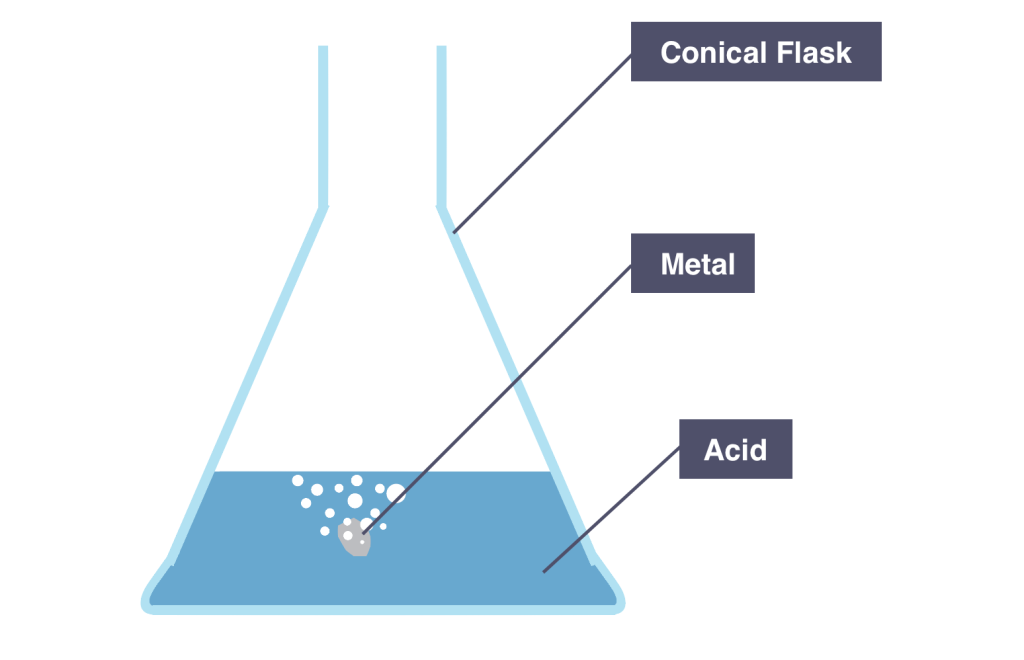
In contrast, certain other metals, like zinc, team up with acids, such as hydrochloric acid, to create interesting changes. Let’s explore what happens when zinc meets hydrochloric acid:
1. Fizz and Bubbles: When you drop a small piece of zinc into hydrochloric acid, the first thing you’ll notice is a fizzing and bubbling. This is because the acid reacts with the zinc to produce a gas called hydrogen.
2. Formation of Zinc Chloride: As the reaction progresses, the zinc gradually dissolves in the acid, forming a new substance called zinc chloride.
3. Release of Heat: Another fascinating aspect of this reaction is the release of heat. The reaction between zinc and hydrochloric acid is exothermic, meaning it gives off heat energy.
This metal-acid reaction is not just cool to watch; it has real-world applications too. It’s used in batteries, to clean metal surfaces, and even in labs to test for the presence of certain metals.
List of necessary equipment
- Iron nail
- Acetic acid
- Water
- Sodium chloride
- Hot plate
Practical part
1) Pour 50 ml acetic acid into the flask
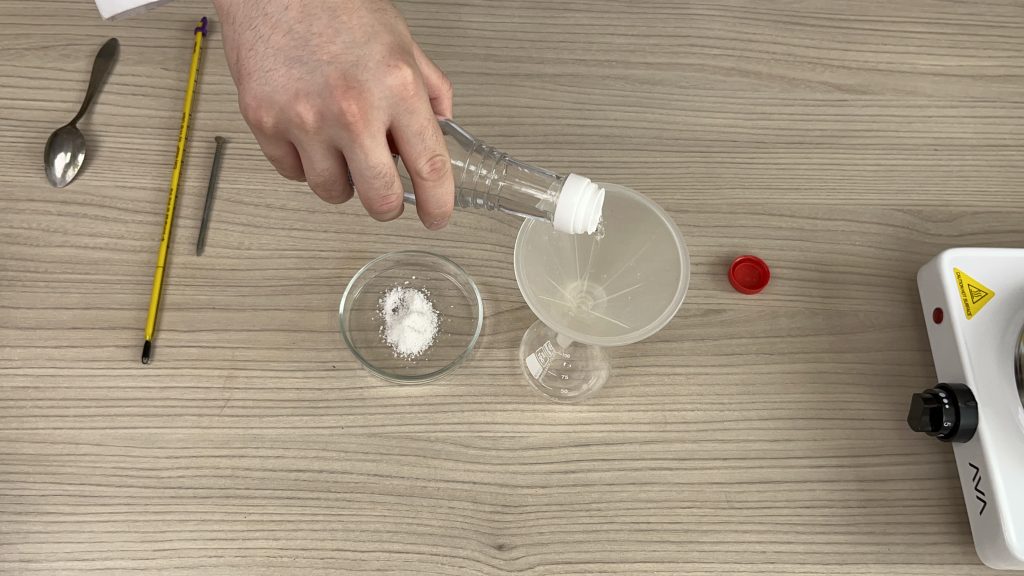
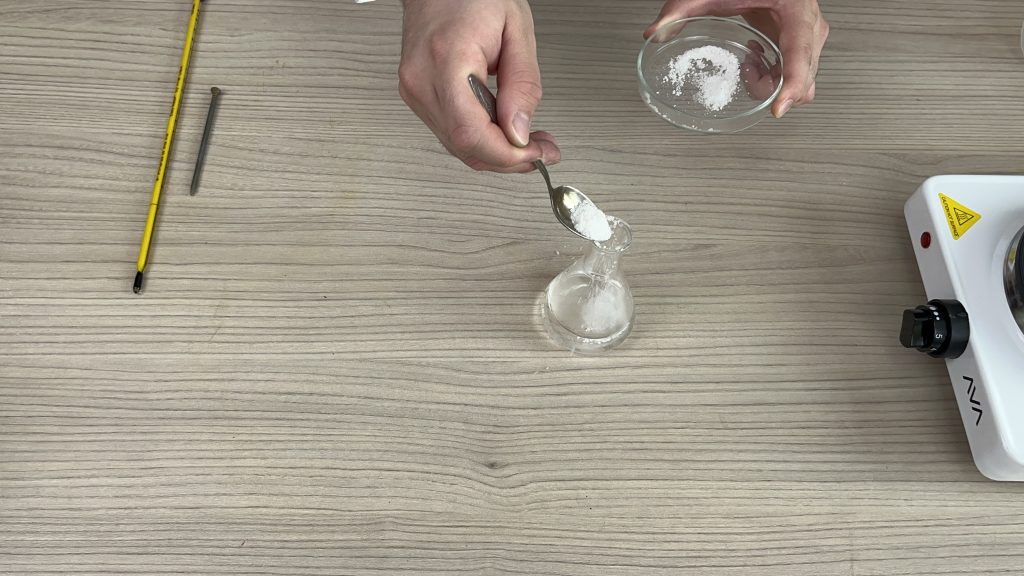
2) Add 5 grams of sodium chloride
3) Stir
4) Install the thermometer and place the flask on the stove
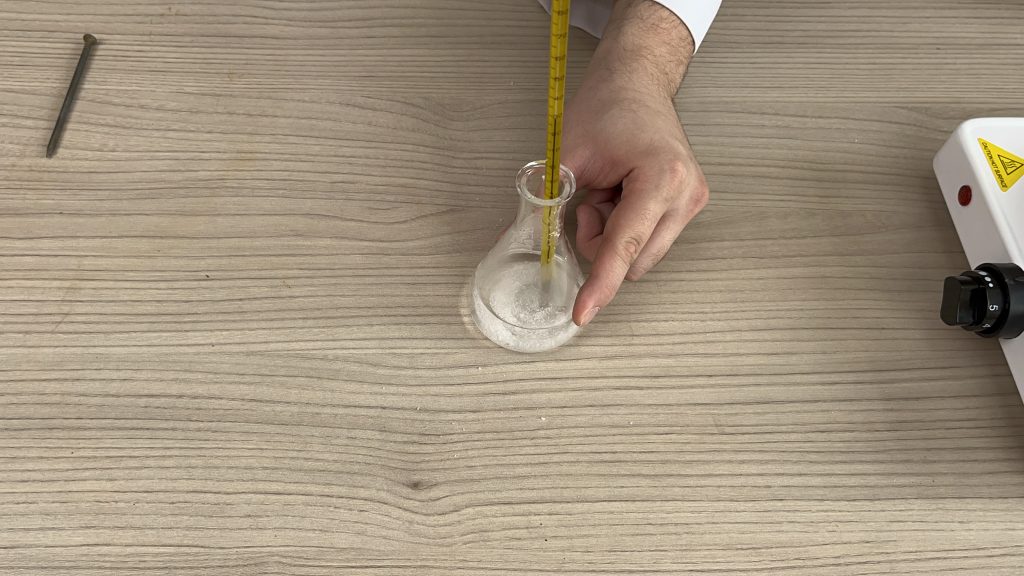
5) Put the nail in the flask
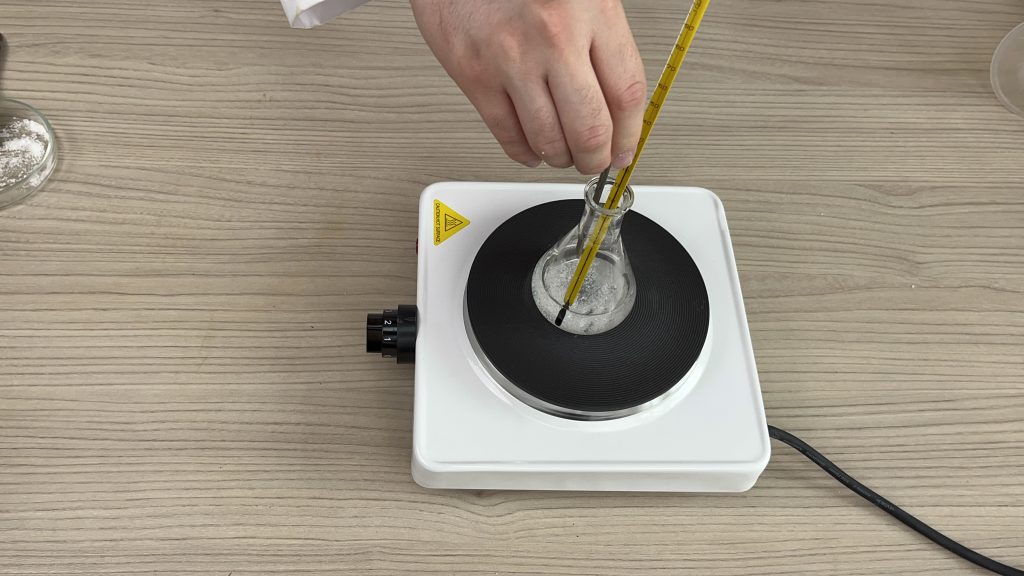
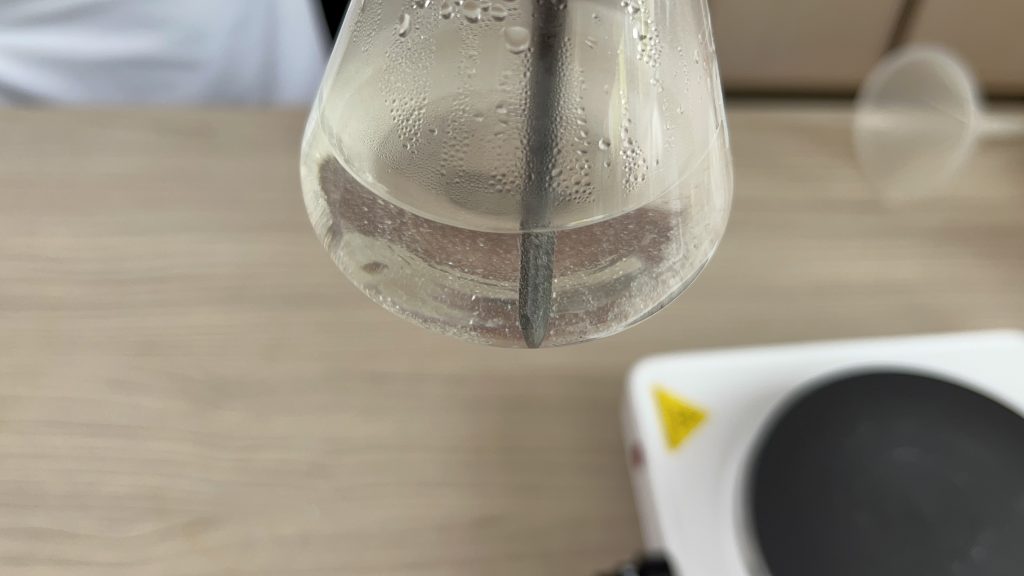
6) As soon as the temperature reaches 90 degrees, remove the flask from the stove.
7) Observe the reaction on the surface of the nail
Conclusion
Thus, you have learned to carry out reactions of metals with acids and will be able to apply this knowledge in practice and theory.
Rules for designing the laboratory work
The laboratory work should contain items in the following order:
- Laboratory work number
- Topic name
- Purpose of the work
- Hypothesis
- Brief description of the theoretical part
- Equipment
- Steps in the correct sequence
- Add a photo from the experiment (if you can’t insert a photo, you can add a picture)
- Give a brief description
- Write a brief discussion and explanation of the topic covered
- Write the conclusion of the work
- The workplace must be cleaned and put in order
Feedback