
Lesson
Project objective
1. To carry out experimental work on cauliflower: to investigate the colour change of the plant.
Teacher’s guide
– For the experimental part of the project, the students work in groups of 4-5.
– The students should be introduced to the topics covering the purpose of the project.
– Before beginning the experimental part, familiarize and provide the students with all the necessary materials.
– At the beginning of the lesson explain the PBL (project based learning) rubrics to the students. 4K skills (critical thinking, collaboration, creativity, presentation)
Safety in Steam lessons
It is recommended that teachers are fully aware of the safety procedures before the beginning of the lesson. If necessary (if they are using items specified in the PPE guidelines), brief the students. Visit Safety in Steam lessons: Safety rules
Theoretical Part
How do plants drink water?
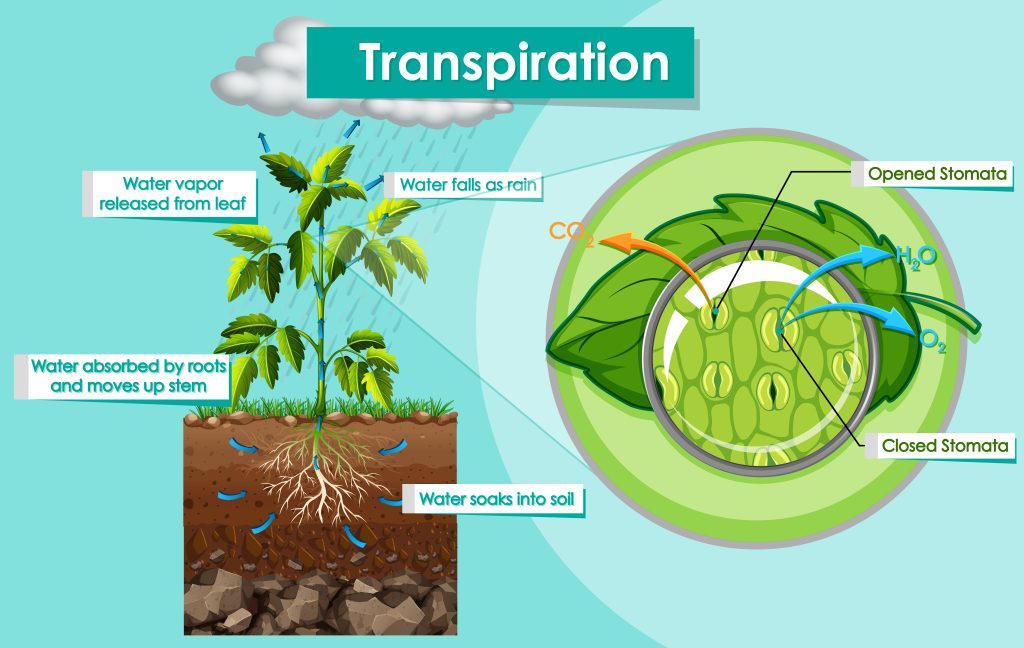
Like humans, plants need to move fluids through them in order to consume nutrients.
Plants drink water through a process called osmosis.
Osmosis is the movement of liquid into a living thing, creating a balance of that liquid. For example, if a plant needs water, it will use osmosis to pull water through its roots until it has enough water for photosynthesis or food production.
Plants pull water up through the capillaries. Water sticks to itself and climbs up and down the plant through tubes called xylem and phloem, which are like our veins. The plant will pull the coloured water upwards and some coloured molecules will remain in the upper parts of the plant, staining the top of the stem or flower!
In addition, Water moves from the soil in which the plant is anchored to the root system of the plant through the cells of the root hairs at the tips of the individual roots. Once the water molecule diffuses into the root, it can take one of three pathways to reach the xylem, which is the conductor from the roots to the rest of the plant. The first of these pathways is simply between the cells in the root. The second is by travelling along junctions between cells (plasmodesmata) and the third is by crossing cells and repeatedly crossing different cell membranes.
Once in the xylem, similar to the veins in animals, water moves with much less resistance towards the leaves. Eventually, water leaves the plant through openings in the leaves called stomata (singular: stomata).
A practical part
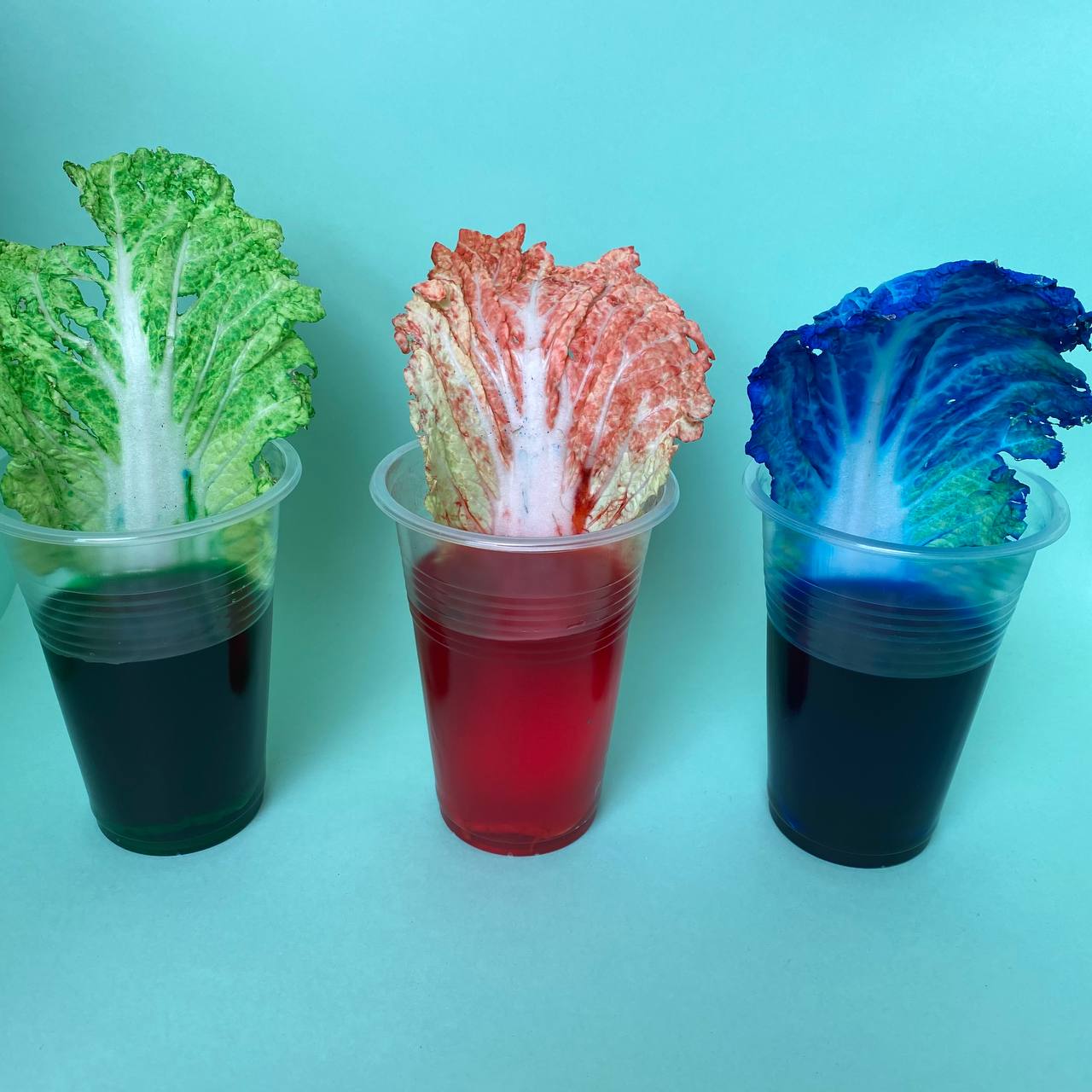
In this experiment, we will add food colouring to the water to see how the water rises up the stem and stains the leaves.
Step 1.Prepare the workplace and all the necessary materials
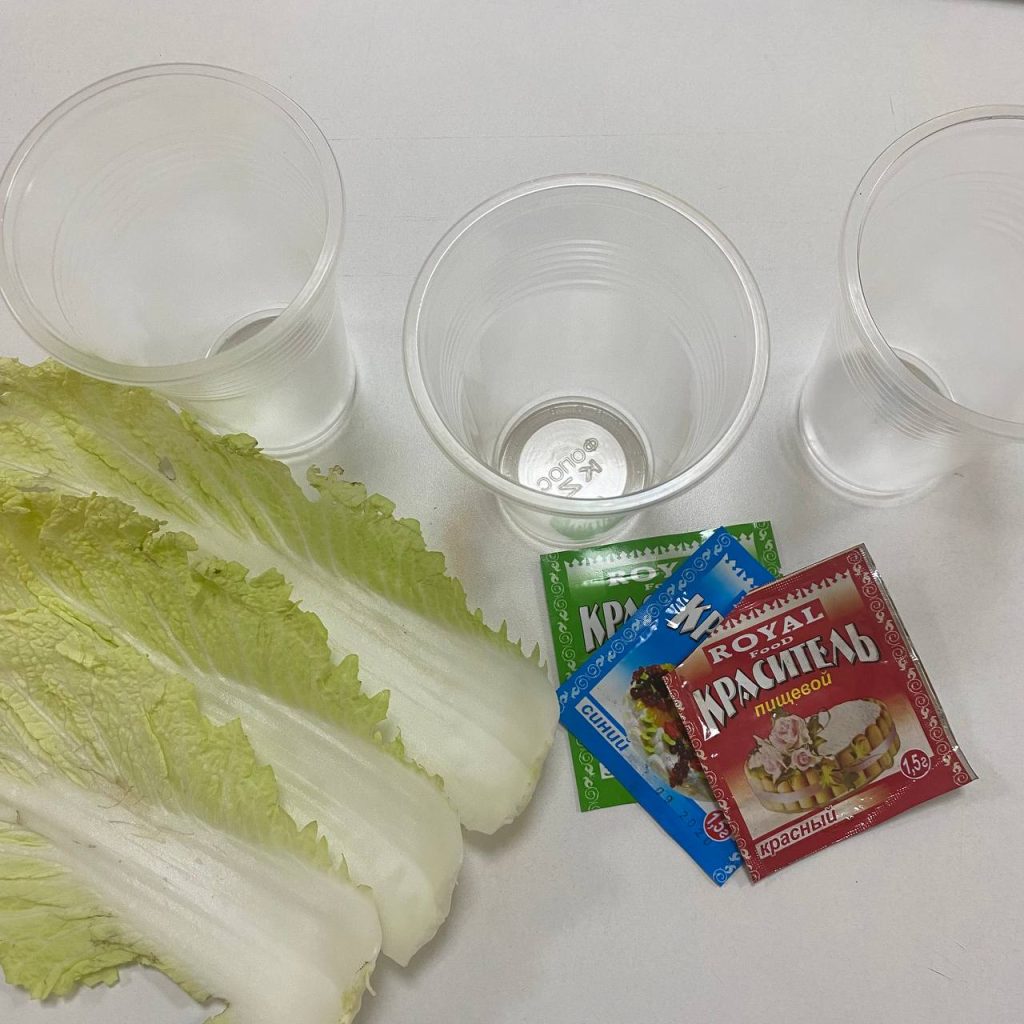
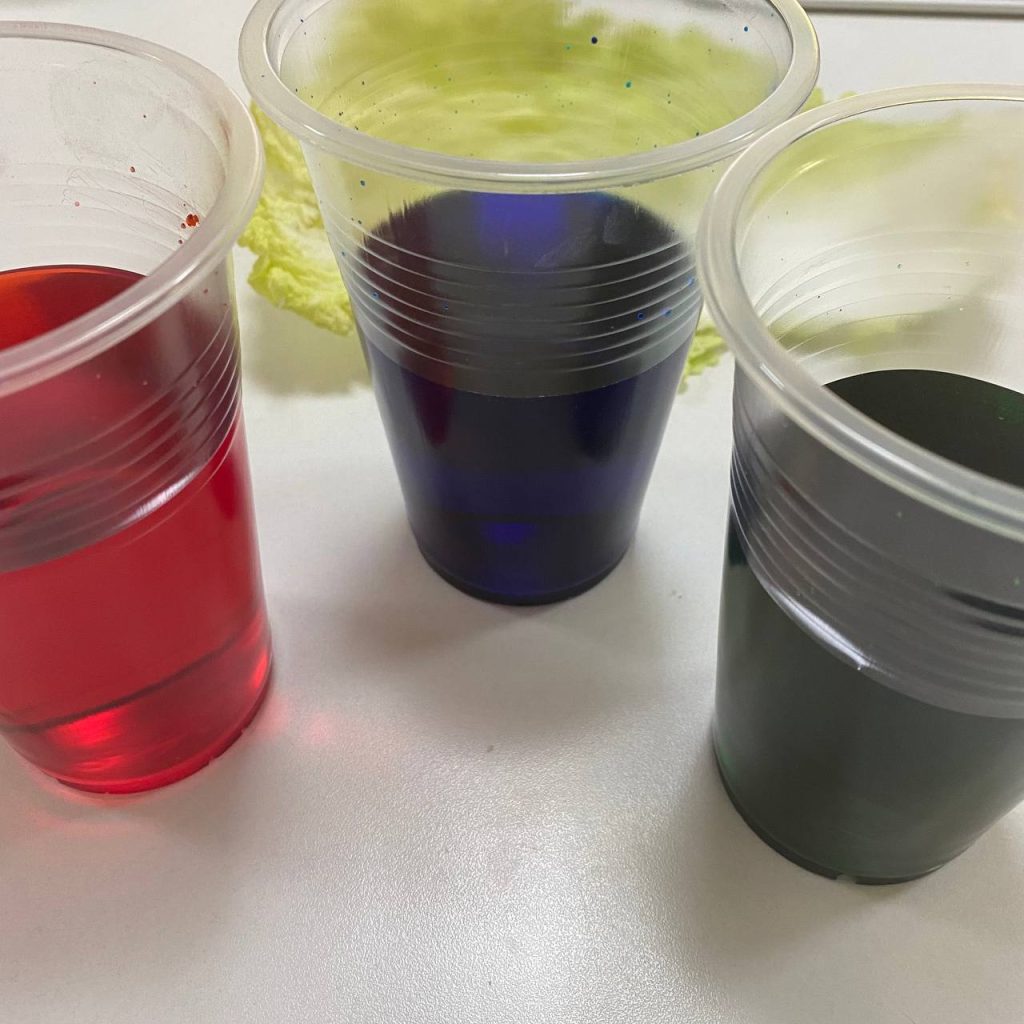
Step 2: Take 3 different colours and dissolve them in water.
Step 3: Then submerge the cabbage leaves in the water. You can also use white roses, chamomile, white chrysanthemums etc.
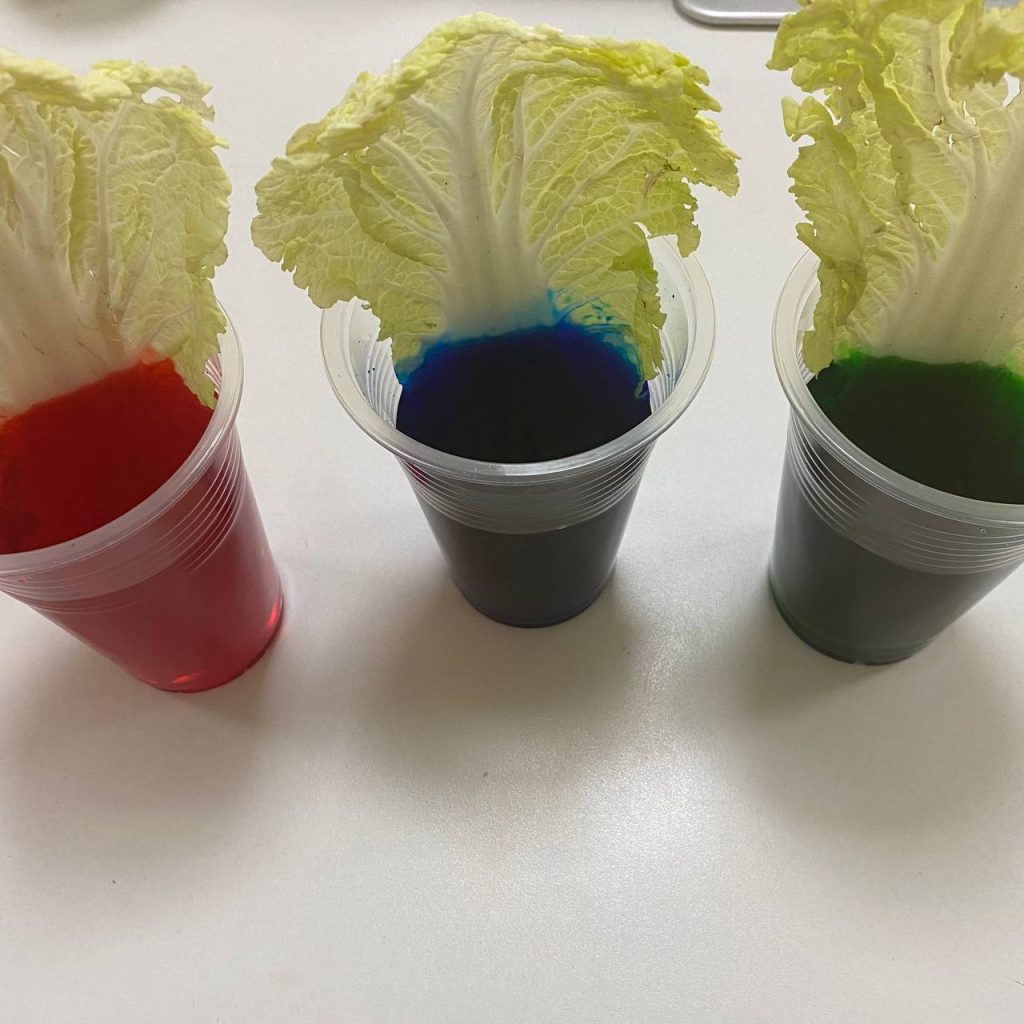
Step 4. Leave the glasses with the plant for half an hour/hour. You can leave it for half a day or until tomorrow
Conclusion
The pupils have thus investigated the possibility of plants growing under different conditions (in this case, they have studied changes in colouration).

On this project, each pupil is awarded a STEAM title, in several categories:
Congratulations, you are a young researcher as you have identified the movement of water and nutrients through plant cells during your experiment.
Evaluation

