
Lesson
Project objective
– To understand the structure of snowflakes;
– To introduce and explore the concept of symmetry;
– An opportunity to learn more about basic shapes;
– Draw different shapes on the geoboard.
Teacher’s guide
– In the practical part of the project, pupils work in a group of 3-4 pupils.
– Pupils have to learn the themes of shape and the flatness of shapes .
– Before beginning the experimental part, introduce and provide the students with all the necessary materials.
– Give brief instructions on how to use the scissors.
– Explain the PBL (project based learning) rubric to the students at the beginning of the lesson. Skills 4K (critical thinking, collaboration, creativity, presentation)
Safety in Steam lessons
Before we begin the lesson, teachers are advised to familiarise themselves with the safety procedures. If necessary (if using items specified in the PPE), brief the students. Go to Safety in Steam lessons
Theoretical part
How does snow fall?
Snow occurs when water vapour in the air freezes before it can turn into water. This happens when the temperature in the clouds is very low. Snowflakes are made up of ice crystals. Snowflakes start out very small and grow. Each snowflake is unique and can contain up to 200 crystals.

How a snowflake forms depends on many factors, such as: the time it takes for water vapour to freeze, the size and amount of dust particles in the air, the strength of the wind, and how all the crystals connect to each other to form patterns and individual snowflakes. Because of all these factors, it is difficult for snowflakes to look the same!
The harmony of symmetry
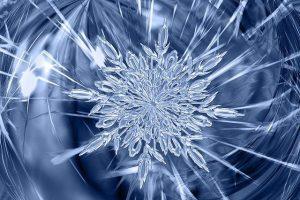
Reflecting on the history of symmetry, trying to investigate the symmetry of figures, the use of symmetry in artwork, symmetry in architecture and mirror symmetry in letters and words to show its harmony and artistry, pointing out the place and necessity of symmetry in mathematics in the craft of Kazakh people, architecture. We would not say that the use of symmetry covers all areas.
The concept of symmetry is familiar from centuries of human history. The laws of mathematics, physics and even nature are subject to the principles of symmetry.
Practical part
Step 1. Take 4 pieces of cardboard, size 22x22cm square
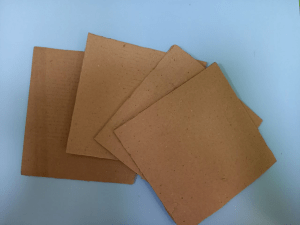
Step 2. Glue 3 pieces of cardboard together with hot glue, and glue on the remaining 1 piece of cardboard after the buttons have been placed on it
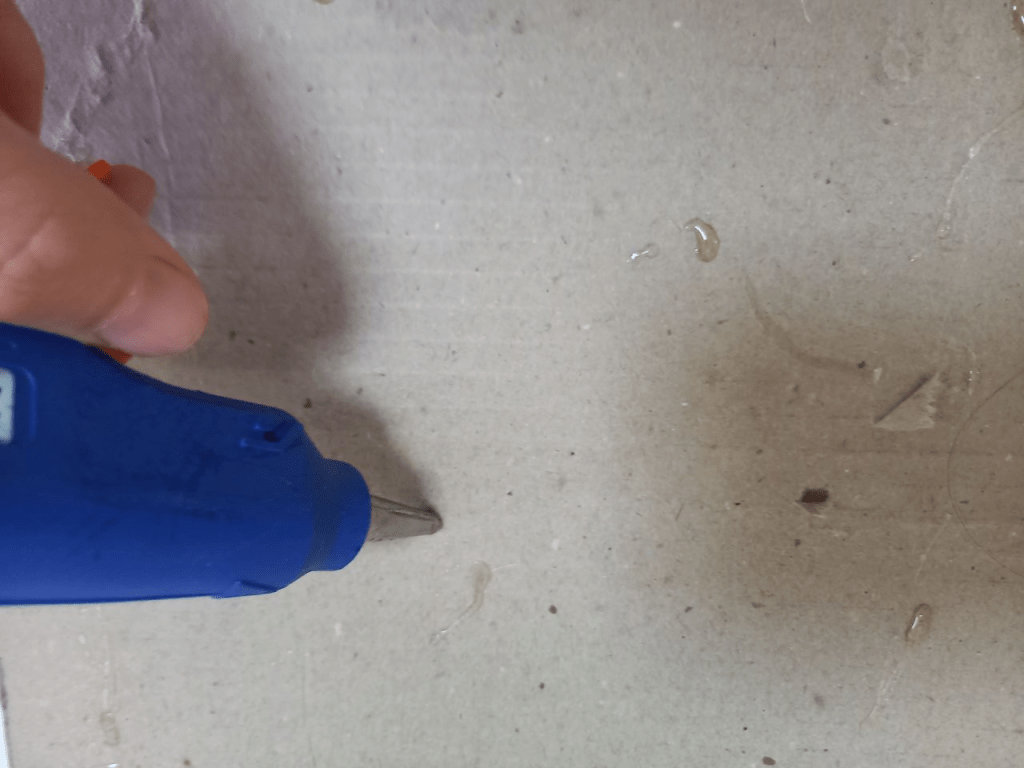
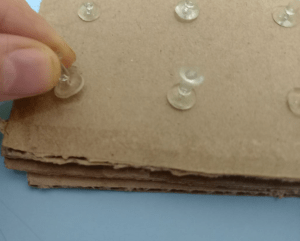
Step 3. Place the buttons so that the distance to the cardboard surface is 4 cm and use hot glue to glue the bottom of the buttons
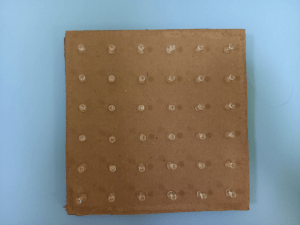
Step 4. From the edges of the finished geoboard and the top edge, tape
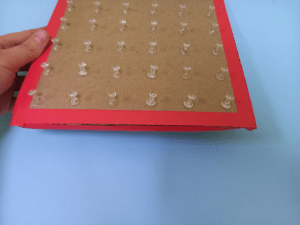
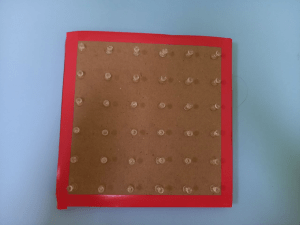
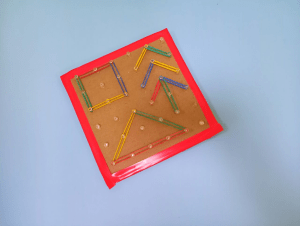
Step 5. Now use a rubber band to make different shapes on the geoboard
Conclusion
In this lesson the students have better understood shapes and their perimeter, area, angles, matches, details, etc. and made a geoboard with their own hands.
On this project each pupil is awarded a STEAM title, by category:
– You yourself, studied shapes, created your own shapes in the geoboard you are a true mathematician!
– You have developed teamwork skills by working in groups. In the practical work you have shown your creativity and cohesion.
Evaluation

