
Energy stored by the capacitor
Capacitor lab: Basics by PhET Interactive Simulations, University of Colorado Boulder, licensed under CC-BY-4.0 (https://phet.colorado.edu)
The title of the Project: Energy stored by the capacitor
Purpose of the work:
- Figure out what is the energy stored by the capacitor.
Practical part
Choose “Light bulb” to start the virtual experiment.
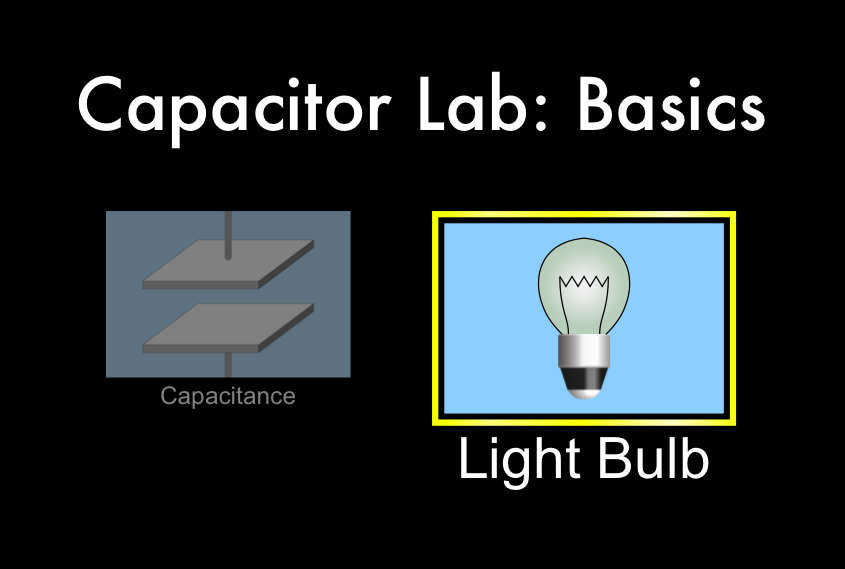
This is a little instruction to the virtual experiment.
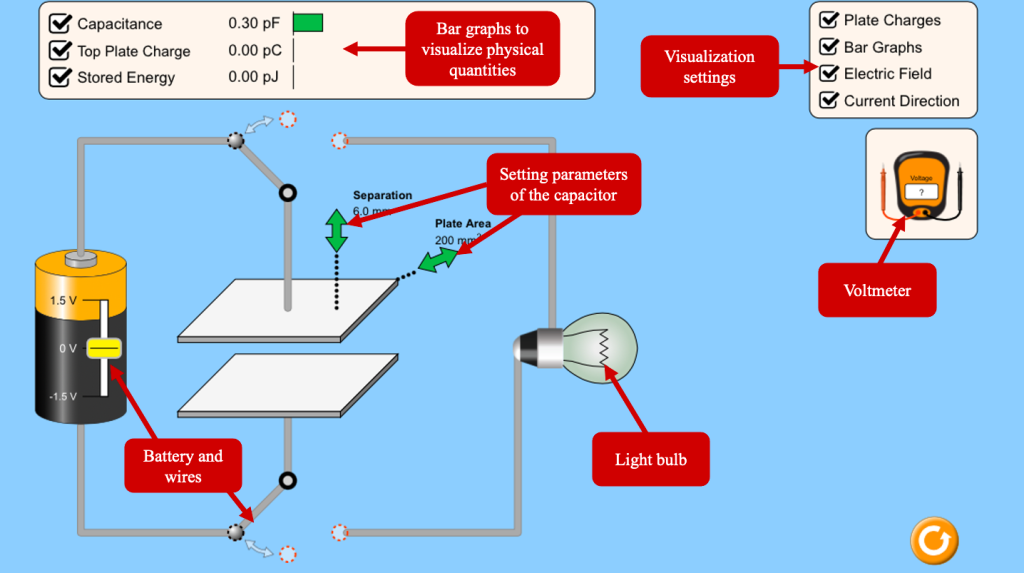
Virtual experiment.
Step 1. Choose the settings as shown in the picture.
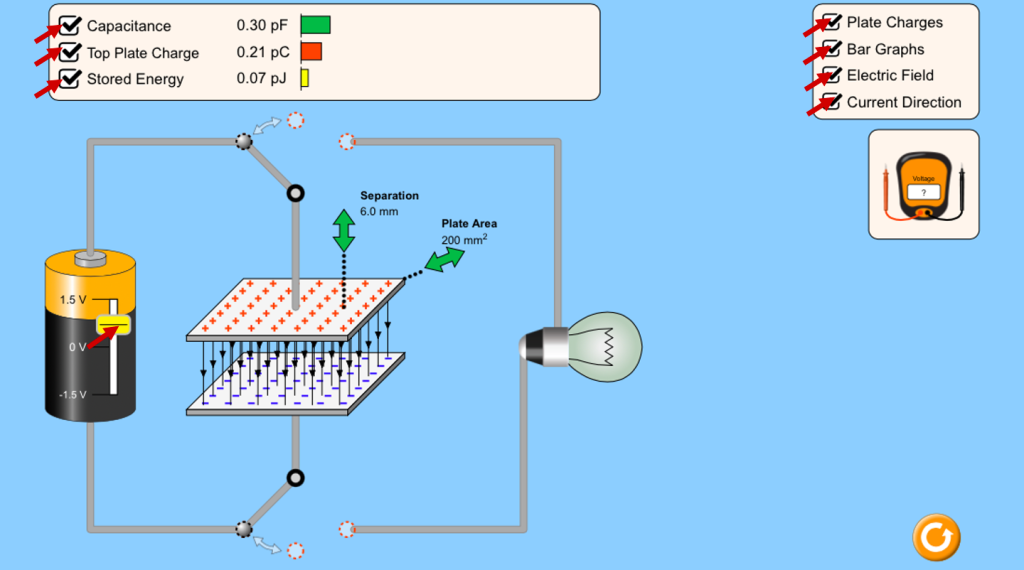
Step 2. Increase the capacitance. What happens? The charge on the plates of the capacitor increases as well as the energy stored by the capacitor. Connect the wires to the light bulb.
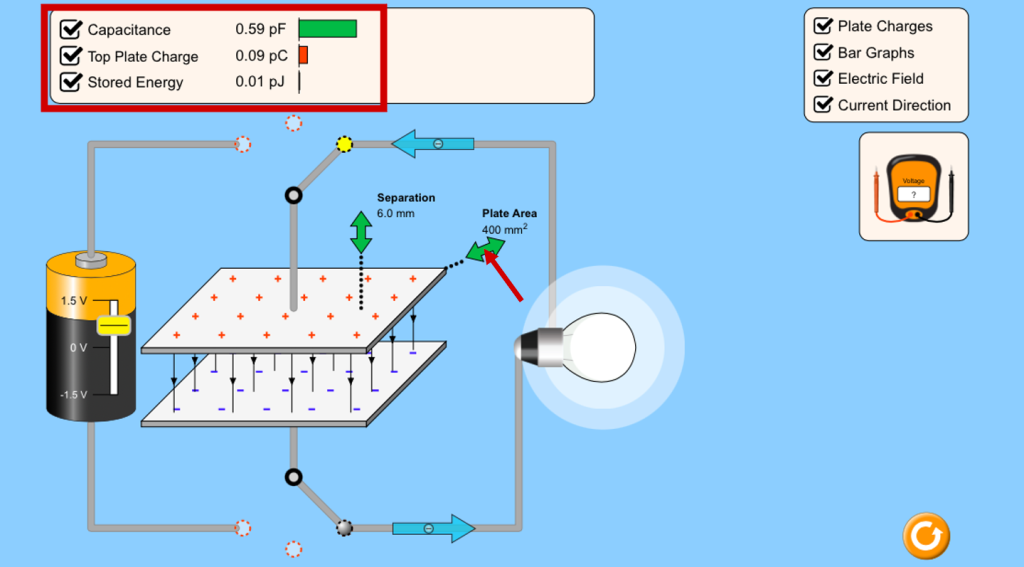
Step 3. Connect the wires back to the battery. Decrease the capacitance. What happens? Connect the wires to the light bulb.
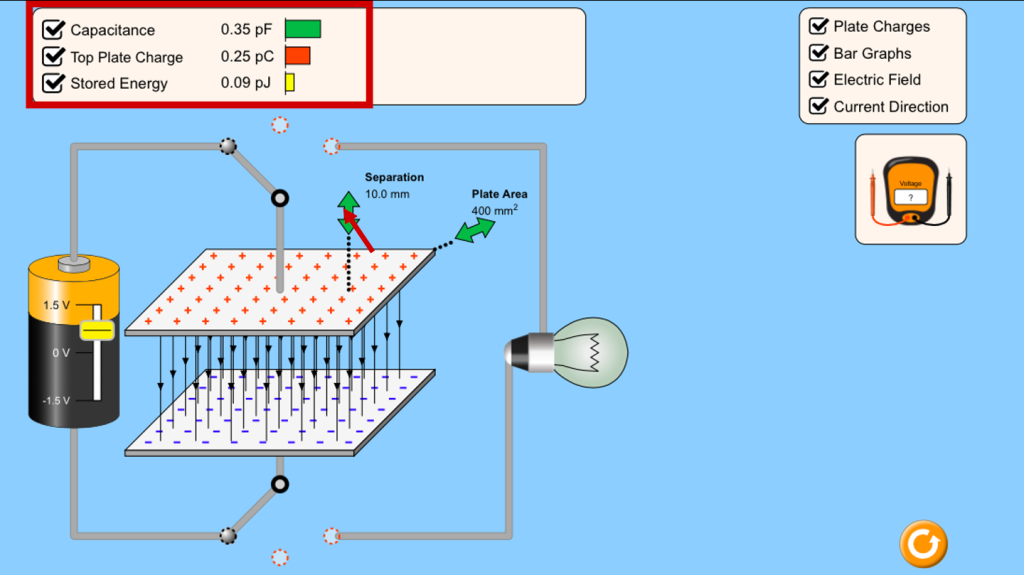
Step 4. Connect the wires back to the battery. Increase the voltage. What happens? The charge on the plates and the energy stored by the capacitor increases too. Connect the wires to the light bulb.
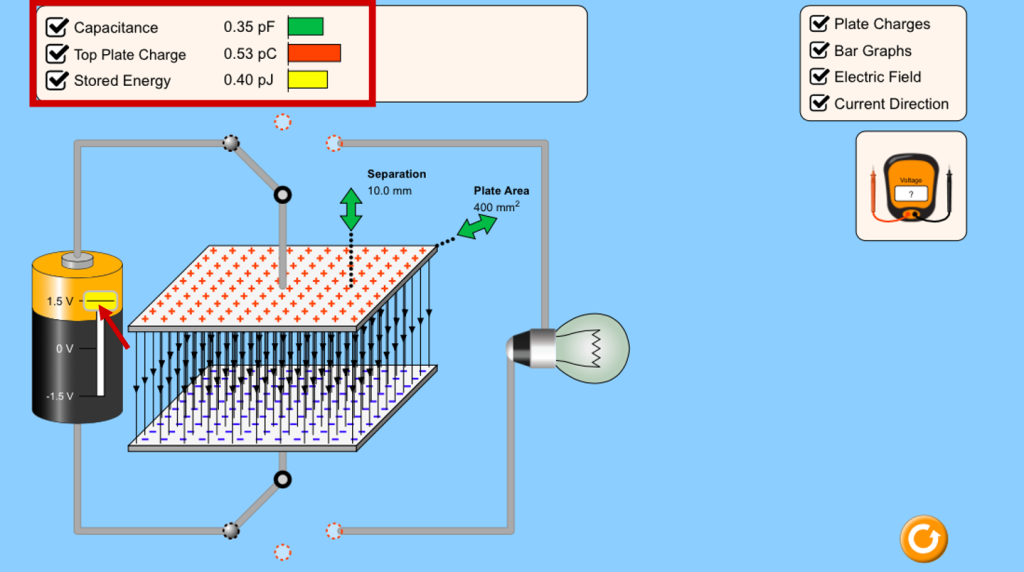
Step 5. Connect the wires back to the battery. Decrease the voltage. What happens? Connect the wires to the light bulb.
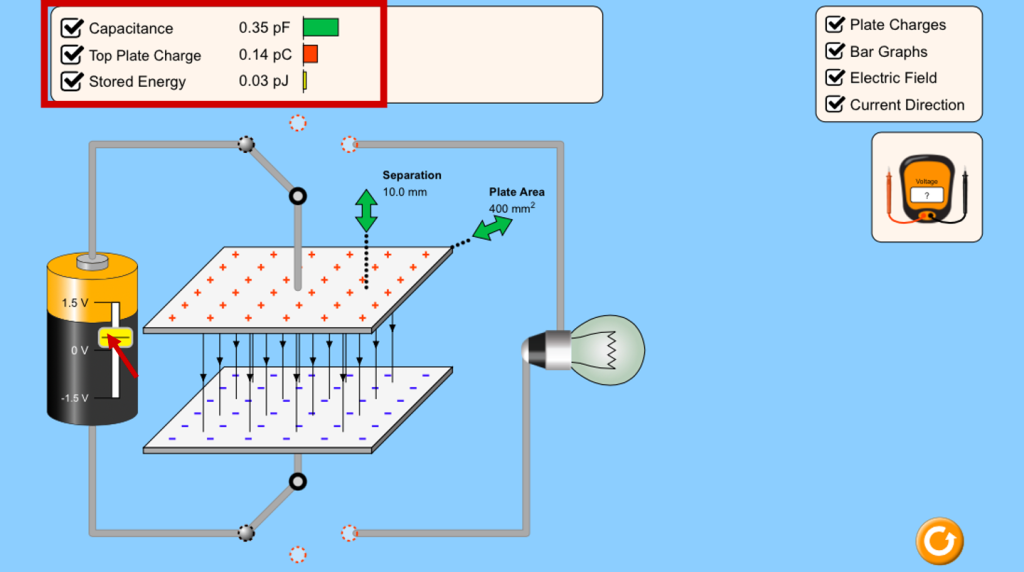
Step 6. What happens if the voltage becomes negative? Make a conclusion.
Conclusion
The energy stored by the capacitor is proportional to the voltage on the edges and the charge on the plates. While the charge accumulated on the plates of the capacitor depends on the capacitance. When the voltage becomes negative the plates of the capacitor change sign of the charge.