
Friction
Friction by PhET Interactive Simulations, University of Colorado Boulder, licensed under CC-BY-4.0 (https://phet.colorado.edu)
The title of the Project: Friction
Purpose of the work:
- Study how friction works on the atomic level.
Practical part

This is a little instruction to the virtual experiment.
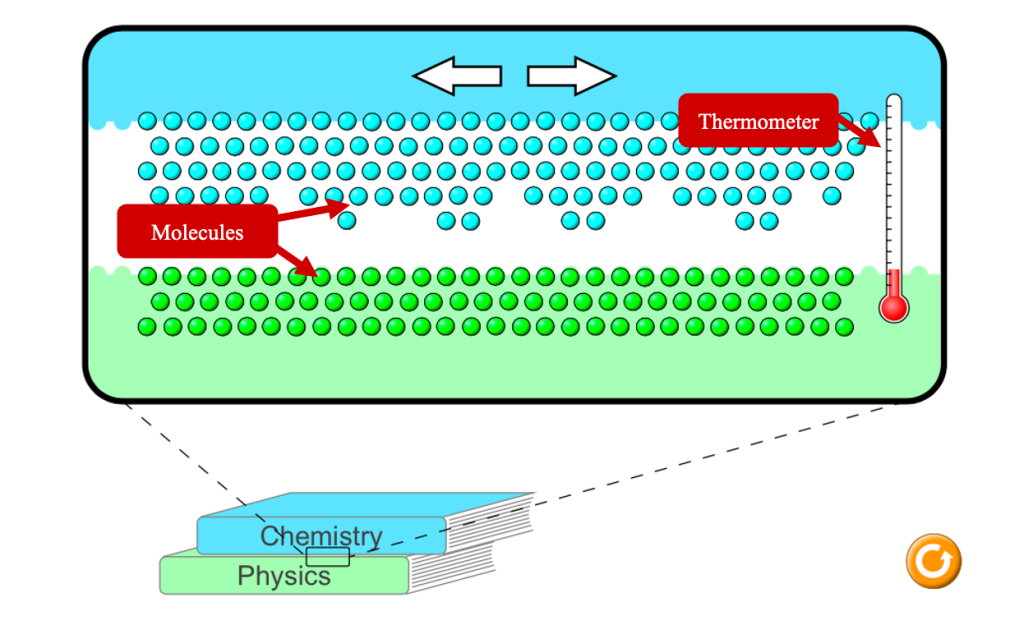
Virtual experiment.
Step 1. Notice that the upper book has microscopic imperfections on its surface.
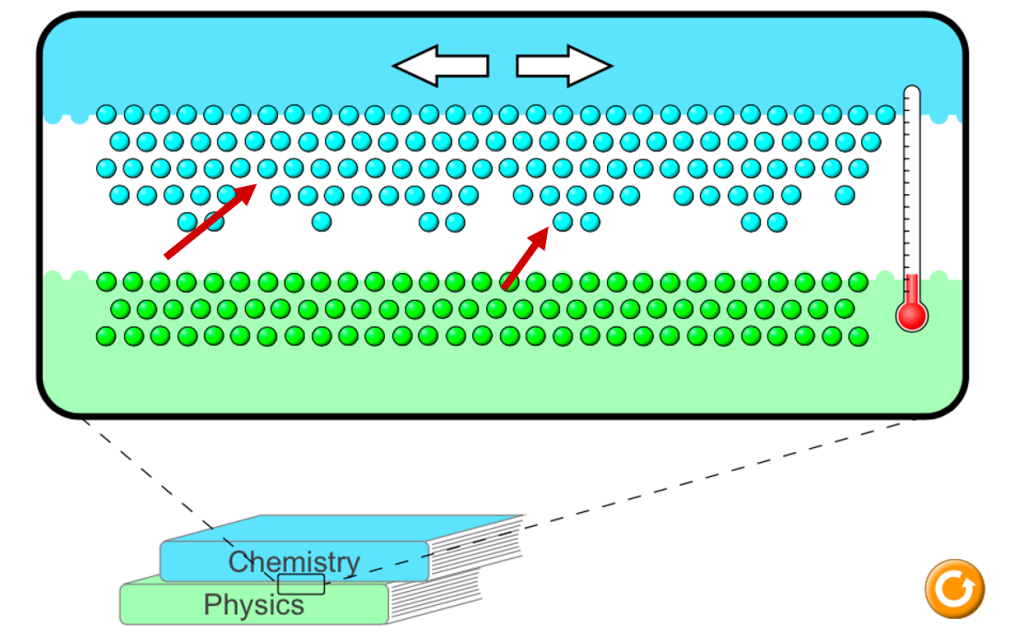
Step 2. Take the upper book and start to rub it a little. When two surfaces rub against each other, the irregularities and microscopic imperfections on their surfaces come into contact. As they slide past each other, the molecules at these points experience resistance due to intermolecular forces.
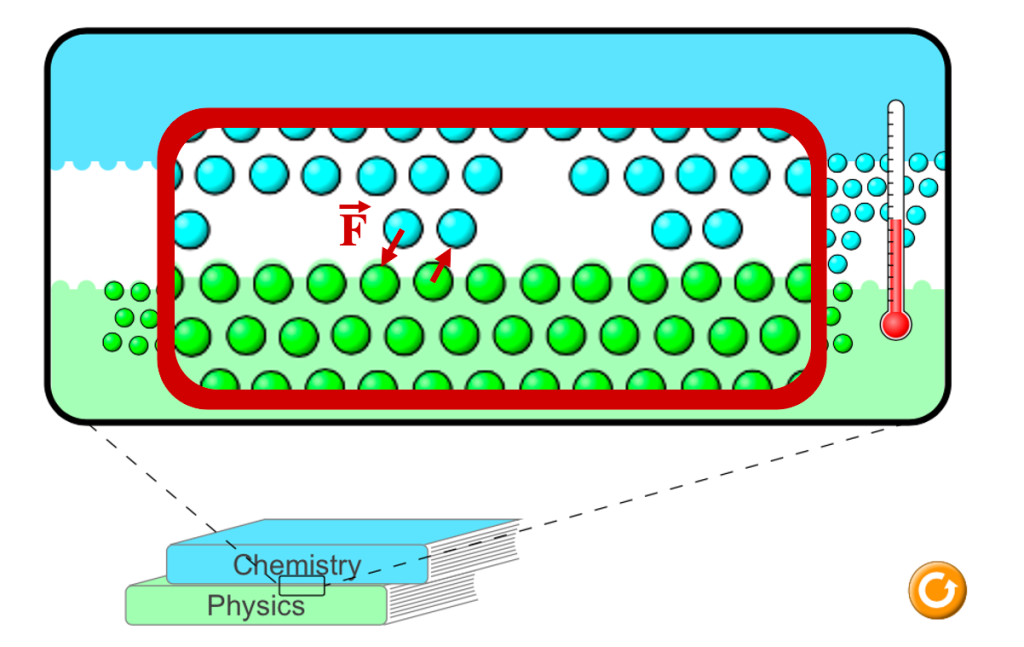
Step 3. Notice that the temperature increases according to the thermometer and the particles start to oscillate faster, when the books are rubbed. This is because the resistance results in the conversion of mechanical energy into thermal energy.
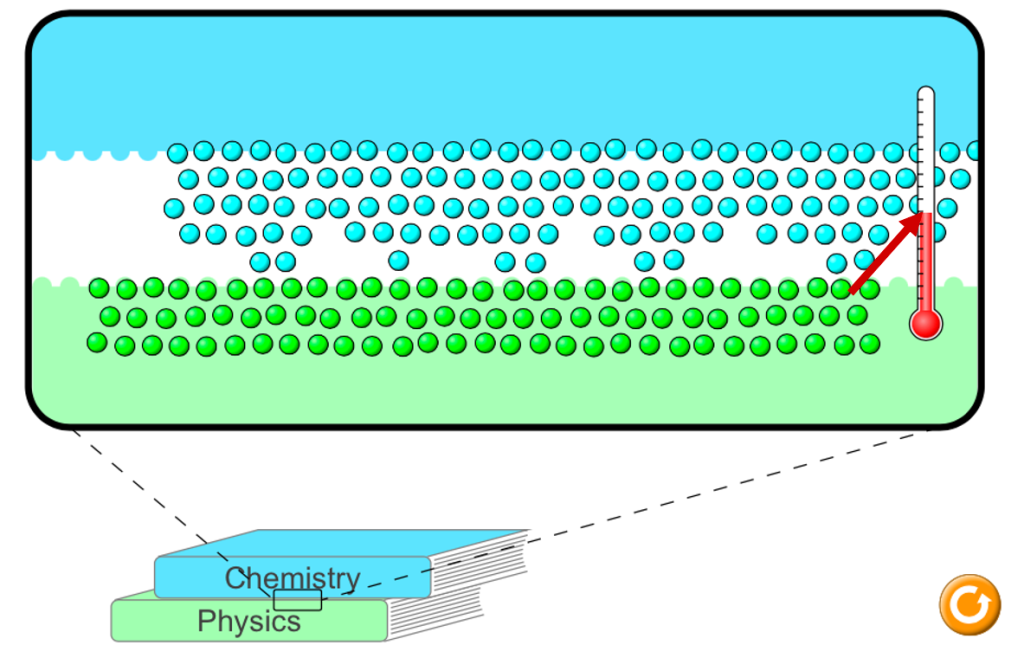
Step 4. Make a conclusion.
Conclusion
When two surfaces slide on each other their microscopic imperfections come into contact and experience intermolecular forces which result in resistance to the motion. The resistance to motion is friction. Friction is essentially the force that opposes the relative motion of surfaces in contact.