Task

lens focal length
Objective of the work
- Learn to determine the focal length between a thin lens and a screen.
- Determine the optical power of a lens.
- To be able to use laboratory instruments in the course of the work.
Teacher’s guide
In the practical work, the students work in a group.
The students should be familiar with the topics of lenses/optical power of a lens/formulas for thin lenses.
Before starting the practical work, familiarise and provide the students with all the necessary materials.
Give the students a worksheet to complete the lab work. You can download the worksheet from the Worksheet link:
Familiarise the students with safety procedures:
Requirements for laboratory work for the students
Laboratory works are carried out by students in the classroom under the direct supervision of the teacher and with strict adherence to safety and health requirements.
Laboratory work is accompanied by measurements and calculations. A report shall be prepared on the results of the work.
The report on the performance of laboratory work by the student shall contain:
- The name and number of the laboratory work;
- The name of the theme of laboratory work;
- The purpose of laboratory work;
- Brief description of the laboratory system (if any);
- The methods of measurement;
- The course of the laboratory work;
- Results of measurements and calculations (usually in the form of tables) with obligatory indication of the units of measurement;
- The results of the individual measurements; add a photo guide
- The results of processing the experimental data obtained with an estimate of the error of measurements;
- Graphs, charts, drawings;
- Basic calculation formulas with the indication of the quantities to be measured (all the alphabetic values of the formulas must be explained);
- Calculation and detailed analysis of the results;
- Conclusions.
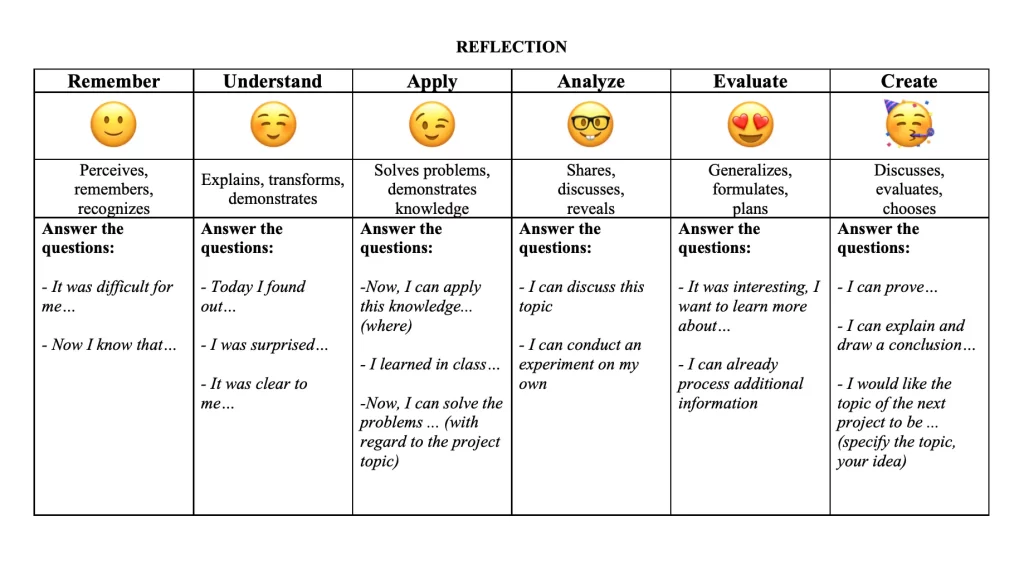
Provide this material (PBL rubrics) to students for assessment so that:
- Students understand in advance what criteria they need to prepare,
- Students will be able to assess their own peers accordingly.
Practical part of the work
Before carrying out the laboratory work. Make a projector to measure the focal length
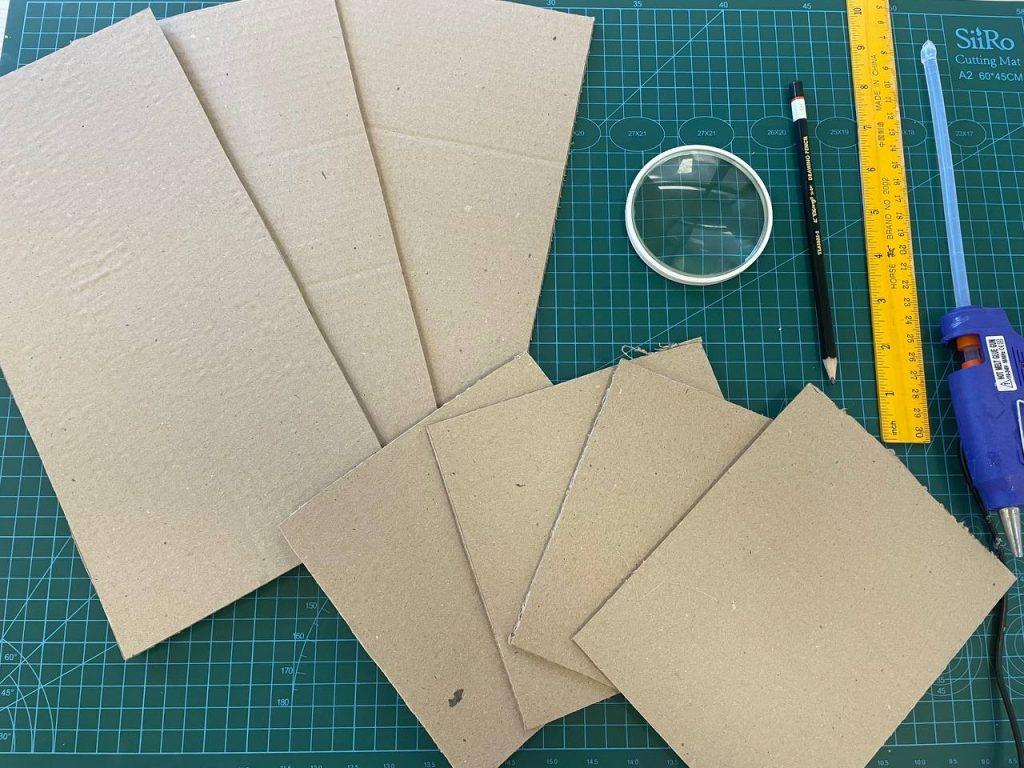
Step 1: Prepare all the required materials
- 30x15cm cardboard – 3pcs
- Cardboard 15x15cm – 3pcs
- Biconvex lens – 1pc
- Pencil
- Hot glue with a stylus
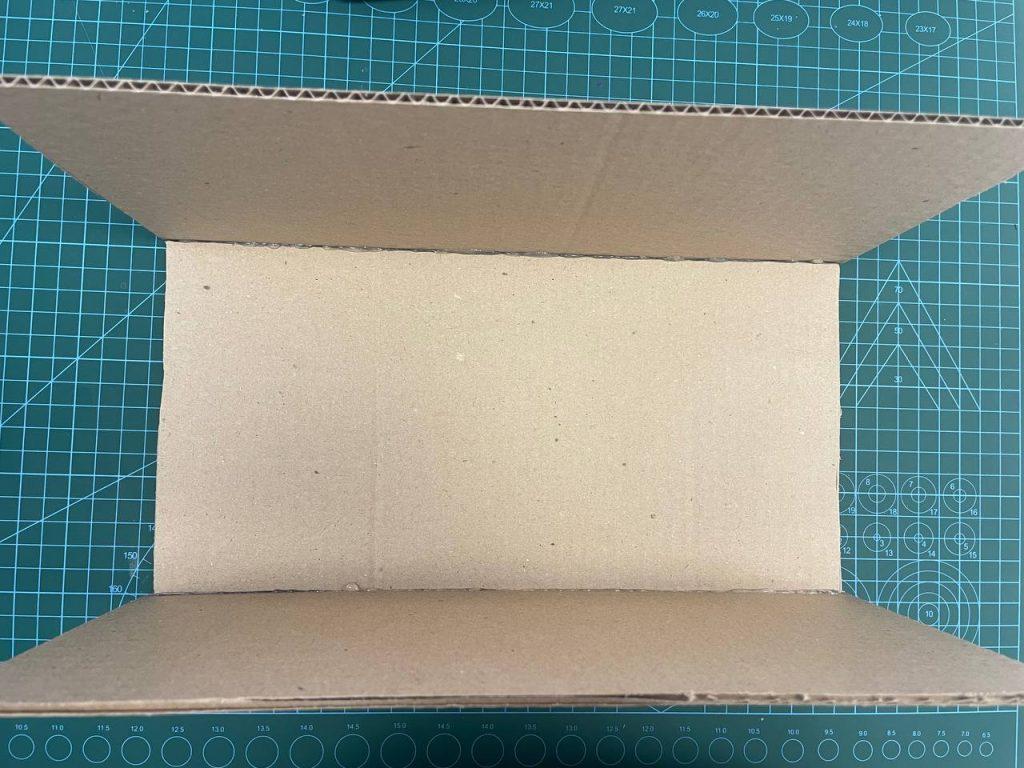
Step 2: Join the cartons together with hot glue
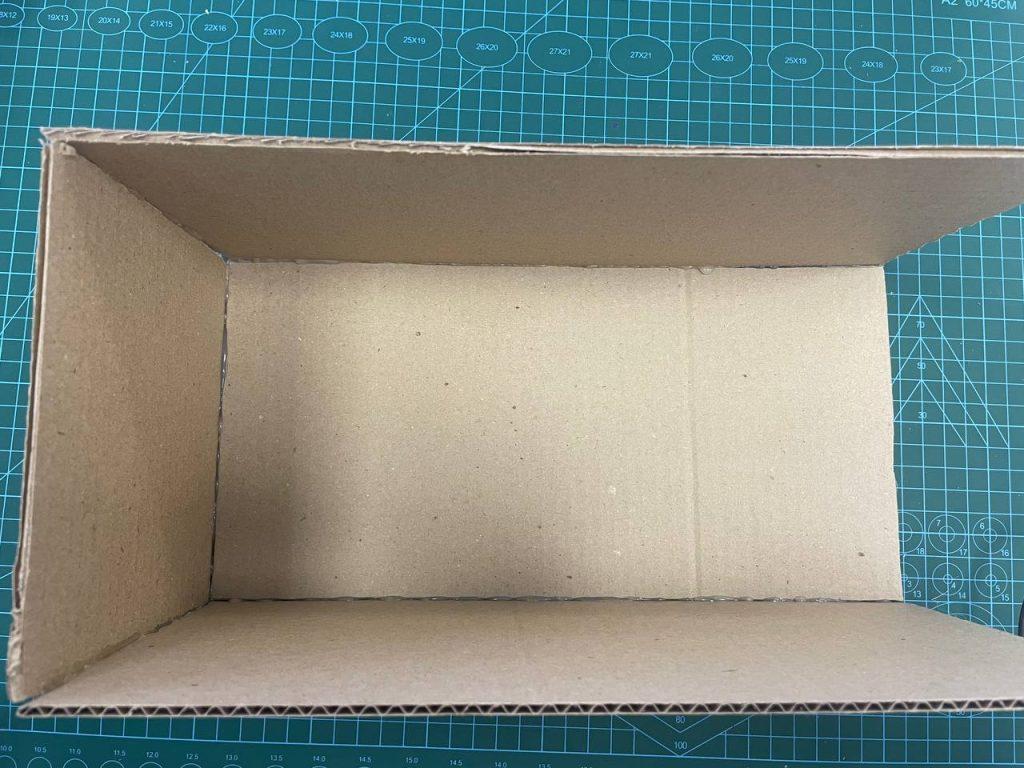
Step 3: Cut a circle out of cardboard so that the magnifying glass can be attached
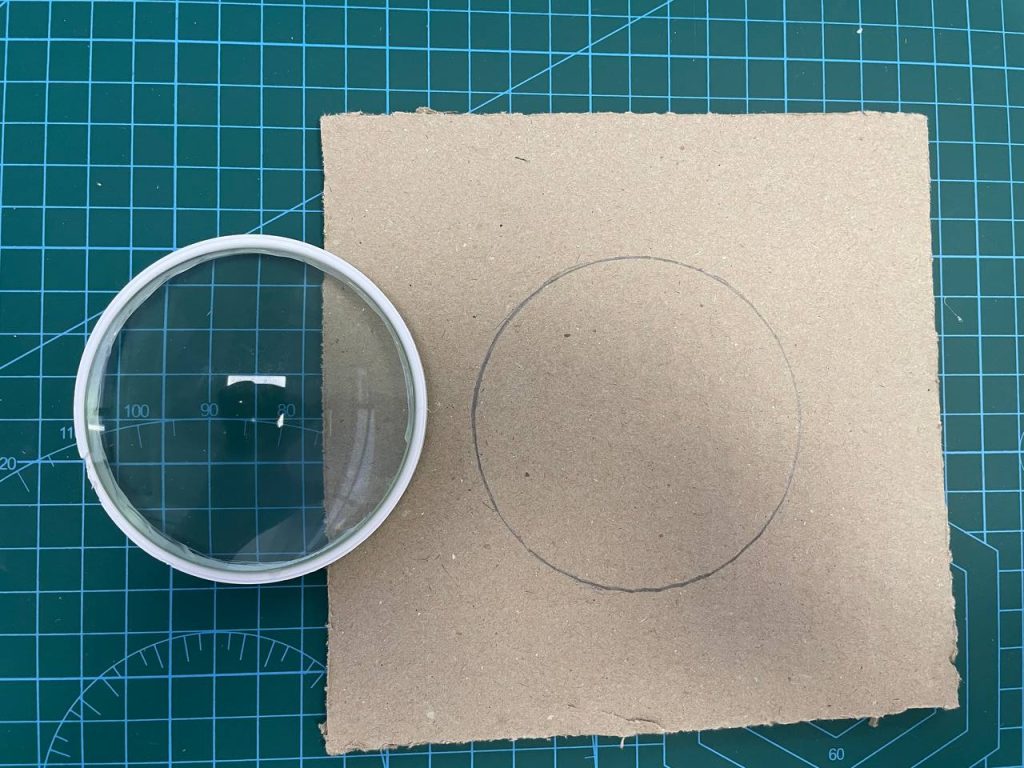
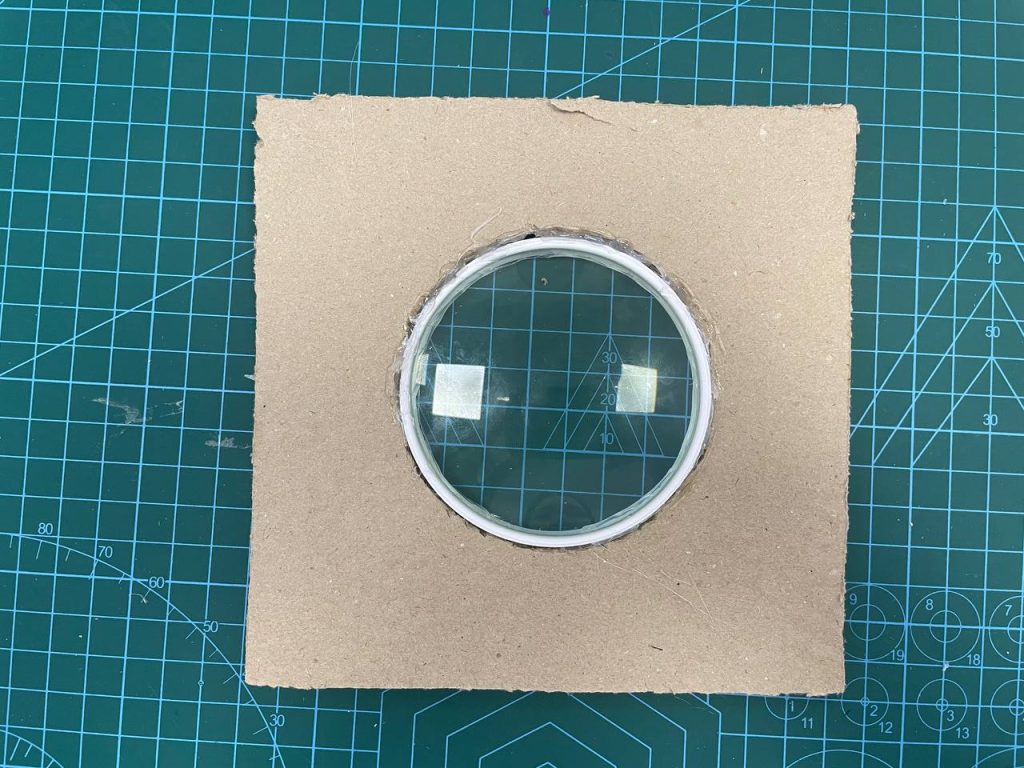
Step 4: Use hot glue to fix the cardboard with the magnifying glass into the large cardboard that has already been formed as a base
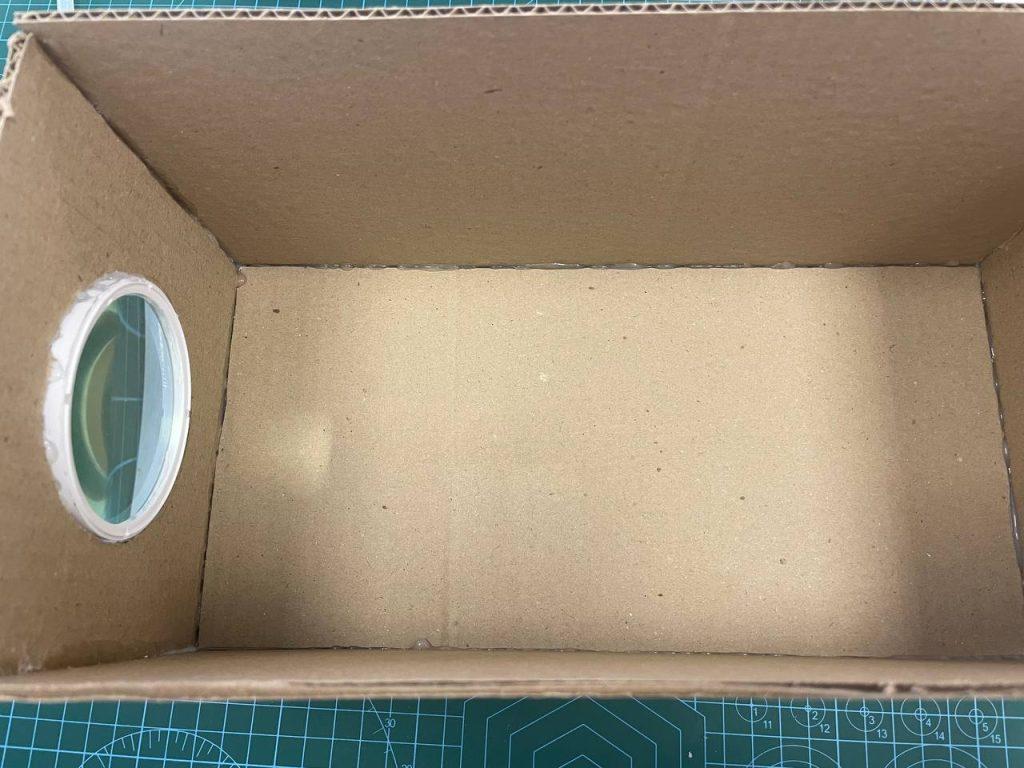
Step 5: Use the second 15x15cm cardboard as a screen
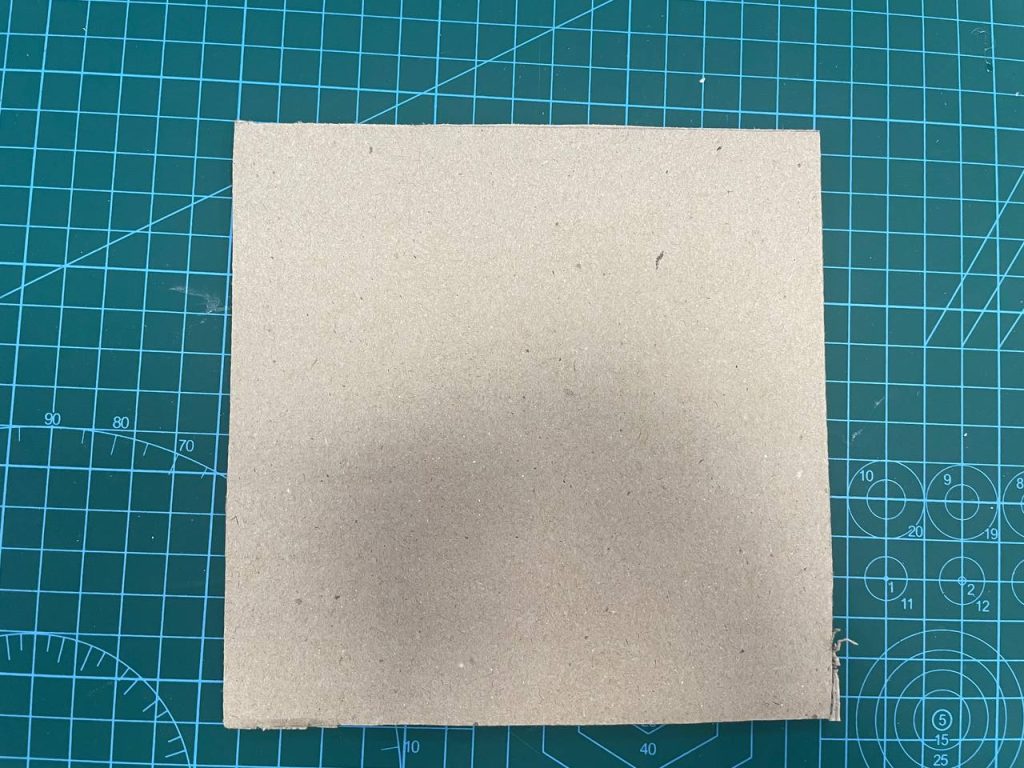
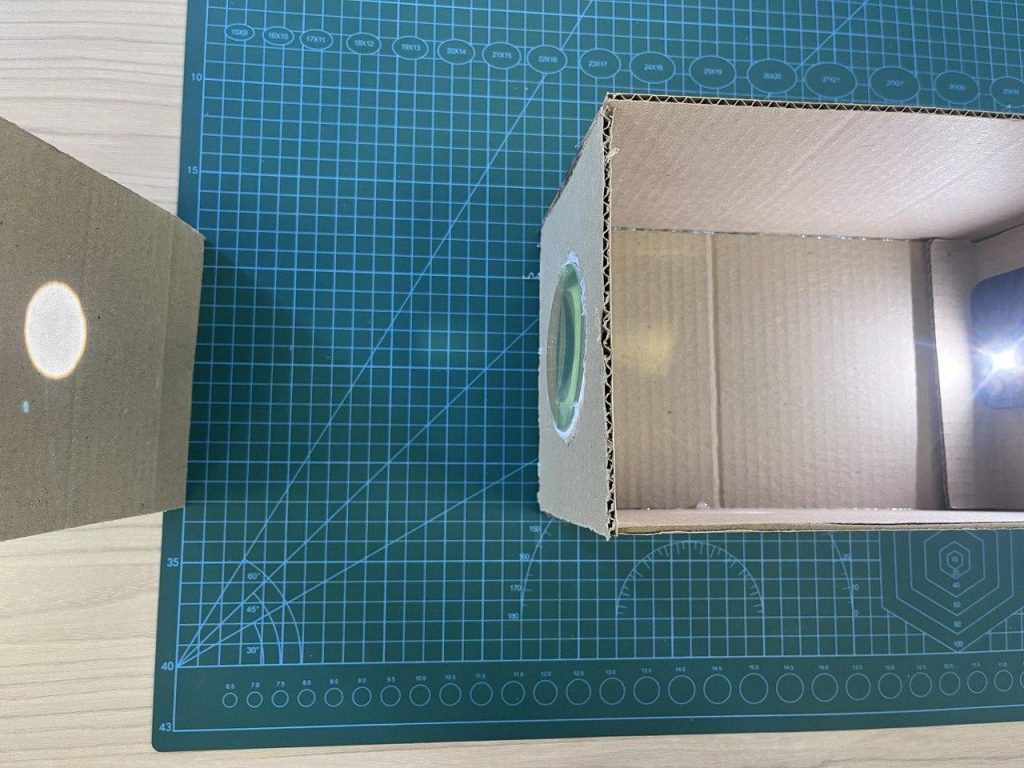
Step 6: You can use this projector to measure the distance between the lens, the screen and the image
Instructions for the experimental part of the work:
d [m] – distance from light source to lens
f [m] – distance from lens to image
d [dptr] – optical power of the lens
F [m] – focal length of the lens
Step 1: Light a torch and position it inside the projector. Move the lantern to get a sharp image of a circle on the screen.
An example is shown in figure – 1.
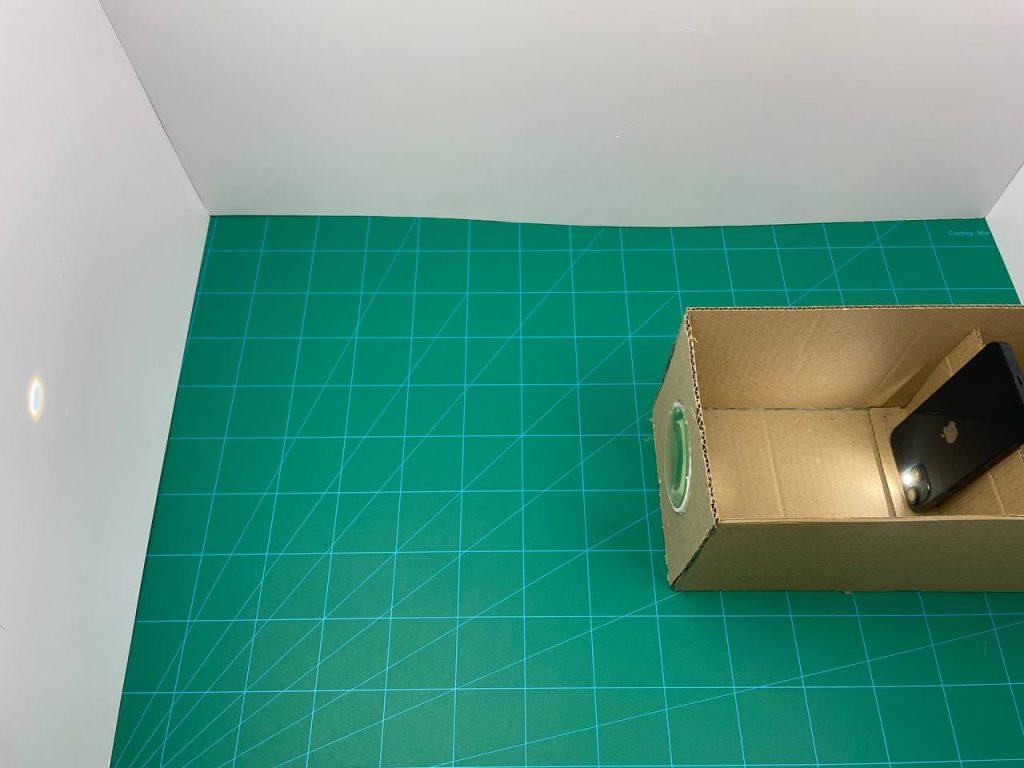
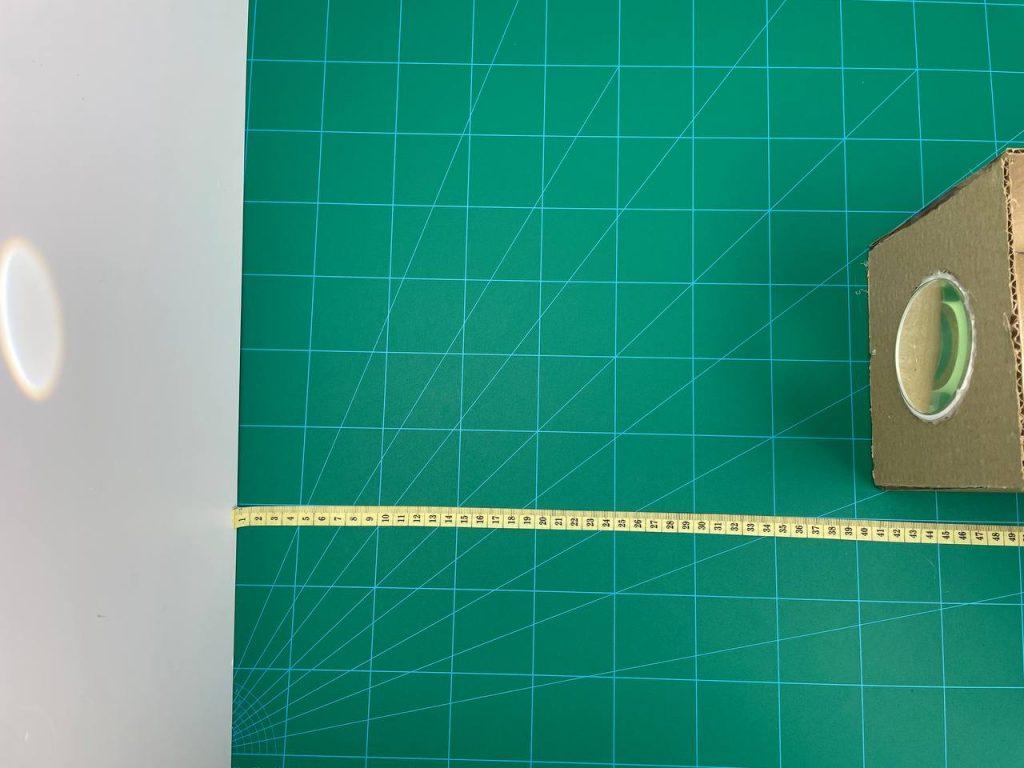
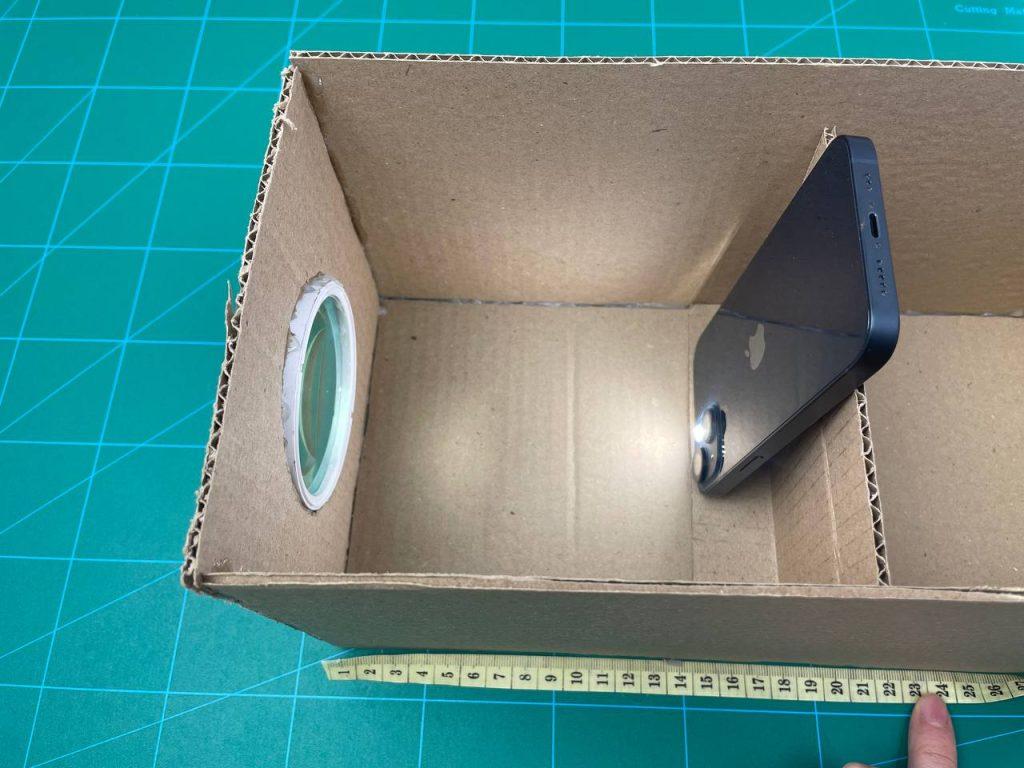
Step 2: Using a measuring tape, measure the distance f from the lens to the image and the distance d from the torch to the lens.
Step 3: Using the formula, find the focal length of the lens
Distance from the lens to the image: f = 41cm
Distance from torch to lens: d = 22cm


Step 4: Determine the optical power of the lens using the focal length
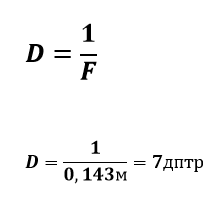
Step 5: Record all the data in the table
Important: When you measure the distance of the lens all values are converted to SI system. For example d=20cm means d=0.2m

Step 6: Take an enlarged, reduced and equal image of the light source on the screen and repeat the experiment three times. Calculate the average value of the focal length and the optical power of the lens
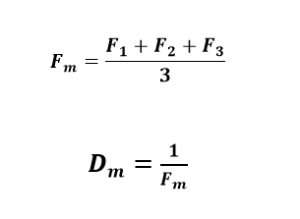
Step 7: Formulate a conclusion to the paper, based on these questions
1. How can the optical power and focal length of a lens be determined experimentally?
2. Under what conditions is the actual image obtained with a lens magnified?
3. What is the formula for the optical power of a system of lenses stacked side by side?
Conclusion
In this lab activity, students learned what a lens is and calculated the optical power of a lens. They made a protractor of their own, using materials at hand, for the experiment. Using the projector, they determined the focal length of the lens.