
Lesson
Objective:
- Familiarity with the digestive system of heterotrophic organisms
- Understanding the function of the digestive system
- Determining the pH of the digestive system
Expected results:
After learning about the project, students will:
- Form teamwork skills
- analyze and summarize the information obtained
- independently draw logical conclusions and draw inferences
Teacher’s guide:
Divide students into groups.
Download the worksheet:
Before beginning practical work, familiarize yourself with the safety rules by following this link:
Theoretical part
heterotrophic nutrition, an organism obtains organic nutrients from a variety of organisms and utilizes them.
All heterotrophs (except hematopoietic and intestinal parasites) must convert complex nutrients into simple compounds (digestion). The soluble products of the organism’s digestion are then broken down to release energy (respiration) and other developmental processes (metabolism).
Types of heterorganisms:
- Animals
- Fungi
- Bacteria and protists
- Humans and other mammals
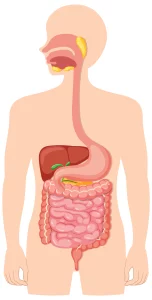
Humans digest the nutrients that enter the body. Food goes through many different processes until it reaches the rectum after entering the mouth. The digestive system includes – mouth, pharynx, esophagus, stomach, small intestine, and colon.
Practical part
Model of digestive system
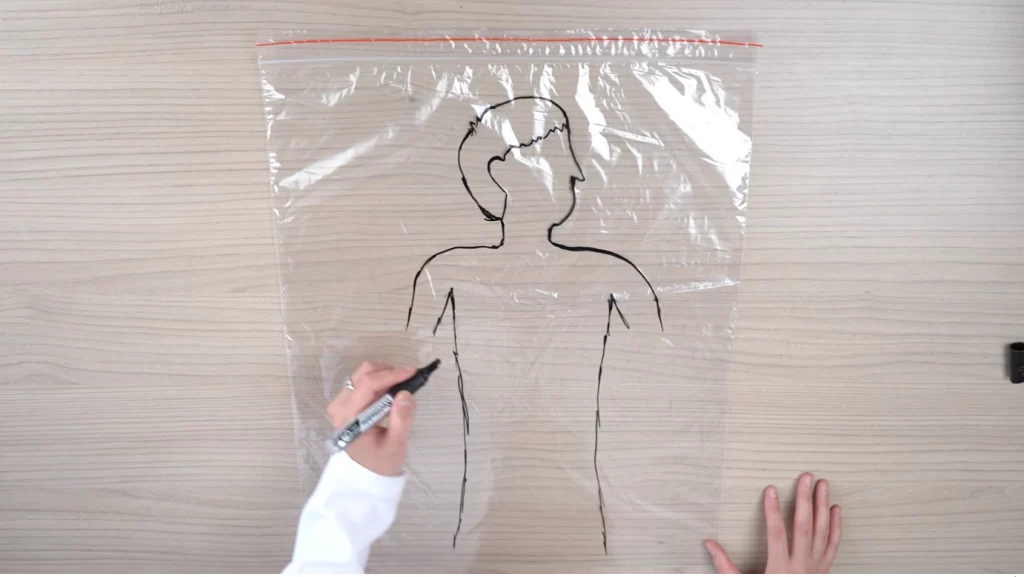
Step 1. Draw a person in a 60*40 cm ziplock bag.
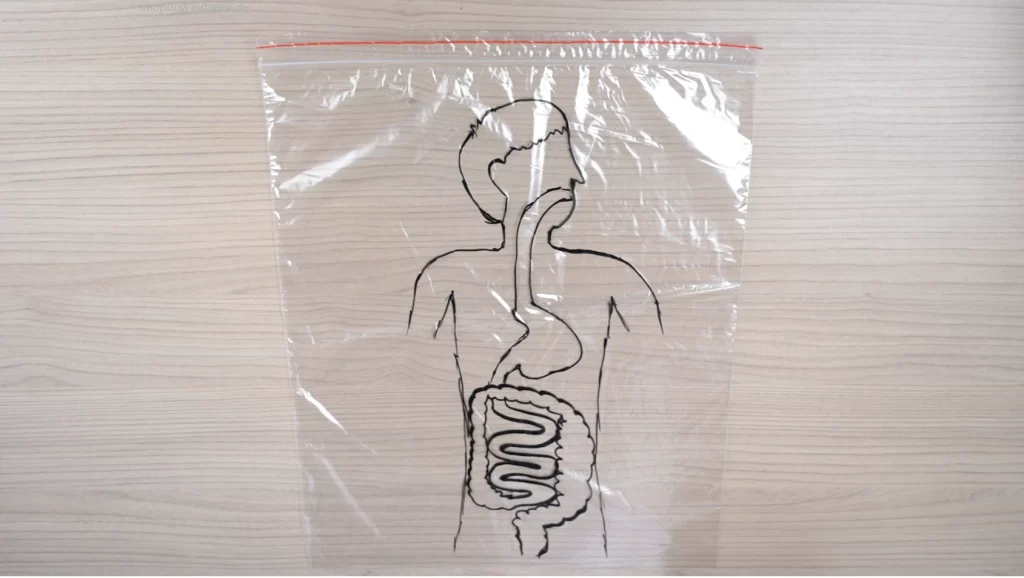
Step 2. Draw human internal organs involved in digestion: mouth, pharynx, esophagus, stomach, small intestine, large intestine.
Step 3. Pour the glycerin inside the ziploc bag.
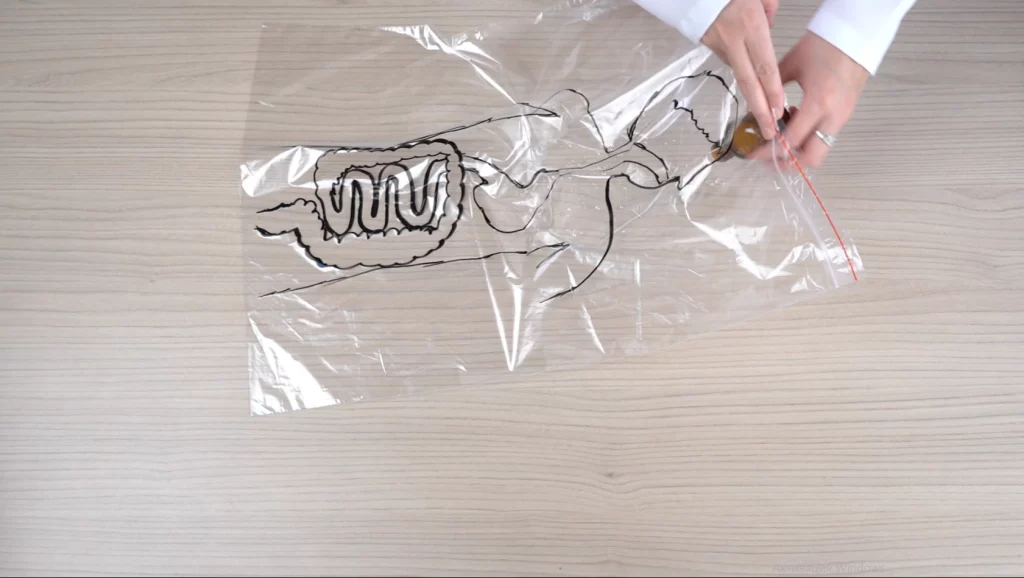
Step 4. Evenly distribute the glycerin inside the bag using.
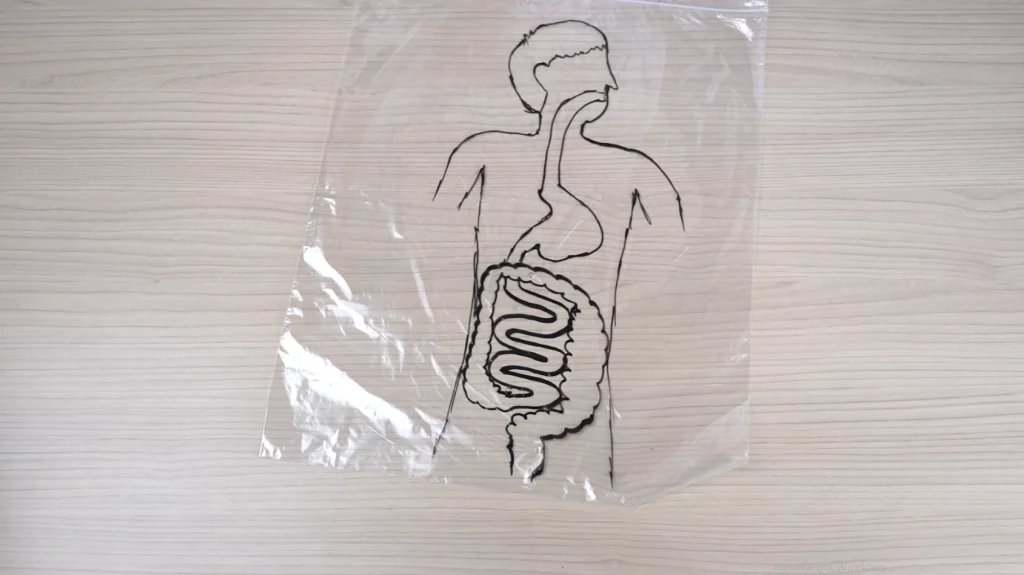
Step 5. Put the nuts inside the bag and place them in front of the mouth image.
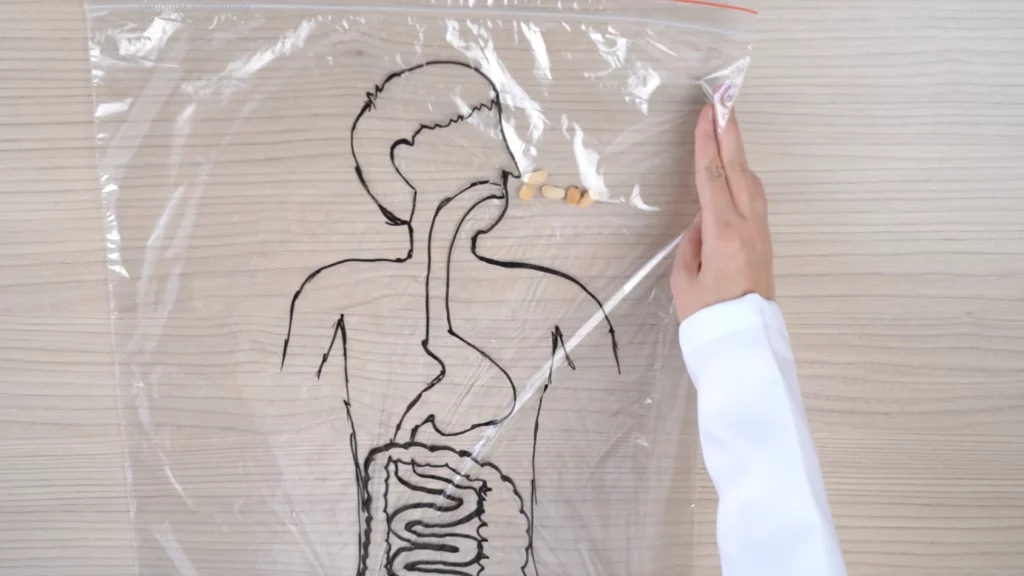
Step 6. Move the nuts along the path of the food through the digestive system, starting in the mouth and ending in the colon. This process demonstrates how food is digested in the body.
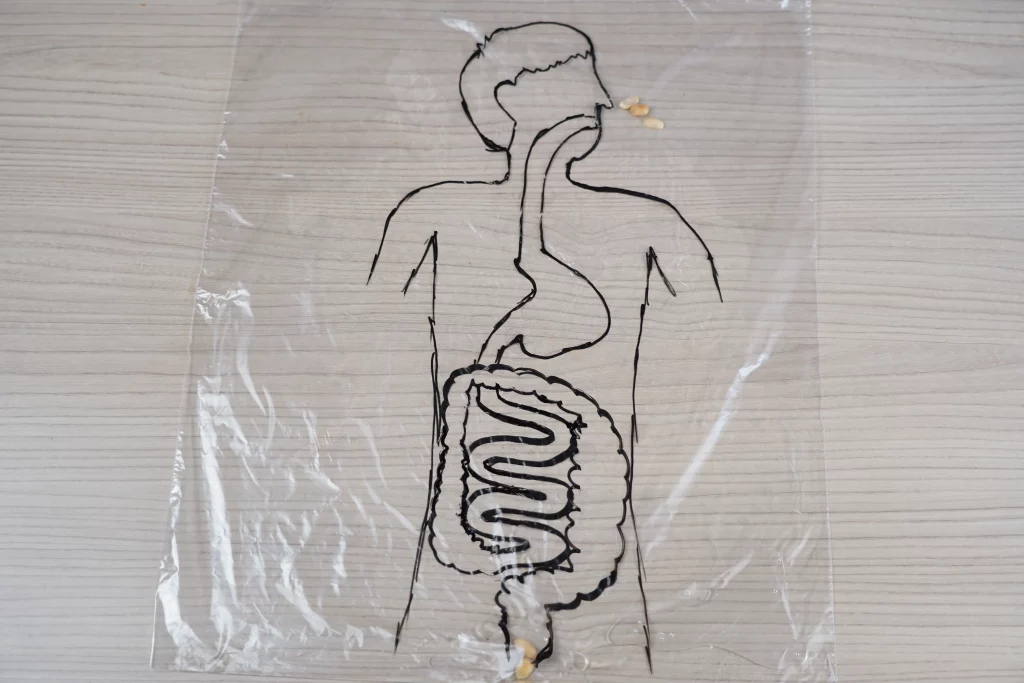
Determining the pH of the digestive system environment
The level of acidity (pH) varies in different parts of the digestive system, which corresponds to their functions and requirements for digestion.
Step 7. Stomach pH
Pour hydrochloric acid into the first test tube.
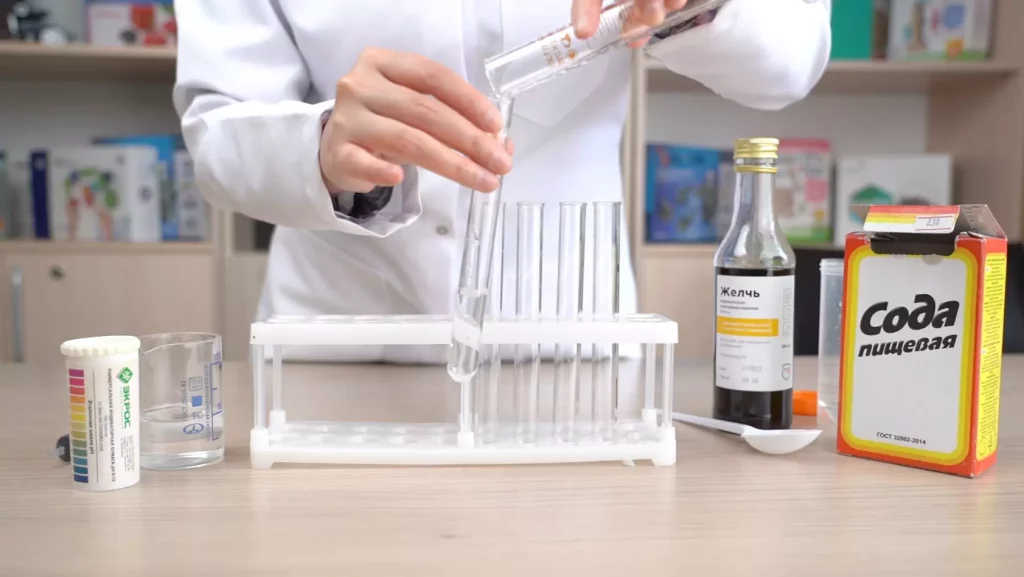
Step 8. Bile pH environment
Pour bile into the second test tube.
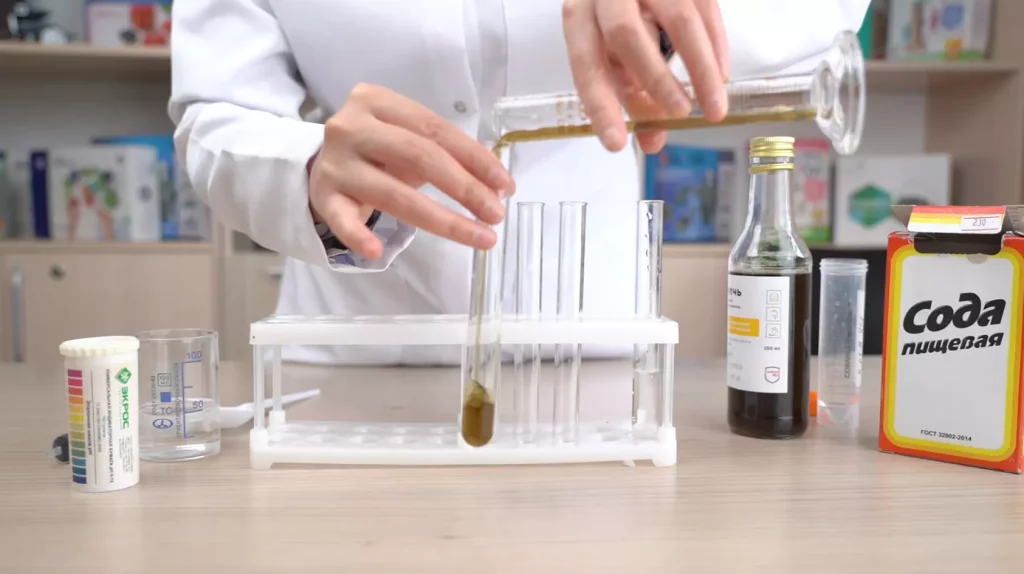
Step 9. Small intestine media pH
Dissolve a pinch of baking soda in 50 ml of water and pour the solution into the third test tube.
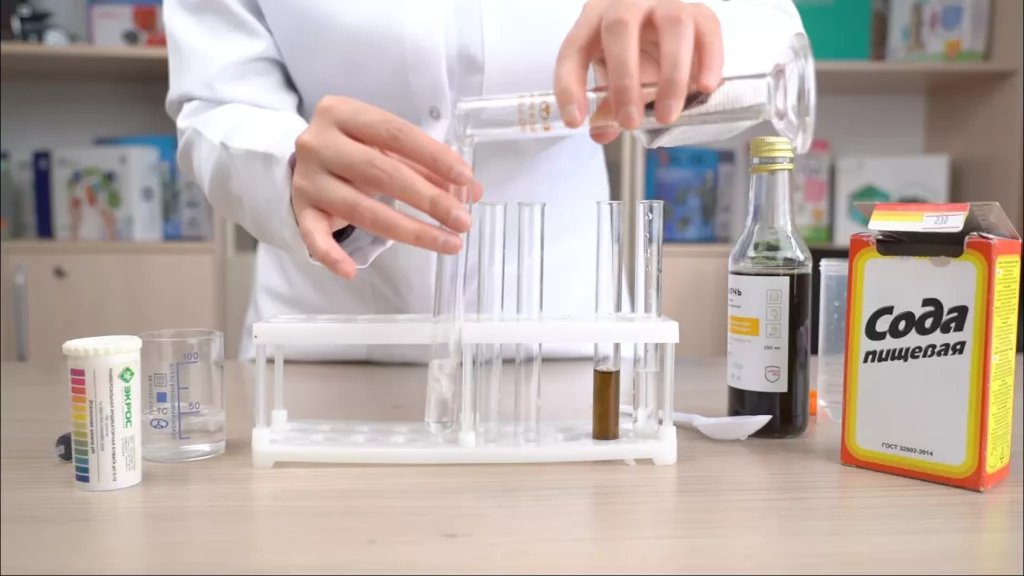
Step 10. pH of the colon environment
Prepare the solution by mixing 1 ml of hydrochloric acid and 4 ml of water in the fourth test tube.
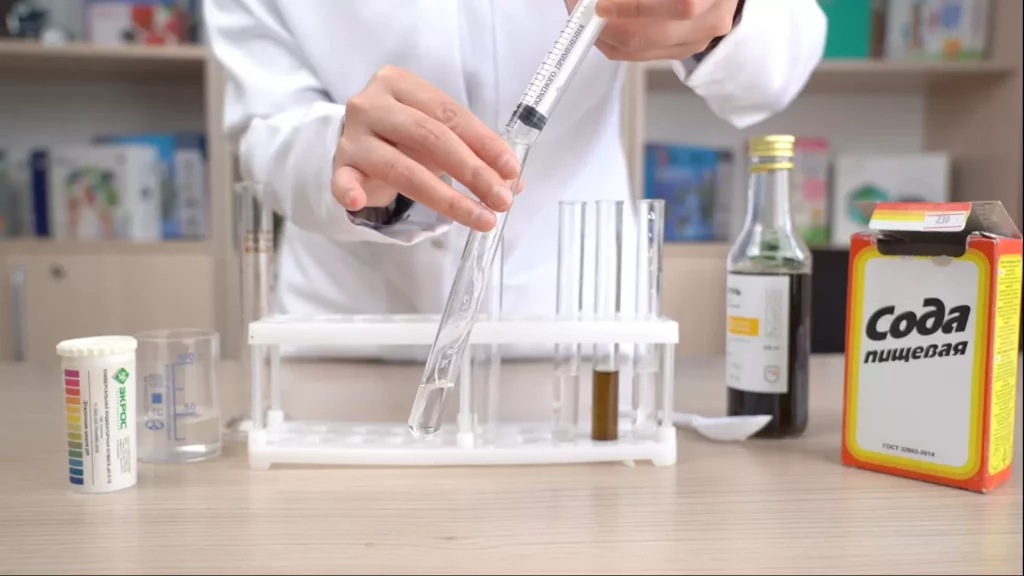
Step 11. Add water to the fifth test tube as a control.
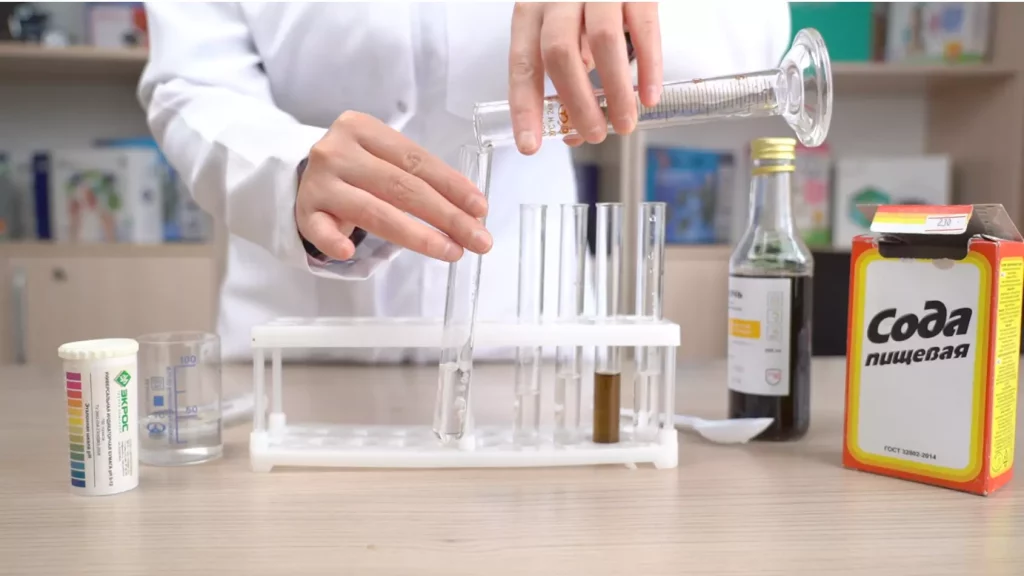
Step 12. Measure the pH of the medium in each organ of the digestive system.
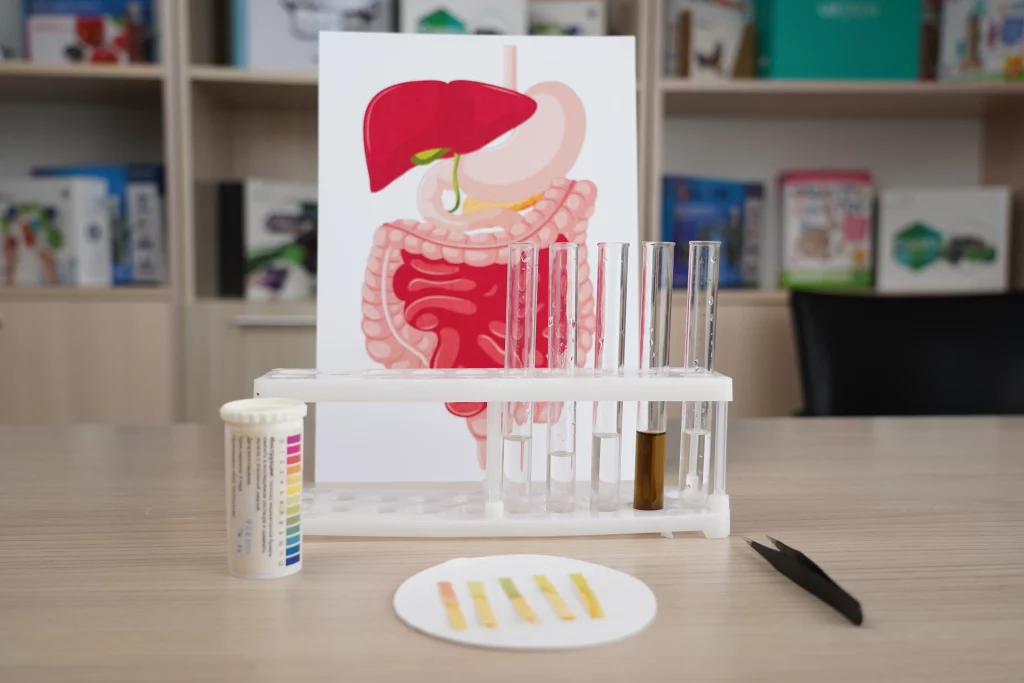
Step 13. Record the pH values of each medium in the table.
| Name | pH environment |
| Stomach | |
| Bile acid | |
| Small intestine | |
| Large Intestine | |
| Water |
Step 14. Draw conclusions by answering the questions.
- What organs are part of the human digestive system?
- What functions does the stomach perform in the digestive process?
- What is the level of acidity in the stomach and why is it important for digestion?
- How do the different organs and parts of the digestive system work with each other to ensure efficient digestion and absorption of nutrients?
Conclusion
This practical work investigated the functions and features of the human digestive system. These experiments allowed students to better understand the processes in the body and the role of the digestive system in digestion and absorption of nutrients. The knowledge gained can be used to better understand healthy living, nutrition and related factors.