
Lesson 1
Goal
1. Study of the term “Green Economy”. Conducting research on the direction and principles of “Green Chemistry”.
2. Alternative energy sources. The study of methods for obtaining “hydrogen fuel”.
3. Synthesis of hydrogen. Electrolysis. Chemical analysis.
4. Statistical data. Hydrogen fuel: benefit or harm.
Expected results
After studying the project, students will be able to:
– to acquire the skill of cooperation with a teacher and work in a group, in pairs
– analyze and summarize the information received
– based on the survey data, they will learn how to make graphs (charts, etc.)
– independently build logical reasoning and draw conclusions
– talk freely about the topics: green economy/green chemistry, alternative energy sources, etc.
– to form a value attitude towards the environment
– demonstrate engineering skills and knowledge in the field of chemistry.
Interdisciplinary communication:
– Chemistry (experiments, electrolysis, hydrogen production, chemical reactions)
– Engineering/physics (electronics, electrolysis, working with measuring instruments)
– Mathematics (collection and analysis of information, statistical data)
Teacher’s Guide
1. To evaluate the project, in the first week, provide this material (PBLrubrics) to students in order to:
– the students understood in advance what criteria they needed to prepare for,
– the students were able to independently give an appropriate assessment to their colleagues.
2. Before starting work, divide the class into teams of 4-5 students.
3. Follow the instructions when working with electronic devices (current).
4. Before the practical part, study all the necessary materials and devices.
5. The experimental part (the electrolysis process) should be conducted under the guidance of a teacher.
Watch the video, then study the description of the project:
(if necessary, it is recommended to include subtitles)
Description
Green chemistry is a revolutionary philosophy that seeks to unite government, scientific and industrial communities, paying special attention to environmental impact control at the very initial stages of scientific development and invention. This approach requires new discoveries and an interdisciplinary approach to the development of materials, the basis of which should be the fundamental principle: it is better not to produce waste immediately than to subsequently spend money on disposal and processing. Environmentally friendly alternatives to modern materials and technologies should be introduced in all industries.
Currently, it has been proven that environmentally friendly alternatives to technologies are also economically more profitable and more functional than toxic traditional analogues. When hazardous materials are taken out of production, all costs associated with these compounds also disappear, which leads to a significant reduction in the costs of processing toxic materials, their transportation, disposal and compliance with technical conditions. If there is a choice between a traditional and a “green” solution, the priorities of the latter are obvious.
The main idea of Green Chemistry is to reduce or completely eliminate the formation of toxic chemical waste.
In 1998, P. Anastas and J.Warner in the book “Green Chemistry: Theory and Practice” [Anastas, P. T.; Warner, J. C. Green Chemistry: Theory and Practice, Oxford University Press: New York, 1998] formulated 12 principles of Green Chemistry. These principles reflect the activities of the scientific community, industry and government agencies aimed at reducing or eliminating the use of hazardous materials and chemical processes.
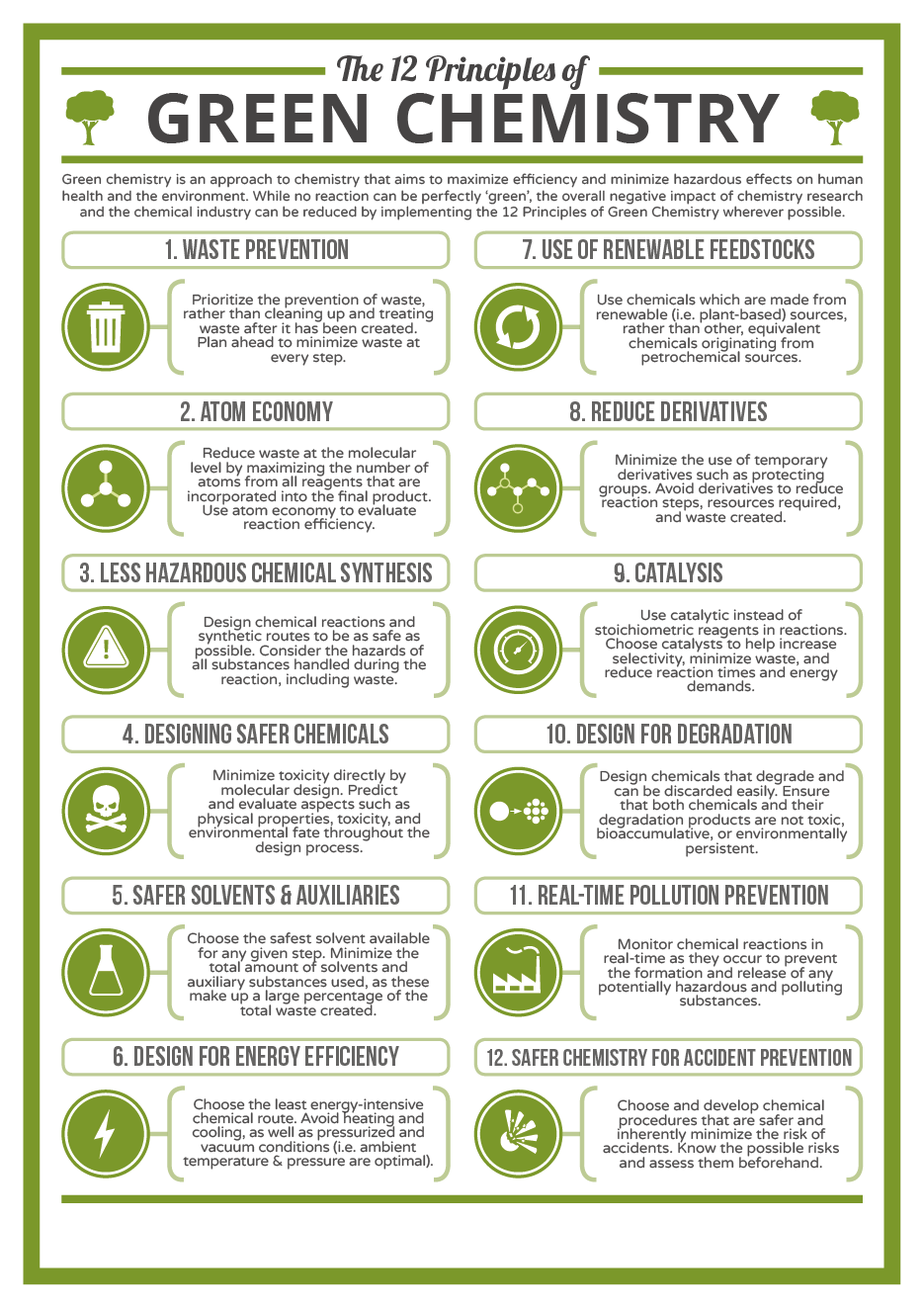
Why do green chemistry use the atomic efficiency value (and the E-factor), and not use the yield of the target product to evaluate the reaction? The concept of product yield is very important for describing a chemical reaction, but it does not describe the full picture of the reaction, but characterizes only the amount of the target product.
Useful links:
1. Green chemistry: why you need to follow its principles. Golubina E.V.
2. P.T. Anastasia, J.K.Warner, Green Chemistry: Theory and Practice, Oxford University Press, New York, 1998, p.30
The practical part
Construction of a structure for performing hydrogen synthesis.
Step 1. Familiarize yourself with all the necessary materials
Step 2. Take 1 l. glass jar with lid.
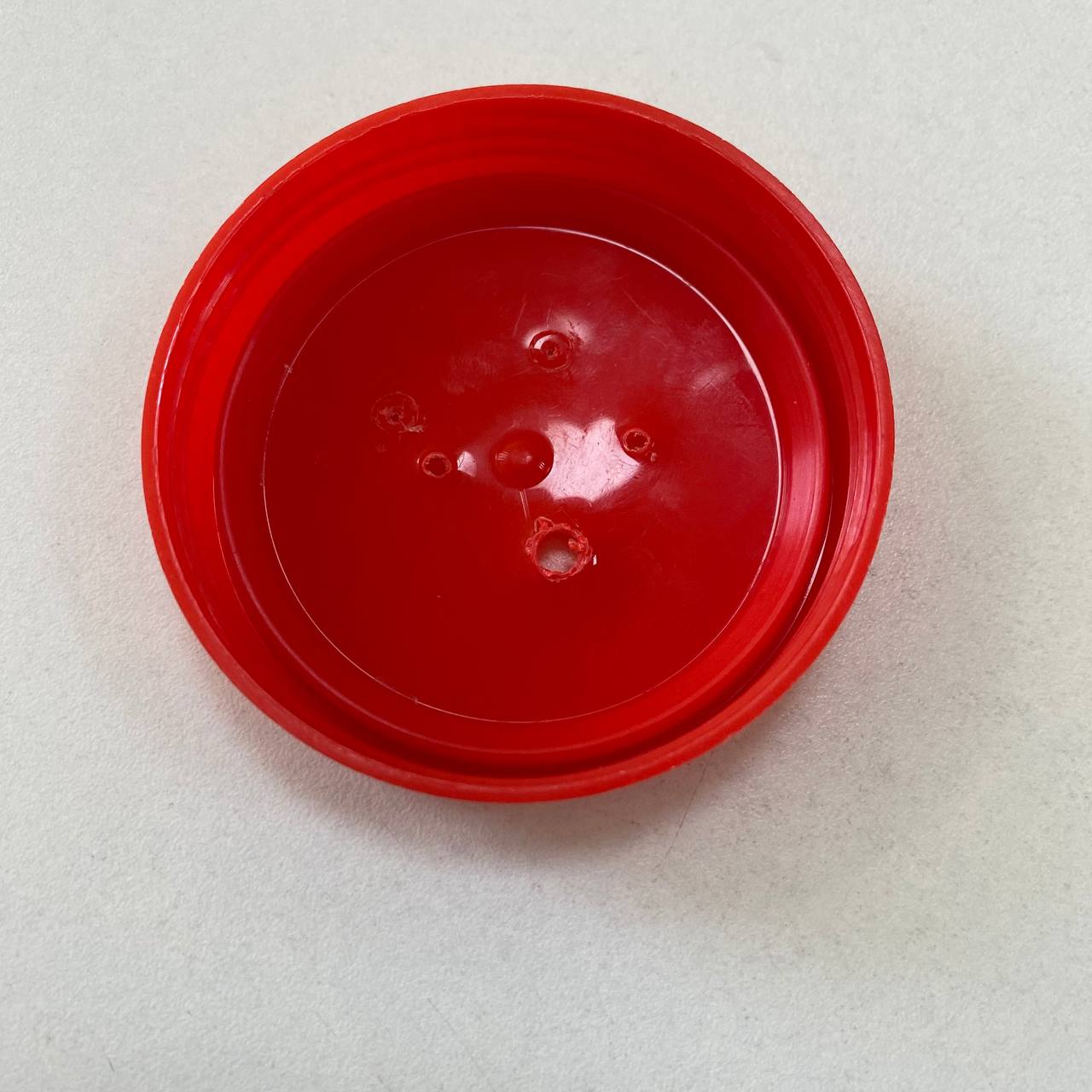
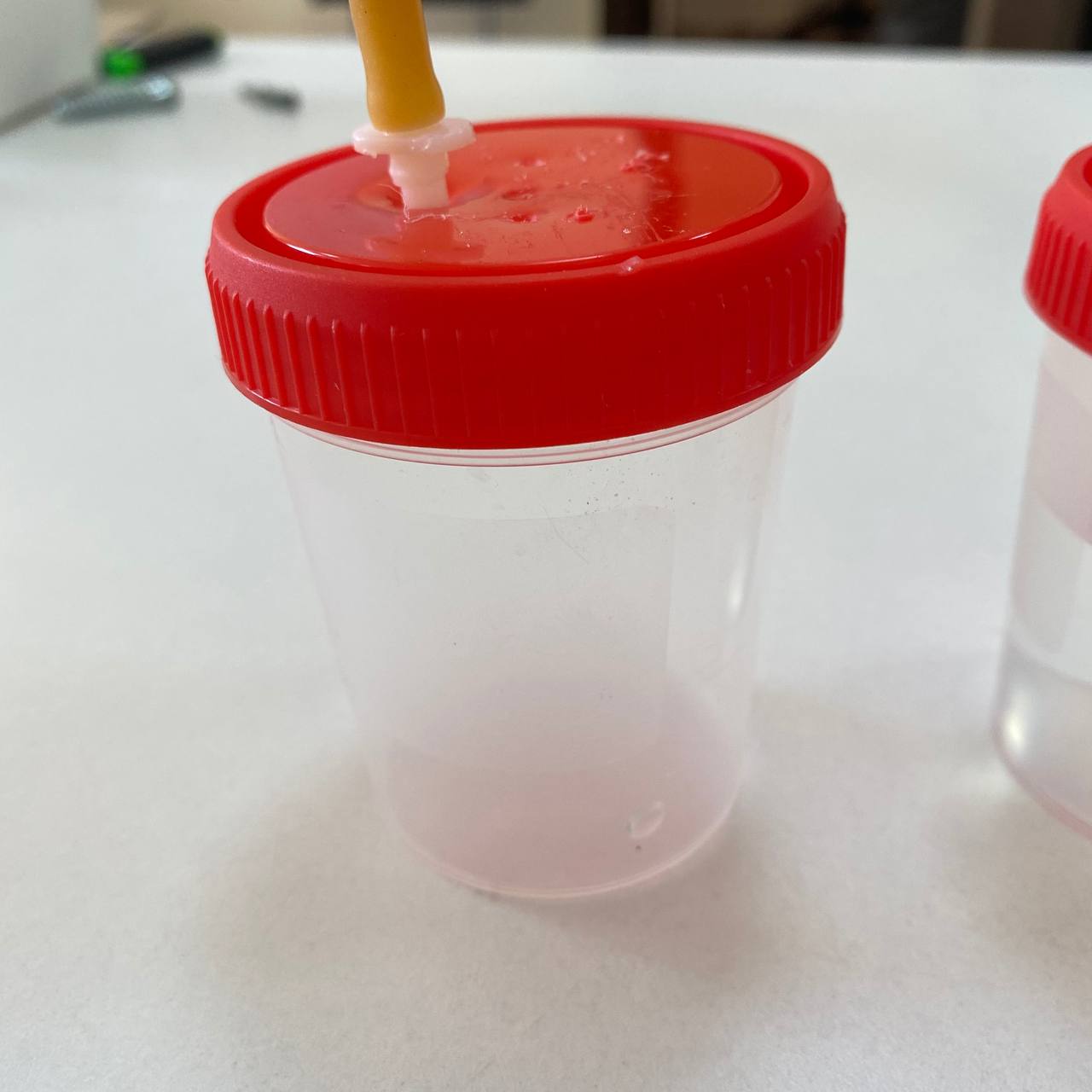
Step 3. Using hot glue, glue the syringe to the lid
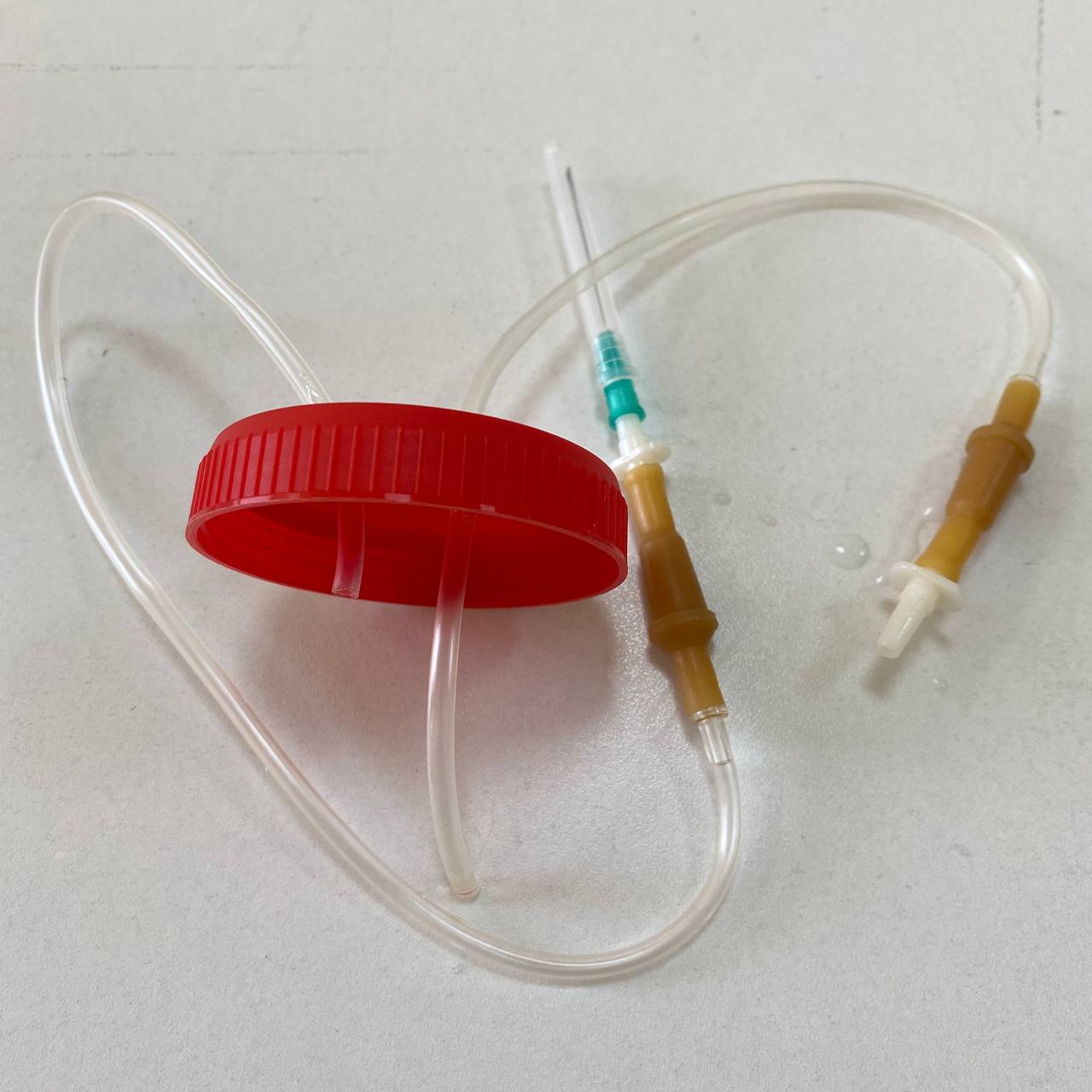
Step 4. Fill the syringe half with copper wire, up to half towards the end
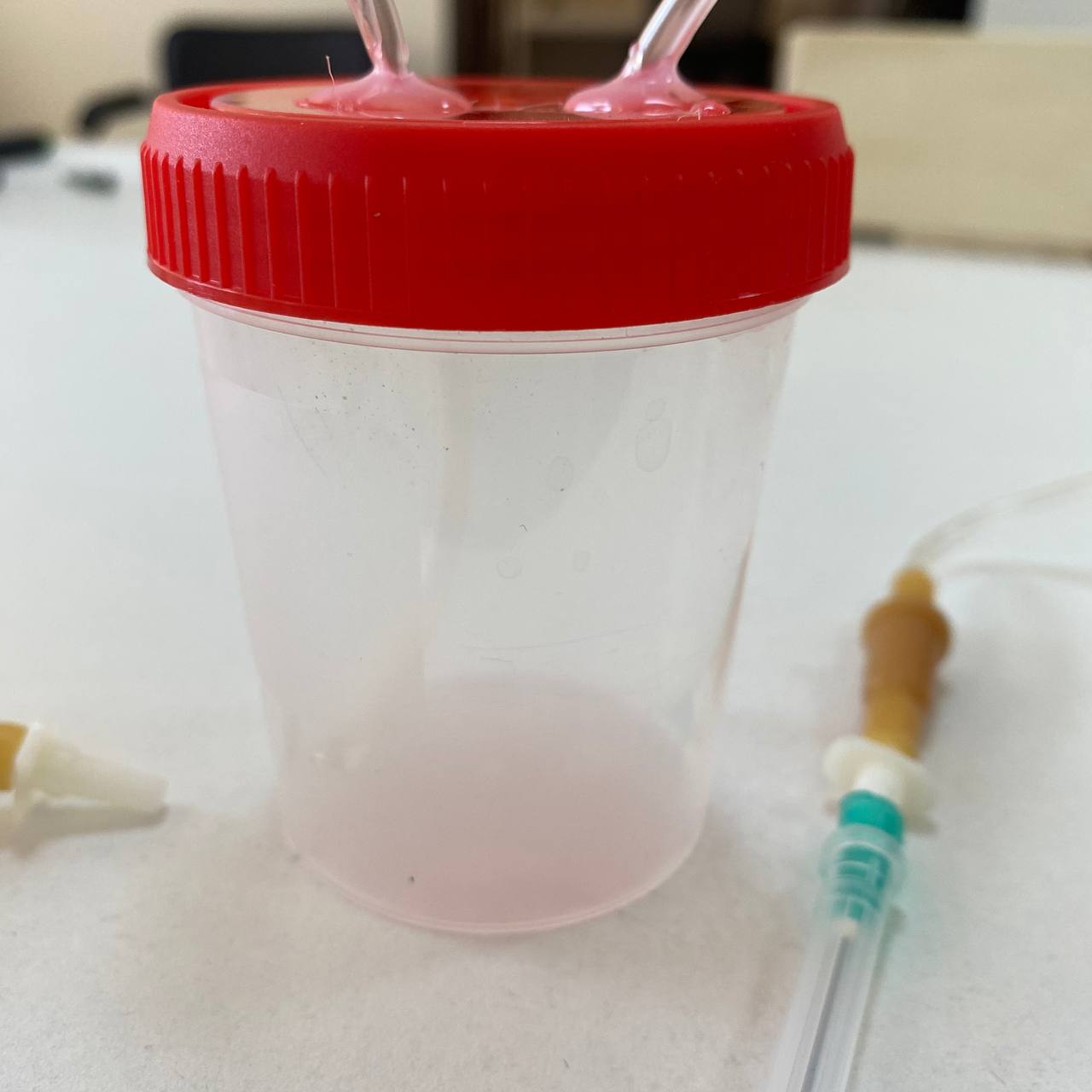
Step 5. Make several holes on the lid and on the syringe, through
.jpg)
Step 6. Then connect the hose from the system to the syringe
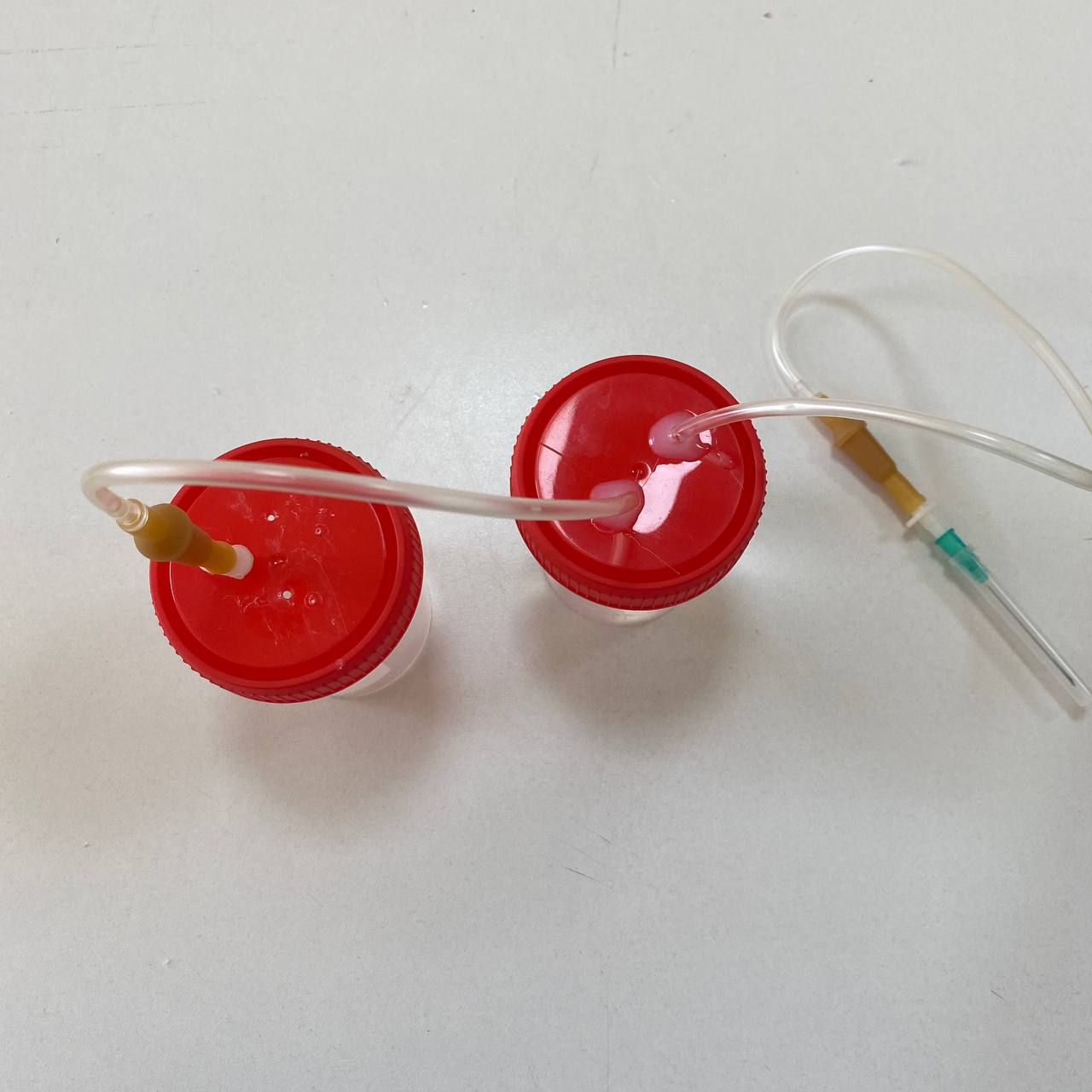
Step 7. Make a container housing (optional)

Homework
1. Conduct research in the field of alternative energy sources:
– explore alternative fuels and traditional (carbon) fuels. Environmental impact.
– to investigate the production and applications of hydrogen and hydrogen fuel
– statistics: who produces / in what quantity / by what technology / efficiency.
2. Make a presentation based on the information received and with accurate statistical data.
3. To summarize. Hydrogen Fuel & Traditional (carbon) fuel: benefit or harm.
The presentation of the homework should be held on the 4th week of the project.