Lesson 1
Project Goals
– Give examples of animals that are on the verge of extinction;
– Make a butterfly from improvised materials.
Teacher’s Guide
– Divide students into groups;
– Make a brief overview of the theoretical part and proceed to the practical part.
Safety in Steam Lessons
Before starting a lesson, the teacher is advised to familiarize himself with the safety precautions. If necessary (in the case of using the items specified in the TB), conduct a brief briefing for students. Follow this link Safety in Steam Lessons
Theoretical part
The flora and fauna of Kazakhstan are unique. On the territory of the state, you can find dozens of species of birds, mammals, insects, and plants, characteristic only for our nature. Many representatives of the fauna of the republic are symbols of Kazakhstan and are under special protection. To account for valuable and endangered species of animals, plants, and insects, a book was created called the “Red Book of Kazakhstan”.
Today, this document consists of three volumes of the publication, the last of which was published in 1999, and the first book was published in the late 70s of the 20th century. It should be noted that each state creates its own Red Book based on a detailed study of the abundance and quality of life of animal, plant, and insect populations that are widespread on its territory. Based on these lists, the Red Book of Flora and Fauna of the entire planet was created, the purpose of which is to preserve biodiversity on earth. Some of them:
Irbis is a rare species of the cat family, inhabiting mainly the mountainous regions of Central Asia. To date, there are just over a hundred snow leopards in Kazakhstan.


The golden eagle is the most popular bird in Kazakhstan and the main symbol of the country. On the territory of Kazakhstan, this bird was listed in the Red Book more than thirty years ago. Now active work is underway to preserve the feathered predator, for this they are bred in special nurseries, and then sent to nature.
Manul is an endangered species of the cat family, common in the steppes of Central Asia. As in other countries where the animal lives, hunting for it is prohibited in Kazakhstan. Outwardly, it looks like a large fluffy domestic cat. Manul is the owner of the thickest coat among cats. Manul is a wild cat that cannot be taught to handle.


Caracal or steppe lynx is found in the deserts of Central Asia, on the coast of the Caspian Sea, on the Mangyshlak Peninsula, as well as in Africa and the Arabian Peninsula. This is an Asian subspecies of caracal, which is considered rare. The reason for the decline in numbers is climate change: cold, long, and snowy winters make it difficult for the predator to move and feed. And, of course, persecution of people.
In the steppes, forests, and mountains of Kazakhstan, you will meet many wonderful butterflies. But the number of some species has recently declined sharply. Butterflies, listed in the Red Book of Kazakhstan, are already under protection. Below you can see photos of endangered butterflies living in Kazakhstan.


In this tutorial, we will make one of these beautiful butterflies from improvised materials. When the butterfly is ready, it can be painted in different colors.
References and additional information:
https://commons.wikimedia.org/wiki/File:DianeJLH.jpg?uselang=ru
https://cdn.nur.kz/images/720/122aba9aec76cf22.webp
https://el.kz/ru/news/nauka/top_7_krasnoknizhnih_zhivotnih_kazahstana/
https://www.nur.kz/family/school/1736069-iscezausie-zivotnye-kazahstana-spisok/
https://astana.zagranitsa.com/article/3406/ischezaiushchii-vid-kakie-zhivotnye-zaneseny-v-krasnuiu-knigu-rk
https://www.nur.kz/family/school/1758742-babocki-zanesennye-v-krasnuu-knigu-kazahstana-nazvania/
Michael M: https://www.pexels.com/ru-ru/photo/2278165/
https://ru.freepik.com/photos/nature’>Nature фото создан(а) vladimircech – ru.freepik.com
Alexas Fotos: https://www.pexels.com/ru-ru/photo/7060881/
https://ru.freepik.com/photos/background’>Background фото создан(а) vladimircech – ru.freepik.com
Practical part
Step 1. We take a wire 15 cm long.

Step 2. We bend so that we get a circle as in the picture.

Step 3. Then we take a 30 cm wire and bend it.

Step 4. We turn the cardan over from the wire, inserting it into the middle so that it resembles a round scroll.

Step 5. You need to do as shown in the figure.

Step 6. Take the scroll and bend it.

Step 7. We twist with pliers from the place where there will be 5cm.

Step 8. We recline to the sides. We wind one side as in the photo.

Step 9. We make a loop from the protruding, second side of the wire.

Step 10. We put the loop exactly in the middle.

Step 11. Cut out butterfly wings from paper. 4 sheets of wings should be 3-4 cm.

Step 12. We fix with tape on the wire. Two front fenders on a small (15 cm) wire.

Step 13. We fix in the same way as the first one. Rear two wings on a long (30 cm) wire.

Step 14. Draw an elastic band through the original 15cm wire.

Step 15. Using a 15 cm wire, attach the elastic band to the main part of the butterfly, through the loop.


Step 16. Once you are ready, by gathering the top of the butterfly, we will rotate it, it will stretch the elastic and make the butterfly fly.

Conclusion
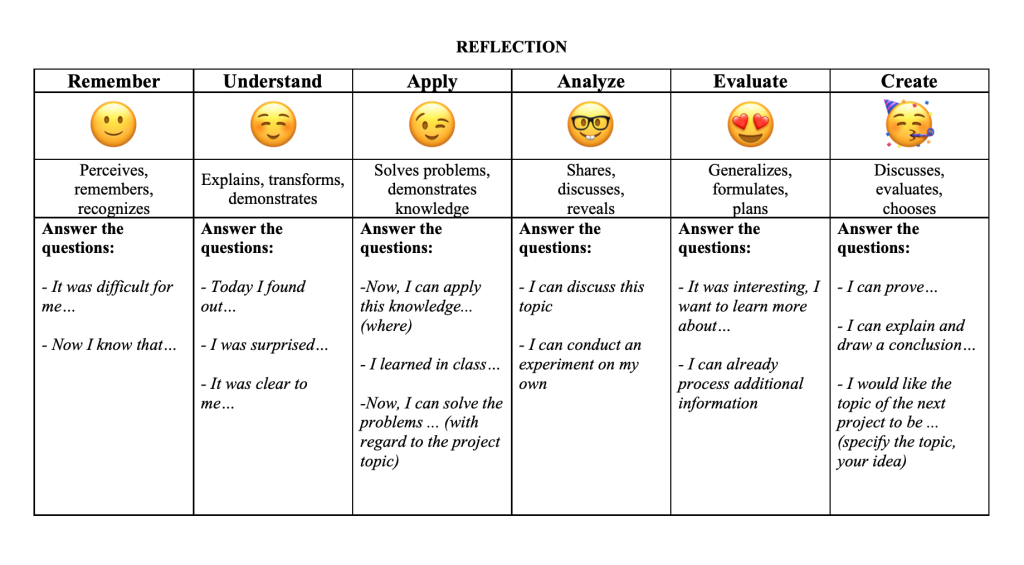
In this lesson, students got acquainted with several animals, species of butterflies, listed in the Red Book of Kazakhstan. Realizing that there are endangered species of animals, they realized that they need to be protected. With their own hands, the butterfly made a butterfly and made an imitation of fluttering wings using a simple mechanism.
Evaluation
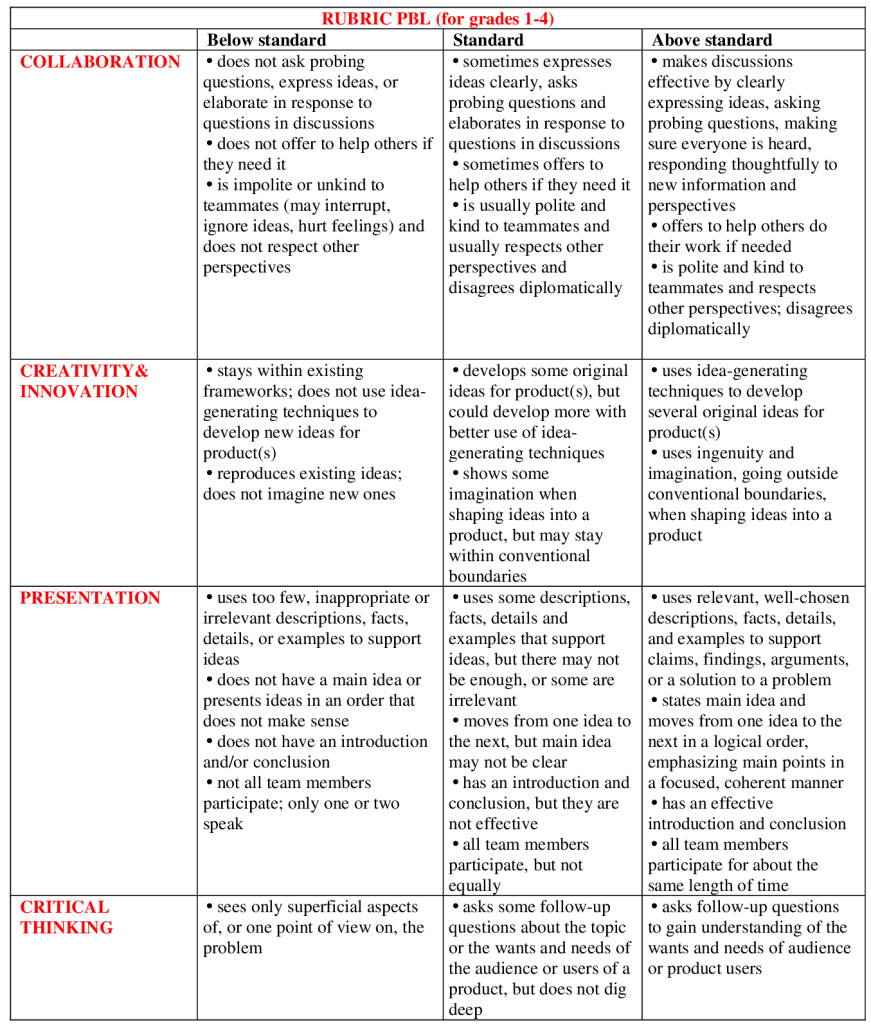
PBL grading criterion:
Project based learning is a learning method in which students acquire the knowledge and skills by working on a single project to explore and find an answer to a genuine, interesting, and complex question, problem, or challenge.