
Lesson 1
Goal
To manufacture and design your own “smart” gas leakage sensor, which will measure accurate indicators of the level of carbon monoxide, natural gases (methane, propane), and also be connected to a GSM module, with which you can remotely receive a gas leak alert. Finally, make a housing for the sensors.
Expected results
After studying the project, students will be able to:
– acquire the skills of cooperation with a teacher and work in a group, in pairs;
– analyze and summarize the information received
– a responsible attitude towards learning will be formed
– communicative competence will be formed in the process of educational activities
– learn how to work with the device (board) Arduino UNO
– acquire basic skills in automation and skills in working with electronic devices
– get acquainted with fire safety rules, classification of materials and combustion products, principles of operation of gas (smoke) leakage sensors and their main indicators
Interdisciplinary communication:
– Computer science (programming languages, work with a PC, work with Arduino)
– Physics (work with electronics, automation)
– handworking(manufacture, installation of the case, and use of equipment)
– Chemistry (classification of materials and combustion products, chemical reactions)
Teacher guidance
At the beginning of the lesson, it is recommended:
– to arouse interest in the project, ask a few “leading questions”, such as:
– Do you know what SMART functionals are? List
– What are gas (smoke) leak detectors? Why is it needed?
– What kind of chemical reaction is observed during combustion?
– to familiarize students with the aspects of what combustion is and its products
– familiarize with the rules of fire safety
– to familiarize students with the basic safety rules when working with electronic components
– provide ready-made code and general drawings, and instructions on how to connect electronic components to the Arduino board
– after the sensors are manufactured, check the operability (operability) of the already finished device
– in conclusion, conduct meteorological research with the whole team on this device, and evaluate the students according to the STEAM.KZ grading criteria.
Introduction
According to world statistics, mortality due to carbon monoxide poisoning is in second place after alcohol poisoning. For example, in America, about 400 people die annually from carbon monoxide poisoning [2]. In Kazakhstan, mortality from poisoning with liquefied and natural gas is over 20 people a year. The causes of poisoning are often violations of the operation of furnace equipment and household gas appliances [1]. A carbon monoxide detector (miniature device) for a home can help to warn the owners in a timely manner about possible dangers and eliminate negative consequences.
Many households today use gas ovens or other gas equipment. When using gas equipment, there is always a risk of gas leakage, which can lead to fires and explosions. In order to detect gas leaks in a timely manner, it is advisable to use gas leak detection systems.
This tutorial proposes an Arduino based wireless gas safety device design. The device is intended for use in the home where natural gas and LPG fueled appliances and heaters can be a source of risk. Also, after some modifications, this system can also be used for other applications in industry or in factories that depend on LPG and natural gas for their activities.
Resources used:
[1]https://ru.sputnik.kz/incidents/20201103/15372148/Skolko-chelovek-gibnet-ot-ugarnogo-gaza-i-vzryva-gazovykh-ballonov-v-Kazakhstane-ezhegodno.html (Дата обращения: 10.11.2021)
[2]https://emerge–centre.uz/news2/minzdrav–preduprezhdaet–opasnost–ugarnogo–gaza–v–tom–chto–on–sovershenno–ne–imeet–zapaha/ (Дата обращения: 10.11.2021)
So now, Let’s talk about how the sensor we created will work.
1. What do you think the sensor reacts to?
– The answer is obvious, on gas/smoke!
2. And how does gas/smoke appear?
– Of course, you are right, from the combustion reaction or from the gas leak.
In such a subject as “chemistry”, you probably studied what combustion reaction is!
So, Combution is a complex physicochemical process where the starting substances are converted into combustion products. This happens during an exothermic reaction, where huge amounts of heat (fire-flame-smoke) and light are released.
Let’s determine what is burning at all and how to classify these things.
In every house there are things that can burn, for example, a wooden wardrobe, clothes, curtains, household appliances made of plastic material and so on. So, try to classify everything you have at home yourself by looking at Table No. 1.
| Classification of fire safety items | Composition | Combustion products |
| Vegetable (natural) fibers | cotton, linen and sisal, the basis of the composition is cellulose | carbon dioxide, carbon monoxide and water |
| Synthetic textile materials | viscose, acetate, nylon, polyester, acrylic | the main gases formed during combustion are carbon dioxide, carbon monoxide and water vapor |
| Plastic | insulation materials, some equipment made of plastic | hydrogen chloride, which has a pungent irritating odor. Inhalation of hydrogen chloride can cause death |
| Wood materials | wardrobe, table, chair | water vapor, heat, carbon dioxide and monoxide. The main danger to humans is the lack of oxygen and the presence of carbon monoxide. Besides, when combustion wood aldehydes, acids and various gases are formed. These substances have a strong irritating effect. |
| Mineral wool (phenol-formaldehyde resins) | materials that are used in the construction of the house | |
| Polystyrene, polyurethane foam |
Let’s now, talk about the main products of the combustion process.
The sensor that we will create will react to these gases (products).
Please note that mainly combustion products are gases such as carbon monoxide, carbon dioxide, hydrogen chloride.
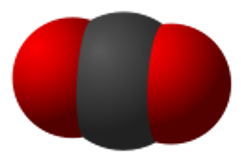
| Carbon oxides | |
| Carbon monoxide | Carbon dioxide |
 | О=С=О |
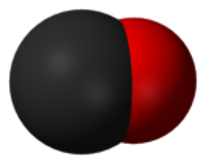 |  |
How is carbon monoxide (CO) formed?
Carbon monoxide is formed during combustion any substance that contains carbon (C).
2С + O2 = 2CO
CO2 + С = 2CO
How is carbon dioxide (CO2) formed?
Carbon dioxide is formed during the rotting and burning of organic compounds, and is also released during the respiration of animals and plants.
С + O2 = CO2
How does plastic (polyvinyl chloride) burn?
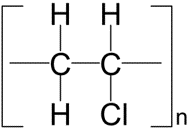
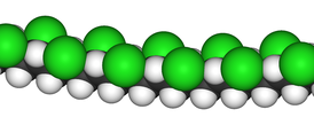
(-CH2-CHCl-)n + 2.5nO2→2nCO2 + nH2O + nHCl
How does cellulose burn?

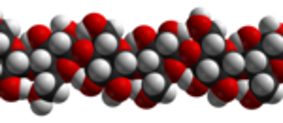
cellulose + О2 = CO2 + H2O или (С6Н10О5)n+6n O2 ——-> 6n CO2 + 5n H2O
Let’s now get down to the arduino part
Now we will learn how to install the Arduino IDE and how to write a sketch and how to run it.
You can find a video tutorial on installing the Arduino IDE at this link.
Теперь приступим к работе с Arduino IDE

To run the code, first we must check if our arduino is connected to the computer.
for this we go to the Tools -> Port tab, here we must select the port

Now we can program our arduino. Let’s connect our display to arduino and display some kind of inscription on the screen
To do this, we have to install the LiquidCrystal_I2C library.
To download this library follow the link LCD I2C library
You can find a video tutorial on installing the library at this link.
Now that we have installed everything we need, let’s start creating our device.
Step 1. Connect the display to the arduino
Below is a diagram of connecting an LCD display to an arduino

Step 2. Now we display the inscription Hello World on the display screen
After installing the library, open the Arduino IDE and run this sketch, in order to download this sketch, click here
#include <LiquidCrystal_I2C.h> // подключаем библиотеку

#include <Wire.h>


LiquidCrystal_I2C lcd(0x27,16,2);

void setup(){

  lcd.init();

  lcd.backlight();

  lcd.setCursor(0,0);

  lcd.print(“Hello World!”);

}


void loop() {

}