Lesson 1
Qualitative reactions to cations and anions
The purpose of the work:
- To learn how to identify various cations and anions using qualitative reactions;
- Conduct qualitative reactions to the determination of Fe2+, Fe3+, Cu2+ cations;
- Conduct qualitative reactions to chloride-, bromide-, iodide-, sulfate-, carbonate-, phosphate-, nitrate-, silicates and describe the results of observing the ion exchange reaction.
Teacher’s Guide:
- Children should do work in groups of 2 people
- Solutions must be prepared by the teacher in advance
- The workplace must be cleaned and put in order
- Safety precautions:
- Woksheet
Description
Qualitative analysis is an important part of chemical research. It allows you to determine the presence of various cations and anions in the solution. To do this, various reactions are used that have unique properties.
One of the most common reactions for the determination of cations is the precipitation reaction. In this reaction, certain reagents are added to the test solution, which cause the formation of a precipitate. The characteristics of this precipitate may indicate the presence of a certain cation. For example, the formation of a white precipitate may indicate the presence of a lead cation (Pb2+), and a yellow precipitate may indicate the presence of a cadmium cation (Cd2+).
Similarly, various reactions are also used to determine anions. For example, a reaction to the formation of a precipitate or a change in the color of the solution may indicate the presence of a certain anion. For example, the formation of a white precipitate with chlorides may indicate the presence of a silver anion (Ag+).
Another method for determining cations and anions is the exchange reaction. In this reaction, the test and reagent solutions are mixed, and ions are exchanged between the solutions. By the characteristics of the resulting precipitation or a change in the color of the solution, the presence of cations and anions can be determined.
It is important to remember that in order to accurately determine cations and anions, it is necessary to conduct a series of reactions and analyze their results taking into account the chemical properties of each ion. It is also necessary to take into account the conditions of the reactions, such as the pH of the medium or the presence of other ions that may affect the results of the analysis.
Qualitative analysis of cations and anions is an important tool for determining the composition of solutions and identifying unknown compounds. Understanding the basic reactions and their interpretation allow chemists to conduct qualitative analysis with high accuracy and reliability.
Practical part

Qualitative reactions to cations and anions
1. To begin with, we will conduct experiments on the determination of iron (III) and copper (II) cations. To do this, we will collect 5 ml of each rasvtol at a concentration of 0.1 M in test tubes.
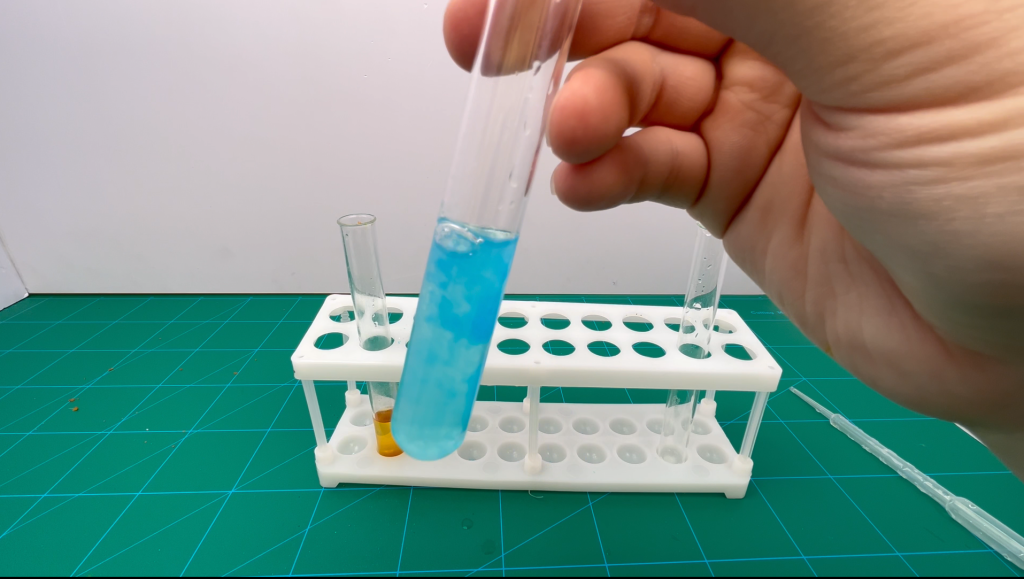
2. To determine the cations in solutions, we will need a 0.1 M sodium hydroxide separator. Mix 5 ml of sodium hydroxide with each tube containing salt solutions
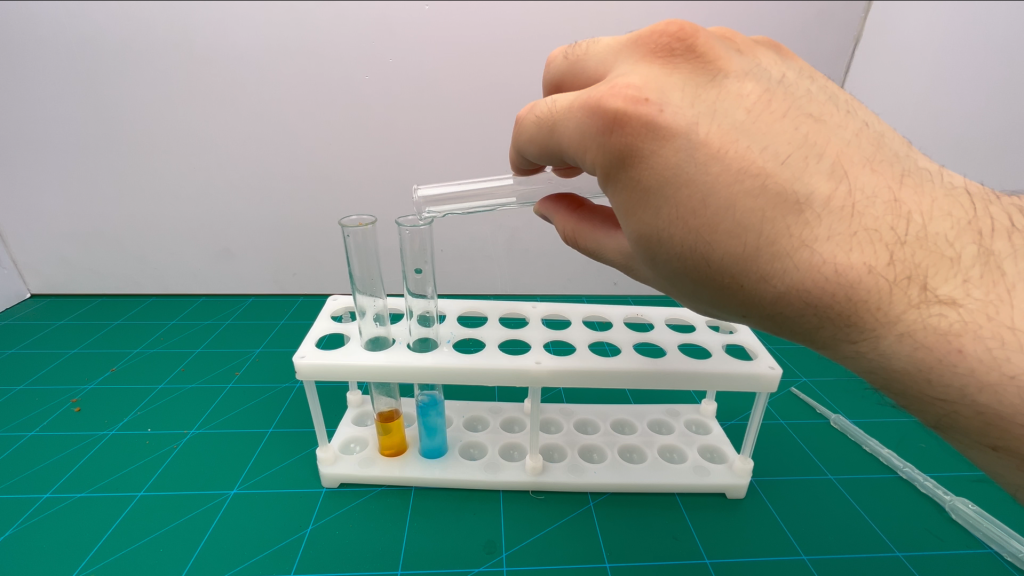
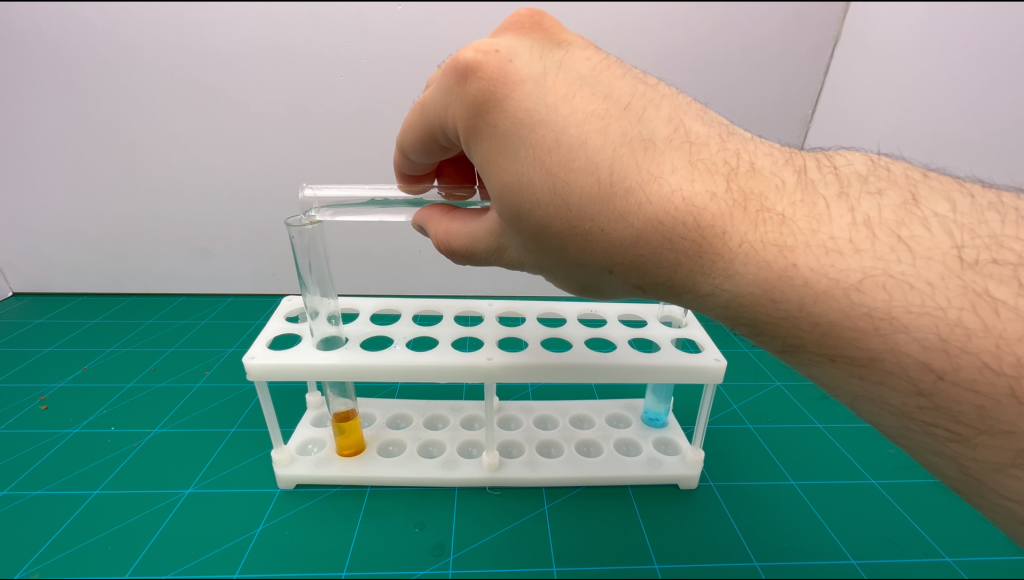
3. Observe the result and write down the result.
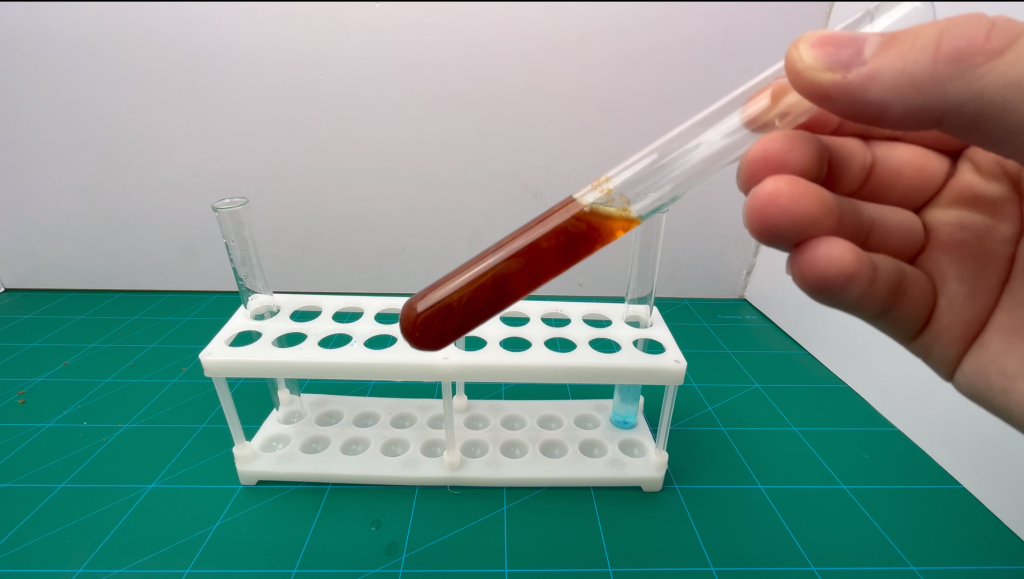
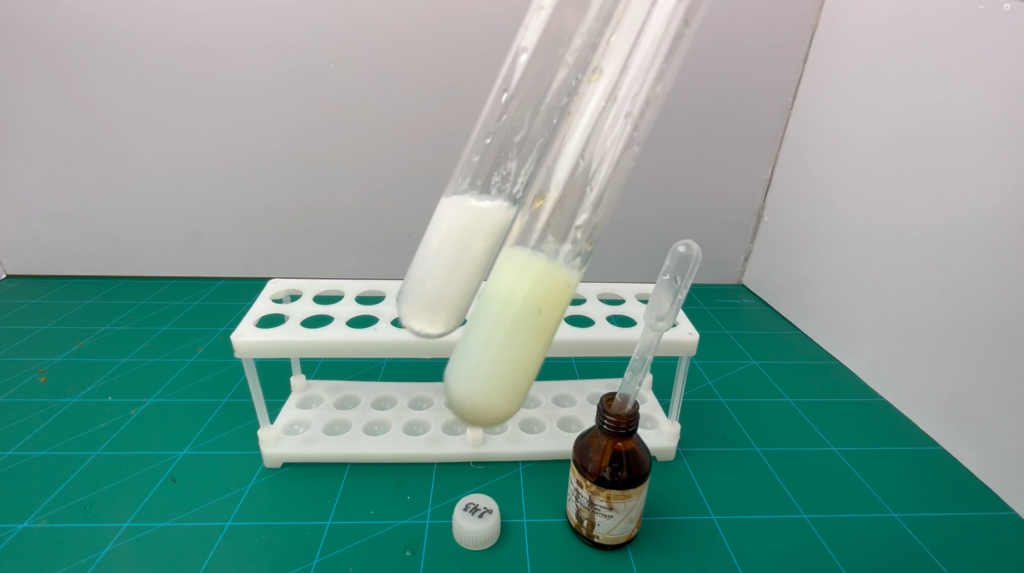
4. Now we can check the iodine and chlorine ions. To do this, prepare 5 ml of each solution.
5. Take a few drops of 5% silver nitrate solution and add them to each of the test tubes.
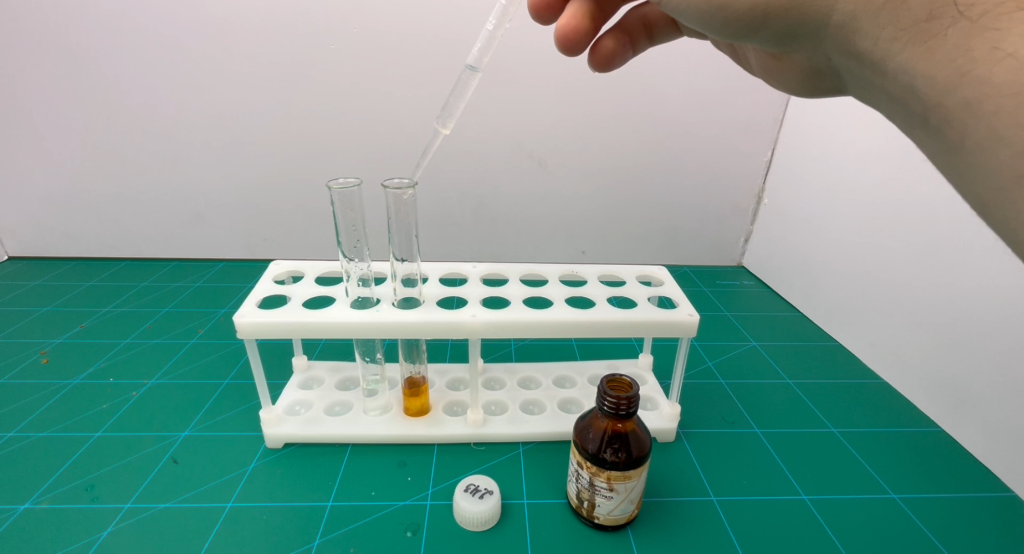
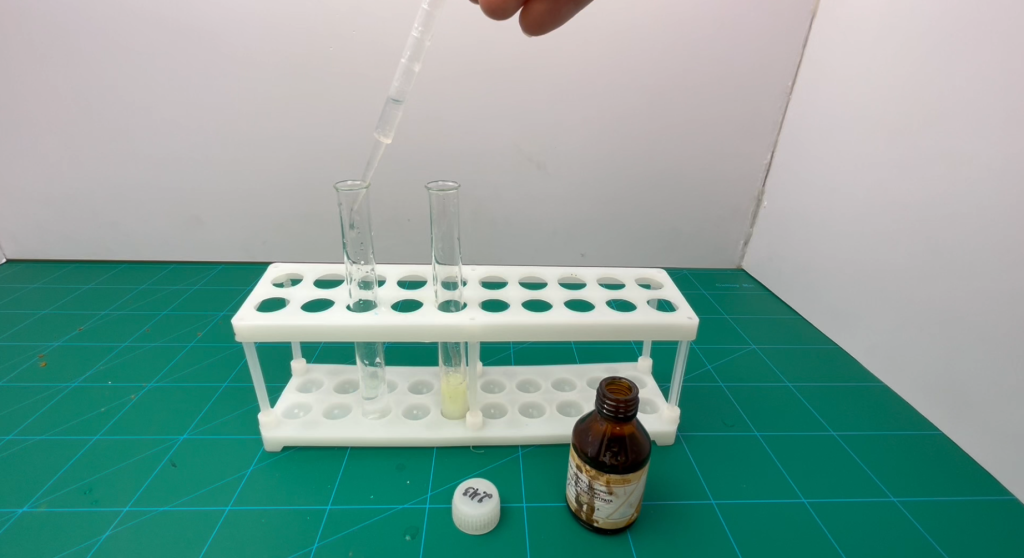
6. Observe the changes and record the result.