Lesson 1
Topic of laboratory work: Atom theory
The purpose of the work:
- Learn how to differentiate between differnt atomic theories
- 8.1.3.2 understand that the number of electrons at each energy level does not exceed a certain maximum value;
- 8.1.3.3 know the shape of s and p orbitals
- 8.1.3.4 be able to write electronic configurations and electronographic formulas of the first 20 chemical elements
Teacher’s Guide
- Children should do the experiment themselves
- The workplace must be cleaned and put in order
Safety precautions:
Worksheet
Description
An atom is a miniature world that all the substances around us consist of. Scientists have been studying for a long time what this small world looks like. The study of atoms has helped to create various models of the atom that help us better understand the structure of the atom.
The first model of the atom was Thompson’s model, called “Pudding with raisins”. It was created in 1904 and described an atom as a small ball with a positive charge, inside of which there are electrons with a negative charge. This model explained why the atom does not collapse, but could not answer the question of why electrons do not fall on the nucleus.
Then came the Rutherford model, which was proposed in 1911 and was called the “Nuclear Model”. She described an atom as a dense nucleus with a positive charge, around which electrons revolve in certain orbits. This model was able to explain why helium atoms are reflected from the aluminum film, but could not explain why electrons do not fall on the nucleus.
Then the Bohr model appeared, which was called the “Planetary Model”. It was proposed in 1913 and claimed that electrons revolve around the nucleus at certain energy levels, and that these energy levels are quantum. Bohr’s model was able to explain why atoms emit and absorb certain wavelengths of light, but did not take into account the fact that atoms can have different shapes.
In today’s laboratory work, we will collect atoms from all three models using the example of the oxygen atom and understand why the Bohr model was the closest to reality model.
To do this, we first need to calculate how many protons and electrons an oxygen atom has. Oxygen has an ordinal number of 8, which means it has 8 protons and 8 electrons.
Practical part
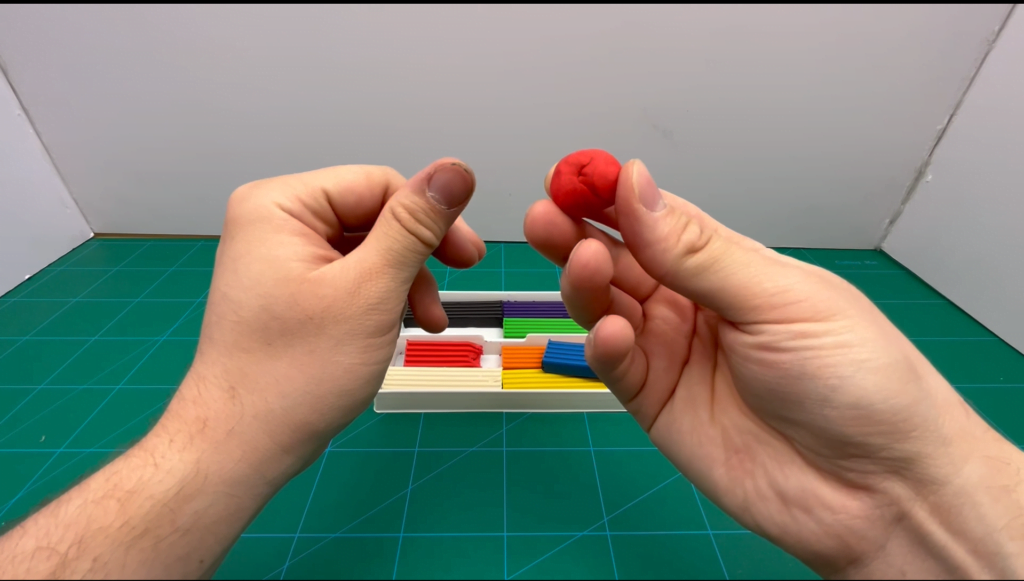
1) To begin with, we will assemble the Thomson model. To do this, take a piece of plasticine of the same color and create a small “ball”. Make smaller balls of plasticine of a different color and stick them on a large ball.
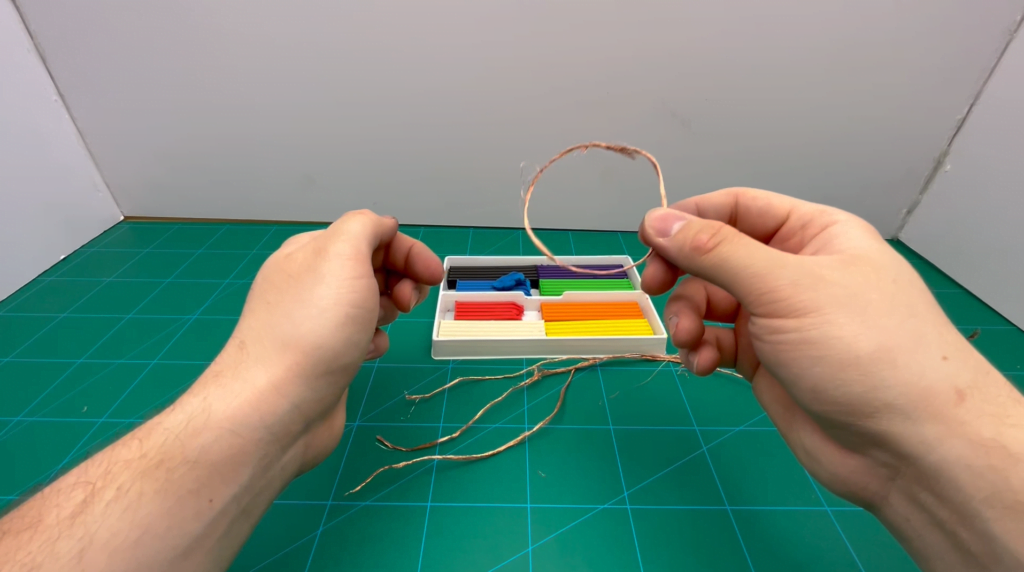
2) To create a Rutherford model, make a wire frame as shown in the picture. Now put a large red ball in the center – this will be our nucleus, and put small blue balls in orbit around the nucleus, these will be electrons. There should be 8 of them.
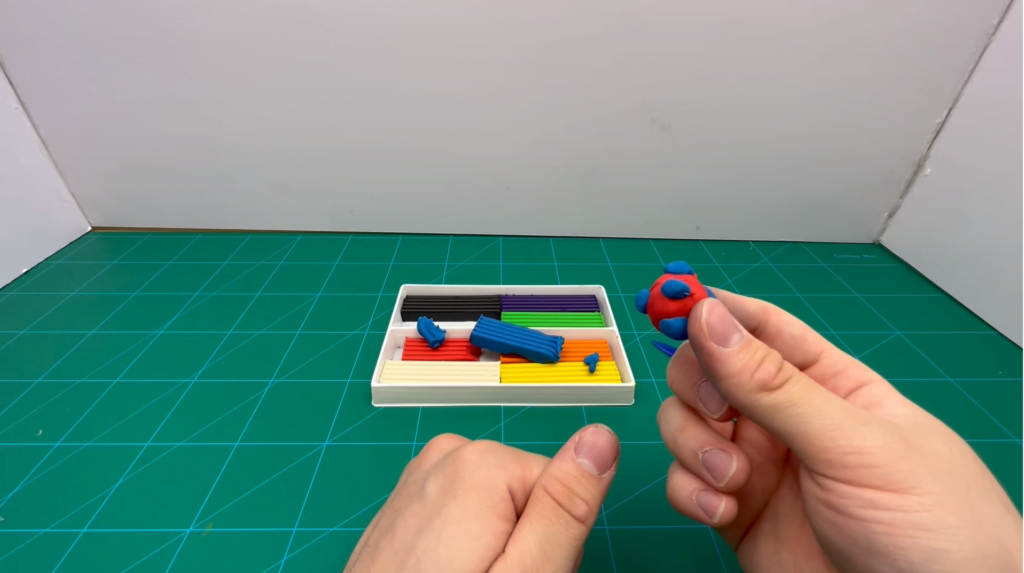
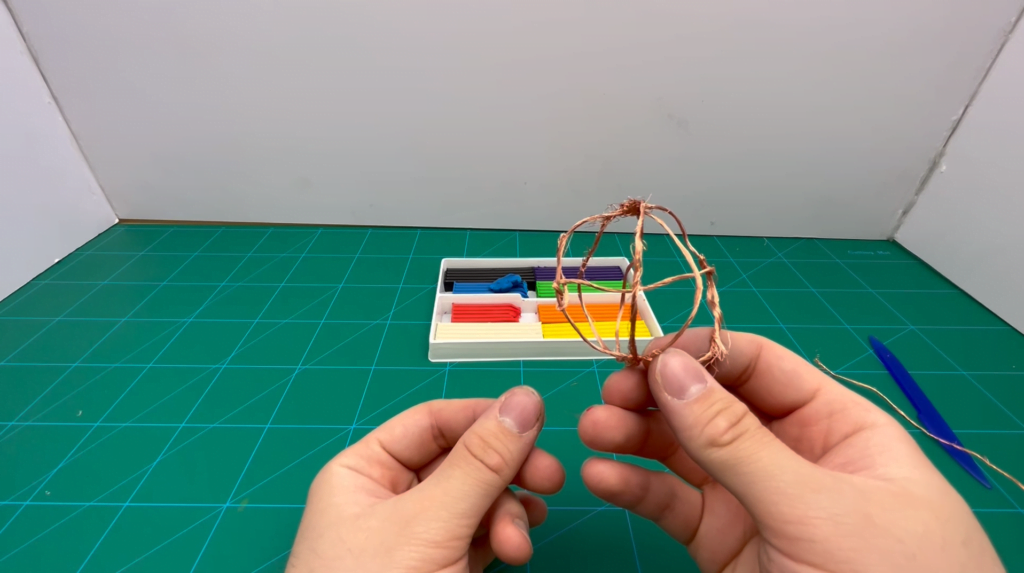
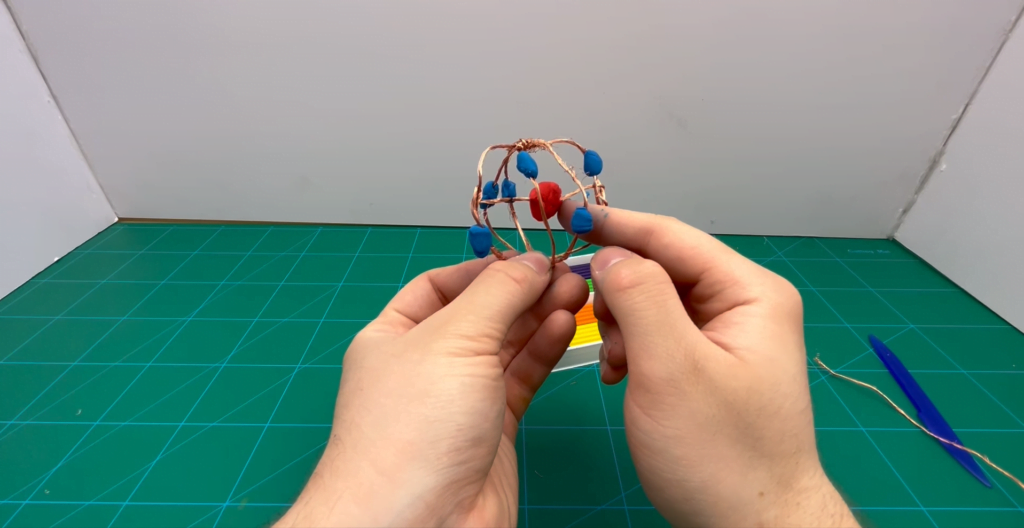
3) To create a Boron model, create a frame as shown in the picture. Stick a red ball in the center. And place the small blue balls as indicated in the picture. There should be 8 of them.
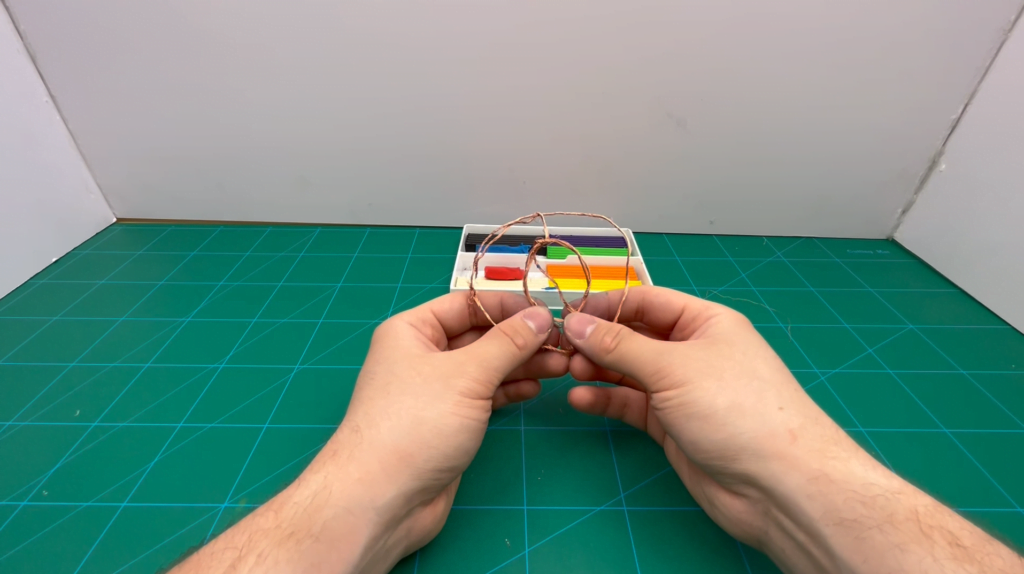
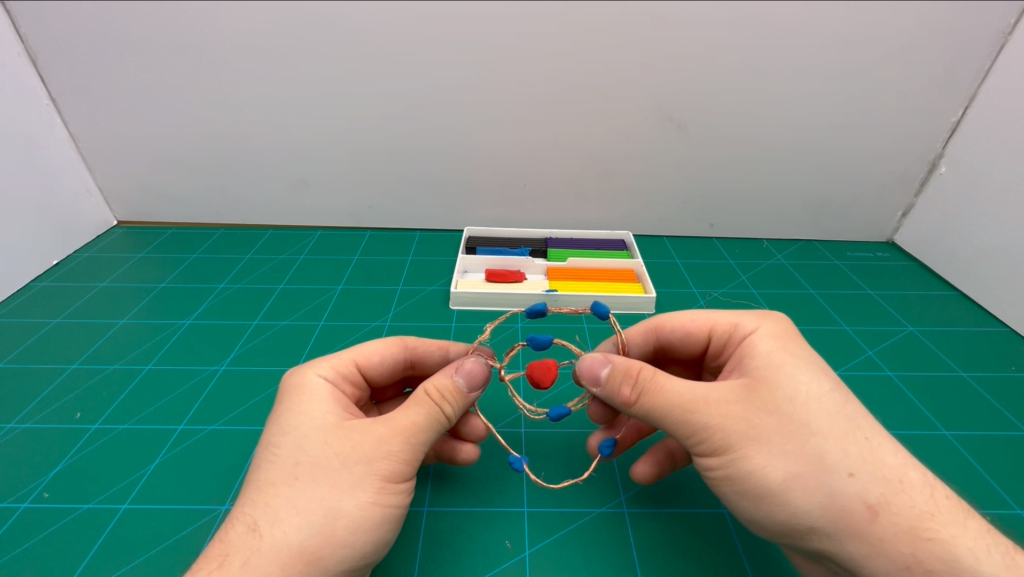
4) Compare the models and use your knowledge of the properties of atoms to determine the most plausible model.