Lesson 1
Topic of laboratory work: Muscle work
The purpose of the work:
- Study human muscle groups and learn how antagonist muscles work
Teacher’s Guide:
- Tasks are performed in groups of 2-3 people
- Pre -inflate by half two balls per group
- Make holes in the tubes at the ends in advance
Expected results:
- Understand the principle of biceps and triceps interaction
Safaty techniques
Worksheet
Description:
Muscles are an important part of our body and help us move. There are three types of muscle tissue in total: skeletal muscle, smooth muscle and cardiac muscle.
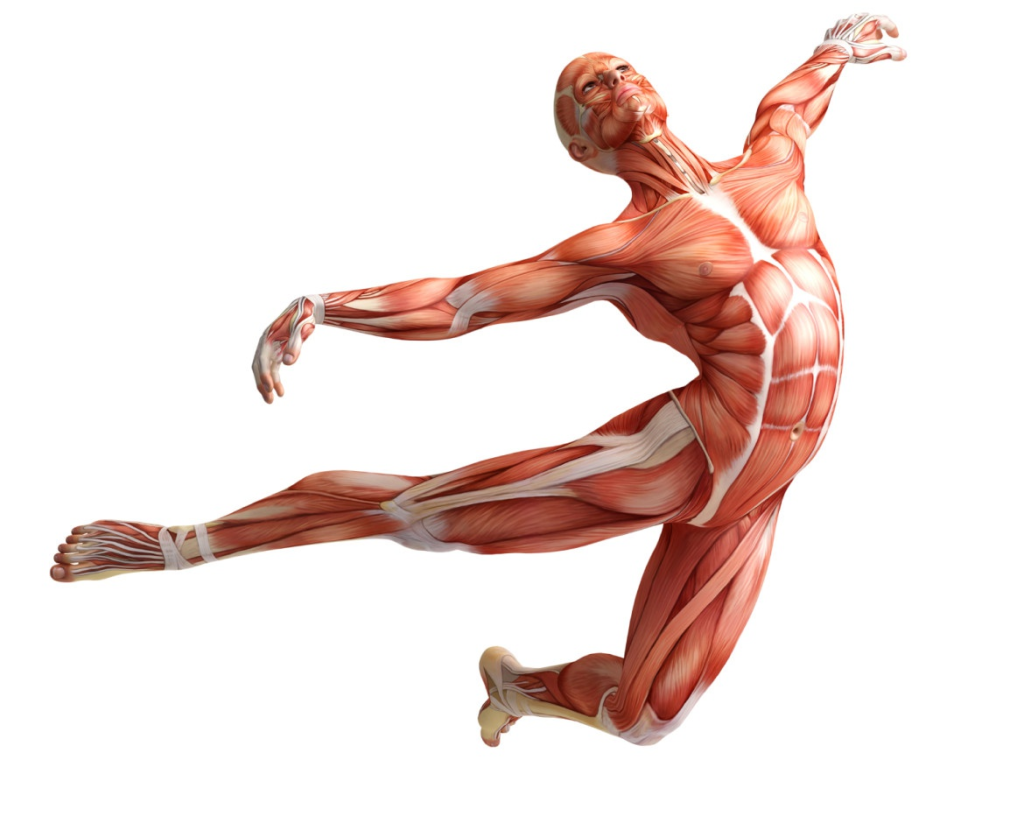
Skeletal muscles are muscles that are attached to bones. They are responsible for our movements and allow us to do various physical exercises. Skeletal muscles are controlled by our will, that is, we can consciously control them. Examples of skeletal muscles are the muscles of the legs, arms, back and abdomen.
Smooth muscle is a muscle that is located in the organs and walls of blood vessels. It controls various automatic functions of our body, such as the contraction of the intestine to digest food or the expansion and narrowing of blood vessels to control blood pressure.
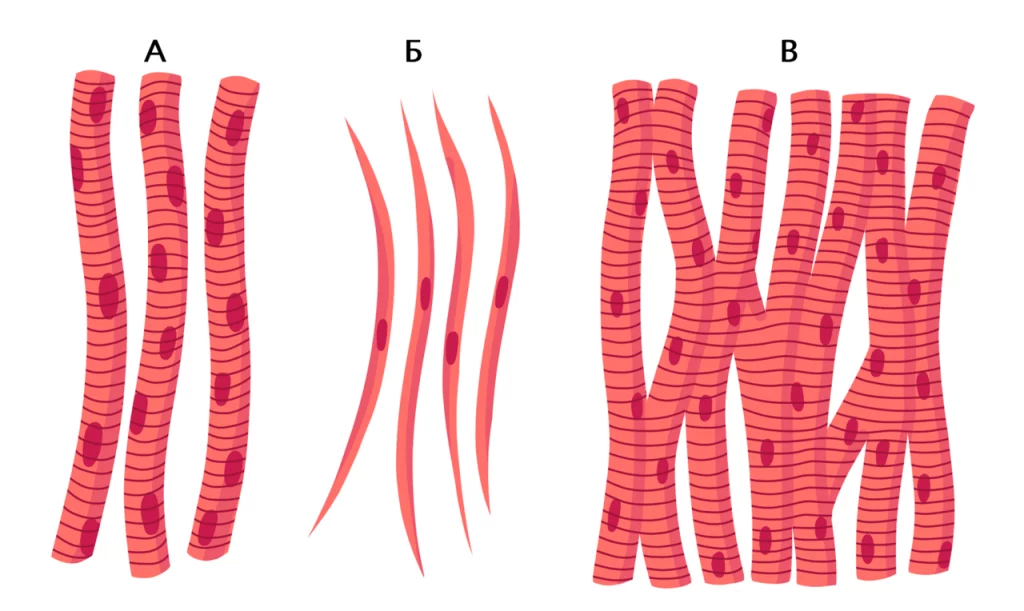
The heart muscle is a special type of muscle that is located in the walls of our heart. It contracts rhythmically and automatically, ensuring the continuous work of our heart and blood circulation.
Muscle fiber, or muscle cell, is the main building block of a muscle. It has a long and narrow shape, resembling a tube. Inside the muscle fiber there are many myofibrils that are responsible for muscle contraction. Myofibrils consist of protein filaments actin and myosin, which slide over each other during muscle contraction, creating movement.
Muscle groups are the division of muscles based on their functions and location in the body. There are several muscle groups, including the muscles of the upper and lower extremities, abdominal muscles, back and chest, as well as neck and facial muscles. Each muscle group performs its own specific function and works together to provide movement and maintain our body.
In addition to the main types of muscles and their groups, it is also important to mention the concepts of “antagonists” and “synergists”.
Antagonists are paired muscles that work in opposite directions to control movement in a particular joint. When one muscle contracts, the other relaxes, and vice versa. For example, for flexion and extension of the arm, there are paired antagonistic muscles: the biceps, which bends the arm at the elbow, and the triceps, which extends the arm. The interaction of antagonistic muscles allows you to precisely control movement and keep the joint in a stable position.
Synergists are muscles that work together with the main muscle to strengthen or stabilize movement. They help the main muscle to perform its function more efficiently. For example, when lifting a heavy object, the forearm muscles (pronation and supination) act as synergists, helping the biceps in performing the flexion movement. Synergists can also provide joint stability and prevent unwanted movements.
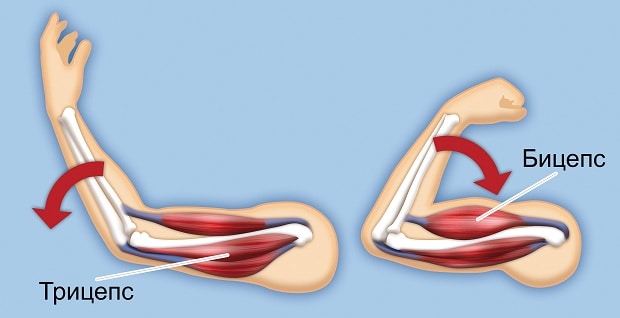
The interaction of antagonists and synergists is an important aspect of movement and provides accuracy, strength and control when performing various motor tasks. The work of these muscle groups allows us to perform complex movements with maximum efficiency and accuracy.
Practical part
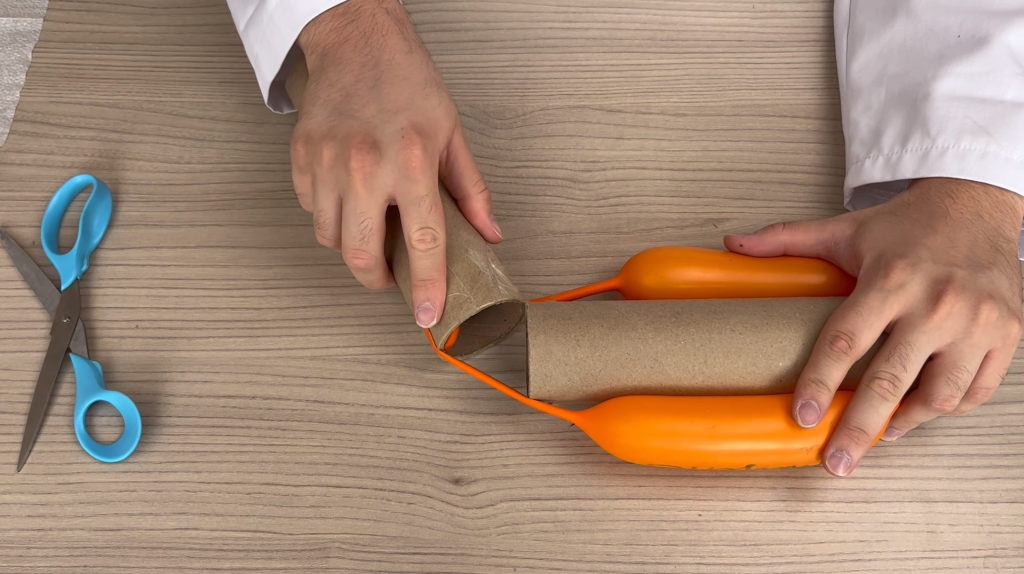
1) Inflate the balls so that they do not have inflated ends, as shown in the picture.
2) Sign one “triceps” and the other “biceps”
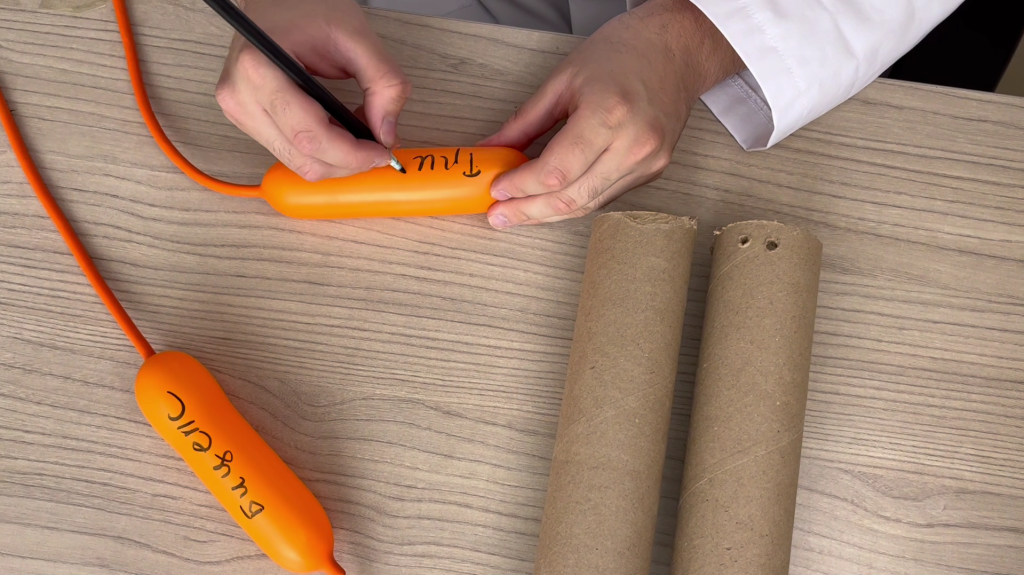
3) Make holes in the tubes at the edges as shown in the picture
4) Fix the ball with one end in the tube and fix it with tape
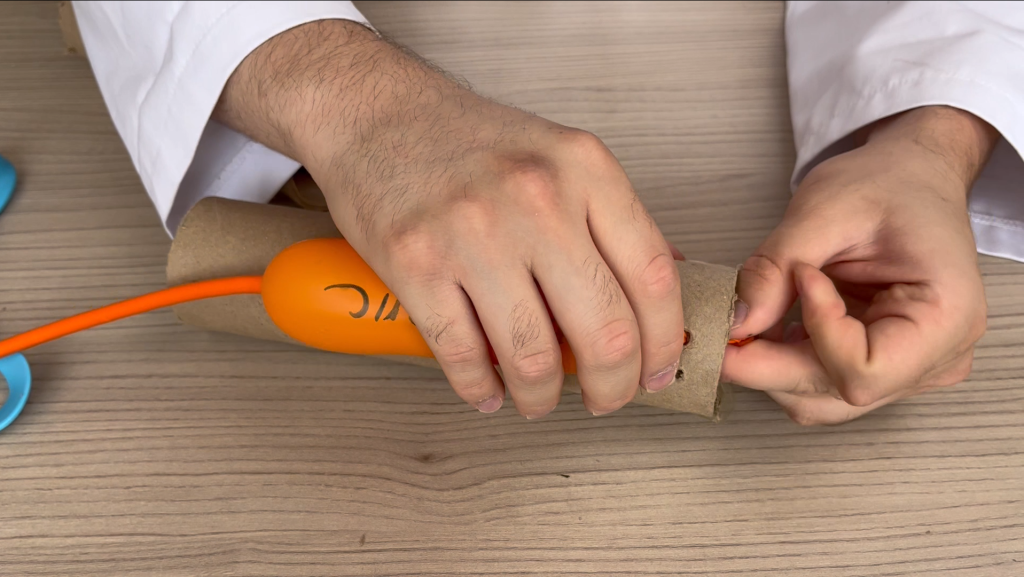
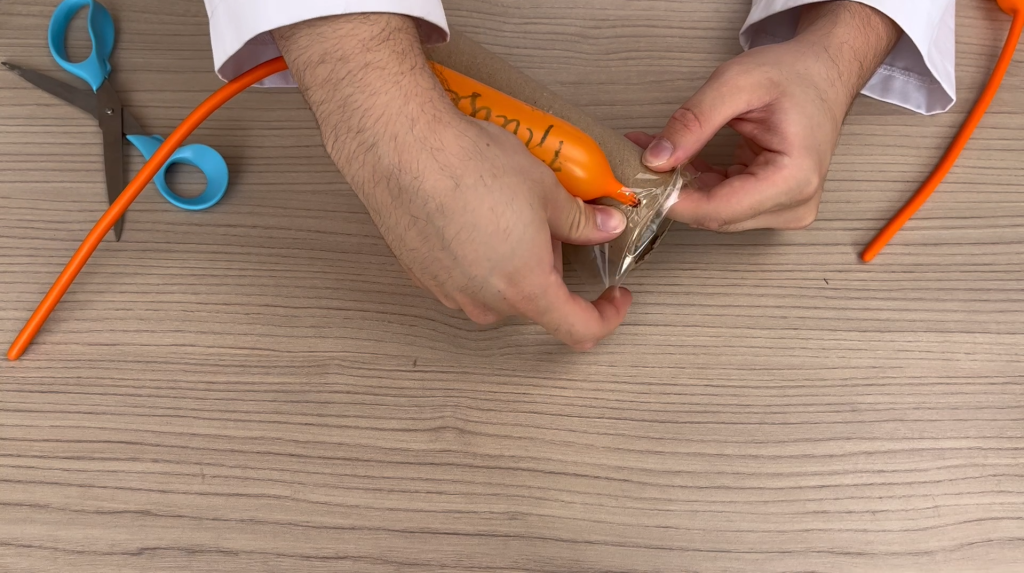
5) Tie the other end of the ball to the other tube and also fix it with tape
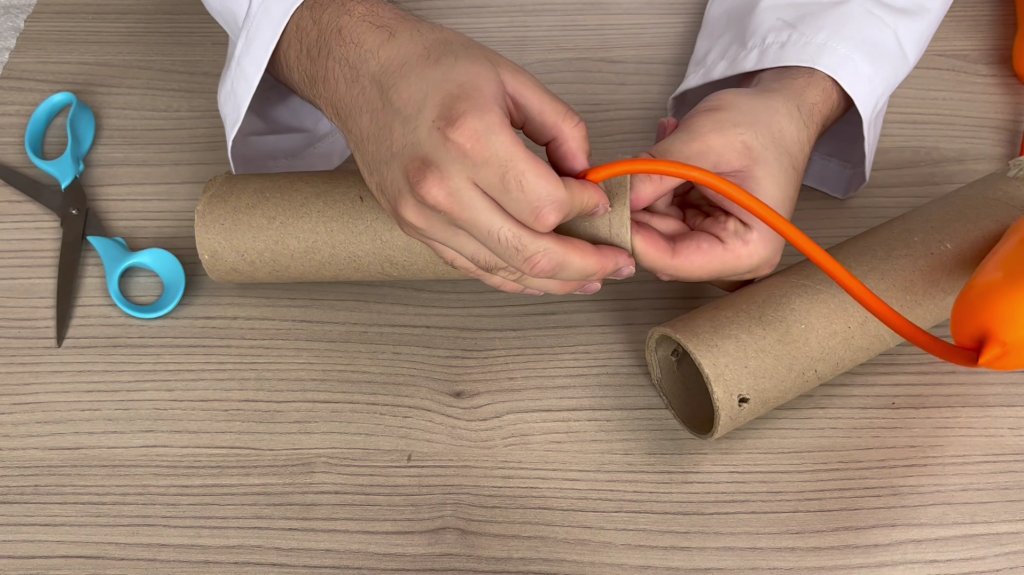
6) Repeat steps 3-5 with the second ball on the back of the tube
7) Try to bend and unbend the layout of the arm.