
Lesson 1
Target:
- determine the presence of carbohydrates in foods
- learn to carry out a qualitative reaction to starch
Expected results
After studying the project, students will be able to:
- Gain teamwork skills
- analyze and summarize the information received
- be able to distinguish between beneficial and harmful types of carbohydrates
- independently build logical reasoning and draw conclusions
Teacher’s guide:
- Divide the students so that there are 3 students in each group.
- Before proceeding with the laboratory work, read the safety rules by clicking on the link:
- To download the worksheet, go to:
Theoretical part
Carbohydrates are one of the three main classes of nutrients found in our food. Carbohydrates are a group of organic molecules made up of carbon, hydrogen and oxygen atoms.
Carbohydrates are the main source of energy for our body, as they are easily broken down and converted into glucose, a sugar that is the main source of energy for cells. Carbohydrates can also play the role of structural elements in cells and tissues, as well as participate in the metabolism of lipids and proteins.
Practical part
Let’s check the carbohydrate content of bread and potatoes. You can replace them with other types of foods. For example: rice, beans, etc.
Step 1. For this you will need:
- bread and potato slices
- starch
- iodine solution
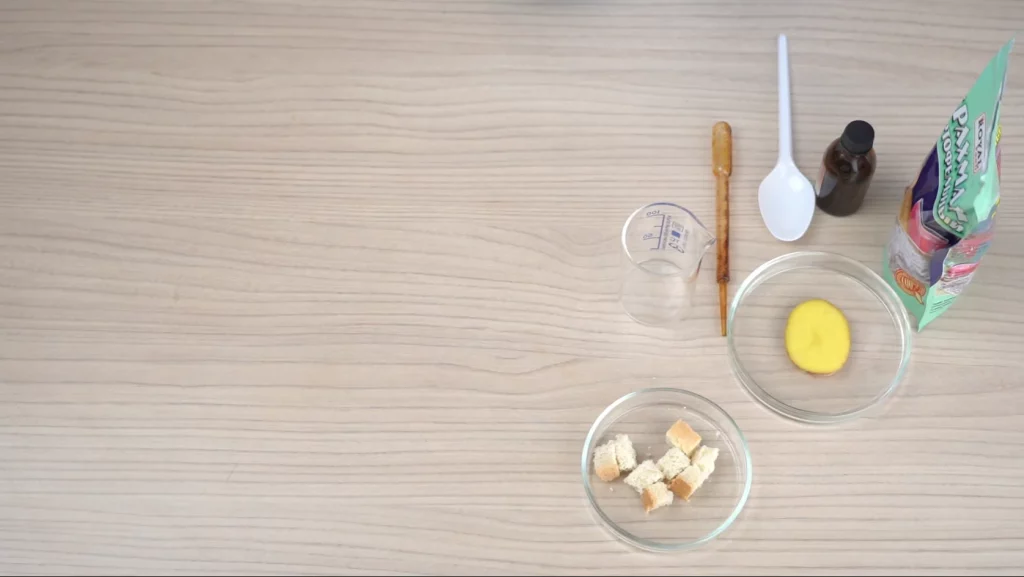
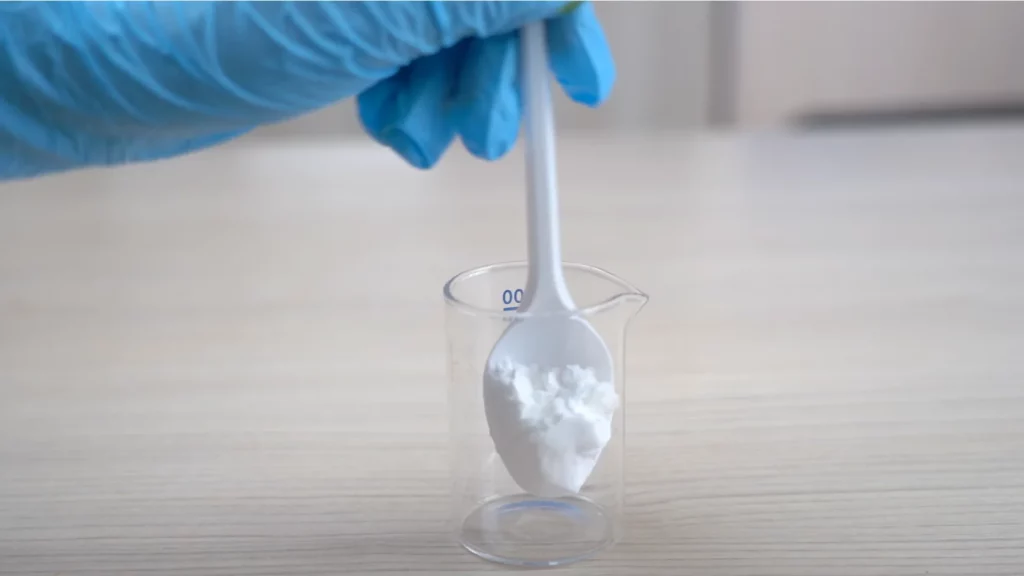
Step 2. Starch is a complex carbohydrate. Let’s carry out a qualitative reaction to starch. To do this, first dilute one spoon of starch in water.
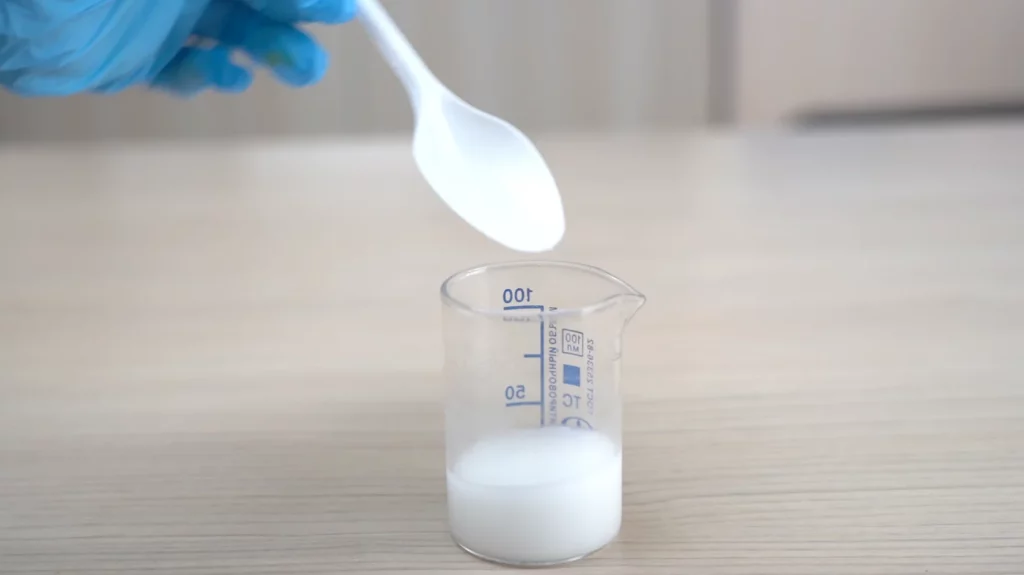
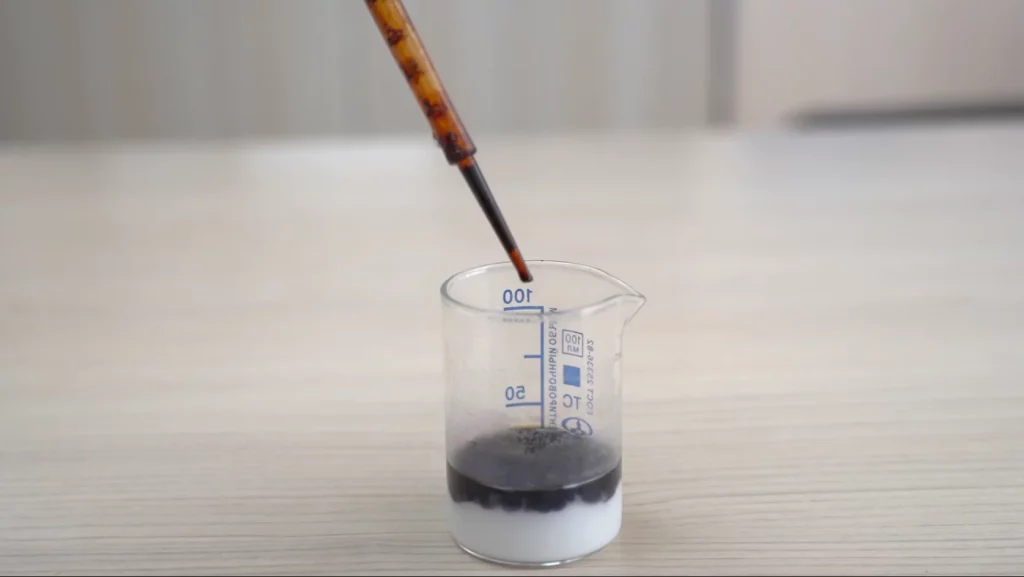
Step 3. Add 2-3 drops of iodine to the solution. The color of the solution will instantly turn dark blue.
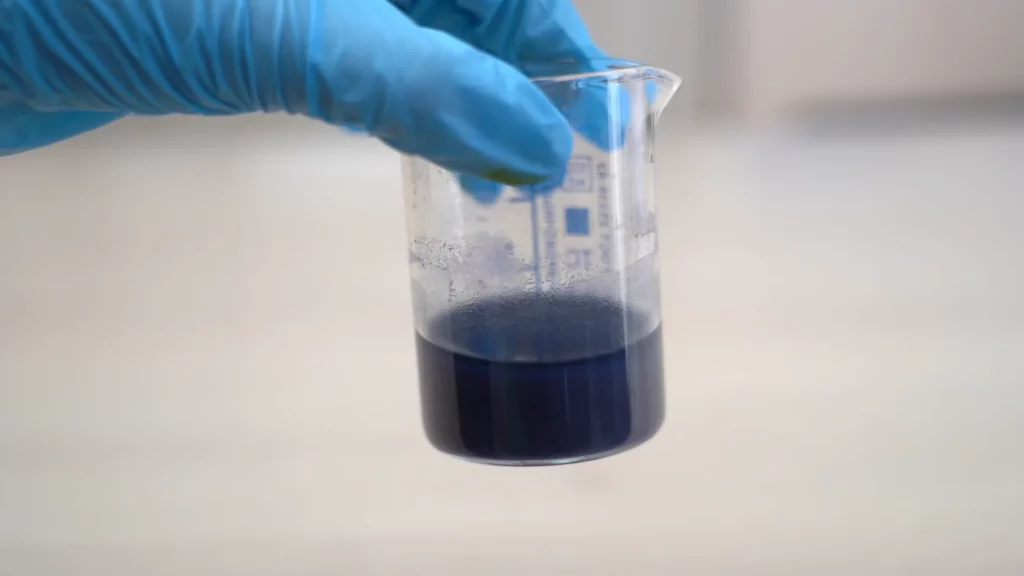
Step 4: Now do this reaction with food types. Apply 2-3 drops of iodine to a slice of bread and potatoes.
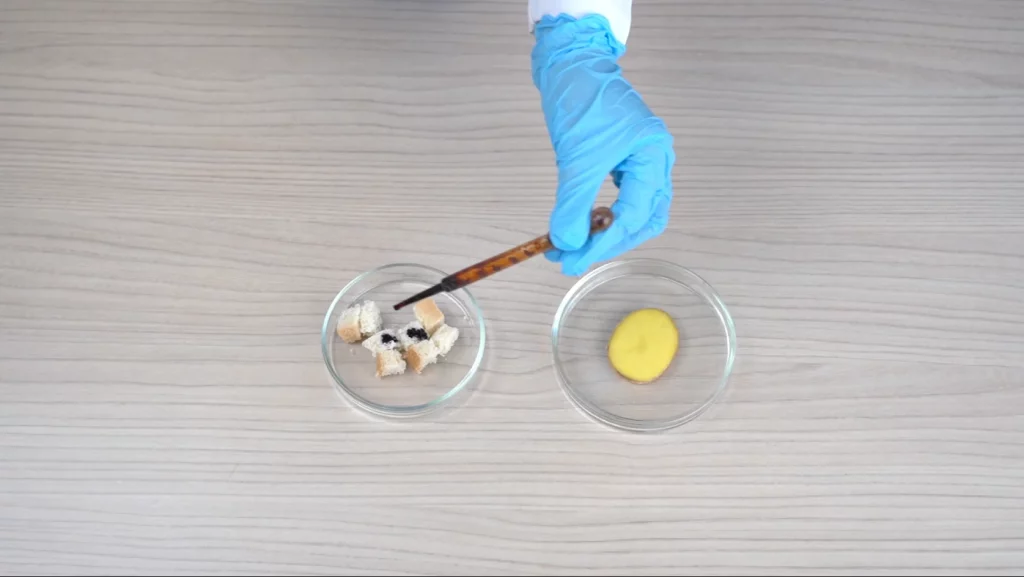
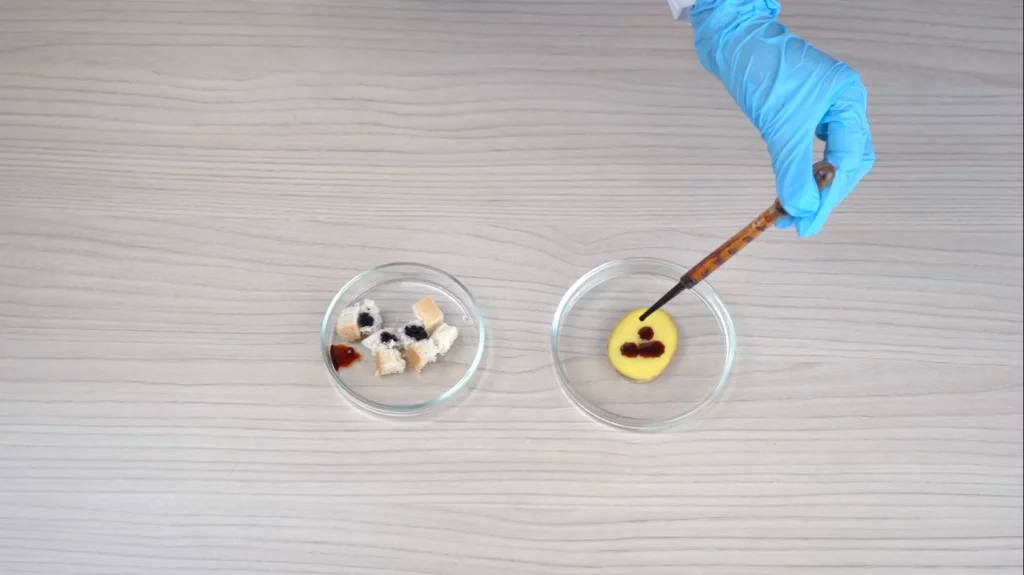
Step 5: Look at the results and draw a conclusion.
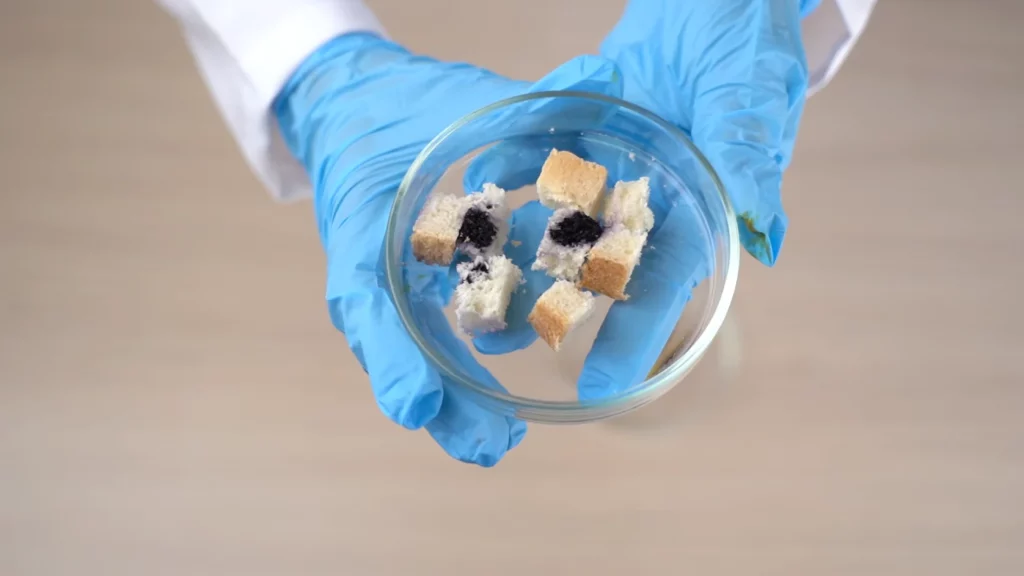
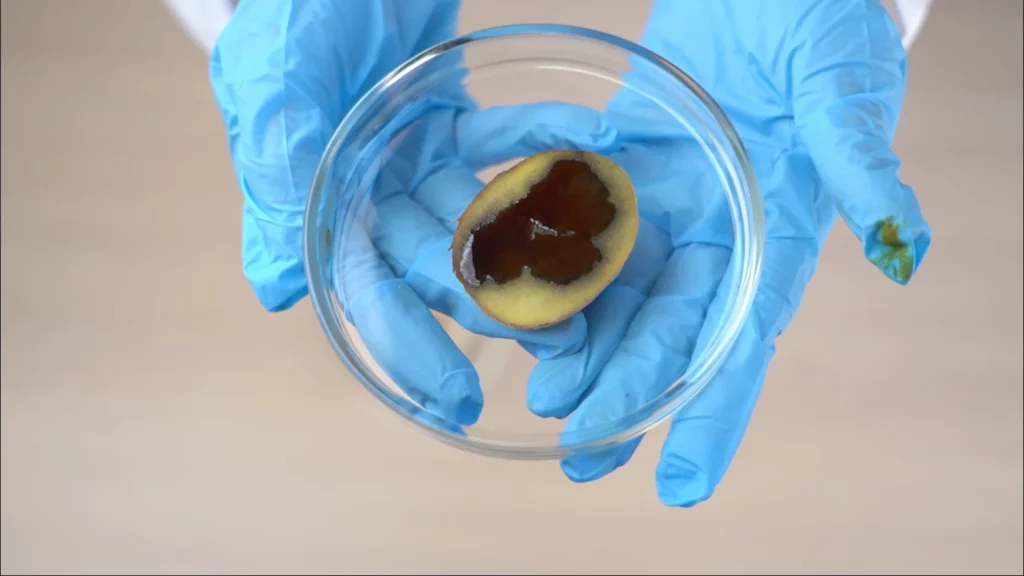
Step 6. Enter the results of the experiment in the table given in the Worksheet and summarize the results of the work:
| Sample | solution color | presence of carbs |
bread | ||
potato |
Conclusion
In this laboratory work, students acquired the skills of identifying carbohydrates in food. They learned how to carry out a qualitative reaction to starch.
Homework
1. Study of the effect of carbohydrates on the human body. Using available sources of information such as scientific articles, books and online resources, learn how carbohydrates affect blood glucose levels and how different types of carbohydrates can increase or decrease the risk of diseases such as diabetes and obesity.
2. Create a 3D model of carbohydrate molecules using various materials (pasta, straws, matches, etc.). Use the model to explain the difference between simple and complex carbohydrates.