Lesson

Objective:
- To understand the differences between atoms and molecules;
- Being able to distinguish between simple and complex things;
- Understanding the structure of a molecule.
Teacher’s Guide
Divide the students so that there are three students in each group.
To download the worksheet, go to:
Before proceeding with the lab work, review the safety rules by following the link:
Practical part
Step 1.
Become familiar with the composition of the molecules shown below. Molecules can consist of only one type of atom or two or more different atoms.
Water – two hydrogen atoms and one oxygen atom;
Ozone – three oxygen atoms;
Carbon dioxide – two oxygen atoms and one carbon atom;
Iodine – two atoms of iodine;
Salt – one sodium atom and one chlorine atom;
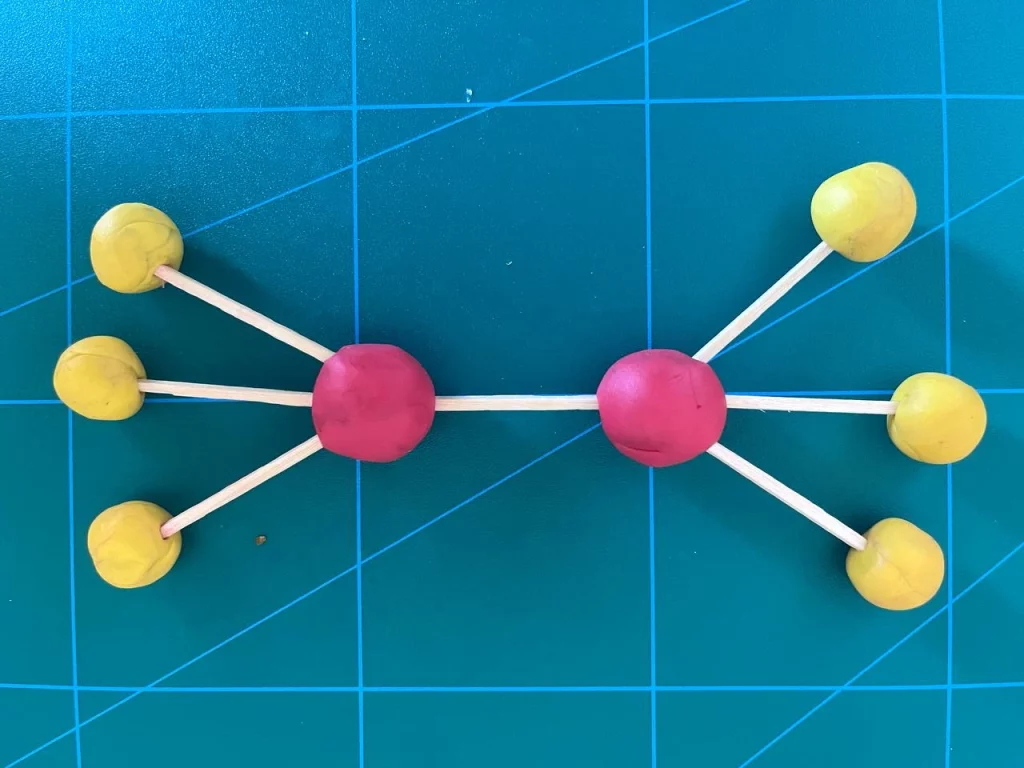
Ethane – two carbon atoms and six hydrogen atoms.
Step 2.
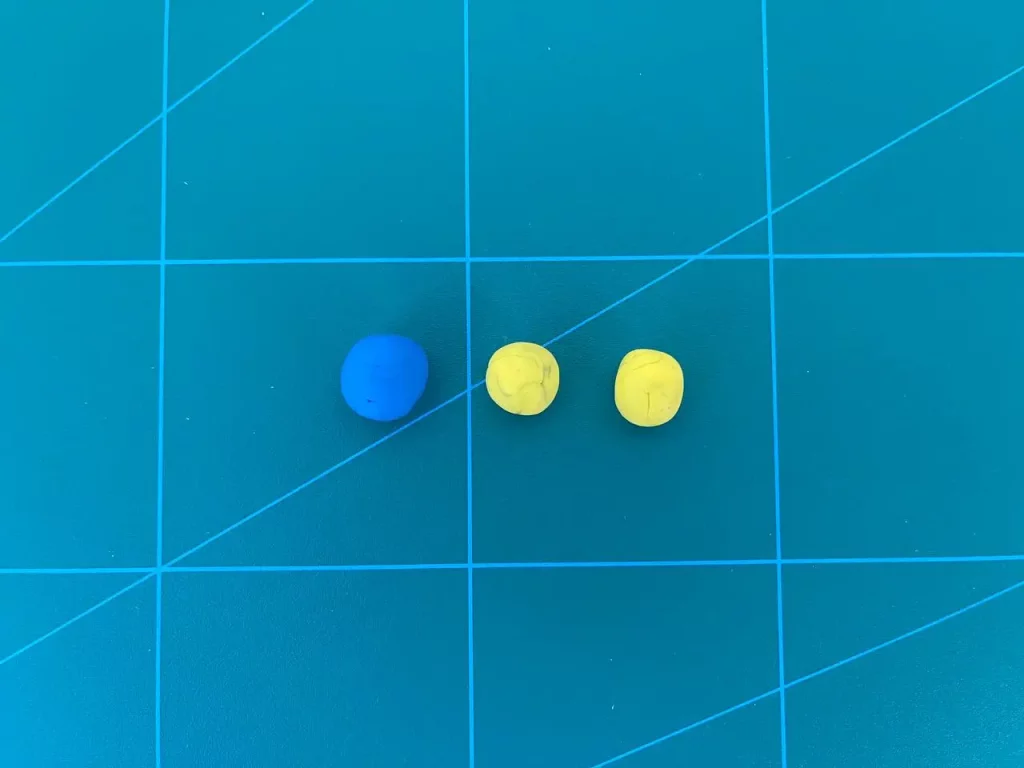
Build a model of a molecule of a substance out of plasticine based on the information given above. Atoms of one kind should be separated from atoms of another kind by size and color.
Water molecule: make two hydrogen atoms and one oxygen atom in the shape of a sphere out of plasticine.
Step 3.
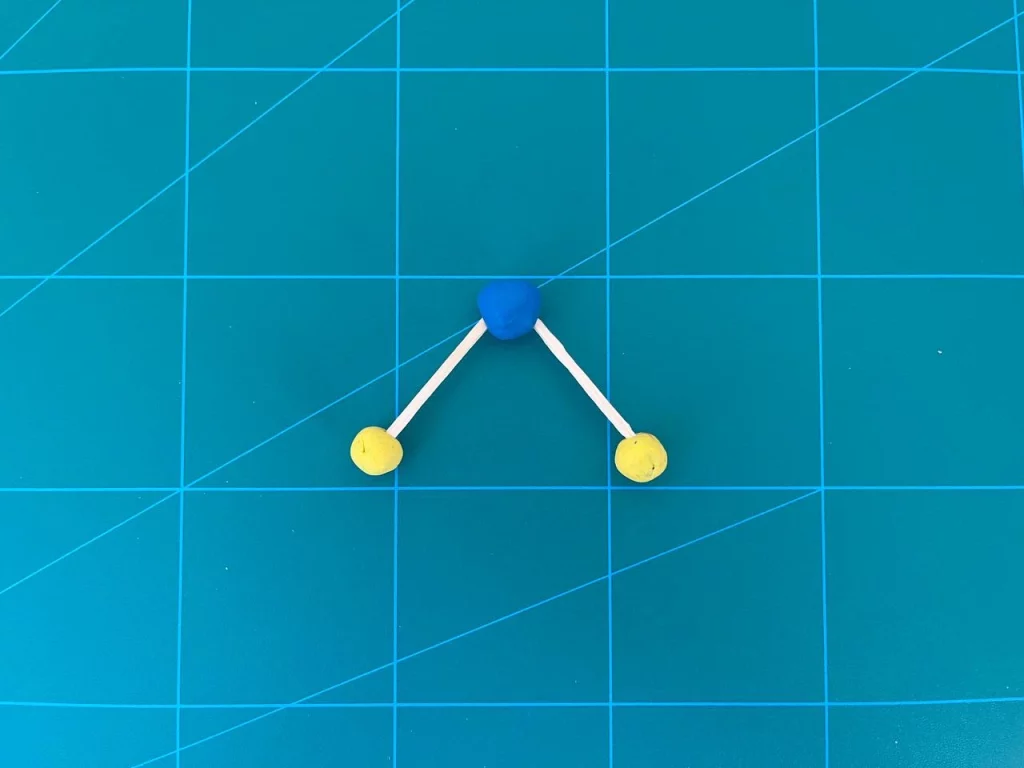
Connect them with matchworms, as in the picture. This connection represents a model of a water molecule.
Step 4.
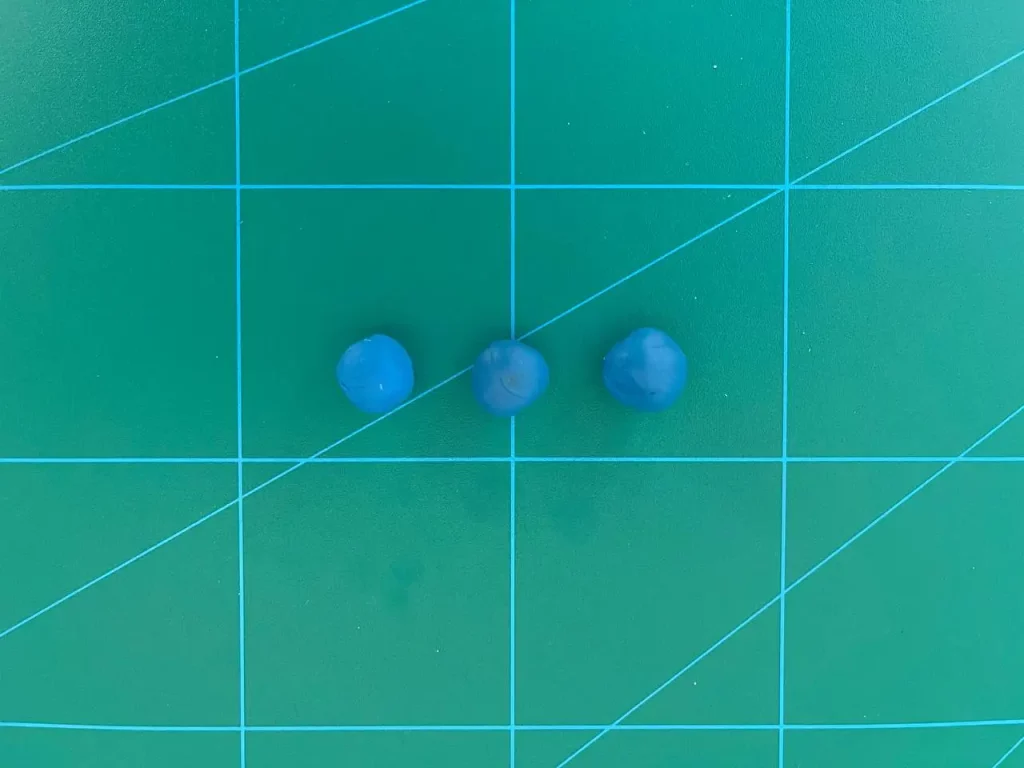
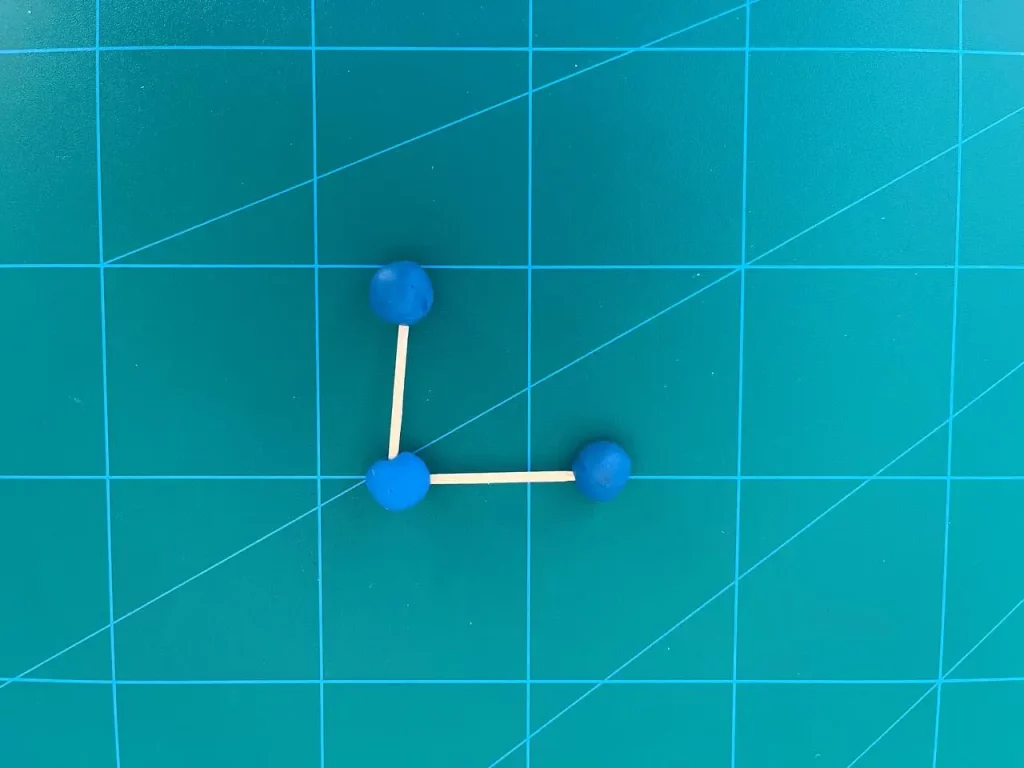
Ozone molecule: Make three oxygen atoms in the shape of a ball of plasticine.
Step 5.
Connect them with matchworms, as in the picture.
Step 6.
Carbon dioxide molecule: Make two oxygen atoms and one carbon atom into a ball of plasticine.
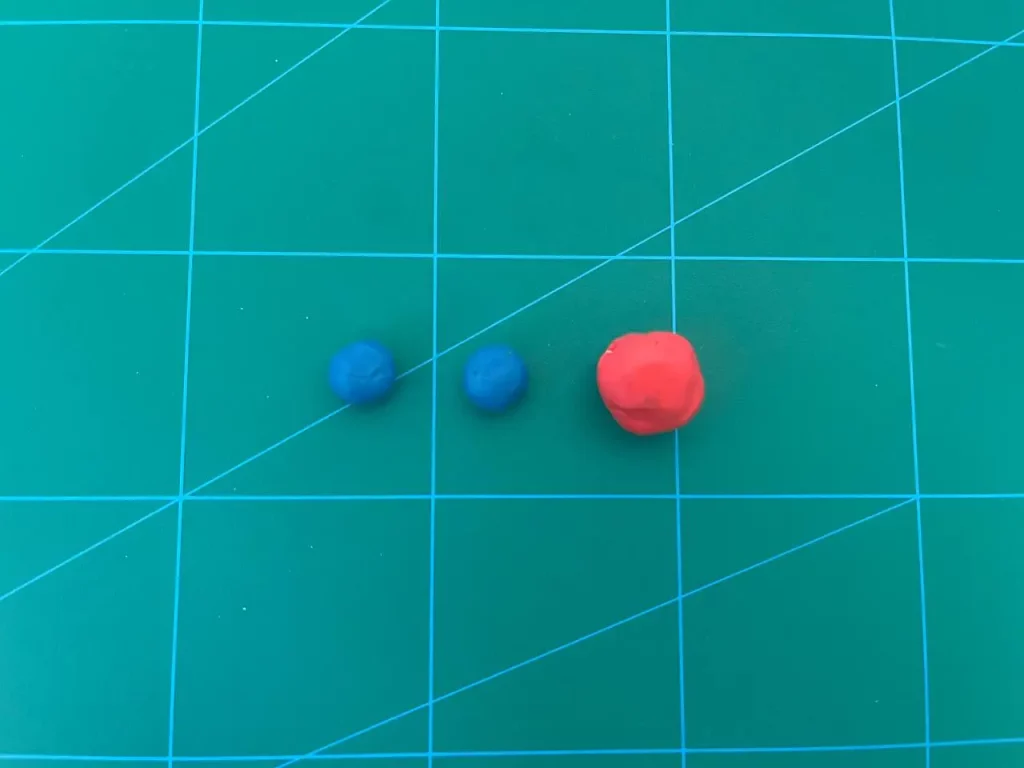
Step 7.
Connect them with matchworms, as in the picture.
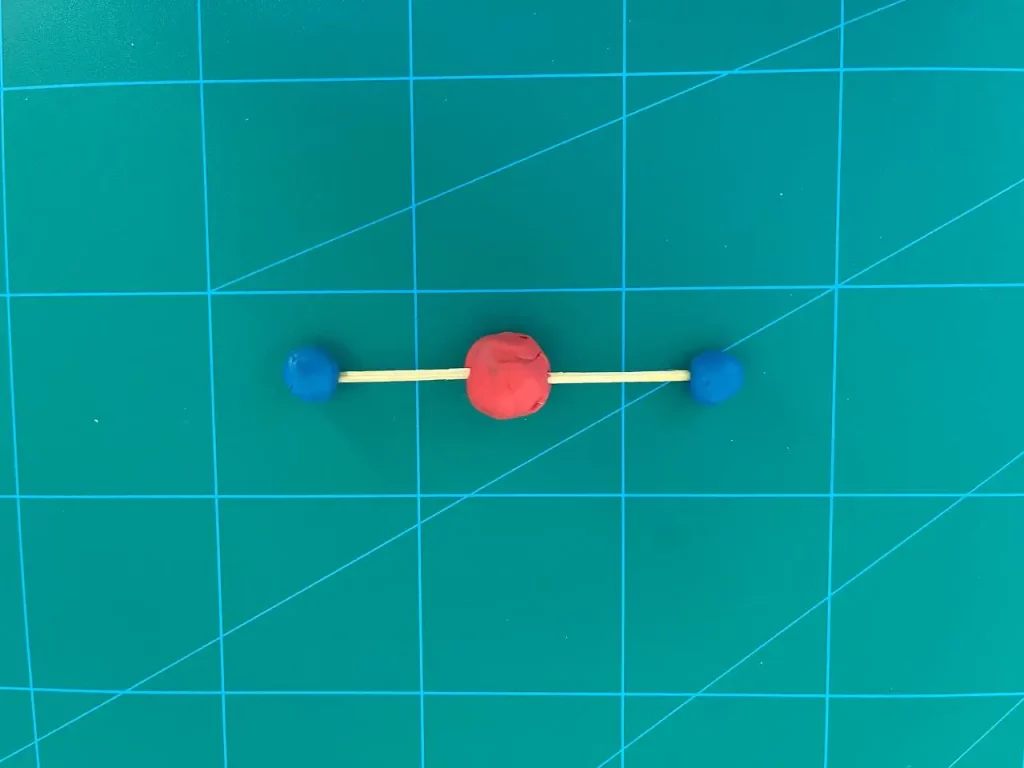
Step 8.
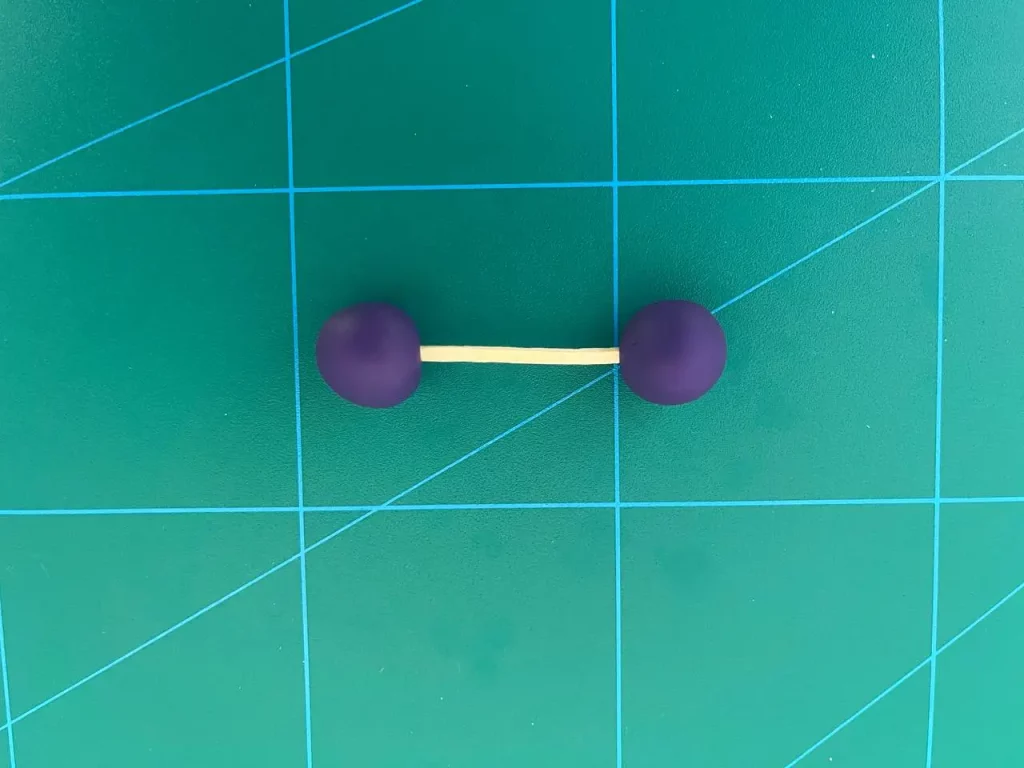
Iodine molecule: make two iodine atoms in the shape of a ball out of plasticine.
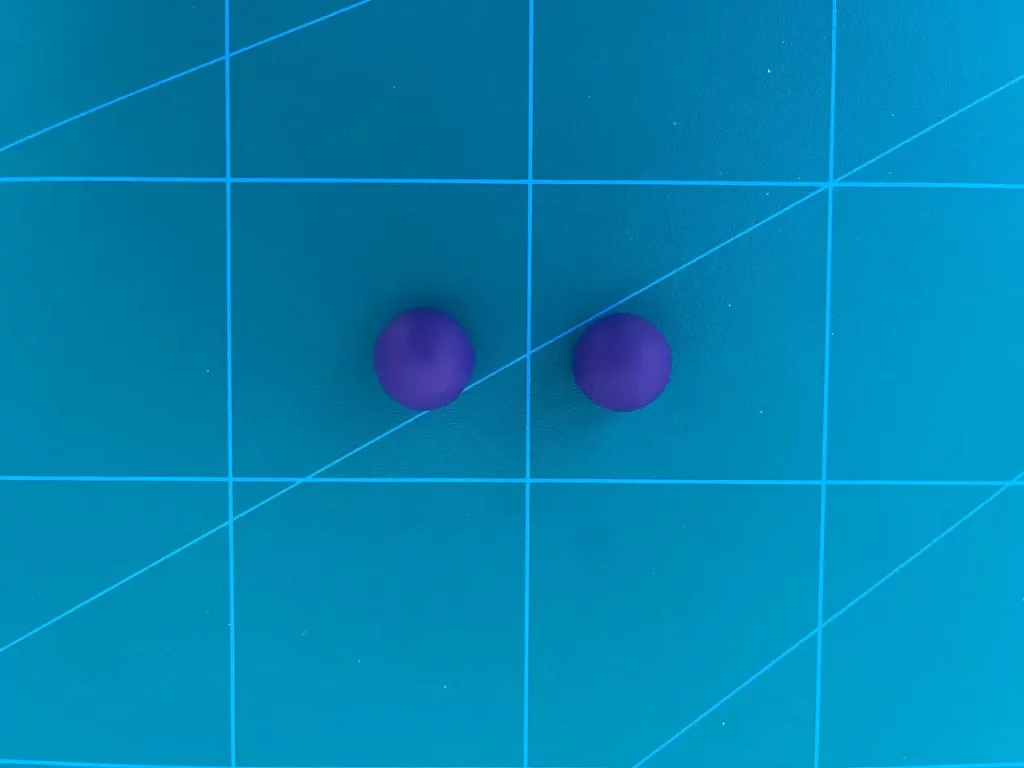
Step 9.
Connect them with matchworms, as in the picture.
Step 10.
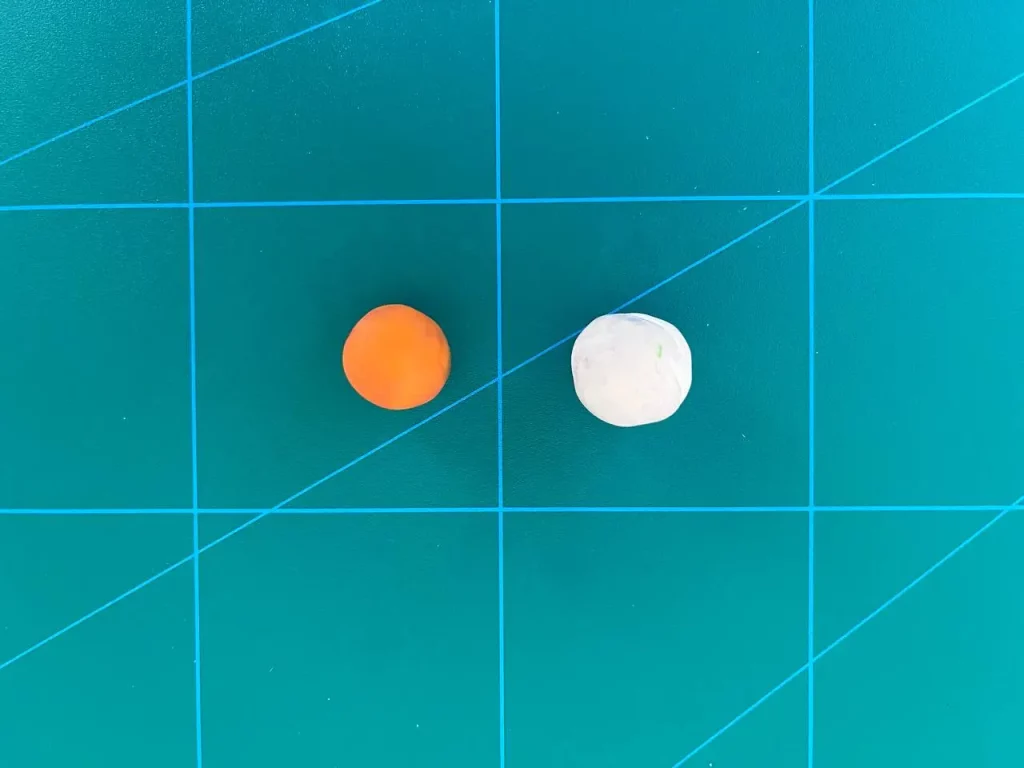
A salt molecule: Make one sodium atom and one chlorine atom out of plasticine in the shape of a ball.
Step 11.
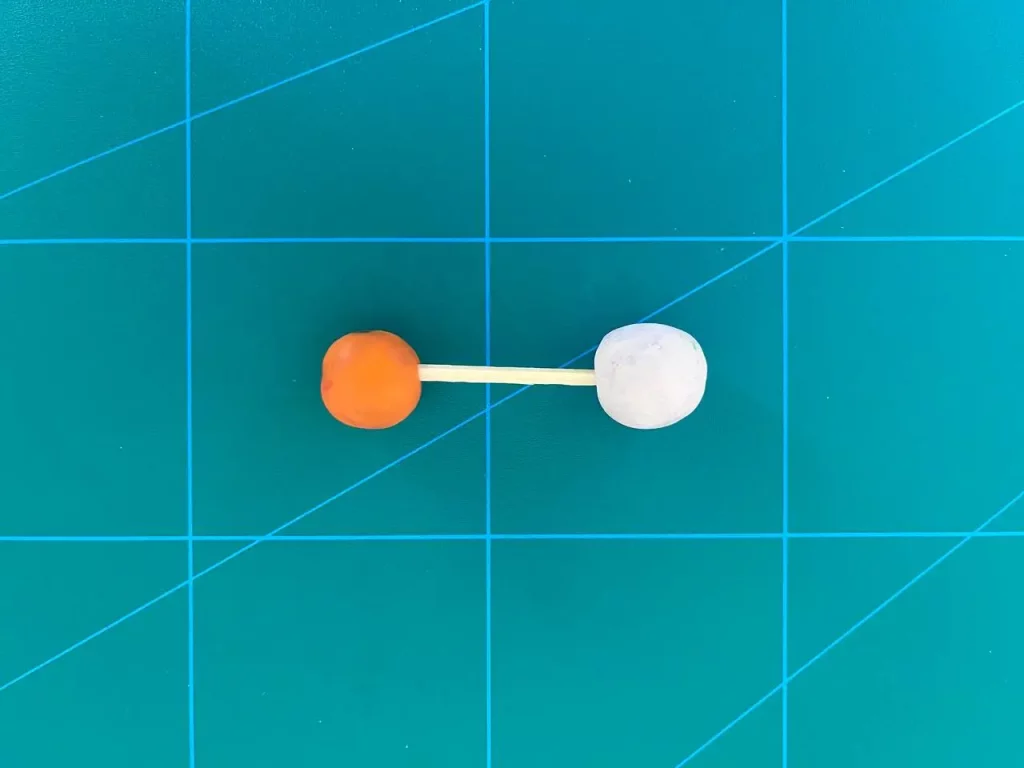
Connect them with matchworms, as in the picture.
Step 12.
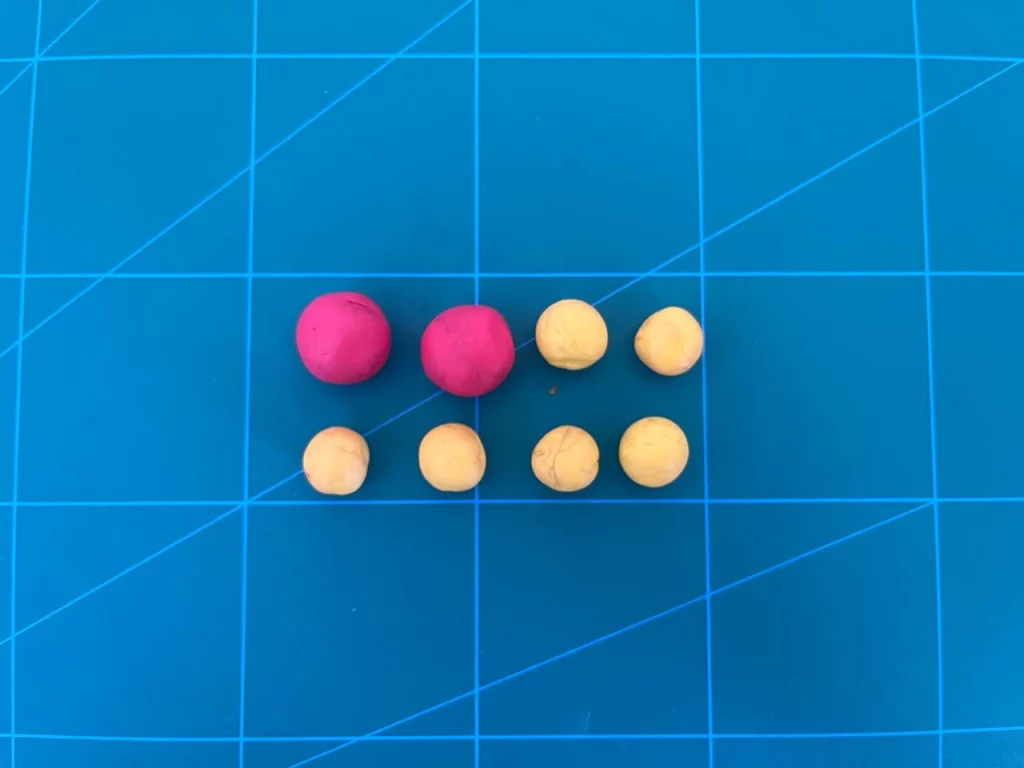
Ethane molecule: Make two carbon atoms in the shape of a ball and six hydrogen atoms out of plasticine.
Step 13.
Connect them with matchworms, as in the picture.
Step 14.
Fill in the table based on the above data about the different molecular models.
Fill in the table based on the above data about the types of molecules.
Note when you draw a picture of a molecule: atoms of one kind should be separated from atoms of another kind by size and color.
A filled water molecule is shown as an example.
| Name | Elements | Number of atoms | Figure | Simple / Complex |
| Water | Hydrogen, oxygen | Hydrogen – 2, Oxygen – 1 | Complex | |
| Ozone | ||||
| Carbon dioxide | ||||
| Iodine | ||||
| Salt | ||||
| Ethane |
Step 15.
Answer the following questions and draw conclusions:
- What small particles do substances consist of?
- What are the particles that make up a molecule?
- Explain why a molecule is larger than one atom.
- What is the difference between a simple thing and a complex thing?
- Explain why not all molecules are simple things.
Conclusion
Through this practical work, students have learned that things are made up of very small particles. The smallest particle of matter is a molecule that retains its properties. And the children studied the structure of this molecule and tried to design their models out of plasticine. Thus, atoms, combining with each other in a wide variety of ways, form a huge number of different substances.