
Lesson

Purpose of the work:
- To study the structure of molecules with covalent bonds (N₂, O₂, diamond) and visualize them through physical and digital models
Expected results:
After completing the work, students can:
- develop teamwork skills
- be able to analyze and summarize the information received
- draw logical conclusions
Teacher’s Guide:
- The task is performed in pairs.
- Before starting laboratory work, please read the safety rules by following the link:
- To download the worksheet, follow the link:
Theory
What is a covalent bond?
A covalent bond is a chemical bond formed between atoms by sharing pairs of electrons. It most commonly occurs between nonmetal elements.
How is a covalent bond formed?
Donor-acceptor mechanism – one atom donates both electrons of the pair, and the other atom accepts them.
Example: ammonium ion (NH₄⁺).
Exchange mechanism – each atom contributes one electron to form a shared pair.
Example: molecules of oxygen (O₂) and nitrogen (N₂), methane (CH₄).
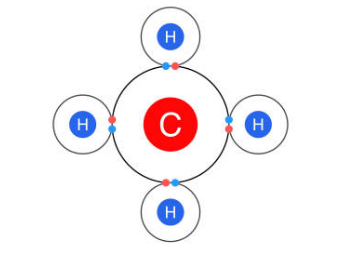
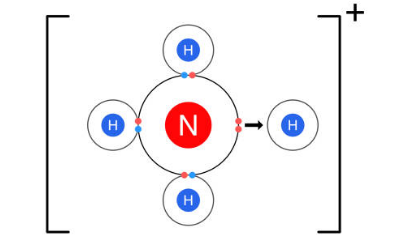
What types of covalent bonds exist?
- Single bond – 1 shared electron pair (e.g., H–H)
- Double bond – 2 shared electron pairs (e.g., O=O)
- Triple bond – 3 shared electron pairs (e.g., N≡N)
In general, the more bonds there are, the stronger the molecule and the shorter the distance between atoms.
What are the types of hybridization?
Hybridization is the rearrangement of atomic orbitals to form stable chemical bonds.
- sp – linear molecular shape, formed by the combination of one s and one p orbital. The atom has two hybrid orbitals arranged 180° apart. (e.g., CO₂)
- sp² – trigonal planar shape, formed from one s and two p orbitals. The angle between the orbitals is approximately 120°. (e.g., C₂H₄)
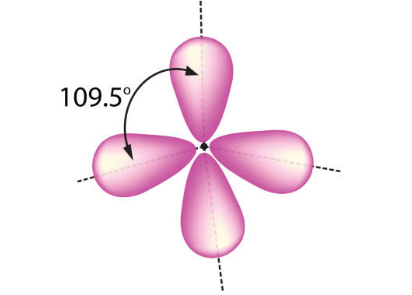
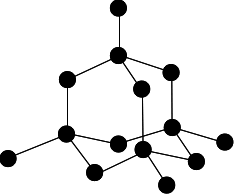
- sp³ – tetrahedral shape, includes one s and three p orbitals. The bond angle is approximately 109.5°. (e.g., CH₄, diamond).
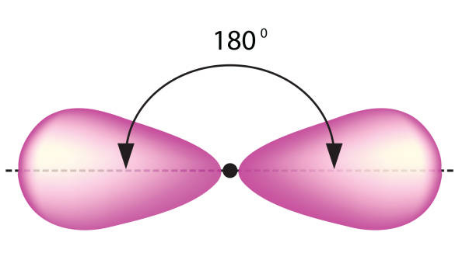
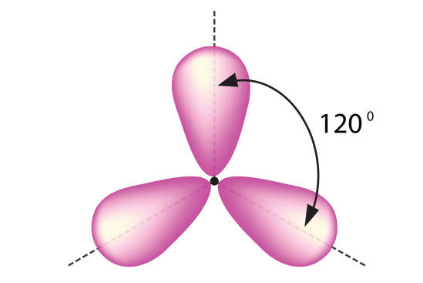
How are molecular structure and substance properties related?
The structure of a molecule directly affects its physical and chemical properties:
- Substances with double and triple bonds are usually more reactive.
- Strong covalent lattices (like in diamond with sp³ hybridization) give a substance hardness and a high melting point.
- Simple molecules like O₂ and N₂ exist as gases under normal conditions because the forces between their molecules are weak.
Practical part
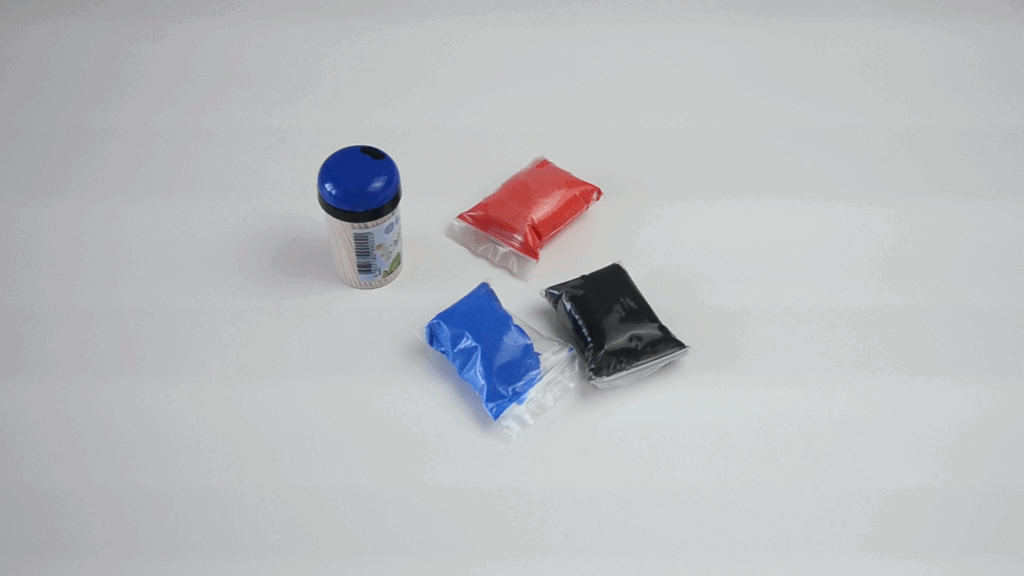
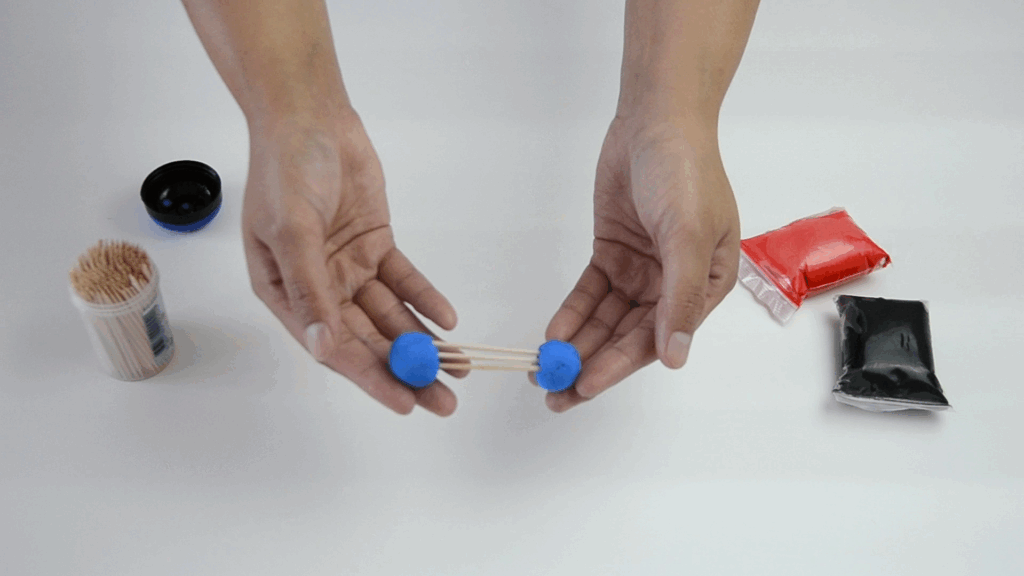
Step 1. To make models of nitrogen, oxygen, and diamond molecules, you will need modeling clay (in three different colors) and toothpicks.
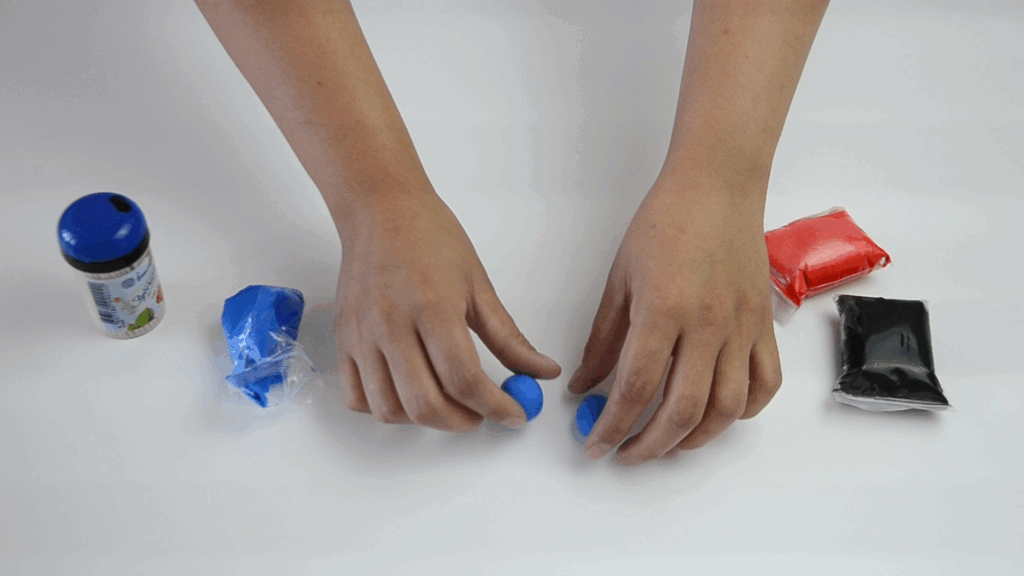
Step 2. Nitrogen molecule (N₂): form two balls of the same color and connect them with three toothpicks — this represents a triple covalent bond.
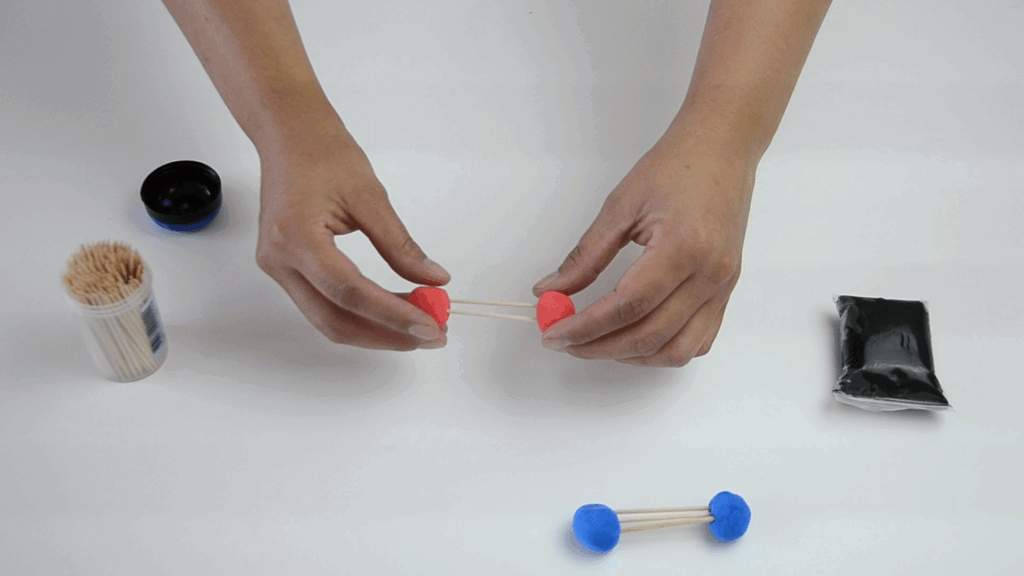
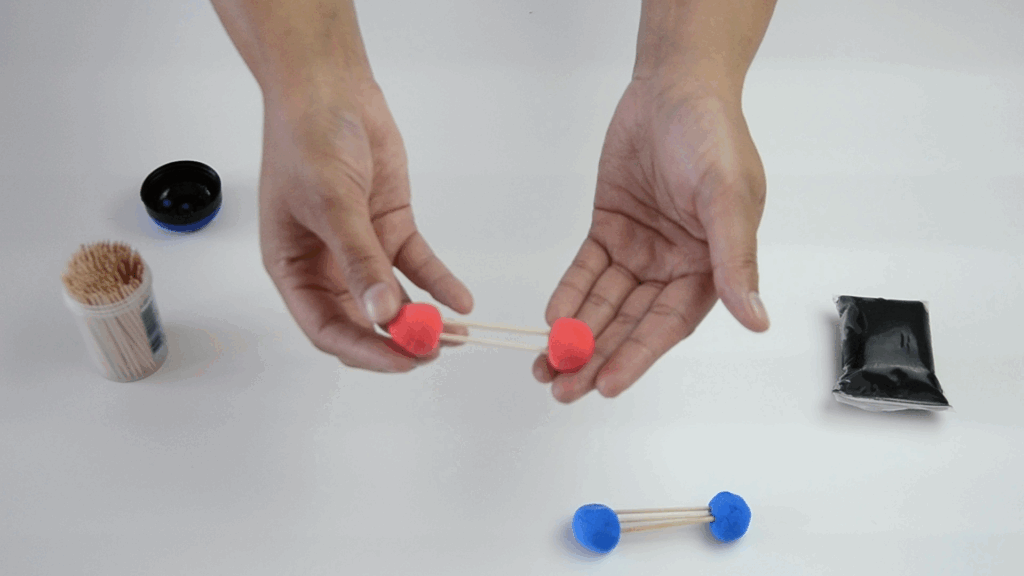
Step 3. Oxygen molecule (O₂): form two balls of another color and connect them with two toothpicks — this is a double covalent bond.
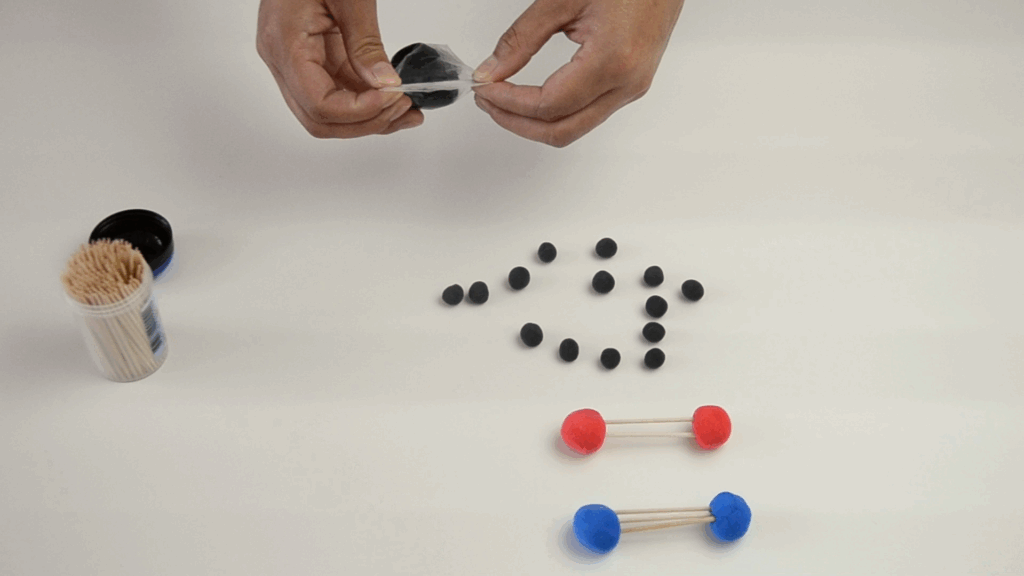
Step 4. Diamond is a crystal lattice made of carbon atoms, where each atom is bonded to four others, forming a tetrahedron. Make 14 identical balls from clay to represent carbon atoms.
Step 5. Build the first tetrahedron. Connect one clay ball (carbon) to four others from different sides — representing four covalent bonds.
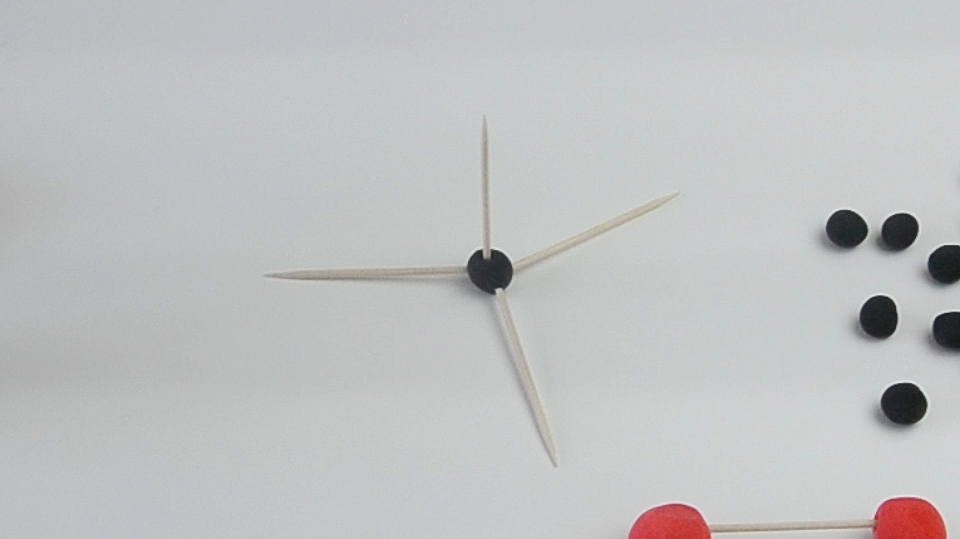
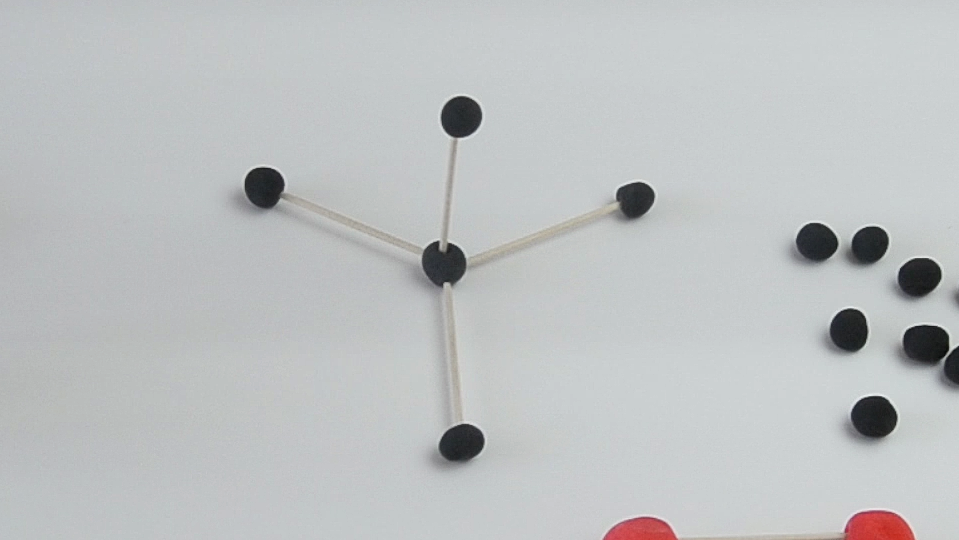
Step 6. Make the second tetrahedron in the same way, but leave the top toothpick unconnected (without a ball). This is needed to join tetrahedra together later.
Create the third tetrahedron leaving out the top and two side atoms — also to allow connection to other parts of the structure.
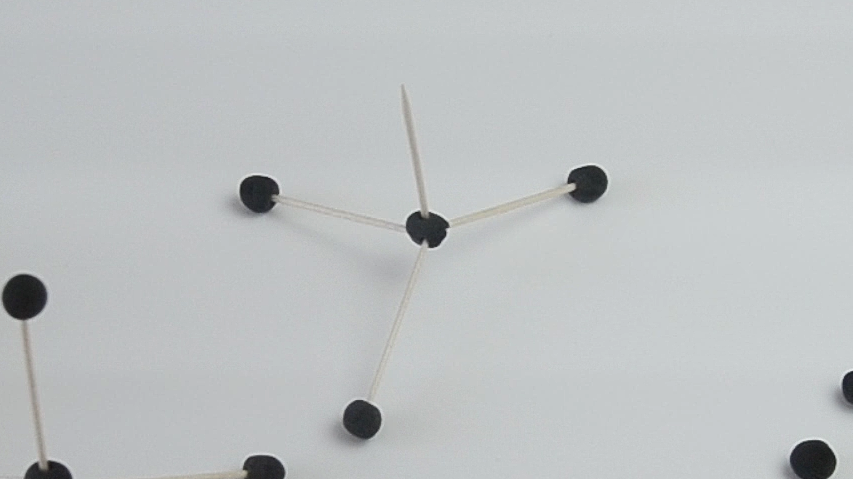
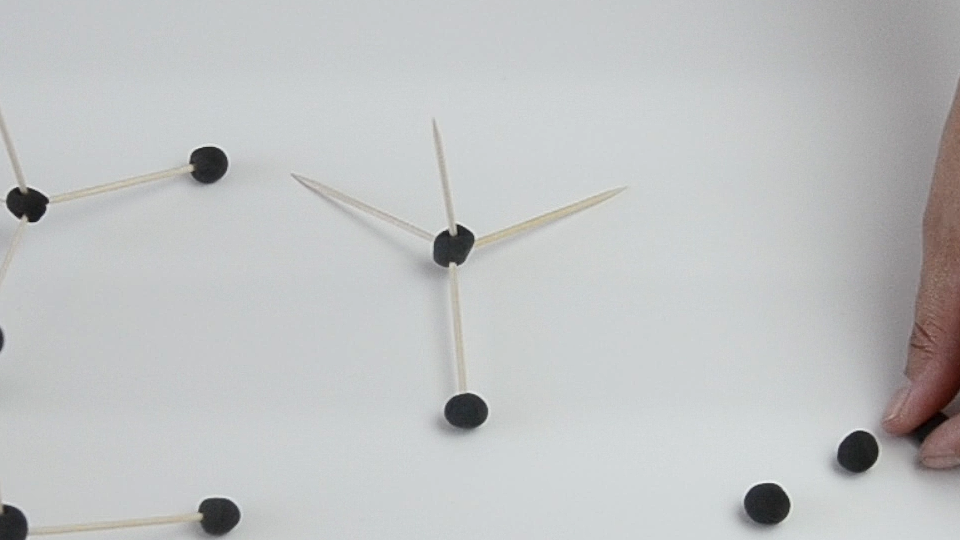
Step 7. Make the last tetrahedron without the top and one side atom.
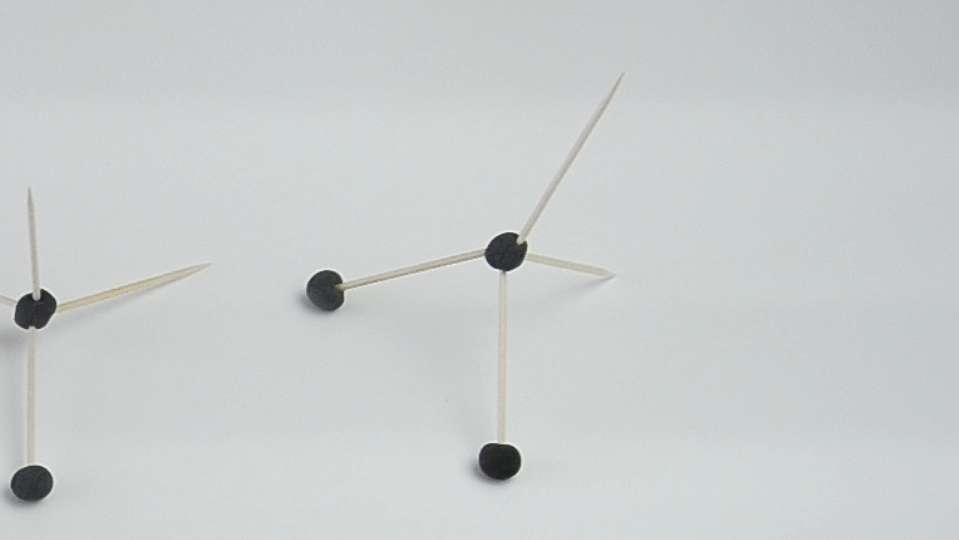
Step 8. Now connect three tetrahedra together as shown in the photo.
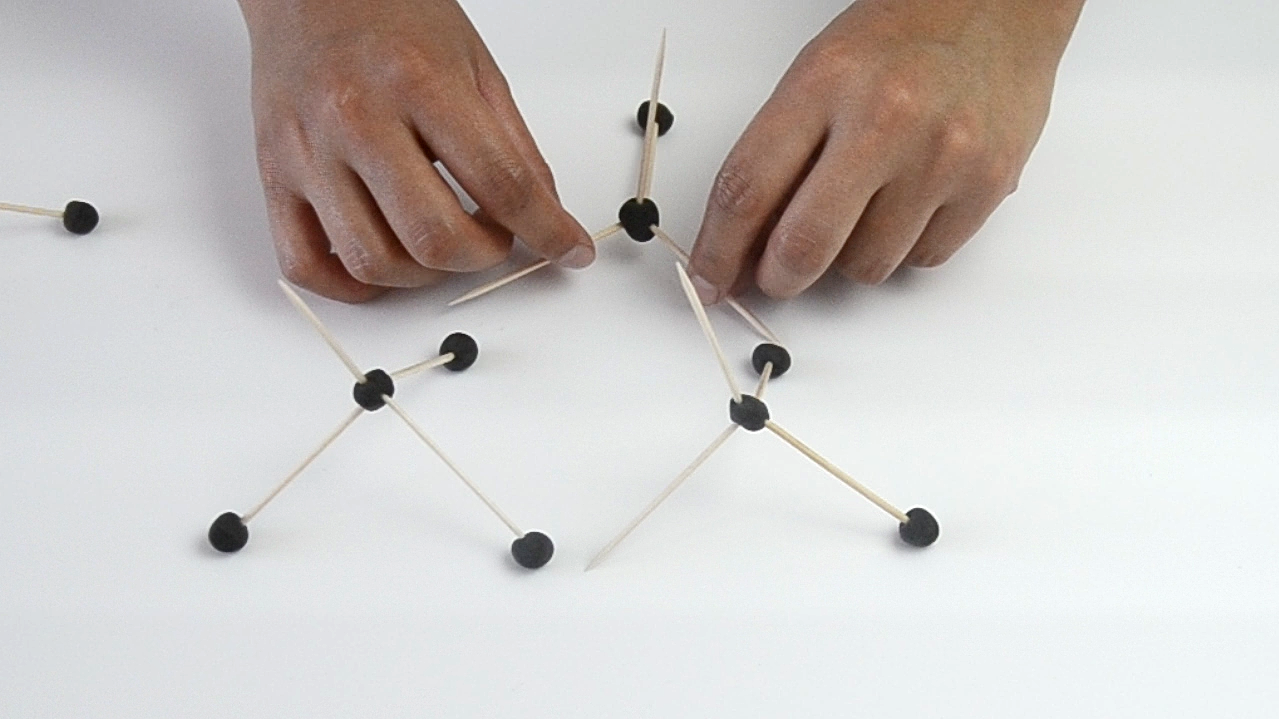
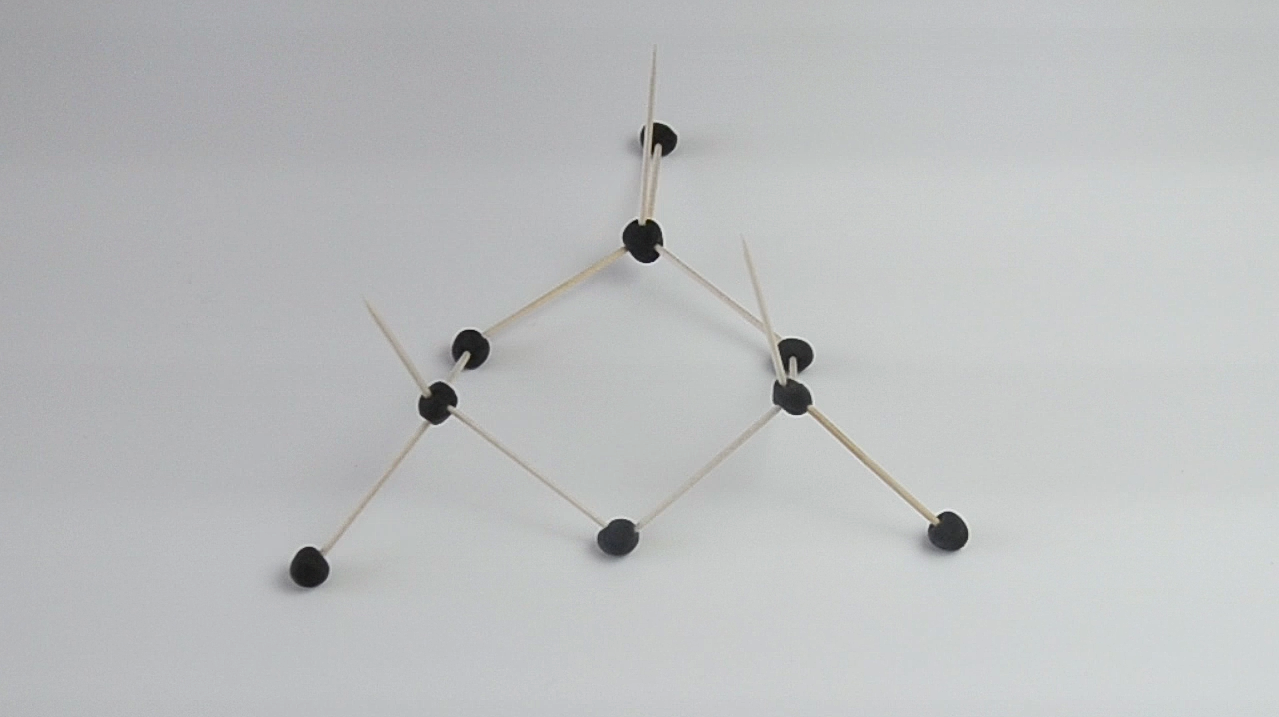
Step 9. And last, connect the first tetrahedron on the top. You will get a fragment of a mirror-symmetric crystal lattice: no matter from which angle you look, the structure appears the same.
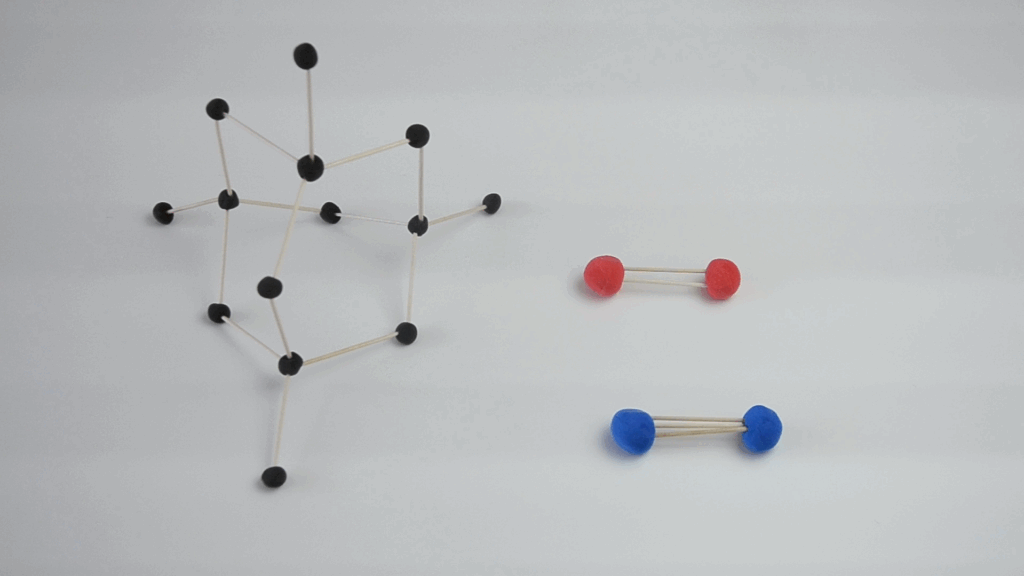
Important: Diamond consists of many such tetrahedra, joined together by strong covalent bonds. This structure gives diamond its unique properties — hardness and strength.
Now try building a 3D version of these molecules online using the MolView platform.
Step 1. Go to the website MolView.org . Click “Close Pop-up” to close the welcome window, and delete the default example model.
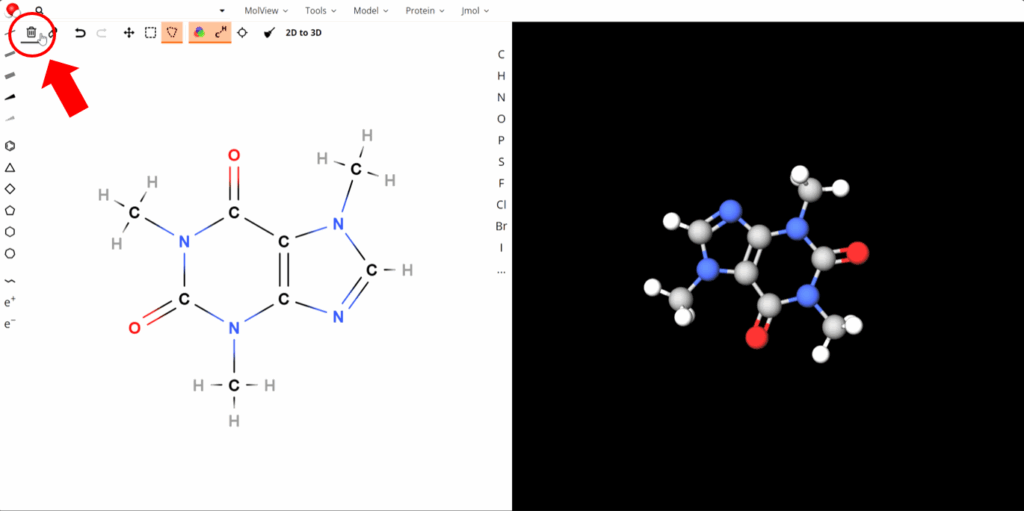
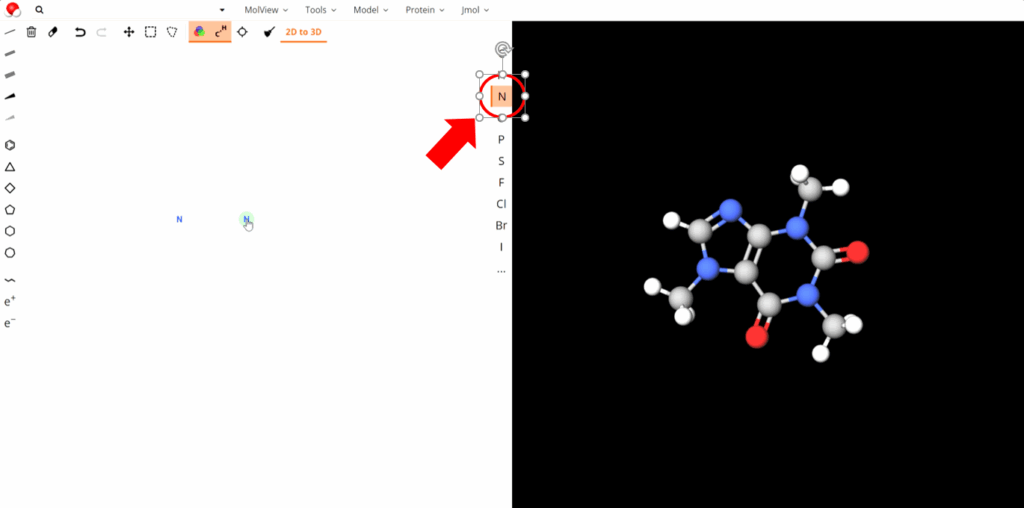
Step 2. Build a nitrogen molecule (N₂).
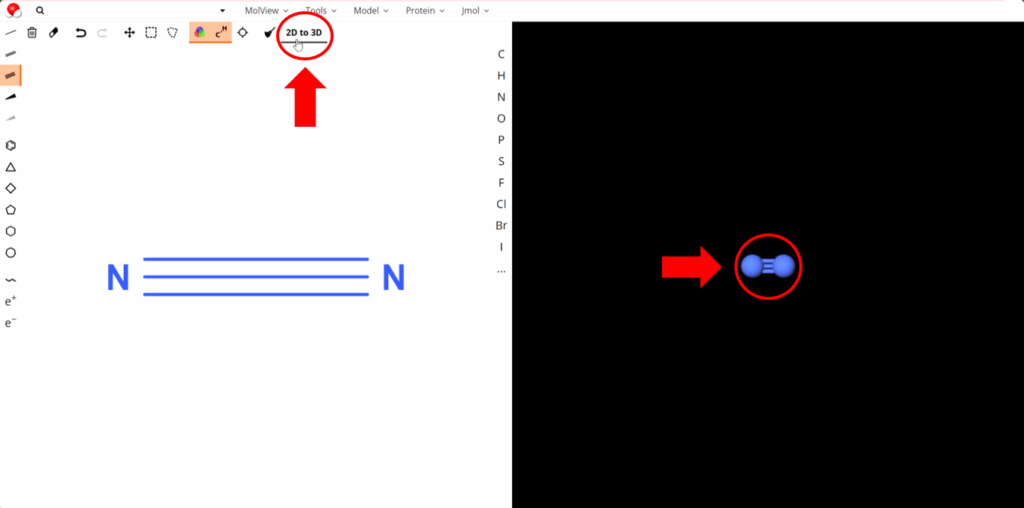
From the list of chemical elements on the right, select N (nitrogen). Then choose the triple bond option from the menu on the left.
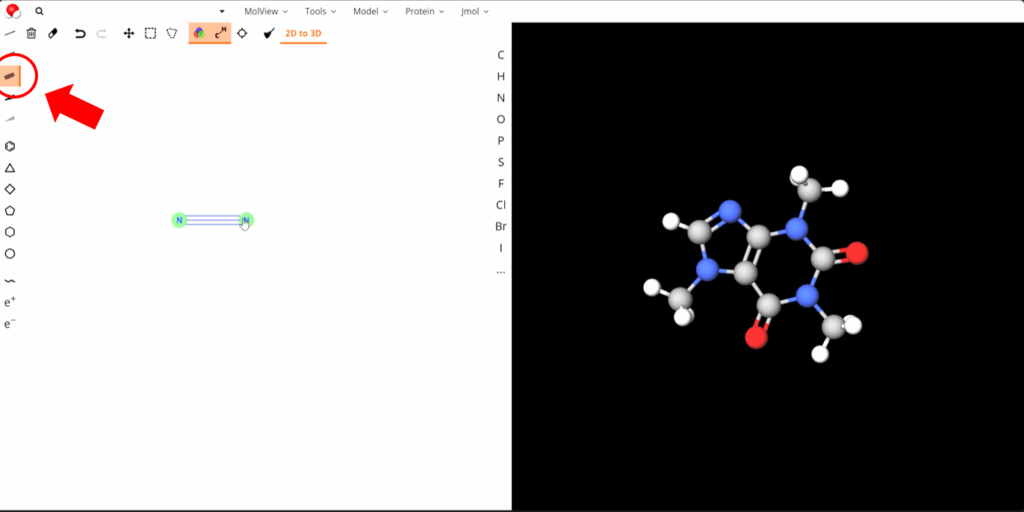
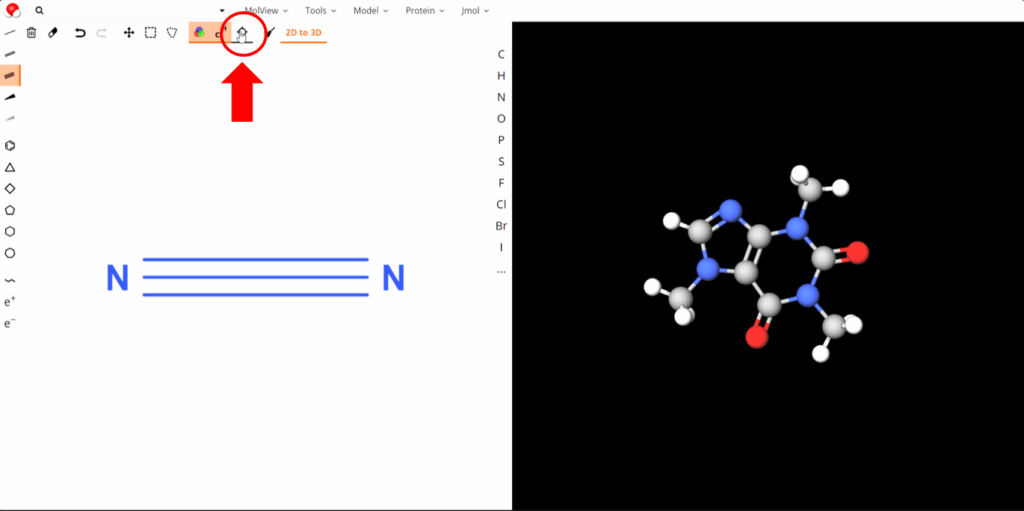
Step 3. Zoom in by clicking the magnifying glass icon. Click “2D to 3D” to convert the model into three-dimensional space. To view the molecule from different angles, click and hold the left mouse button and move the cursor.
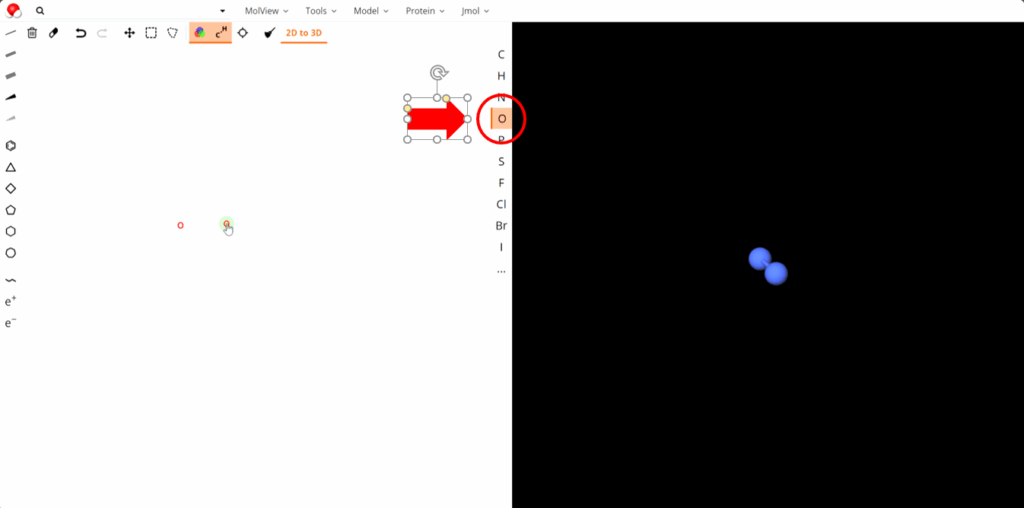
Step 4. Build an oxygen molecule (O₂). Select the element O (oxygen) and choose the double bond type.
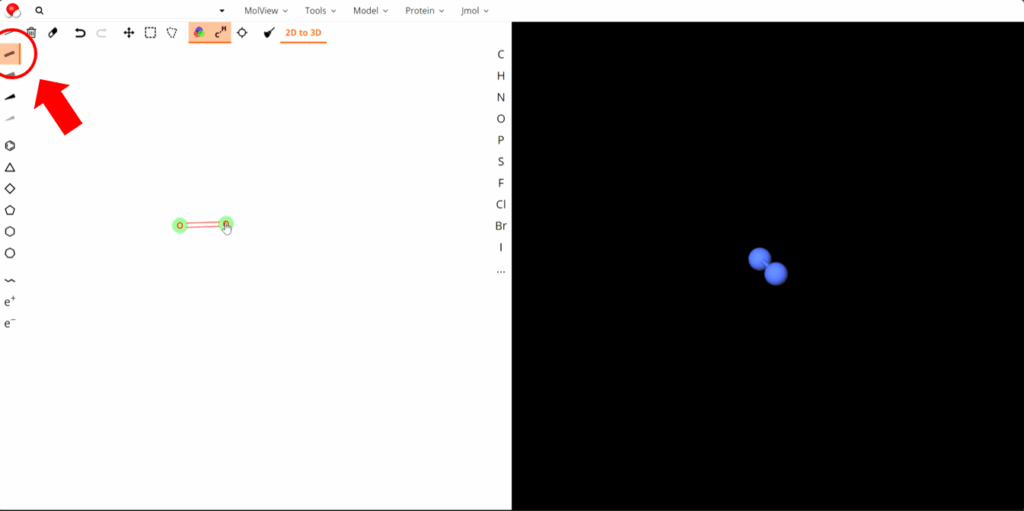
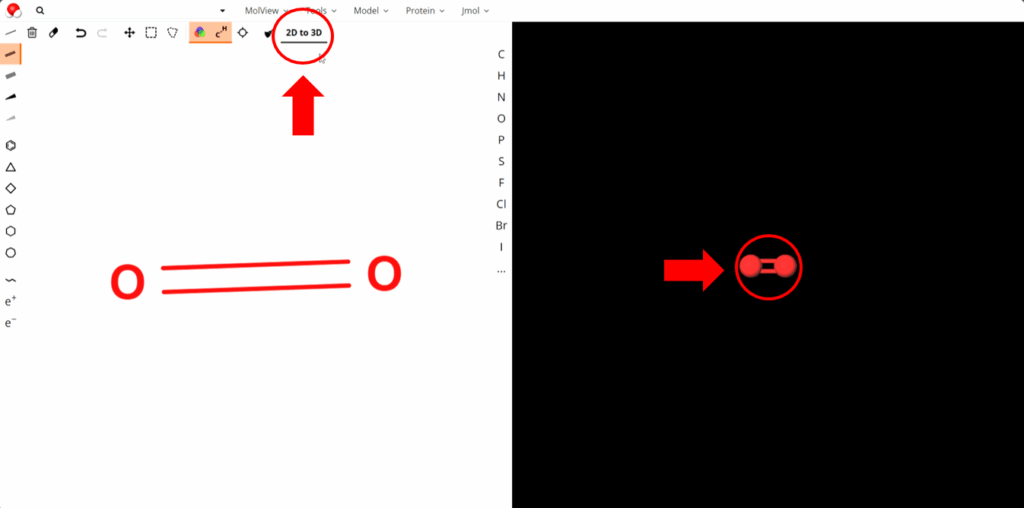
Step 5. Switch to 3D mode and observe the spatial structure of the molecule.
Step 6. Now try to build a fragment of the diamond crystal lattice. Choose the element carbon (C) and arrange the atoms in a tetrahedral shape (one atom in the center, four around it).
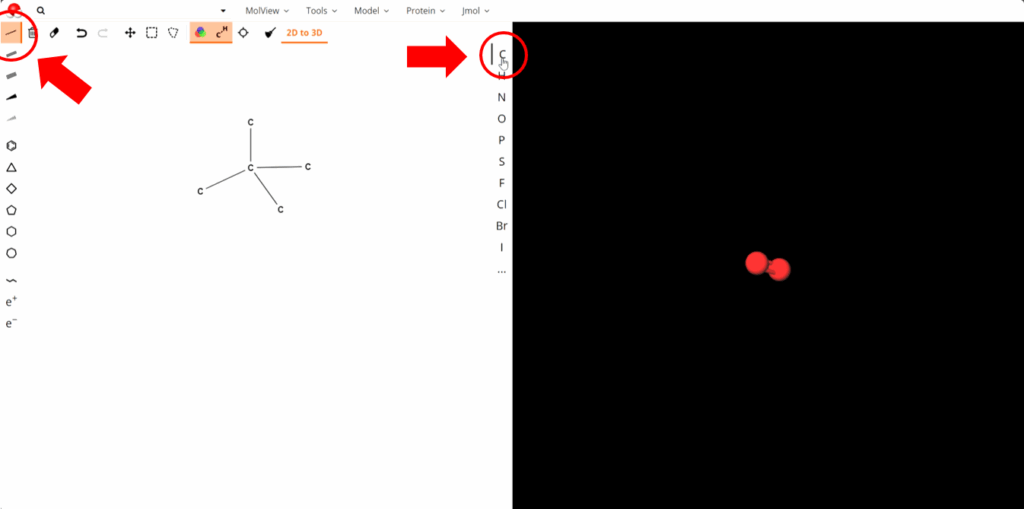
Step 7. Connect the tetrahedron to the central atoms of three other tetrahedra, simulating a crystal lattice.
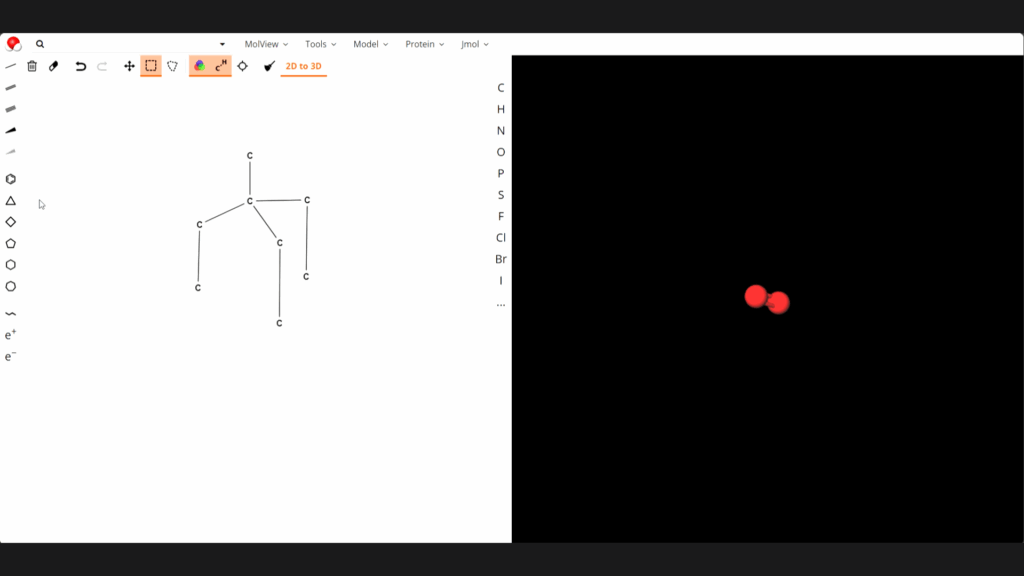
Step 8. Remember that each carbon atom forms four covalent bonds, so connect each atom to four neighbors.
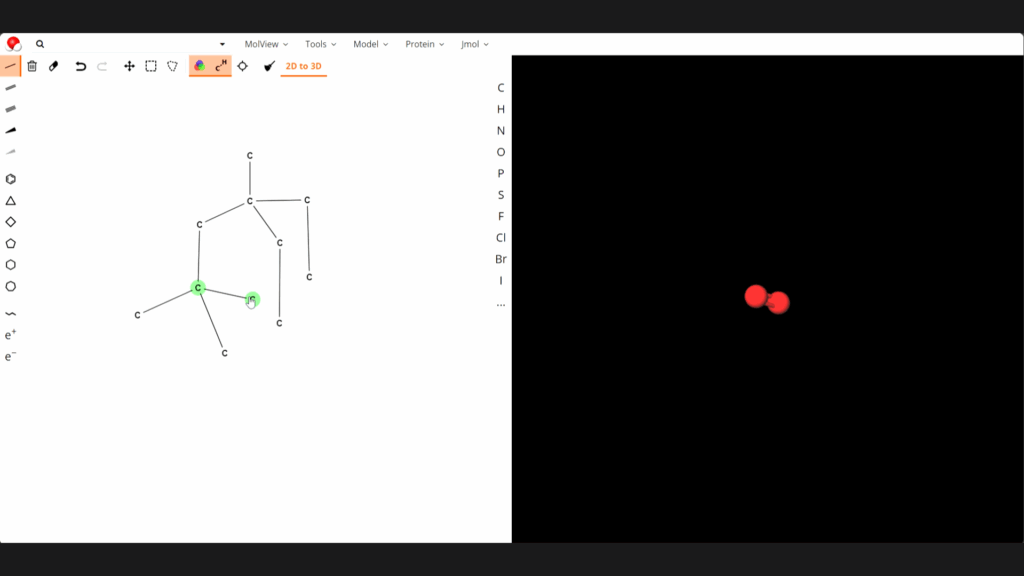
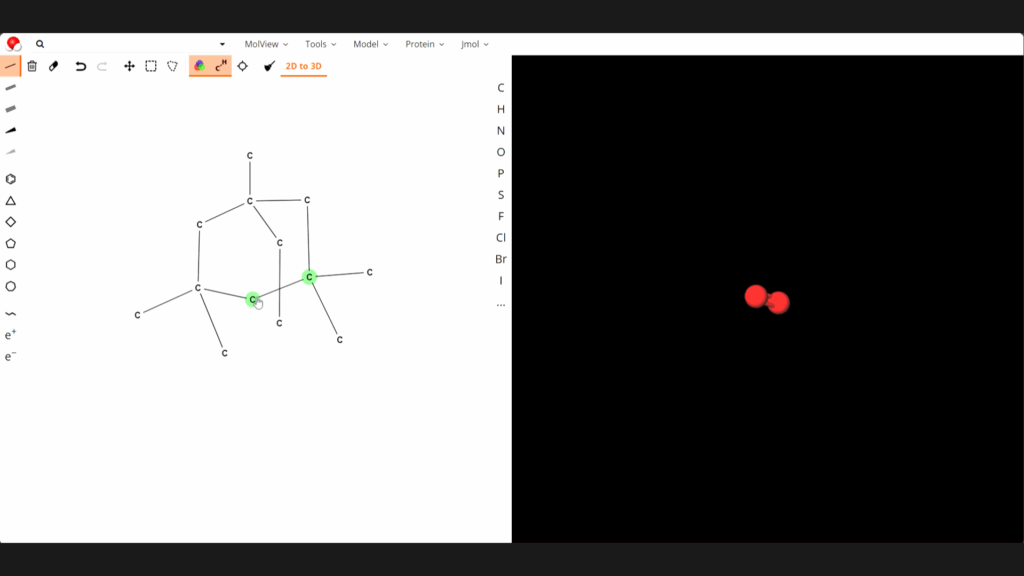
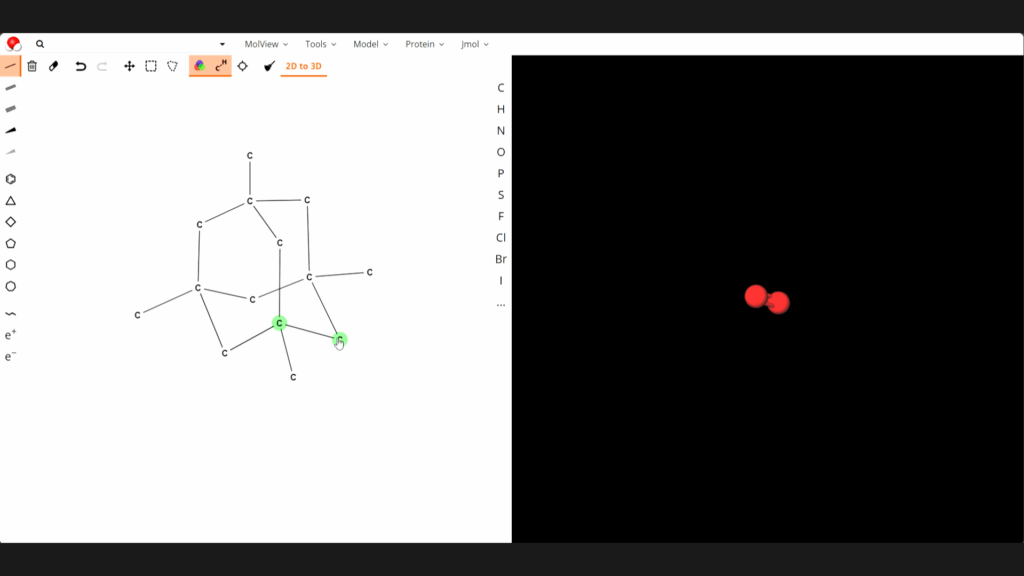
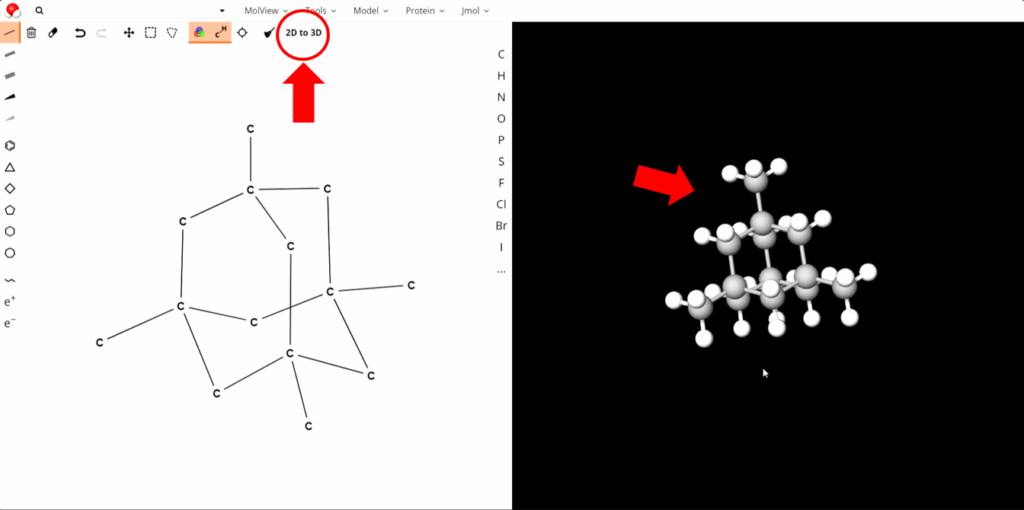
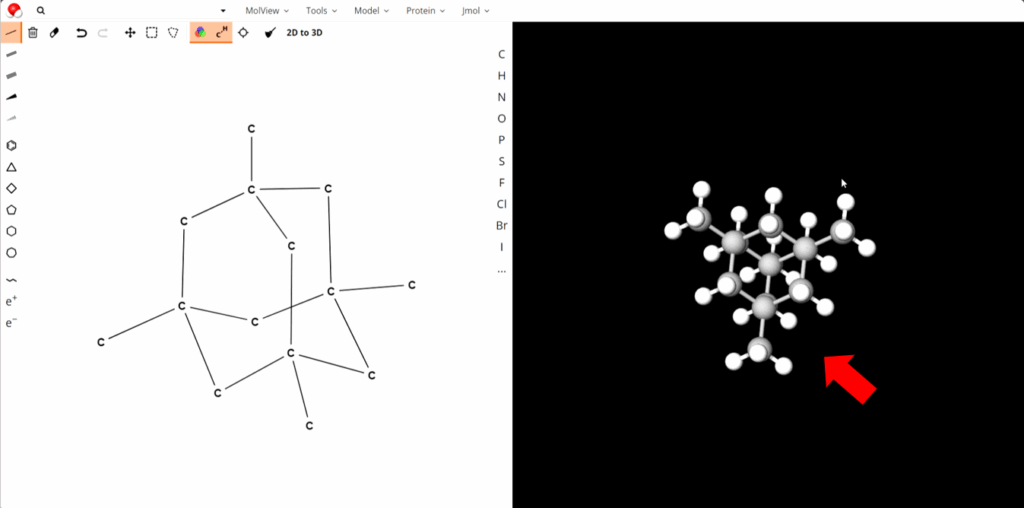
Step 9. Convert the completed model into 3D mode.
Rotate the molecule in different directions to examine its structure.
You will see that the diamond lattice is symmetrical — it looks the same from every side.
Conclusion
During the lab work, students:
- studied mechanisms of covalent bond formation;
- modeled nitrogen and oxygen molecules with double and triple bonds;
- built a fragment of the diamond crystal lattice;
- used MolView to create 3D molecular models.
Modeling helps to understand molecular structures, types of covalent bonds, and the relationship between structure and properties of substances.