
Lesson

Purpose of the work:
- to investigate the effectiveness of a catalyst on the rate of a chemical reaction
Expected results:
After completing the work, students can:
- develop teamwork skills
- be able to analyze and summarize the information received
- draw logical conclusions
Teacher’s Guide:
- The task is performed in groups of 3-4 people
- Before starting laboratory work, please read the safety rules by following the link:
- To download the worksheet, follow the link:
Theory
What is catalysis?
Catalysis is the process of changing the speed of a chemical reaction through a catalyst.
A catalyst is a substance that affects the rate of reaction but is not consumed or included in the final products.
Types of catalysts:
- Positive catalysts (accelerators):
Yeast speeds up hydrogen peroxide breakdown (enzyme: catalase),
Potassium iodide (KI) and copper sulfate (CuSO₄) accelerate oxygen release. - Negative catalysts (inhibitors):
Antioxidants in food slow down oxidation and spoilage,
Fuel additives reduce fuel degradation.
Types of catalysis:
- Homogeneous catalysis – the catalyst and reactants are in the same phase (usually liquid).
Example: Cu²⁺ ions in hydrogen peroxide solution. - Heterogeneous catalysis – the catalyst and reactants are in different phases.
Example: Yeast (solid) in hydrogen peroxide (liquid).
Practical part
Let’s observe heterogeneous catalysis in action.
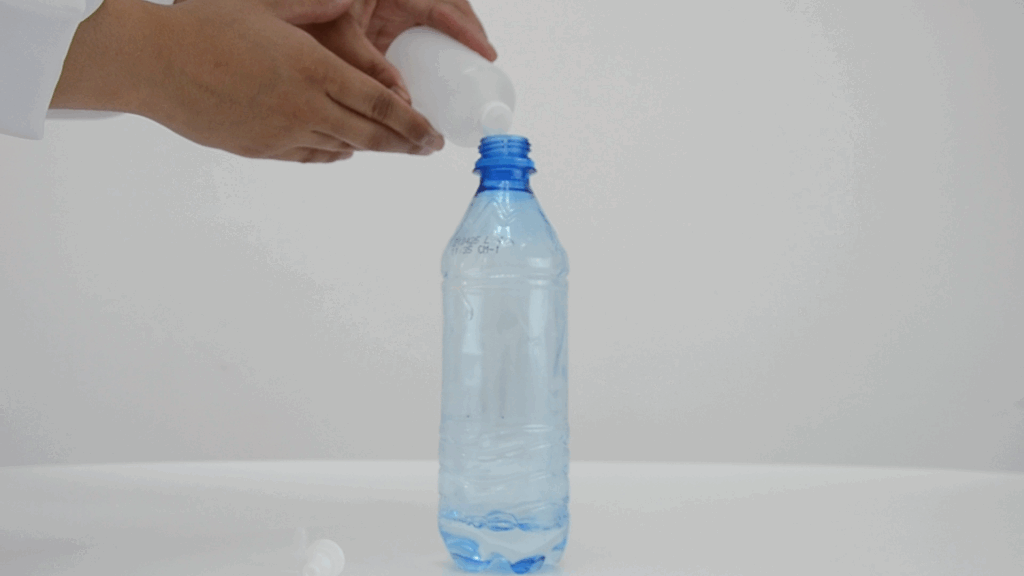
Step 1. Pour 100 ml of 3% hydrogen peroxide into a plastic bottle.
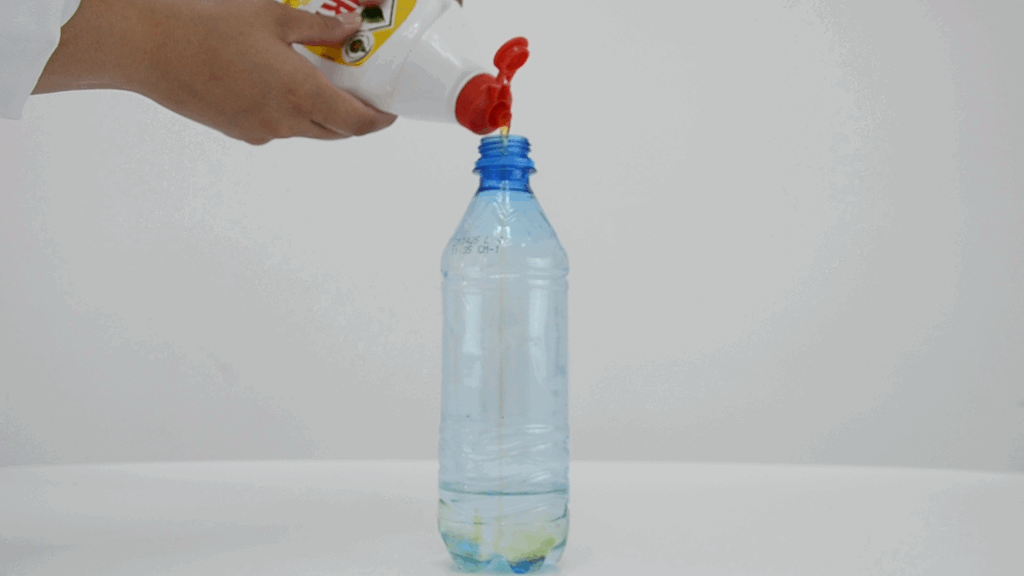
Step 2. Add a few drops of liquid soap. For visibility, you can also add food coloring.
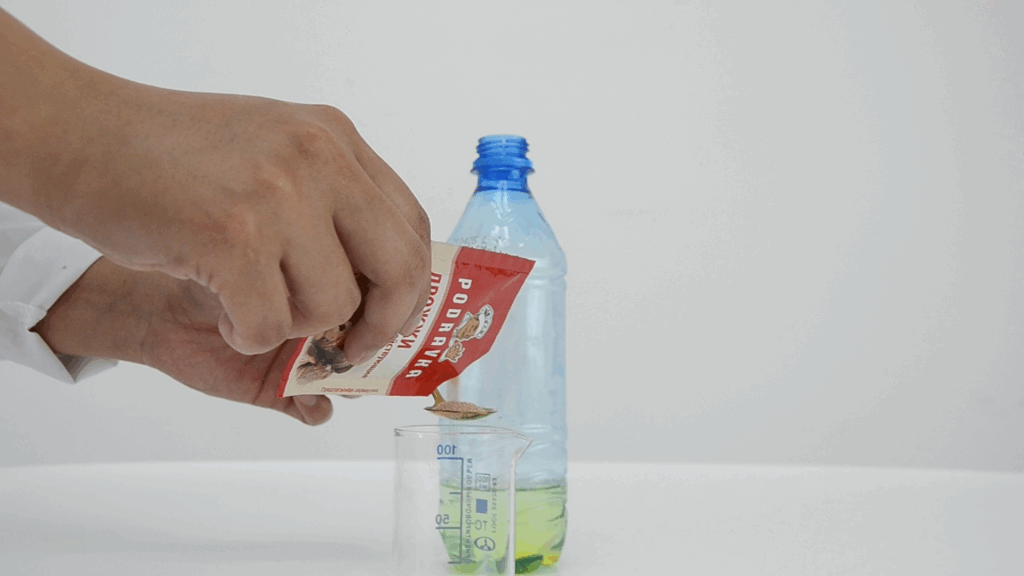
Step 3. In a separate cup, mix 1 teaspoon of dry yeast with 4 teaspoons of warm water.
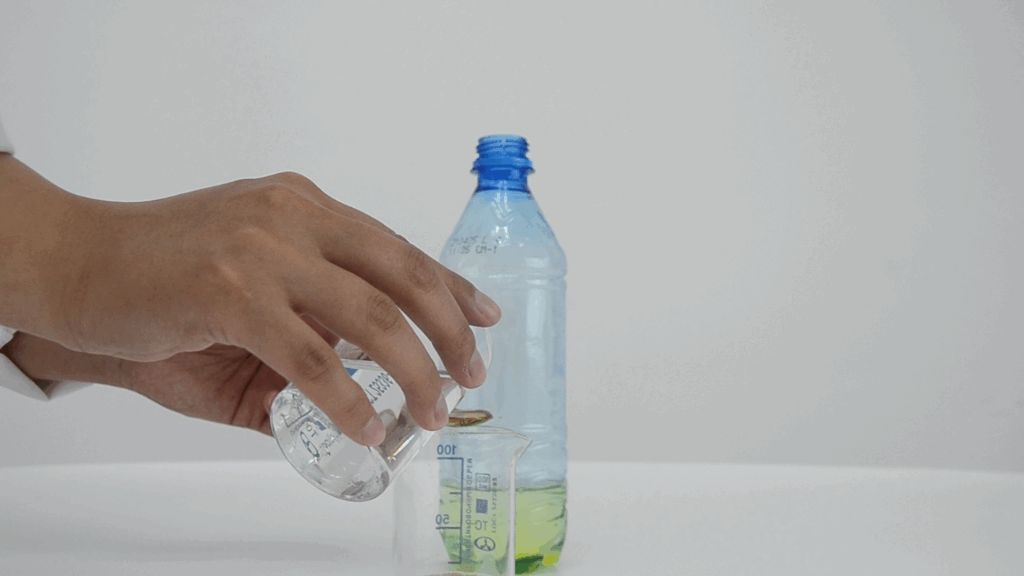
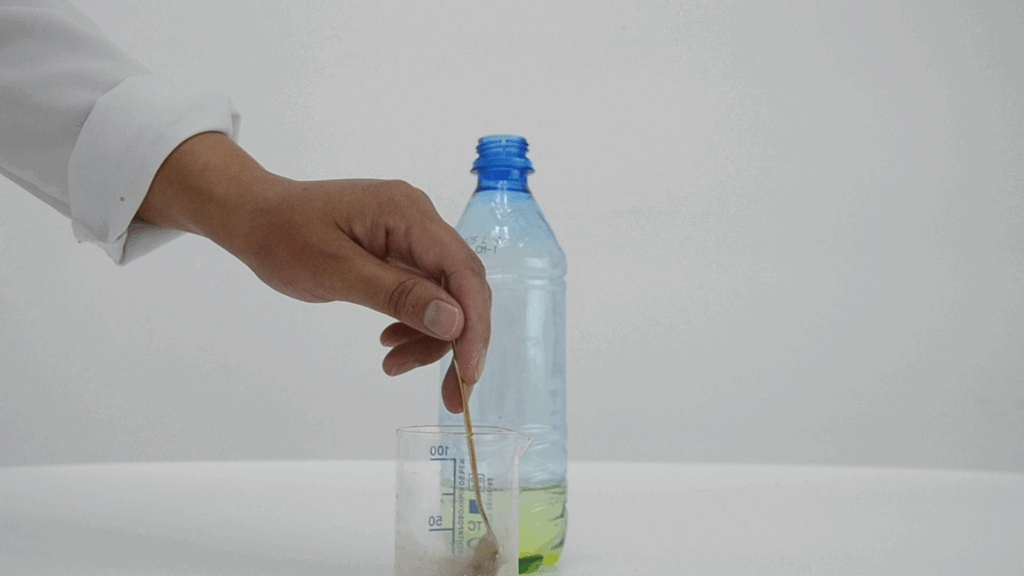
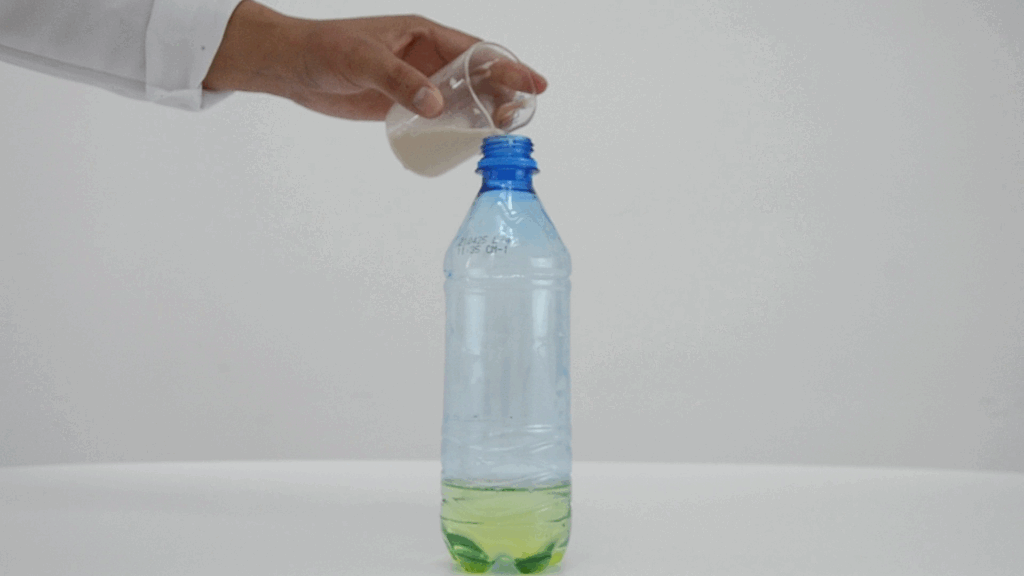
Step 4. Quickly pour the yeast mixture into the bottle and observe the vigorous reaction.
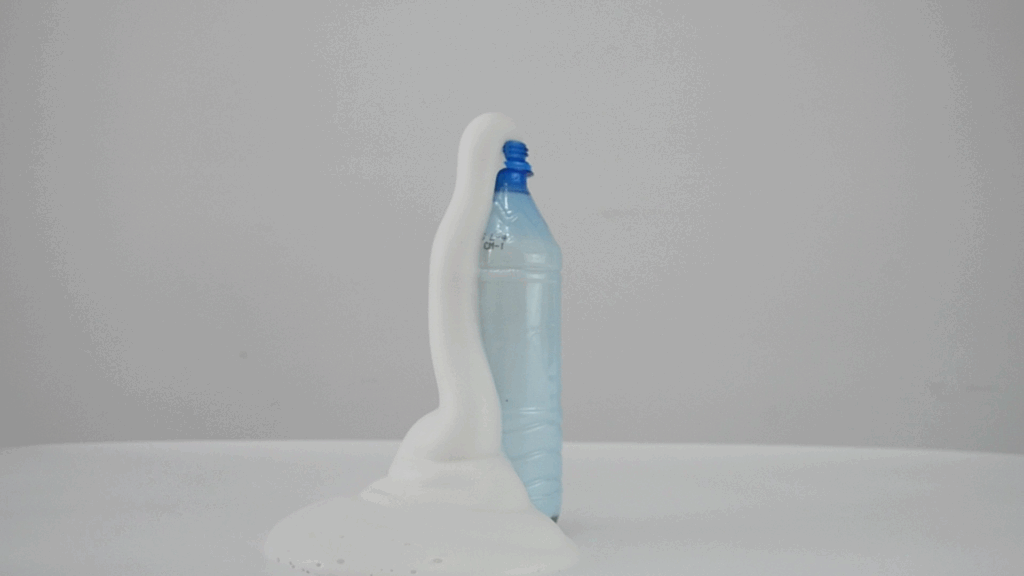
Step 5. Draw a conclusion: the yeast acts as a catalyst, speeding up the breakdown of hydrogen peroxide with the release of oxygen and foam. This is an example of heterogeneous catalysis, where the catalyst (yeast) does not dissolve in the reactant.
Conclusion
During this lab, students explored the concept of catalysis and examined how different catalysts affect the rate of hydrogen peroxide decomposition.
They learned to observe, compare, and analyze reaction speed and draw conclusions about the effectiveness of each catalyst.