
Lesson

Purpose of the work:
- Investigate the properties of glucose as an aldehyde alcohol
- Conduct a qualitative test for starch
Expected results:
After completing the work, students can:
- develop teamwork skills
- be able to analyze and summarize the information received
- draw logical conclusions
Teacher’s Guide:
- The task is performed in groups of 2-3 people
- Before starting laboratory work, please read the safety rules by following the link:
- To download the worksheet, follow the link:
Theory
What are carbohydrates?
Carbohydrates are organic compounds made of carbon, hydrogen, and oxygen. They are divided into:
- Monosaccharides (glucose, fructose)
- Disaccharides (sucrose, lactose)
- Polysaccharides (starch, cellulose)
Carbohydrates are important as a source of energy and are part of the structure of living cells.
Glucose — a monosaccharide
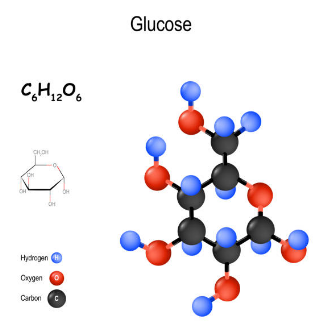
Glucose (C₆H₁₂O₆) is a simple sugar that:
- contains an aldehyde group (–CHO) → that’s why it’s called an aldohexose (aldehyde alcohol)
- has five hydroxyl groups (–OH)
- can undergo oxidation reactions, for example, with Cu(OH)₂ or [Ag(NH₃)₂]⁺
Key property: glucose is a reducing agent. It can reduce metal ions (e.g., Cu²⁺) to Cu⁺.
Sucrose — a disaccharide
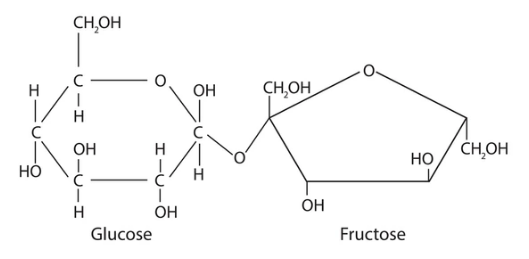
Sucrose (C₁₂H₂₂O₁₁) consists of glucose and fructose joined together.
Feature: it does not contain a free aldehyde group, so it does not give a positive test for aldehydes.
However, if heated with acid (hydrolysis), it breaks down into glucose and fructose, which do give a positive reaction.
Practical part
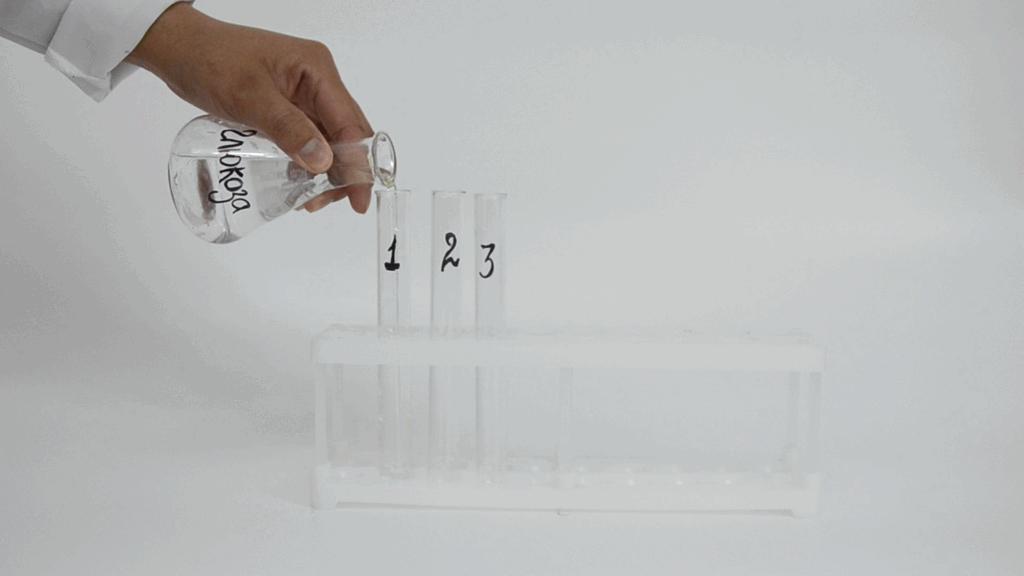
Step 1. Prepare three test tubes and number them. Pour glucose solution into the first test tube.
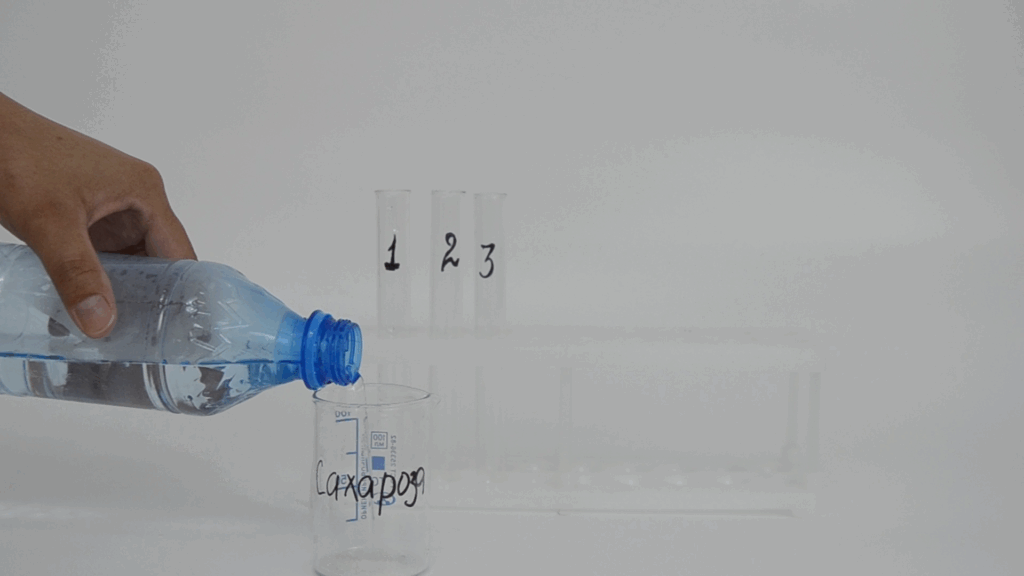
Step 2. For the second test tube, mix a spoonful of sugar with water.
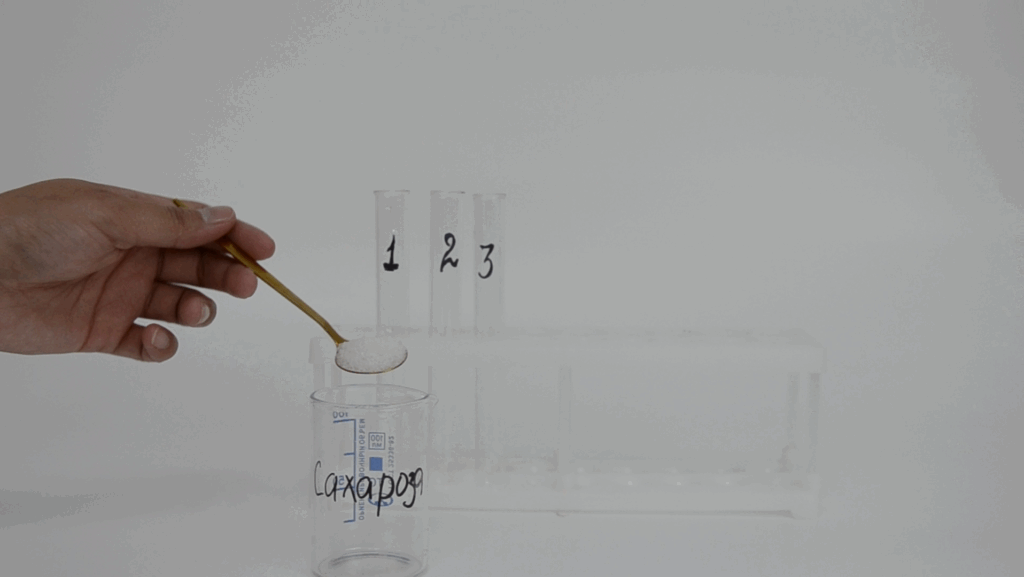
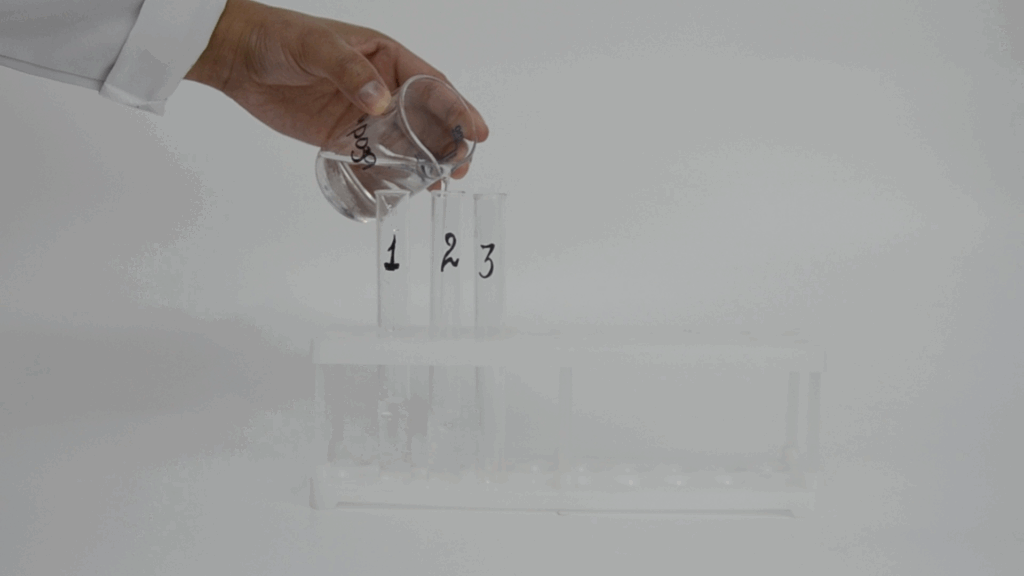
Step 3. Pour the sugar solution into the second test tube.
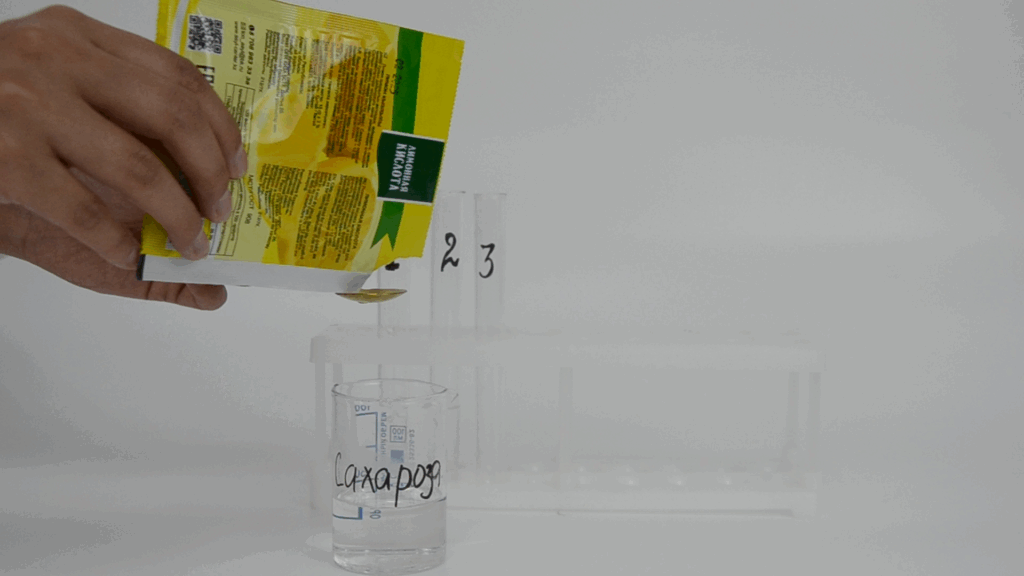
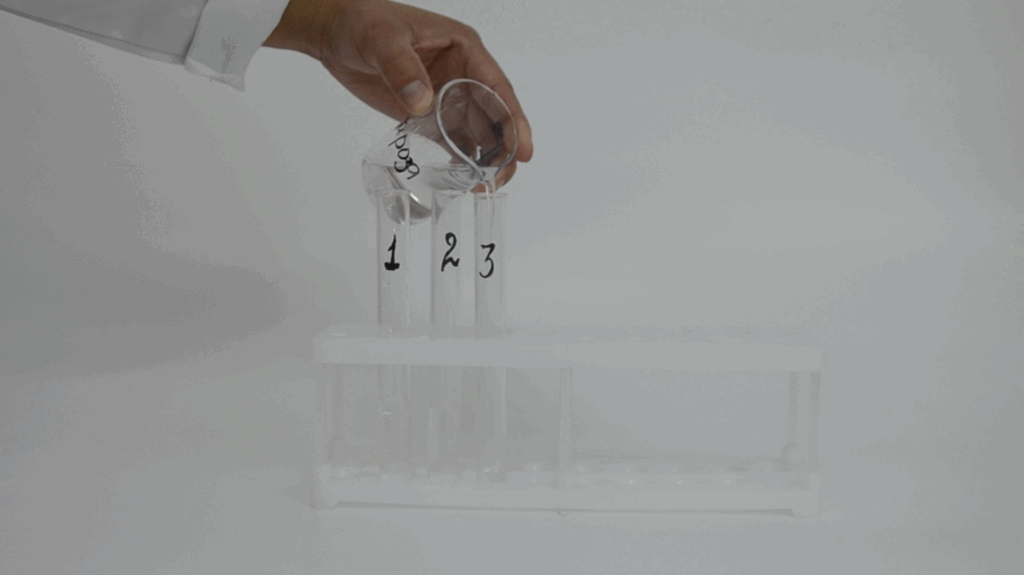
Step 4. Mix sugar solution with citric acid and pour it into the third test tube.
Step 5. Prepare copper(II) hydroxide (Cu(OH)₂): dissolve copper sulfate in water in a beaker.
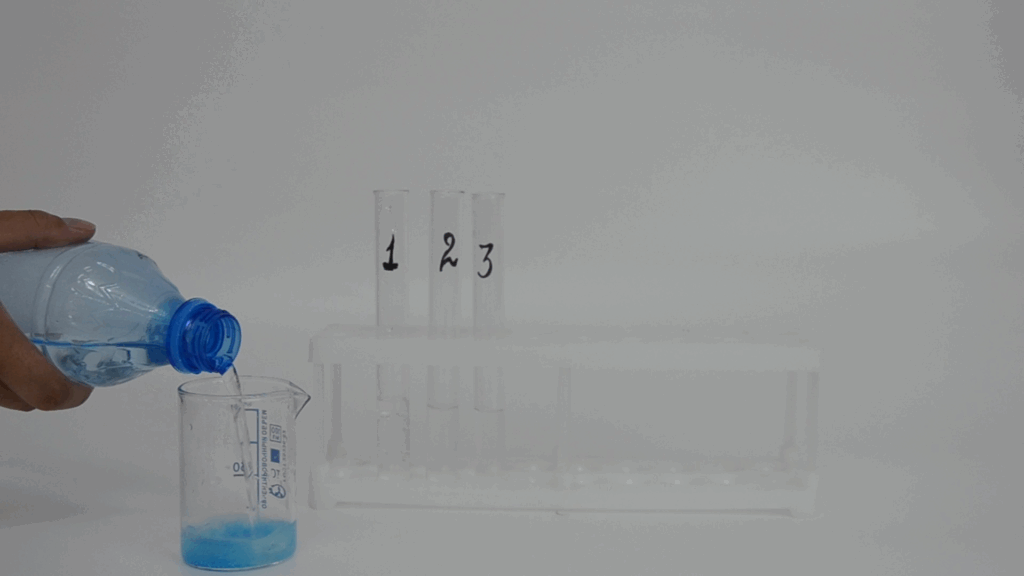
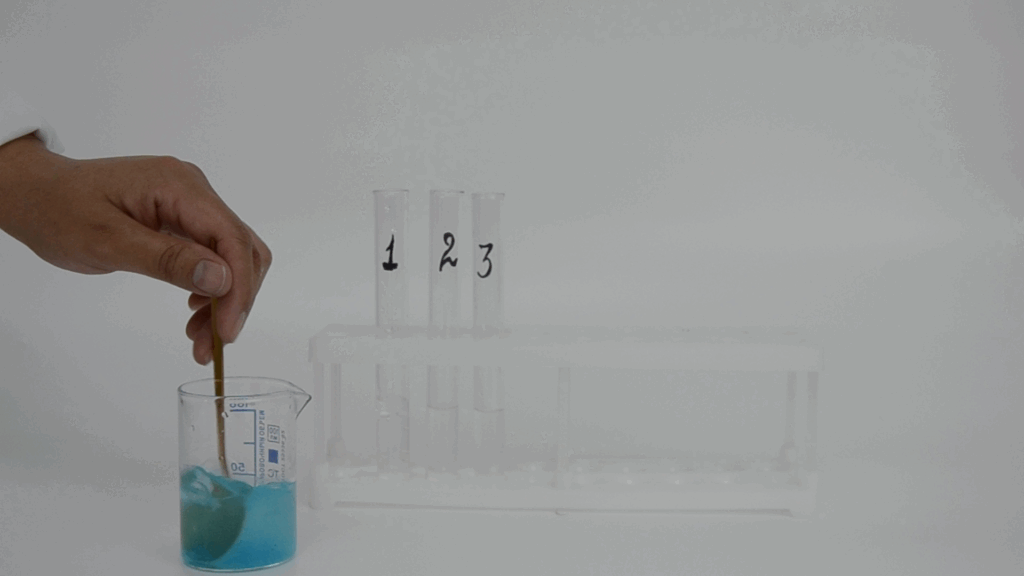
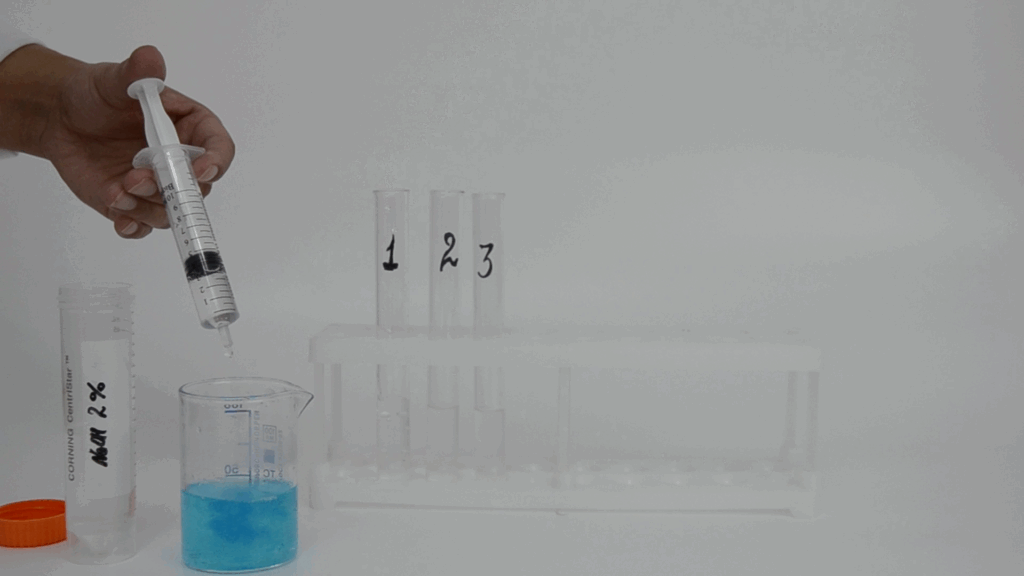
Step 6. Add 3–4 ml of alkali solution (NaOH) — a blue precipitate of Cu(OH)₂ will form. Add 3 ml of this to each test tube.
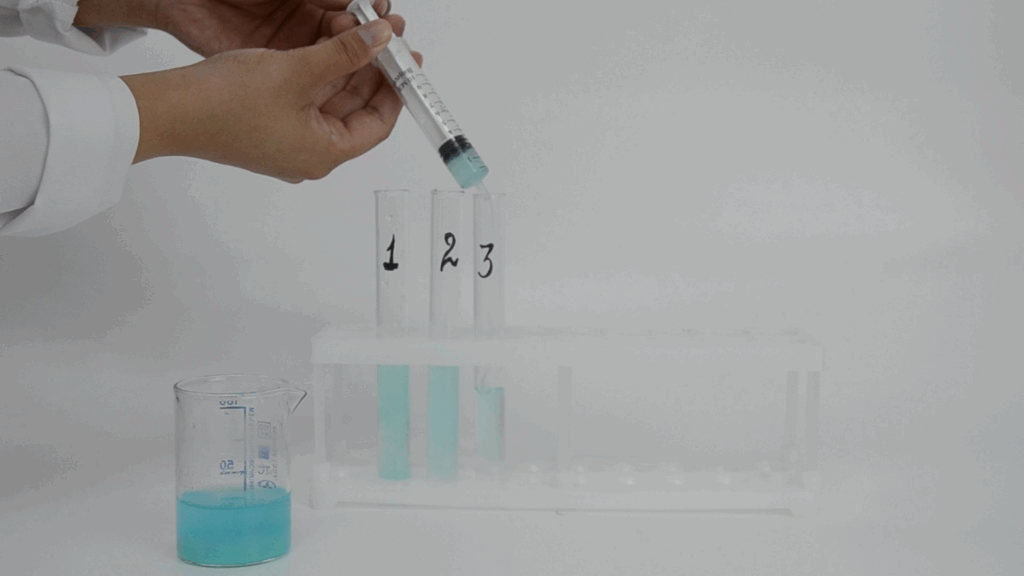
Step 7. Place all three test tubes in a hot water bath for 15 minutes and observe the reactions. Record your observations in the Worksheet.
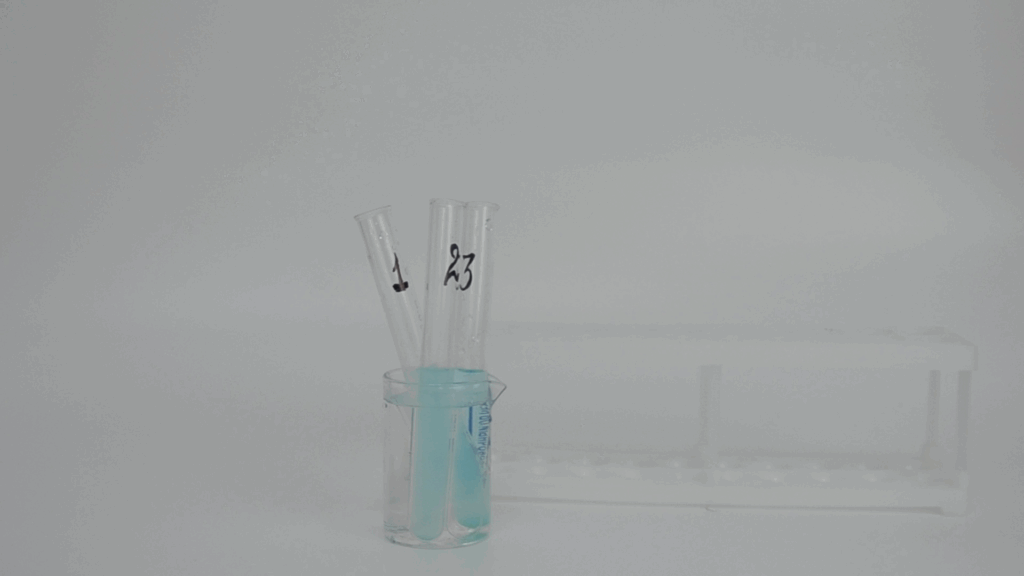
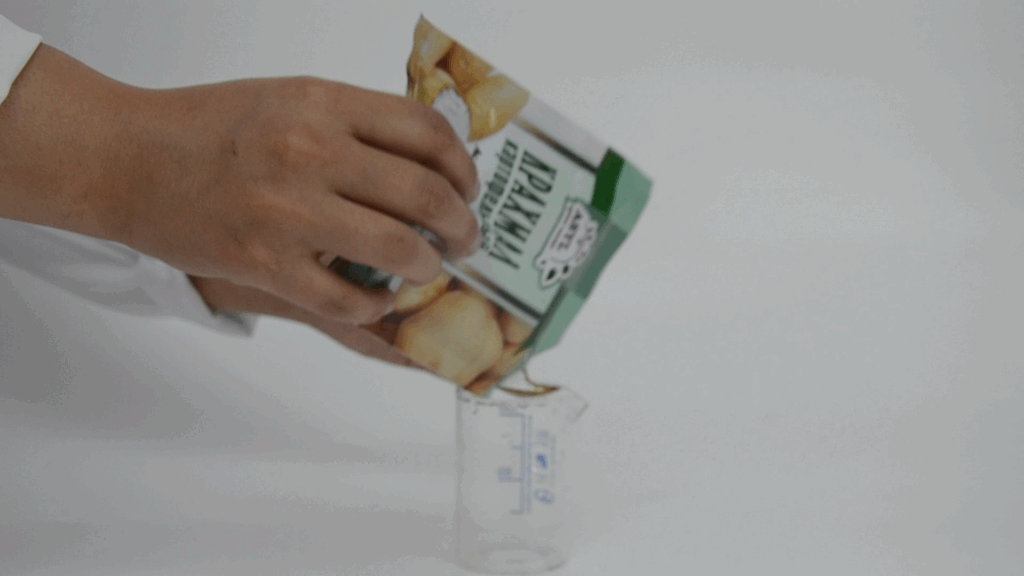
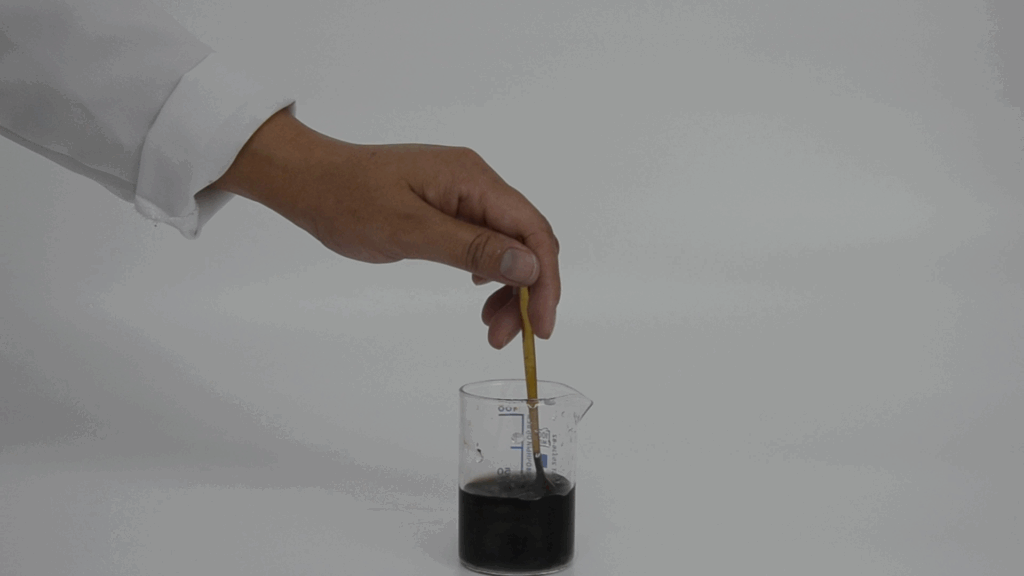
Step 8. Now perform the qualitative test for starch. Dissolve potato starch in water, or use water from boiled potatoes..
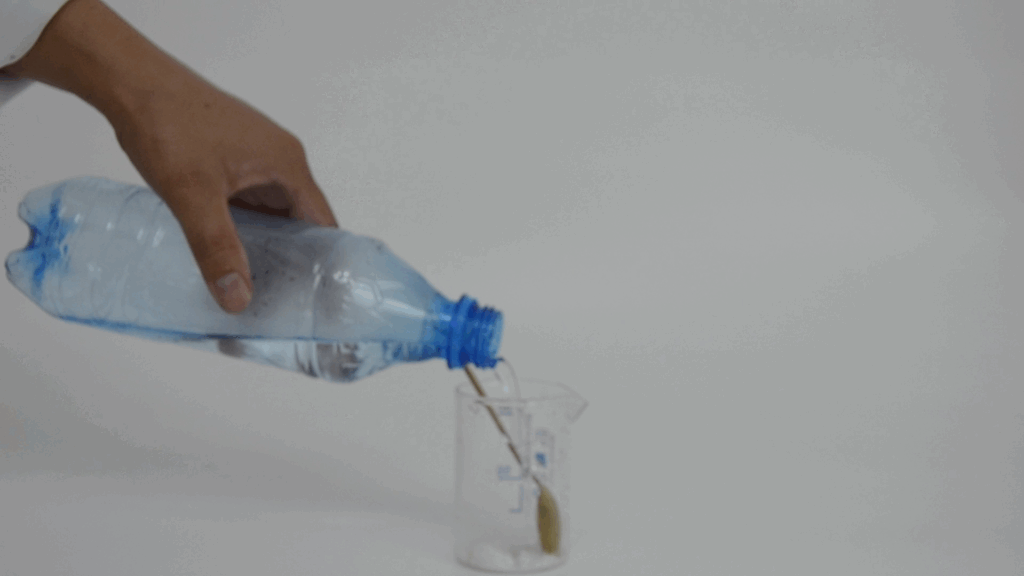
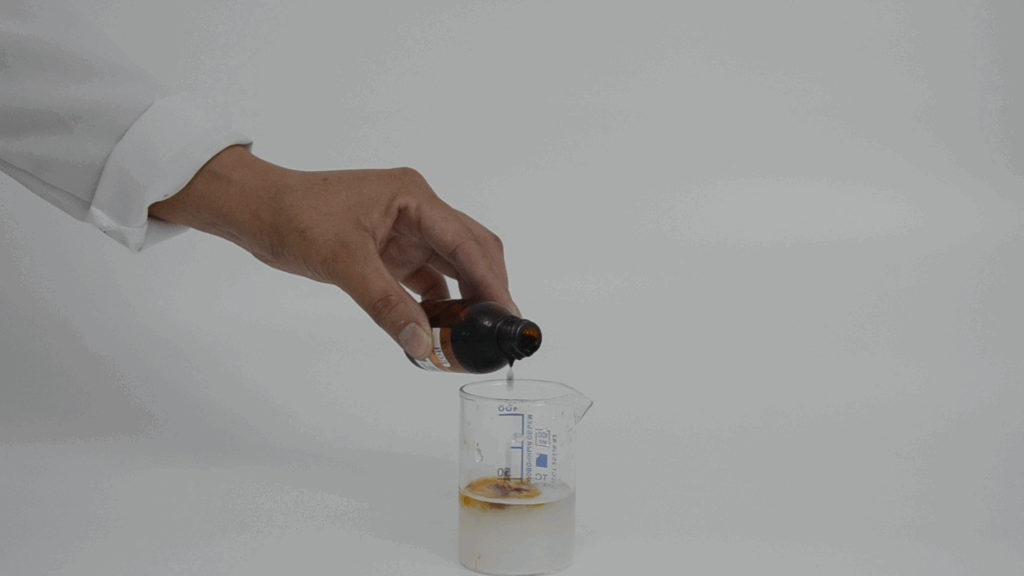
Step 9. Add 2–3 drops of iodine solution. Observe the changes. Draw a conclusion and write down your observations in the Worksheet.
Conclusion
Students observed that glucose has reducing properties, starch gives a characteristic color when reacted with iodine, and sucrose, after hydrolysis, forms glucose that reacts with Cu(OH)₂. These experiments help to better understand the structure and properties of carbohydrates