
Lesson

Purpose of the work:
- To study the main photosynthetic pigments by analyzing different plant samples.
Expected results:
After completing the work, students can:
- develop teamwork skills
- be able to analyze and summarize the information received
- draw logical conclusions
Teacher’s Guide:
- The task is performed in groups of 3-4 people
- Before starting laboratory work, please read the safety rules by following the link:
- To download the worksheet, follow the link:
Theory
Chloroplasts are organelles in plant cells where photosynthesis occurs. Their main function is to convert sunlight into chemical energy with the help of pigments.
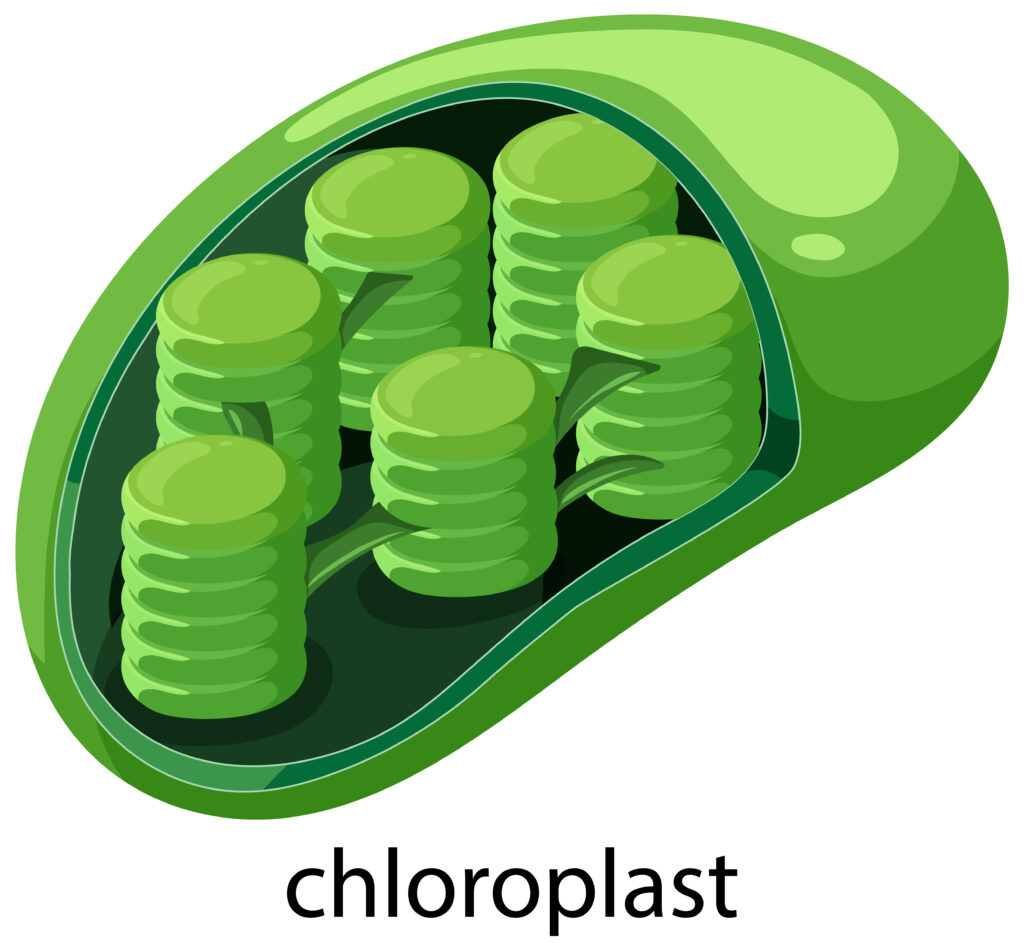
Main photosynthetic pigments:
- Chlorophyll a – primary green pigment that captures light energy
- Chlorophyll b – auxiliary green pigment that broadens light absorption range
- Carotenoids – yellow and orange pigments that protect chlorophyll from damage
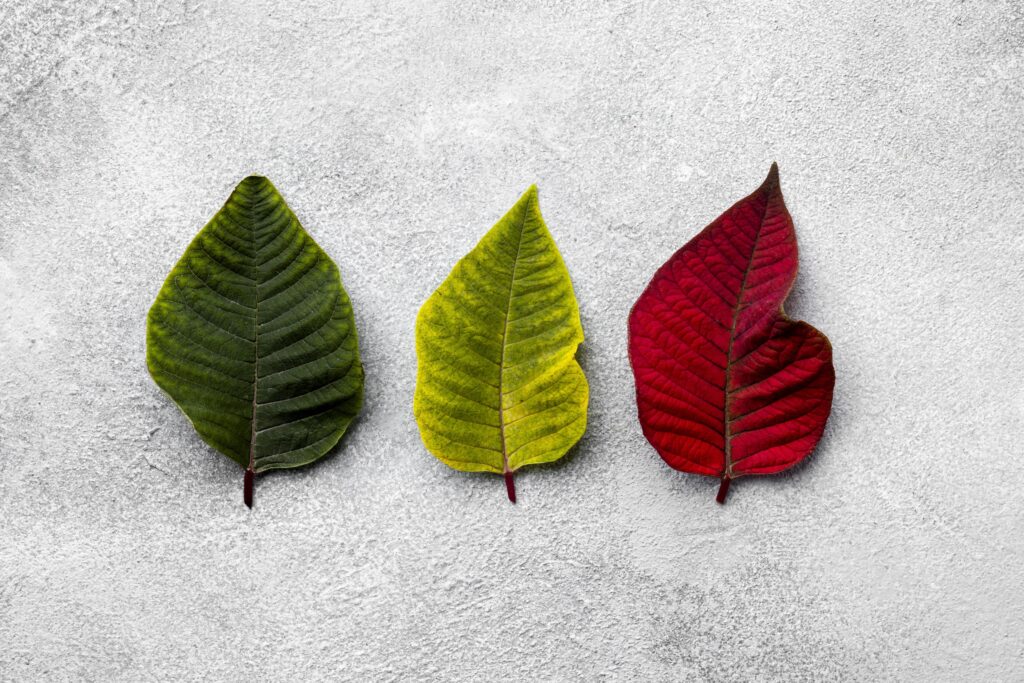
- Anthocyanins – red-purple water-soluble pigments that provide protection but do not take part in photosynthesis
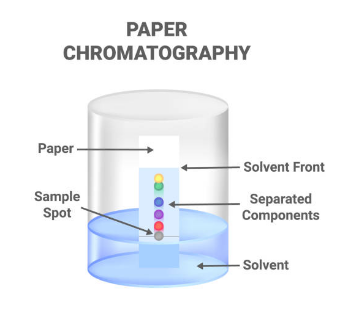
Chromatography is a method of separating substances based on their movement along paper in the presence of a solvent. Each pigment has a specific Rf value which helps in identification.
Practical part
For the chromatography lab on photosynthetic pigments, it is optimal to use plant leaves with varying amounts of chlorophylls and carotenoids to observe the diversity of pigments. For example: spinach, basil, parsley, red cabbage, lettuce leaves, etc.
Step 1. Grind the leaves of red basil using a mortar and pestle.
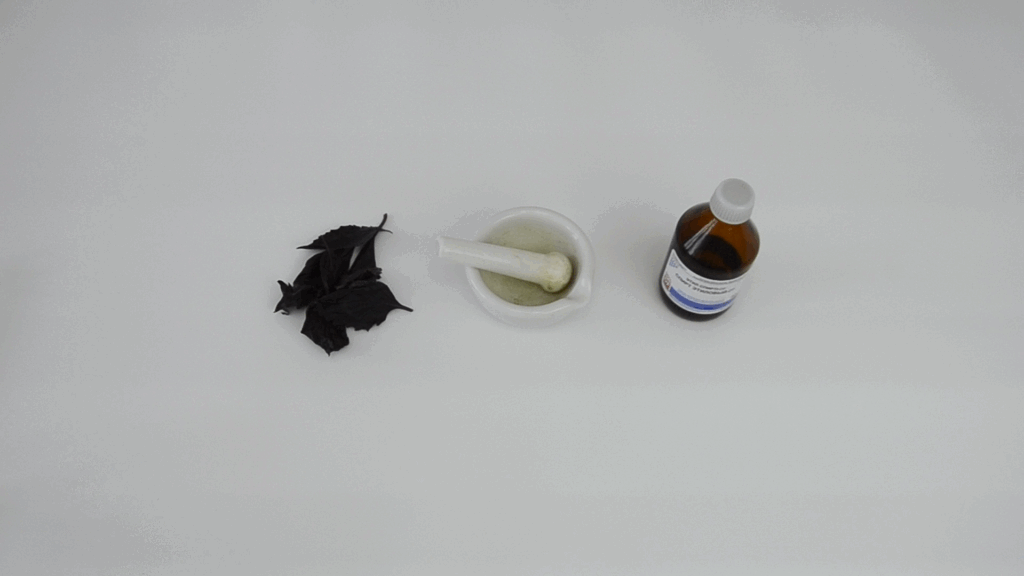
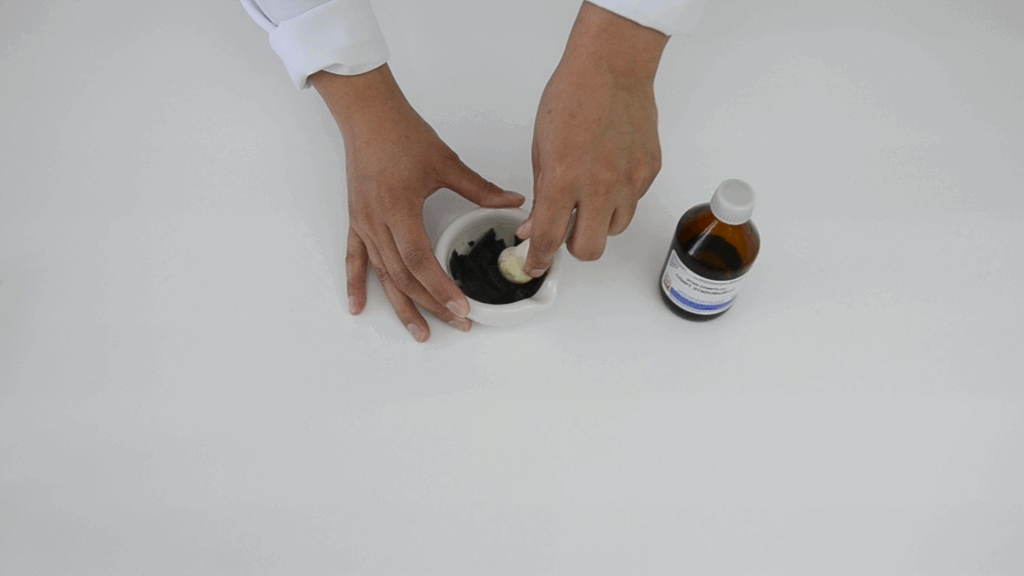
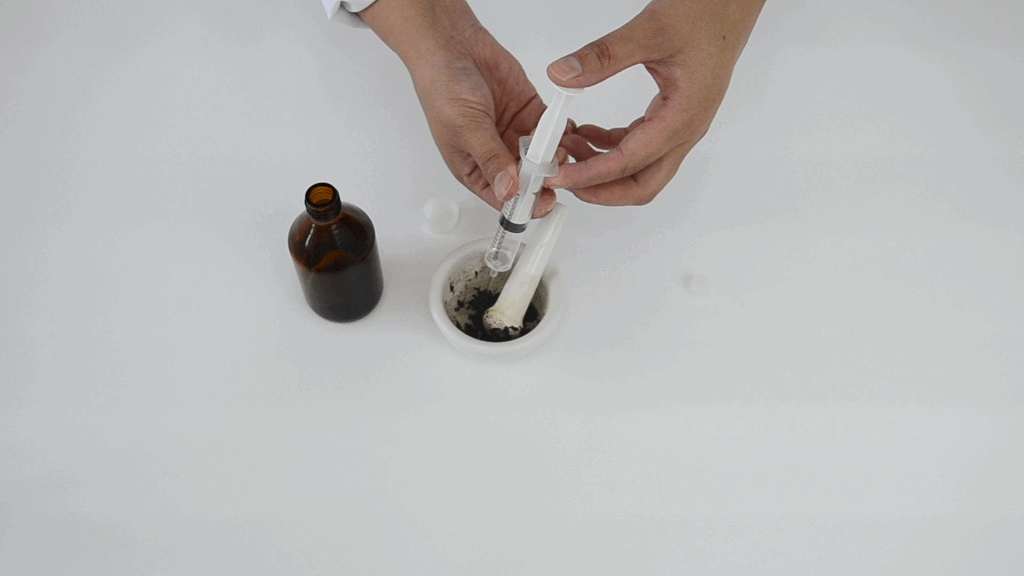
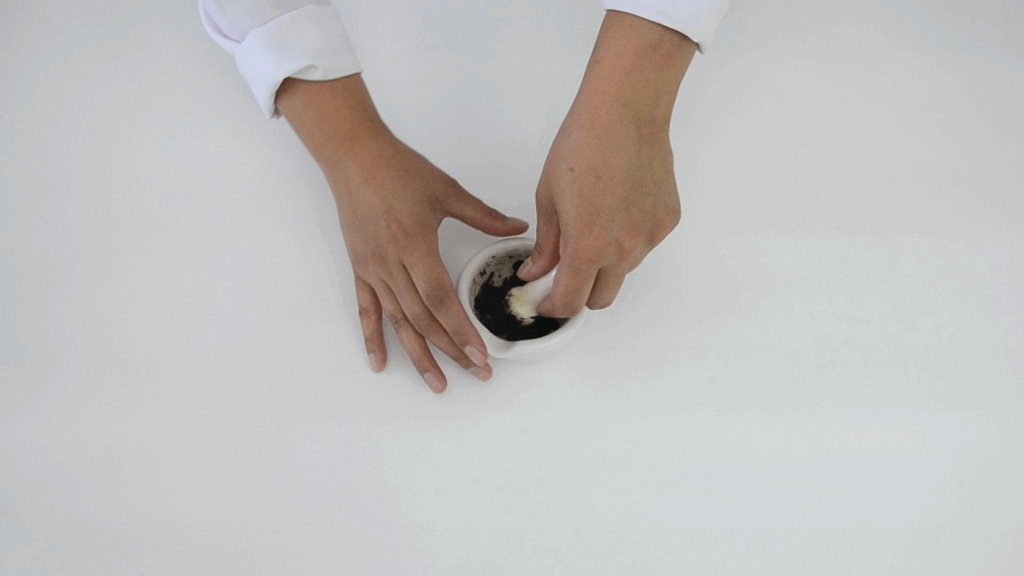
Step 2. Add 2–3 ml of 96% ethanol or acetone to the sample. Mix the leaves thoroughly to obtain a concentrated green-purple solution.
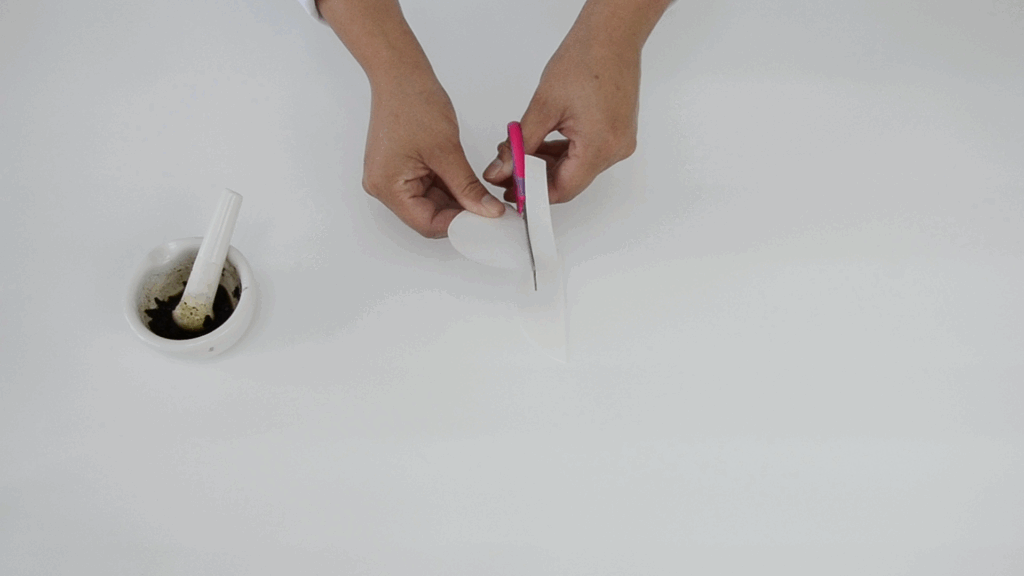
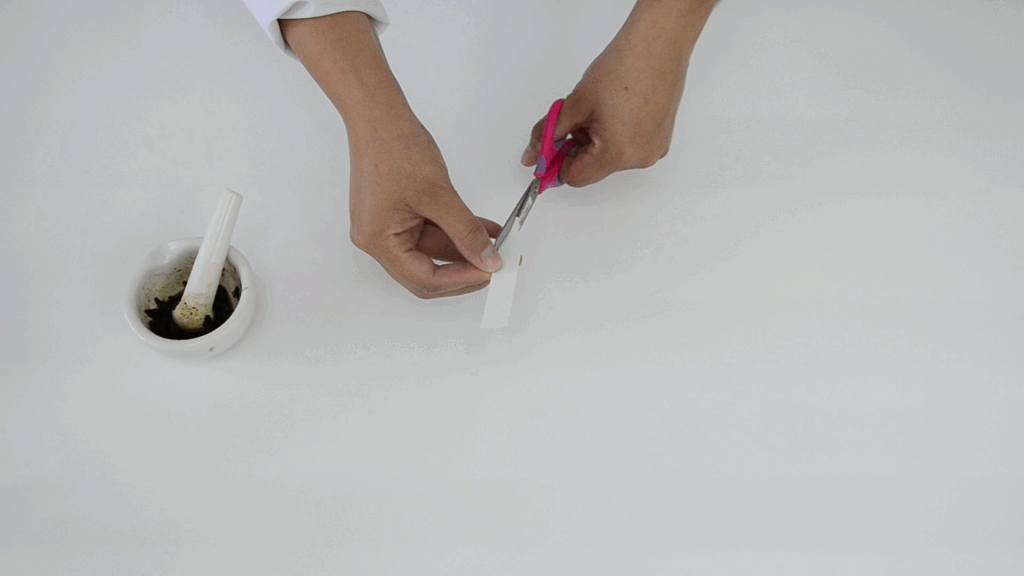
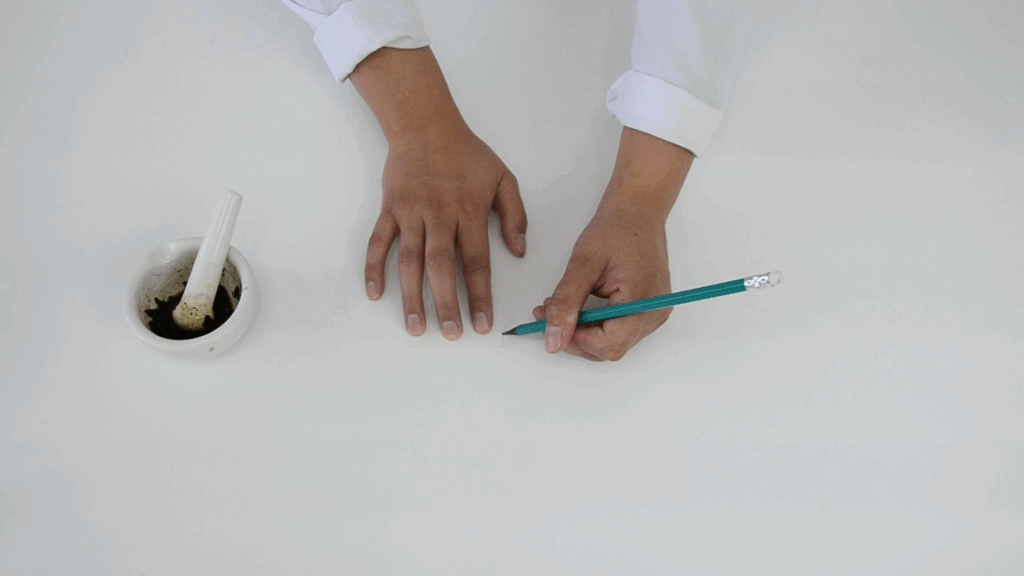
Step 3. Cut strips of filter paper (1–2 cm wide and 8–10 cm long). Cut one end into a point to make a tab. From the tip of the tab, draw a horizontal line 1.5 cm above with a pencil (starting line).
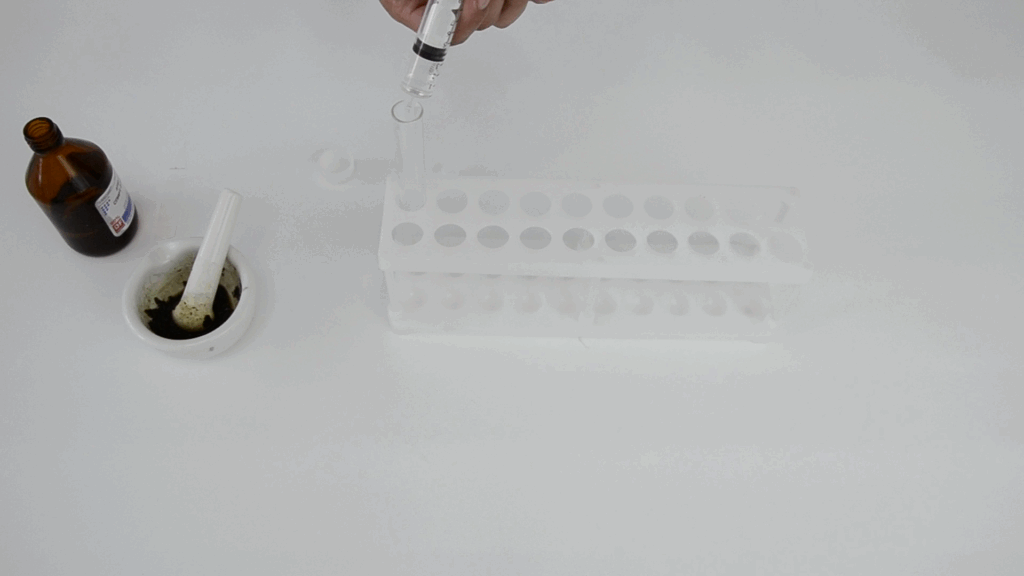
Step 4. Pour 1–2 cm of ethanol into a beaker or test tube (make sure the solvent does not touch the pigment spot).
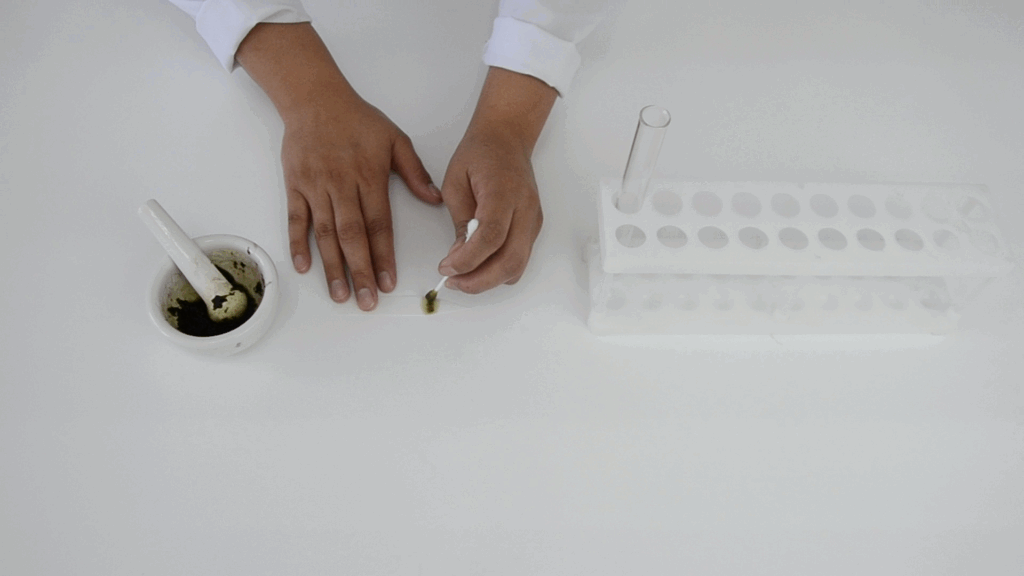
Step 5. Using a cotton swab, toothpick, or syringe, carefully apply a drop of extract onto the starting line of strip. Allow the spot to dry and, if needed, apply a second or third layer.
Step 6. Carefully place the paper strip into the container with the solvent, bottom end down, ensuring the pigment spot does not touch the liquid.
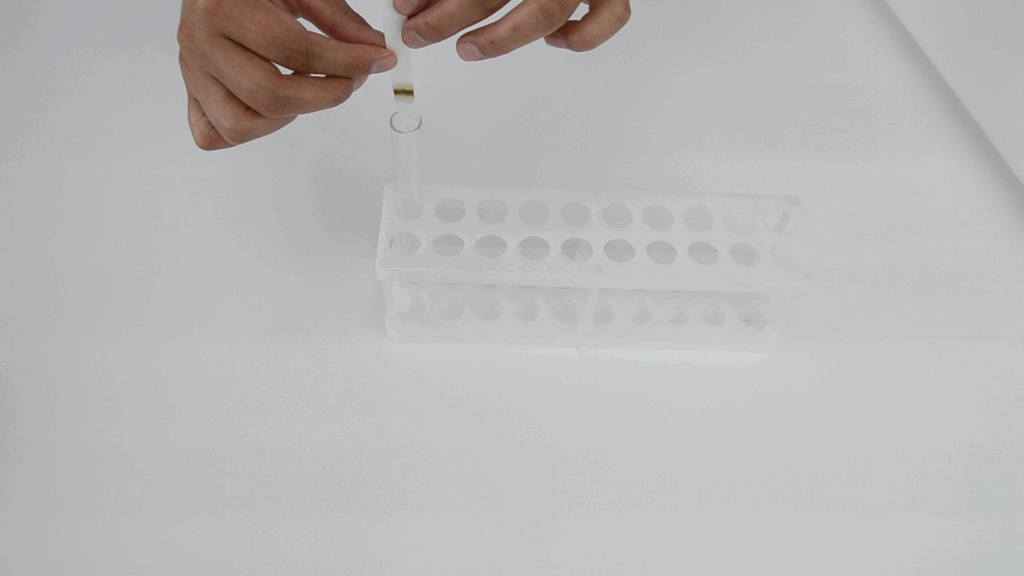
Step 7. Observe how the solvent rises along the paper and separates the pigments. Wait until the solvent reaches a height of 6–8 cm.
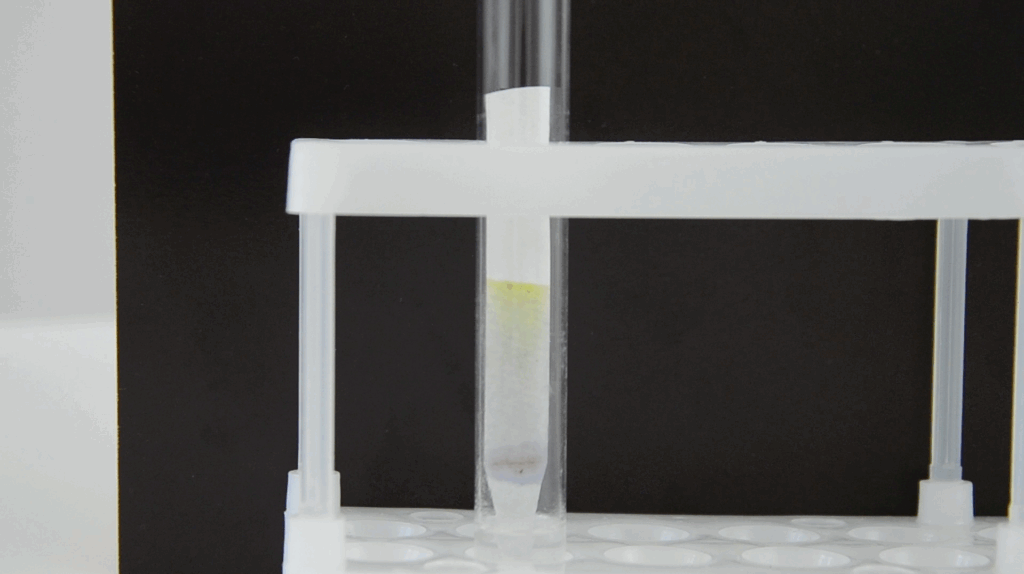
Step 8. Remove the paper and immediately mark the solvent front with a pencil. Mark the center of each colored pigment spot.
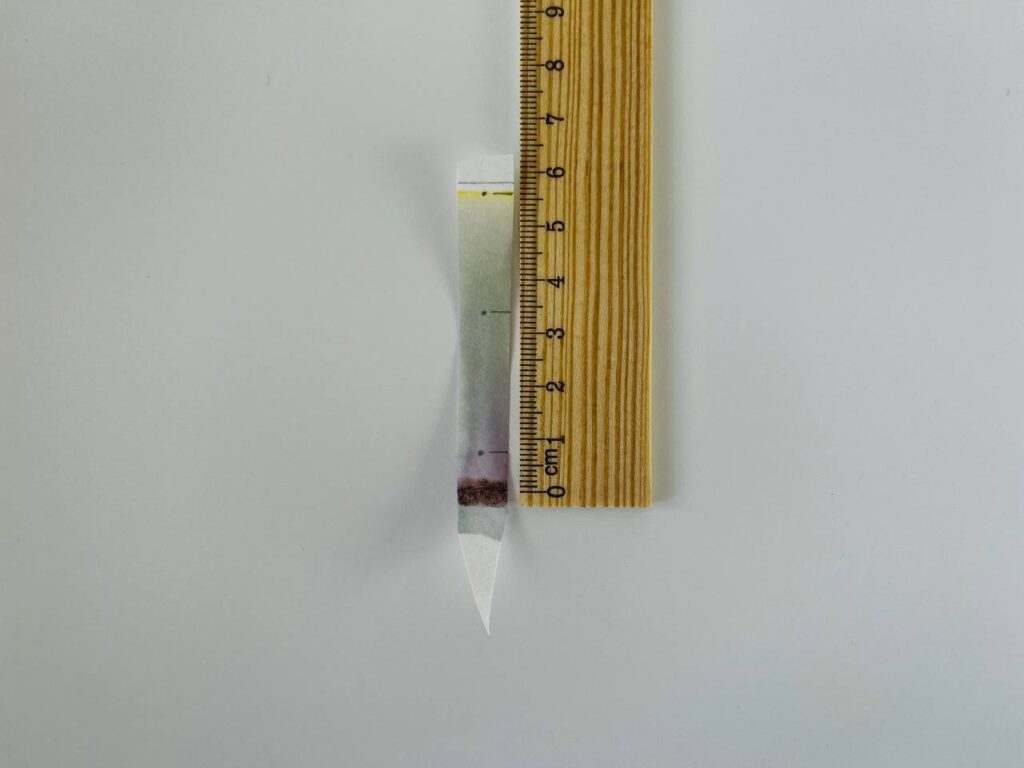
Calculating Rf for Each Pigment
Measure the distance from the starting line to the center of each pigment spot.
Measure the total distance from the starting line to the solvent front.
Calculate the Rf value using the formula:

Record the data in the table on the Worksheet. Make your conclusions.
Conclusion
As a result of the experiment, students separated the pigments from the leaves of red basil. They calculated Rf values and established the link between the chloroplast’s structure and its role in photosynthesis and plant protection.