
Lesson

Purpose of the work:
- To learn how to construct structural and spatial models of molecules.
Expected results:
After completing the work, students can:
- develop teamwork skills
- be able to analyze and summarize the information received
- draw logical conclusions
Teacher’s Guide:
- The task can be completed in pairs or individually.
- Before starting laboratory work, please read the safety rules by following the link:
- To download the worksheet, follow the link:
Theory
Organic compounds are based on the carbon atom. Carbon is tetravalent and can bond with other carbon atoms, forming chains of different lengths. This explains the great variety of organic substances.
Homologous series
Organic compounds are grouped into homologous series.
Homologues are compounds with similar structure and properties that differ by one or more –CH₂– groups.
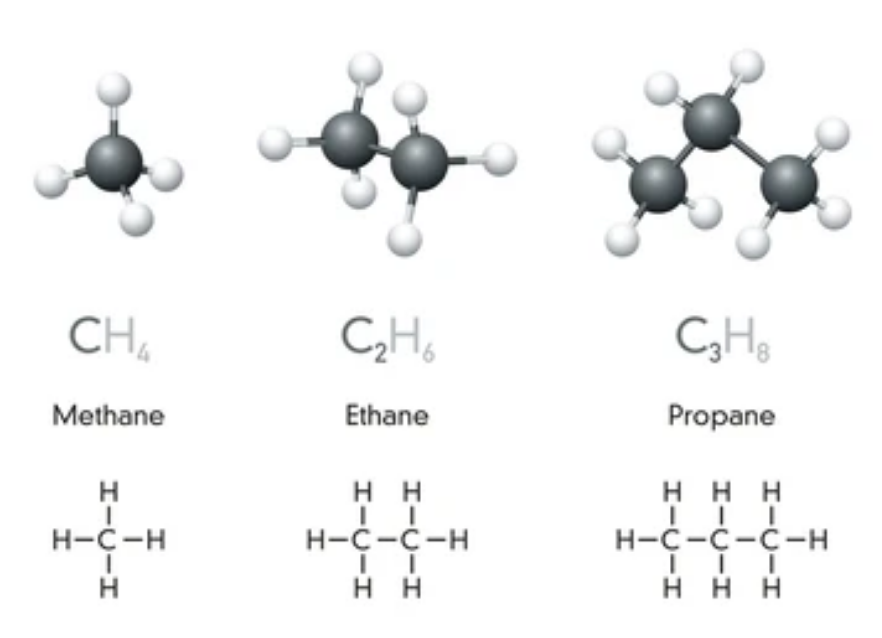
For example, alkanes:
- methane CH₄,
- ethane C₂H₆,
- propane C₃H₈,
- butane C₄H₁₀, etc.
They all share the general formula CₙH₂ₙ₊₂ and show gradual changes in physical properties (boiling point, state of matter) while retaining similar chemical properties.
Structural formulas
Organic compounds can be represented in different ways:
- molecular formula (shows the number of atoms),
- structural formula (shows the bonding order of atoms),
- spatial (3D) formula (shows the arrangement of atoms in space).
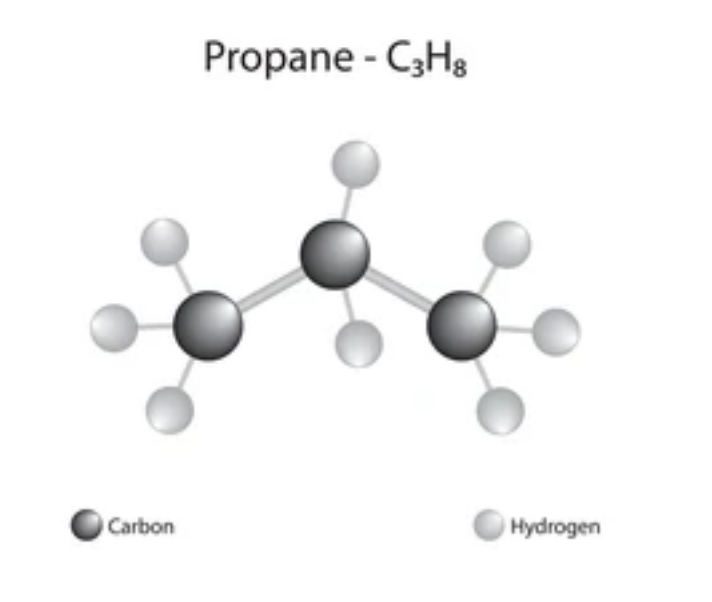
Example for propane:
- molecular formula: C₃H₈,
- structural formula: CH₃–CH₂–CH₃.
IUPAC nomenclature
To provide unambiguous names for organic compounds, the international IUPAC nomenclature is used.
Basic rules:
- choose the longest carbon chain (this is the base name),
- number the carbon atoms,
- identify substituents and their positions,
- construct the name.
Examples:
- CH₄ → methane,
- C₂H₆ → ethane,
- C₃H₈ → propane,
- C₃H₇Cl → 1-chloropropane.
Practical part
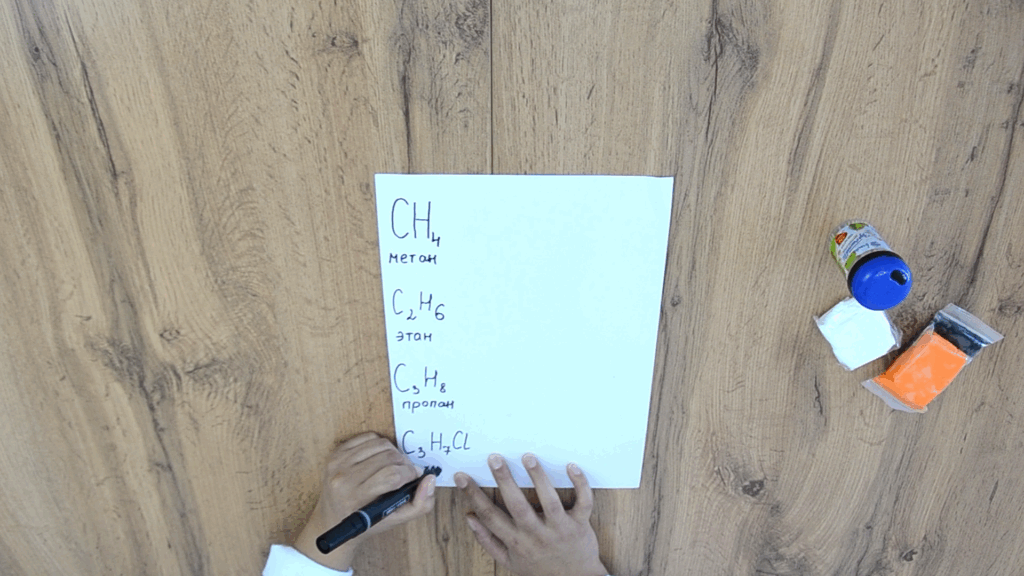
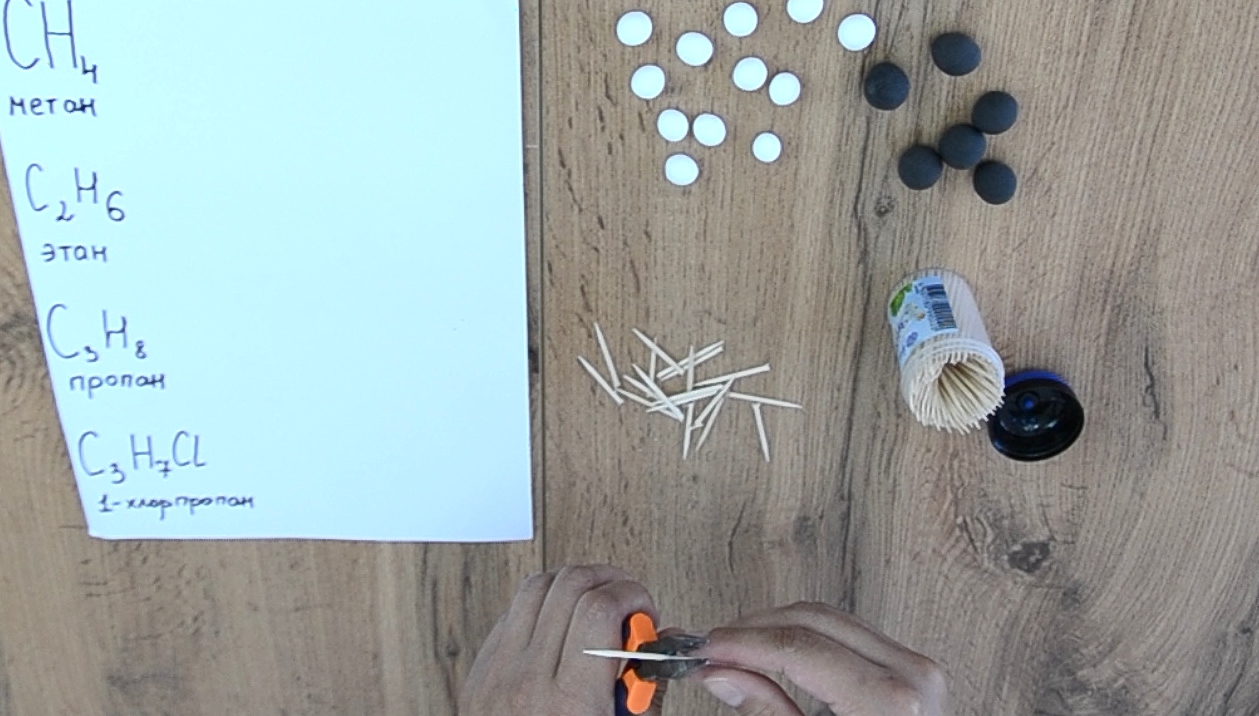
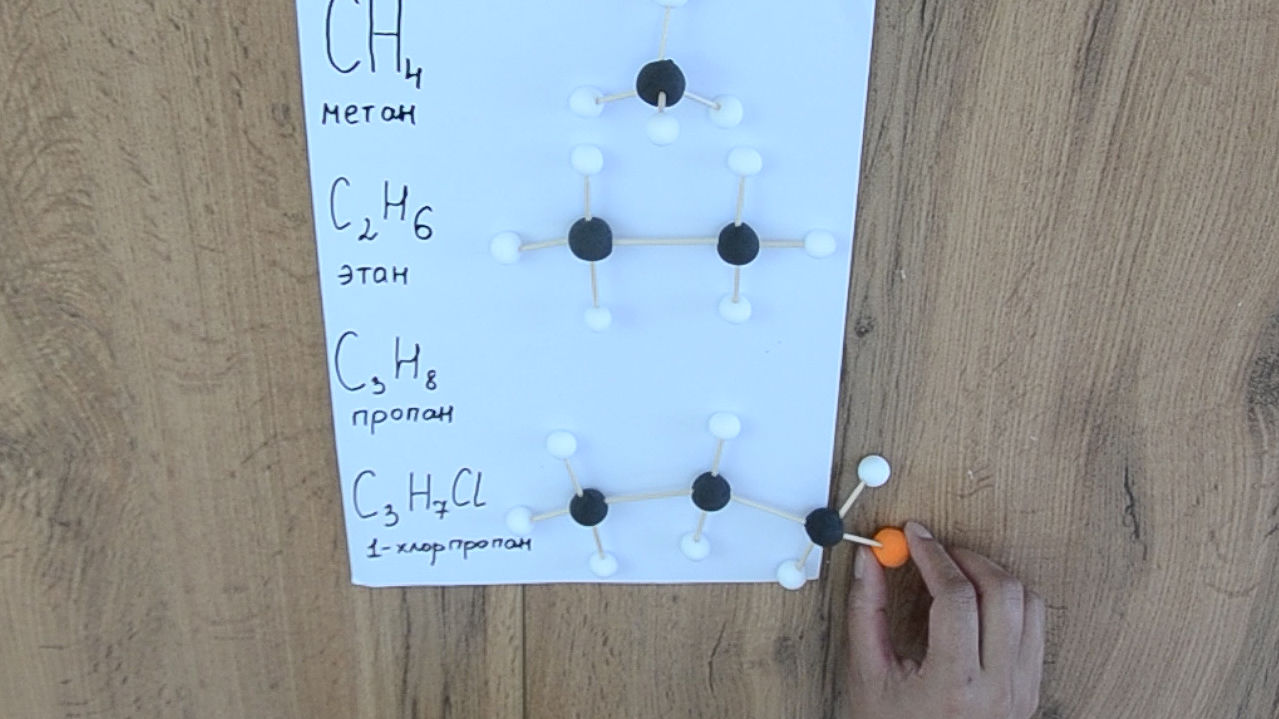
Step 1. Write the chemical formulas and names of aliphatic compounds according to the international IUPAC nomenclature.
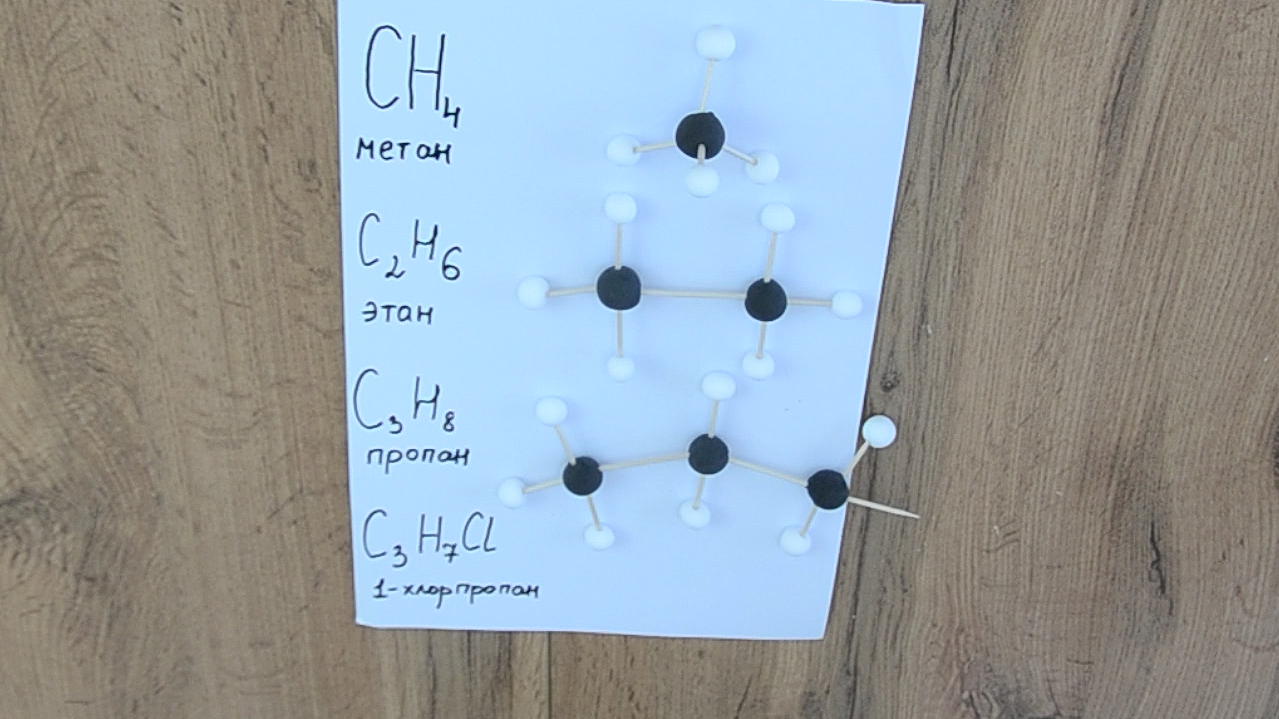
Examples: methane (CH₄), ethane (C₂H₆), propane (C₃H₈), 1-chloropropane (C₃H₇Cl).
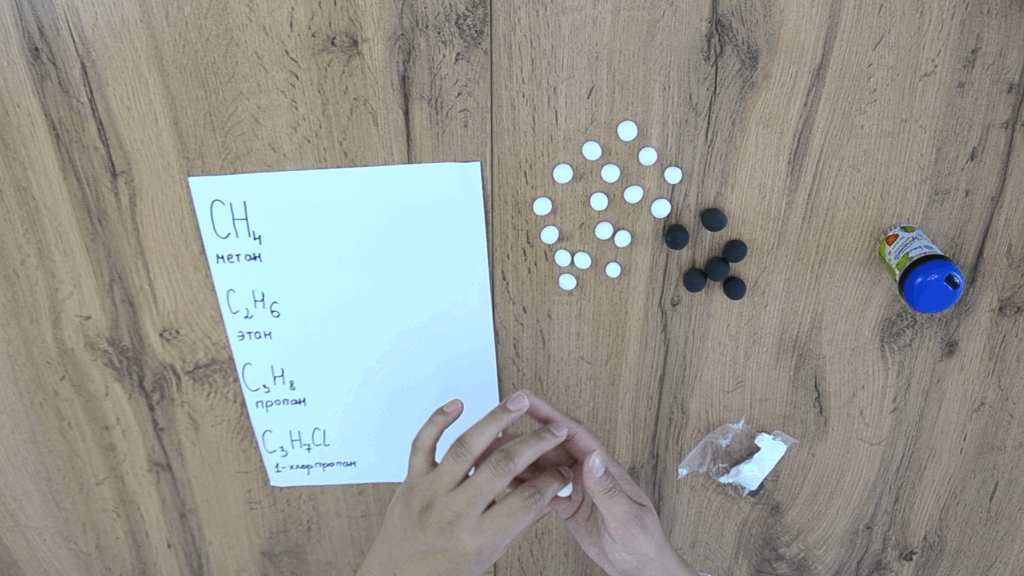
Step 2. Make atom models out of modeling clay:
- black clay — carbon atoms (C),
- white clay — hydrogen atoms (H).
The carbon atom should be about 1.5 times larger in radius than the hydrogen atom.
Step 3. Cut toothpicks in half and use them as chemical bonds.
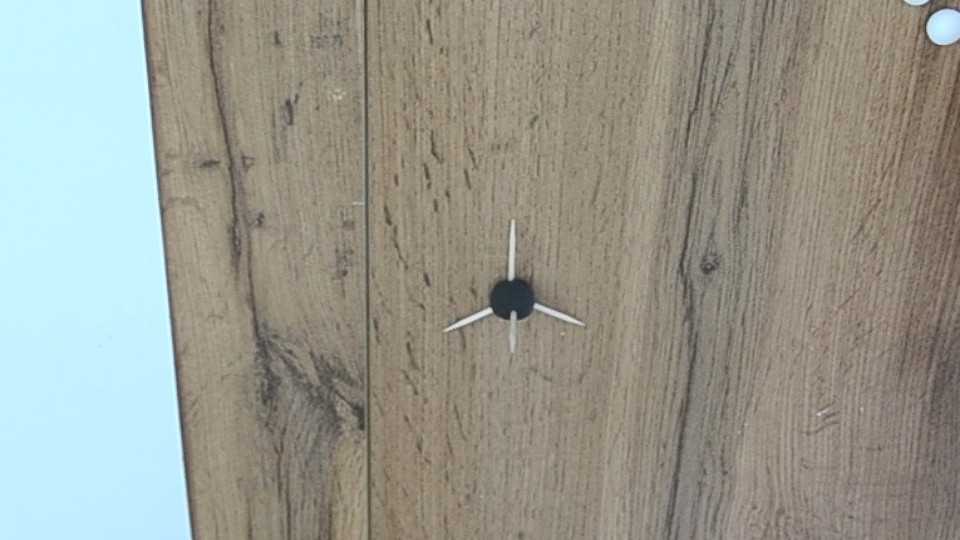
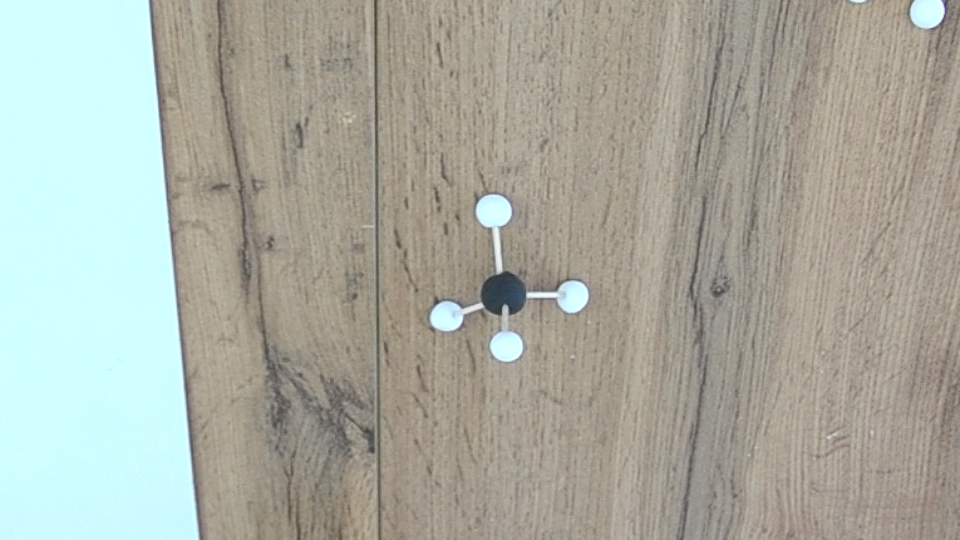
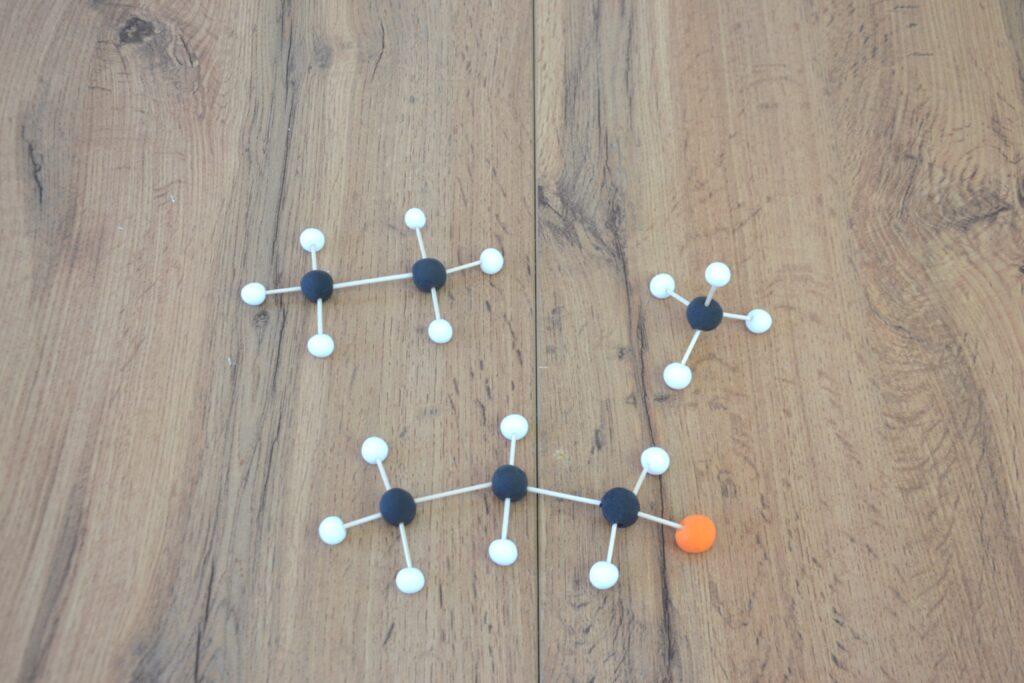
Step 4. Assemble the methane molecule (CH₄): one carbon atom and four hydrogen atoms. In all organic compounds, the carbon atom is tetravalent, meaning it can form four chemical bonds. Methane is a vivid example of this property.
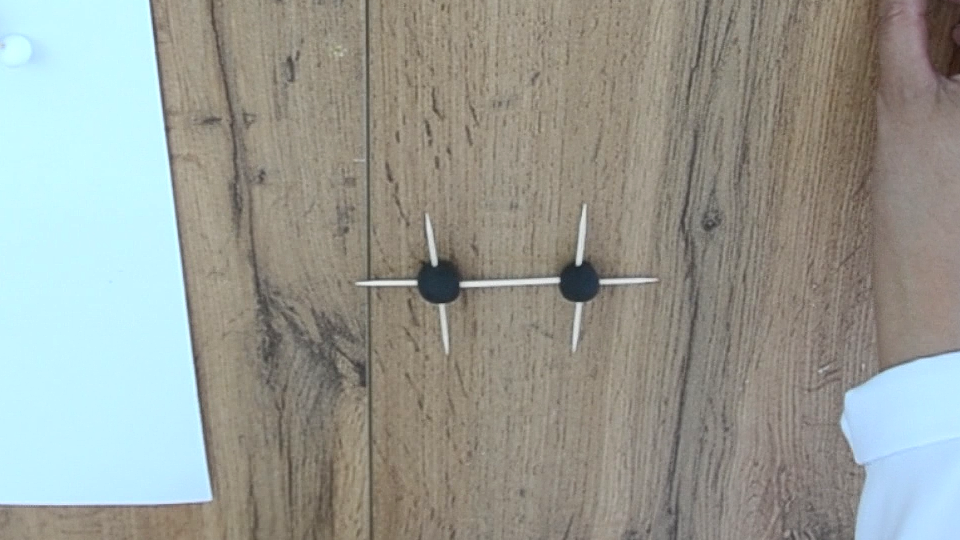
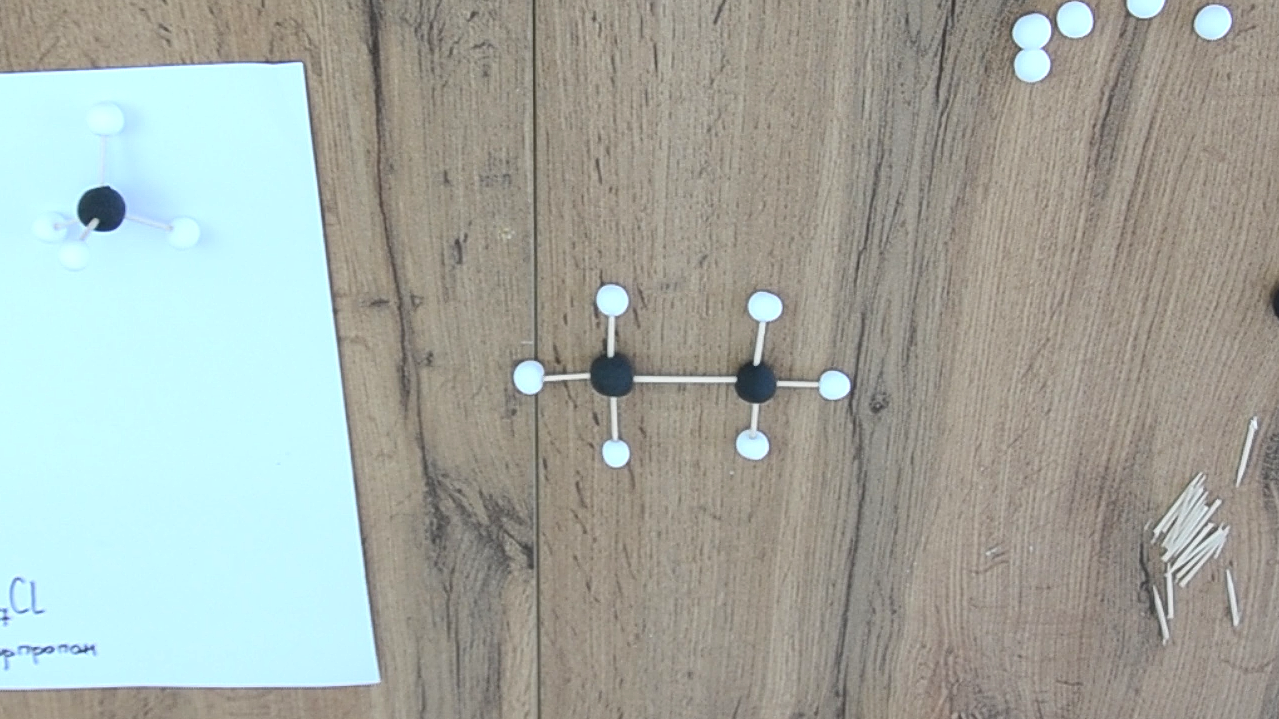
Step 5. Assemble the ethane molecule (C₂H₆): connect two carbon atoms together and attach three hydrogen atoms to each carbon.
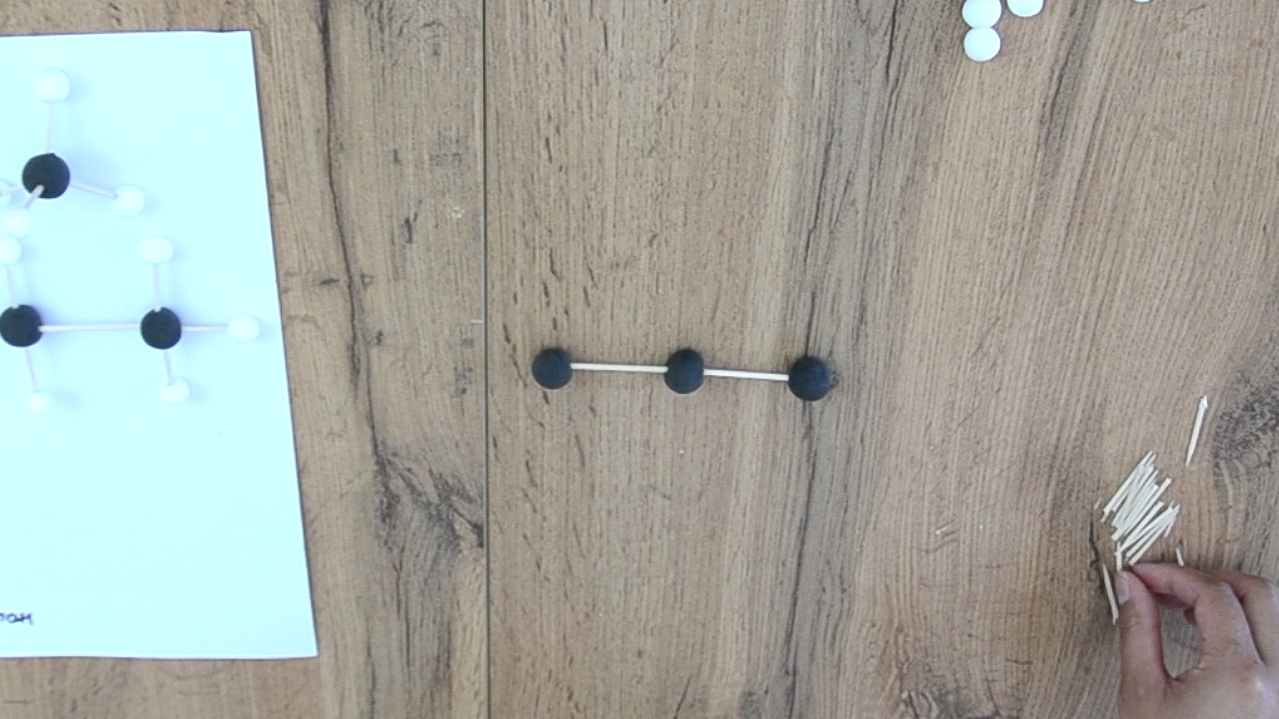
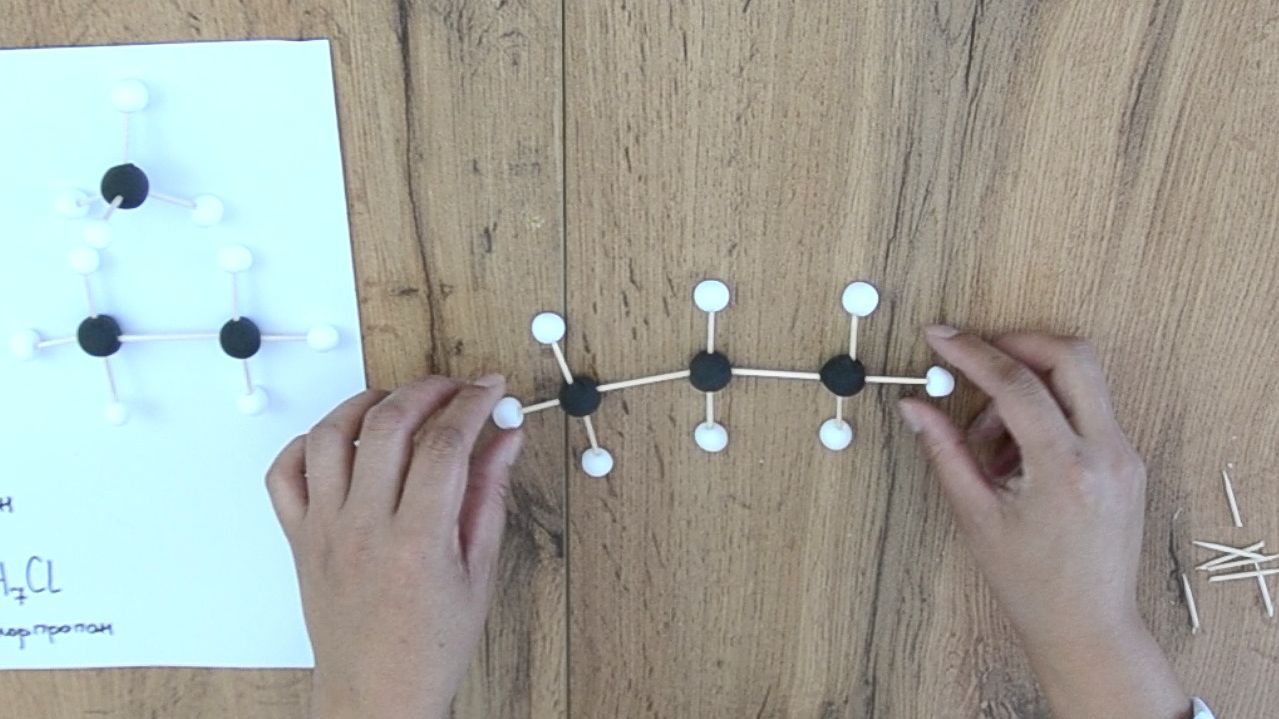
Step 6. Assemble the propane molecule (C₃H₈): connect three carbon atoms in a chain and add eight hydrogen atoms.
Step 7. Build the 1-chloropropane molecule (C₃H₇Cl): replace one hydrogen atom in the propane molecule with a chlorine atom (use clay of a different color). Note that the chlorine atom is about twice as large as the hydrogen atom.
Step 8. Complete the tasks and write your conclusions in the Worksheet.
Conclusion
In this work, students constructed models of organic compound molecules. Practical modeling showed that even the simplest organic substances have a definite spatial structure, which plays an important role in chemistry and biology.