
Lesson

Purpose of the work:
- to study the properties of halogens and their compounds;
- to learn qualitative methods for identifying halide ions (Cl⁻, I⁻) in aqueous solutions through characteristic chemical reactions.
Expected results:
After completing the work, students can:
- develop teamwork skills
- be able to analyze and summarize the information received
- draw logical conclusions
Teacher’s Guide:
- The task is performed in groups of 3-4 people
- Before starting laboratory work, please read the safety rules by following the link:
- To download the worksheet, follow the link:
Theory
Halogens are elements of Group VII of the Periodic Table: fluorine (F₂), chlorine (Cl₂), bromine (Br₂), and iodine (I₂). They are strong oxidizing agents and easily form halide ions (F⁻, Cl⁻, Br⁻, I⁻) when reacting with metals and other elements.
Halides are salts that contain a halide ion.
Examples:
- NaCl — sodium chloride,
- NaBr — sodium bromide,
- KI — potassium iodide.
Qualitative reactions are used to identify halide ions.
Cl⁻, Br⁻, and I⁻ ions can be detected with a silver nitrate (AgNO₃) solution.
The following precipitates are formed:
AgCl — white, AgBr — cream, AgI — yellow.
I⁻ ions can also be recognized by oxidation to iodine (I₂), which gives a blue coloration with starch.
Practical part
Experiment No. 1: Qualitative reaction with starch
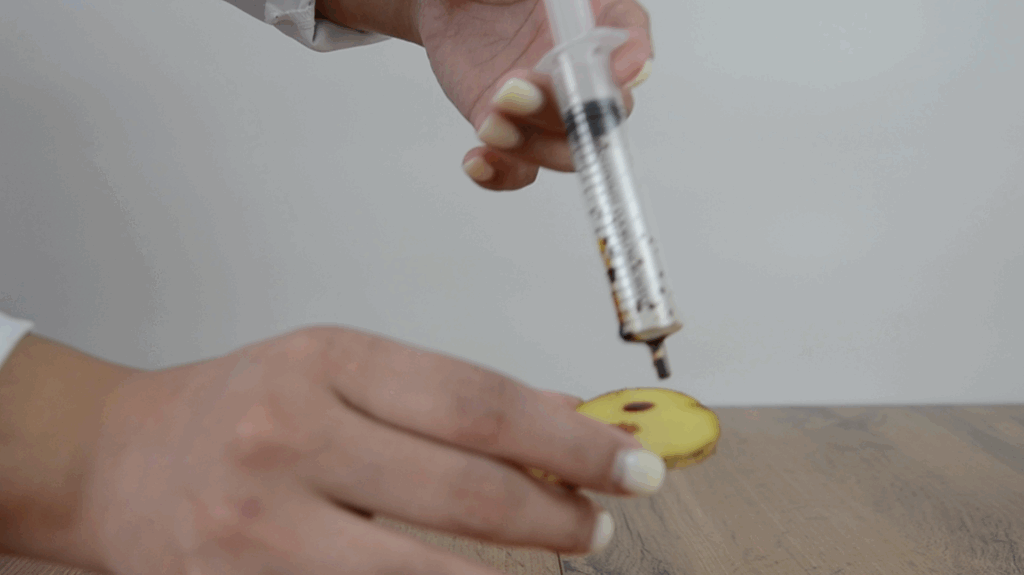
Step 1. Take a slice of raw potato and add a few drops of alcohol iodine solution to its surface.
Step 2. Observe the color change.
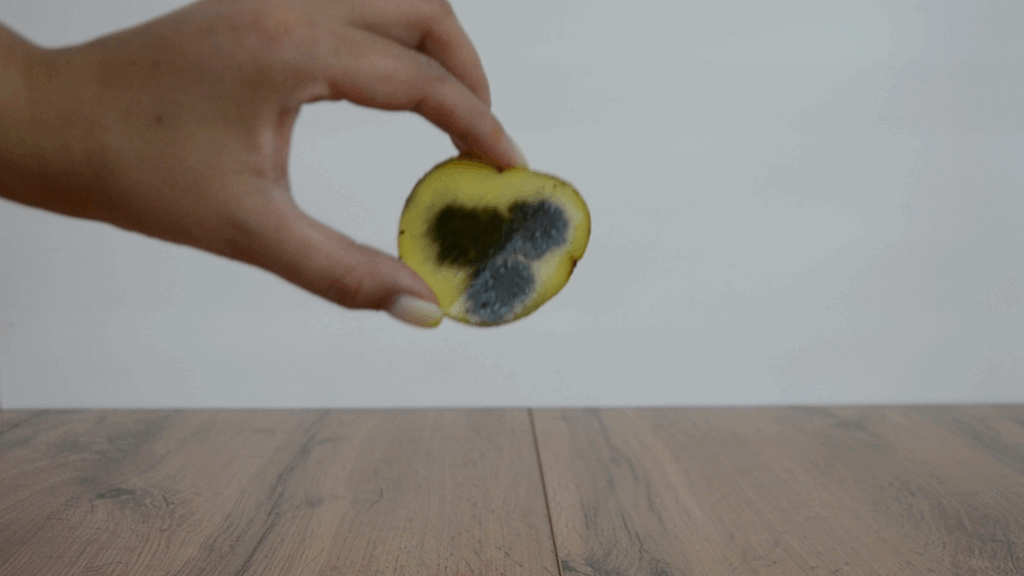
Iodine reacts with starch, forming a dark blue complex.
Experiment No. 2: Detection of halide ions (example of potassium iodide)
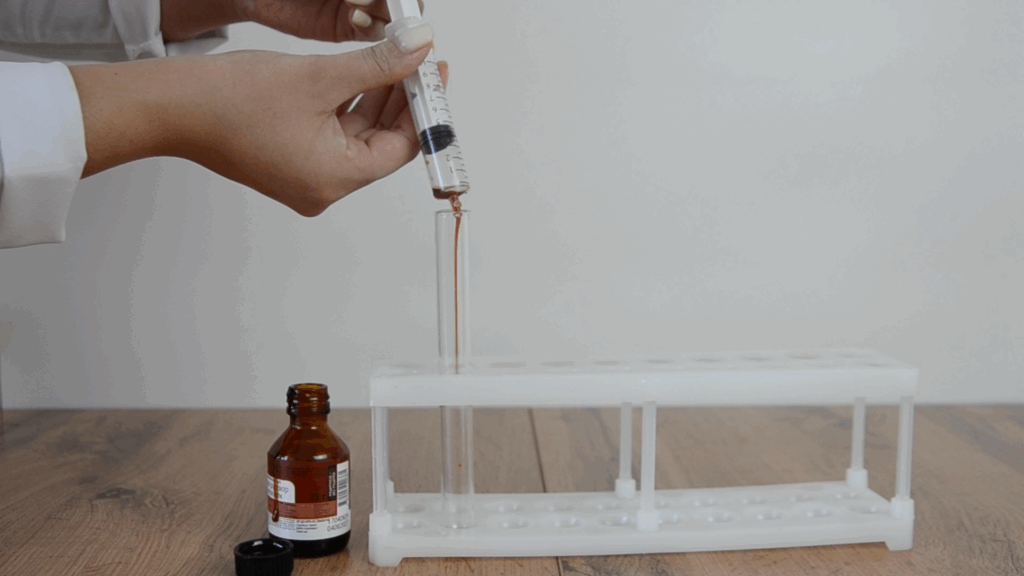
Step 3. Pour 2–3 ml of Lugol’s solution into a clean test tube.
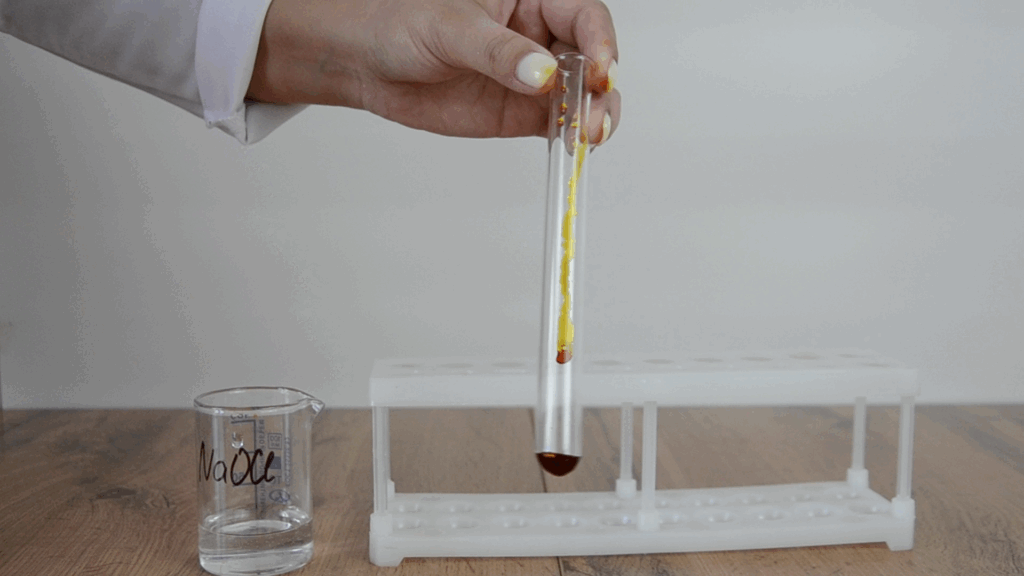
Step 4. Add 1–2 drops of diluted bleach (NaOCl solution) and gently mix.
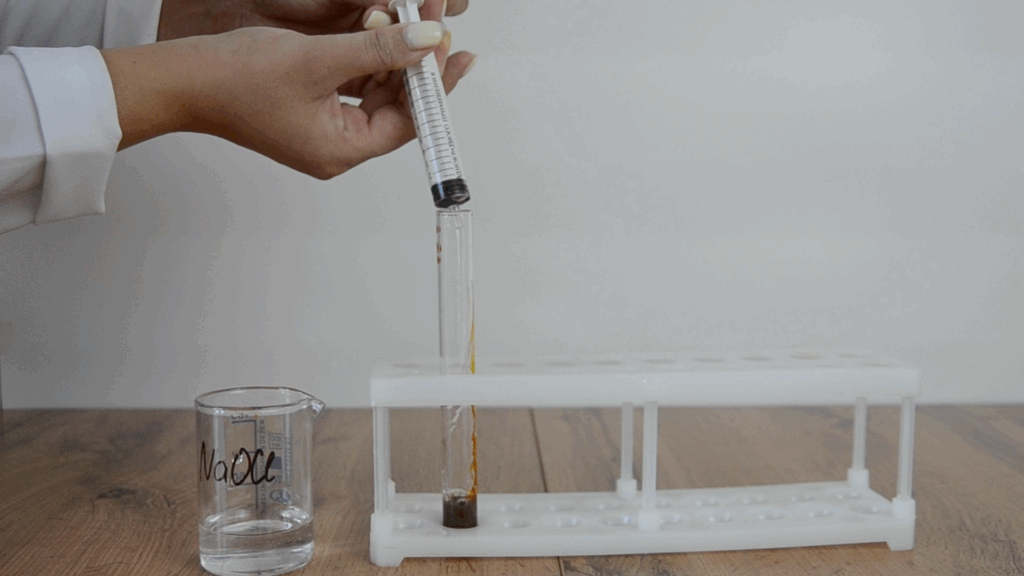
Step 5. Observe the color change — the solution turns pale brown due to iodine (I₂) formation.
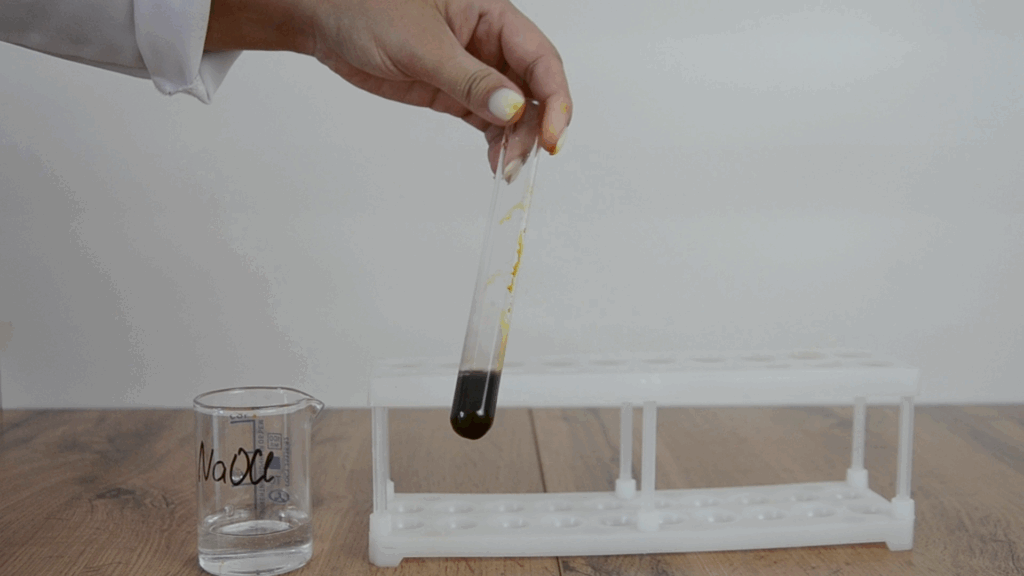
Step 6. Place a small piece of potato into the solution and observe the changes.
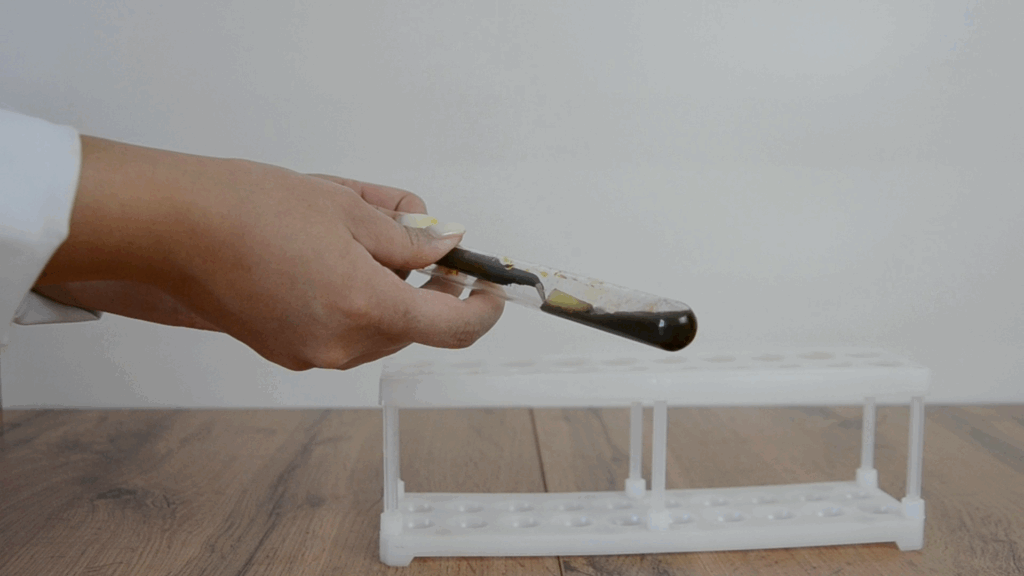
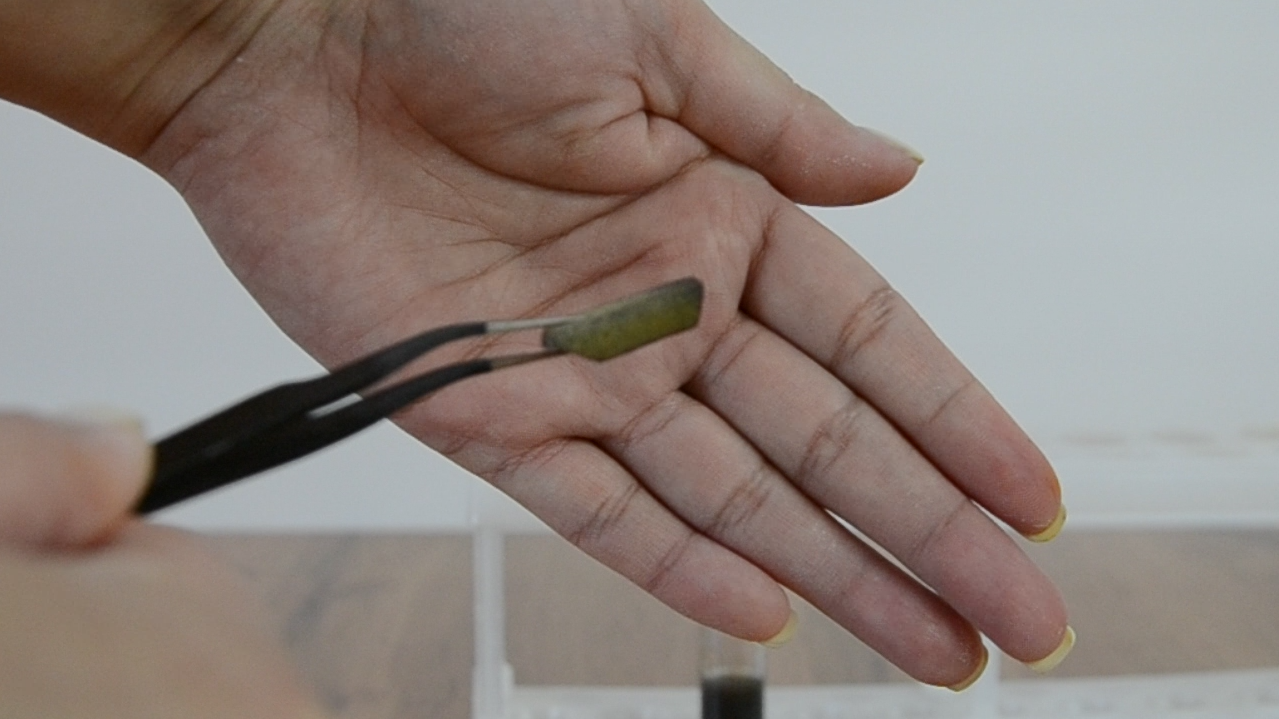
The appearance of a dark blue color on the potato indicates the release of iodine and its reaction with starch.
Conclusion
During this laboratory work, students studied the properties of halogens and their compounds and learned to distinguish halide ions using simple and visual chemical reactions. They observed color changes during the interaction of iodine with starch and the formation of differently colored precipitates when halides reacted with silver ions. These observations allowed students to conclude that the type of halide present in a solution can be identified by the characteristic color and appearance of the precipitate.