
Lesson

Purpose of the work:
- to study the structure of bones and determine the role of organic and inorganic substances in their composition.
Expected results:
After completing the work, students can:
- develop teamwork skills
- be able to analyze and summarize the information received
- draw logical conclusions
Teacher’s Guide:
- The task is performed in groups of 3-4 people
- Before starting laboratory work, please read the safety rules by following the link:
- To download the worksheet, follow the link:
Theory
Bones are hard organs that make up the skeleton of humans and animals.
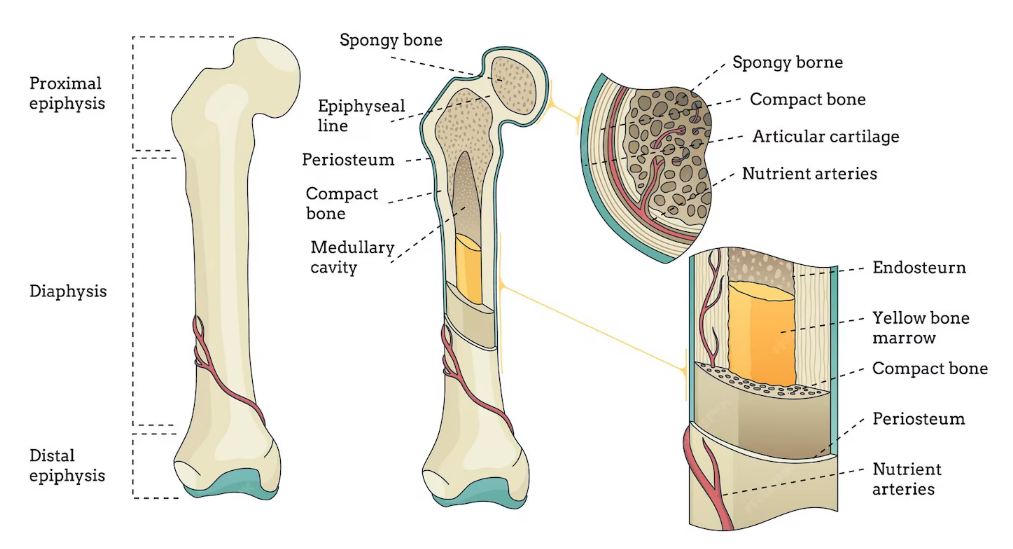
Each bone has external (macroscopic) and internal (microscopic) structures.
Macroscopic structure:
A bone consists of three main parts:
- Epiphyses — the ends of the bone, covered with cartilage;
- Diaphysis — the middle part composed of compact bone tissue;
- Medullary cavity — contains bone marrow.
The bone is covered by a thin membrane called the periosteum, through which blood vessels and nerves pass. It helps the bone grow and repair after injury.
Chemical composition of bones:
Bones consist of two main components:
- Organic part (collagen) — provides elasticity and flexibility.
- Inorganic part (calcium and phosphorus salts) — gives hardness and strength.
The combination of these components makes the bone both strong and resilient.
Practical part
Experiment №1: Macroscopic study of the bone
Step 1. Take raw and dry chicken thigh bones and observe their external structure.
Identify the main parts:
- the proximal and distal epiphyses,
- the diaphysis,
- the metaphysis,
- the articular cartilage.
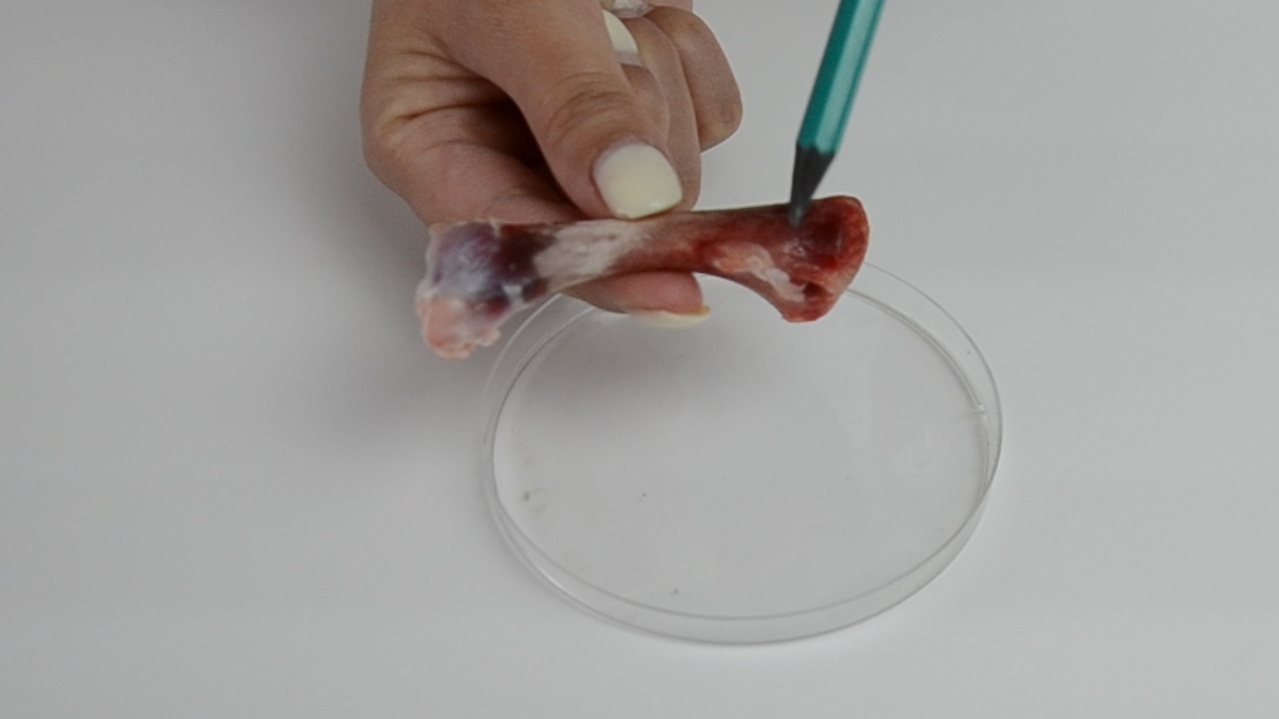
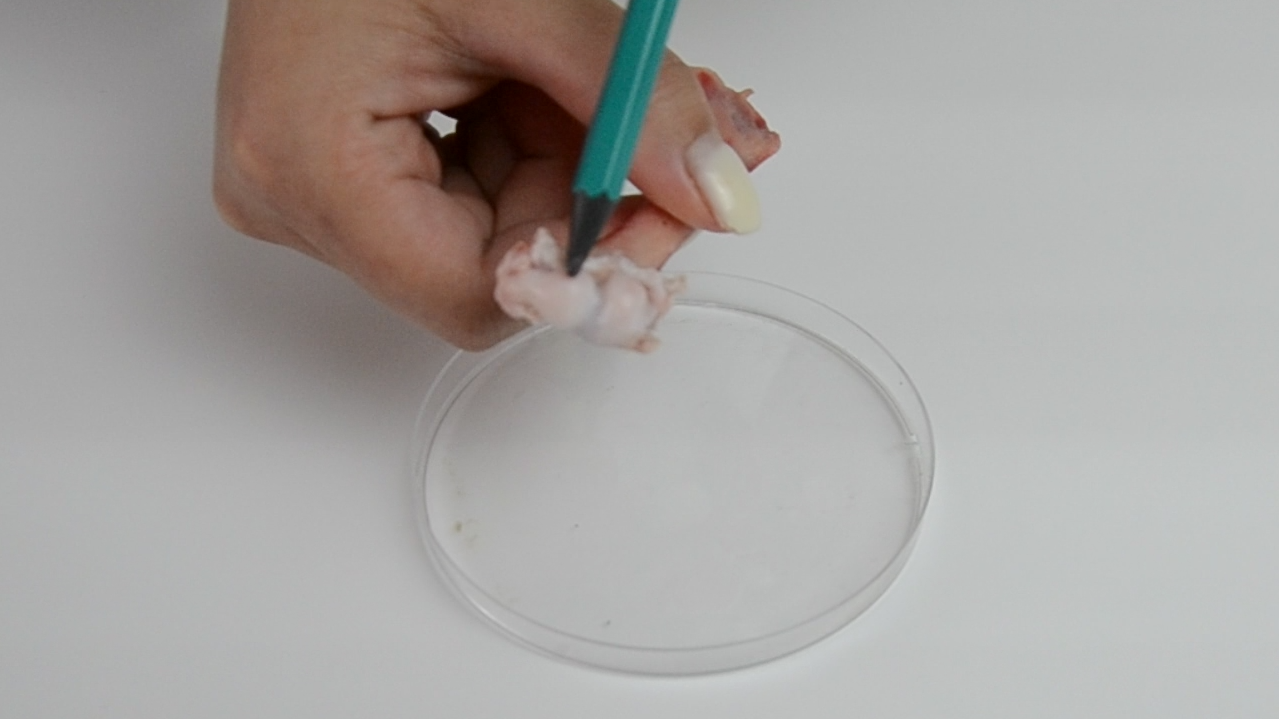
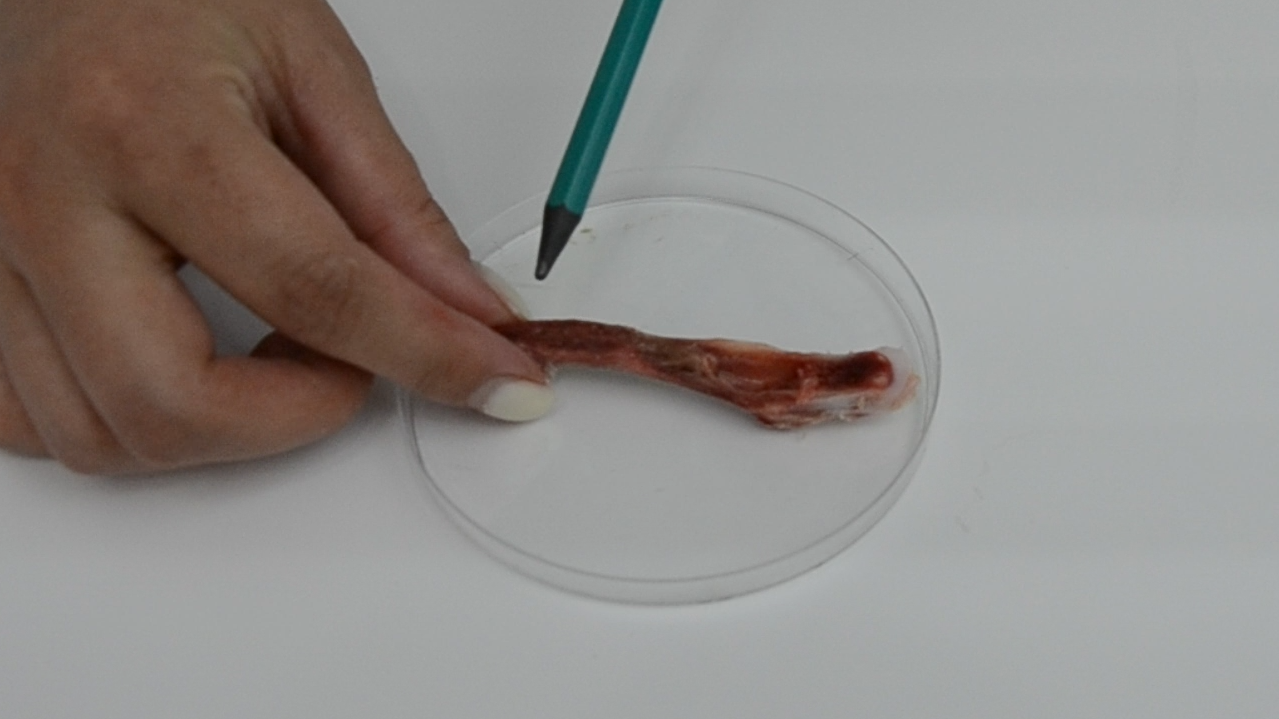
Step 2. Observe the periosteum — the teacher may gently scrape it with tweezers to show it.
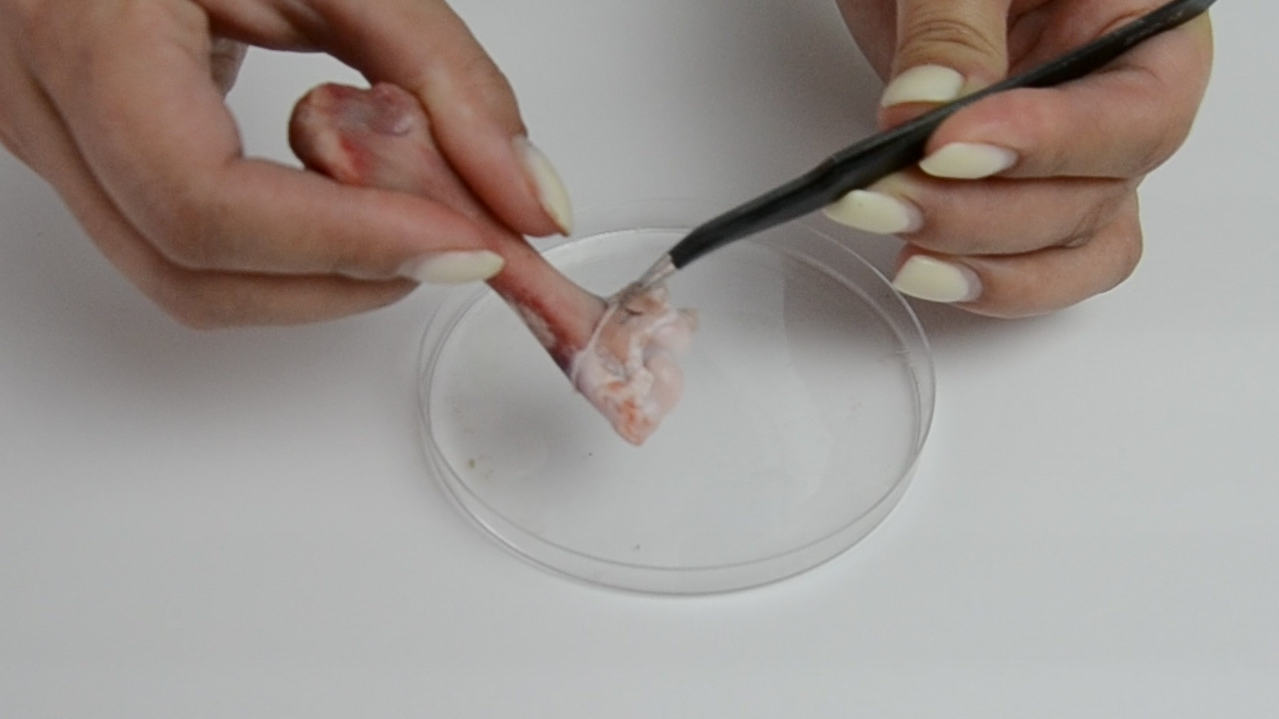
Step 3.The teacher carefully makes a cross-section of the bone.
Step 4. Examine the internal structure:
- spongy and compact bone tissue,
- periosteum,
- bone marrow,
- blood vessels.
Experiment №2: Effect of the organic part (collagen) on bone structure
Purpose: To demonstrate how collagen affects the flexibility of bones.
Step 5. Take two similar bones: keep one raw (control), and boil the other for 1–2 hours.
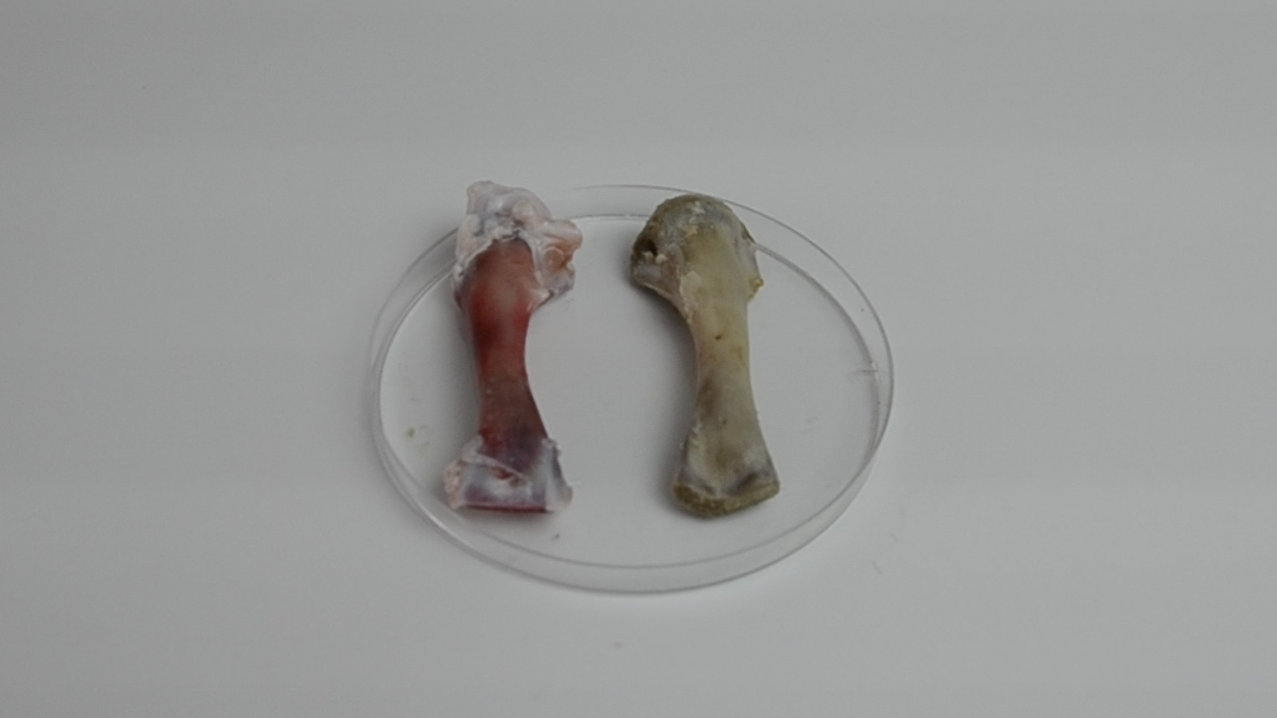
Step 6. Dry both bones.
Step 7. Compare them: which is harder, softer, or more flexible.
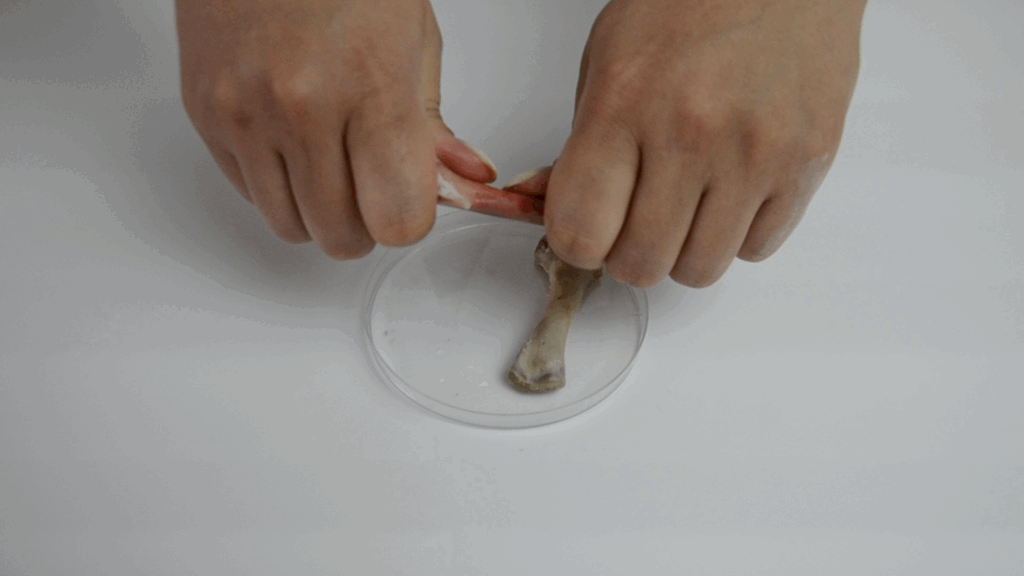
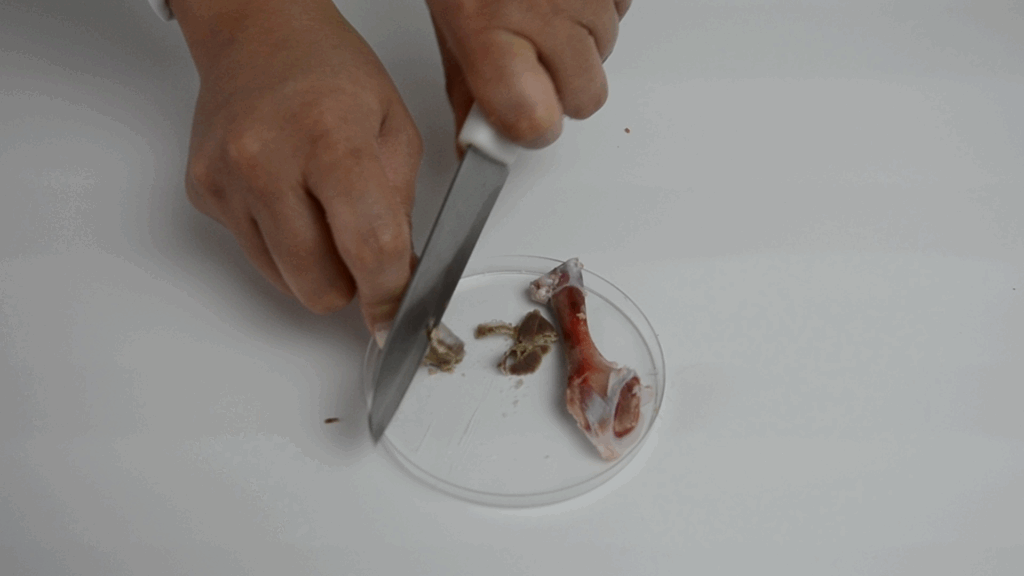
the boiled bone becomes softer and less elastic, as collagen breaks down into gelatin.
Experiment №3: Effect of the mineral part (calcium and phosphorus salts) on bone structure
Purpose: To show that minerals provide bone hardness.
Step 8. Weigh a dry bone and record its mass.
Step 9. Place it in vinegar and leave for 5–7 days.
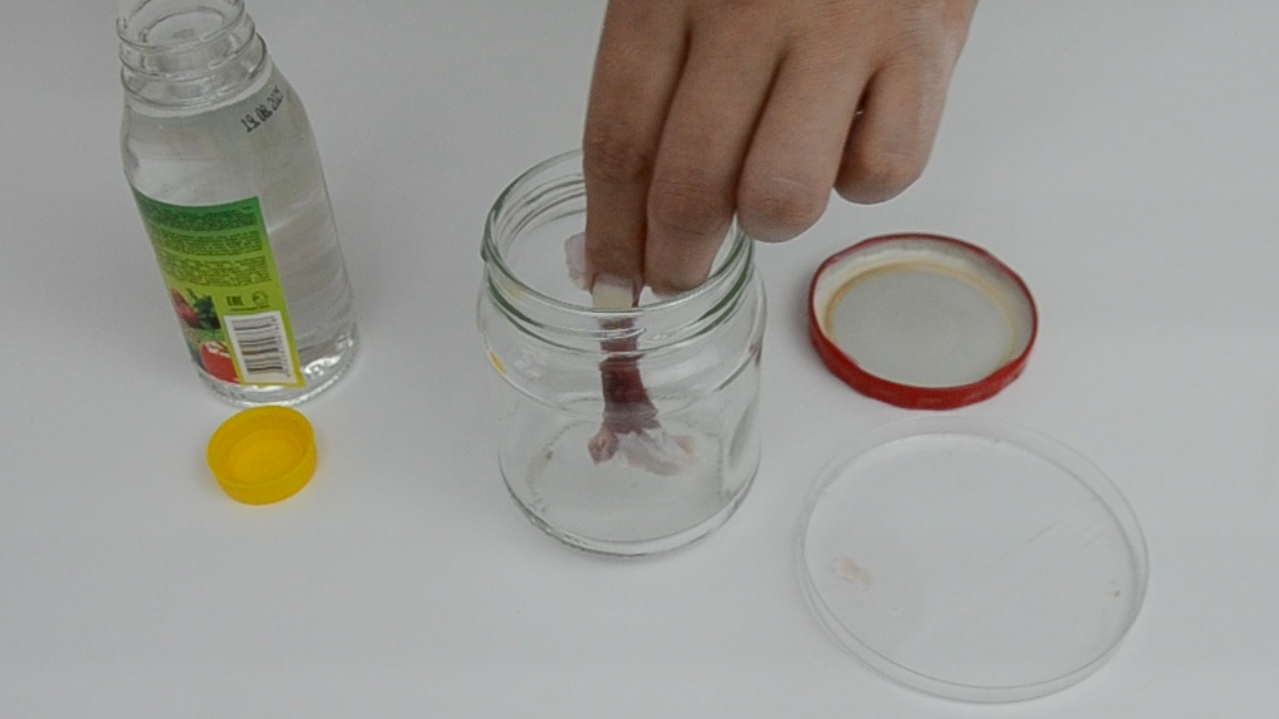
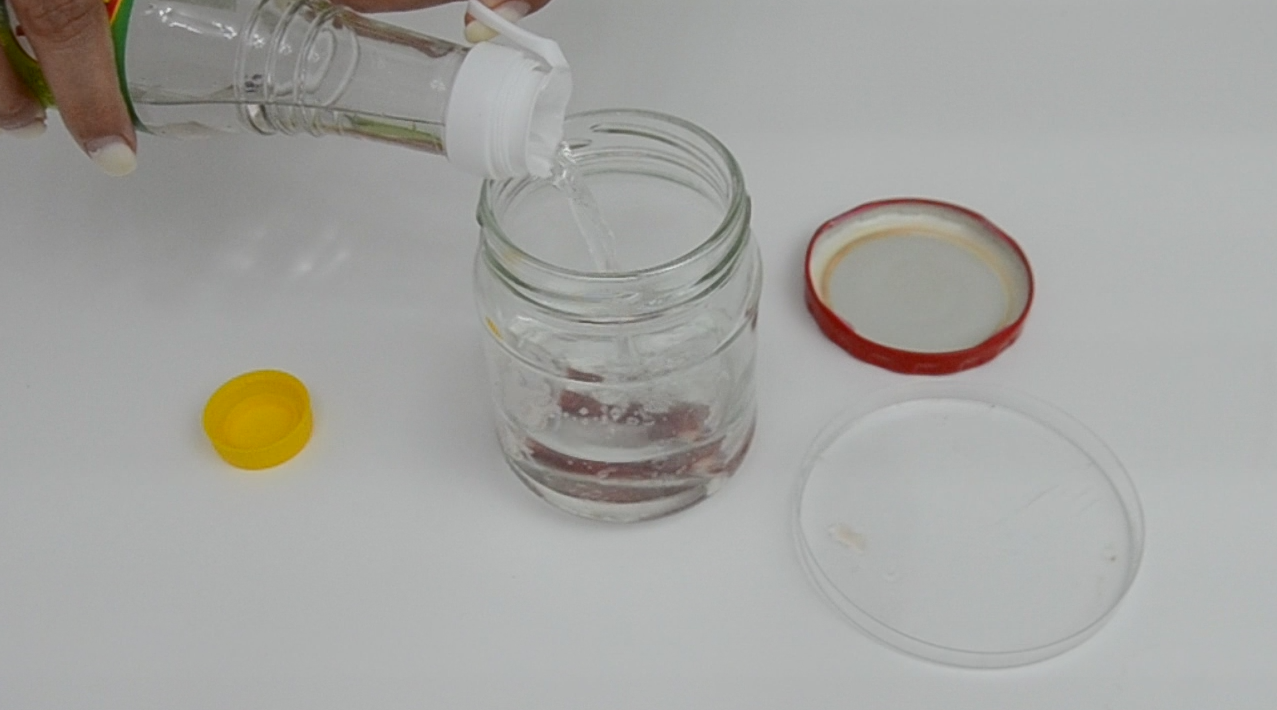
Step 10. Remove, rinse, and dry the bone.
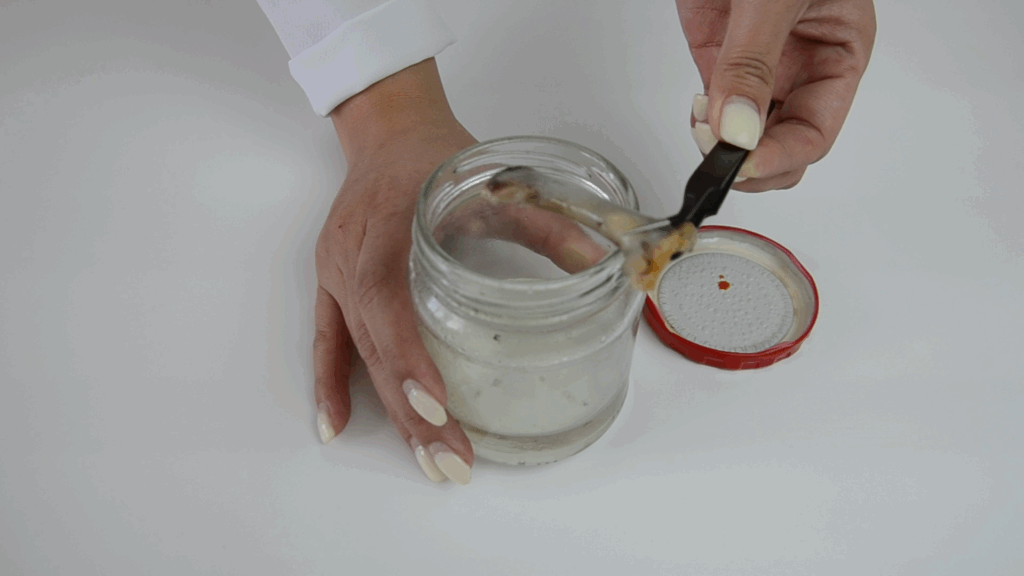
Step 11. Try to bend it — it becomes soft and flexible.
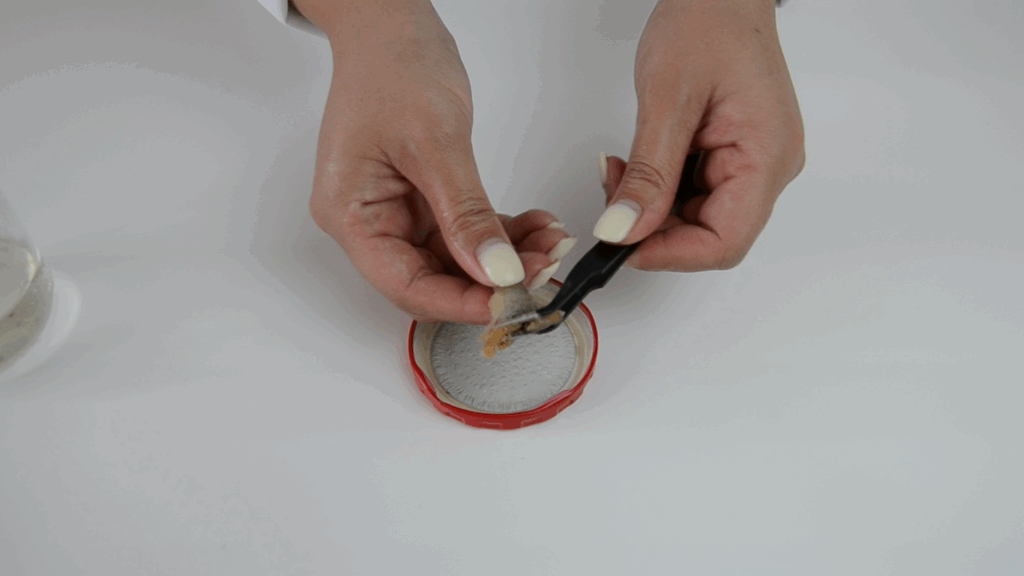
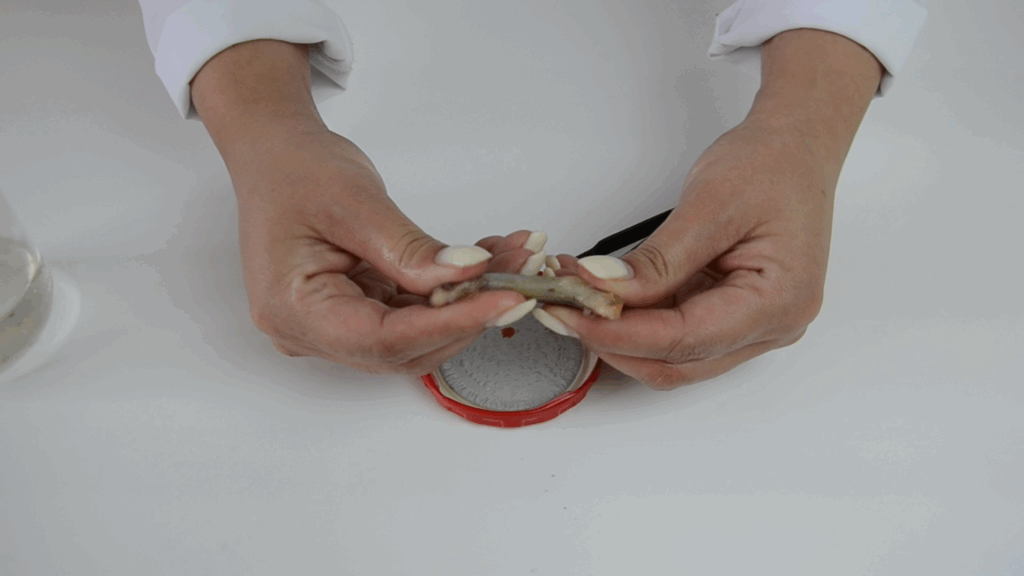
Step 12. Weigh it again and compare the mass with the original.
The acid dissolves the mineral part of the bone, leaving the organic collagen framework, making the bone flexible but less hard.
Conclusion
In this work, students explored the structure and composition of bones and discovered that their properties depend on both organic and inorganic substances. Collagen provides flexibility, while mineral salts give strength. Only the combination of these two components allows the bone to be strong yet elastic.