
Lesson
Objective:
- Learn how to neutralize a substance
- Study how the interaction between an acidic and a basic neutralizes
Teacher’s Guide
1. Divide the students so that there are three students in each group.
2. To download the worksheet, go to:
3. Before proceeding with the lab work, review the safety rules by following the link:
Theoretical part
Neutralizing a solution is a process whereby the addition of an acid or alkali to a solution results in the elimination of excess acidity or alkalinity in the solution. The result is a neutral solution that is neither acidic nor alkaline. During neutralization, acid and alkali react with each other to form salt and water. The reaction occurs with the release of heat.
Neutralization can be slow or fast, depending on the concentration of acid and alkali, as well as temperature and other factors.
If you want to neutralize the solution, there are a few simple rules to follow:
- Use alkali to neutralize acids and acids to neutralize alkalis.
- Add the alkali or acid slowly and carefully. Do not add them too quickly to avoid a violent reaction.
- Constantly check the pH of the solution using a pH meter or indicator papers to make sure that the pH is close to 7, which is a neutral value.
- If you are using indicator papers, remember that they can give inaccurate results if there are other chemicals in the solution.
Practical part
Check out the required materials: glass 3 pieces (number the glasses from 1 to 3), citric acid, baking soda, vinegar, soda ash and water.

Experiment № 1
Step 1.
Pour the same amount of water into the first and second glasses.

Step 2.
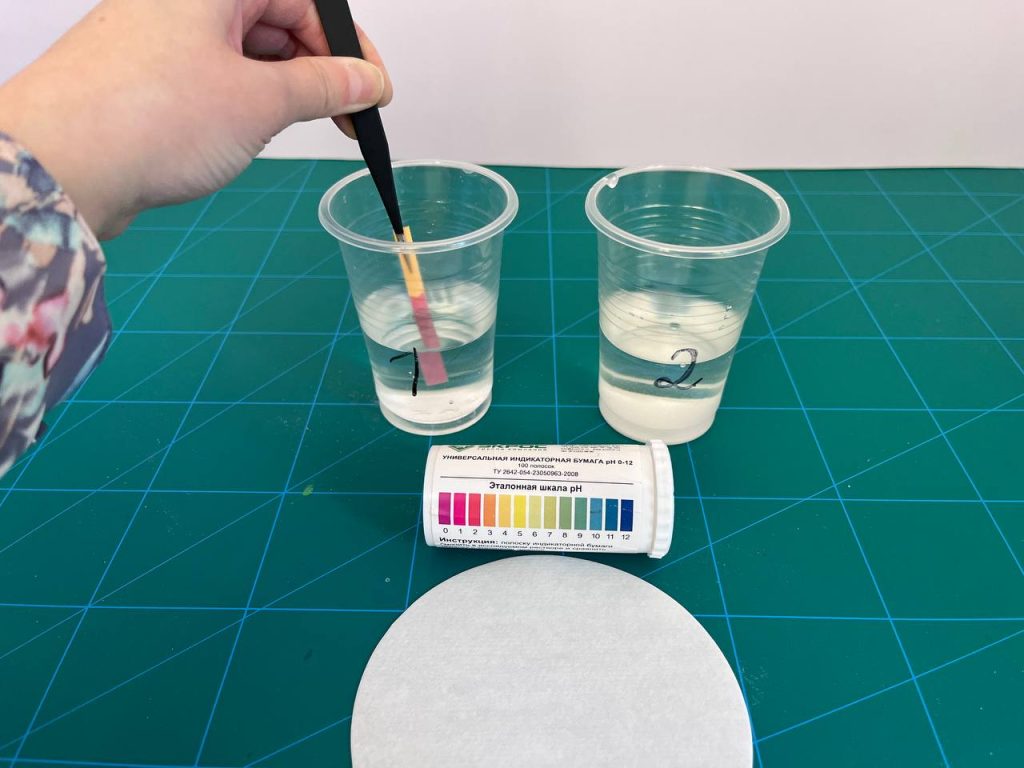
Put 1 spoonful of citric acid in the first beaker and stir.

Step 3.
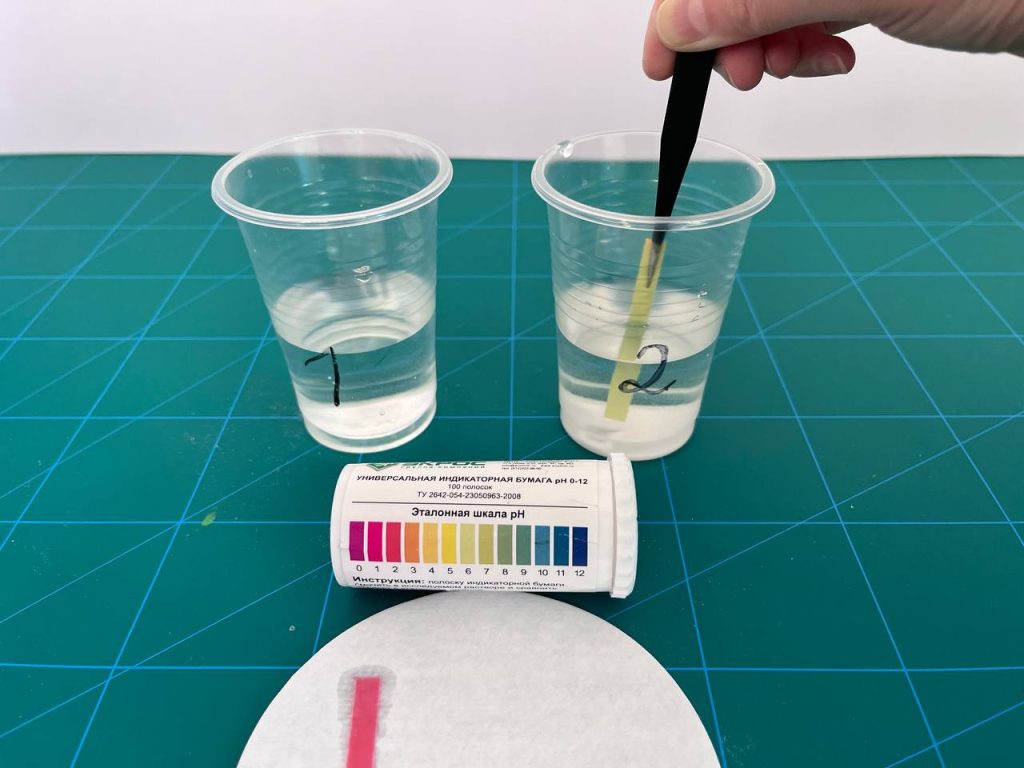
Put 1 tablespoon of baking soda in the second glass and stir.

Step 4.
Take two universal indicators and determine the pH of each solution using a reference scale.
Step 5.
Pour equal amounts of the solution from the first and second glasses into the third glass and stir. The interaction of the acidic and the basic results in a neutral.

Step 6.
Determine the pH of the mixture using a universal indicator.

Experiment № 2
Step 1.
Pour the same amount of water into the first and second glasses.

Step 2.
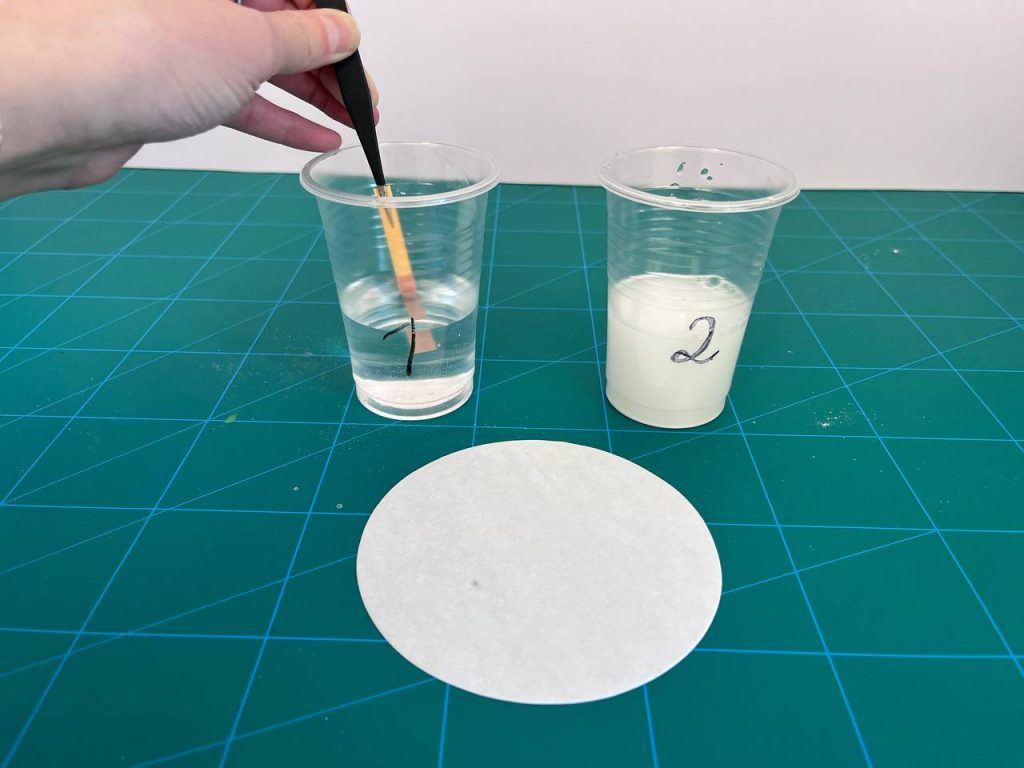
Pour 1 spoonful of vinegar into the first glass and stir.

Step 3.
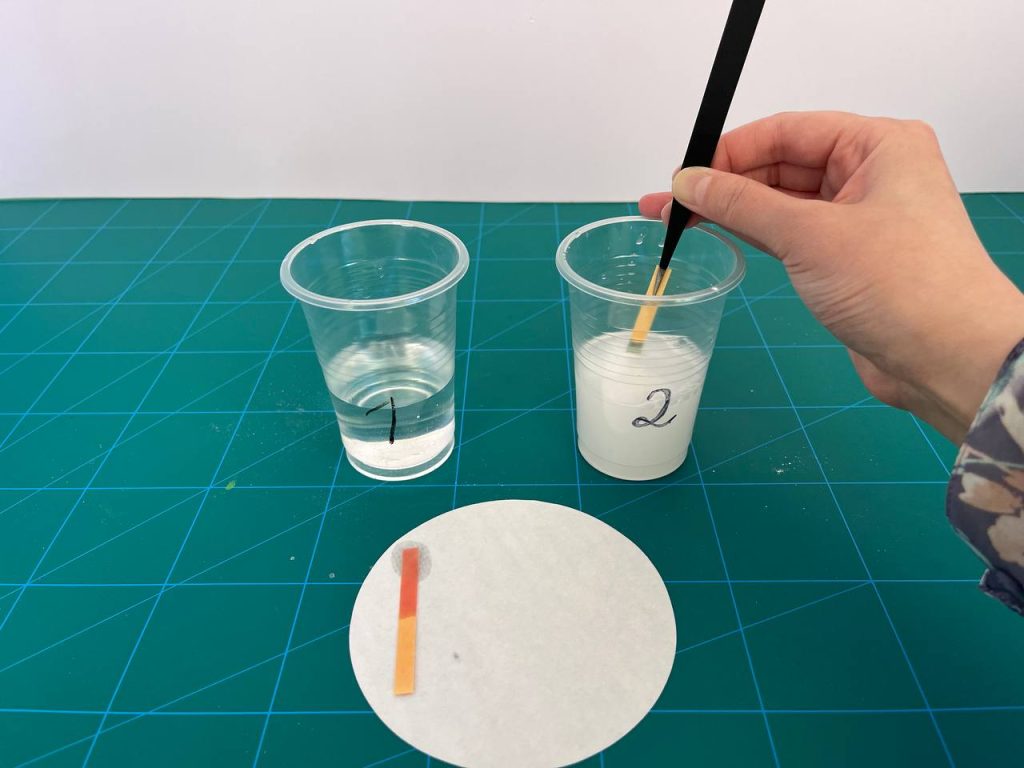
Put 0.5 spoonfuls of soda ash in the second glass and stir.

Step 4.
Take two universal indicators and determine the pH of each solution.
Step 5.
Pour equal amounts of the solution from the first and second glasses into the third glass and stir. The interaction of the acidic and the basic results in a neutral.

Step 6.
Determine the pH of the mixture using a universal indicator.

Step 7.
Complete the results of the first and second experiments in the table below:
| Item Name | Color of universal indicator | pH of solution | Was there a neutralization process? |
| citric acid | |||
| baking soda | |||
| vinegar | |||
| soda ash |
Step 8.
Make conclusions by answering the following questions.
- What is a solution and how can it be neutralized?
- What happens when acid and basic are mixed?
- How does the color of the indicator change as the pH of the solution changes?
- How can you use your knowledge of neutralizing solutions in the home?
Conclusion
In doing this practical work, students conducted interesting experiments related to neutralization in the environment. Students learned about neutralization theory and experienced how important it is to choose the right substances to neutralize solutions. This practical work allows students to understand the principles of neutralizing solutions and develop experimental skills.