
Lesson
Objective:
- familiarity with the concept of a solution
- be able to distinguish between the types of pH of the solution
- learn to identify а рН with the help of a universal indicator
Teacher’s Guide
1. Divide the students so that there are three students in each group.
2. To download the worksheet, go to:
3. Before proceeding with the lab work, review the safety rules by following the link:
Theoretical part
pH is a way of measuring how acidic or alkaline a liquid, such as water or juice, can be. It is measured on a scale from 0 to 14, where 7 is a neutral value, less than 7 is acidic, and more than 7 is alkaline. The lower the pH value, the more acidic the solution, and the higher the pH value, the more alkaline.
Why is this important? Because different chemical processes occur at different pH levels. For example, for dishwashing, it’s better to use an alkaline solution because it removes grease and oil more easily. And lemonade needs acidic lemon juice to make it tasty.
Measuring pH can be useful for determining whether a solution is safe for consumption, for setting up chemical reactions, for determining product quality, and much more.
Indicator papers are paper strips that change color depending on the pH value of a solution. In order to measure pH with indicator papers, you must first prepare the solution you want to measure. Then, place the indicator paper in the solution and wait a few seconds for it to change color. Compare the color of the indicator paper to the color scale to determine the pH value.
Practical part
Step 1.
Check out the required materials.

Step 2.
Number the glasses from 1 to 5.

Step 3.
Pour lemon juice into glass number two. To do this, cut a lemon and squeeze the juice of half a lemon into a glass.

Step 4.
Put 1 spoonful of baking soda in the third glass.

Step 5.
Pour 1 spoonful of apple cider vinegar into the fourth glass.

Step 6.
Pour 1 spoonful of liquid soap into the fifth glass.

Step 7.
Fill all five glasses to the middle with water.

Step 8.
Now determine the рН using the universal indicator. Take the universal indicator 5 pieces. Take one indicator in each liquid, dip the tweezers to the middle of the indicator and hold for a few seconds.
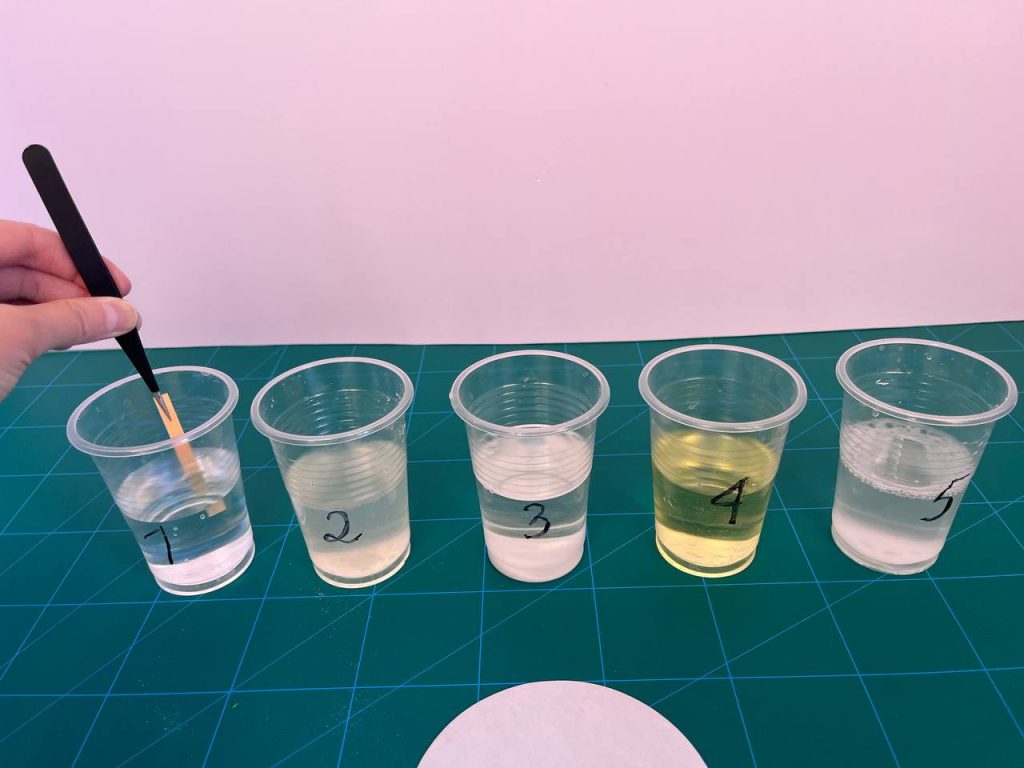
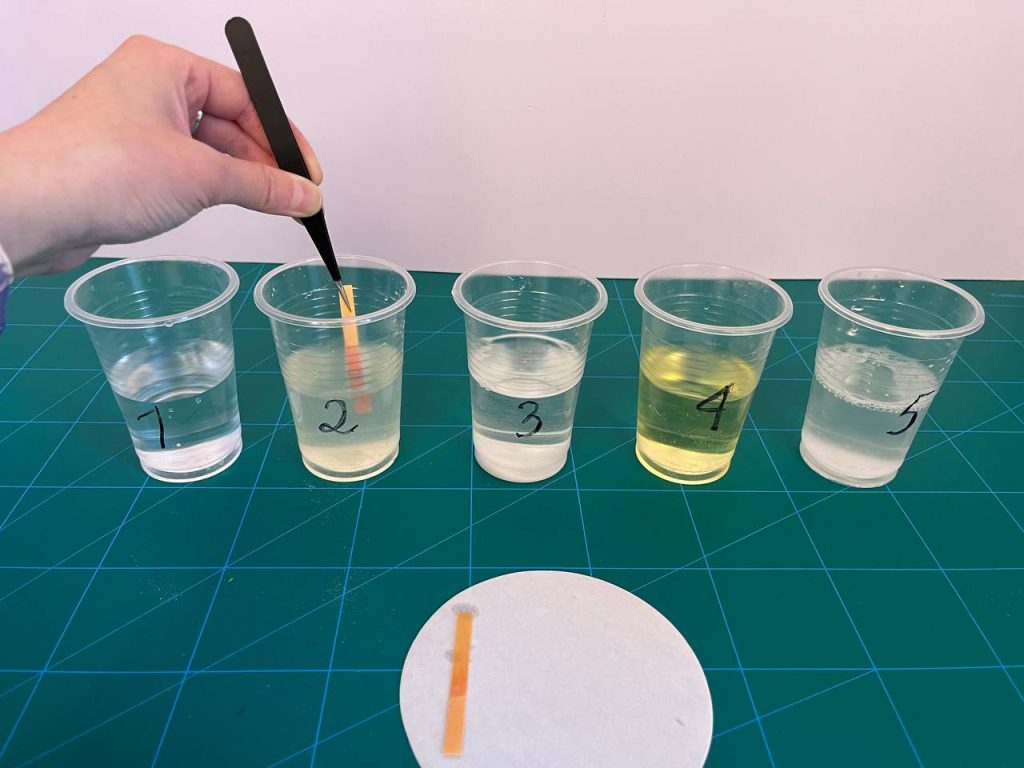
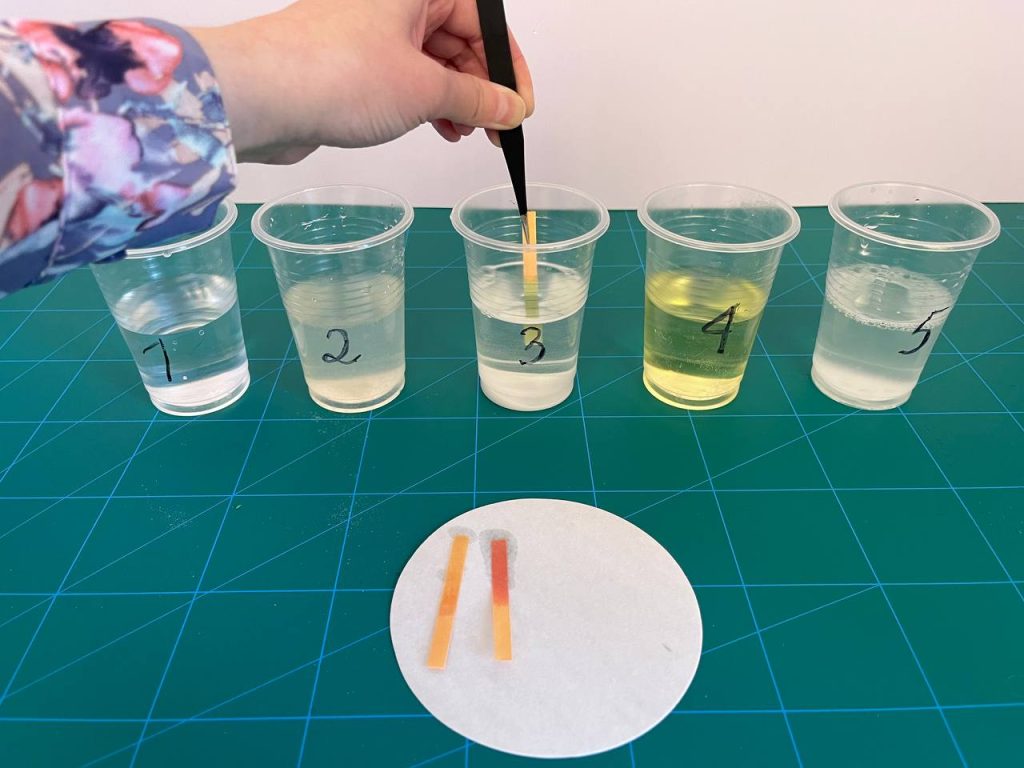
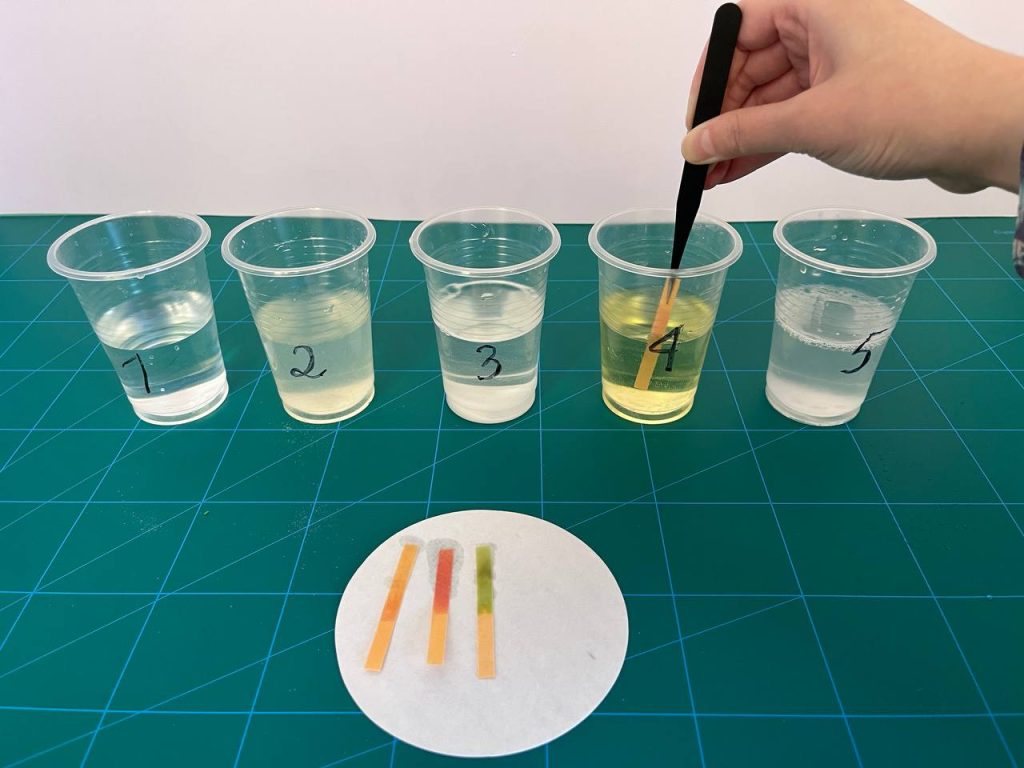
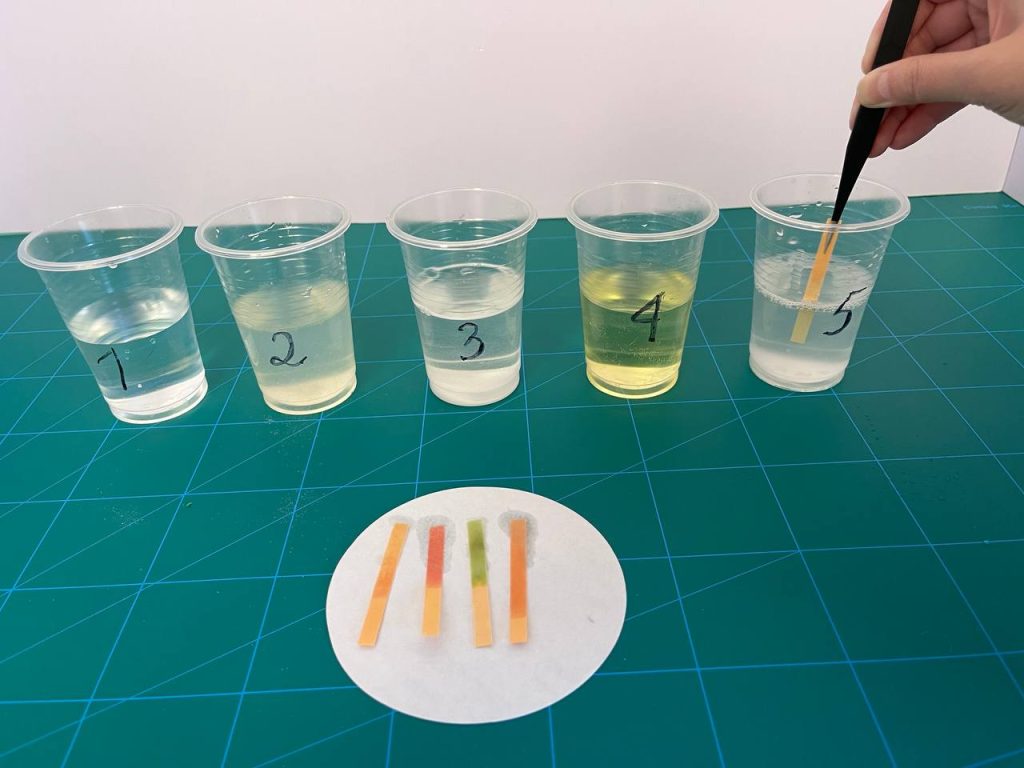
Step 9.
Determine each subject’s indicators individually on a reference scale to which рН they belong.

Step 10.
Fill in the results in the table below.
| Item Name | Color of universal indicator | рН of solution |
| Water | ||
| Lemon water | ||
| Water with baking soda | ||
| Apple cider vinegar | ||
| Soapy water |
Step 11.
Draw conclusions by answering the following questions.
- What is pH and how does it relate to the acidity and basicity of a solution?
- How can you measure the pH of an environment and what are the most accurate methods?
- What activities affect changes in the pH of solution?
- How does the pH range vary for different types of solution (e.g., acidic, basic, neutral)?
- Why did adding lemon juice to water turn an acidic environment and adding baking soda turn into a basic environment?
- Why did the water become acidic when you added apple cider vinegar and lemon juice to the water?
Conclusion
By doing this practical work, students learned about types of pH solution. They learned how to determine the рН using indicators. By looking at the color of the indicator, he learned to determine whether the solution is basic, acidic, or neutral. Determined what kind of environment the foods we consume in our daily lives belong to.