lesson
Purpose of the work:
The goal of this laboratory work is to study the dependence of the sliding friction force on the normal force. Check whether the friction force depends on the area of surface and calculate the friction coefficient.
Expected results:
1. Friction force is proportional to normal force.
2. Friction force doesn’t depend on the area of the contacting surfaces.
3. Friction coefficient obtained experimentally matches the table value.
Teacher’s Guide:
Divide the students to 3 students in each group.
To download the worksheet, please follow this link:
Before starting laboratory work, read the safety rules:
Theoretical part
Friction force is a force that opposes the relative motion of surfaces in contact.
Normal force is a force that surfaces exert on the objects.
The formula of the friction force is
F = m N
where N is the normal force and m is the friction coefficient.
From this formula we can find the formula for the friction coefficient
m = F/N
The table value for the friction coefficient is m= 0.25.
Sources:
- Сила трения. Учет трения в технике. (2019). Физика. Учебник для 7 класса общеобразовательной школы.
Experimental part
Dynamometer. To run this experiment, we need a dynamometer. It can be made from scrap materials and stationery.
To make a dynamometer you will need cardboard, ruler, paper, thread, needle, elastic rubber band, paper clamp and clips, lab weights with known mass. Prepare your equipment and start the work.
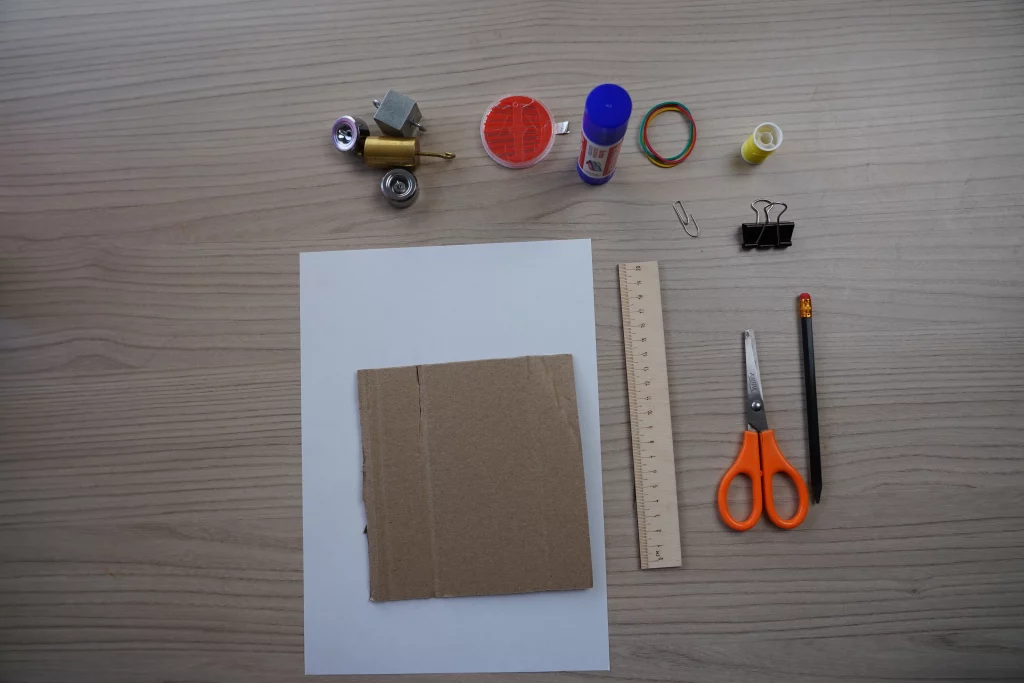
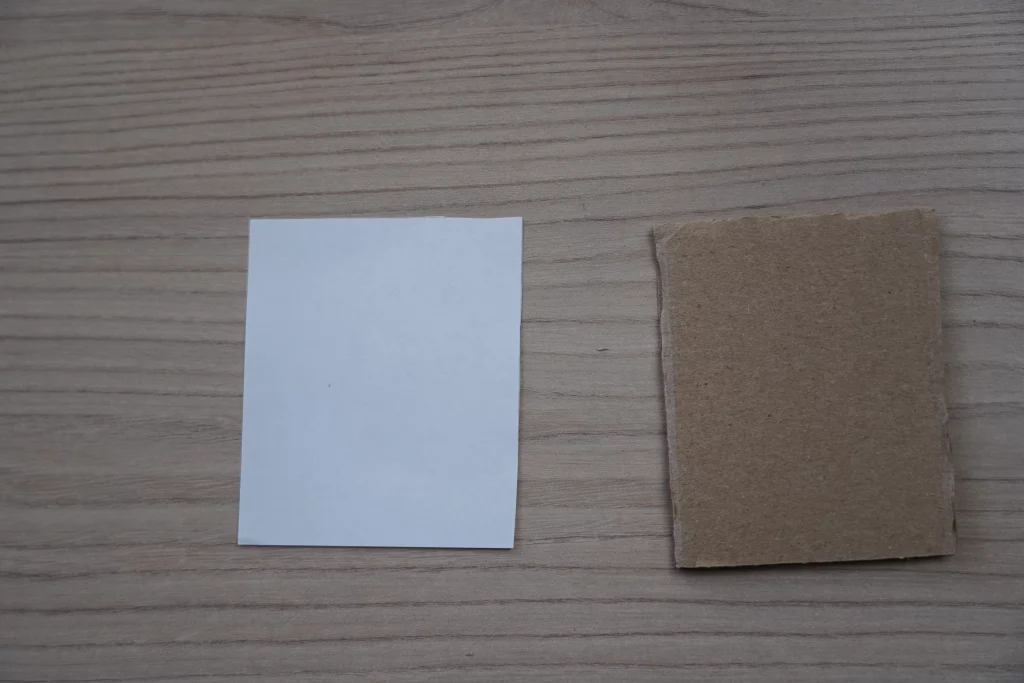
Step 1. Take a piece of cardboard, cut a rectangle from it and glue paper onto it to mark the scaling of the dynamometer.
Step 2. Using a needle and a thread, make a pointer and stick to the rubber band.
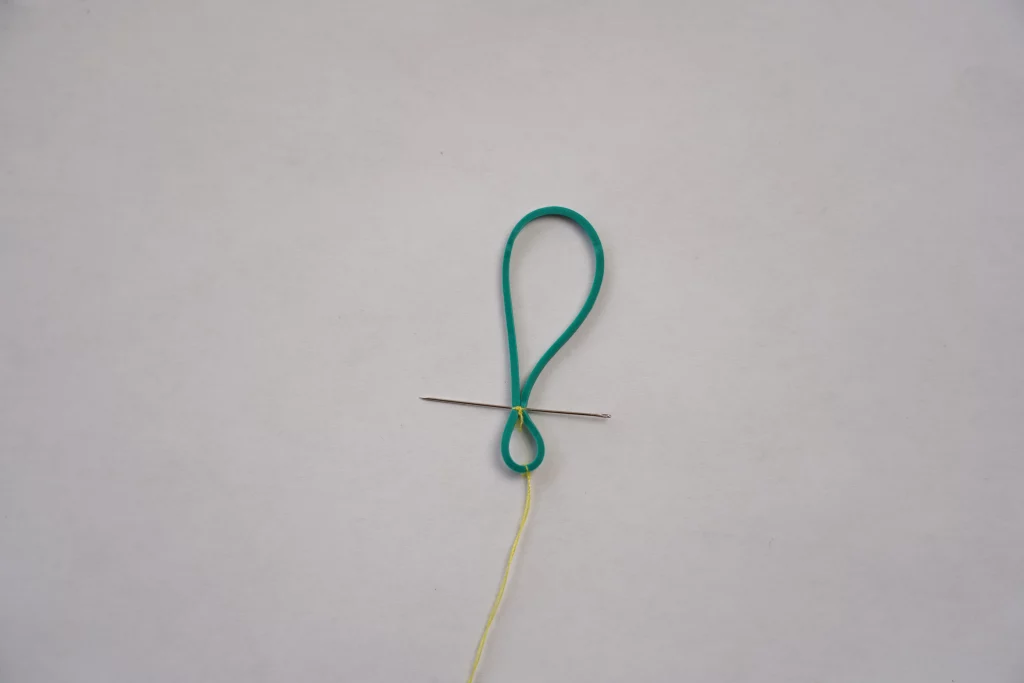
Step 3. Using a paper clip make a hanger, stick it to the rubber band as well.
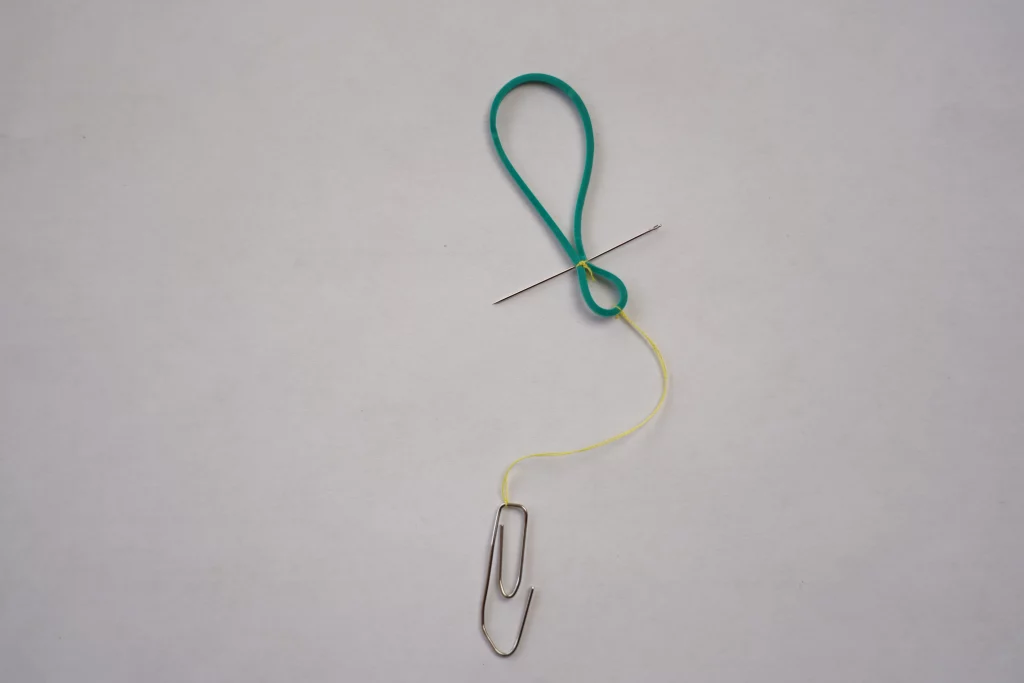
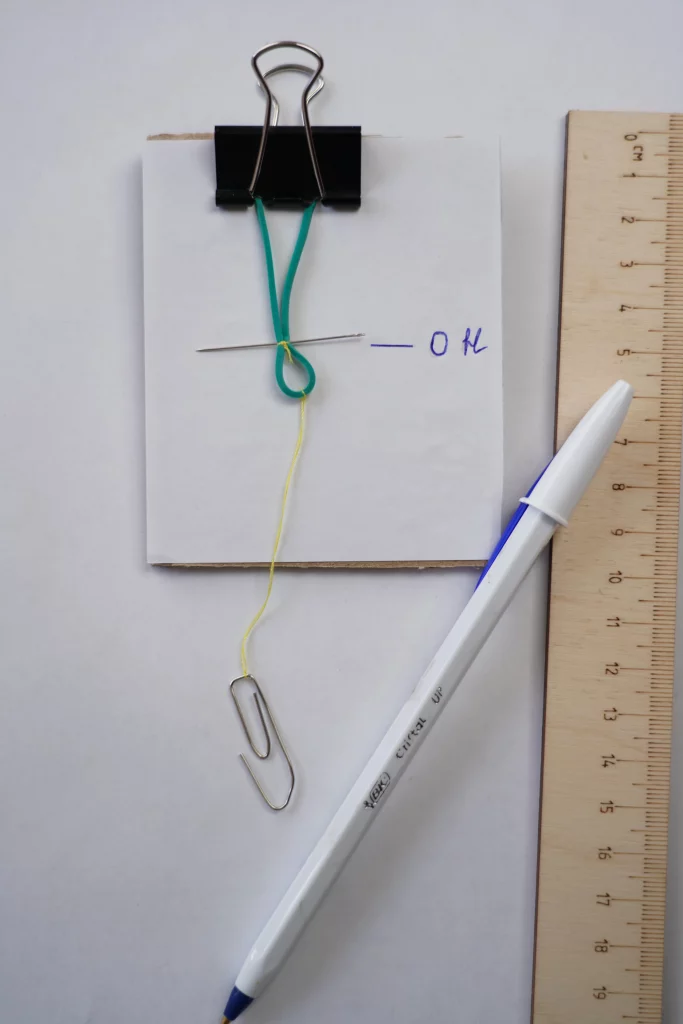
Step 4. Measure the length of the rubber band in a relaxed position and mark it 0 Newtons.
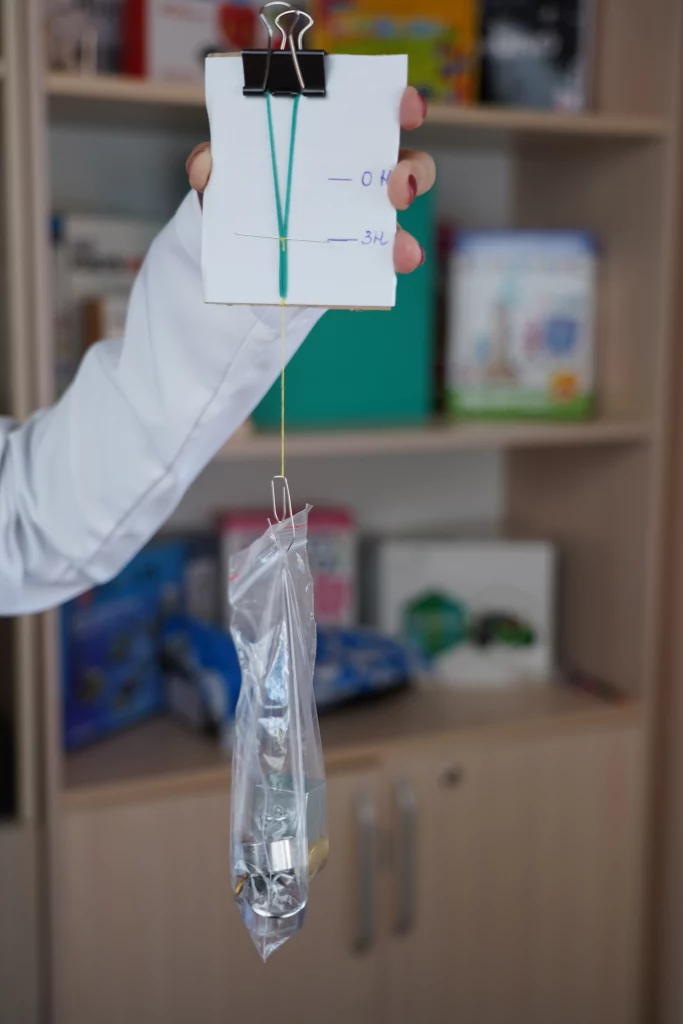
Step 5. Hang on the dynamometer weight that will give the maximum scaling of this equipment. Mark it.
Step 6. Using a ruler, fill in other marks to complete the scaling of the dynamometer.
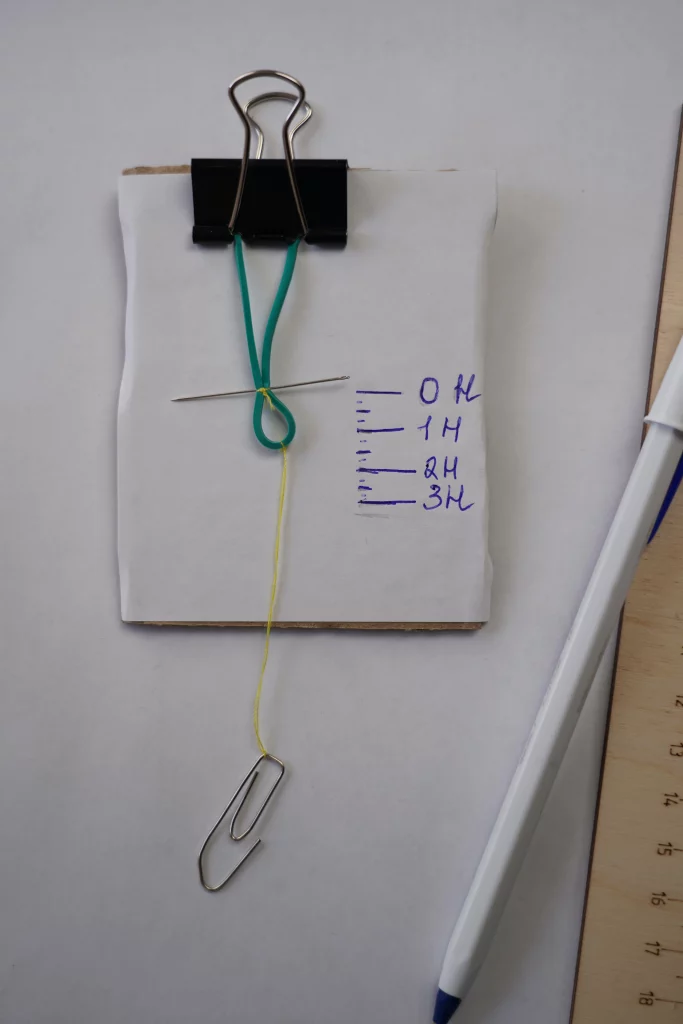
Now we can start the first experiment.
Experiment 1. Identify the type of dependence of the friction force on the normal force.
Procedure:
Step 1. Identify the value of division of the dynamometer.
Step 2. Measure the weight of the object.
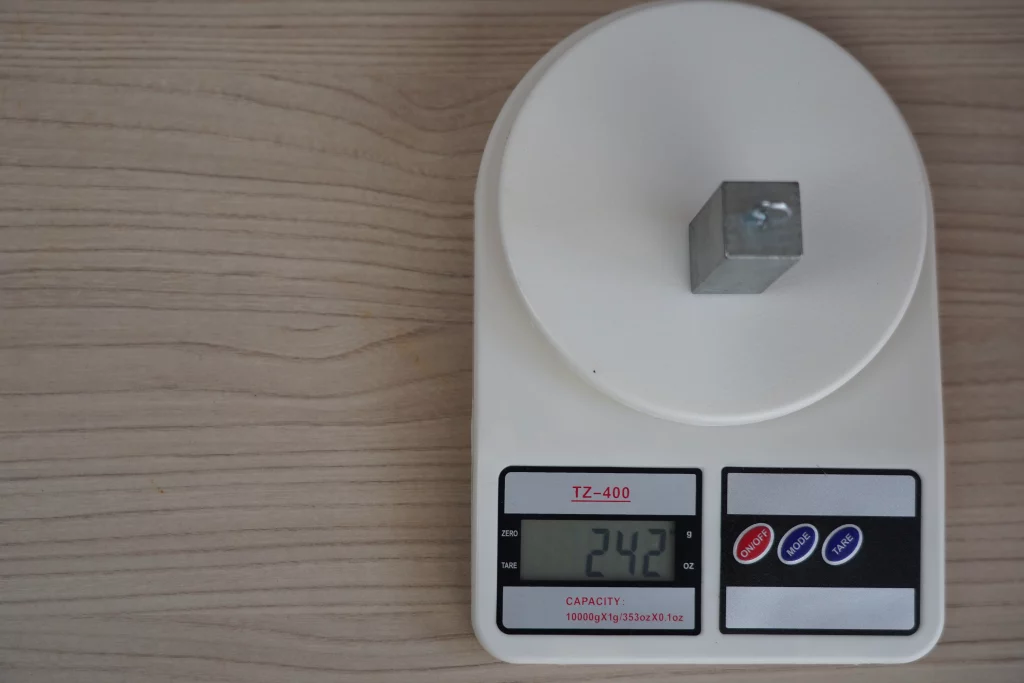
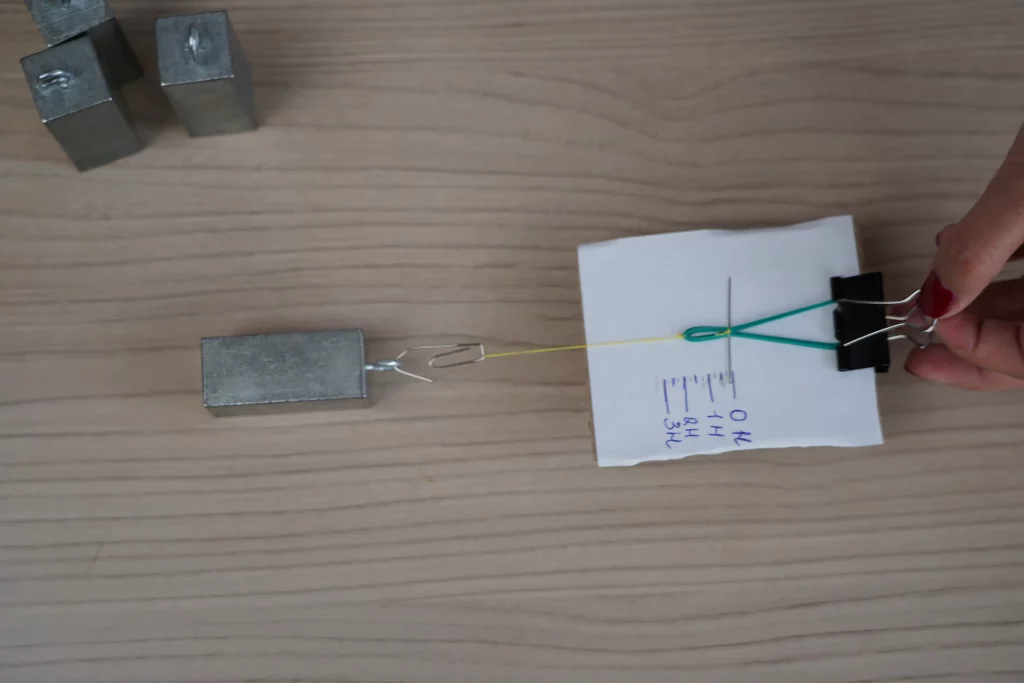
Step 3. Position the object and the dynamometer in a horizontal way. Hang the object to the dynamometer and pull the dynamometer evenly. Mark the reading of the dynamometer and insert it into the table. The reading is the friction force of that object.
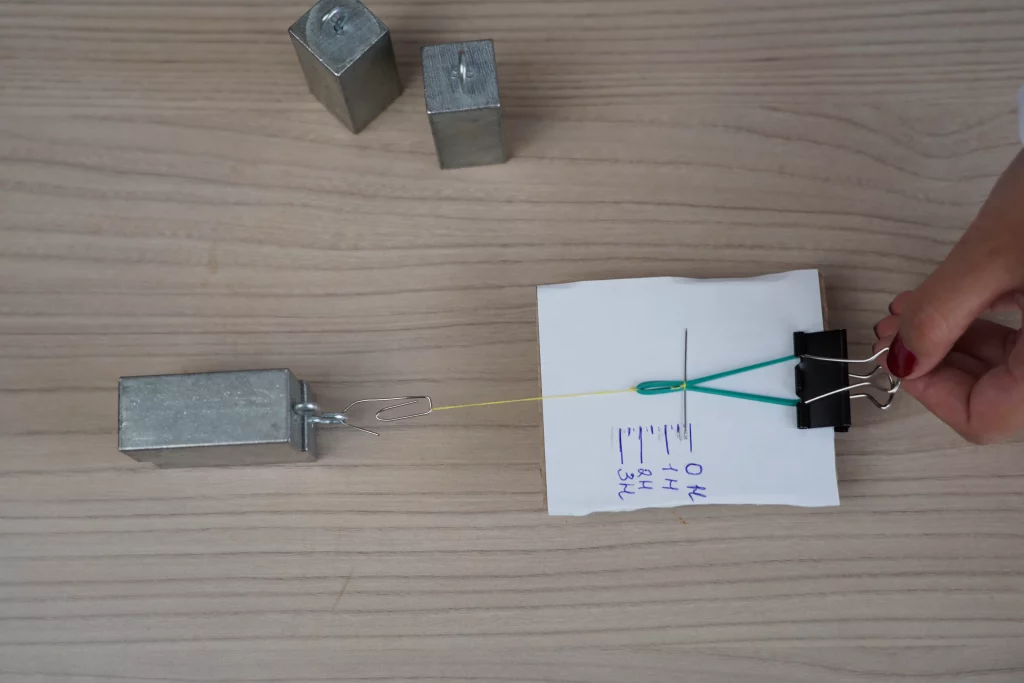
Step 4. Adding more weight repeat Steps 2 and 3. Insert the reading into the table.
Step 5. Draw a graph based on the data from the table. Derive conclusions.
Experiment 2. Identify the dependence between the friction force and the area of the contacting surfaces.
Procedure:
Step 1. Measure the friction force F2 of the object position sideways.
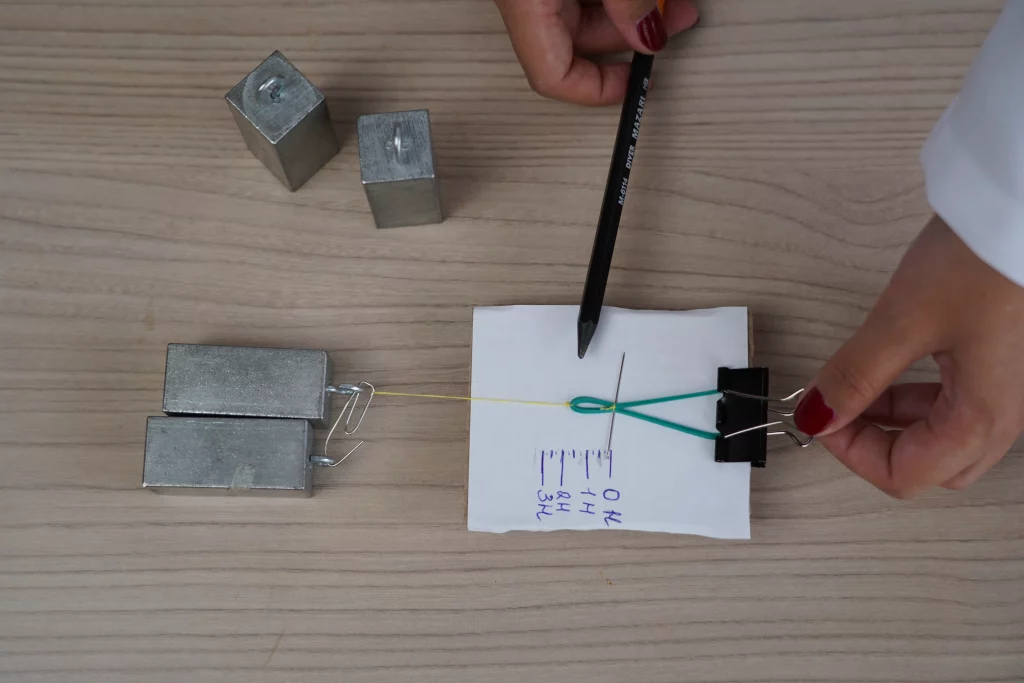
Step 2. Insert the data into the table and compare the results with the friction force F1 from the previous experiment. Derive conclusions.
Experiment 3. Calculate the friction coefficient.
Procedure:
Step 1. Calculate the friction coefficient for every run using the formula.
Step 2. Compare the results that you obtained experimentally with the table value of the friction coefficient. Derive conclusions.
Research part
| № | Weight,P, N | Measurement error of dynamometer,ΔF, N | Friction force,F1, N | Friction force with error,F1±ΔF, N | Friction force,F2, N | Friction force with error,F2±ΔF, N | Friction coefficient, |
| 1 | |||||||
| 2 | |||||||
| 3 | |||||||
| 4 |
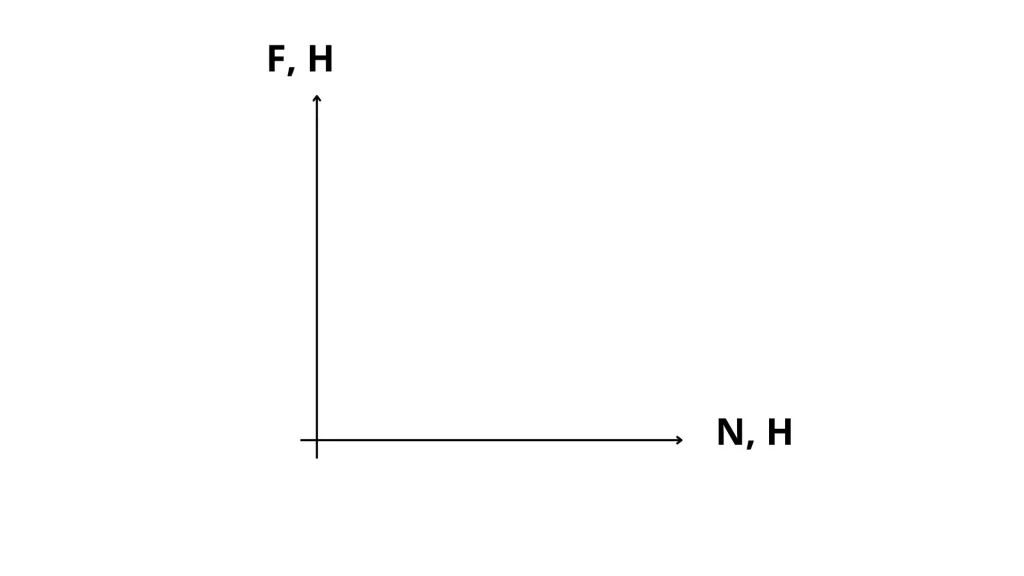
When deriving conclusions, answer the following questions:
- Was the friction force changing when you increased the normal force? How?
- Was the friction force changing when you changed the area of contacting surfaces?
- Did the friction coefficient derived experimentally match the table value?
Conclusion
In the process of doing this laboratory work, students should come up with the following conclusions. The friction force is proportional to the normal force of the object. The friction force doesn’t depend on the area of the contacting surfaces.