
Lesson
Objective:
- To compare the effectiveness of different insulation materials in retaining heat.
- To determine the best and worst among insulation materials.
Expected results:
Students better understand the principles of insulation and gain knowledge of which insulation materials are best for use in the home or other applications.
Teacher’s guide:
- Divide students into groups.
- Before beginning practical work, familiarize yourself with the safety rules by following this link:
- Download the worksheet.
Theoretical part
Insulation plays an important role in keeping heat in buildings and reducing heating and air conditioning costs.
Insulation materials:
There are many materials that can be used to insulate buildings.

The most common types are:
- Foam is a lightweight material with low thermal conductivity. Its air pockets prevent heat transfer.
- Cotton is a natural material that retains heat well.
- Aluminum foil is commonly used as an insulating material that reflects heat radiation and is used to prevent heat loss.
- Bubble wrap can be a good insulating material due to the air pockets between the bubbles.
Thermal insulation and its principles:
- Thermal insulation is the process of preventing the transfer of heat between different media. It is based on three basic principles:
- Thermal conductivity: many materials can conduct heat. The lower the thermal conductivity of a material, the better it is for insulation.
- Convection: heat can be transferred by convection, which is the movement of hot air upwards and cold air downwards. Effective insulation can slow this process down.
- Radiant heat: heat can be transferred by radiation. Materials that reflect heat radiation can be effective in preventing its transfer.
Practical part
Step 1.
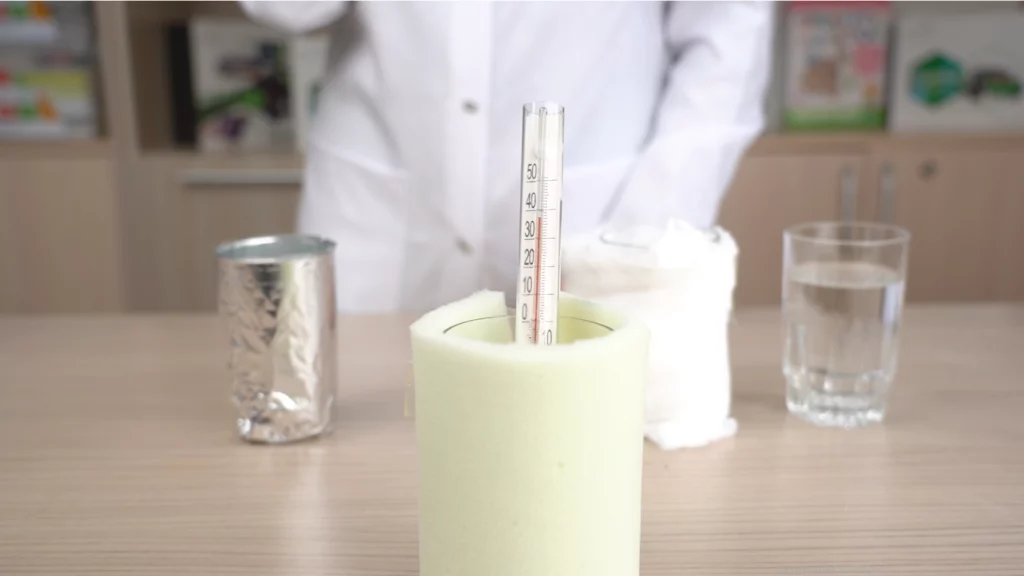
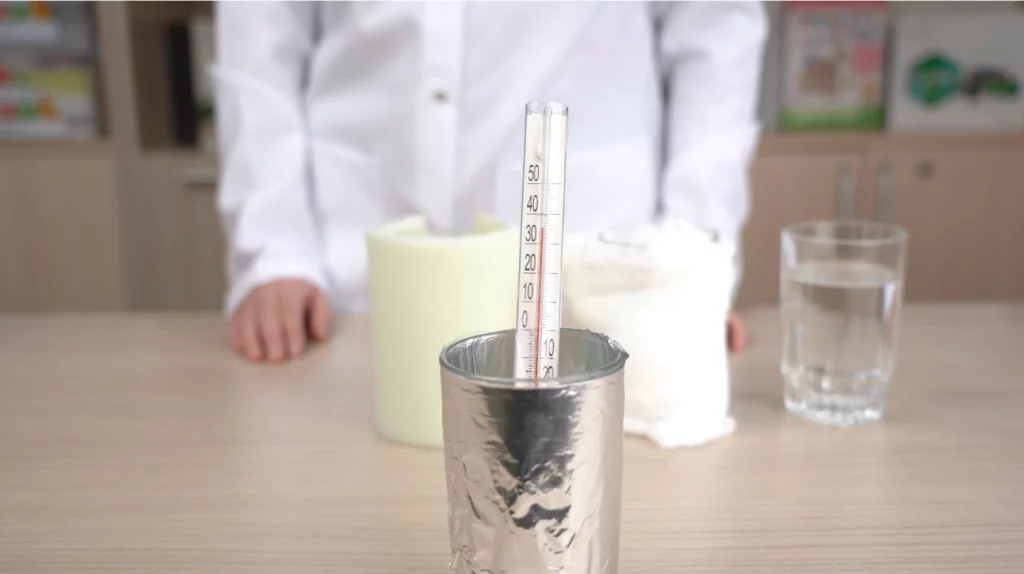
Wrap each glass with a different insulating material. Make sure that the insulating material completely covers the glass. When you wrap the glasses with the materials, you can tape the edges with duct tape. You can line the outside with gauze to properly insulate the glass with absorbent cotton. Leave one glass unwrapped for inspection.
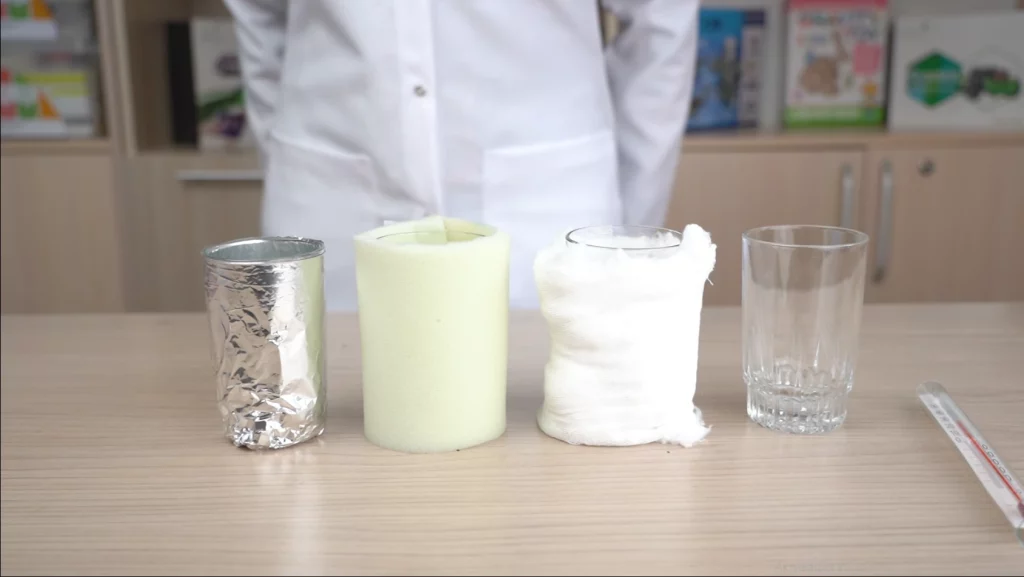
Step 2.
Fill each beaker with the same amount of hot water. It is important that the water level is the same in all the beakers.
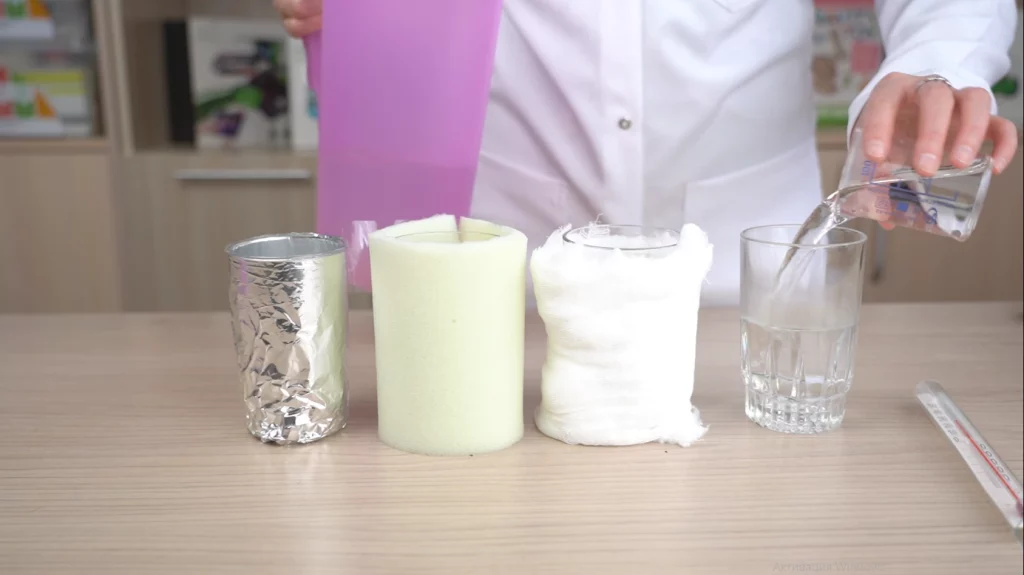
Step 3.
Measure the initial temperature of the water in each beaker with a thermometer and record this data on the worksheet.
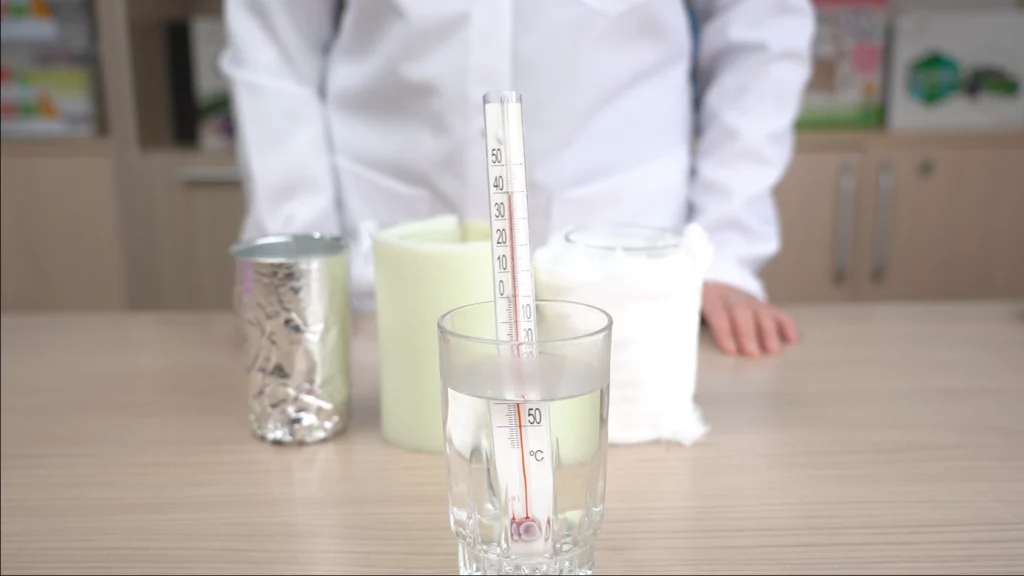
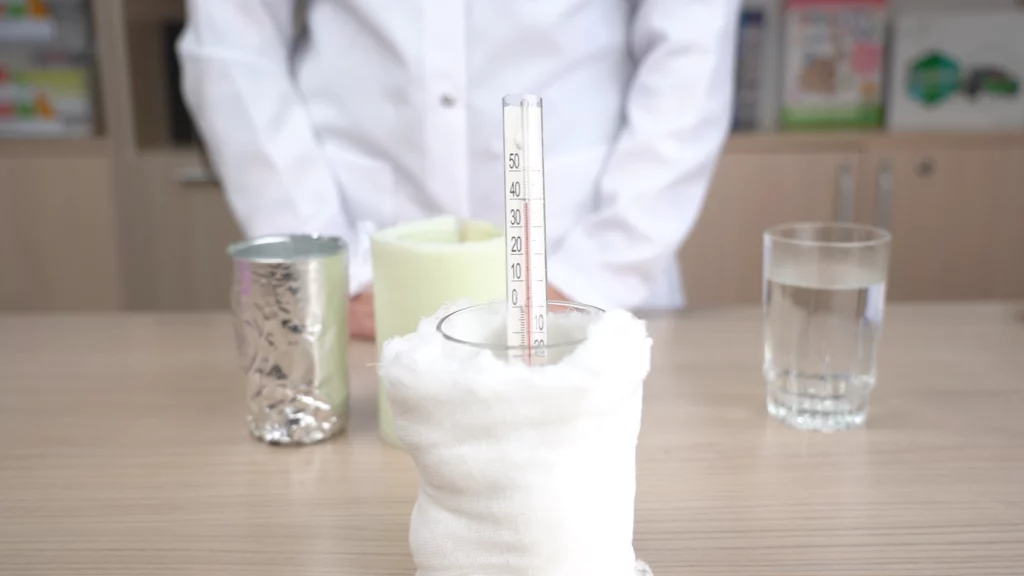
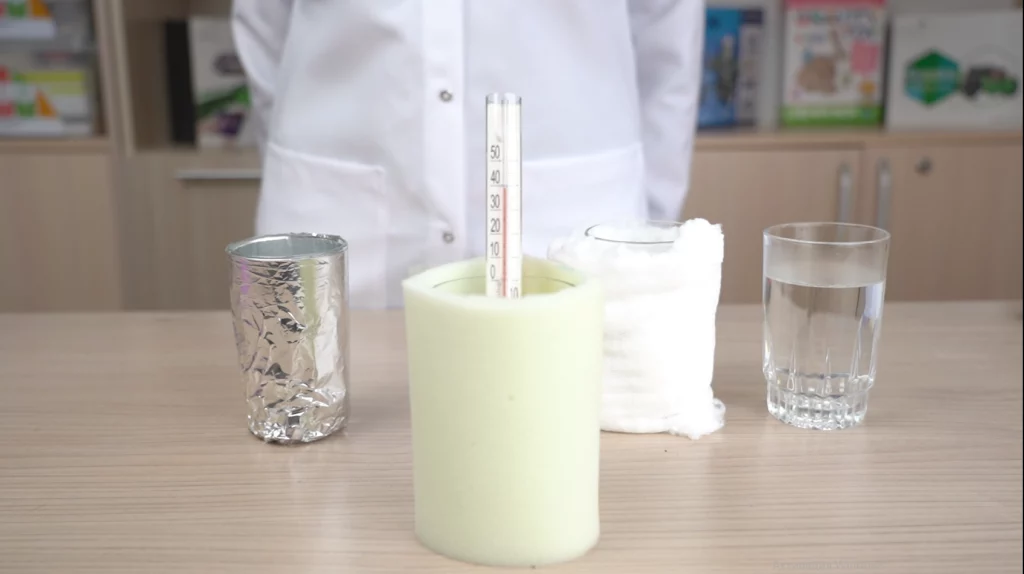
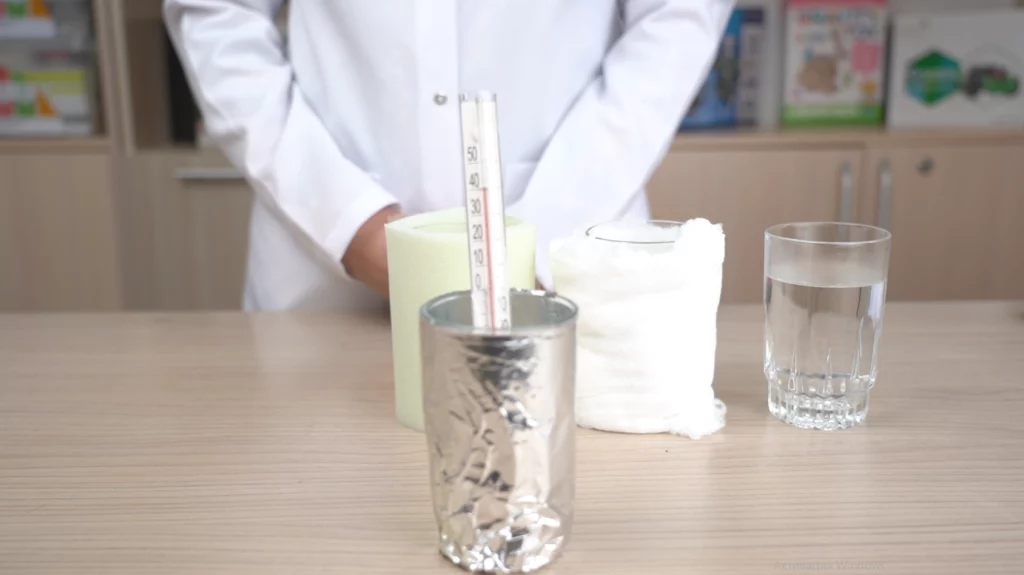
Step 4.
Start a timer.
At specified time intervals (every 5 minutes), measure the temperature of the water in each beaker again and record the values on the worksheet. Continue measuring the water temperature for 30 minutes.
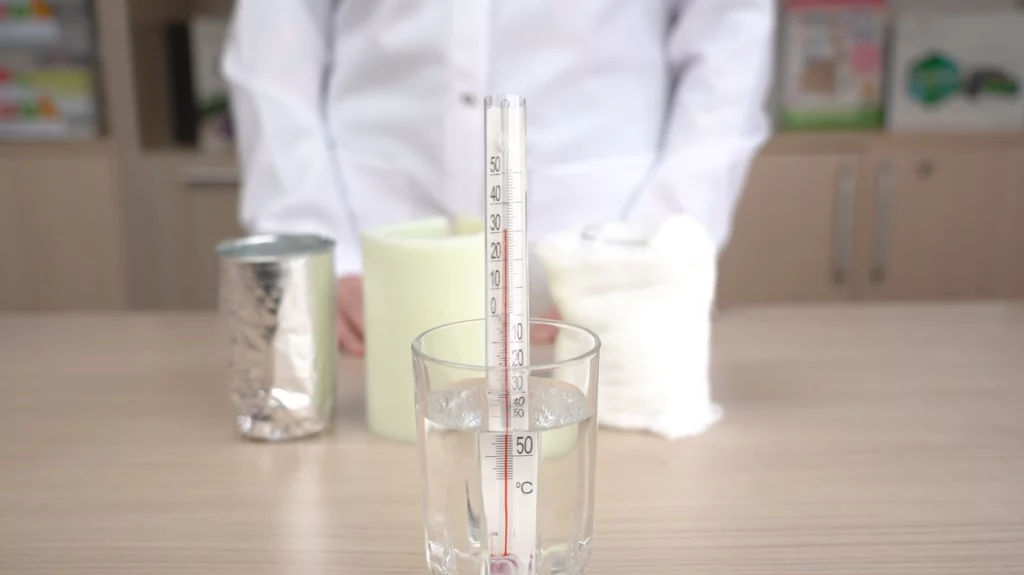
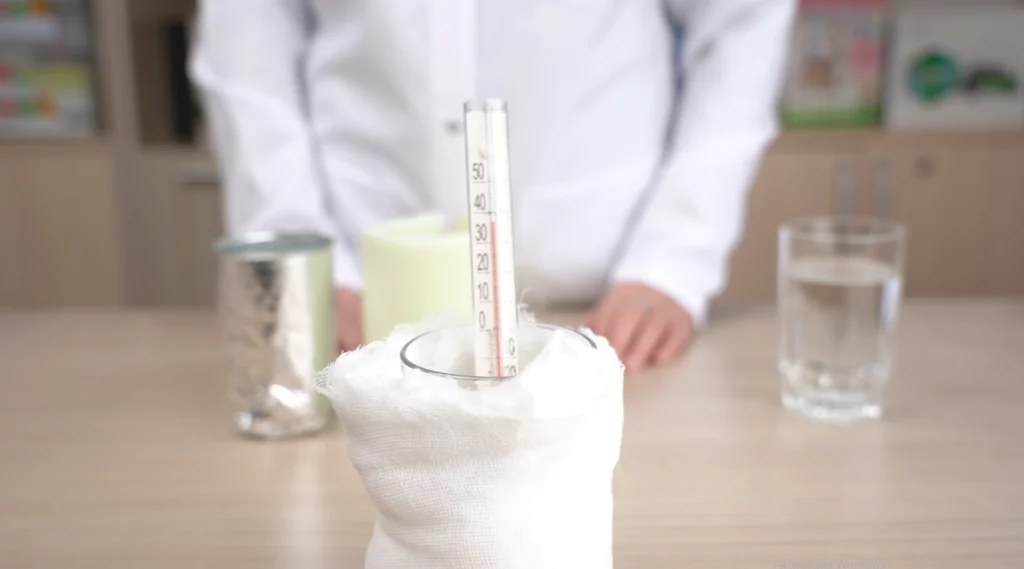
Step 5.
Compare the changes in water temperature in each container.
Determine which insulating materials retain heat best.
| Time | a glass without packaging | a glass wrapped in foam rubber | a glass wrapped in absorbent cotton | a glass wrapped in aluminum foil |
| Beginning | ||||
| 5 min | ||||
| 10 min | ||||
| 15 min | ||||
| 20 min | ||||
| 25 min | ||||
| 30 min |
Step 6.
Answer the following questions and draw conclusions:
- What results did you achieve? Which insulation materials were most effective?
- What factors make one insulation material more effective than another?
- Based on the results of the experiment, what recommendations can you make for more effective insulation in everyday life?
Conclusion
As part of the practical work, students conducted a comparative study of the effectiveness of different insulation materials in retaining heat. They used several popular insulation materials such as foam, absorbent cotton and aluminum foil. The experiment allowed them to evaluate how different materials affect heat retention inside cups of hot water.