
Lesson
Objective:
- Understanding the transition of energy and substances in the ecological pyramid
- Modeling the food chain
Expected Outcomes:
After studying the project, students will have:
- bridging the gap between theoretical knowledge and its application in the real world
- form teamwork skills
- analyze and summarize the information obtained
- independently draw logical conclusions and draw inferences
Teacher’s guide:
Divide students into groups.
Download the worksheet:
Before beginning practical work, familiarize yourself with the safety rules by following this link:
Theoretical part
The transfer of substances and energy between organisms can be reflected by a food (trophic) chain.
A food chain is a sequence of organisms in which each organism eats or decomposes another. Each link in the food chain is called a trophic level.
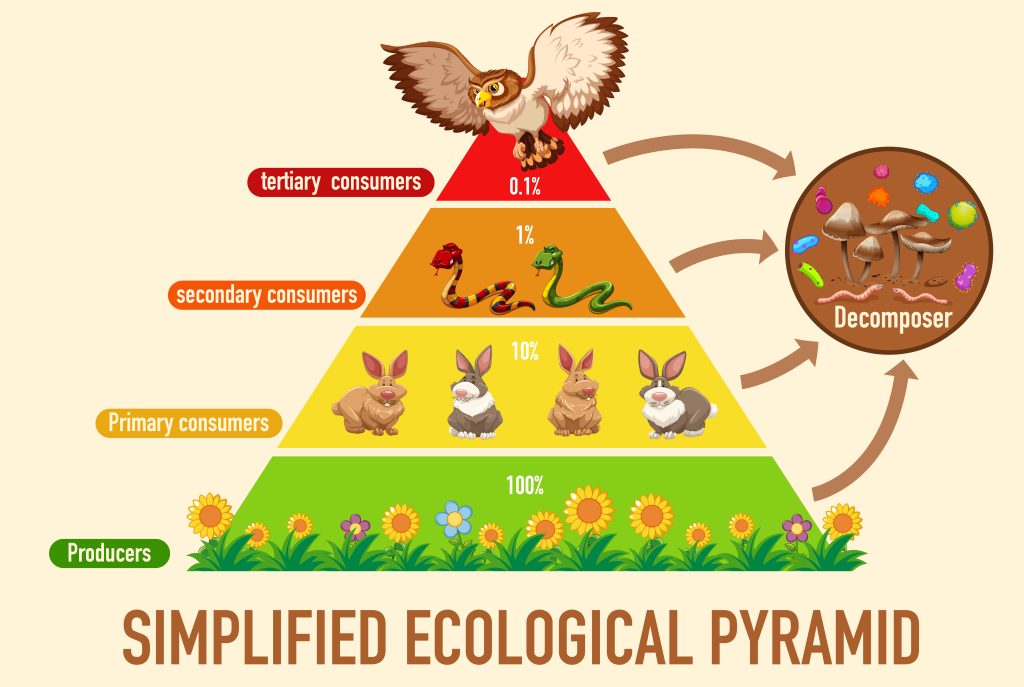
Ecological pyramid – graphical representations of the relationship between producers and consumptives of all levels (herbivores, predators, species that feed on other predators) in an ecosystem.
The only source of energy on Earth is the Sun. Autotrophs (mainly green plants, blue-green algae) convert the Sun’s energy into chemical bonding energy by photosynthesis. They become a source of organic matter for all other organisms and “feed” heterotrophs: I-order consumers (herbivores), those become food for II-order consumers (predators), etc. After death, any organism undergoes decomposition thanks to the activity of fungi and microorganisms (destructors, or reducers).
Sources:
Natural Science 6th grade, part 2, Almaty Kitap, 2019.
Practical part
Task 1. Give definitions to the following concepts.
- Food chains –
- Producers –
- Consumers –
- Reducers –
Task 2. Fill in the given ecological pyramid with the levels in an ecosystem.
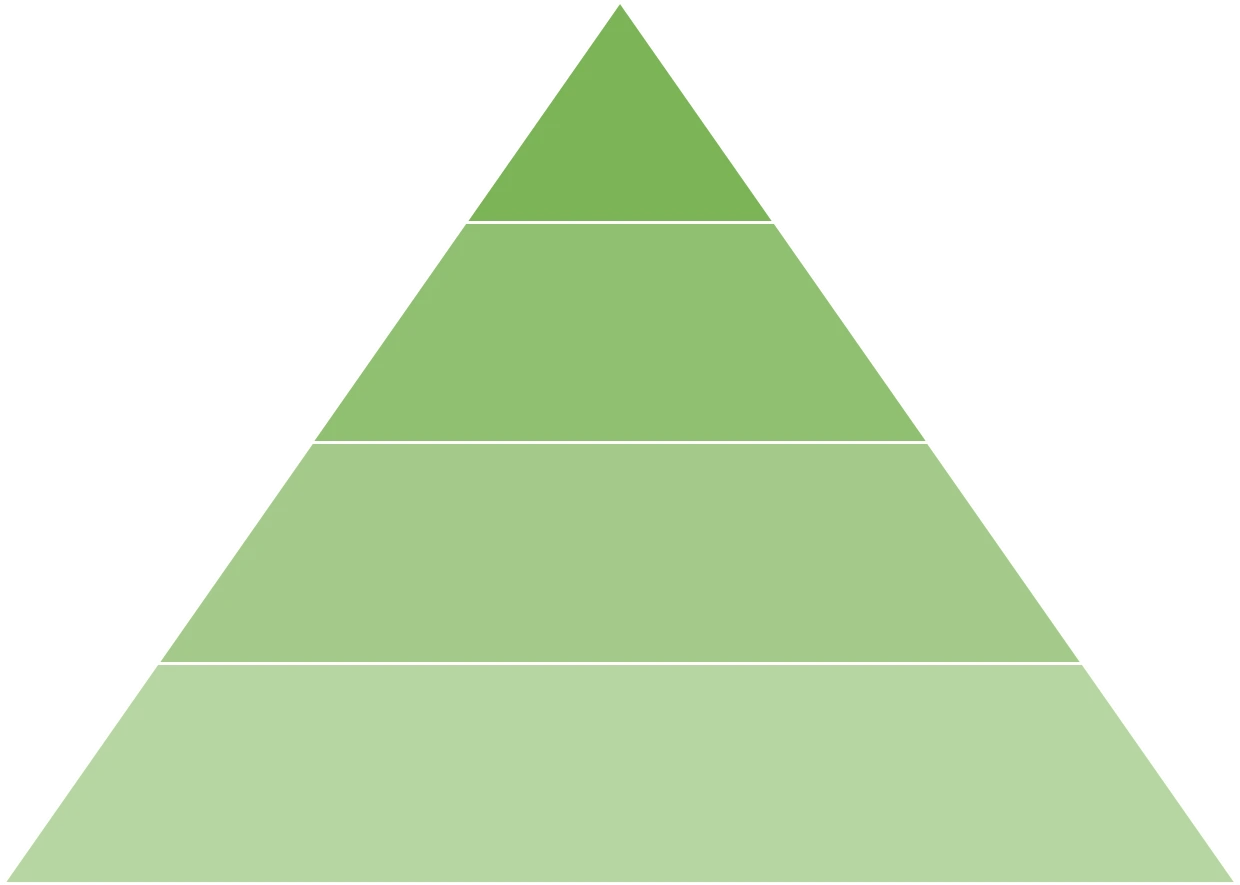
Task 3. Create two food chains. They should all start with plants (their parts) or dead organic waste (detritus). The intermediate link in the first case should be an earthworm; in the second case, a housefly. All food chains should end with humans. Suggest the longest versions of the chains.
- First food chain:
- Second food chain:
Task 4. Create a geoboard of the food chain.
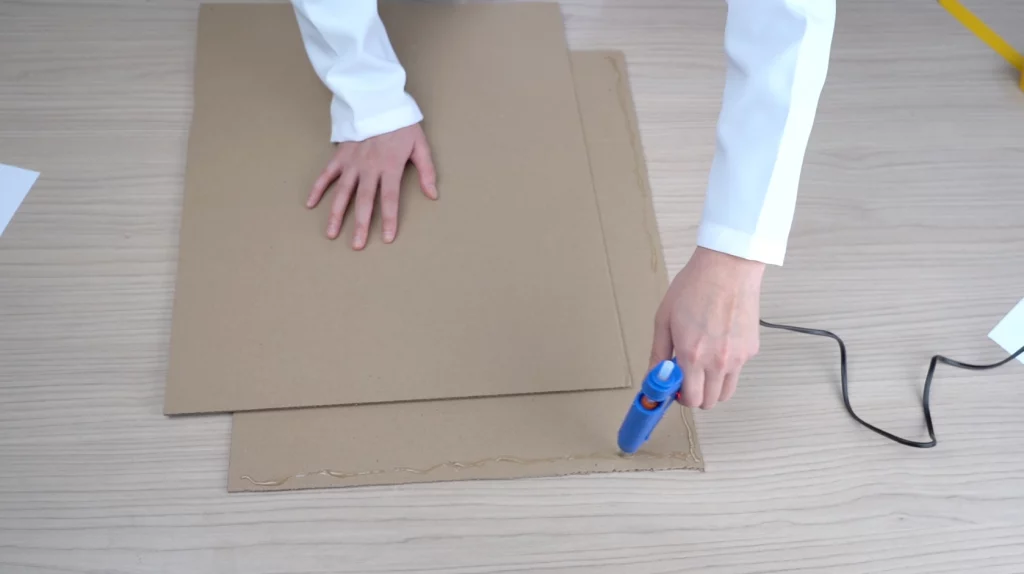
Step 1. Cut out 2 pieces of 50*40 cm cardboard. Glue them together using hotmelt glue.
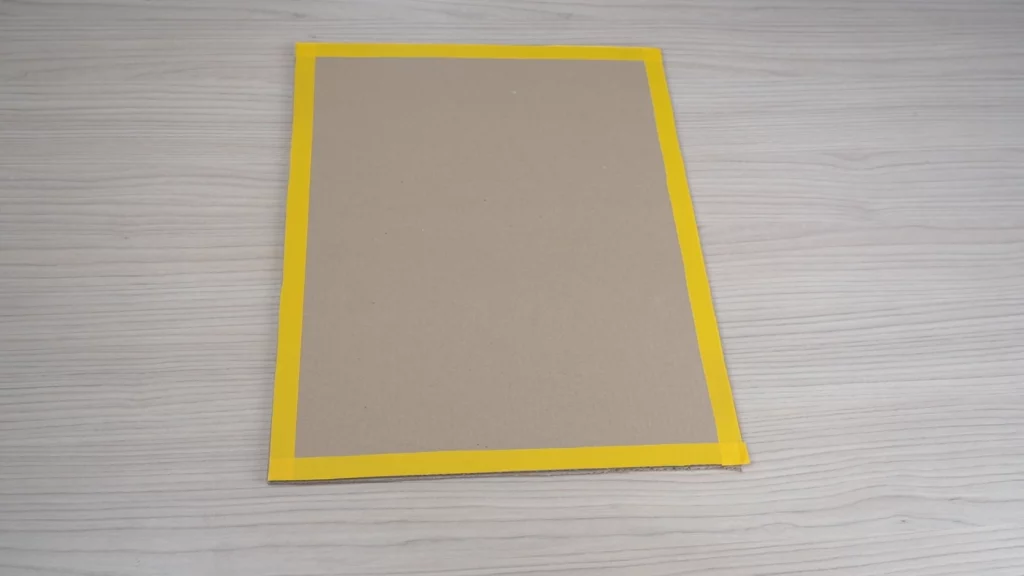
Step 2. Cut 2 pieces 1 cm wide, 50 cm long strips and 2 pieces 40 cm long strips from the sticky paper. Tape the edges of the cardboard with the sticky paper.
Step 3. Cut the A4 paper into small pieces and cut (into 8 pieces).

Step 4. Students should draw elements of the ecosystem on the paper. Several food chains should be constructed from the images. Images should include producers, herbivorous animals (first order consume), carnivorous animals (second order consume) and third order consume. Use colored pencils to draw.You can also get images of animals and plants ready by clicking on the link: Ecological pyramid.
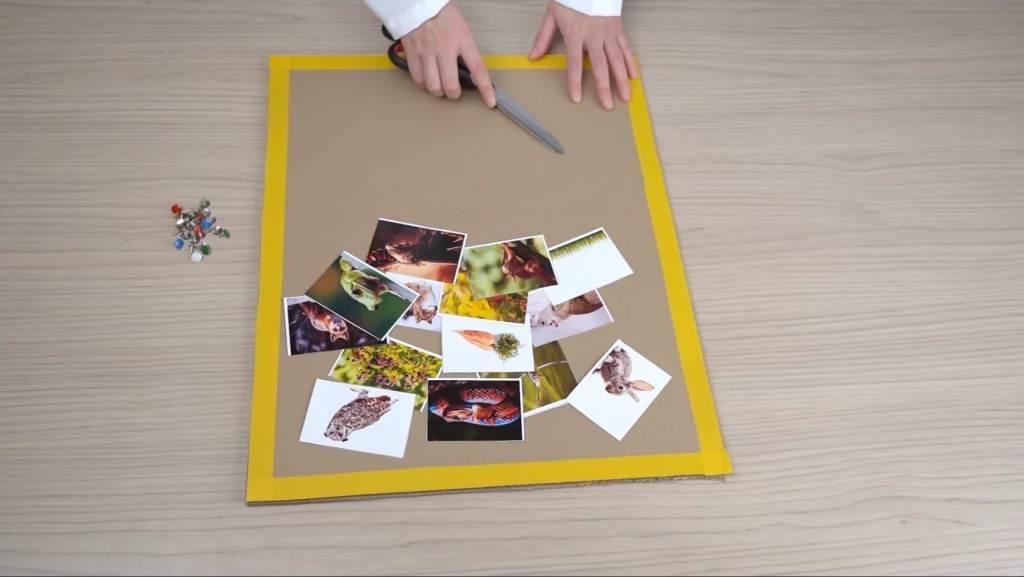
Step 5. Attach the pictures to the cardboard using a stationary button.
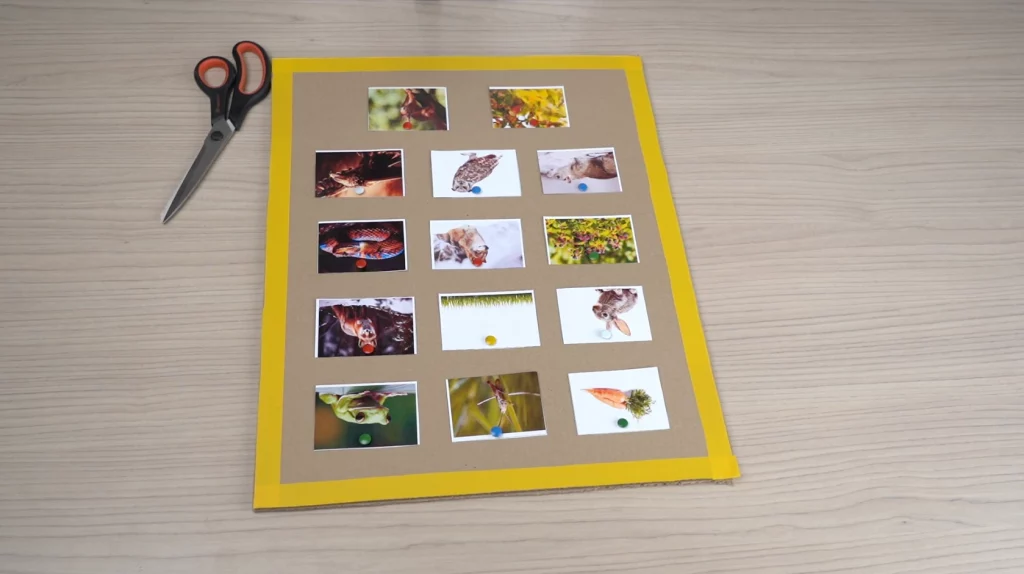
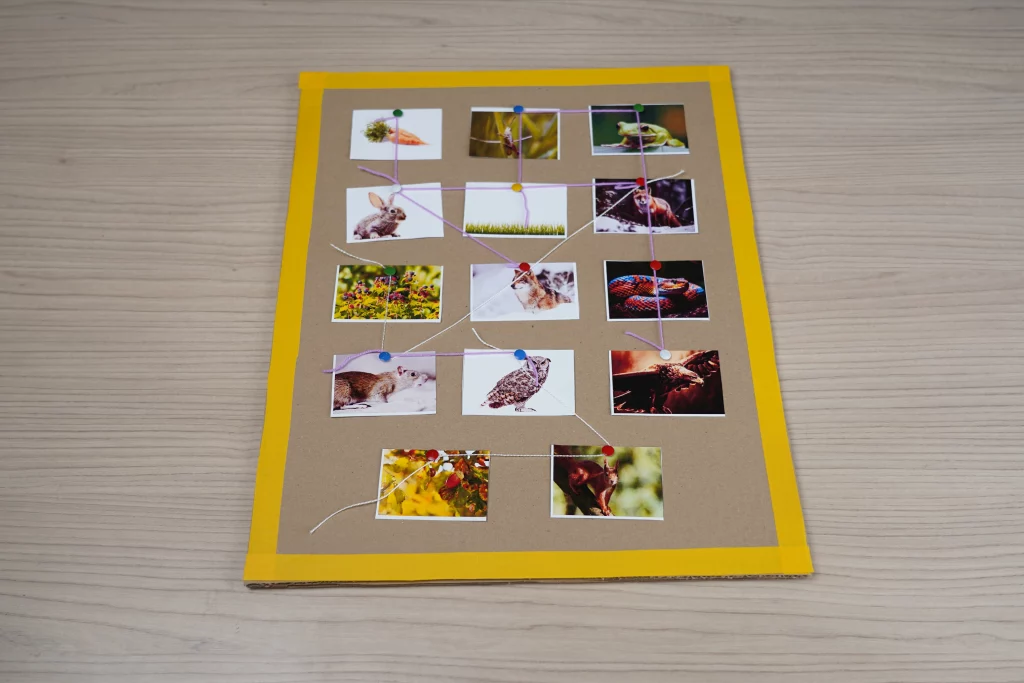
Step 6. Create a food chain link between the ecosystem elements and connect them to each other using thread.
Conclusion
In the practical work, analyzing the data obtained during the study, we can draw the following conclusions:
Food chains represent an important mechanism for the transfer of energy and matter from one level of consumers to another in an ecosystem. From primary producers to final consumers, each level plays a different role in sustaining the next link. It is important to note that there is a decrease in the transfer of energy, which is reflected in the structure of the ecological pyramid. The study of food chains and ecological pyramids has enriched our knowledge of the interrelationships in nature and emphasized the need to respect biodiversity and ecosystems in order to maintain a healthy planet.