
Lesson
Purpose of the work:
- to study the process of protein denaturation
- to investigate the properties of protein
Expected results:
After completing the work, students can:
- develop teamwork skills
- be able to analyze and summarize the information received
- draw logical conclusions
Teacher’s Guide:
- The task is performed in groups of 3 people
- Before starting laboratory work, please read the safety rules by following the link:
- To download the worksheet, follow the link:
Theoretical part
Protein denaturation is the process by which the spatial structure of a protein molecule is destroyed. As a result of denaturation, the protein loses its biological activity.


Denaturation can be caused by various factors, such as:
- Heating: Increasing the temperature increases the kinetic energy of molecules, which can disrupt the bonds that hold the protein in its three-dimensional structure.
- Acids and bases: Changes in pH can alter the charge of amino acid residues in the protein molecule, which can also lead to denaturation.
- Organic solvents: Some organic solvents can dissolve hydrophobic regions of the protein molecule, causing it to unfold.
- Heavy metal salts: Heavy metal ions can bind to amino acid residues in the protein molecule, which can also lead to denaturation.
- Radiation: Ultraviolet (UV) radiation and ionizing radiation can damage bonds in the protein molecule, leading to its denaturation.
Protein denaturation can be:
- Reversible: In some cases, a denatured protein can regain its structure and function if the denaturing agent is removed.
- Irreversible: In other cases, a denatured protein cannot regain its structure and function.
Examples of protein denaturation in everyday life:
- Cooking eggs: Heating the protein in egg white denatures it, causing it to coagulate.
- Meat becomes tough when overcooked: Prolonged exposure to high temperatures during cooking can denature the proteins in meat, making it tough.
- Action of detergents: Some detergents contain substances that can denature proteins, helping them remove dirt and grease.
Practical part
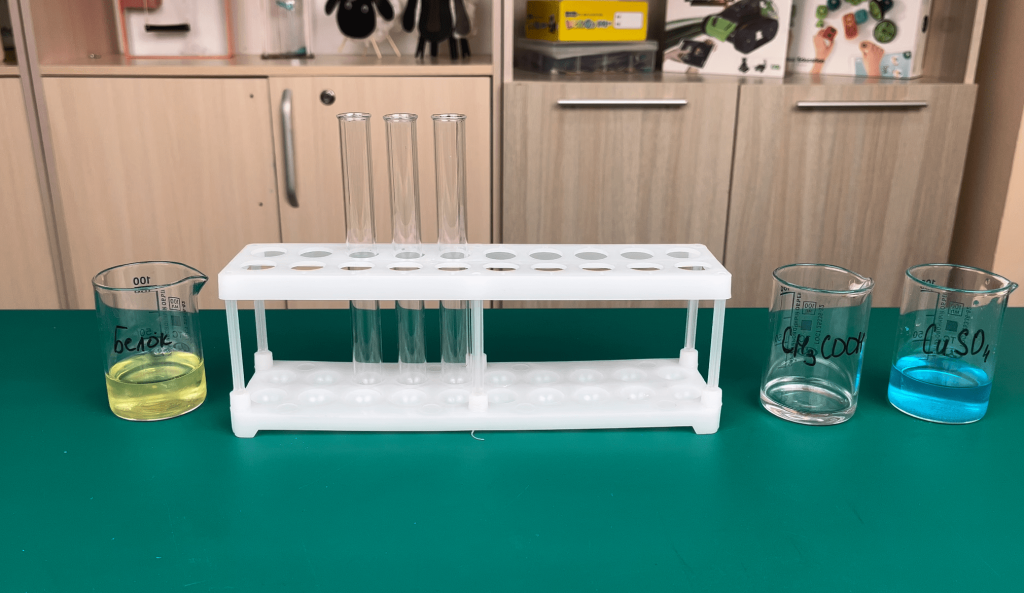
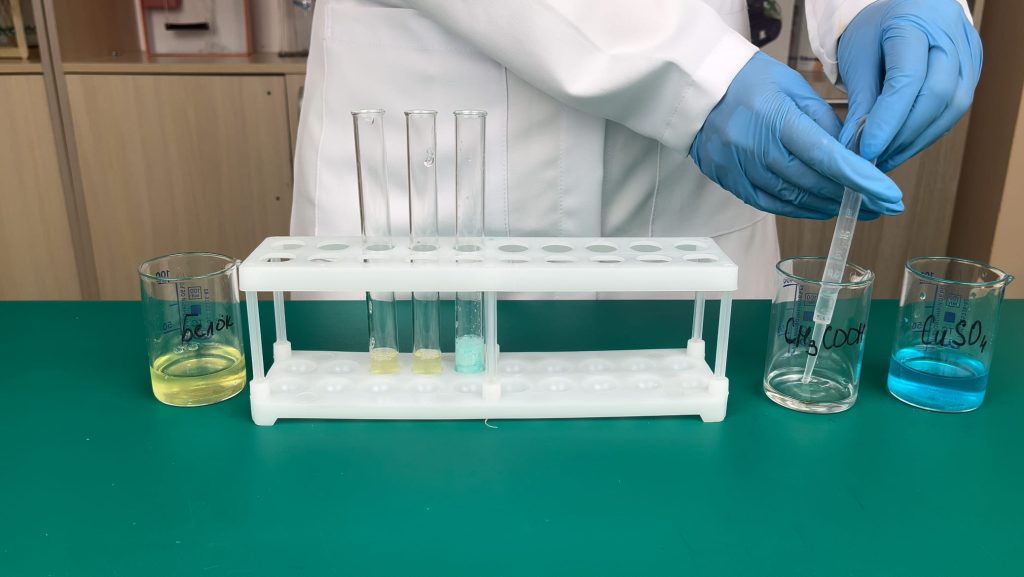
Step 1. Prepare 3 clean test tubes, egg white, acetic acid (70%, CH3COOH) and a solution of copper sulfate (CuSO4).
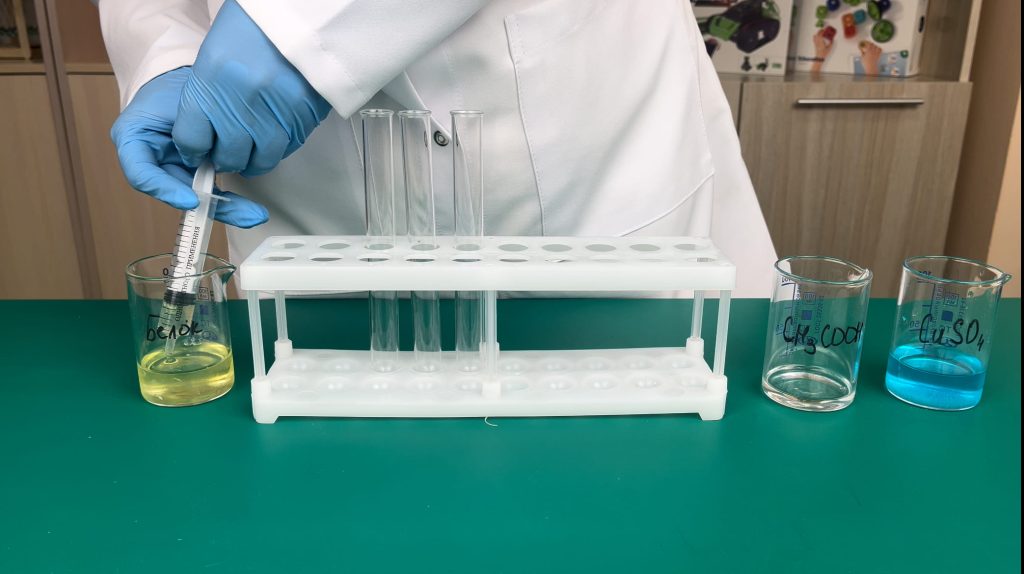
Step 2. Using a pipette, pour 2 ml of protein into each tube.
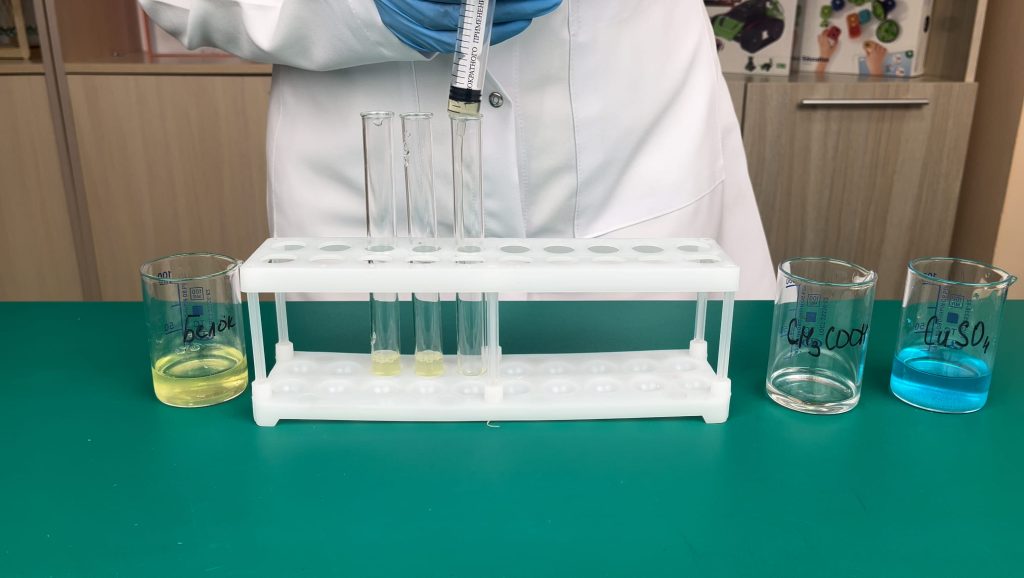
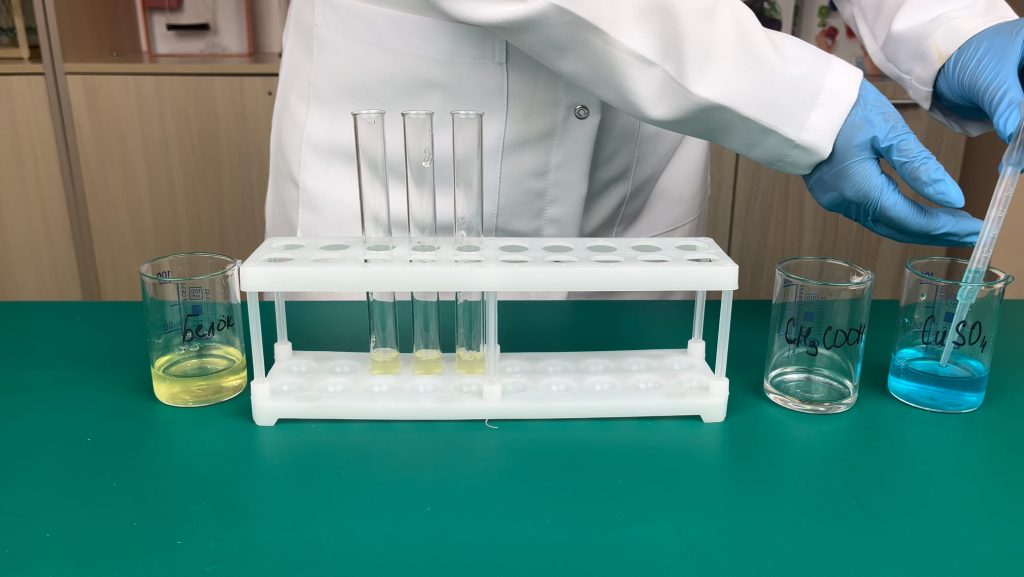
Step 3.Protein-salt interaction. Add 0.5 ml of copper sulfate solution to one, then shake the test tube. Watch the reaction.
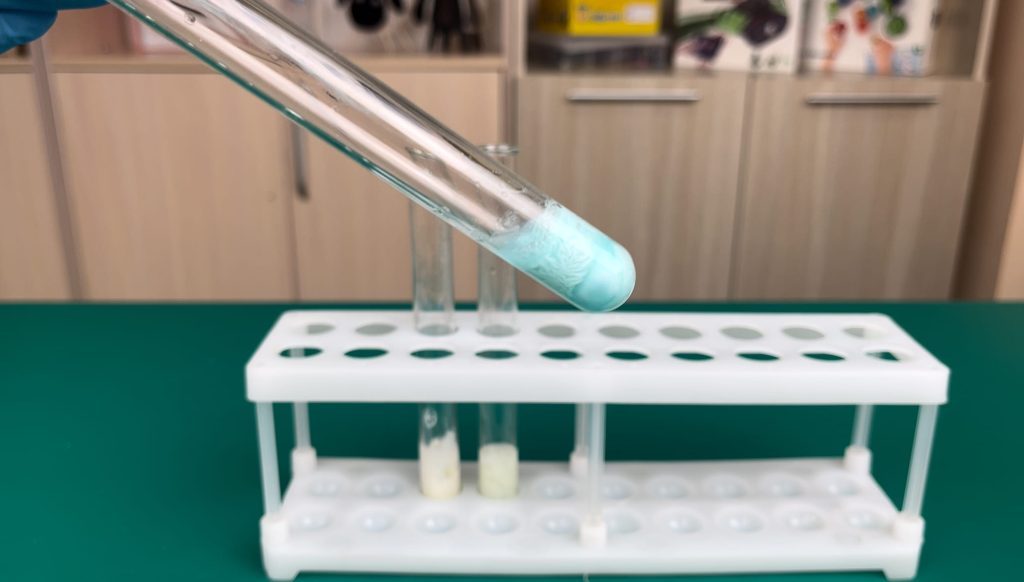
Step 4. Protein-acid interaction. Add acetic acid to the second tube in the same amount. Shake the test tube. Observe the changes.
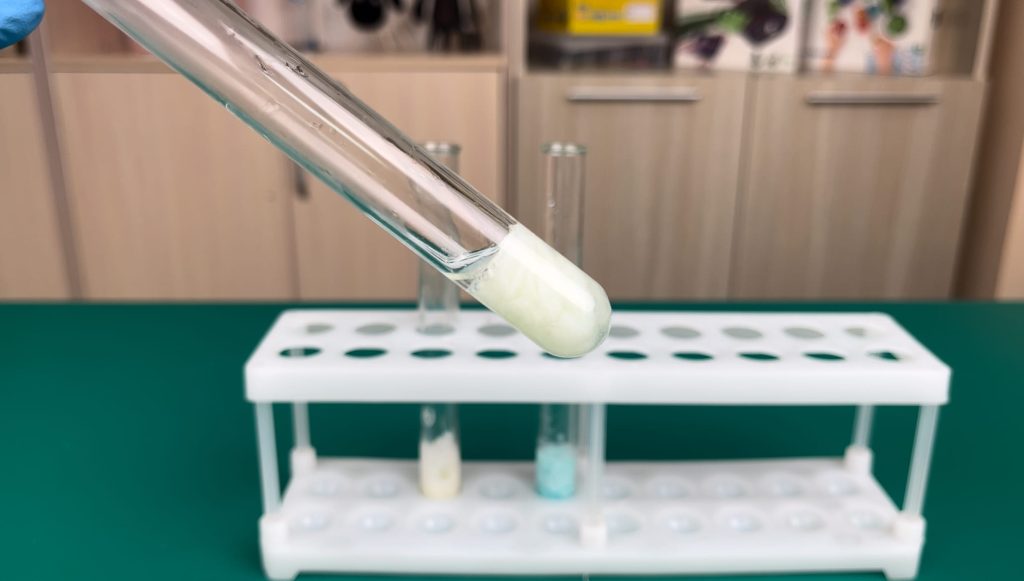
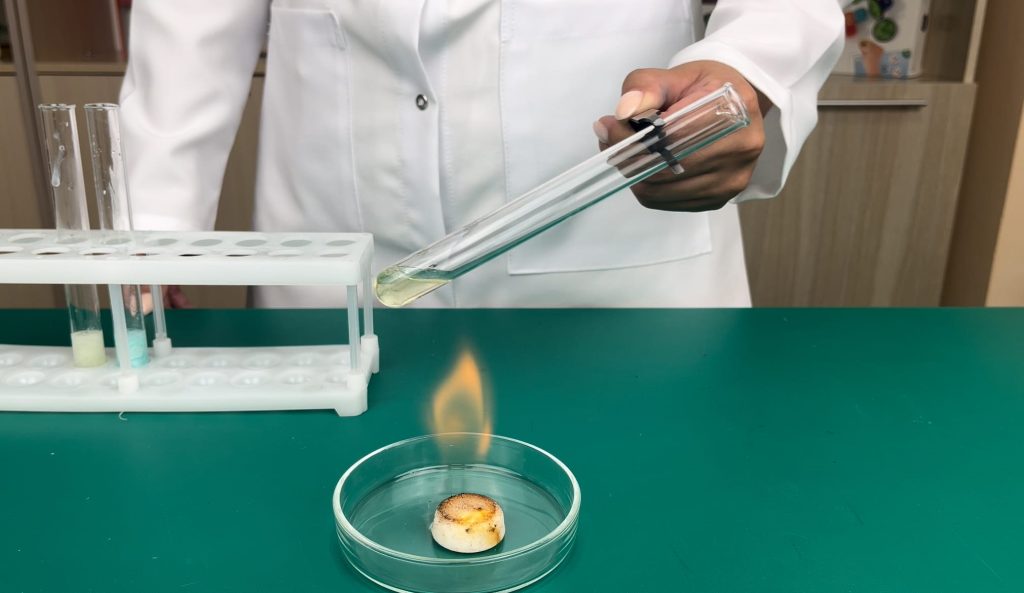
Step 5. The effect of temperature on the protein structure. Carefully heat the third tube with an alcohol lamp. First, warm up the entire tube, then the protein. Observe the changes.
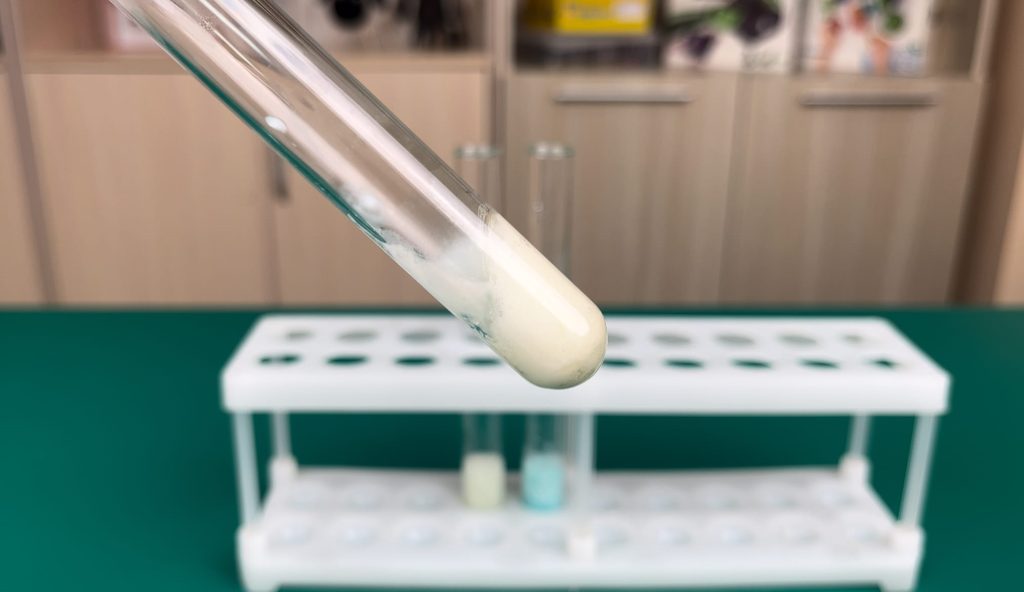
Step 6.Enter the received data into the table on the Worksheet:
| The factor | Observations (Describe the appearance of the protein after the reaction) |
copper sulfate | |
acetic acid | |
t, temperature |
Conclusion
This research investigated how different factors affect protein denaturation.