
Lesson
Purpose of the work:
- to study the structure of nitrogen and ammonia molecules
Expected results:
After completing the work, students can:
- develop teamwork skills
- be able to analyze and summarize the information received
- draw logical conclusions
Teacher’s Guide:
- The task is performed in pairs
- To download the worksheet, follow the link:
Theoretical part
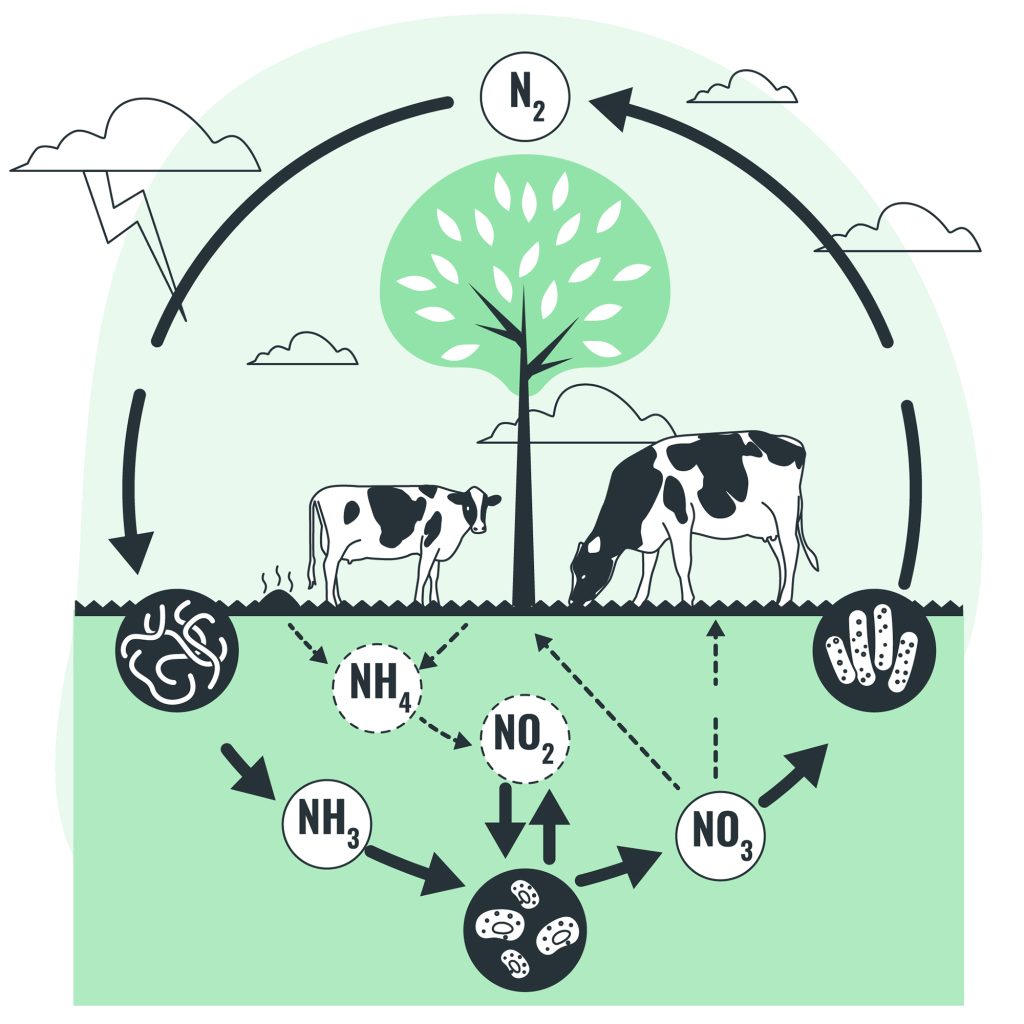
Nitrogen is a diatomic gas that makes up about 78% of the volume of the Earth’s atmosphere. It is an important component of many biomolecules, including proteins, nucleic acids and chlorophyll.
Ammonia is a colorless gas with a pungent odor that easily dissolves in water. It is used in the production of fertilizers, explosives and other chemical compounds.
Practical part
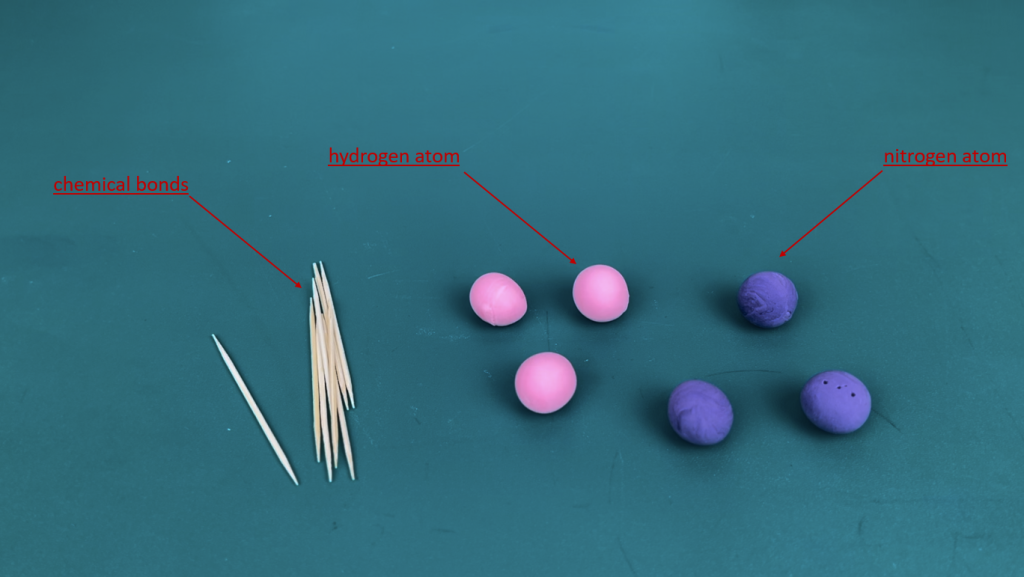
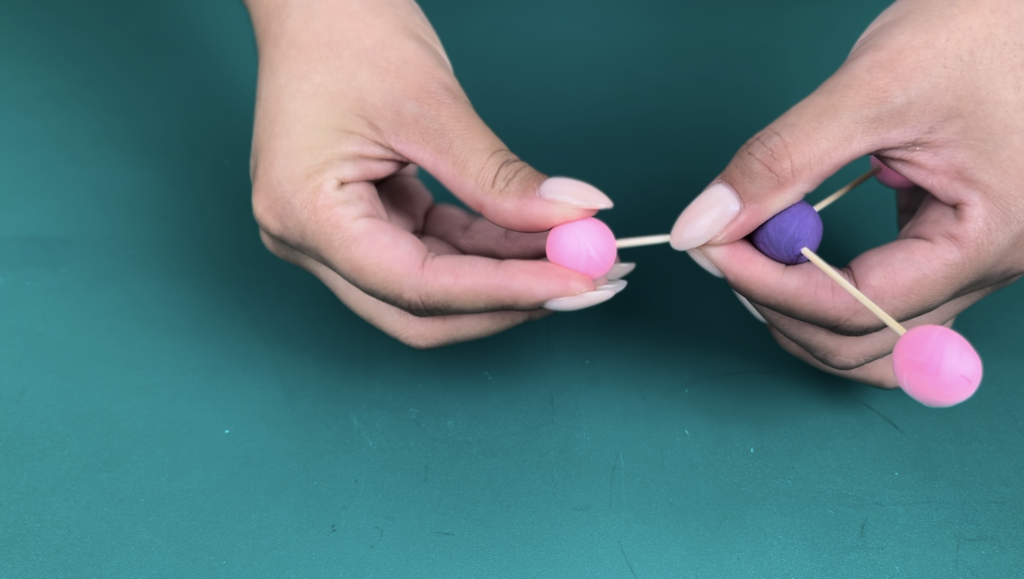
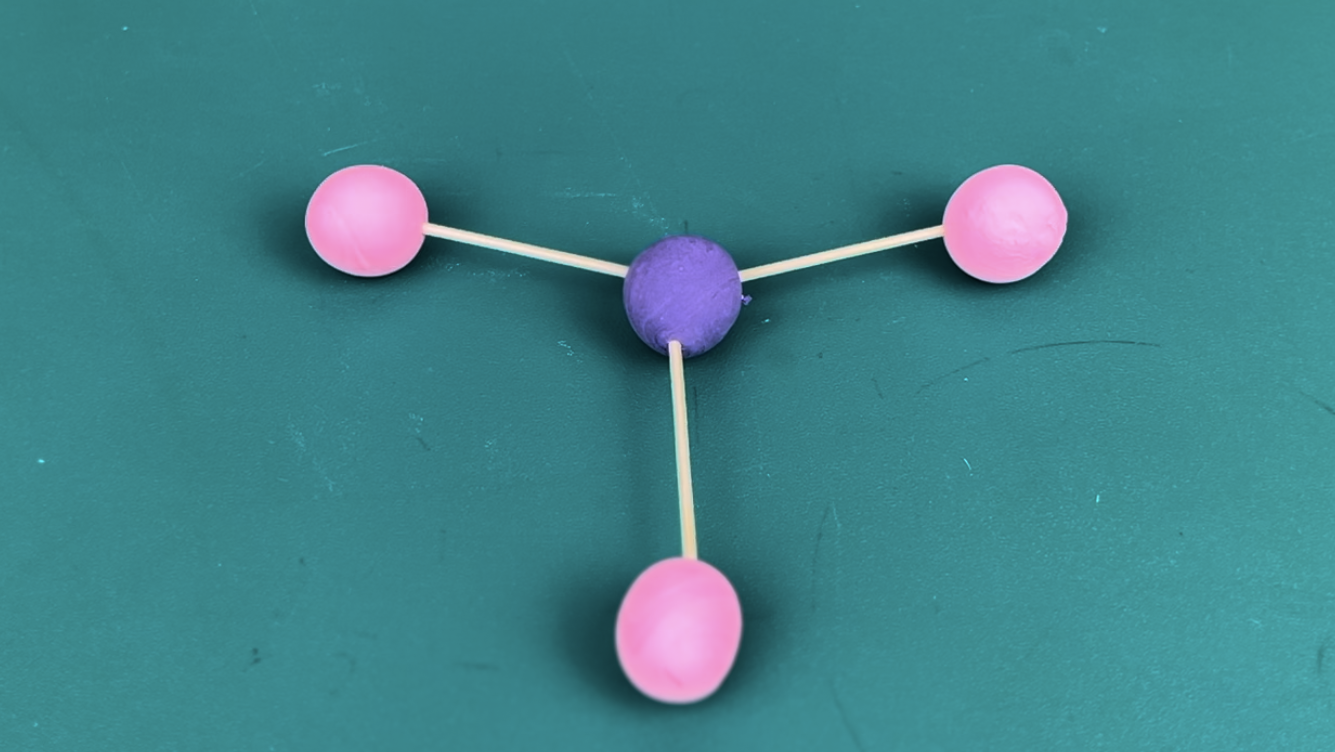
Step 1. Create models of nitrogen and ammonia molecules using improvised materials. Make balls of two colors out of plasticine or other material, symbolizing nitrogen and hydrogen atoms, and use sticks as chemical bonds to connect atoms into molecules.
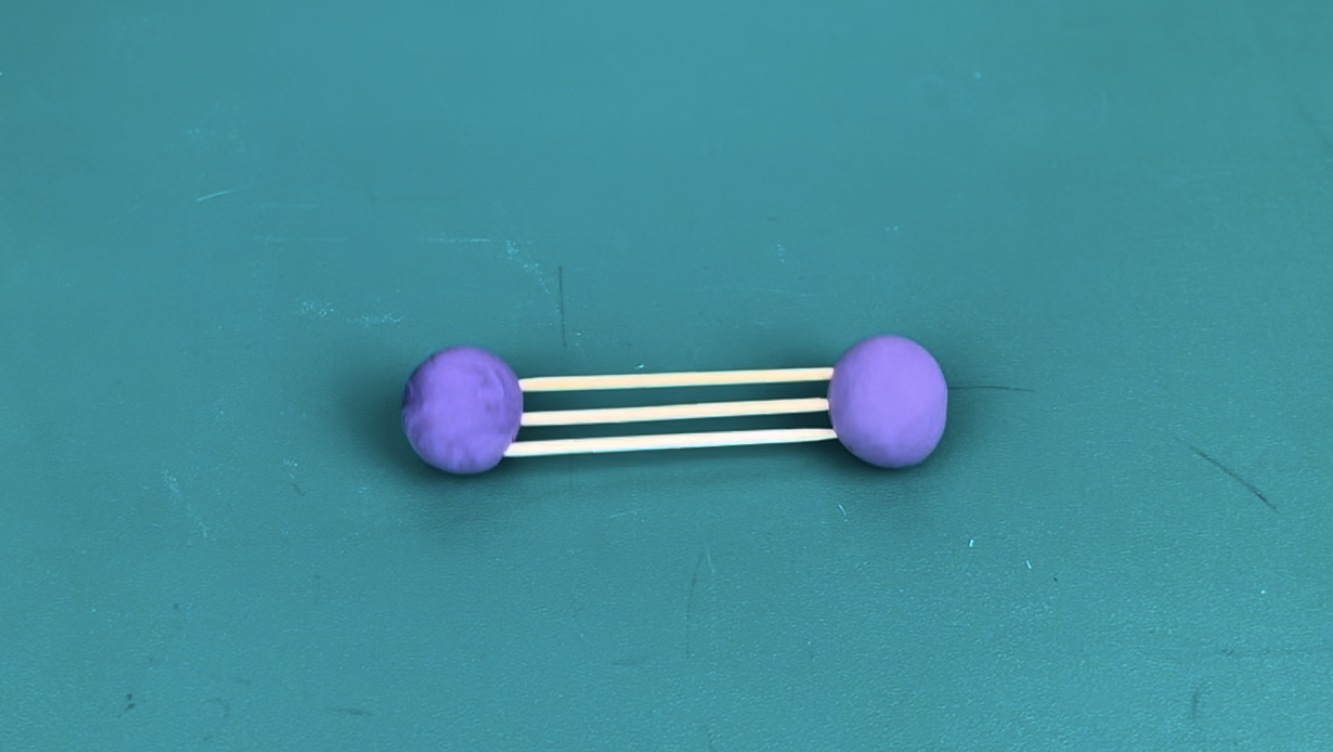
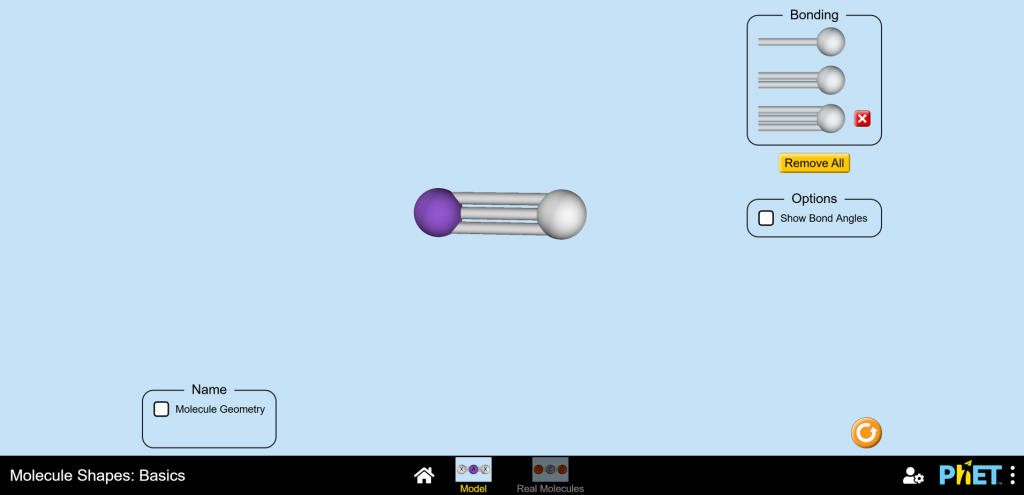
Step 2. By connecting two balls of the same color with three toothpicks, you will get a model of a nitrogen molecule (N₂).

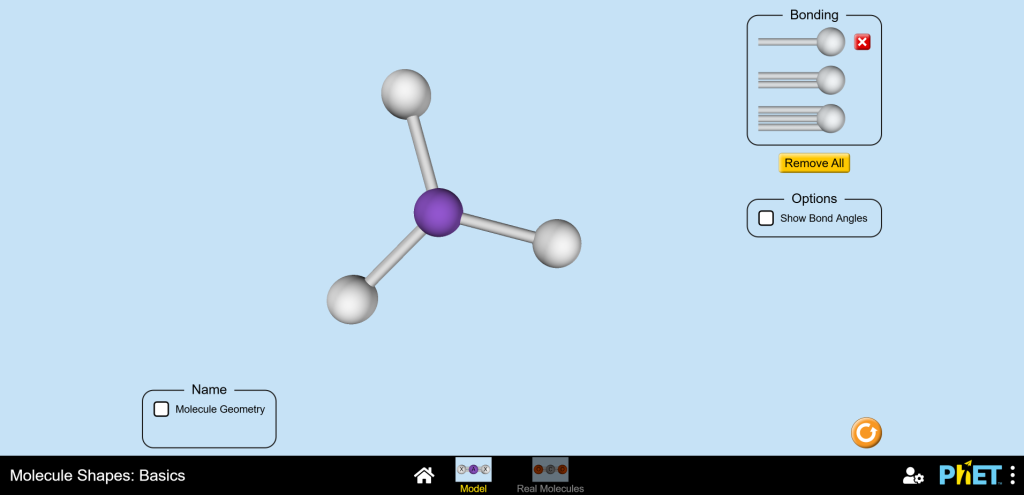
Step 3. To create an ammonia (NH₃) molecule, connect one central atom (of a different color) with three atoms of the primary color using one toothpick for each connection.
Virtual Experiment
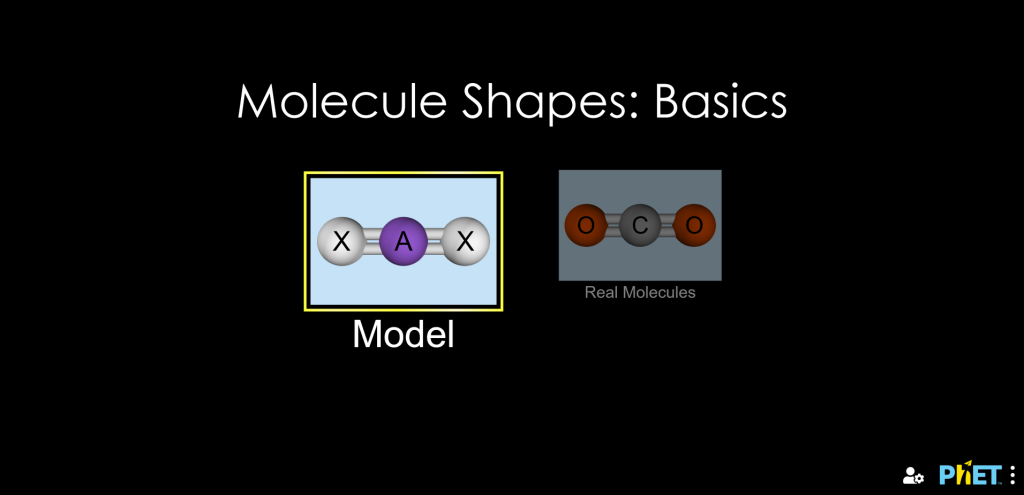
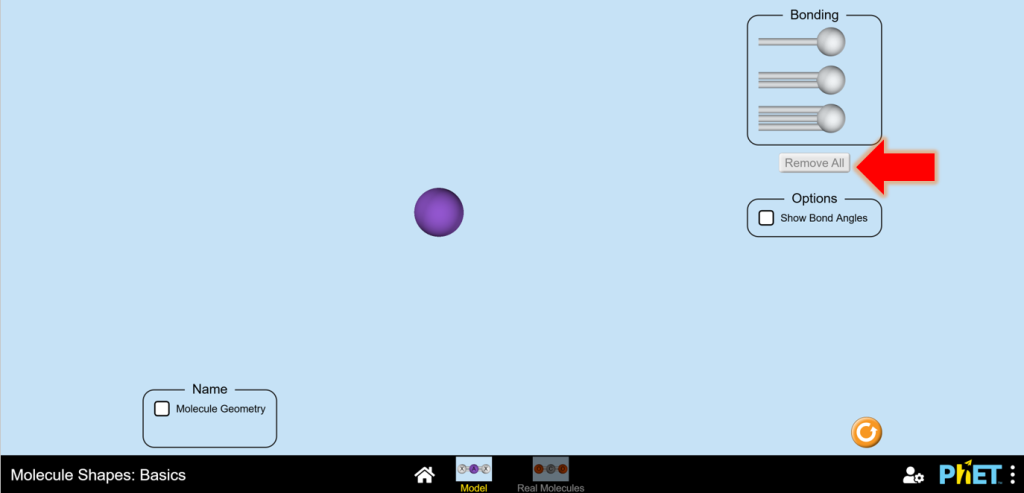
Step 1. Now run the virtual simulation PhET “Molecule shapes: Basics”. Select the Model mode.
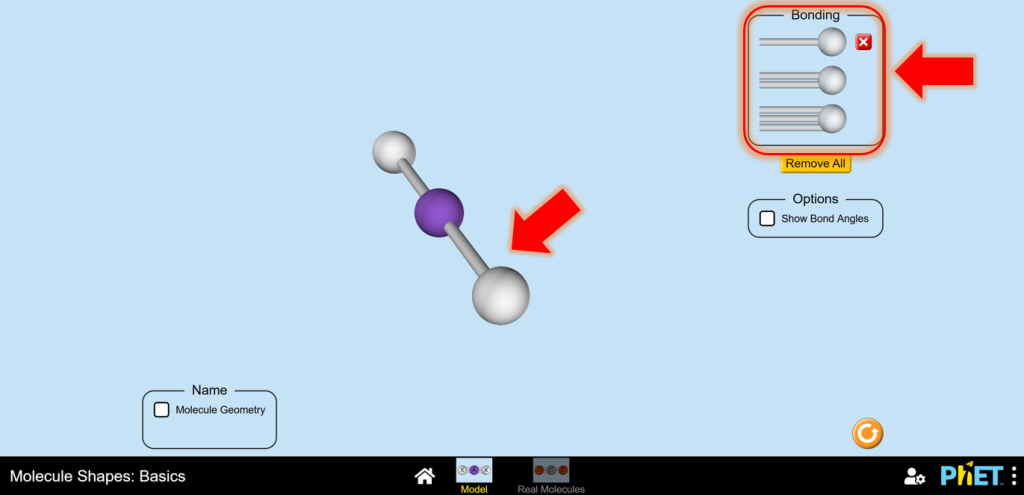
Step 2. Use the icons to add atoms with single, double, or triple bonds to the molecule. Remove all connected atoms by clicking “Remove All”.
Step 3. Assemble the nitrogen molecule.
Step 4. Assemble the ammonia molecule.
Conclusion
In this work, we successfully created models of nitrogen (N₂) and ammonia (NH₃) molecules using improvised materials and a virtual simulation of PhET “Molecule shapes: Basics”.