
Lesson
Purpose of the work:
- Experimentally confirm the presence of carbon in food products
Expected results:
After completing the work, students can:
- develop teamwork skills
- be able to analyze and summarize the information received
- draw logical conclusions
Teacher’s Guide:
- The task is performed in pairs.
- Before starting laboratory work, please read the safety rules by following the link:
- To download the worksheet, follow the link:
Theoretical part
Carbon is a fundamental element essential to life. It forms the backbone of organic compounds, which are the building blocks of living organisms.
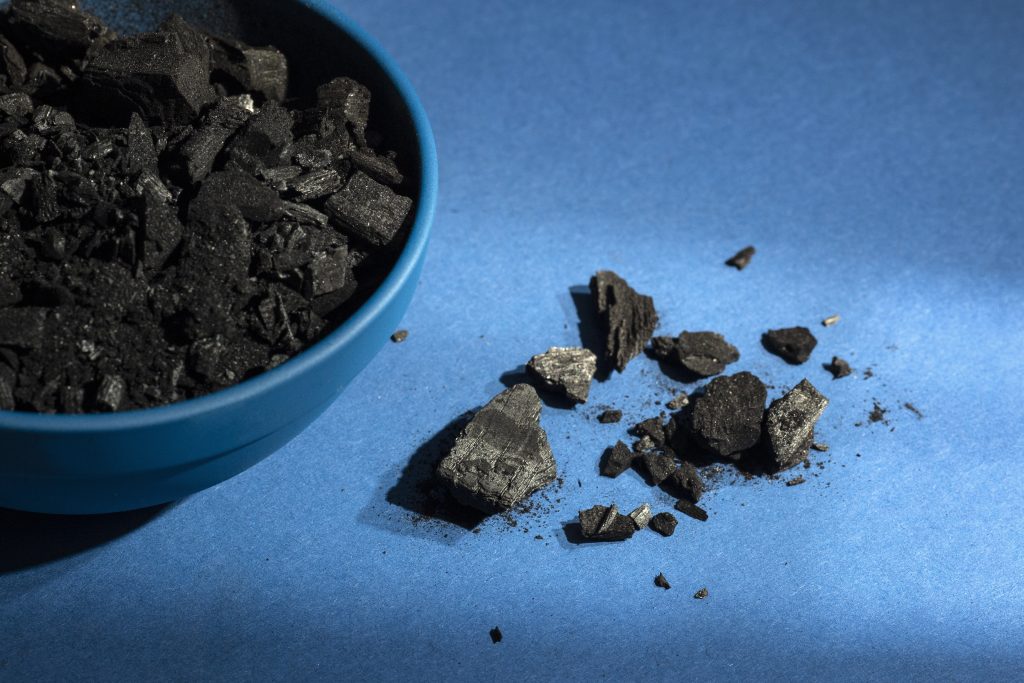
These compounds range from simple sugars to complex proteins and DNA. Organic substances, when heated in the absence of oxygen, undergo a process called pyrolysis. This process breaks down the complex molecules into simpler substances, including carbon. The residue left behind is primarily carbon.
Practical part
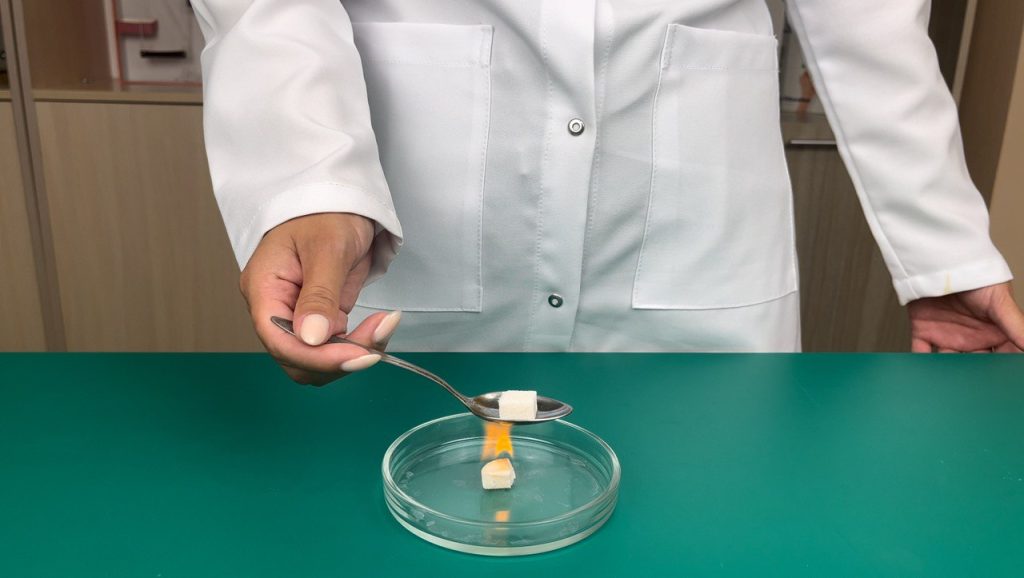
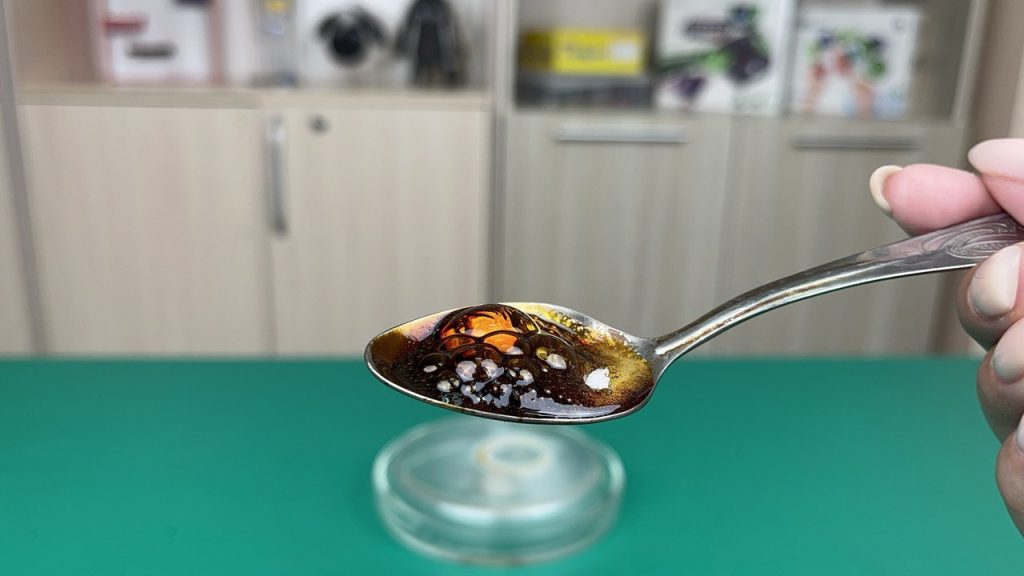
Step 1. Light the alcohol lamp. Place a small amount of sugar in a spoon and gently heat it over the flame of an alcohol lamp. Observe the changes that occur to the sugar. What happens to its color and texture? Why do you think the sugar turns dark and hard?
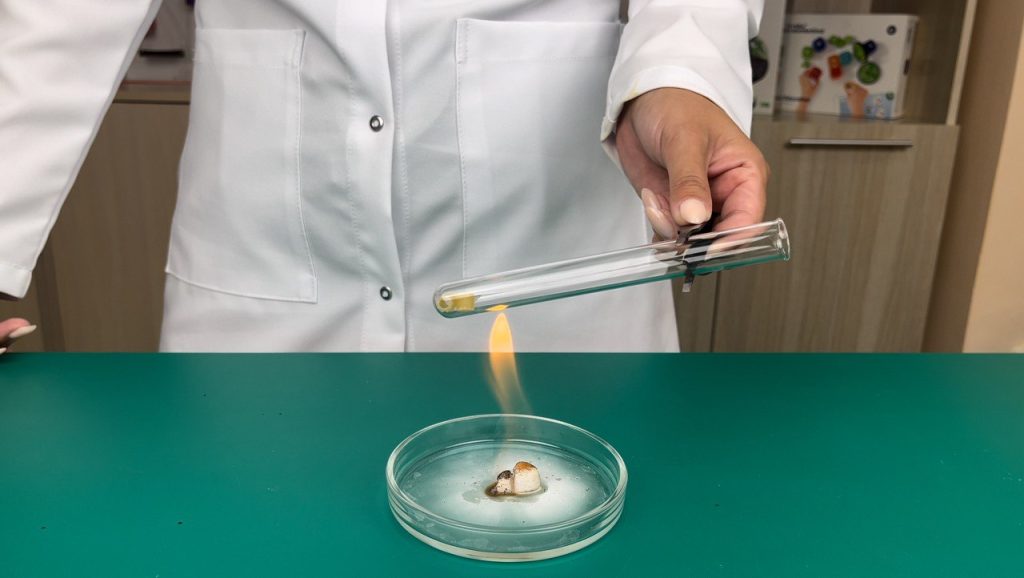
Step 2. Place a few small pieces of pasta in a dry test tube. Gently heat the test tube. Observe the changes that occur inside the test tube. What do you notice on the inner walls of the test tube?
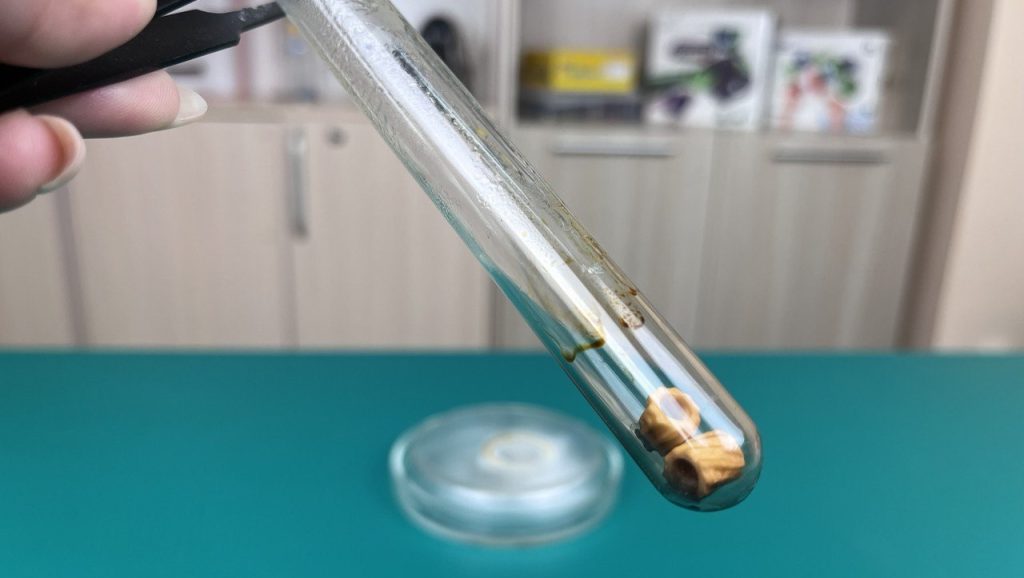
Step 3. Write a simplified balanced chemical equation to represent the changes that occurred to the sugar. Based on your observations, what can you conclude about the presence of carbon in sugar and pasta?
Conclusion
The experiments demonstrated to the students that both sugar and pasta consist of carbon. When heated, these carbon-based organic materials break down, producing carbon and other compounds.