
Lesson
Purpose of the work:
- to investigate the common properties of nitric acid with other acids.
Expected results:
After completing the work, students can:
- develop teamwork skills
- be able to analyze and summarize the information received
- draw logical conclusions
Teacher’s Guide:
- The task is performed in groups of 2-3 people
- Before starting laboratory work, please read the safety rules by following the link:
- To download the worksheet, follow the link:
Theoretical part
1. Definition:
Nitric acid (HNO₃) is a strong mineral acid that consists of hydrogen, nitrogen, and oxygen. It is a colorless, corrosive liquid, but can appear yellowish due to the presence of nitrogen oxides.
2. Physical Properties:
- Concentrated nitric acid is highly corrosive and toxic.
- Its density is 1.51 g/cm³, and the boiling point is 83°C.
- The acid is highly soluble in water and forms a strong acidic solution.
3. Chemical Properties:
- Strong Acid: Nitric acid completely dissociates in water, releasing hydrogen ions (H⁺) and nitrate ions (NO₃⁻), making it a strong acid.
- Oxidizing Agent: It is a powerful oxidizing agent, especially in its concentrated form. Nitric acid can oxidize metals, non-metals, and other compounds.
- Reactivity with Metals: Nitric acid reacts with most metals to form nitrates, nitrogen oxides, and water. For example, when copper reacts with concentrated nitric acid:
- Reactivity with Non-metals: It also reacts with non-metals like carbon, sulfur, and phosphorus, producing corresponding oxides and water.
4. Concentrations of Nitric Acid:
- Dilute Nitric Acid: Typically contains about 10-30% HNO₃ by volume. It is used for lab purposes and has less aggressive oxidizing properties.
- Concentrated Nitric Acid: Contains around 68% HNO₃ and is a potent oxidizing agent.
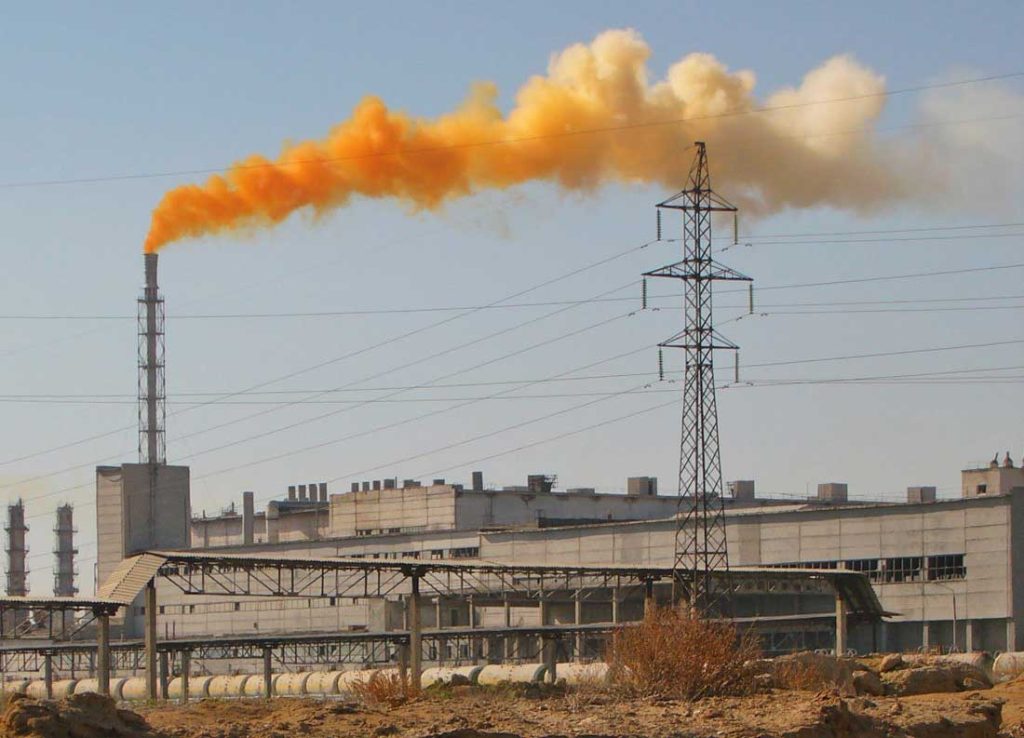
- Fuming Nitric Acid: Contains more than 86% HNO₃ and releases nitrogen dioxide (NO₂) fumes in the air.
5. Applications:
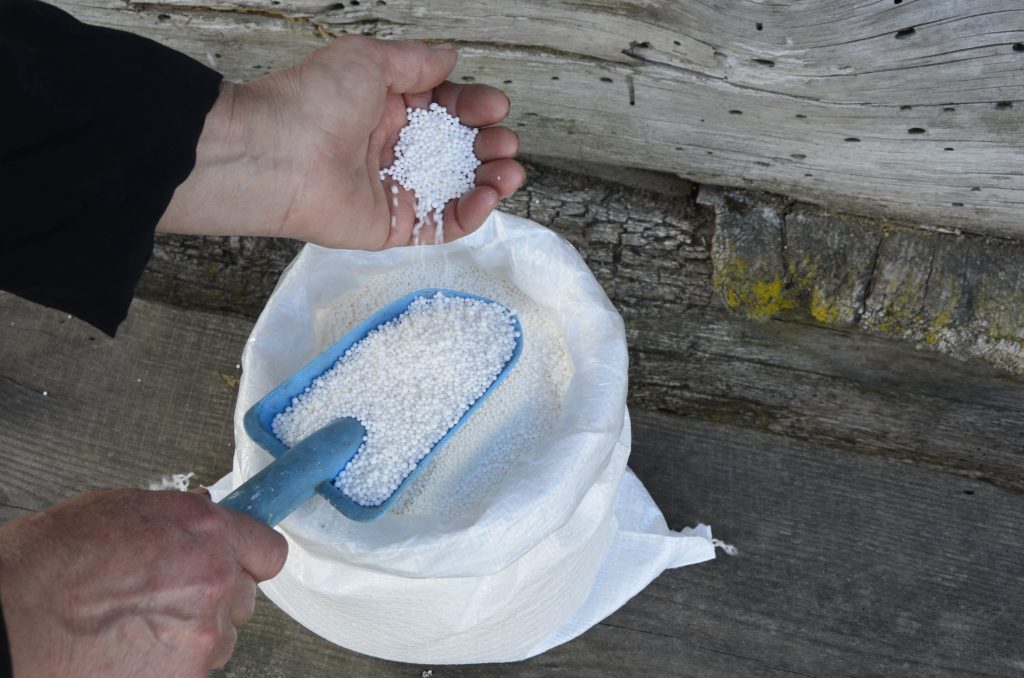
- Fertilizer Production: Nitric acid is widely used in the production of fertilizers, especially ammonium nitrate.
- Explosives: It is involved in the manufacturing of explosives like TNT (trinitrotoluene).
- Etching and Cleaning: Nitric acid is used for etching metals and cleaning laboratory glassware.
- Aqua Regia: A mixture of nitric acid and hydrochloric acid (1:3 ratio), used to dissolve noble metals like gold and platinum.

6. Safety and Environmental Impact:
Nitric acid is a highly hazardous substance. It causes severe burns upon contact with skin and is harmful to the respiratory system. Its fumes can contribute to environmental issues like acid rain when released into the atmosphere.
Practical part
Experiment №1: Effect on Carbonates
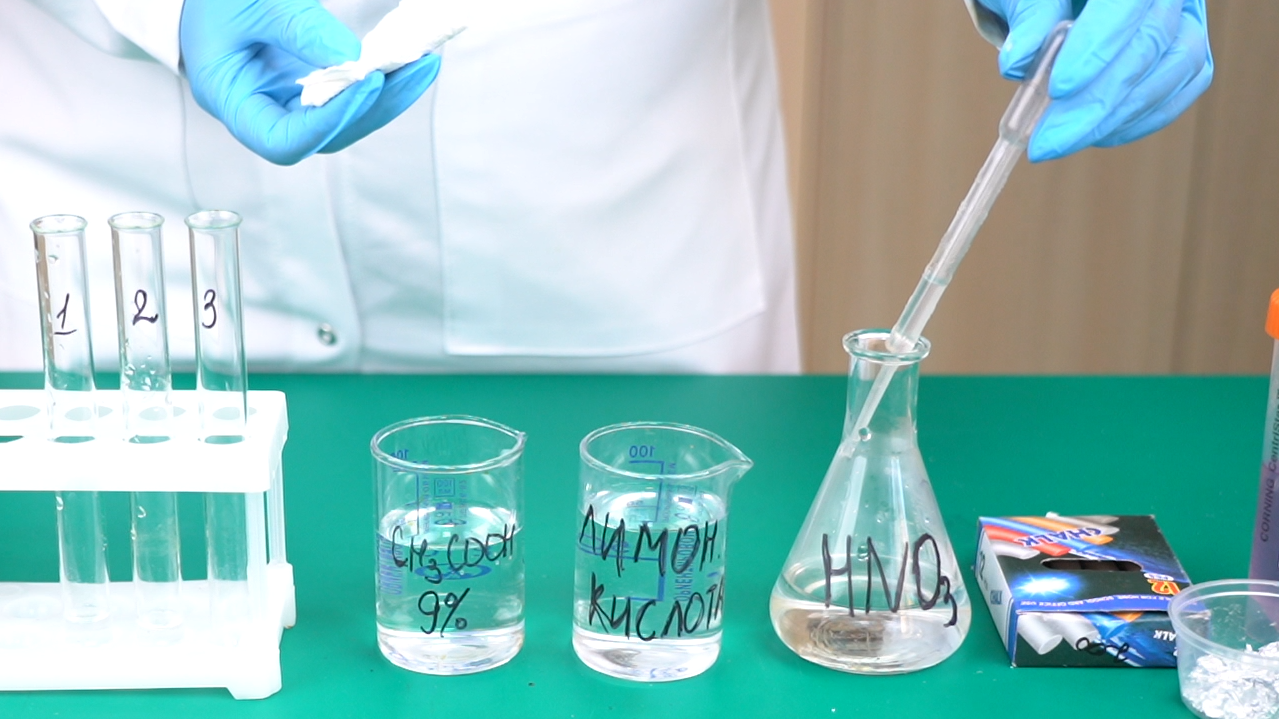
Step 1. Add acetic acid to one test tube, lemon juice to the second, and diluted nitric acid to the third.
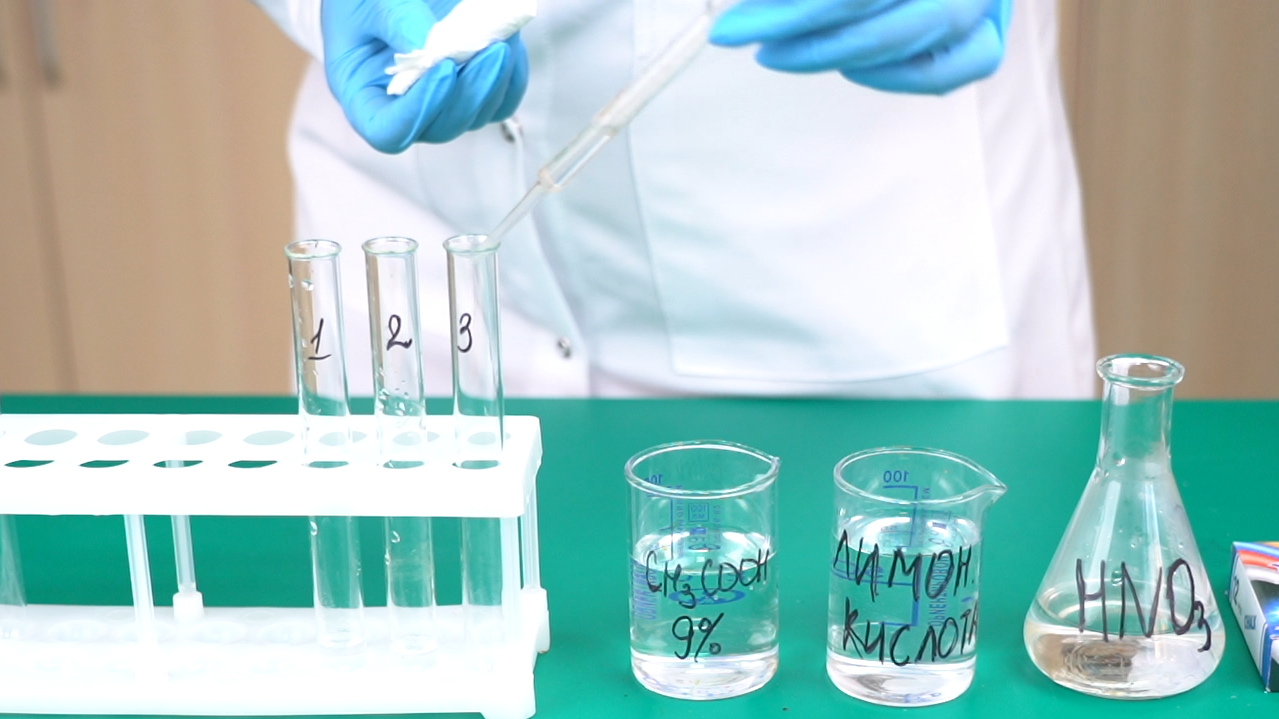
Step 2. Place a small piece of chalk into each test tube.
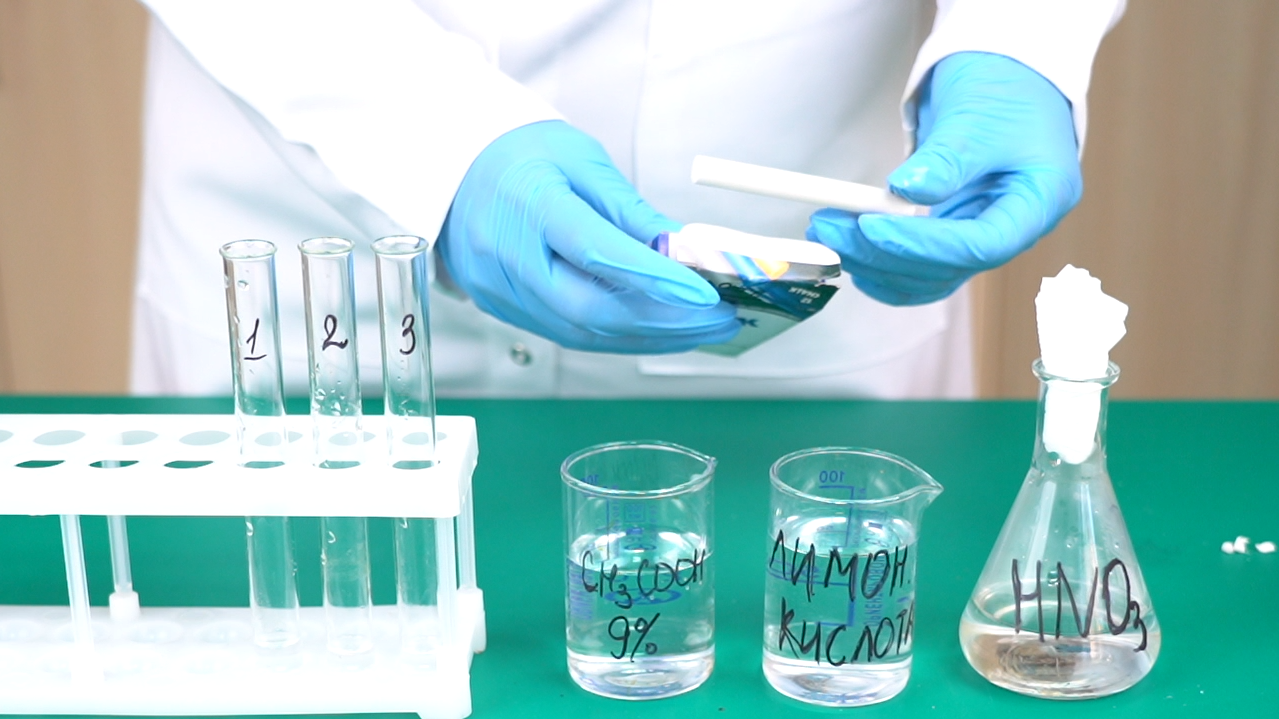
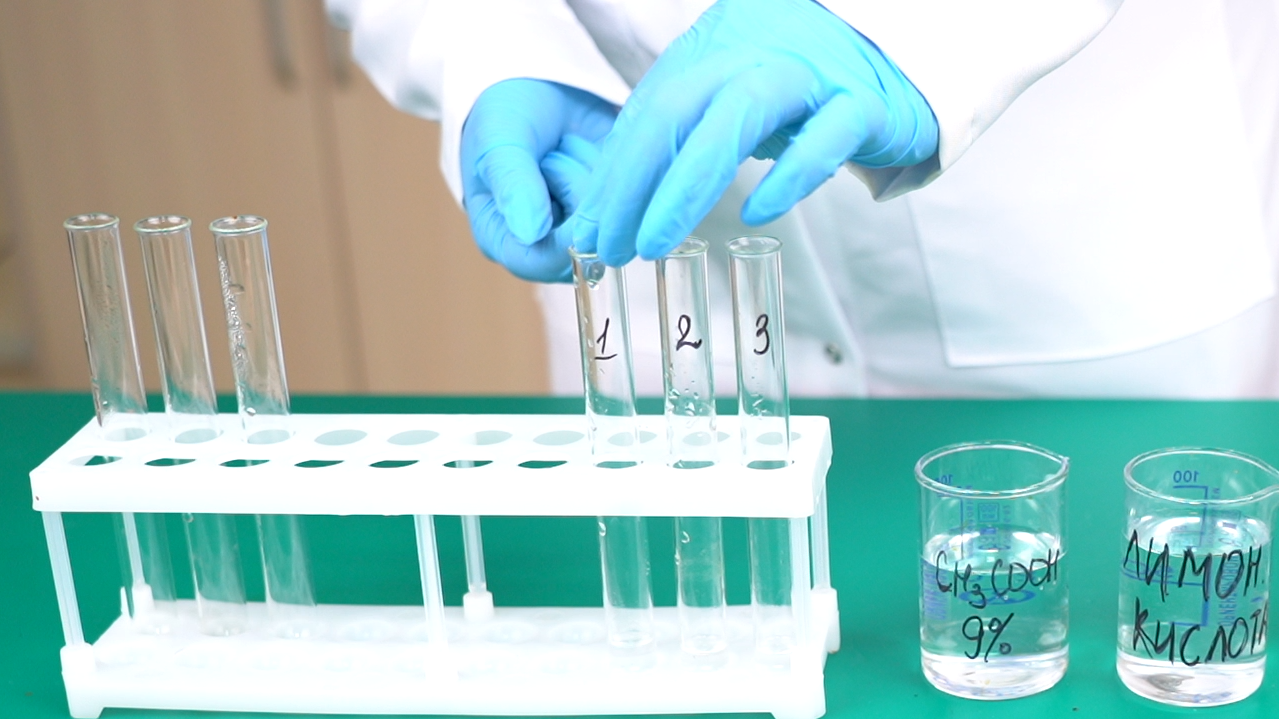
Step 3. Observe the gas (carbon dioxide) release and record the results. Compare the changes in each test tube.
Experiment №2: Indicators in Action
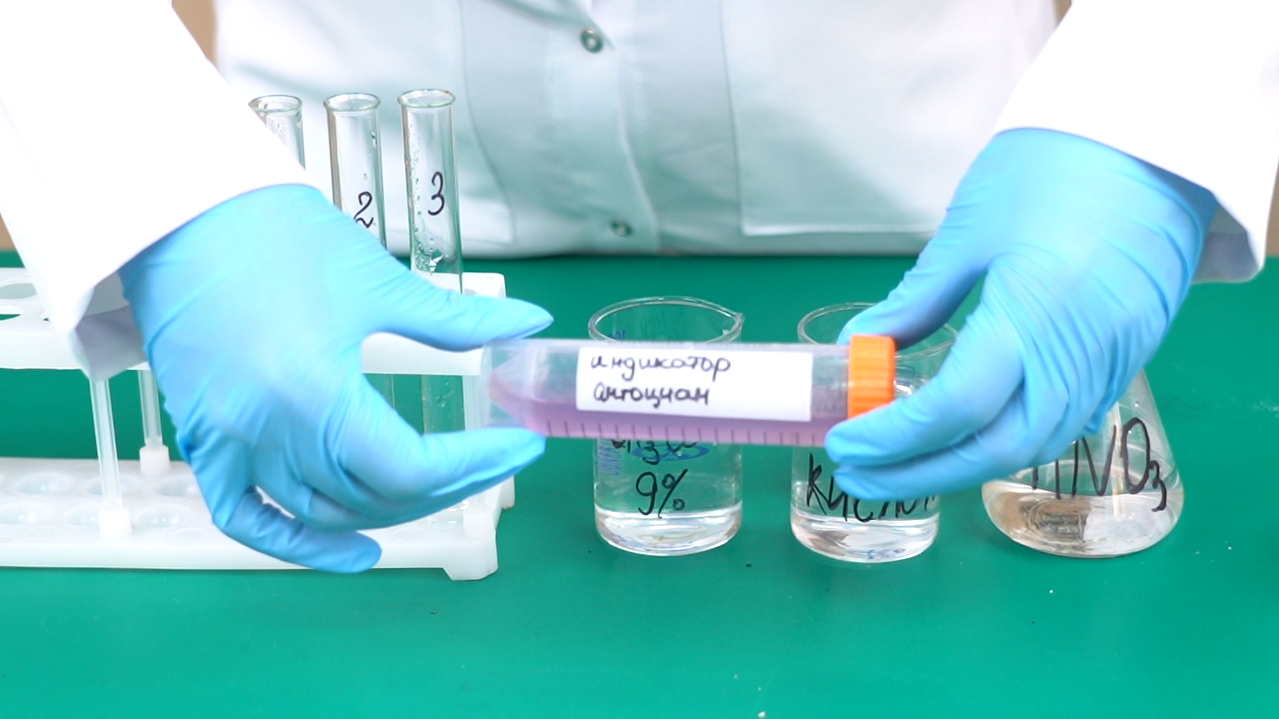
Step 4. You can use a natural indicator obtained from red cabbage.
Step 5. Repeat Step 1.
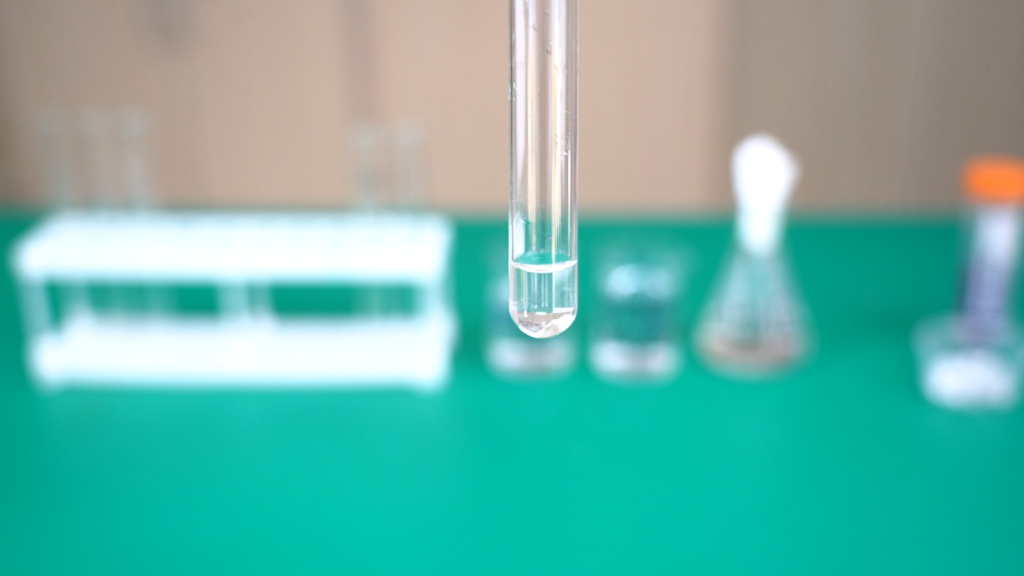
Step 6. Then add a few drops of the indicator to each test tube and observe the color change.
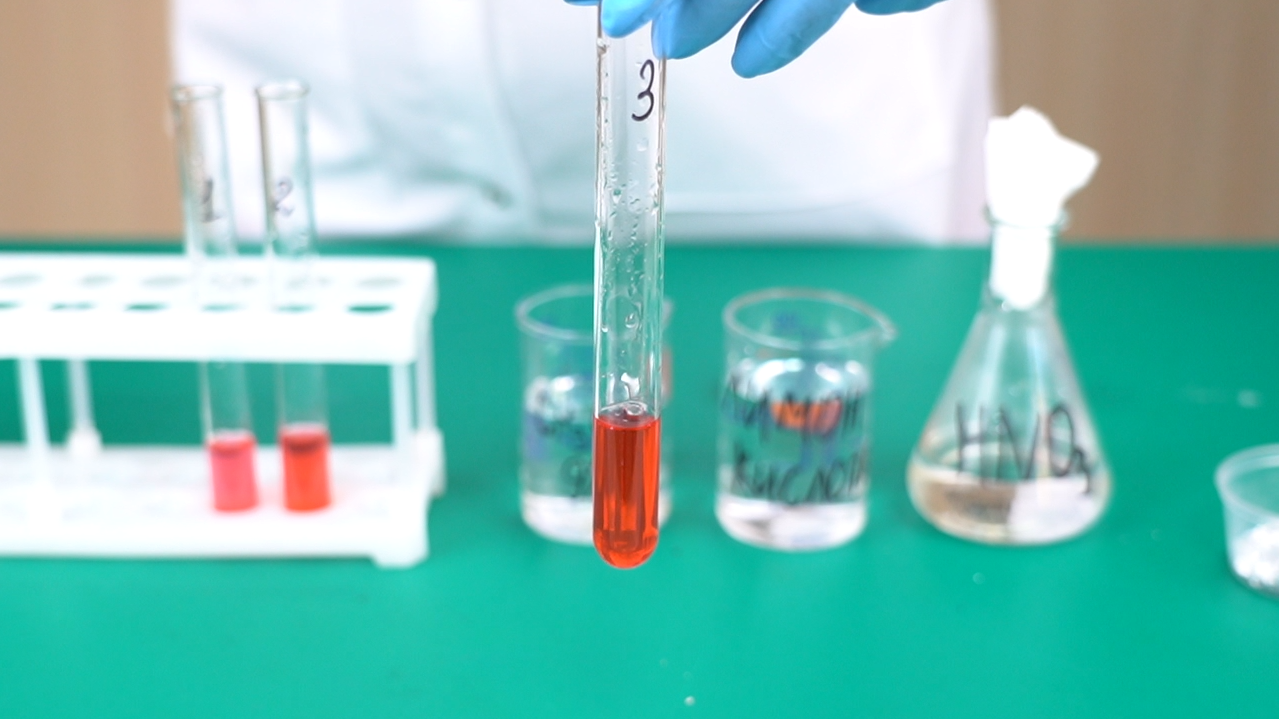
Step 7. Complete the tasks in your Worksheet and make conclusions.
Conclusion
During the laboratory work, students observed the reactions of nitric acid, acetic acid, and lemon juice with carbonates. They learned to recognize the differences in acid behavior, determine changes in medium using indicators, and analyze gas release. Special attention was given to the properties of nitric acid, its ability to actively interact with carbonates.