
Lesson
Purpose of the work:
- To study the chemical properties of calcium oxide as a typical calcium compound.
- Demonstrate that calcium oxide exhibits properties of a basic oxide.
- Establish a connection between the properties of calcium oxide and the position of calcium in the periodic table of elements.
Expected results:
After completing the work, students can:
- develop teamwork skills
- be able to analyze and summarize the information received
- draw logical conclusions
Teacher’s Guide:
- The task is performed in pairs
- Before starting laboratory work, please read the safety rules by following the link:
- To download the worksheet, follow the link:
Theoretical part
Calcium is an alkaline earth metal. Calcium (Ca) is an element in the second group of Mendeleev’s periodic table. It is a typical alkaline earth metal, silvery-white, fairly soft, and can be easily cut with a knife. Calcium is one of the most abundant elements in the Earth’s crust, found in bones, mollusk shells, and many other natural compounds.


Chemical Properties of Calcium: Interaction with Simple Substances:
- Actively reacts with oxygen in the air to form calcium oxide (quicklime): 2Ca + O₂ → 2CaO
- Reacts with water, releasing hydrogen: Ca + 2H₂O → Ca(OH)₂ + H₂↑
- Reacts with halogens to form halides: Ca + Cl₂ → CaCl₂
Interaction with Complex Substances:
- Reacts with acids: Ca + 2HCl → CaCl₂ + H₂↑
- Reacts with solutions of salts of more active metals: Ca + CuSO₄ → CaSO₄ + Cu↓
Calcium Compounds Calcium forms many compounds, many of which have significant practical importance. The most important calcium compounds include:
- Calcium oxide (CaO) – a white crystalline substance, also known as quicklime. It is obtained by calcining limestone CaCO₃: CaCO₃ → CaO + CO₂↑. Quicklime actively reacts with water to form calcium hydroxide (slaked lime): CaO + H₂O → Ca(OH)₂.
- Calcium hydroxide Ca(OH)₂ – a white crystalline substance, also known as slaked lime. Widely used in construction for preparing lime mortar.
- Calcium carbonate CaCO₃ – a major component of limestone, marble, and chalk. Decomposes upon heating to calcium oxide and carbon dioxide.
- Calcium sulfate CaSO₄ – found in nature as the mineral gypsum. Partial dehydration of gypsum yields alabaster, which is used in construction materials.
- Calcium chloride CaCl₂ – used for drying gases and as a de-icer.
Practical Applications of Calcium Oxide:
- Construction: Used to prepare construction mixtures, concrete, and silicate bricks.
- Metallurgy: Used as a flux in metal smelting.
- Agriculture: Used for liming acidic soils.
- Chemical Industry: Used in the production of various chemicals, such as calcium hypochlorite.
- Food Industry: Used as a food additive (E529).
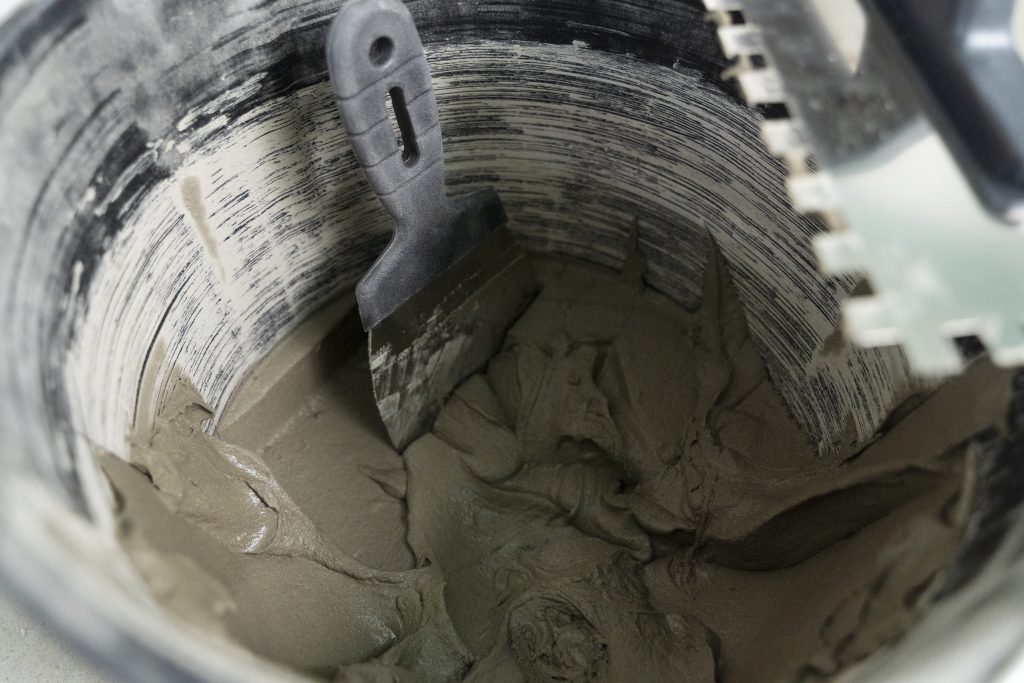

Important Properties of Calcium Oxide:
- Strong base.
- Hygroscopic (absorbs moisture from the air).
- Releases a large amount of heat upon interaction with water.
- Reacts with acids to form salts.
Practical part
Experiment No. 1: Interaction of Calcium Oxide with Water
Step 1. Place 2-3 spoons of calcium oxide into a mortar or glass.
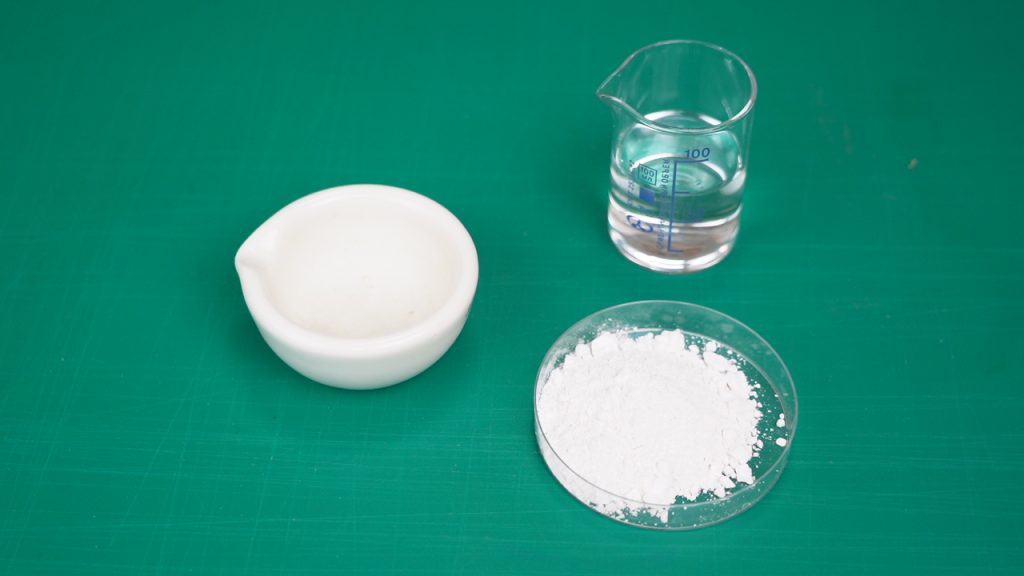
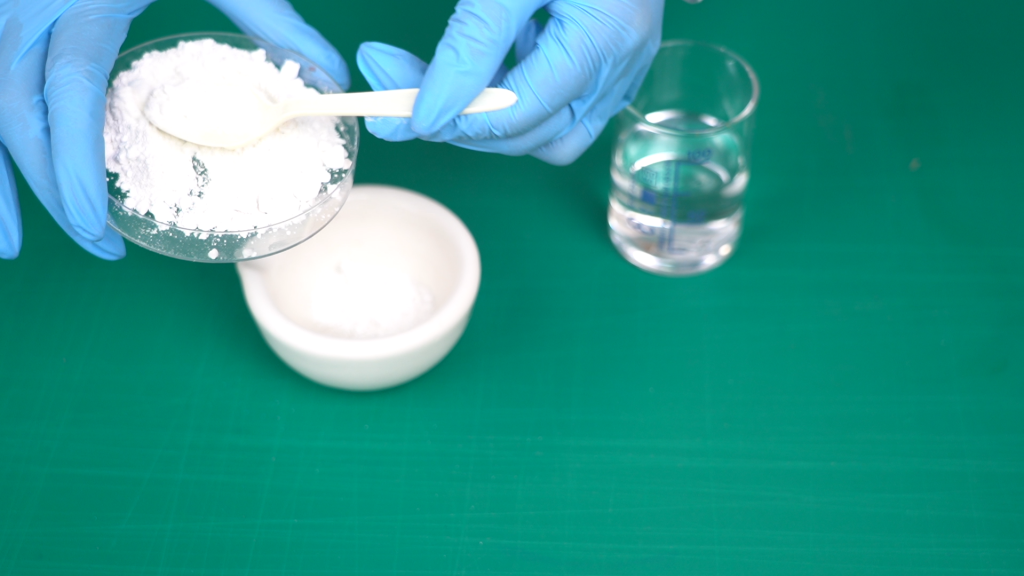
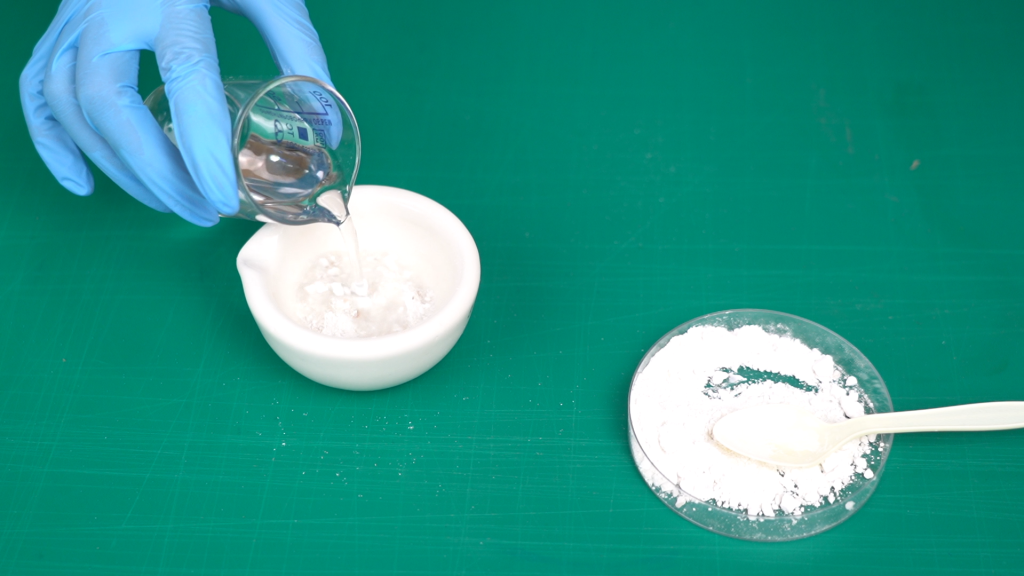
Step 2. Add a small amount of water. Observe the reaction.
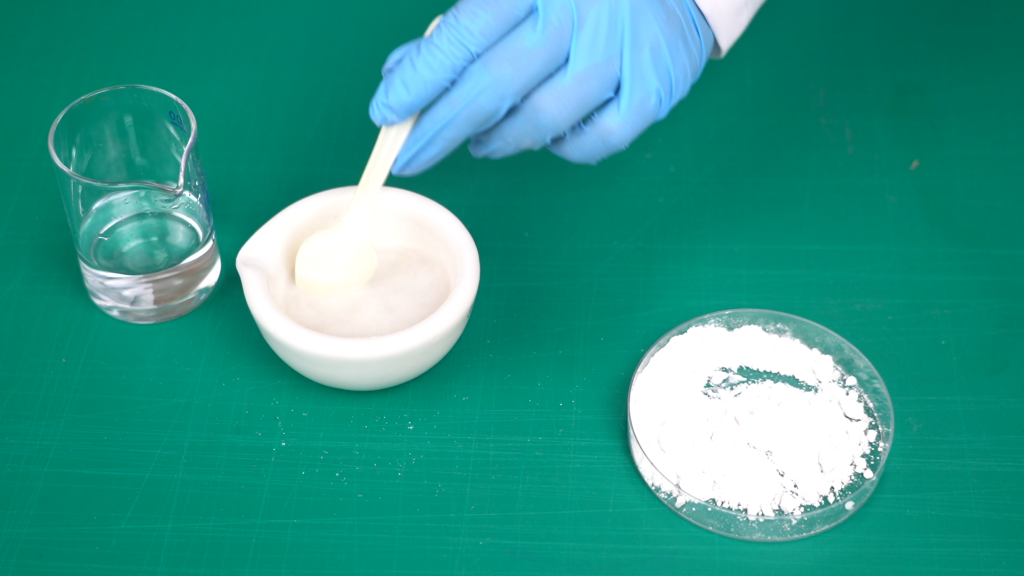
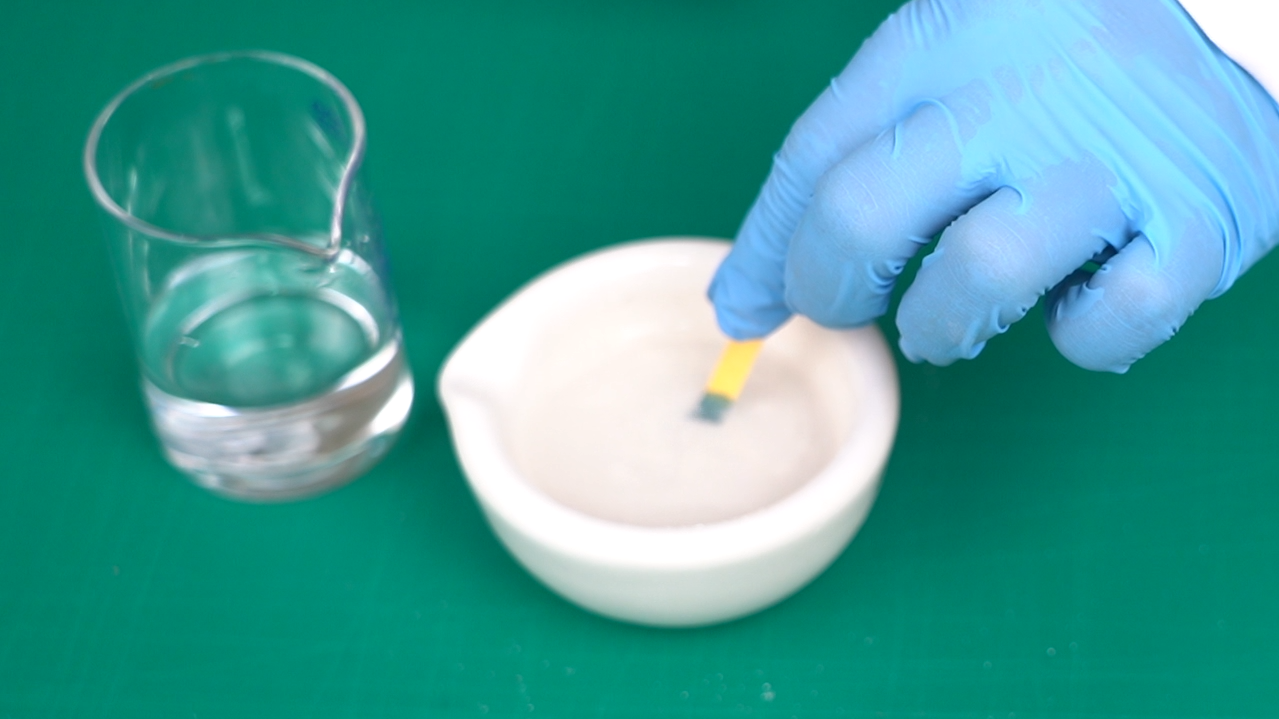
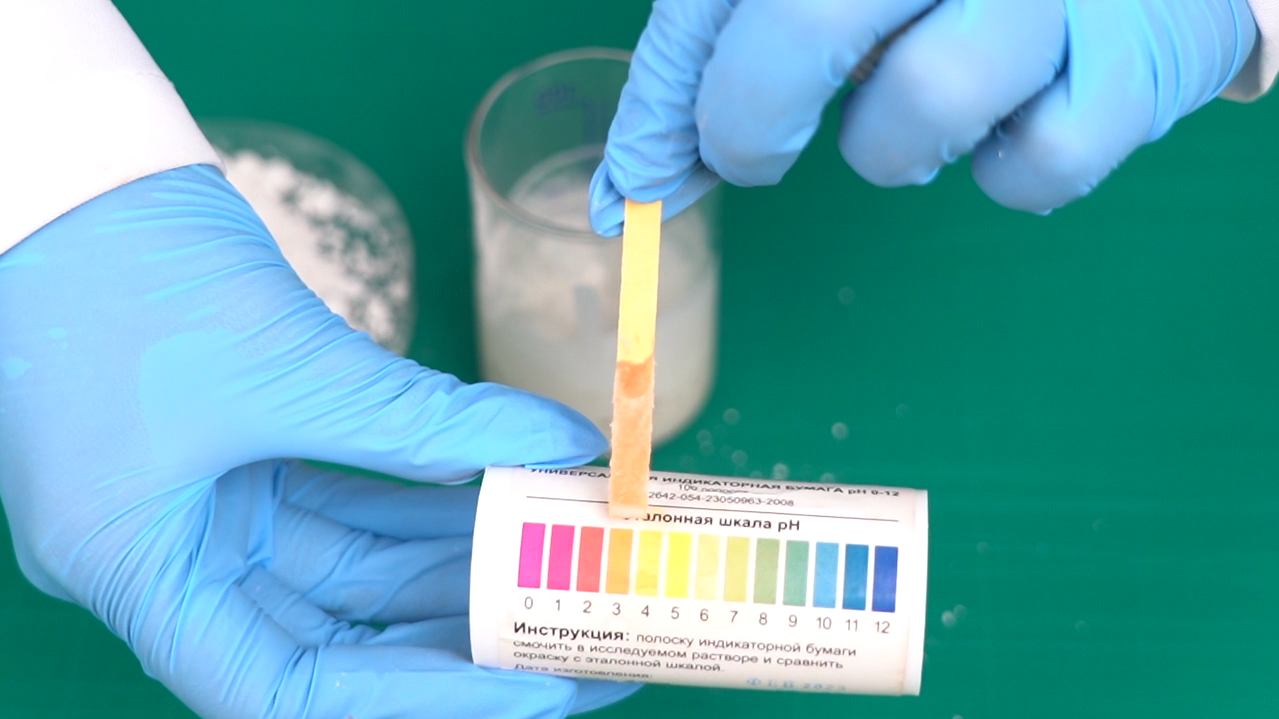
Step 3. Check the pH of the resulting solution with indicator paper. Record observations on the worksheet and draw conclusions.

Experiment No. 2: Interaction of Calcium Oxide with Acetic Acid
Step 4. Repeat Step 1.
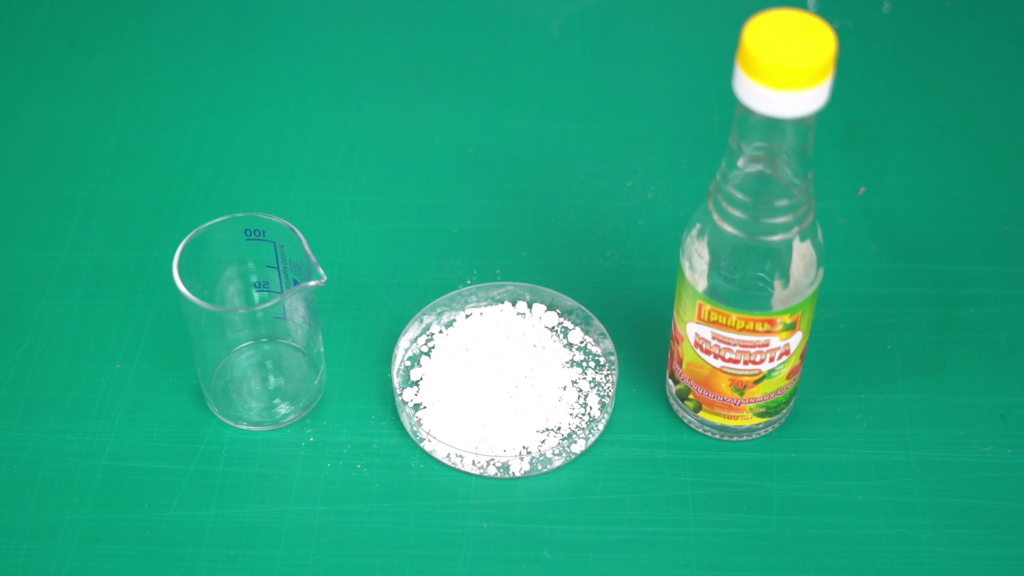
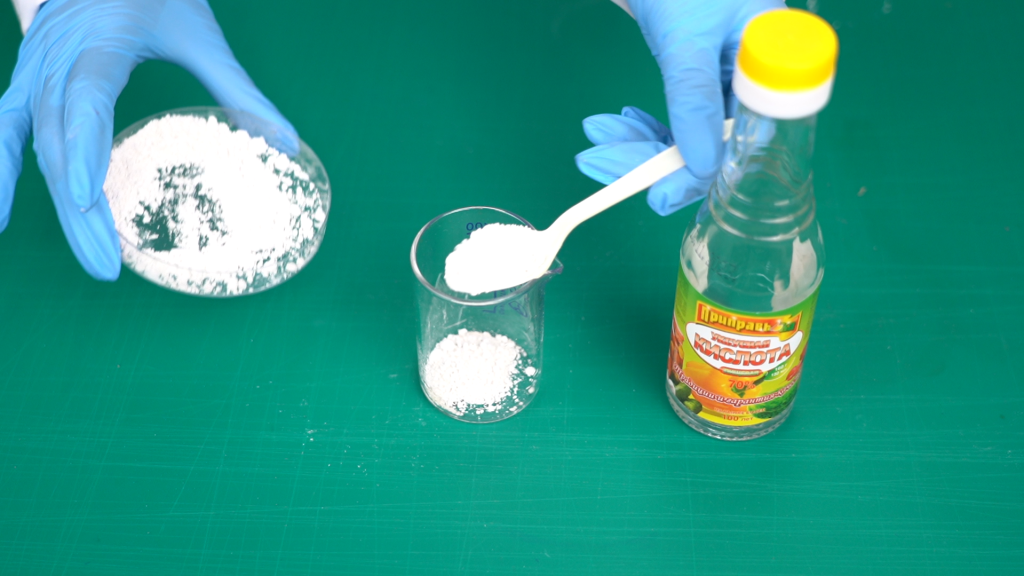
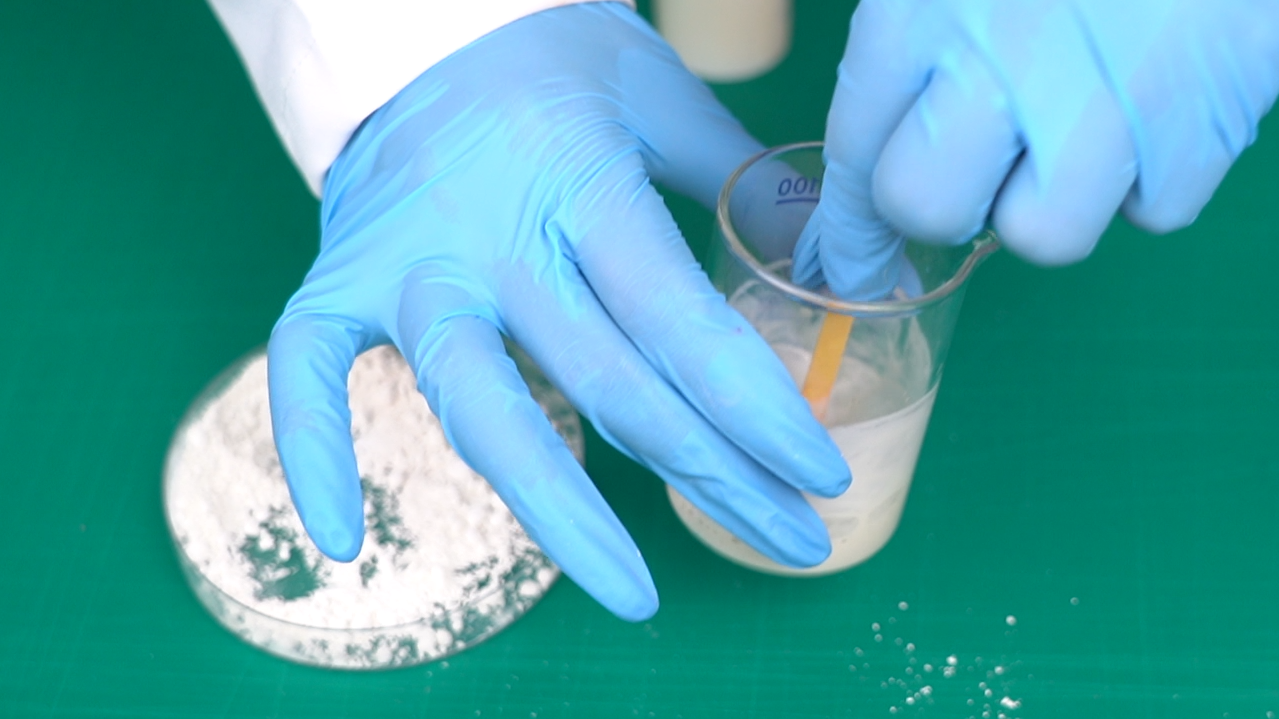
Step 5. Carefully add a solution of acetic acid. Observe the reaction.
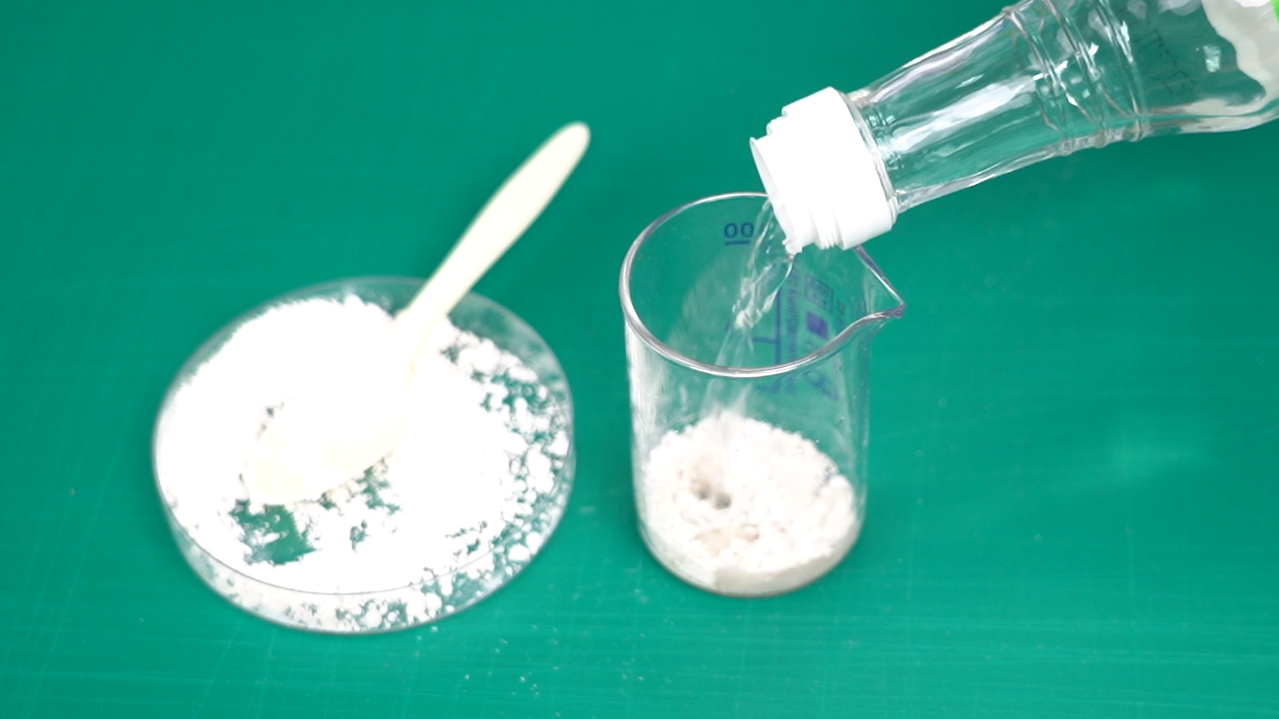
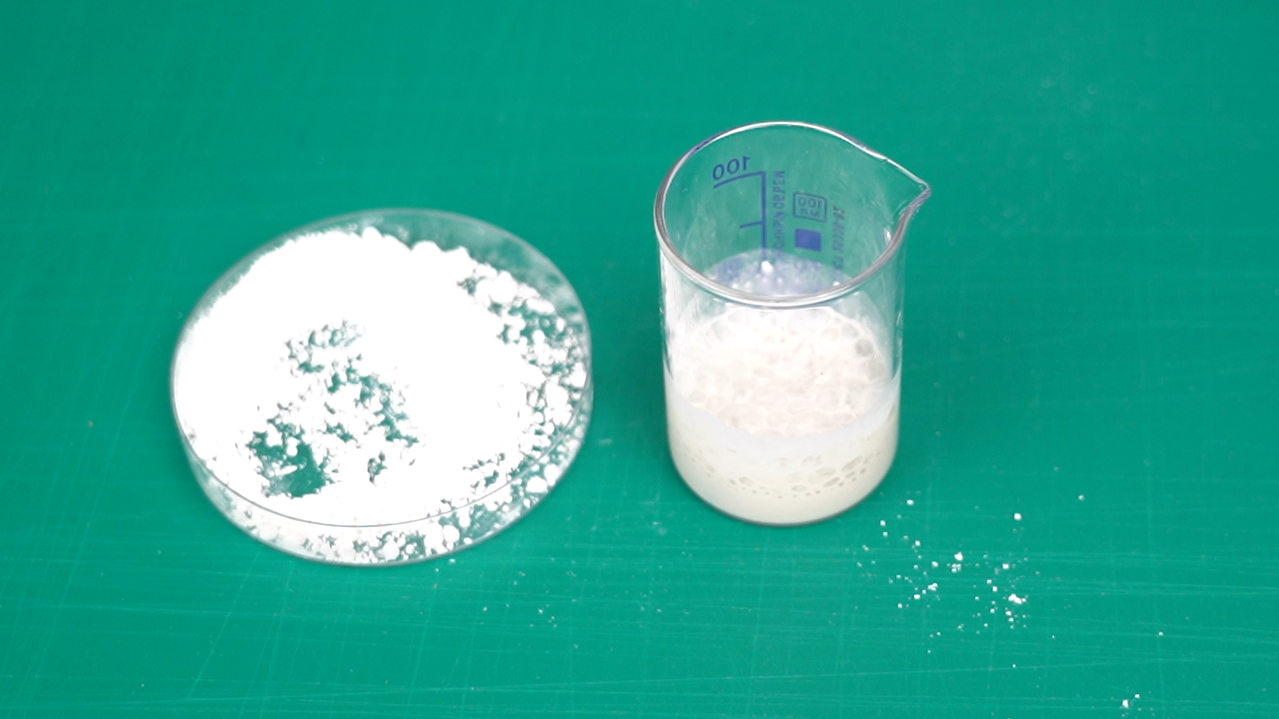
Step 6. Check the pH of the resulting solution with indicator paper. Record observations on the worksheet and draw conclusions.
Precautions:
- When conducting experiments with acids, safety rules must be observed: wear safety goggles, use a small amount of acid, and conduct experiments under teacher supervision.
- Quicklime should be stored in airtight containers and avoid contact with skin and eyes.
Conclusion
During the experiment, students studied the characteristic chemical properties of calcium oxide. They observed the reactions of calcium oxide with water and acid. Students learned to conduct simple chemical experiments while following safety rules and to draw conclusions based on the results obtained.