
Lesson
Project Objective:
- To create, know, and use the addition table of single-digit numbers without going beyond a tenth.
- To use the transposition property of addition.
Teacher’s guide
- For the project, divide the students into groups of 4-5.
- Before starting the experiments, make sure that the students are familiar with numbers up to 10.
- Introduce the students to the project and provide them with all the necessary materials before the practical part.
- Give a brief instruction on the safety rules for working with scissors and hot glue.
- At the beginning of the lesson, explain the PBL (Project Based Learning) rubric to the students. 4K skills (critical thinking, collaboration, creativity, presentation).
Theoretical Part
What are addition and subtraction?
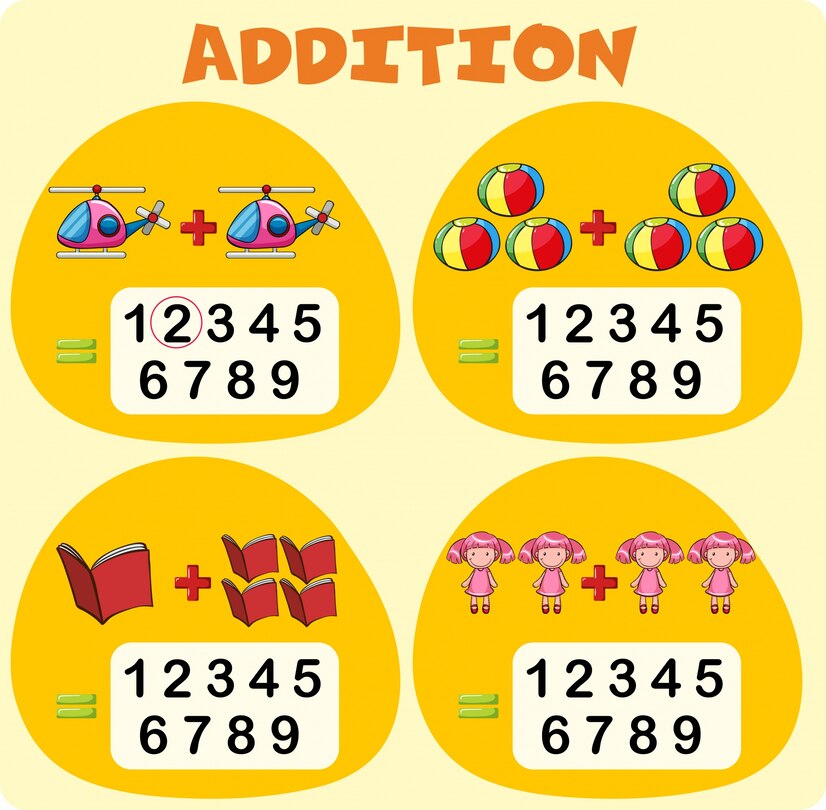
- Addition is a math activity in which we combine two or more sets and count how many items are left. For example, if you had 3 apples and your mom gave you 2 more apples, your total would be 3+2=5 apples.
- Subtraction is the opposite of addition. It shows by how much one number is less than another, or how many items are left when you take away a part. For example, if you had 5 candies and you ate 2, you are left with 5-2=3 candies.
Methods for Addition and Subtraction
- Using objects: The easiest way is to use any objects: toys, fingers, counting rods.
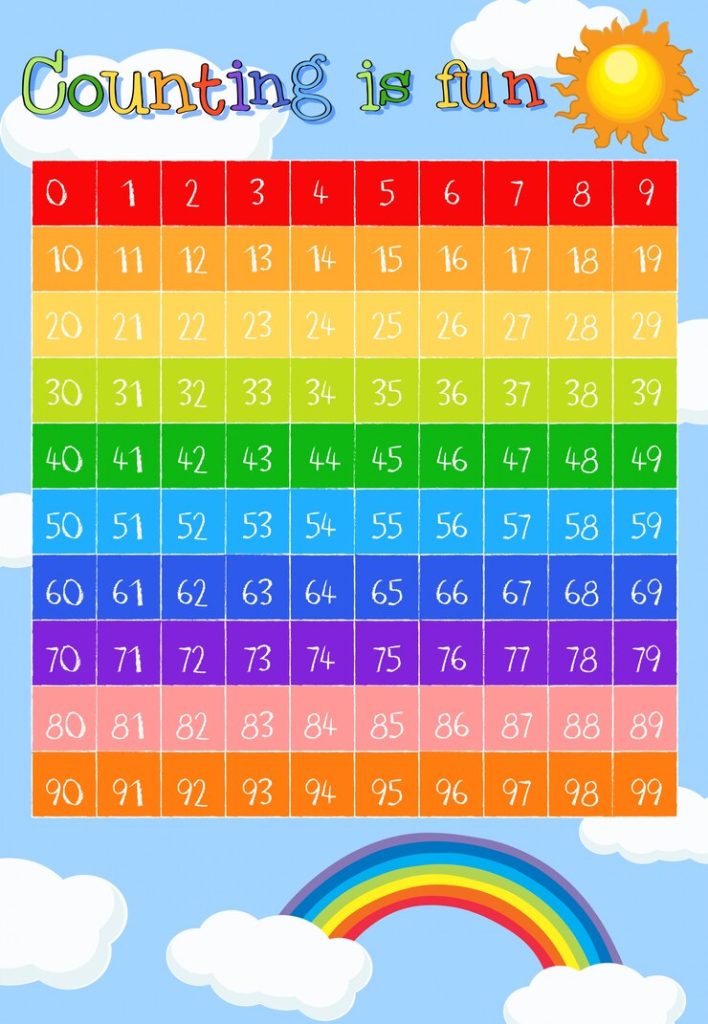
- Number line: A number line can be used to visualize the process of addition and subtraction by taking steps forward or backward.
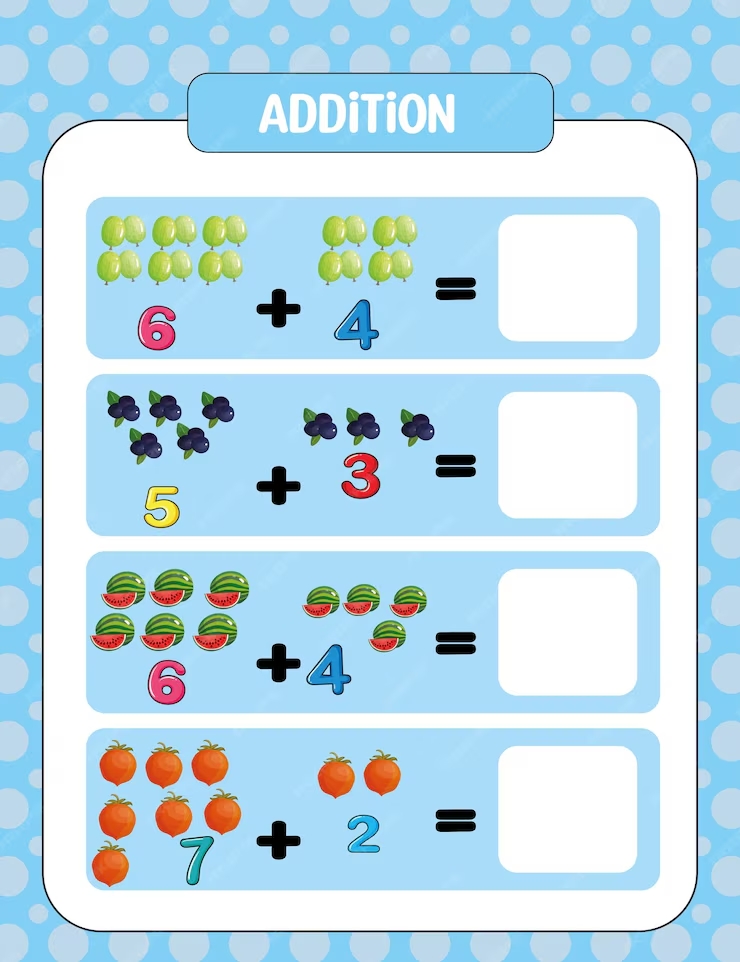
- Addition chart: An addition chart can help you memorize the results of adding numbers from 1 to 10.
- Subtraction as the opposite of addition: If you know that 3+2=5, it is easy to see that 5-2=3.
Properties of addition
The transposition property: The sum does not change when the summands are transposed. For example, 2+3=3+2.
Practical part

1. Follow the link and print the pictures: a shop and an ice cream. Cut out the paper with the picture of the ice cream 25*18 cm, the paper with the picture of the shop 8*18 cm.

2. Cut out 20*5 cm corrugated cardboard 20*1 cm – 3 pieces, 4*1 cm – 2 pieces.
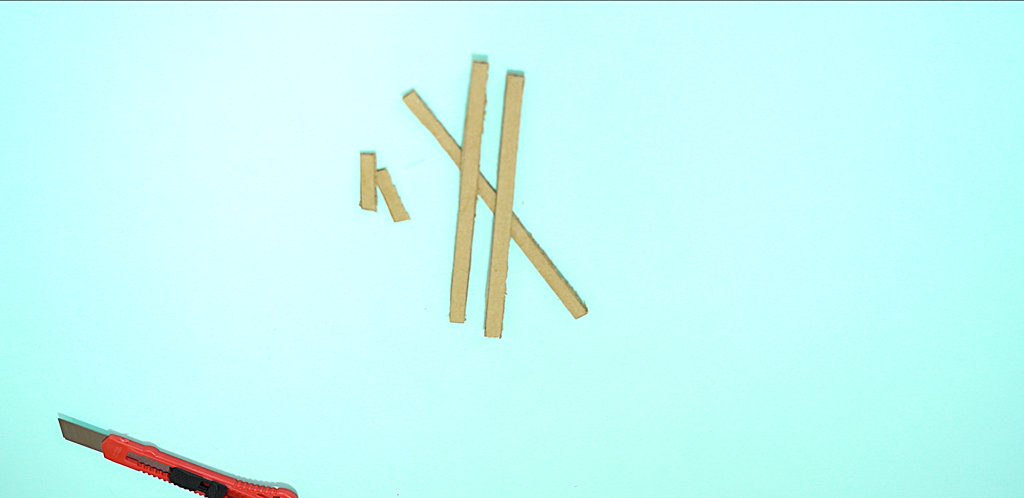
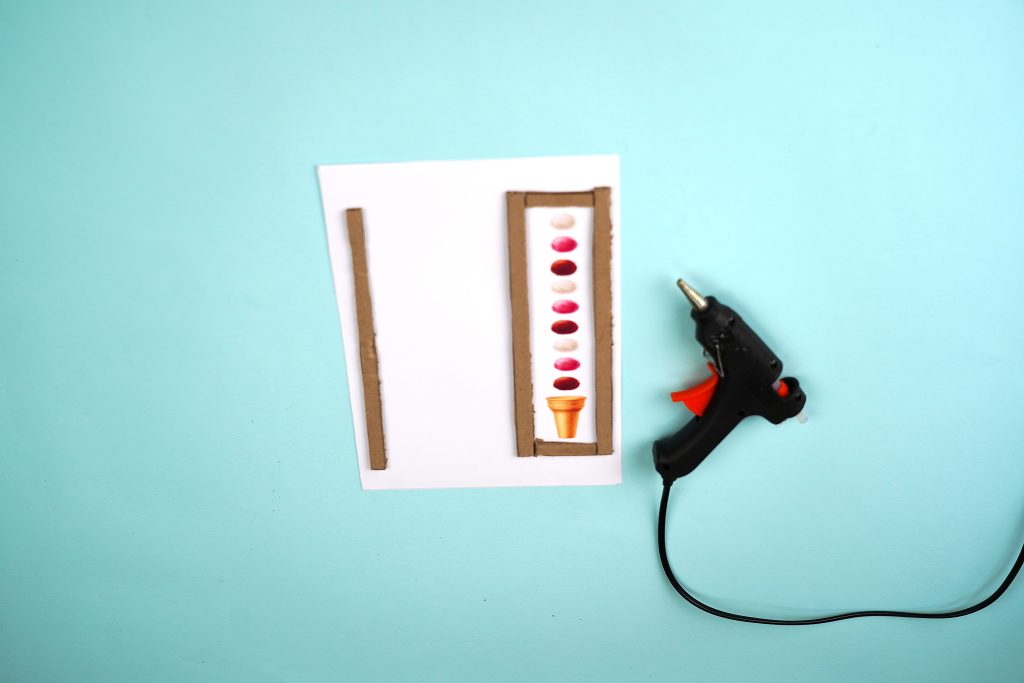
3. Stick the cardboard with hot glue on the paper with the picture of the ice cream. Glue 2 pieces of 20*1 cm paper 2.5 cm from the top and 0.5 cm from the left edge. Leave 4 cm between them. Stick the 4*1 cm card in the middle of the two. Stick the third 20*1 cm paper 2.5 cm from the top and 2 cm from the right edge.
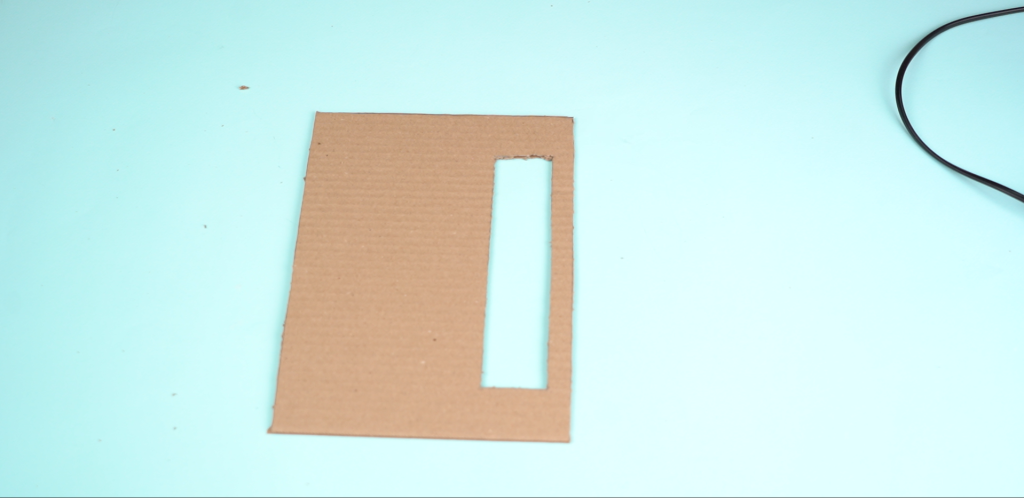
4. Cut out a 25*18 cm piece of cardboard. Draw a rectangle of 18*4 cm, leaving 1.5 cm from the left edge and 3.5 cm from the top. Cut it out and remove it with stationery scissors.
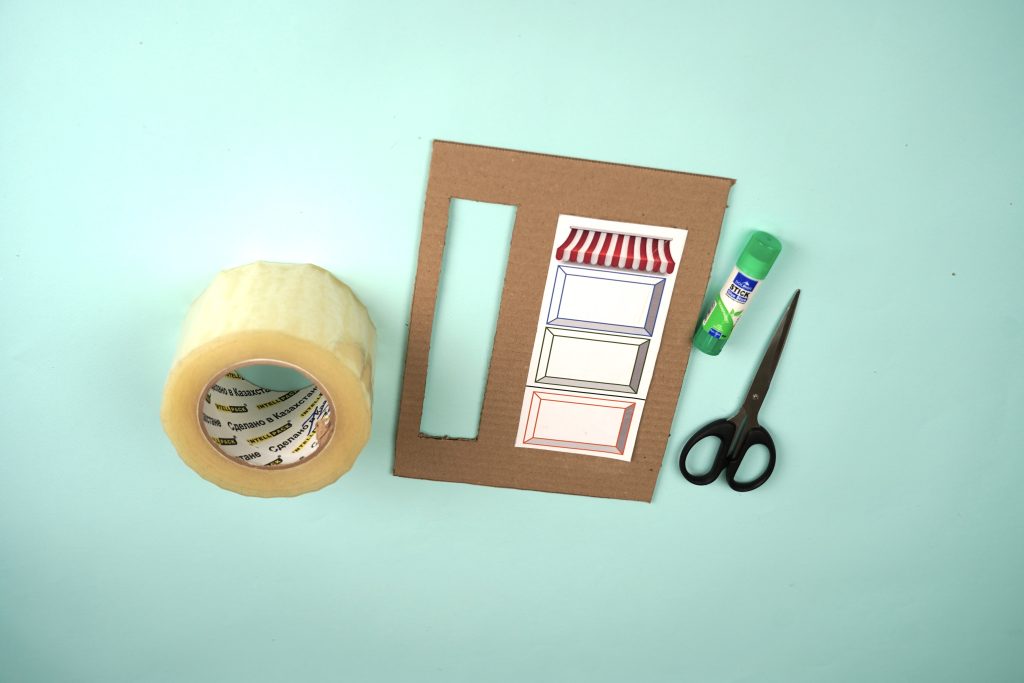
5. On the surface of the cardboard, glue the picture of the shop at a distance of 3.5 cm from the top and 2 cm from the right edge. Tape it in place. The tape will act as a chalkboard.
6. Glue the cardboard with the picture of the store to the ice cream paper with hot glue. Do not glue the bottom of the cardboard. You should be able to see the ice cream through the hole in the middle of the card.
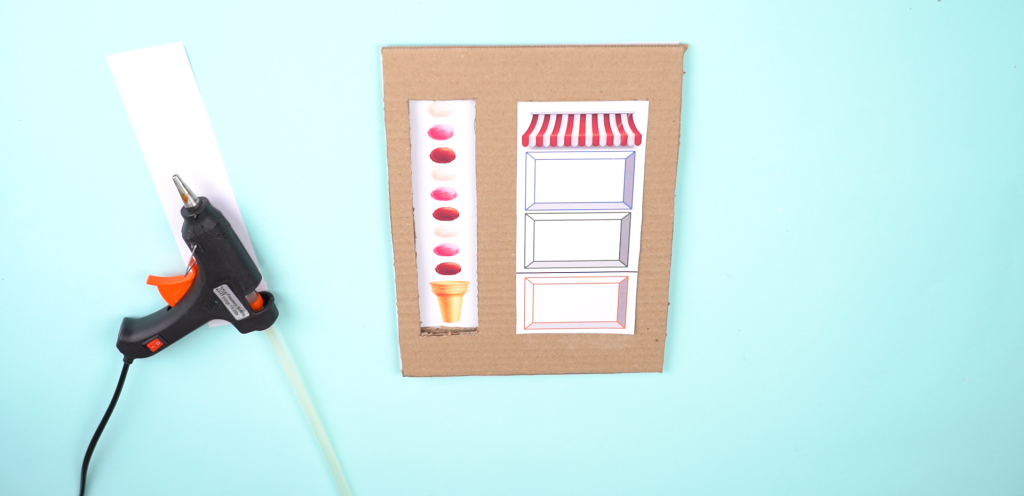
7. Cut a rectangle 4 cm wide from A4 paper. Insert it from the bottom of the card into the place where the ice cream is. You will create tasks by moving this paper up and down.
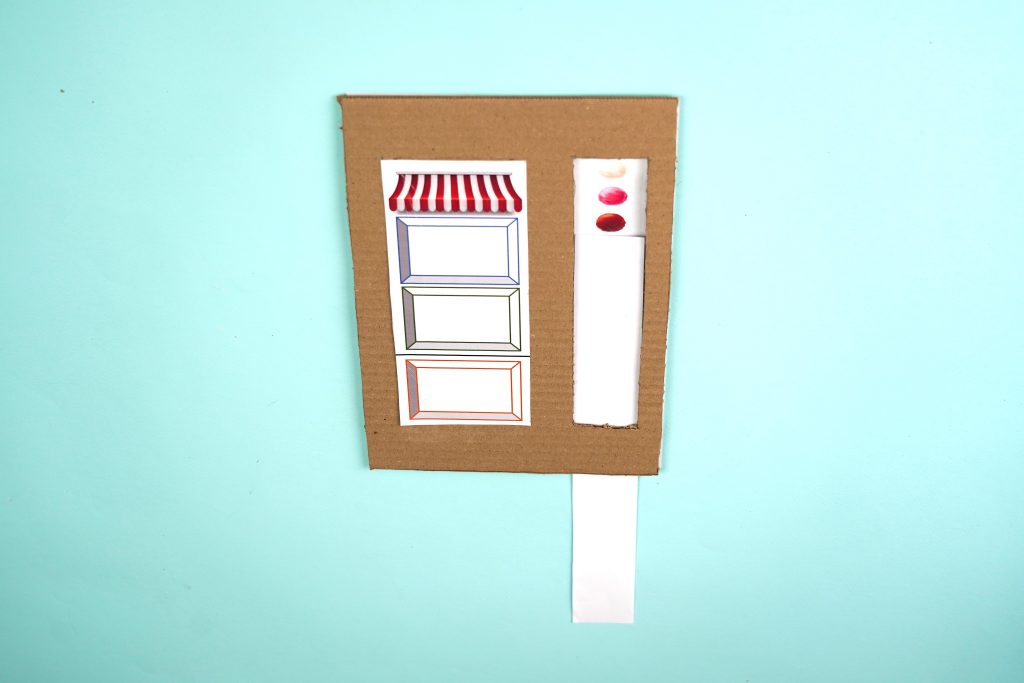
Done!!!
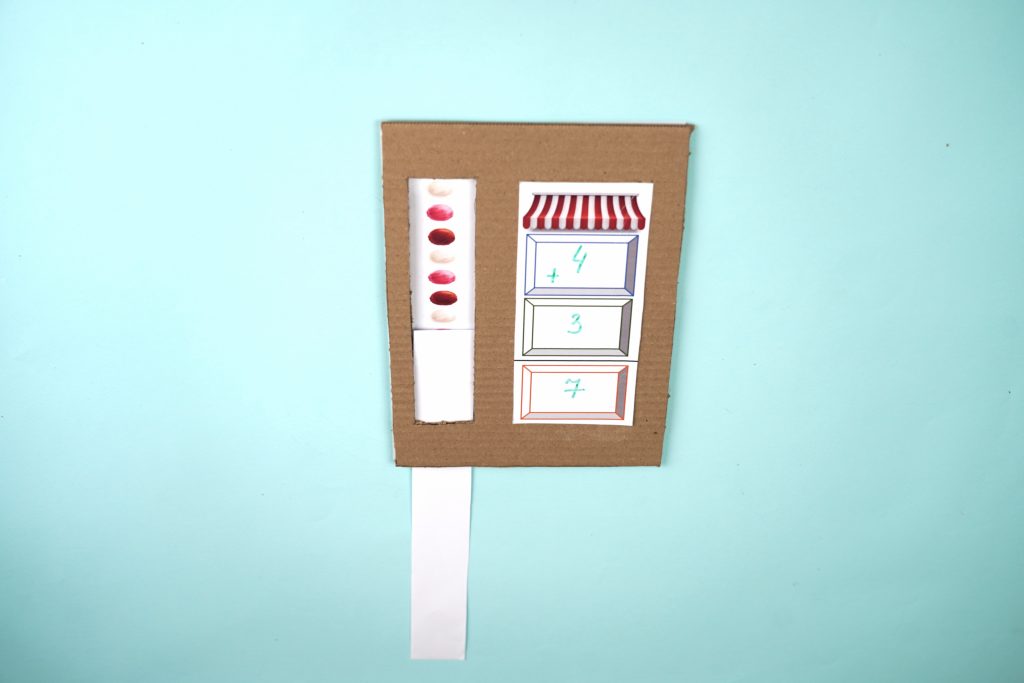
Now you can make addition and subtraction problems for the numbers 1 to 10. Make the problems by writing the numbers with a marker in the two rectangles at the top of the shop. Solve the problem by moving the long paper on the ice surface. Write the answer in the box below. You can erase the marker with a napkin. This is how you create different problems.
Congratulations! You have created your addition and subtraction chart!

Conclusion
In this project, you have created your own math table. The board allows you to add and subtract numbers up to 10. Calculating with ice cream at the store will be fun and entertaining for students. Adding and subtracting numbers up to 10 is the first step in learning complex math operations.

This project awards each student a STEAM title in multiple categories:
– By creating this model, you have become a true master of science! You decided to make a report with numbers. That is real scientific thinking!
– Look at this wonderful calculator! You used your engineering and problem-solving skills to create a working model. Congratulations, you are an expert engineer!