
Lesson
Project Goal
- Learn to add and subtract numbers up to 10
- Develop number manipulation skills.
Teacher’s Guide
- The project can be done individually or in pairs, where each student can independently solve examples.
- Before starting, familiarize the students with the materials and explain how to safely use the string and hole-punching tools. Note that caution is needed when working with the stationery awl or hole punch.
- At the beginning of the lesson, explain the PBL (project based learning) categories to your students. 4K skills (critical thinking, collaboration, creativity, presentation)
Theoretical Part
What is addition?
Addition is a mathematical operation where we combine two or more numbers to find their total. When we add numbers, we essentially add one number to another. For example, if we have 3 balls and add 2 more, we have 5 balls. This operation is written as: 3 + 2 = 5.
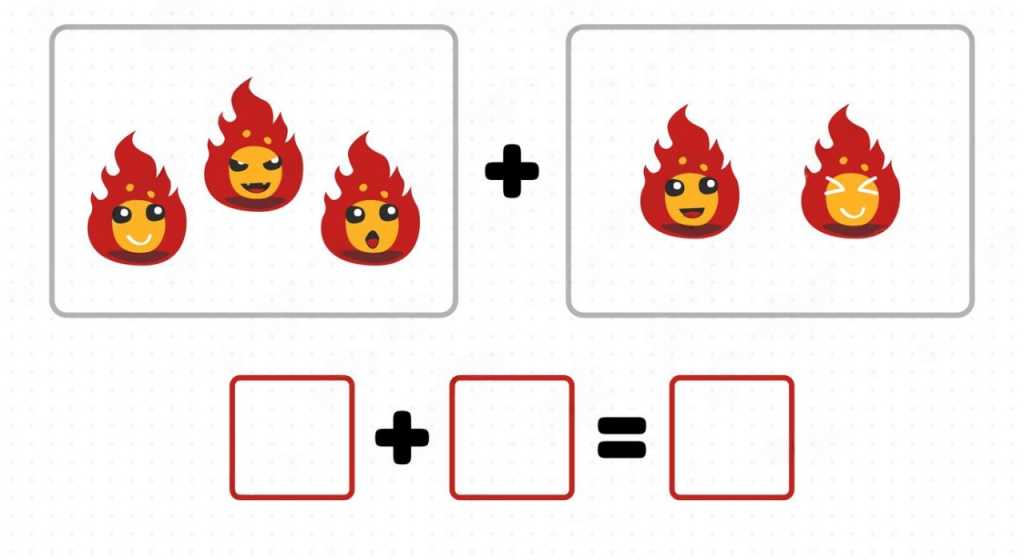
Addition helps us quickly find the total number of objects. In first grade, we learn to add numbers from 1 to 10, which means we can easily count the total of small groups of objects.
What is subtraction?
Subtraction is the operation where we take away part of a whole. For example, if we had 4 candies and ate 2, we will have 2 left. This operation is written as: 4 – 2 = 2. Subtraction allows us to find out how much is left after something is taken away.
Subtraction is very useful when we want to understand what remains after an action.
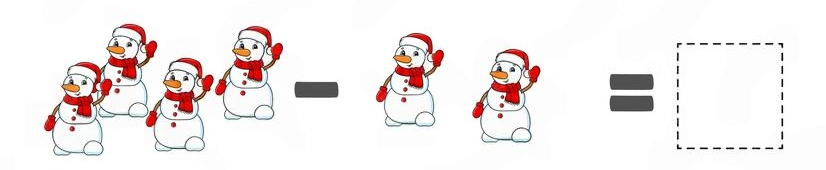
Why is this important?
Addition and subtraction are the basics of mathematics. They help us count, distribute objects, solve simple problems, and even explain events around us. Mathematics develops logic and thinking, and addition and subtraction are the first step into the world of numbers.
When we learn to add and subtract, we learn how numbers can interact. This knowledge is essential for future mathematical tasks and helps us solve everyday problems easily and quickly.
Practical Part

Step 1. Take a cardboard tube from a roll and make cuts at both ends.
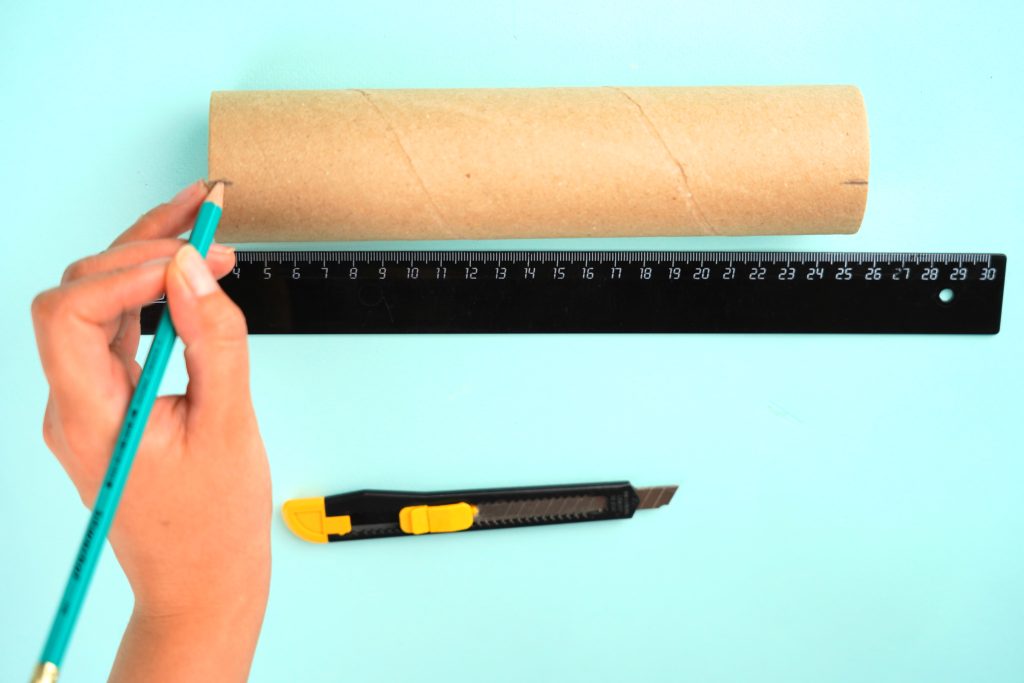

Step 2. Thread the string with the bead: tie the bead to one end of the string and thread it horizontally.


Step 3. This will be our “counter” to mark the answer.

Step 4. Draw numbers from 1 to 10 along one side of the tube. They should go in order from left to right. Color the numbers if you like.
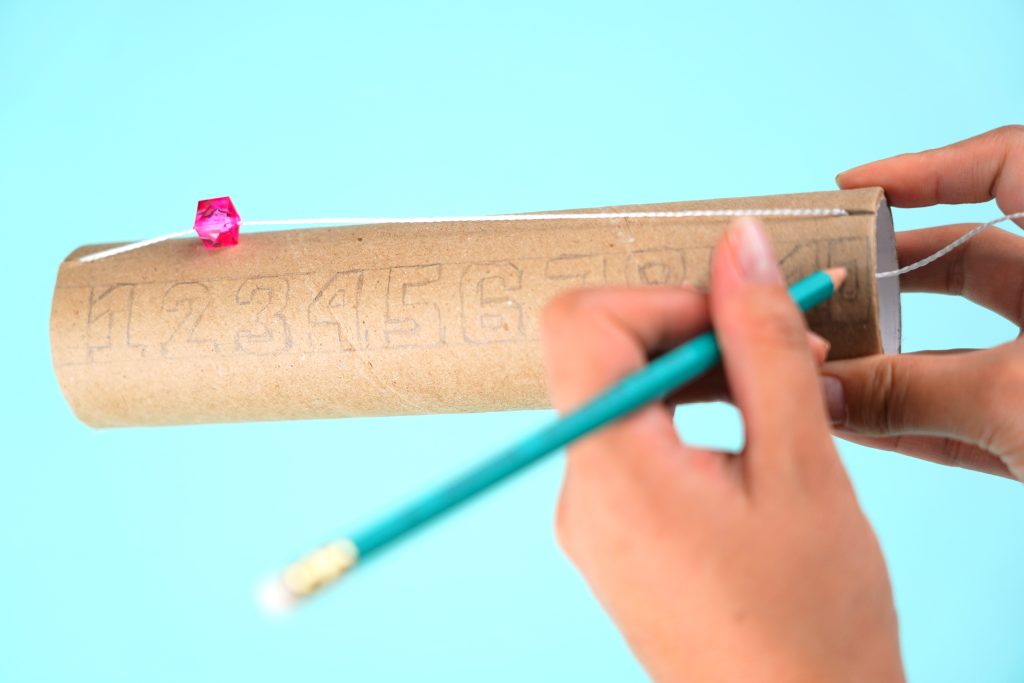
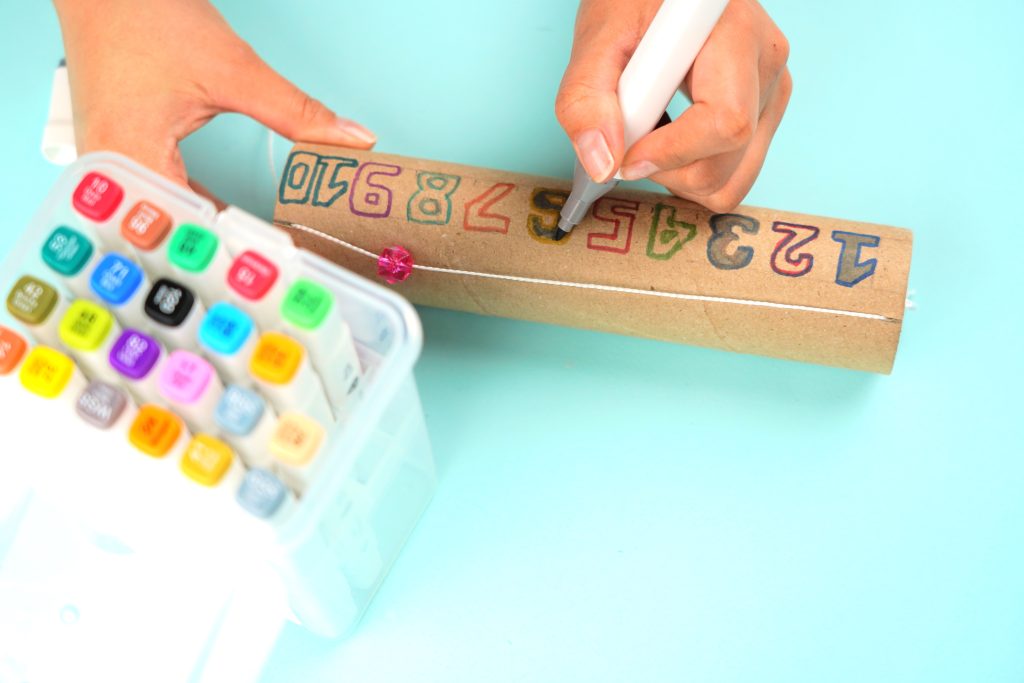
Step 5. You should now have a structure like the one in the photo. The bead should move freely along the numbers.
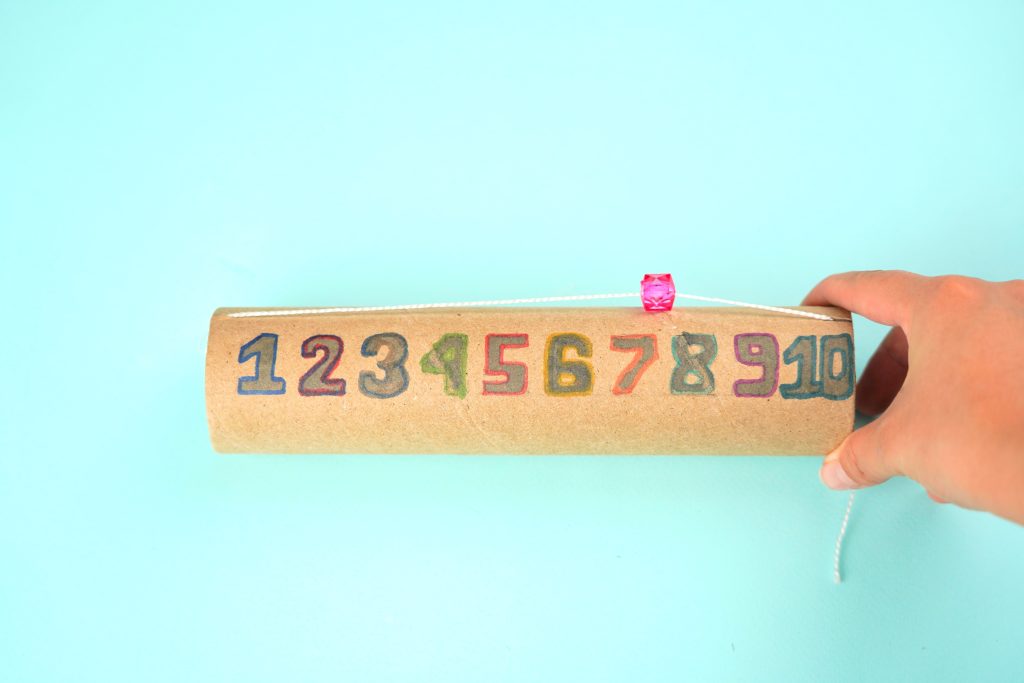
Step 6. Make holes: using a stationery awl or hole punch, make 10 holes along the number lines, with one hole under each number. Ask the teacher for help if needed.
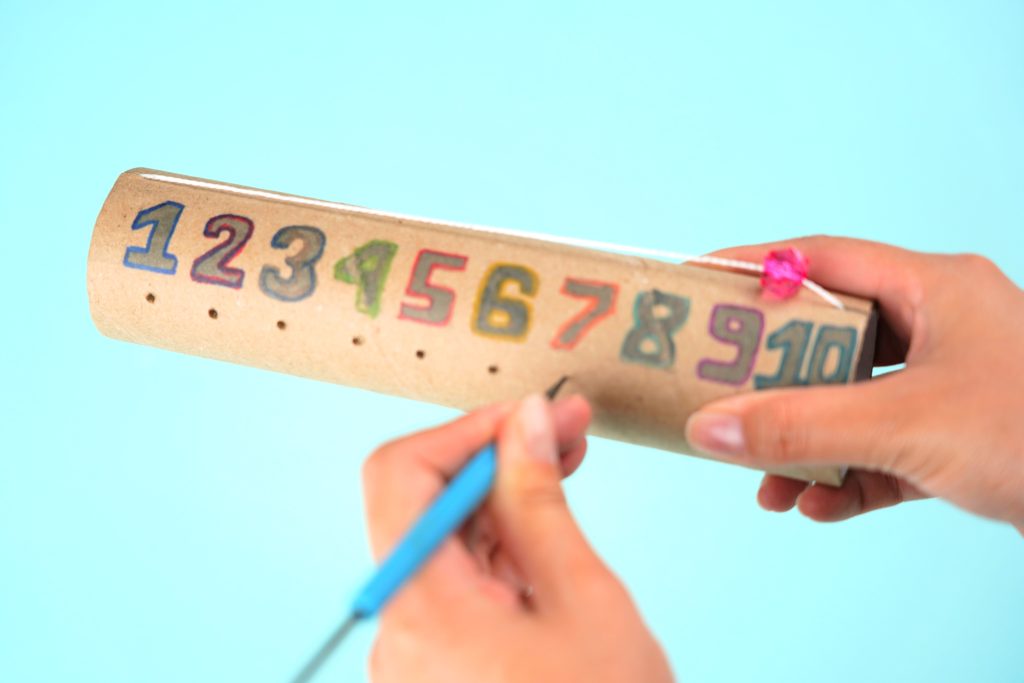
Step 7. Prepare cotton swabs of different colors. They can be placed into the holes to indicate the desired quantity.
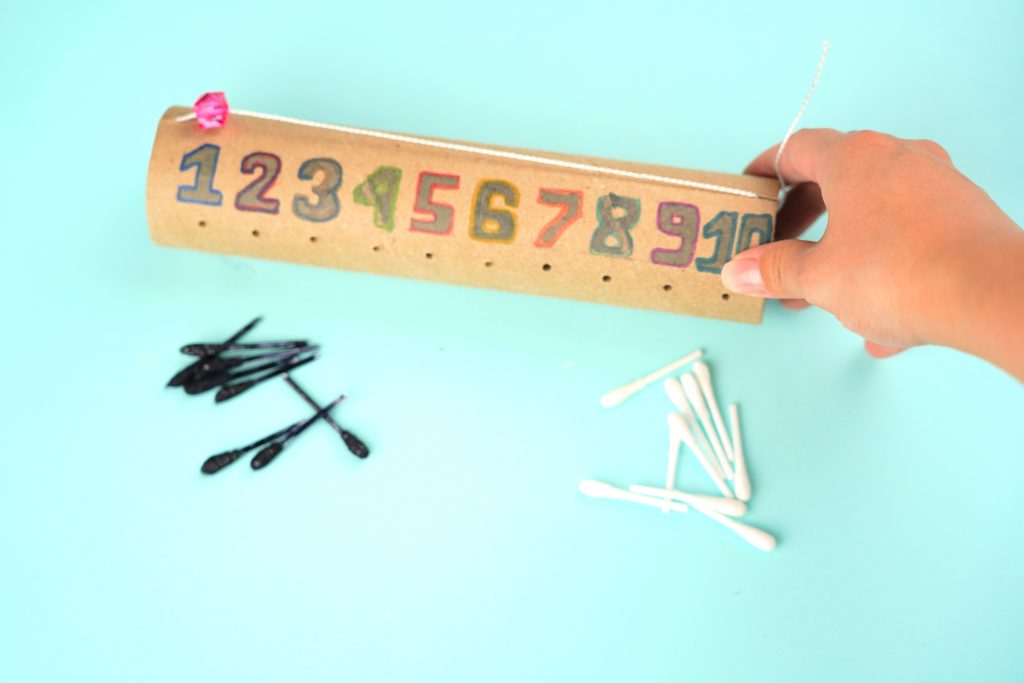
Now let’s do math! For instance, 3 + 4. Place 3 cotton swabs of one color in the holes and 4 of another color. Then, counting the swabs, move the bead to the correct number along the last swab – and you will get the answer.

Now, try solving these tasks using the toy you just made.
- Place 2 cotton swabs of one color and 3 cotton swabs of another. Move the bead to the answer to find out how many swabs in total.
- Place 4 swabs in the holes, and then add 2 more swabs. Where should the bead be moved to show the answer?
- We have 5 swabs, but we add the same amount again. How many swabs do we have in total?
- Place 8 swabs, and then remove 3 swabs. Move the bead to the correct answer. How many swabs are left?
- If we add 2 more swabs to 6 swabs, what answer will we get?
- You have 7 “coins” (cotton swabs). You bought a toy for 4 coins. How many coins do you have left?
- You have 3 swabs in the holes. How many more do you need to add to make 7?
Conclusion
This project helps visually understand addition and subtraction of numbers up to 10. Students can use the toy to independently solve examples and check their answers.

In this project, each student is awarded a STEAM title in several categories:
- Using your engineering skills and creativity, you created your own toy-counter. You are a true Inventor!
- By making this toy, you learned to work with numbers in practice! You are now a Math Scientist!