
Lesson

Project Goal:
To describe the lifestyle of the Saka based on visual materials.
Teacher Instructions:
Divide students into groups of 4-5 people.
Before starting the project, discuss with students historical concepts such as “tribes that inhabited ancient Kazakh lands,” “Saka,” “Saka culture,” and “Saka lifestyle.”
At the beginning of the lesson, explain the PBL (Project Based Learning) rubric to the students. 4K Skills (Critical Thinking, Collaboration, Creativity, Presentation).
Theoretical Part
The Saka were nomadic tribes who lived on the territory of present-day Kazakhstan during the Early Iron Age. They were known for their bravery and courage. The everyday life of the Saka was based on nomadic livestock herding. In addition, craftsmanship was highly developed. Artisans made horse harnesses, jewelry, spears, swords, daggers, and more. Items found during archaeological excavations are evidence of their remarkable skills.
People associated their origins with nature, considering themselves a part of it. Each clan or tribe believed they originated from a specific animal – such as a deer, wolf, ram, tiger, or steppe eagle. Therefore, images of animals on objects were regarded as sacred talismans and protective amulets. Jewelry was often made of gold and decorated with animal figures.
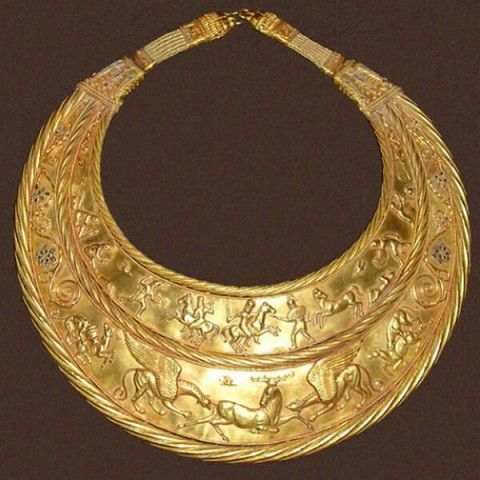
A vivid example of Saka art is the “Golden Man”. This archaeological discovery was made in 1969 in a burial mound near the city of Issyk in the Almaty Region. It was a young Saka warrior dressed in clothing adorned with over 4,000 gold ornaments. This find demonstrates the high status of the warrior, the social hierarchy among the Saka, and their advanced jewelry-making skills.
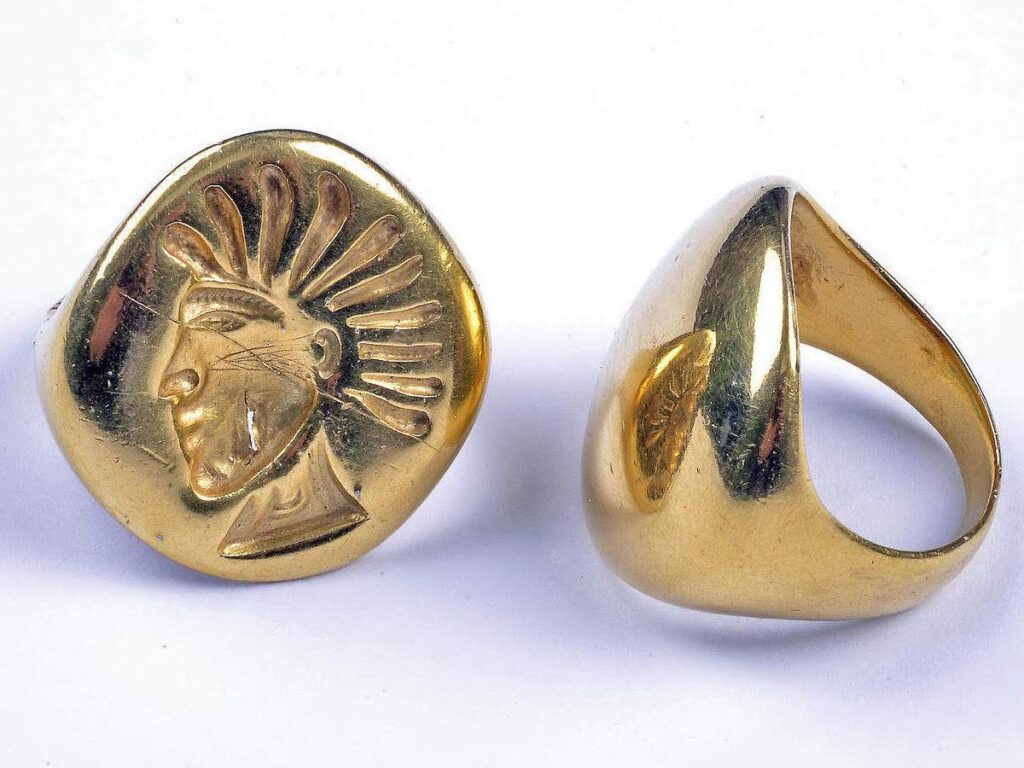
The ring we will create in this project features a design based on an actual ring found on the hand of a Saka prince.
Practical Part
Step 1. Follow the link and print the provided images on paper. Link. Cut out the images.
Making a Necklace
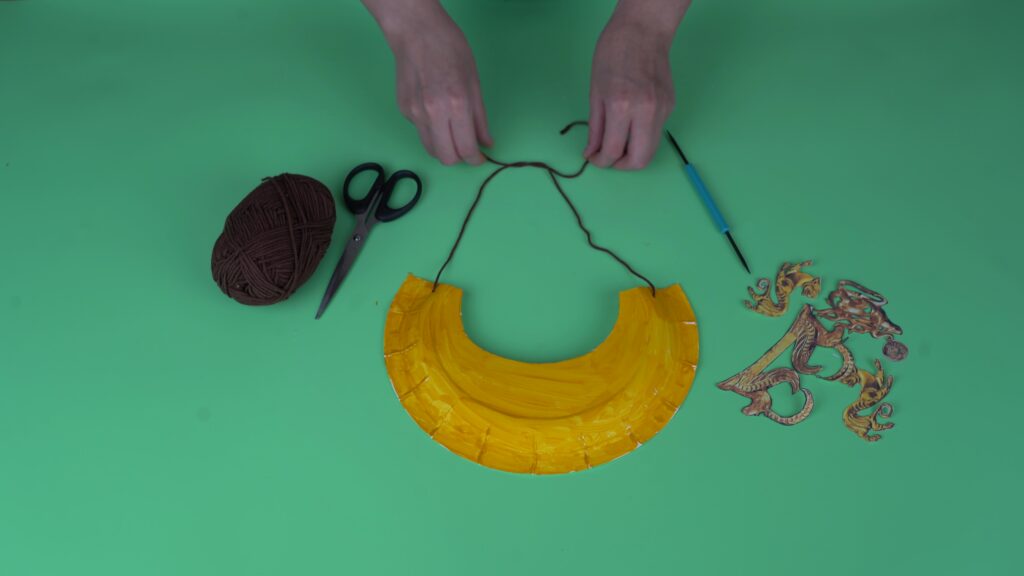
Step 2. Draw a semicircle in the center of the paper plate and cut it out as shown in the example.
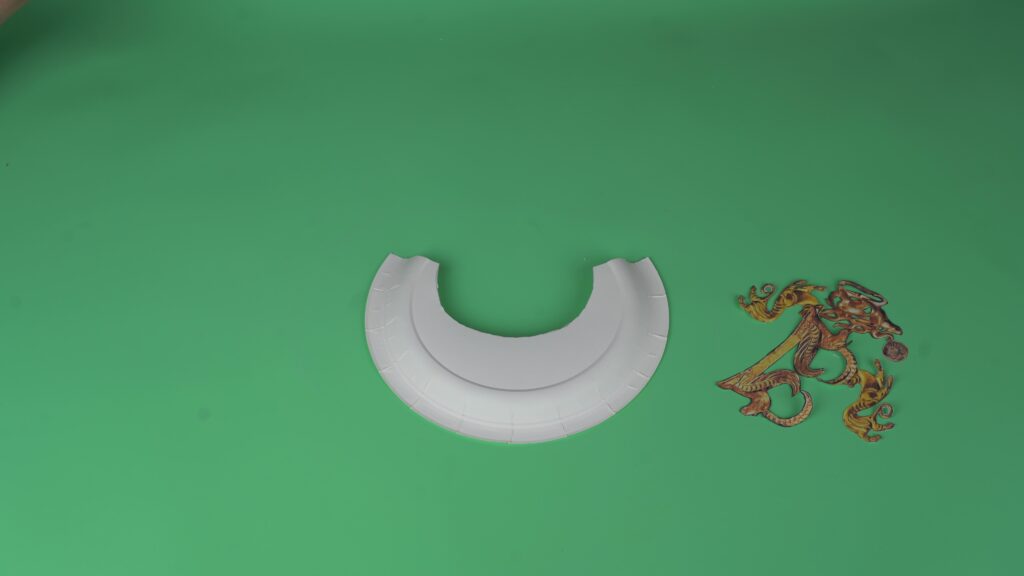
Step 3. Paint the plate yellow. Make holes on both sides using an awl. Thread a piece of string through the holes – this will be the necklace cord.
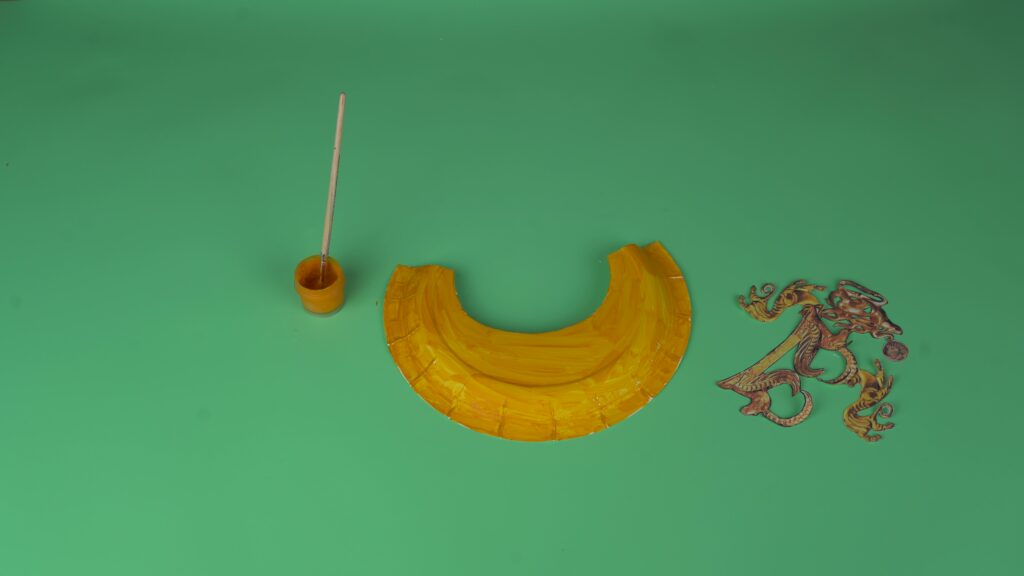
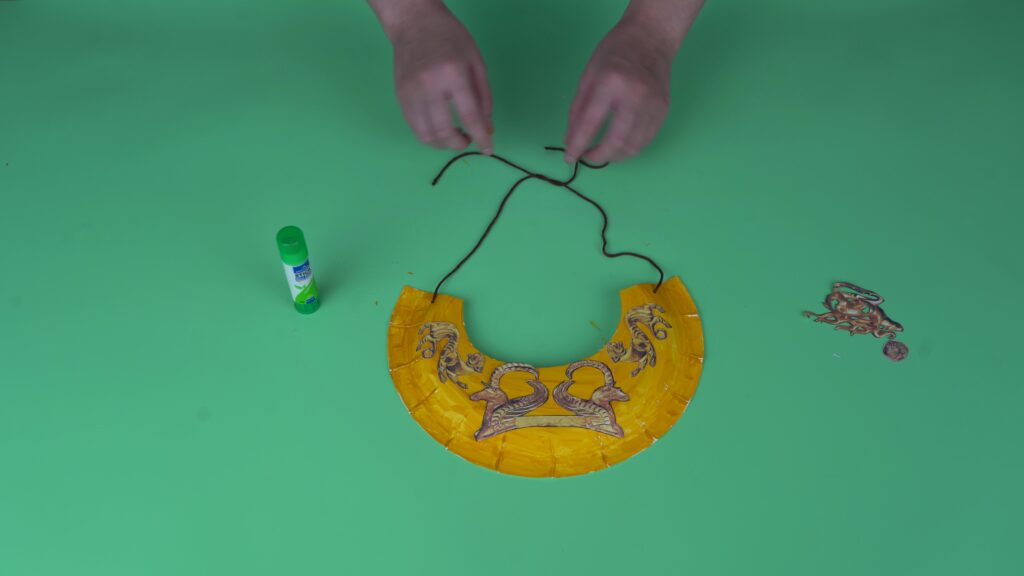
Step 4. Glue the cut-out images of the winged mountain goat and leopards onto the necklace.
Making a Bracelet
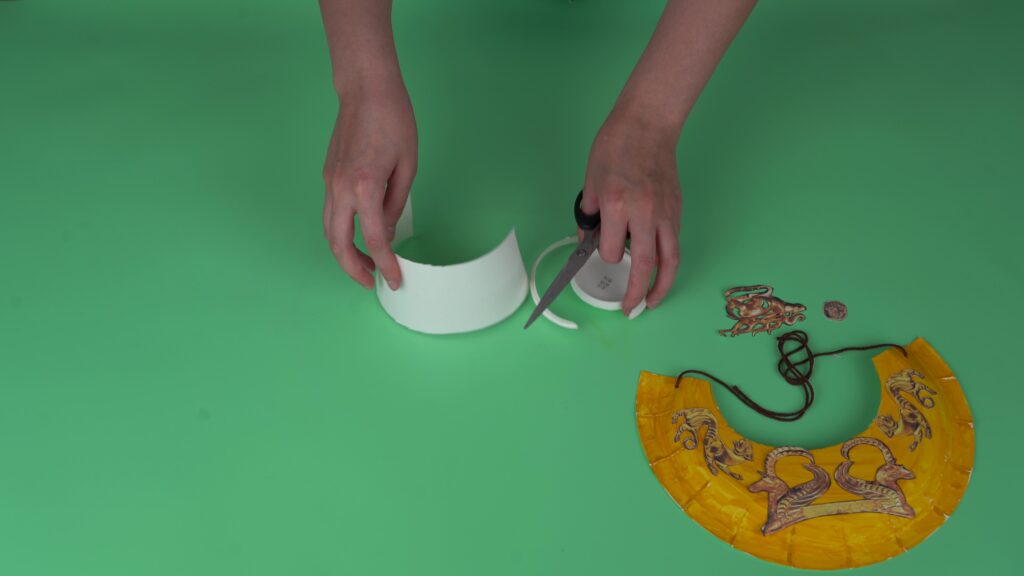
Step 5. Cut off the top and bottom parts of the paper cup. Cut the cup vertically, then cut out a rectangular strip about 3-4 cm wide.
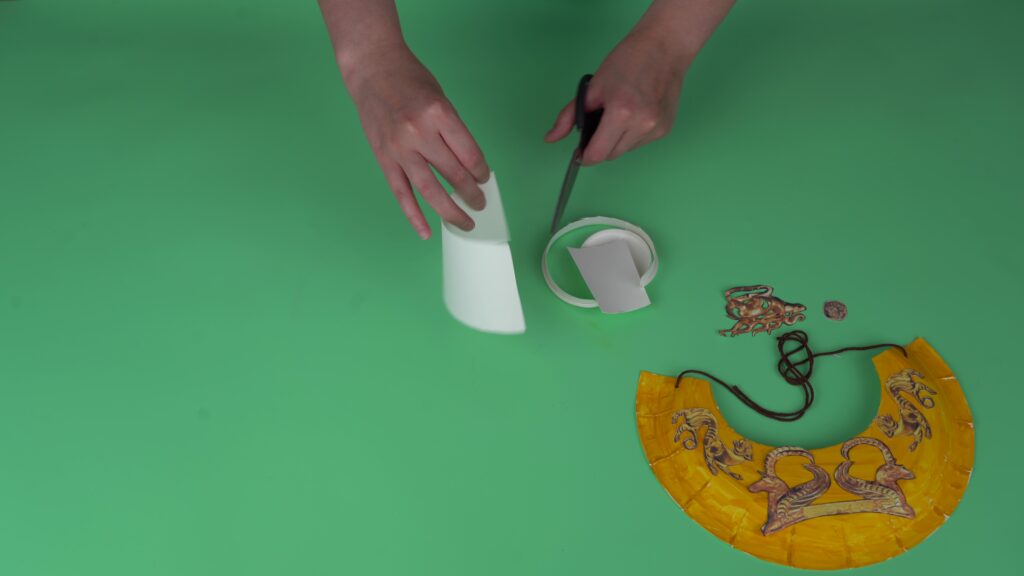
Step 6. Paint the strip yellow. Make holes on both ends using an awl. Thread a piece of string through the holes – this will be the bracelet cord.
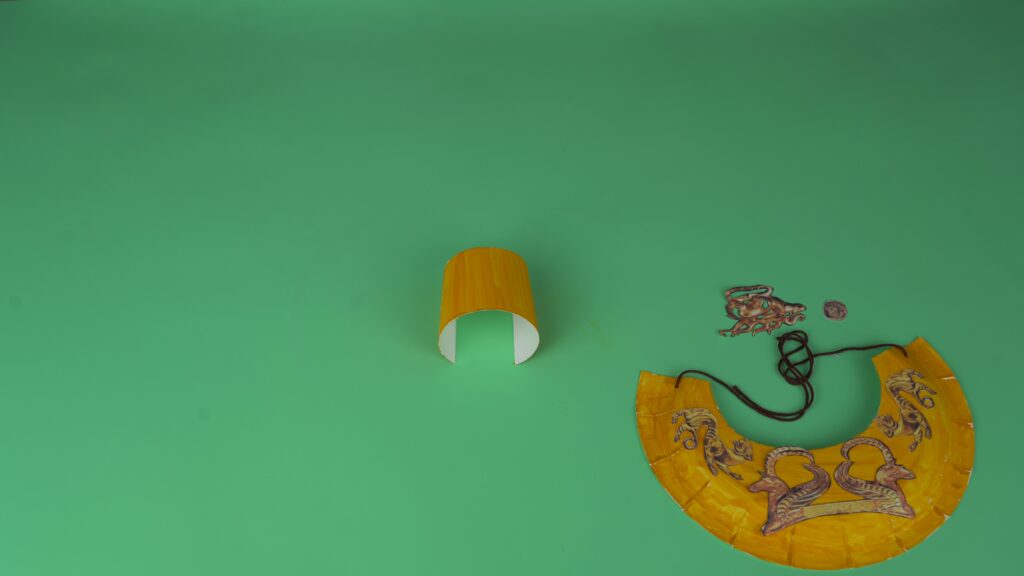
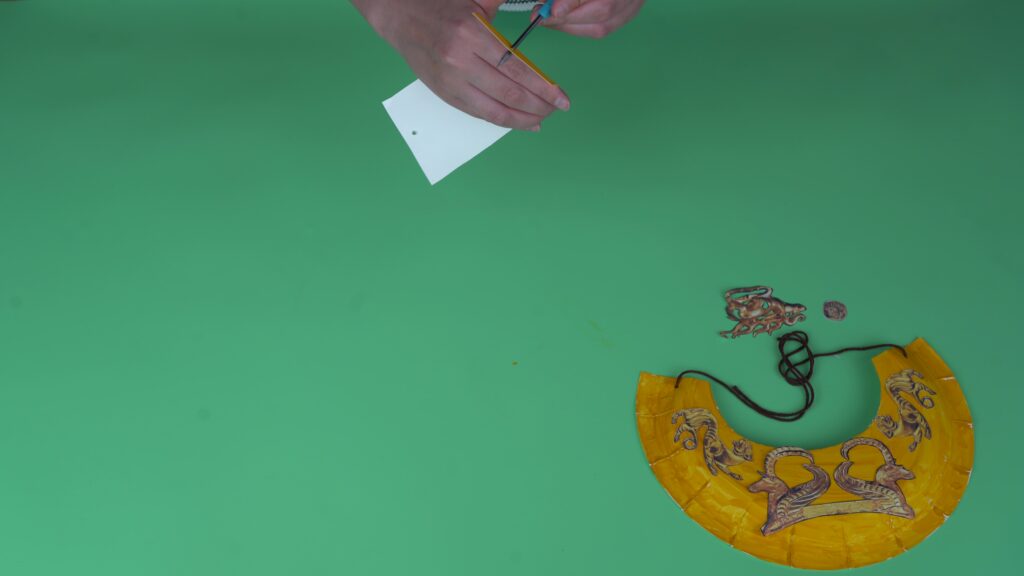
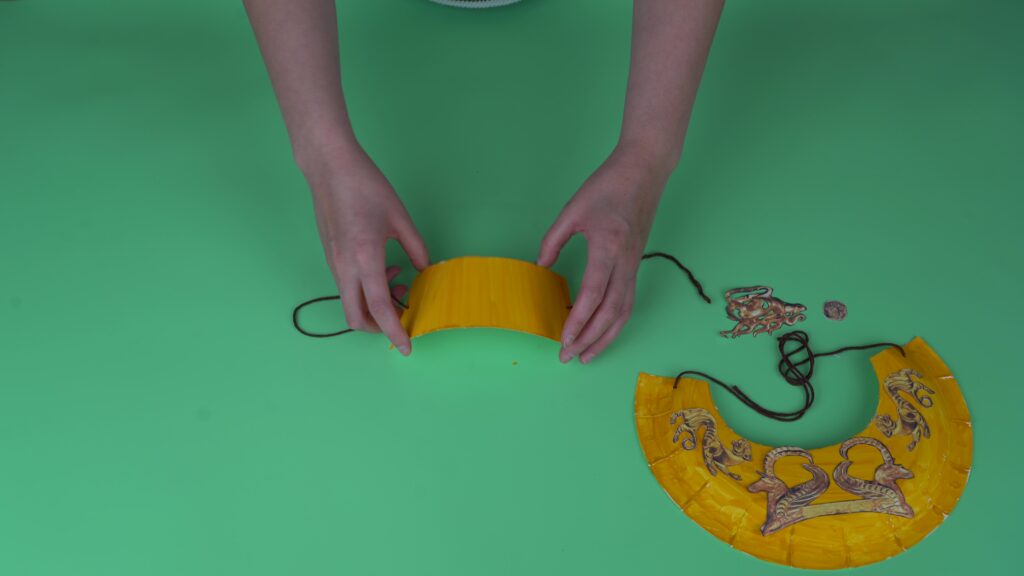
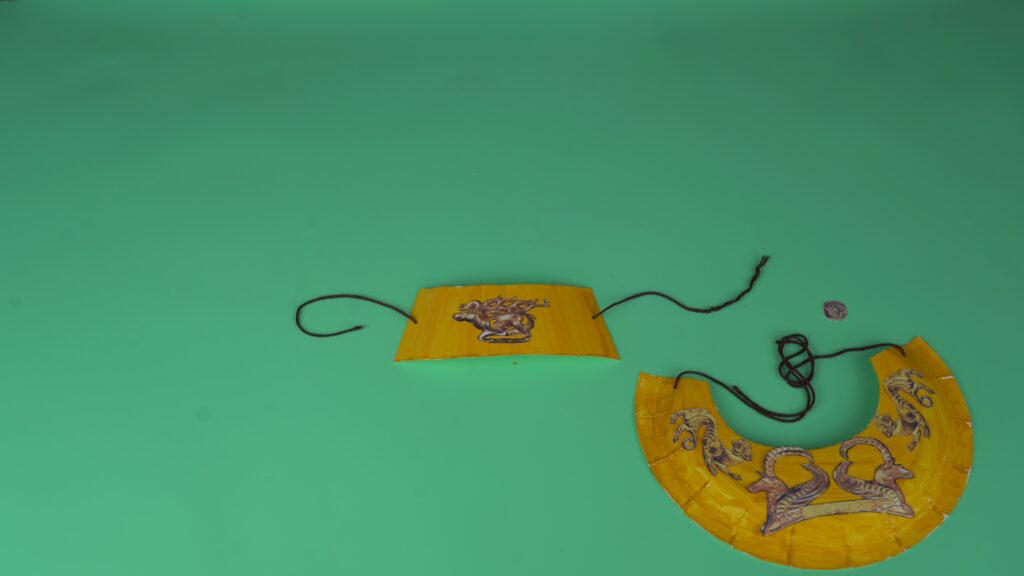
Step 7. Glue the image of a deer onto the bracelet.
Making a Ring
Step 8. Twist the chenille wire into a ring shape. Leave a small section, measure it around your finger, and twist the ends to secure it.
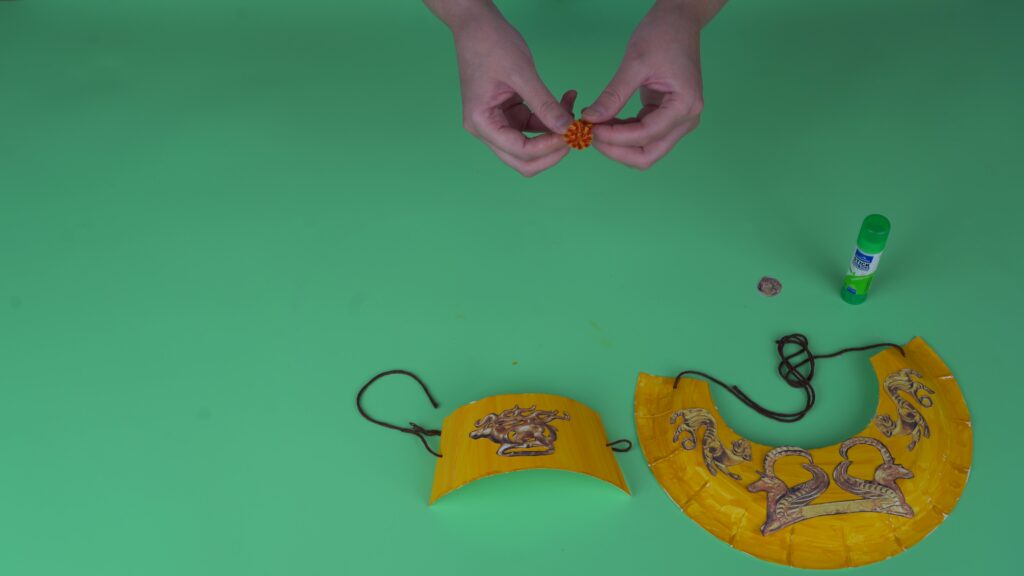
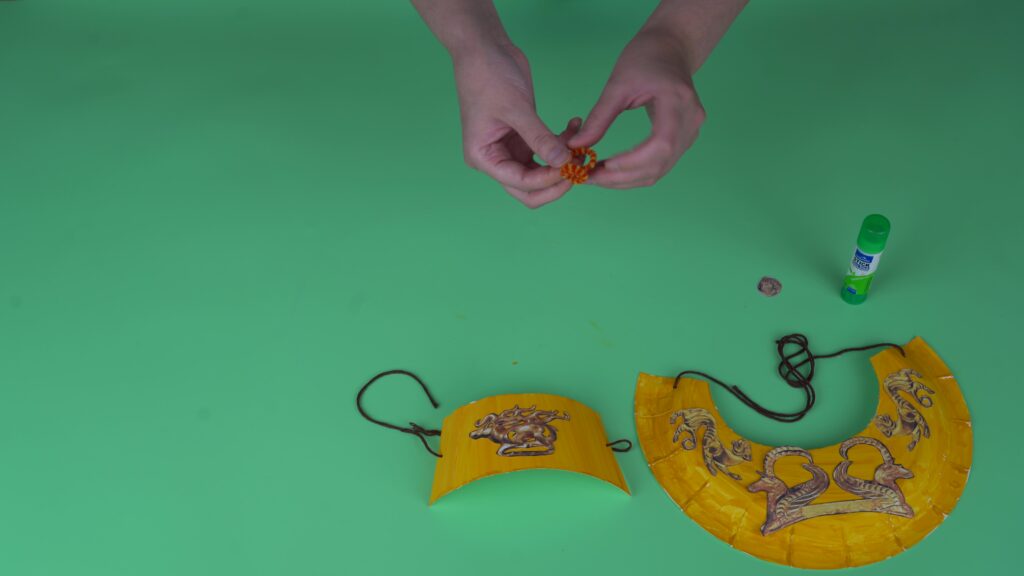
Step 9. Attach the image to the face of the ring using double-sided tape.
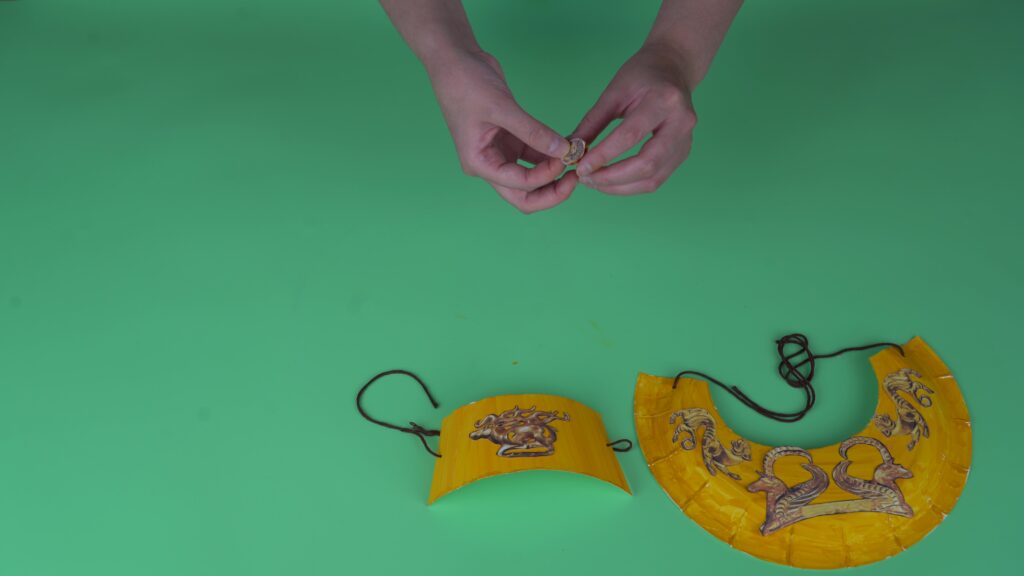
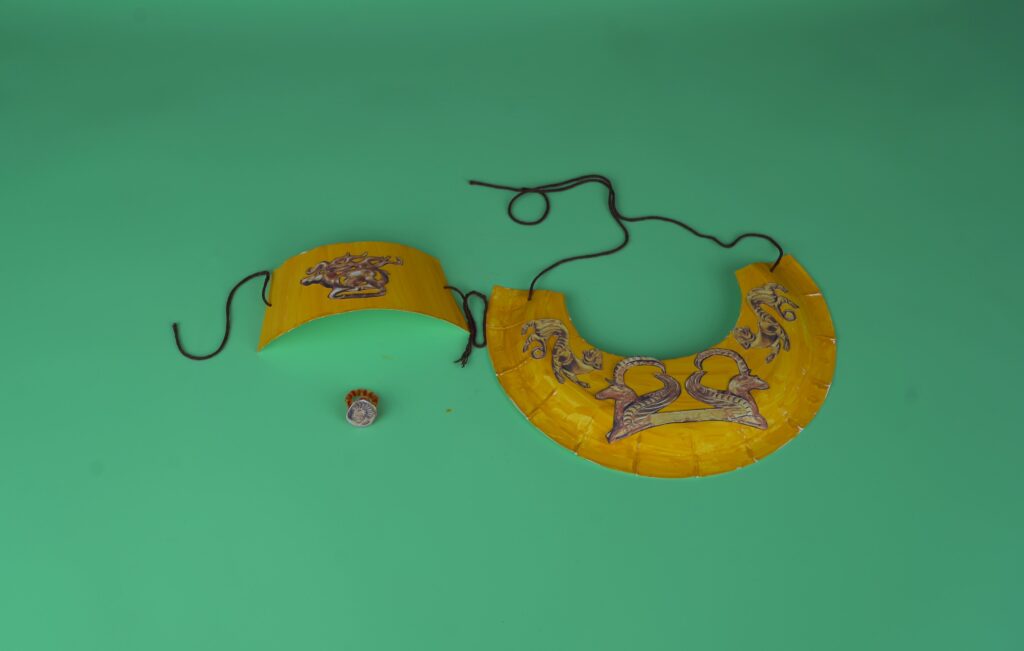
Done!
The jewelry decorated with Saka ornaments is ready.
Conclusion
Through this project, students gain a deeper understanding of the lifestyle and culture of the Saka, explore historical sources, and engage with ancient jewelry art. Creating Saka-inspired jewelry with their own hands fosters creative thinking and helps students feel a connection with the past. As a result, they learn to work with historical information and develop fine motor and craft skills.

In this project, each student is assigned a STEAM title in several categories:
– By assembling this model, you have become a true master of science! You have learned how clocks work. This is real scientific thinking!
– Look at this beautiful clock! You have used your design and problem-solving skills to create a working model. Congratulations, you are an expert engineer!