
Meaning: share and balance
Mean: Share and Balance by PhET Interactive Simulations, University of Colorado Boulder, licensed under CC-BY-4.0 (https://phet.colorado.edu)
Objective:
- To know the definitions and formulas for calculating the mean;
- To describe the mean in terms of equalization, fraction, and balance point.
This virtual activity is designed for use in geometry lessons on the following topic:
- Grade 6. “Mean. Dispersion. Standard deviation.”
Theoretical part
Arithmetic mean
The arithmetic mean is a number that shows the average of all the numbers in a group. To find the arithmetic mean, you need to add up all the numbers and divide the resulting sum by the number of those numbers.
Formula:
Average = (Sum of all values) / (Number of values)
Example: Suppose we have a data set of 5 measurements of people’s height: 170 cm, 175 cm, 180 cm, 185 cm, 190 cm. Average: (170 + 175 + 180 + 185 + 185 + 190) / 5 = 180 cm.
Virtual Experiment
Modeling “mean fraction and equilibrium” allows students to understand mean in a variety of contexts. Students observe how gravity balances the height of water in two-dimensional beakers when the valves are opened. The flattened height is the average level of water in the beakers.
Procedure:
Step 1. Launch the simulation. In the workspace you will find
- Balancing panel (1);
- The water in the equalizing beaker (2);
- A panel with the Predicted Average, Mean, Marks, Water Level buttons (3);
- Button to reset the balance (4);
- Button to change the number of cups (5);
- Reset button (6).
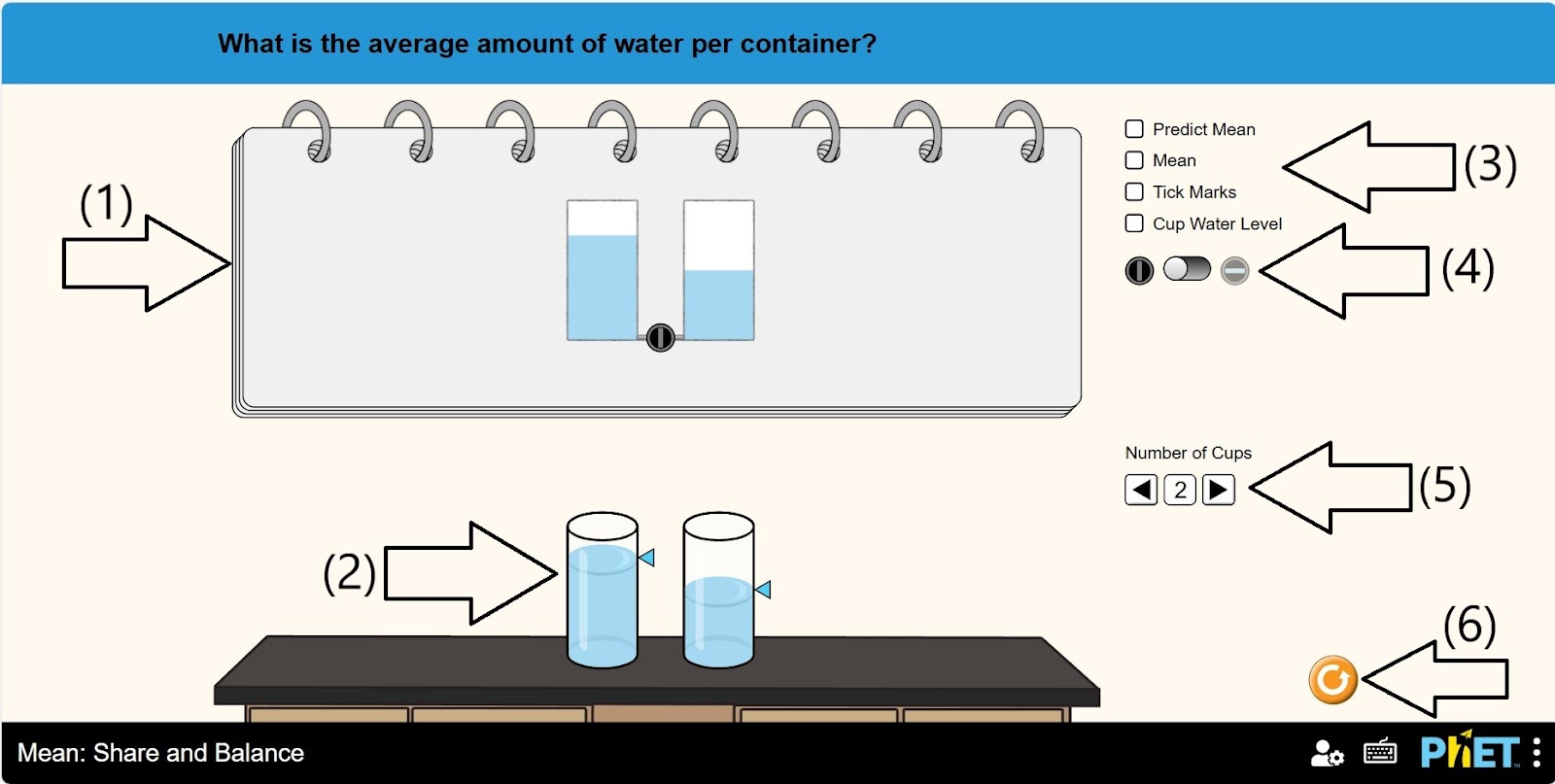
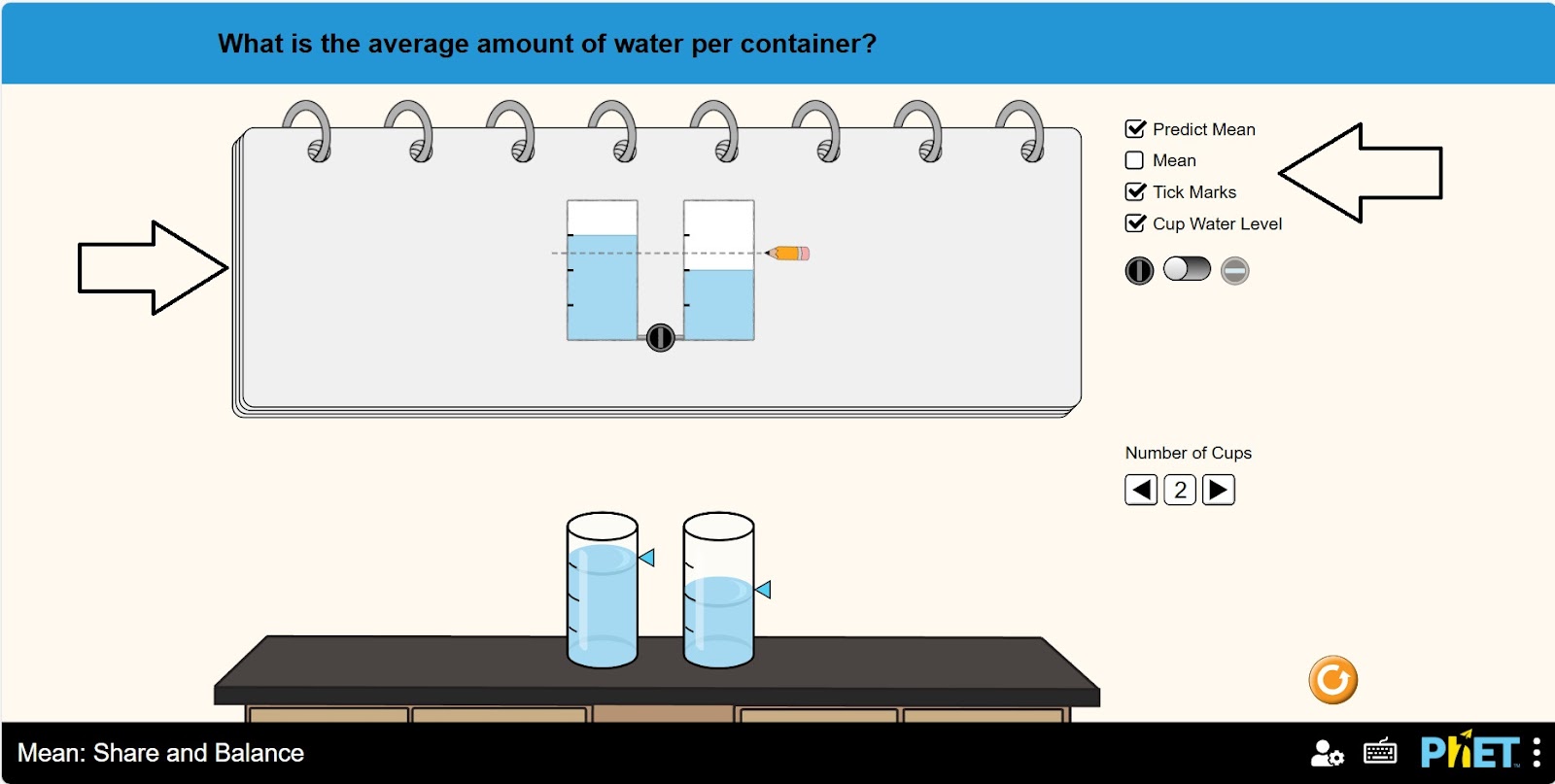
Step 2. Activate the Predicted Average, Marks and Water Level buttons. Looking at the marks in the beaker, if it balances the water in the beaker, guess where the water level reaches the beaker by moving the knob there.
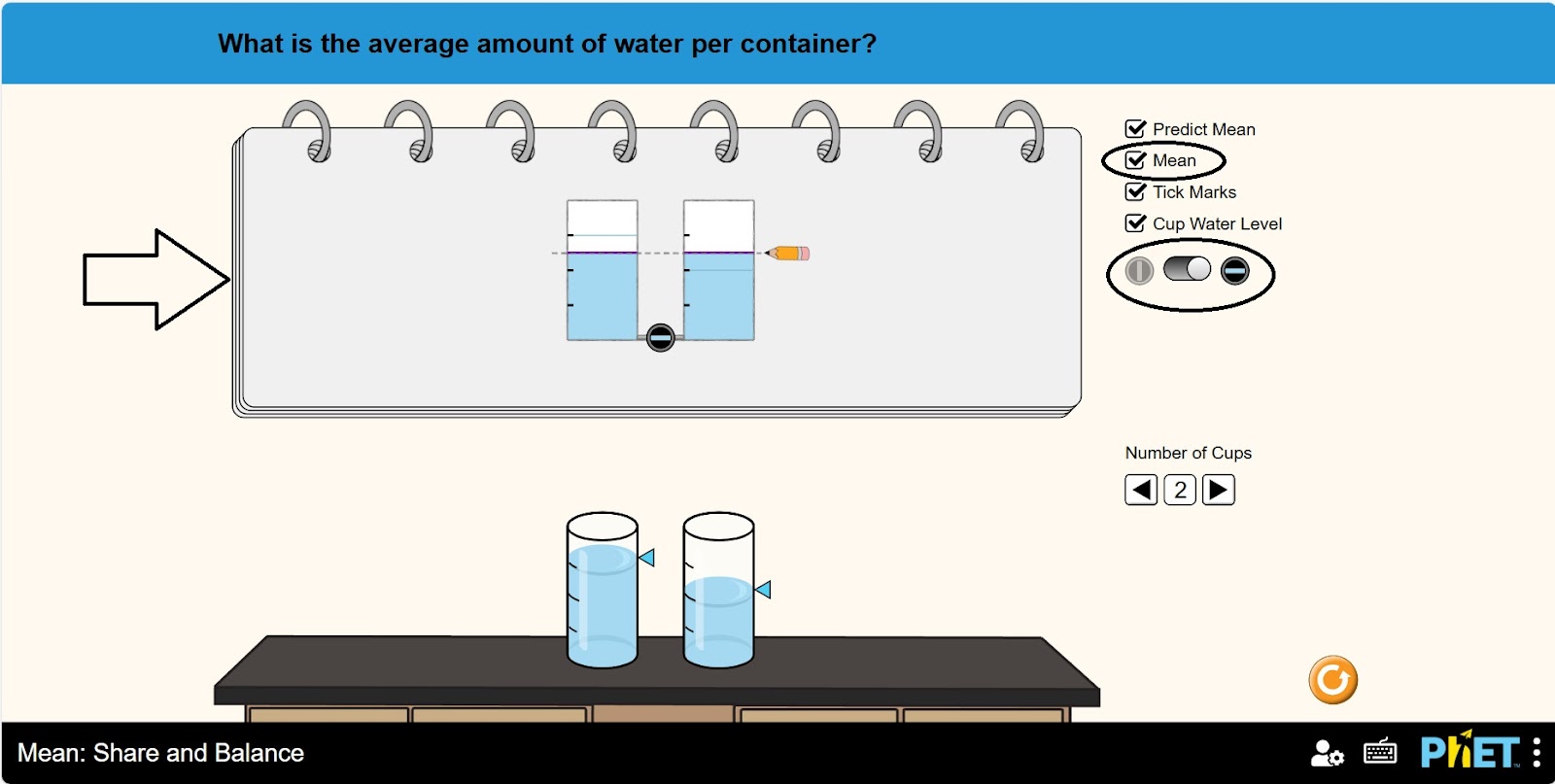
Step 3. Press the middle button. Click “Restore Balance”. Compare the actual average water level with the estimated average water level.
Step 4. Press the “Restart” button. Increase the number of jars as desired.
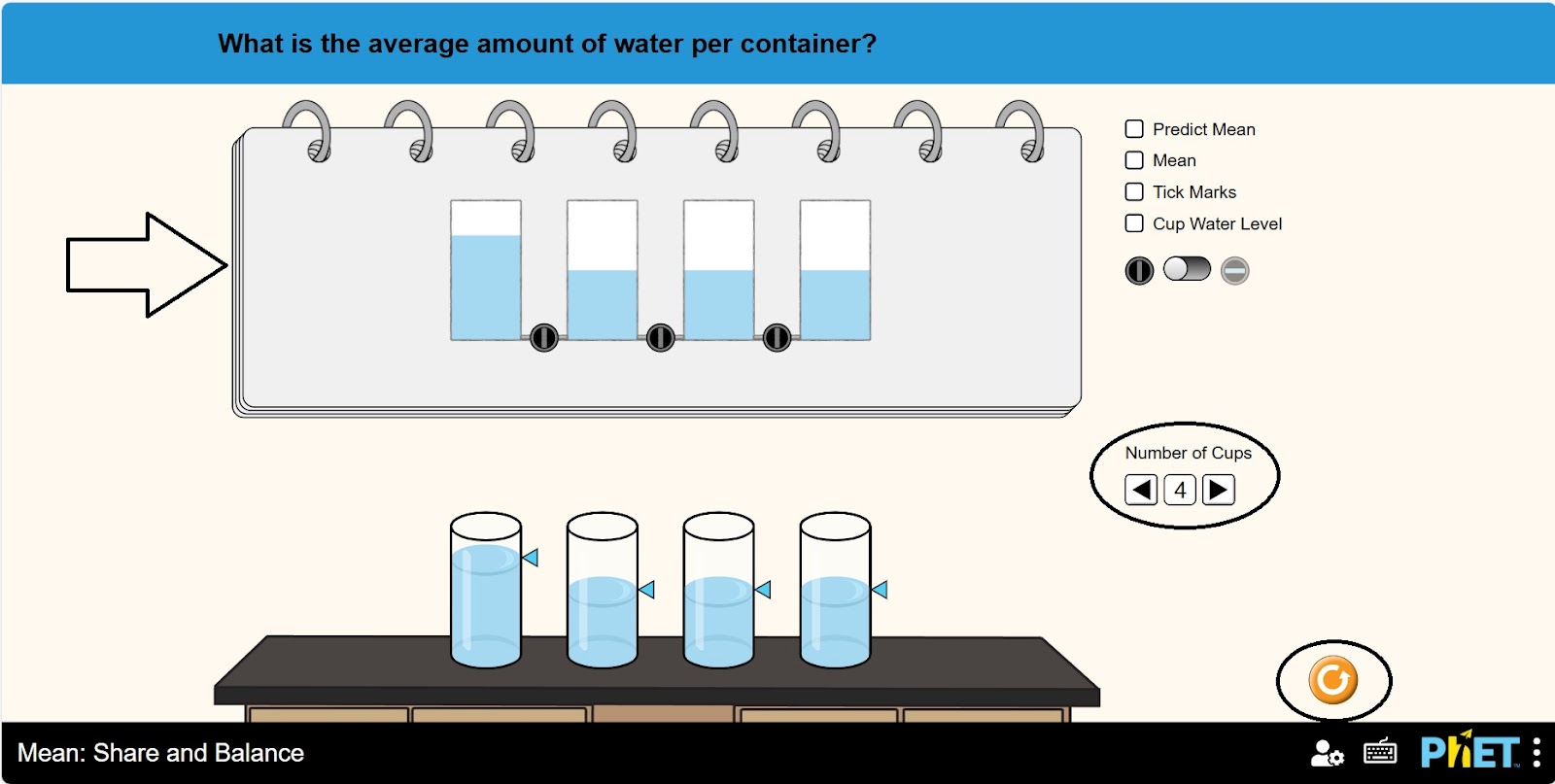
Step 5. Repeat the process for 2 cups.
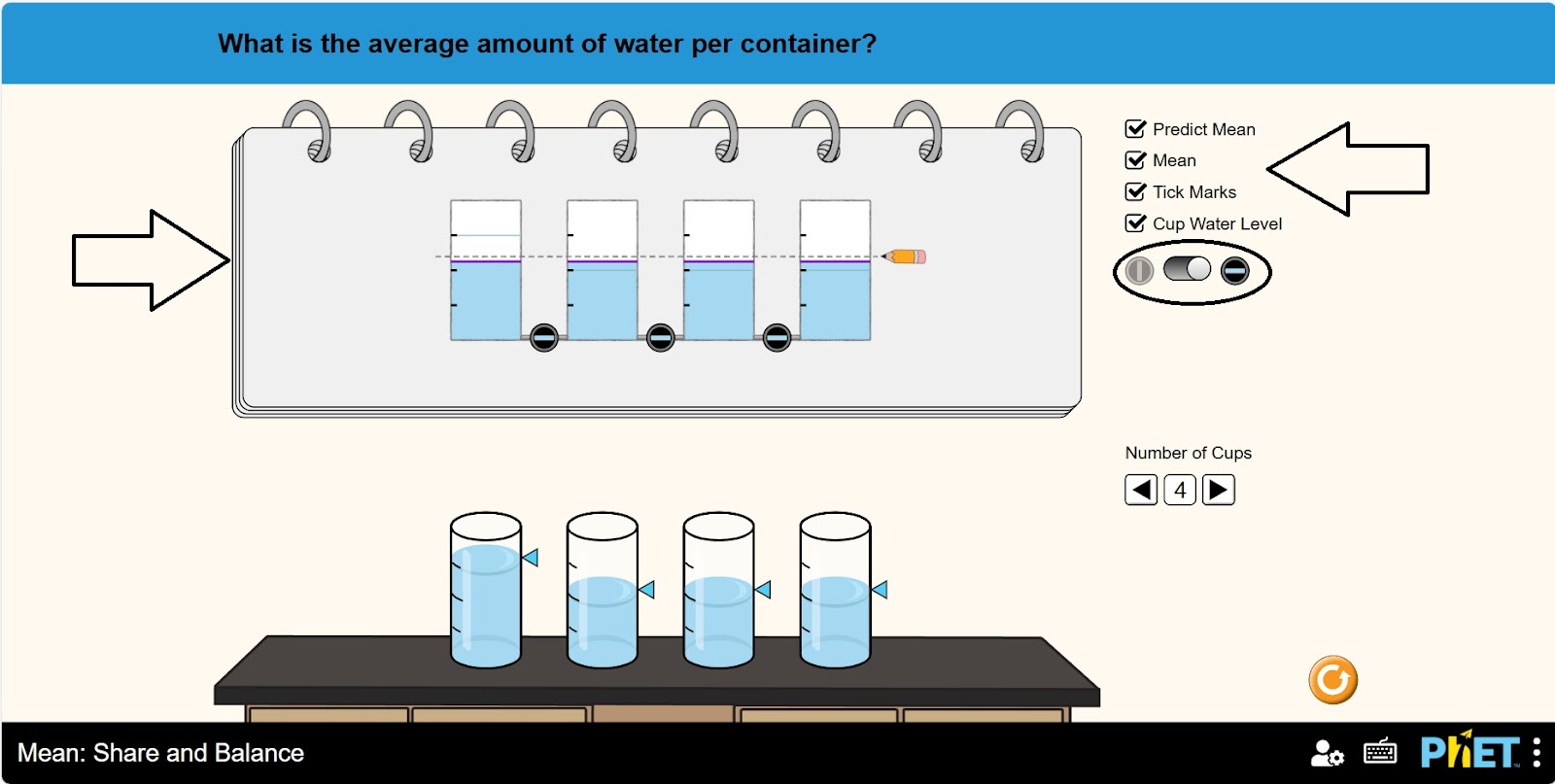
Step 6. Experiment by changing the number of cups to your liking.
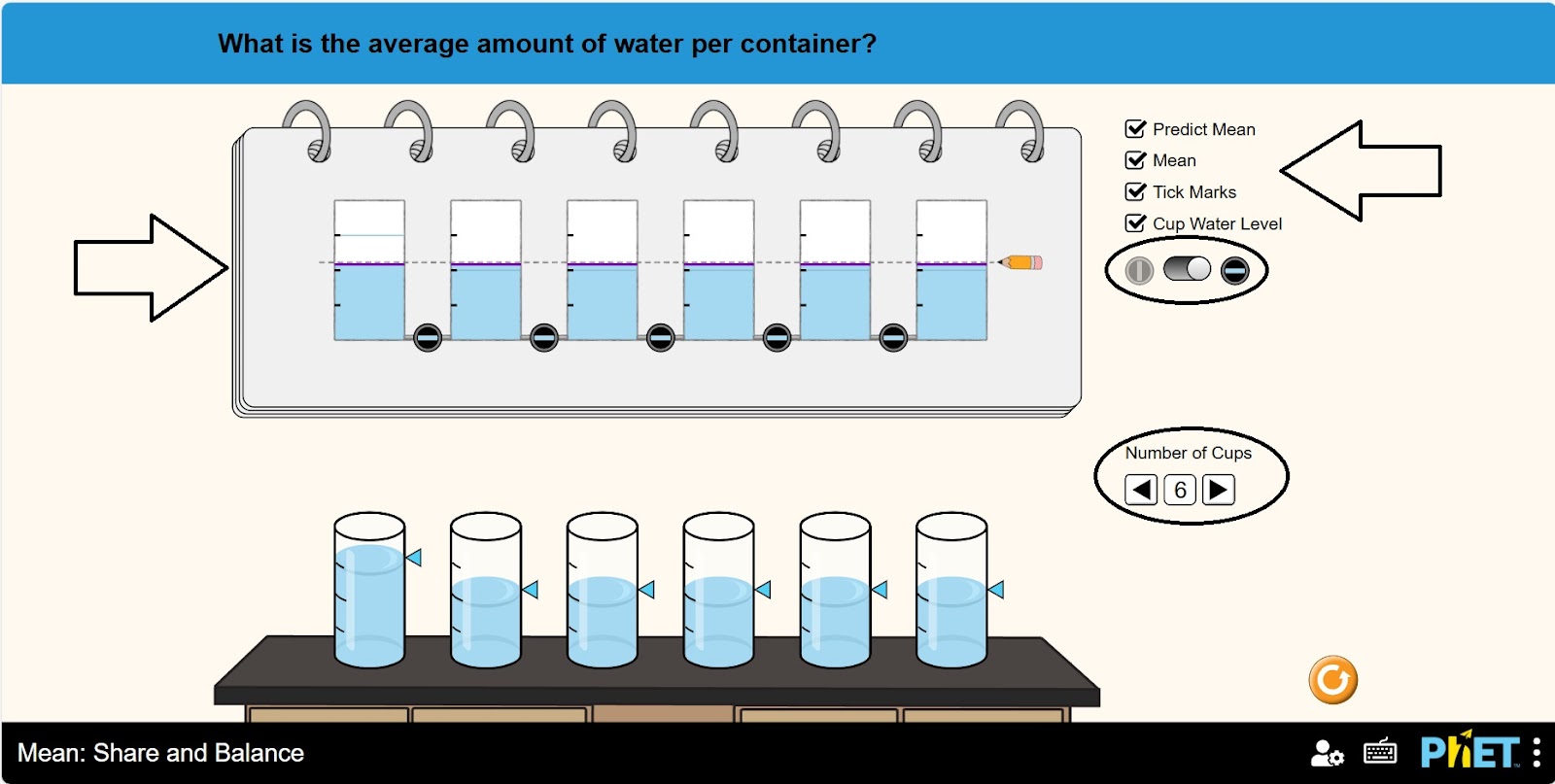
Conclusion
Students were introduced to the concept of average through this virtual activity. They performed different manipulations of different levels of water in a beaker and balanced the water.