
Lesson
Project objective
– List the organs of the circulatory system and define its role in the human body;
– Identify the location, functions of the circulatory system;
– Model the components of the circulatory system.
Teacher’s guide
– In the practical part of the project, students work in pairs.
– The students should be familiar with topics such as the circulatory system and the organs of the circulatory system.
– Before beginning the experimental part, familiarize and provide students with all the necessary materials.
– Provide brief instructions on how to use the scissors and the medical system.
– Explain the PBL (project based learning) rubric to the students at the beginning of the lesson. Skills 4K (critical thinking, collaboration, creativity, presentation)
Safety in Steam lessons
Before we begin the lesson, teachers are advised to familiarise themselves with the safety procedures. If necessary (if using items specified in the PPE), brief the students. Go to Safety in Steam lessons
Theoretical part
The human body is a complex biological machine that requires many processes to function effectively. In order for these processes to work smoothly, vital elements must be delivered to different parts of the body.
The blood system (circulatory system), a group of organs involved in the circulation of blood in the body. The normal functioning of any animal body requires efficient blood circulation, as it carries oxygen, nutrients, salts, hormones and other vital substances to all organs of the body.
In addition, the circulatory system returns blood from the tissues to those organs where it can be enriched with nutrients, and to the lungs where it is oxygenated and freed from carbon dioxide (carbon dioxide). Finally, the blood must wash over a number of special organs, such as the liver and kidneys, which neutralise or excrete end products of metabolism. The accumulation of these products can lead to chronic ill-health and even death.
In its most general form, this transport system consists of a muscular four-chamber pump (heart) and many channels (vessels) whose function is to deliver blood to all organs and tissues and then return it to the heart and lungs. It is also called the cardiovascular system, or cardiovascular system, because of its main components.
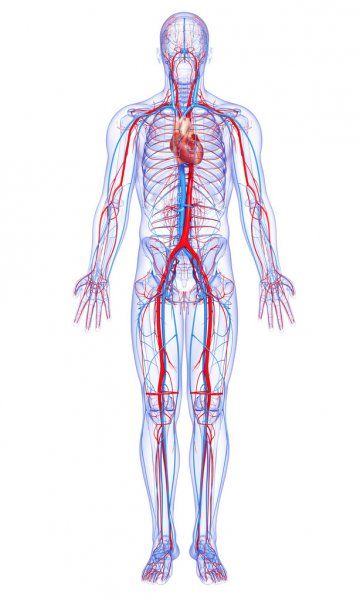
The most important features of the human circulatory system are:
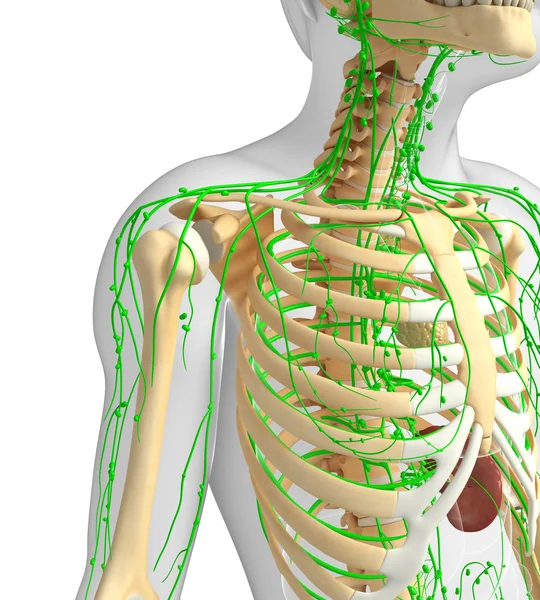
- The human cardiovascular system consists of the heart, blood vessels, blood and lymph.
- In the human circulatory system, blood circulates in two loops (double circulation) – one for oxygenated blood and the other for deoxygenated blood.
- The human heart consists of four chambers – two ventricles and two atria.
- The human circulatory system has a network of blood vessels throughout the body. These include arteries, veins and capillaries.
- The main function of blood vessels is to transport oxygenated blood and nutrients to all parts of the body and to collect metabolic waste products which are eliminated from the body.
- Most diagrams of the human cardiovascular system do not visually represent its absolute length.
- Theoretically, if all human veins, arteries and capillaries were arranged in a single line, they would be 100,000 km long (about eight times the diameter of the Earth).
The human cardiovascular system consists of 4 main parts that have specific roles and functions. The vital components of the circulatory system include:
- The heart
- Blood (technically blood is considered a tissue, not an organ)
- Blood vessels
- Lymphatic system

Practical part
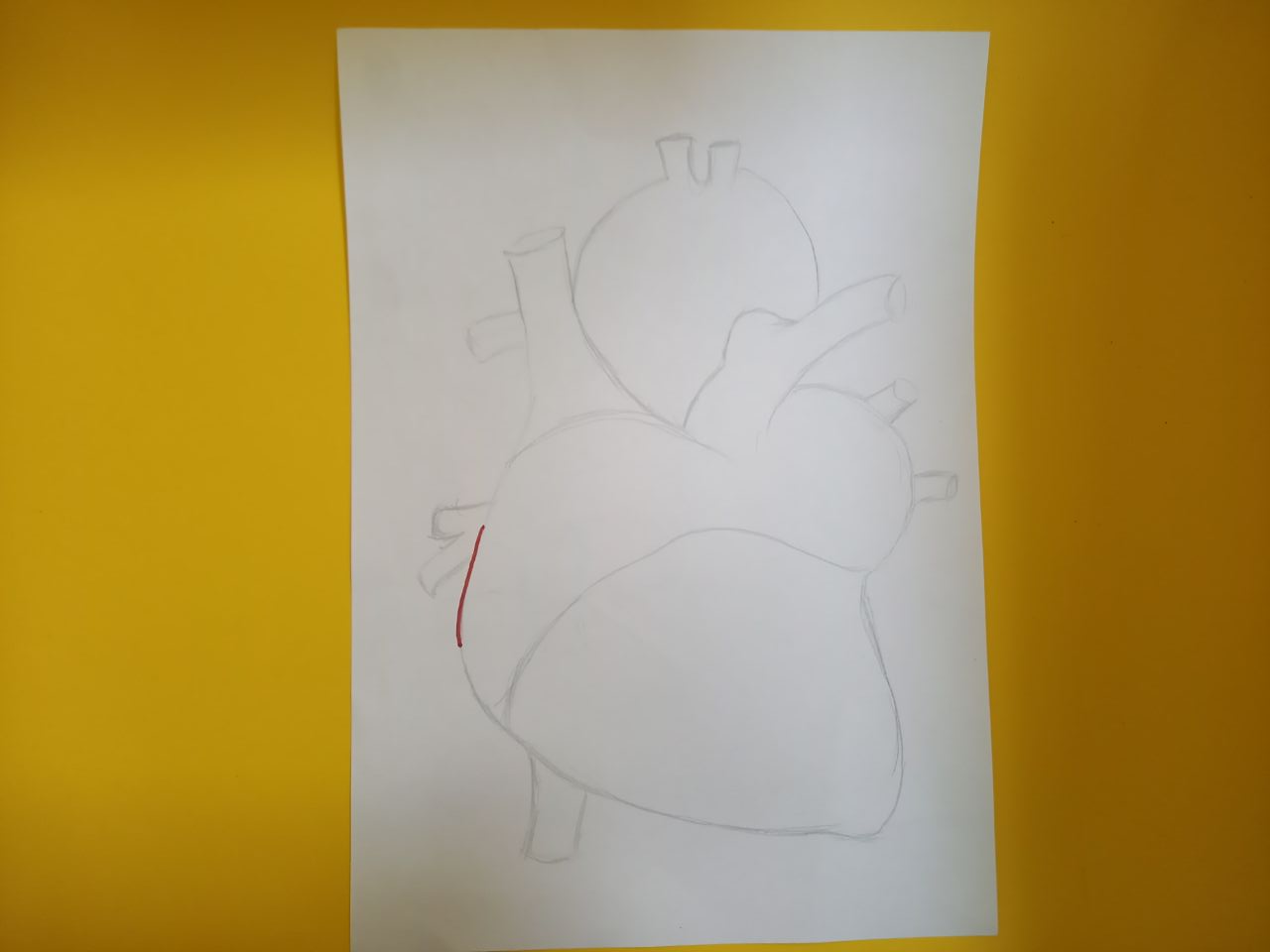
Step 1. Draw a heart on white A4 paper with a pencil, then colour the drawing with felt-tip pens
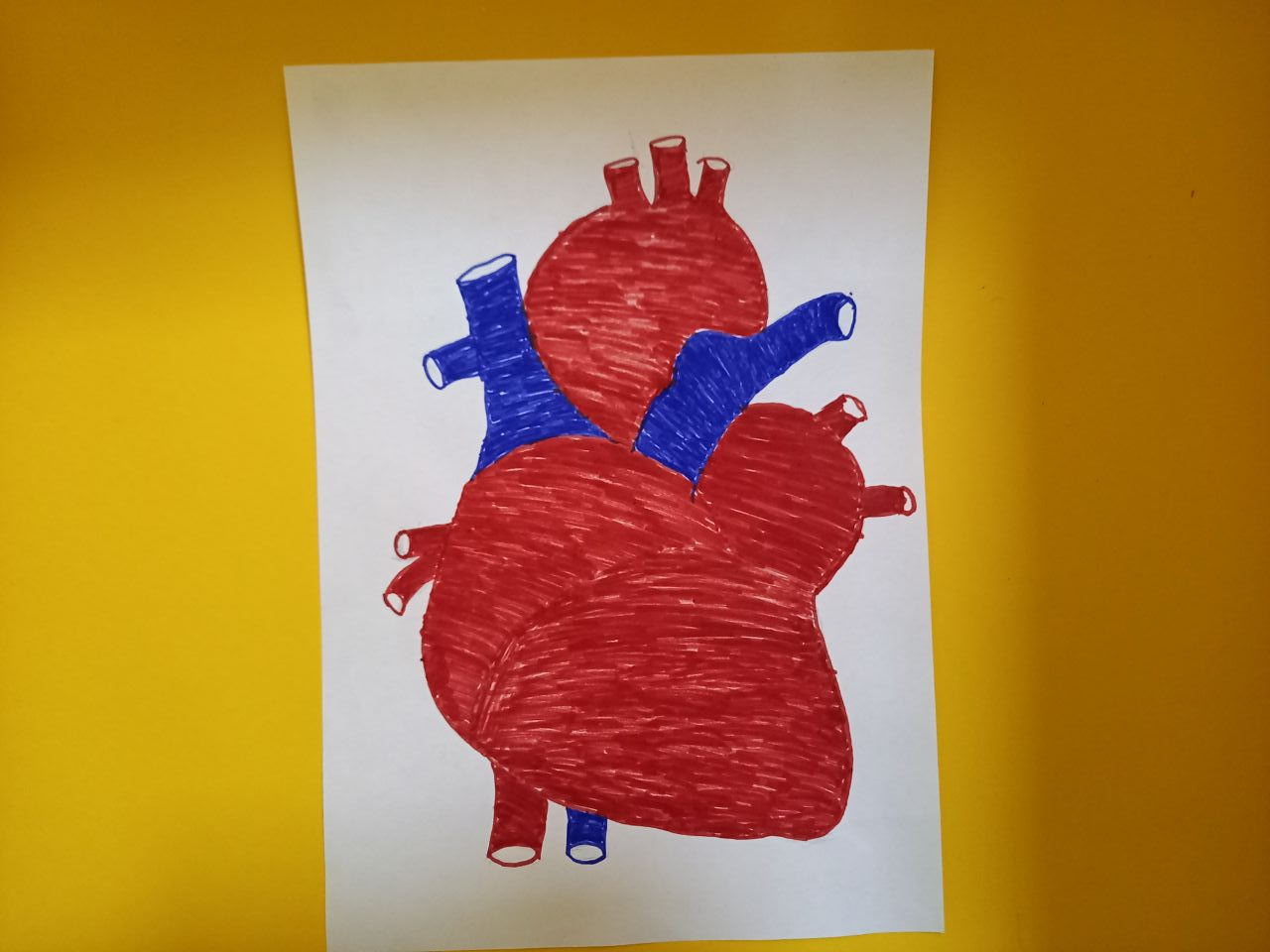
Step 2. Take a 30x30cm cardboard, and using paper glue, glue the heart pattern onto the cardboard
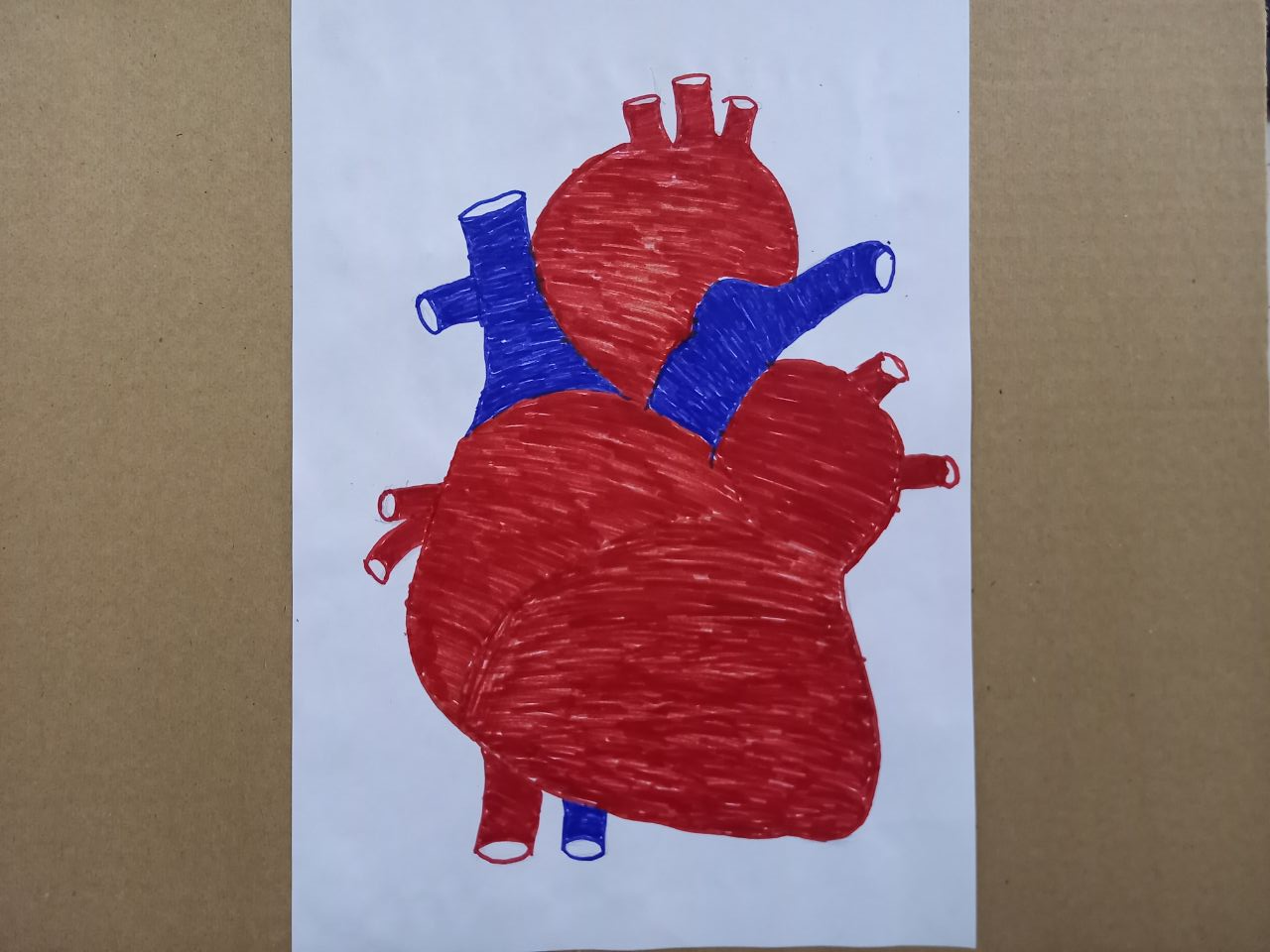
Step 3. Take 2 pieces of medical system, cut off unnecessary parts, and with the help of duct tape attach 1 system through veins (blue) and 2 system through arteries (red)
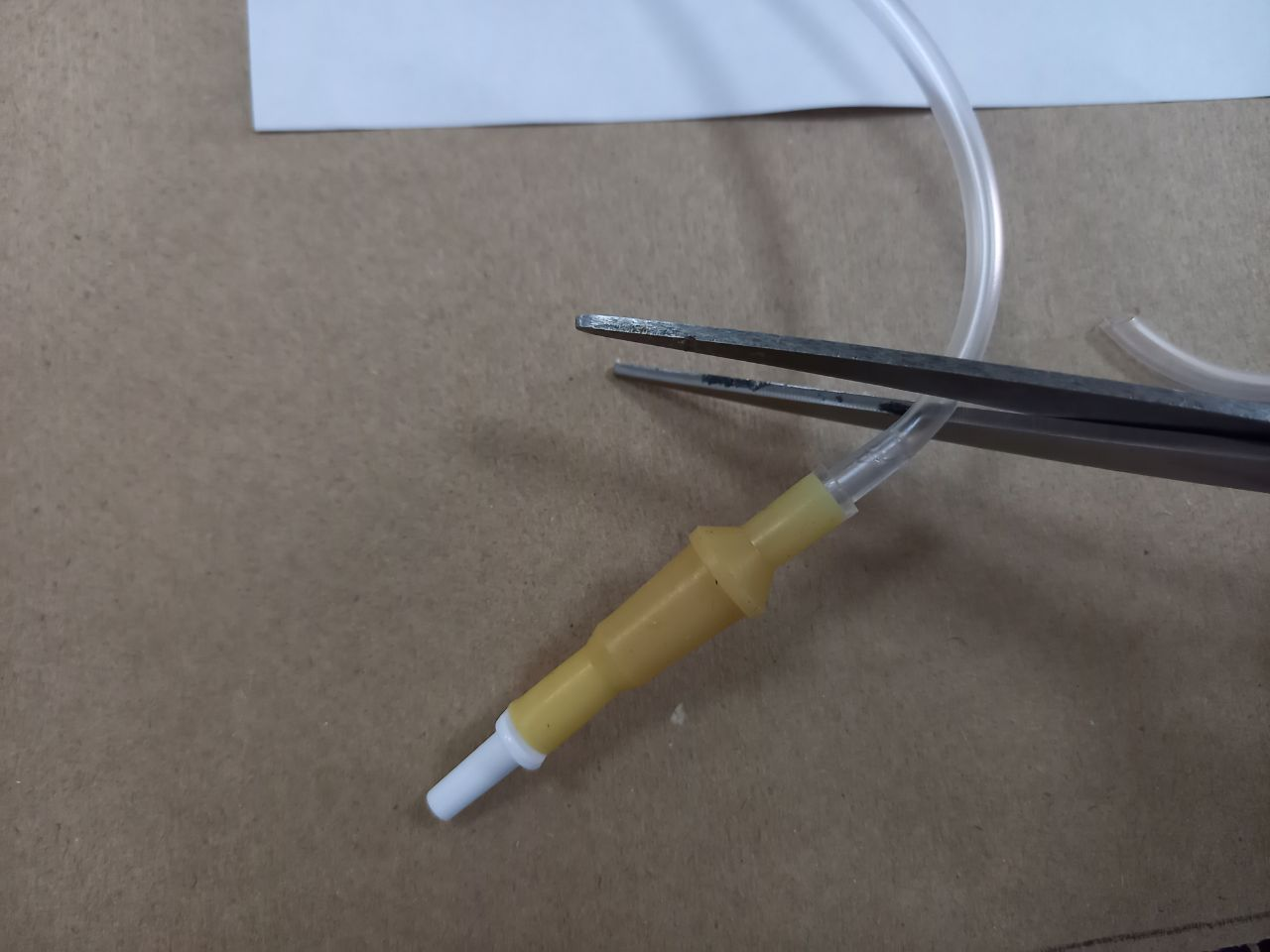
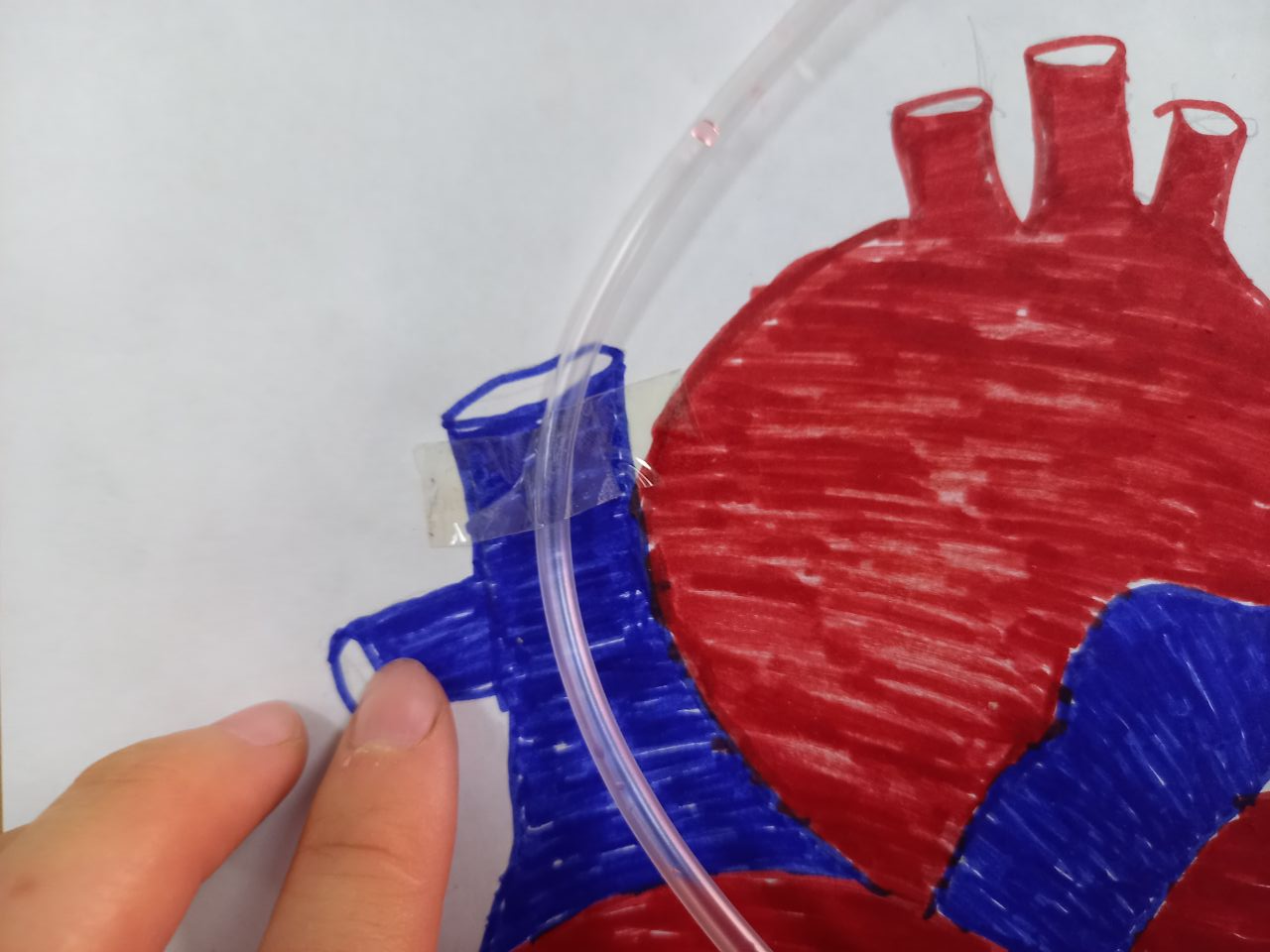
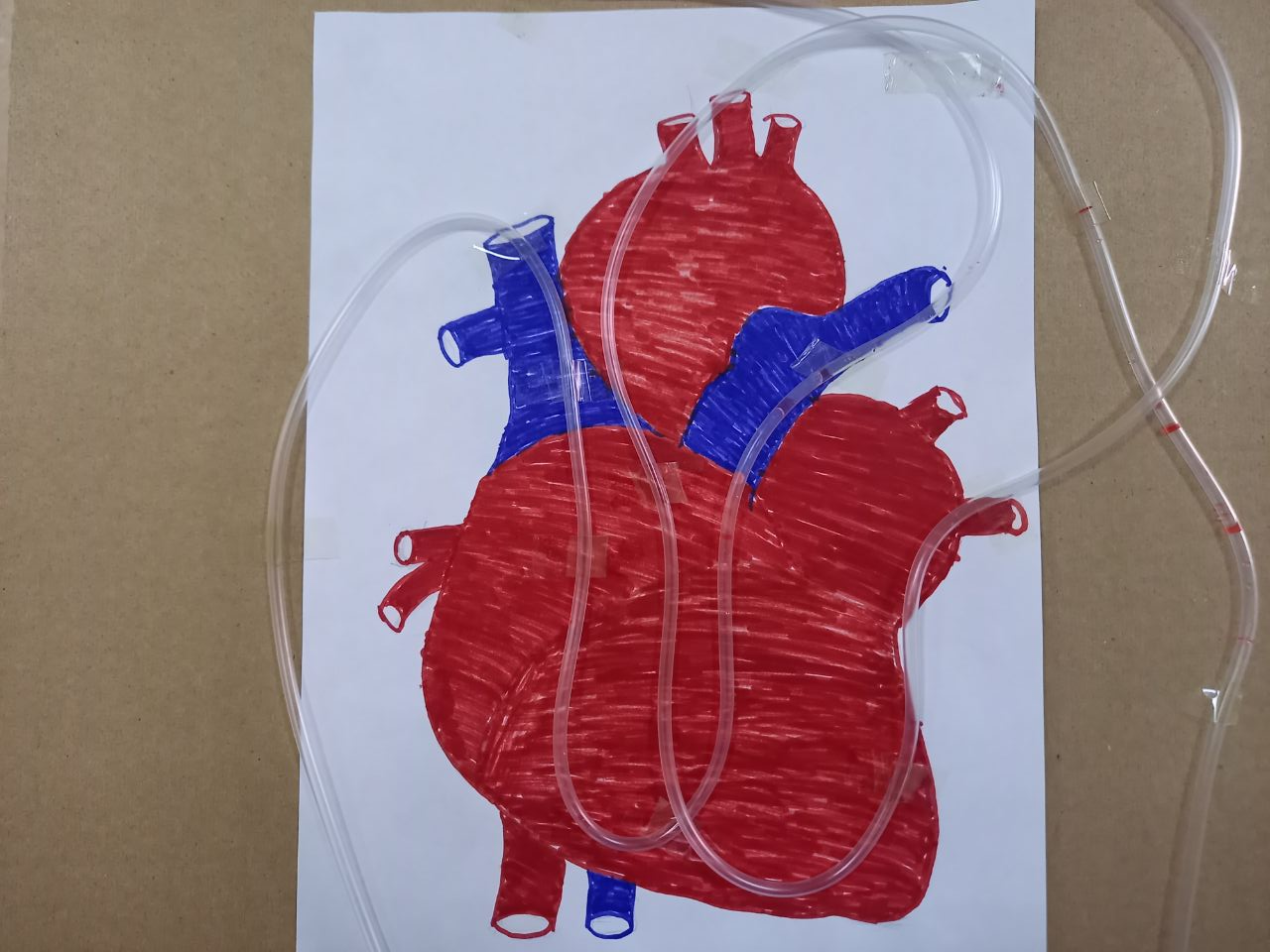
Step 4. Attach to the end of the system the clamp that was previously cut out of the system
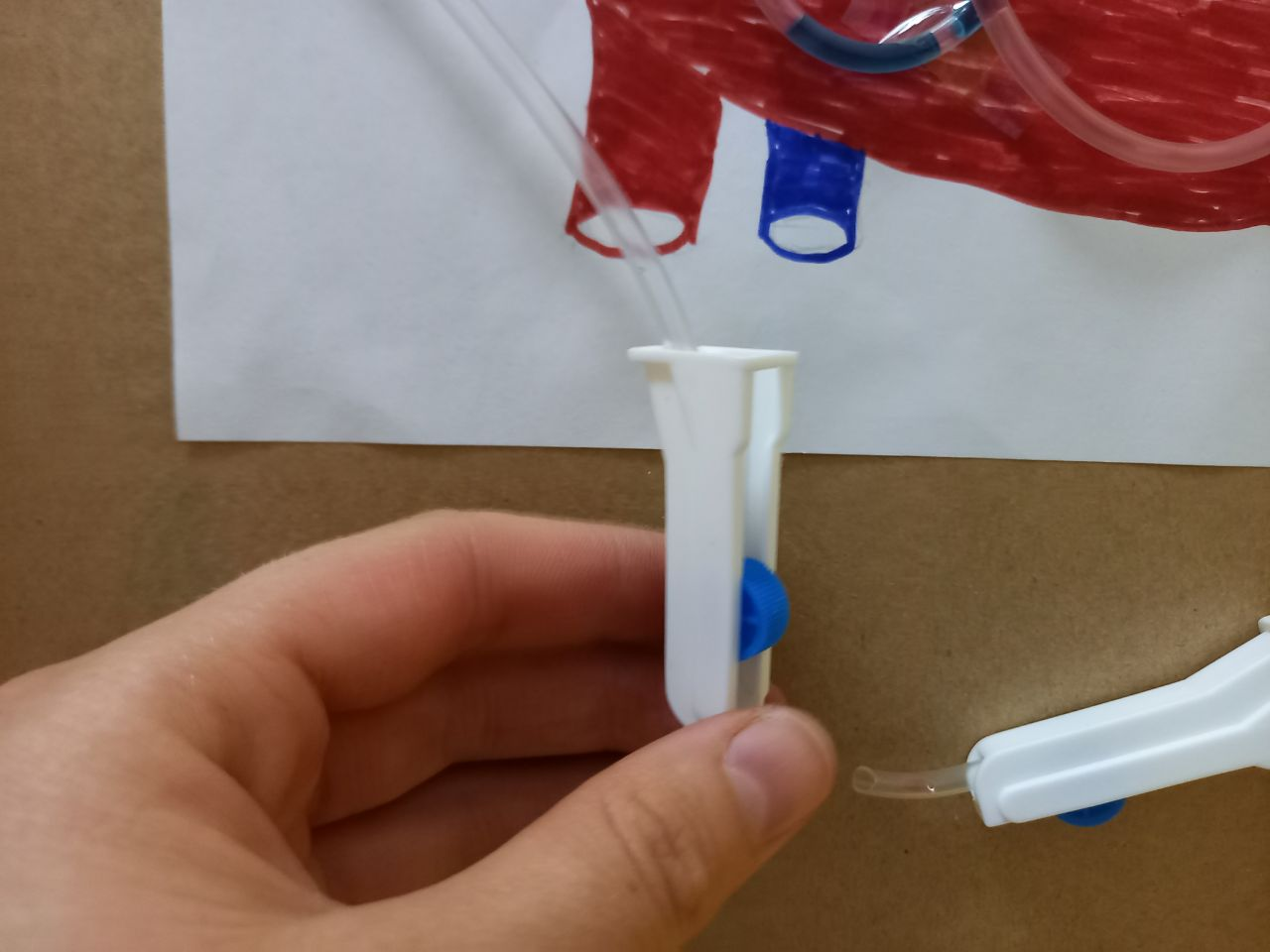
Step 5. Take 2 dyes (red and blue) and add one drop to the glasses of water and stir
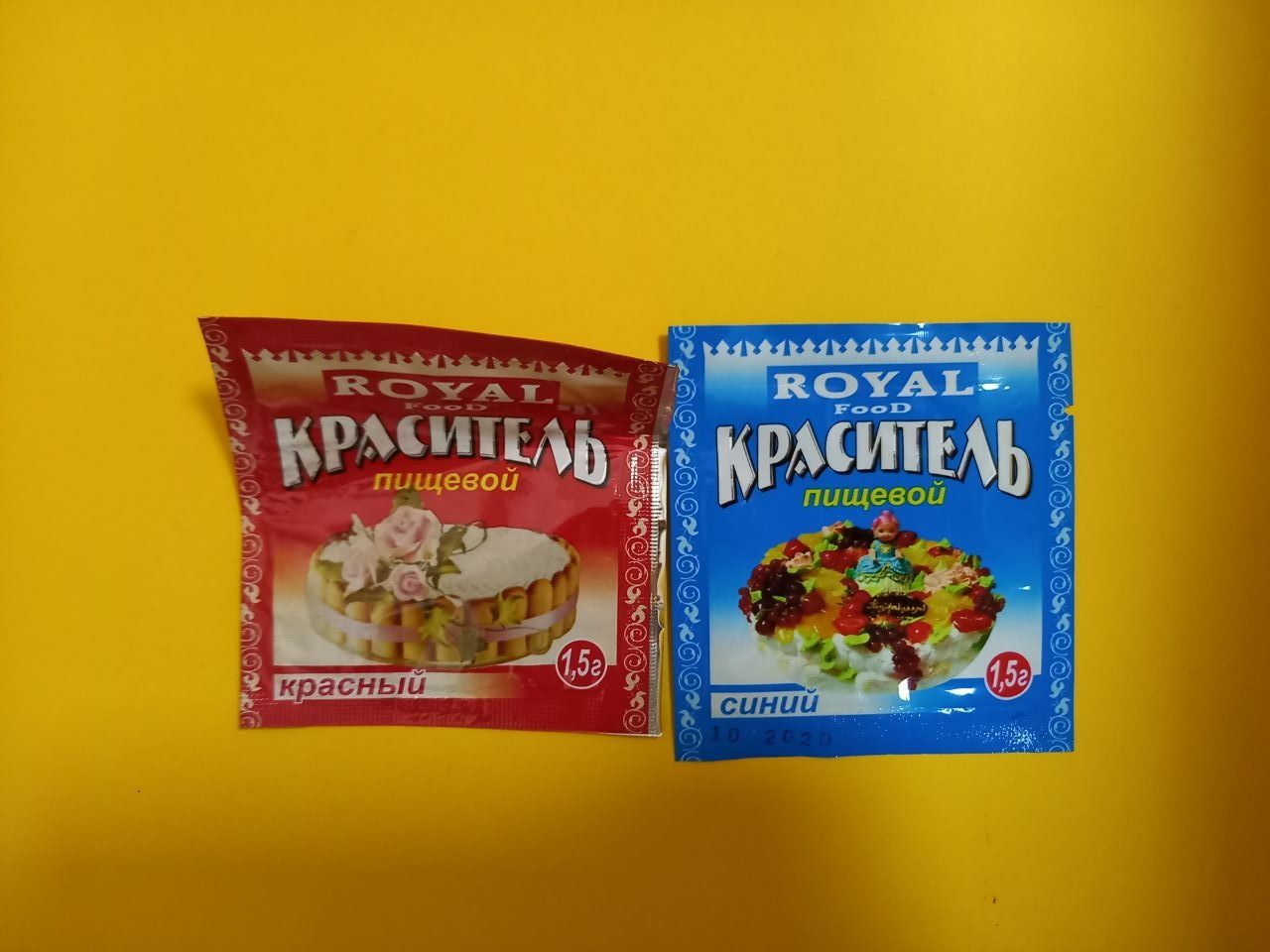
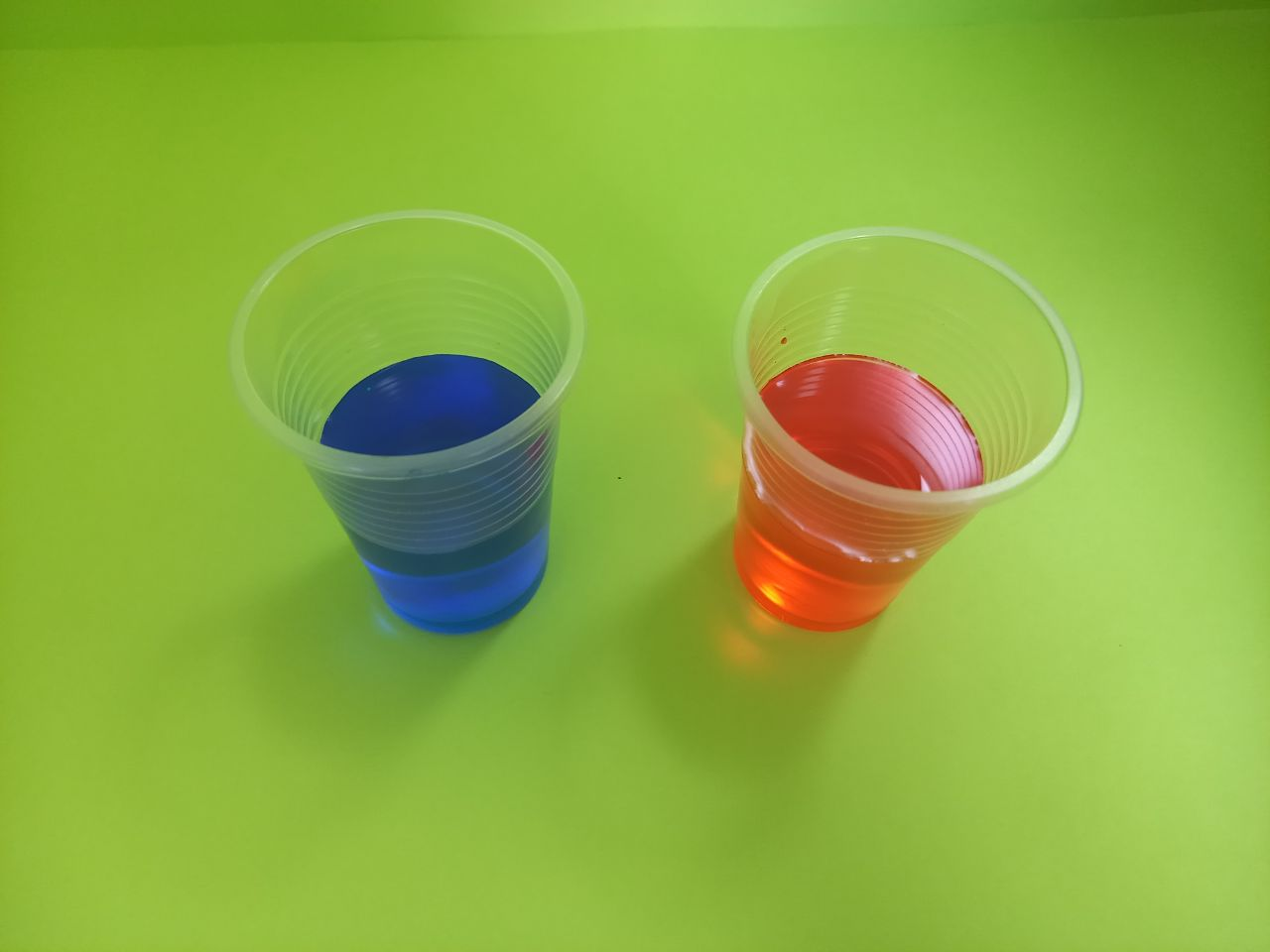
Step 6. Take 2 syringes and fill them with dyes and guide them through the system, and attach the syringe to the cardboard with tape or duct tape
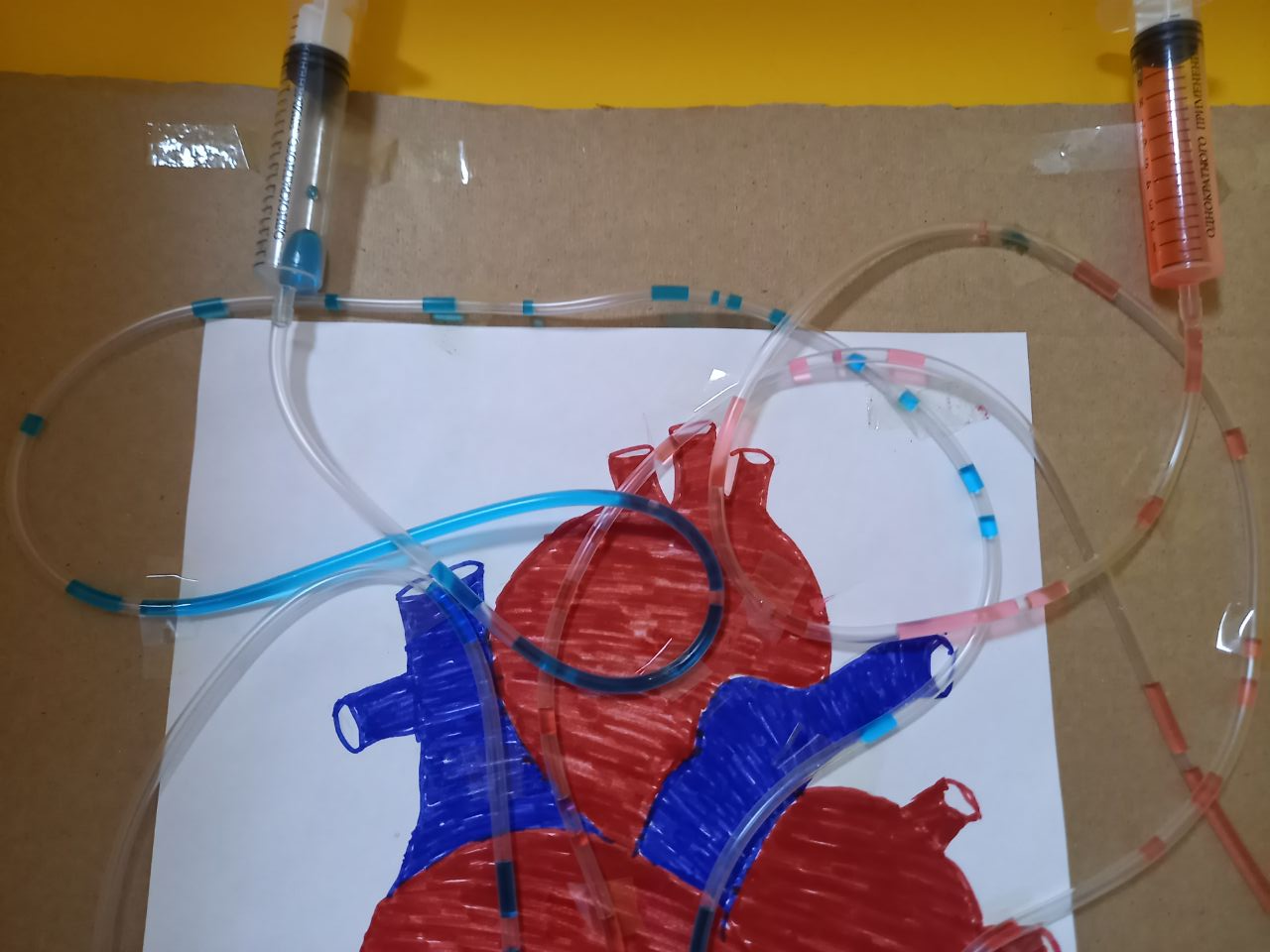
Through this model of the circulatory system, you can learn how circulation occurs in the human body
Conclusion
In this lesson the students have learned how the human circulatory system works. They have also listed the organs of the circulatory system and identified its role in the human body.
On this project, each student is awarded a STEAM title, by category:
– You have independently, investigated the human circulatory system, made a model of the circulatory system уou are a true scientist – biologist!
– You have developed teamwork skills by working in groups. During the practical work you have shown your creativity and cohesion.
Evaluation

