Lesson 1
Topic of laboratory work: Study of skin sensitivity
The purpose of the work:
- To examine skin sensitivity
Teacher’s Guide:
- Tasks are performed in groups of 2-3 people
Expected results:
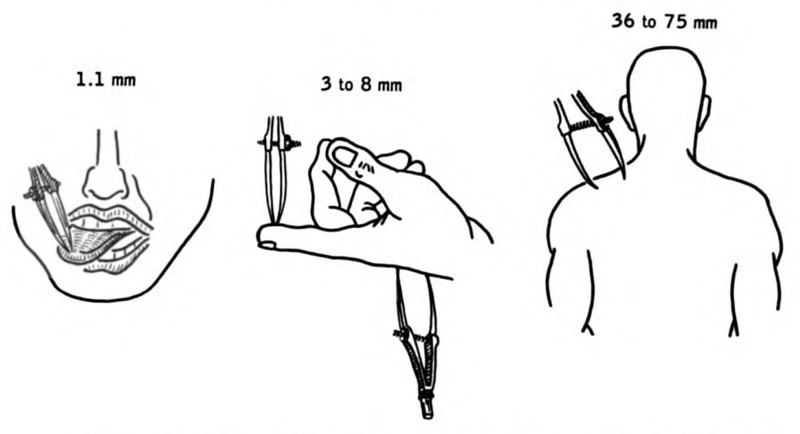
- Students can perform two-point discrimination test
Description
There are many receptors located in the human body that play a key role in our ability to perceive and interpret various stimuli from the environment. Thermoreceptors, mechanoreceptors, and nociceptors are the three main types of receptors responsible for various forms of sensitivity.
Thermoreceptors specialize in responding to temperature changes. They are located in different parts of the body, including the skin, internal organs and the hypothalamus – the part of the brain responsible for regulating body temperature. Thermoreceptors allow us to feel the difference between cold and heat, and also help to maintain a constant temperature of our body.
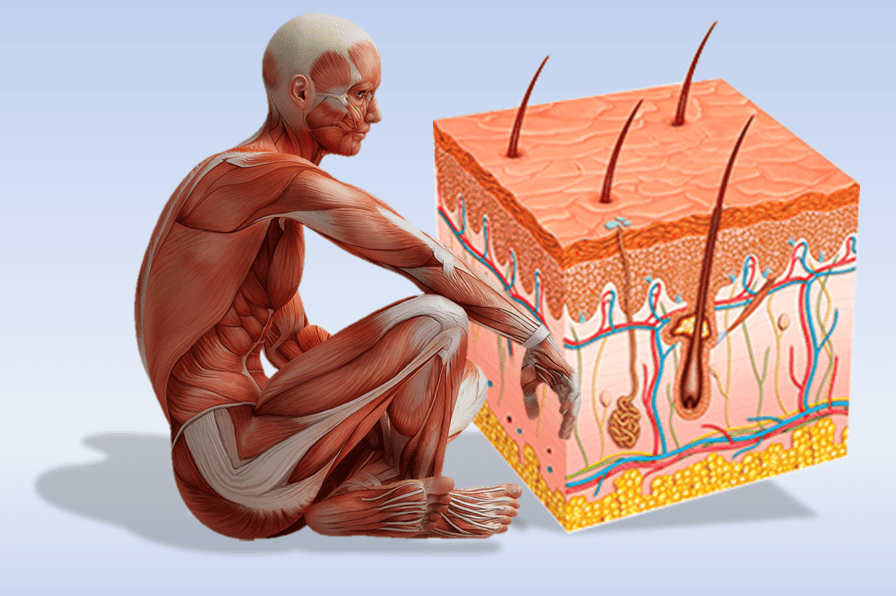
Mechanoreceptors are responsible for responding to mechanical stimuli such as touch, pressure, vibration, and stretching. They are located in different parts of the body, including the skin, muscles, tendons and internal organs. Mechanoreceptors allow us to feel physical contact with the environment, determine the shape and texture of objects, as well as perform tactile functions such as grasping and manipulating objects.
Nociceptors are responsible for the sensation of pain and respond to potentially damaging or irritating stimuli. They are located in various tissues of the body, including the skin, internal organs and joints. Nociceptors transmit information about the possible danger to the brain, which allows us to feel pain and take measures to protect and avoid damage.
List of necessary equipment
- Compass
- Ruler
Practical part
1) Take a compass and measure the distance of 2 mm between its ends.
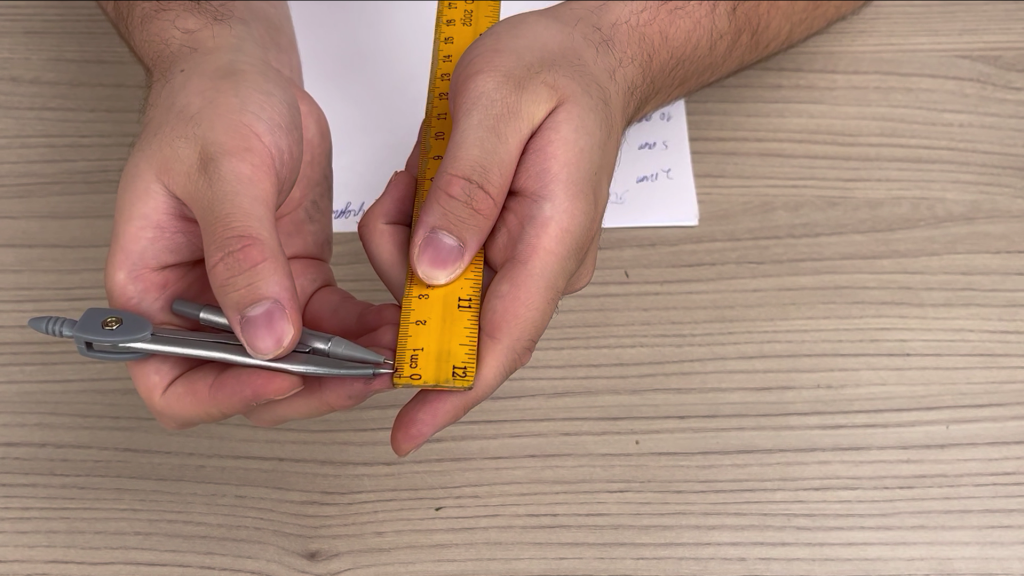
2) Gently touch the tip of your finger of your neighbor and write down how many touches he\she felt, 1 or 2?
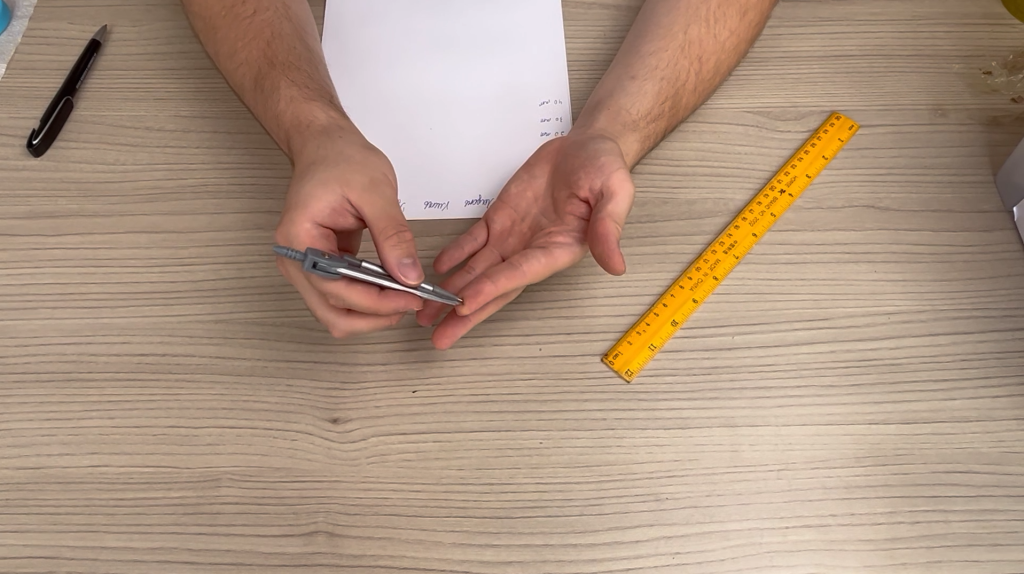
3) Now touch the palm with the compass and also write the number of touches.
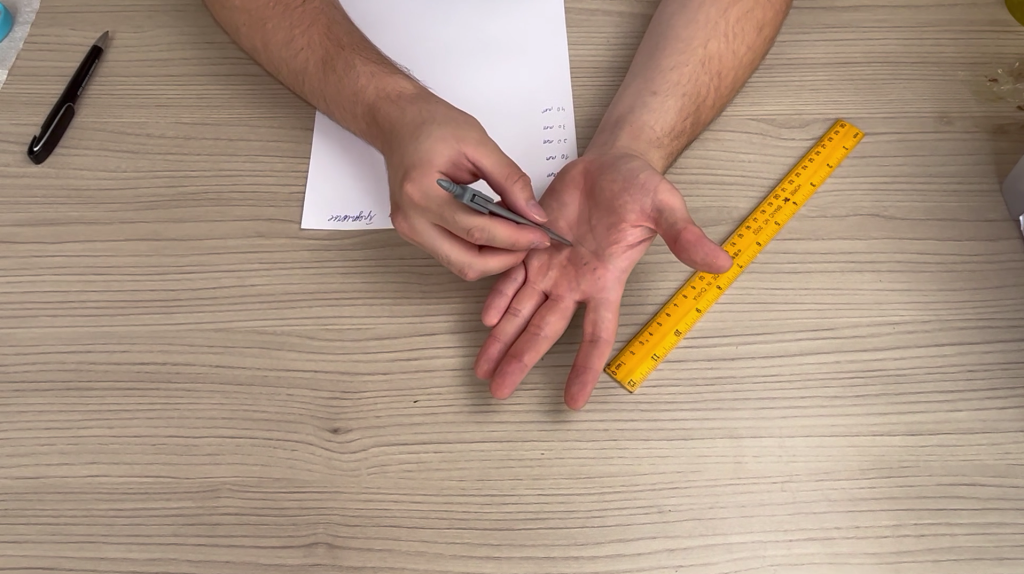
4) Repeat this action for the wrist, hand and forearm. Fill in the table.
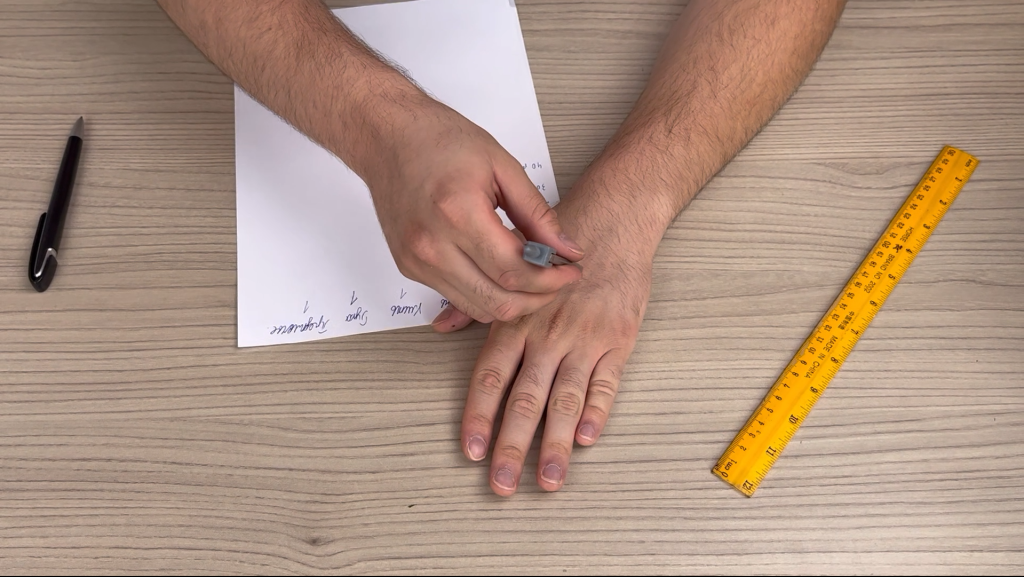
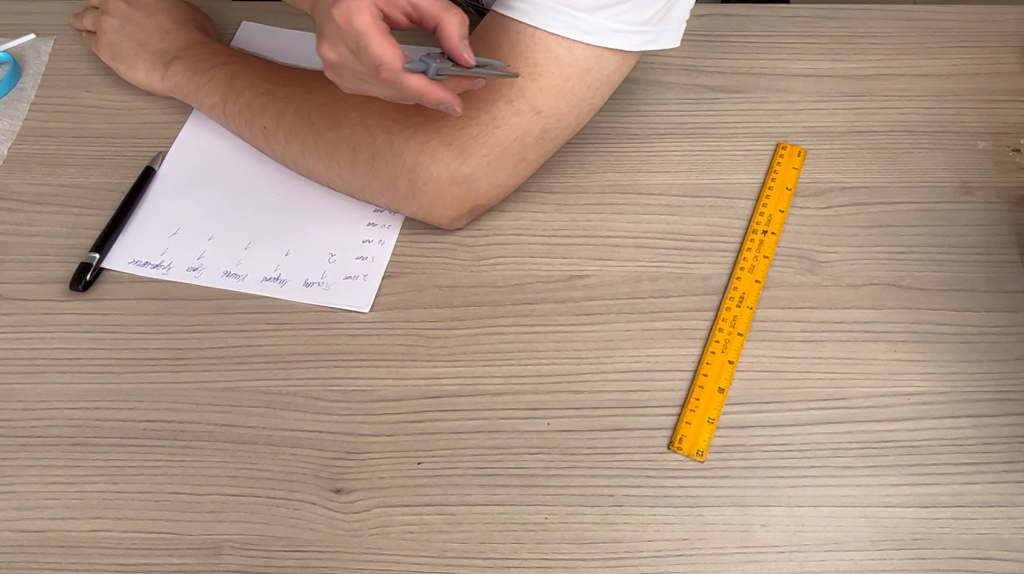
5) Now increase the distance between the tips of the compass to 5 mm and repeat steps 2-4.
6) Repeat steps 2-4, but with a distance of 10, 20, 30 and 40 mm. Fill in the table.
| Количество касаний | |||||
| Finger | Palm | Wrist | Hand | Forearm | |
| 2 mm | |||||
| 5 mm | |||||
| 10 mm | |||||
| 20 mm | |||||
| 30 mm | |||||
| 40 mm | |||||
Requirements for the design of laboratory work:
• Laboratory work must contain items in the following order:
- Laboratory work number
- Topic name
- The purpose of the work
- Hypothesis
- Brief description of the theoretical part
- Equipment
- Steps in the correct sequence
- Add a photo from experiment #1 (if you can’t insert a photo, you can add a picture)
- Give a brief description
- Add a photo from experiment #2 (if you can’t insert a photo, you can add a picture)
- Give a brief description
- Write a brief discussion and explanation of the topic covered
- Write the conclusion of the work
• The workplace must be cleaned and put in order