Week 1
The aim of the project is to
1. to investigate the ability of plants to grow under different conditions (seasons): winter, spring, summer and autumn.
2. To make a model of an apple tree in four seasons.
Teacher’s manual
– For the experimental part of the project, students work in groups of 4-5.
– The students should be introduced to the topics that cover the purpose of the project.
– Before beginning the experimental part, familiarize and provide the students with all the necessary materials.
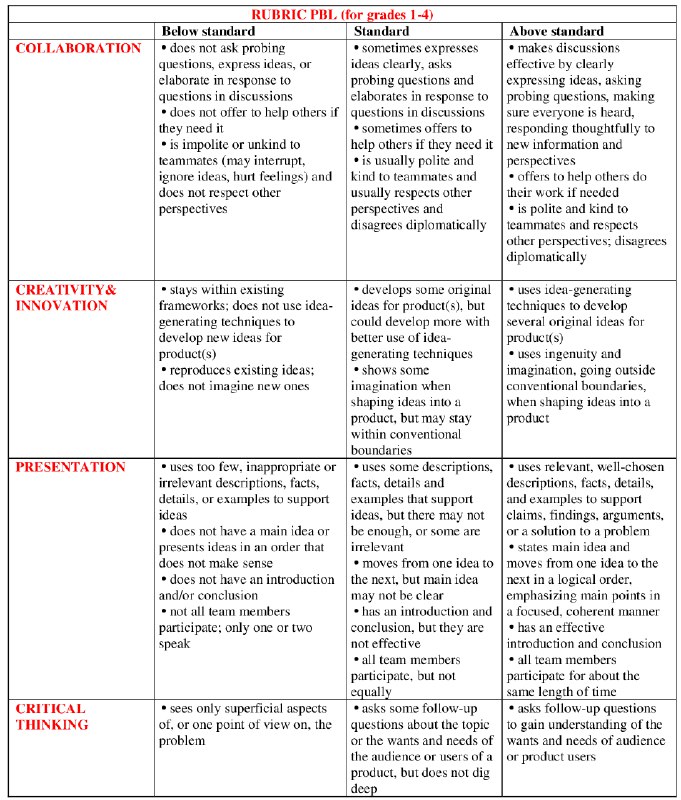
– At the beginning of the lesson explain the PBL (project based learning) rubrics to the students. Skills 4K (critical thinking, collaboration, creativity, anticipation)
Safety in Steam lessons
It is recommended that teachers are fully aware of the safety procedures before the beginning of the lesson. If necessary (if they are using items specified in the PPE guidelines), brief the students. Visit Safety in Steam lessons: Safety
Theoretical part
Look at the picture and describe the changes in each season and fill in the table:
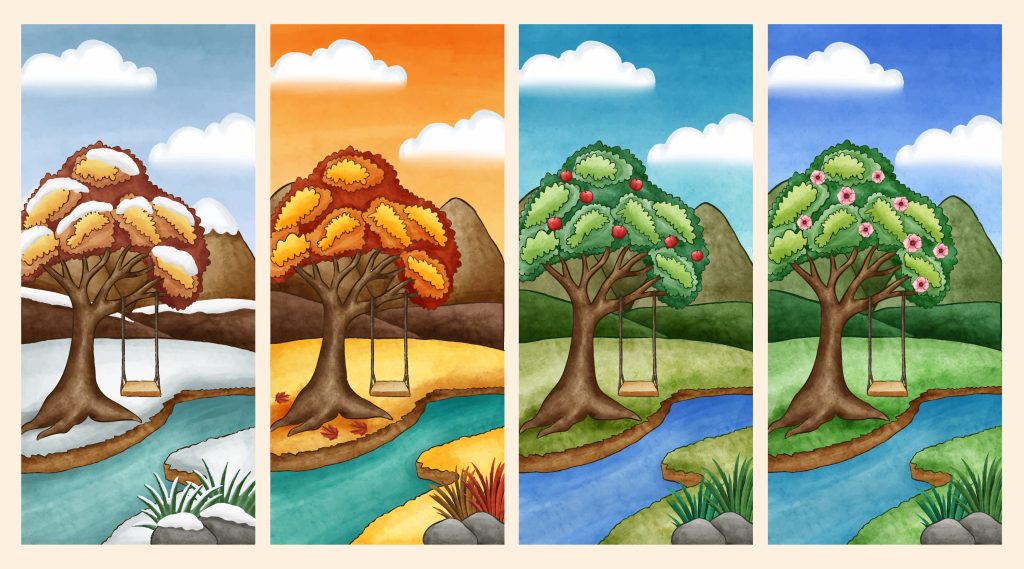
| Plants in winter | Plants in autumn | Plants in summer | Plants in spring |
| … | … | … | … |
Green plants need sunlight and water to form and grow nutrients.
They most often grow in spring and summer or during the wet season. They vary in winter or during the dry season. Many plants store nutrients underground. Their above-ground parts die off and the plant rests until spring.
Deciduous trees such as oaks and beeches drop their leaves in autumn because there is not enough sunlight to provide nutrients to the leaves. In winter they rest and new leaves emerge in spring.
Evergreen trees are always covered with leaves that never fall off.
The leaves of evergreen trees, such as pine and spruce, are long and thin, called needles. Most evergreens grow in the north, where summers are short and cool and winters are harsh. Retaining their leaves, they begin to grow when spring arrives.
Deserts are usually very dry, sometimes with rain, sometimes with very short rainy seasons. The seeds only germinate during the rainy season, producing new sprouts. Plants bloom and produce seeds very quickly.
Practical part
Step 1. Start by printing out the tree drawing – 2 copies (to make 4 trees).
To download the drawing, follow this link
Then prepare all the necessary materials for the project.
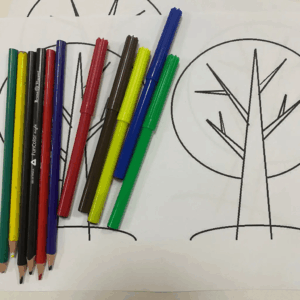
Step 2. Afterwards, using coloured pencils, draw the tree in a step-by-step fashion
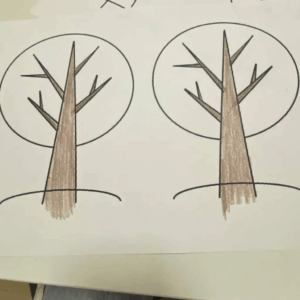
Step 3. Try to depict all the seasons, e.g. snow in winter, yellow leaves in autumn.
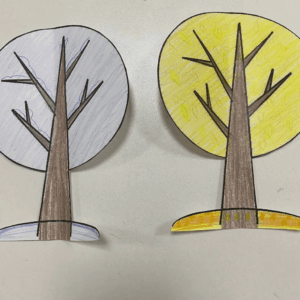
Step 4. And in spring – just everything is in full bloom, and in summer – the tree bears its fruit
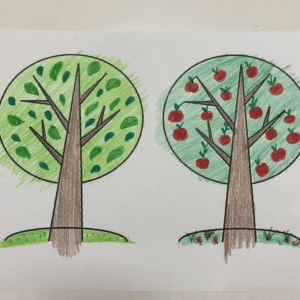
Step 5. Then carefully cut out the trees
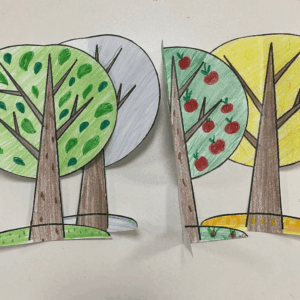
Step 6. Then fold each paper in half.
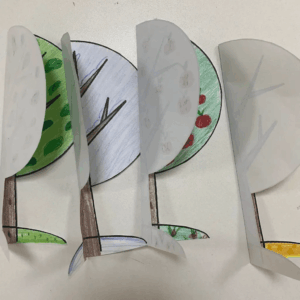
Step 7. Using paper glue, glue one side at a time to the other.
For example, connect one side of the summer – with one part of the spring and then to the second part of the spring glue only one part of the winter.
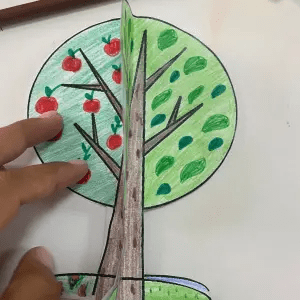
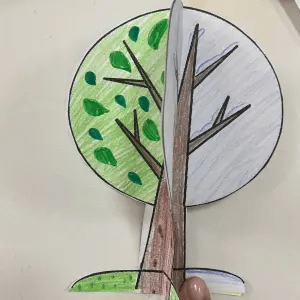
Step 8. Next, combine the remainder of winter with half of autumn, and then to summer.
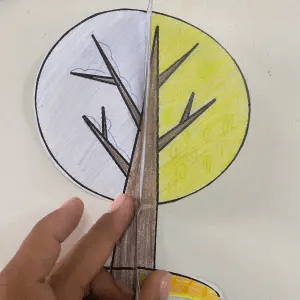
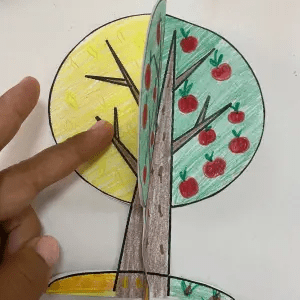
Step 9. You should get a construction with four sides like this.
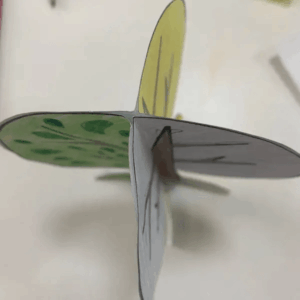
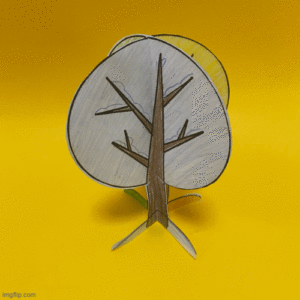
Congratulations, your project is ready!
You have depicted the seasonal changes in plants!
Conclusion
In this way the students have learnt what seasonal changes in plants are and what phenomena occur in each season. The students then drew the seasonal changes of the apple tree on paper.
On this project, each pupil is awarded a STEAM title, in several categories:

Congratulations, you are a true – botany expert as you have explored the world of plants!
Congratulations, you are a young – designer artist! We are sure that in the future you will surprise the world with your masterpieces!
Evaluation