Week 1
Objectives
- learn how to collect and store rainwater
- learn about ways to use rainwater for household purposes
- learn to plan and build engineering facilities
- learn to work collaboratively and work in groups
Goals
Students should develop an understanding of:
- designing rainwater harvesting systems
- use of rainwater for household purposes
- planning and construction of engineering facilities
- communication skills to collaborate with the teacher and other students
- at least one type of rainwater harvesting system
Interdisciplinary connection
- Chemistry (familiarity with the structure of the road that absorbs water)
- Physics (working with a water pump)
Introduction
Transport networks are important for the economic activity of any country. During extreme weather events, transport infrastructure can be damaged, endangering people’s safety and causing significant disruption and associated economic and social impacts. Floods, especially as a result of heavy rainfall, are the main cause of disruption to the transport sector due to weather conditions. One way to solve this problem is to use roads with a special structure capable of passing water through them. [1].
The smart road is a porous material used as a pavement for roads, providing instant water drainage from the road surface. The top surface of the concrete of such roads consists of a layer of pebbles with tiny holes in between. These holes allow water to pass through and make the layer porous. Beneath it is a series of granular layers containing pebbles and stones of various sizes. This layer either allows water to soak into the soil below or a drainage system is built under the concrete to drain water. Drainage water can be used for household needs [2].
Resources used:
[1] https://www.sciencedirect.com/science/article/pii/S1361920916308367
[2] http://kinooze.com/roads-that-absorb-water-like-sponge/
So, let’s create a mini-lab and independently develop a road surface that absorbs water.
To begin with, it is necessary to study what materials are used to develop a smart coating, such as:
1. Crushed stone or gravel (the smaller the size, the better it conducts moisture).
2. Building cement.
Terminology
Crushed stone and gravel are bulk materials consisting of grains (pieces of rock) of different sizes. They are of natural origin. The difference between them is that gravel (octane rocks) is formed as a result of independent destruction of the rock, and crushed stone – (non-octane inorganic rocks) is formed as a result of mechanical destruction of the rock. Depending on the prevailing size of the fragments, crushed stone and gravel are divided into large (5-10 mm), medium (2.5-5 mm), and small (1-2.5 mm). Fine-grained material may be present in the gaps between gravel clasts.
Chemical composition of gravel:
| Mineral composition | Name | Content,% | |
| 1 | SiO2 | Silicon oxide, or silica | 48-65% |
| 2 | Al2O3 | Aluminum oxide, or alumina | 15-18% |
| 3 | CaO | Calcium oxide, or quicklime, or kirabit | 3.5-10.5% |
| 4 | MgO | Magnesium oxide, or burnt magnesia | 2.1-7.2% |
| 5 | SO3 | Sulfur oxide, or sulfuric anhydride | 0.38-1.01% |
| 6 | Fe2O3 | Iron oxide, or hematite | 7.0-12.5% |
Chemical composition of gravel: Given the different mineralogical and petrographic compositions of rocks, gravel grains may contain mineral granites, quartz, feldspars, marble.
Cement is an artificial inorganic binder used as one of the main building materials. When interacting with water, it forms a plastic mass, which then hardens and turns into a stone-like body. Mainly used for making concrete and mortar.
Cement is obtained by fine grinding of clinker and gypsum. Clinker is a product of uniform firing to sintering a homogeneous raw material mixture consisting of limestone and clay of a certain composition, ensuring the predominance of calcium silicates.
When crushing clinker, additives are introduced: СaSO4·2H2O gypsum to control the setting time, up to 15% active mineral additives (pyrite cinders, flue dust, bauxites, sands) to improve some properties and reduce the cost of cement.
Chemical composition of cement:
| Mineral composition | Name | Content,% | |
| 1 | СаО/CaS | Calcium oxide/sulfur sulfide | 67% |
| 2 | SiO2 | Silicon oxide, or silica | 22% |
| 3 | Al2O3 | Aluminum oxide, or alumina | 5% |
| 4 | Fe2O3 | Iron oxide, or hematite | 3% |
| 5 | MgO/P2O5/Cr2О3 | oxides of magnesium, phosphorus and chromium | 3% |
Practical part
Step 1. Put on disposable rubber gloves. Prepare the work area and all necessary materials. !
!!! The more gravel you add, the better the water will pass through.
– Crushed stone or gravel 1 cup – 250 gr
– Cement 1/3 cup – 80 gr
– Water – 1/3 cup – 100 ml
– Container for solution – 1 pc.
– Pre-decorated dishes for the form – 1 pc.
– Film – 30 * 50 mm in size
– Skewer (thick) / spoon – 1 pc
– Disposable rubber gloves
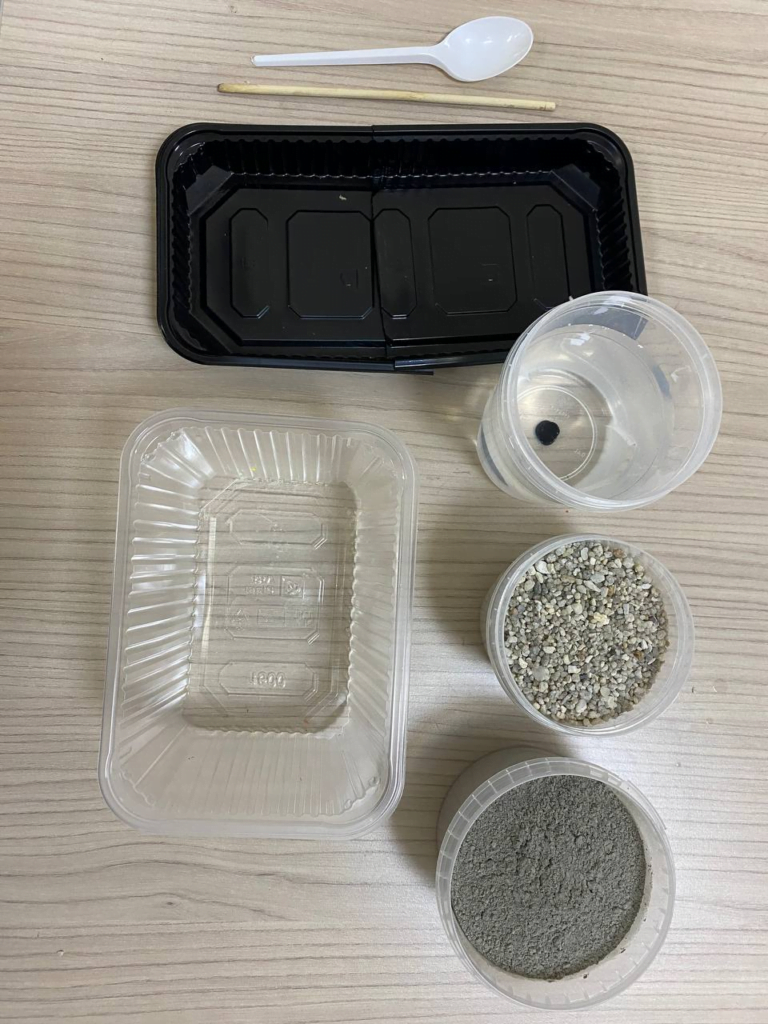
Step 2. Pour 1 cup of crushed stone (gravel) and 1/3 cup of cement into the dishes. Cement should be three times less than crushed stone. Then pour 1/3 cup or 100 ml of water.
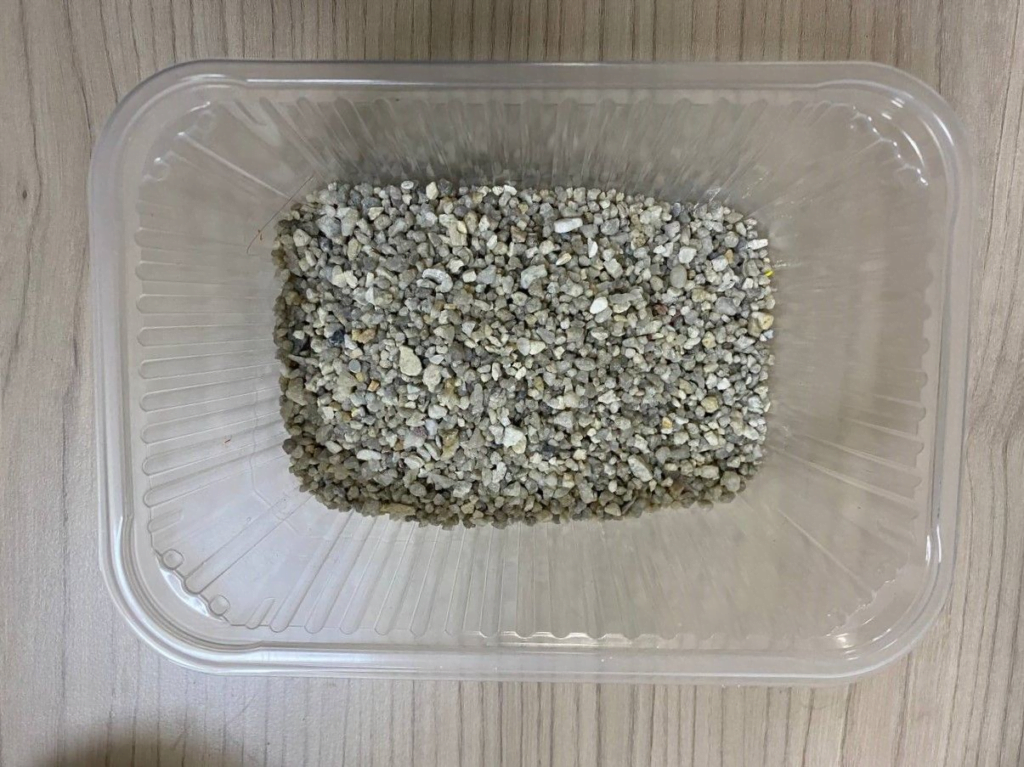
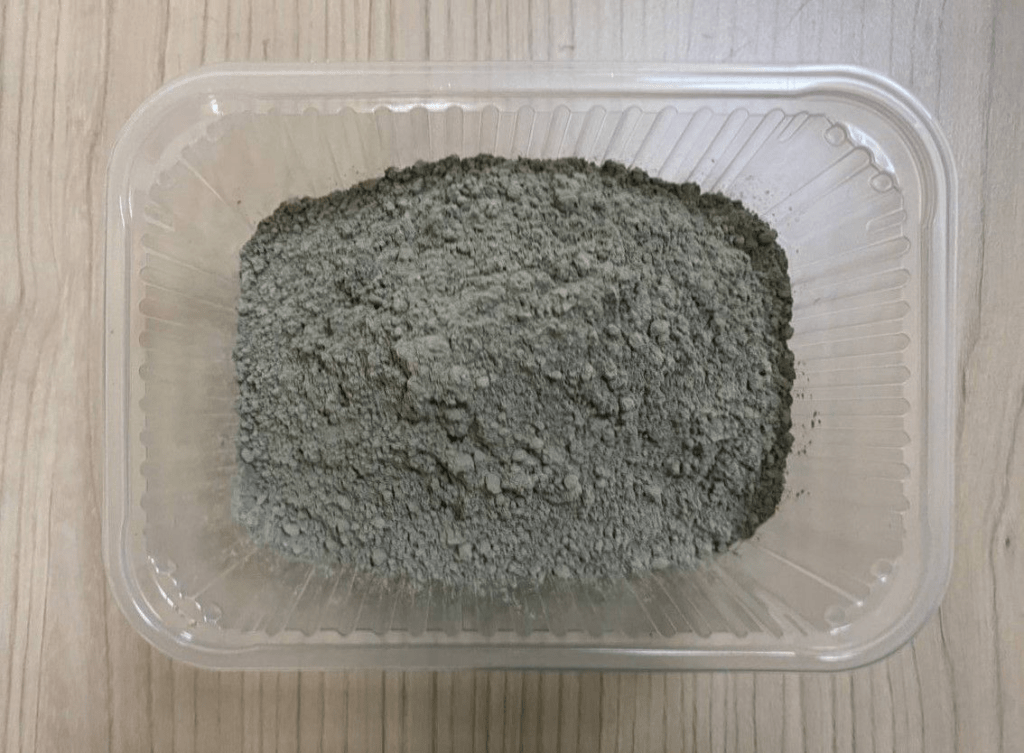
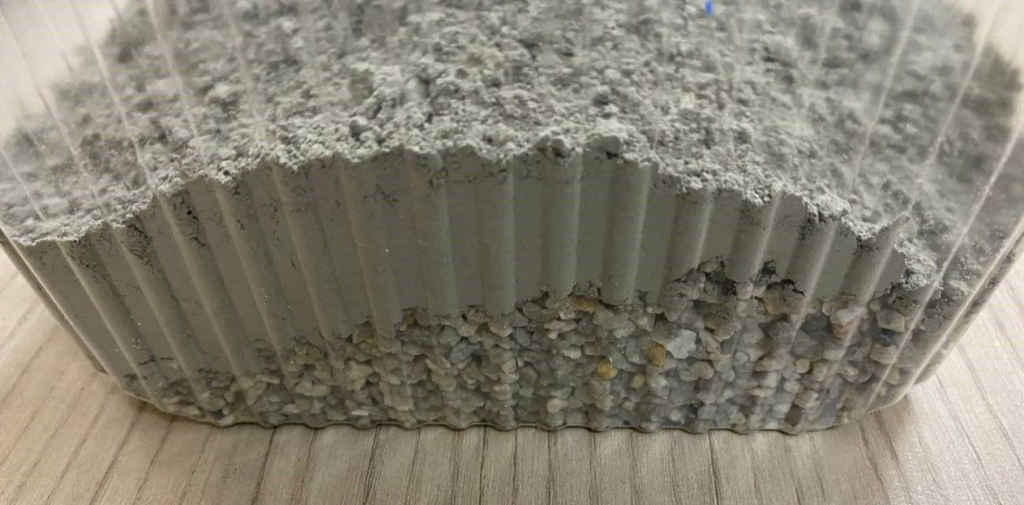
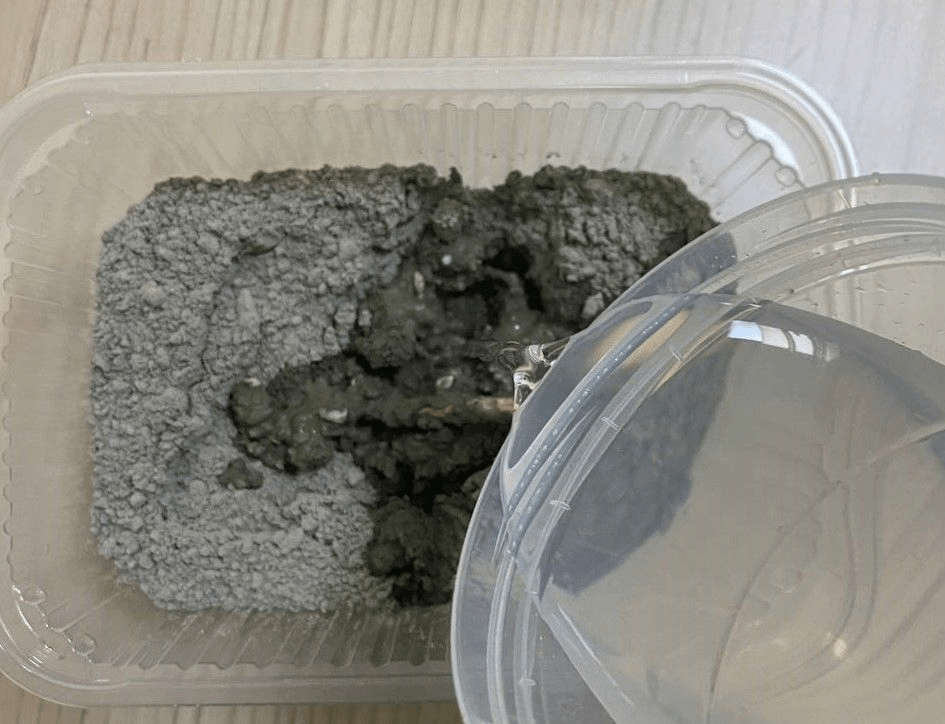
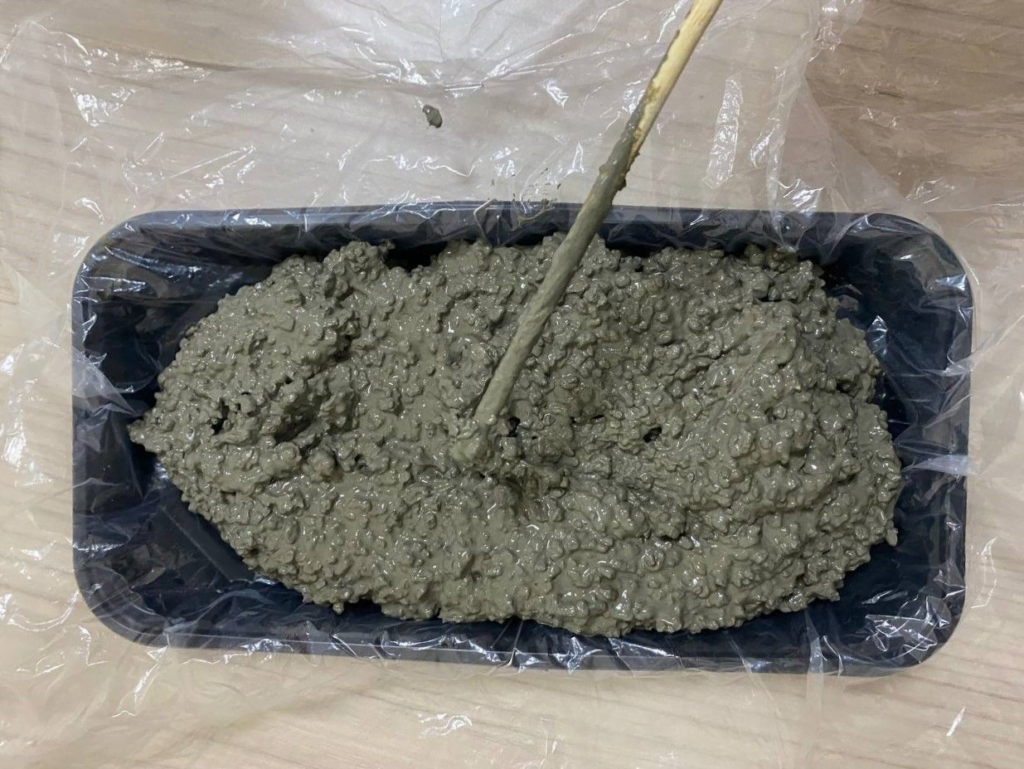
Step 3. Mix everything thoroughly. The resulting mixture should not be liquid or too dense.
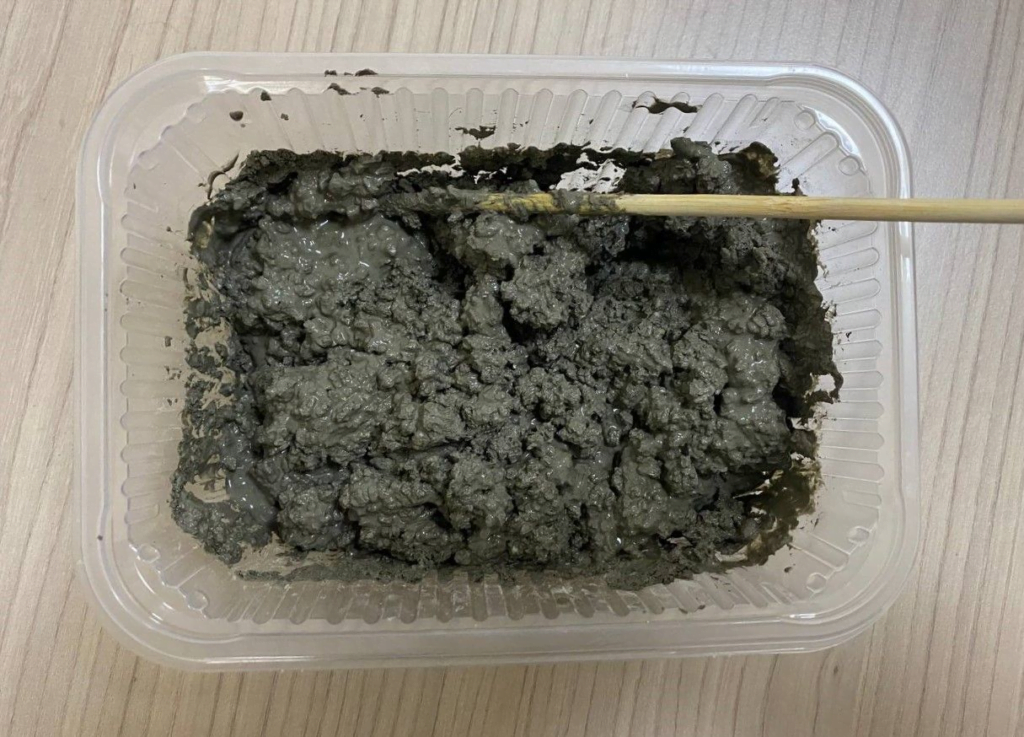
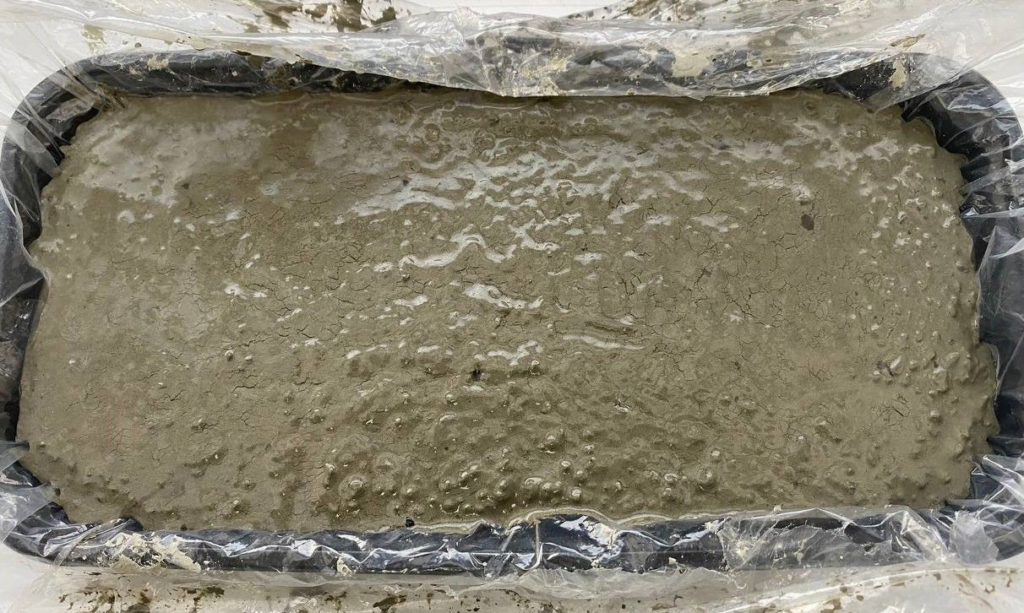
Step 4. You should get a mixture as shown in the picture.
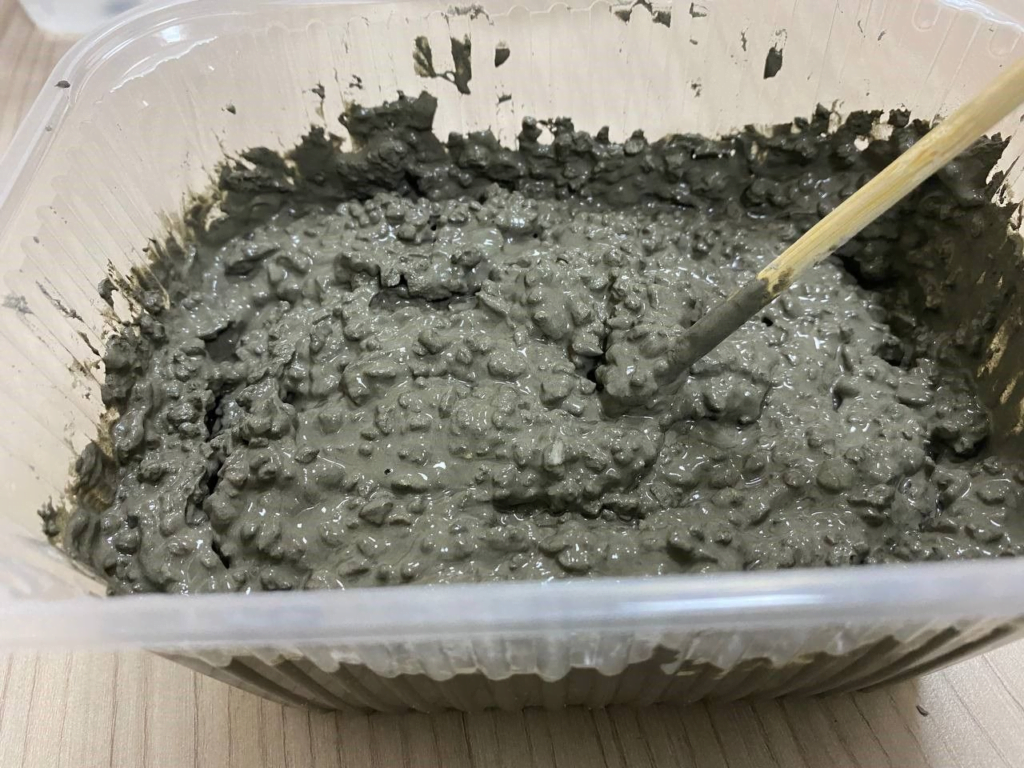
Step 5. Prepare disposable tableware as a form for paving the road. Lay down the film
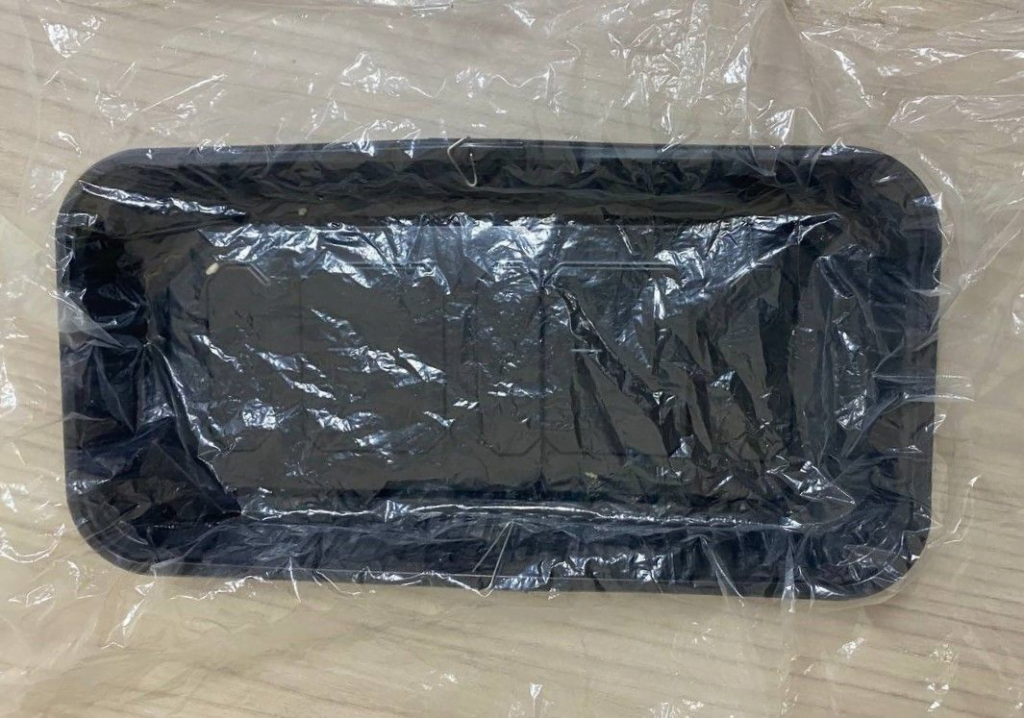
Step 6. Pour the finished mixture into the mold and tamp it down with your hands to get a smooth flat surface.
Step 7. Leave for 2-3 days until the cement has completely hardened. You should get porous moisture-absorbing asphalt. Asphalt passes water due to crushed stone (gravel), which forms porosity for this road.