
Week 1
Goals:
- Develop logical thinking
- Develop the ability to divide objects into groups and sets
Read the safety instructions before you start [ safety insructions ].
Teacher’s Guide:
Tell the students about the fruits and vegetables that grow on the tree and underground (from the ground). Give examples using the pictures shown below in the material. After each example, ask students to provide their own examples.
Introduction
A fruit is a juicy edible fruit of a tree or shrub. A variety of fruits are also some berries.
Vegetables is a culinary term for the edible part (such as a fruit or tuber) of certain plants, excluding fruits, cereals, mushrooms, nuts, and edible algae [3].
Plants that grow on a tree
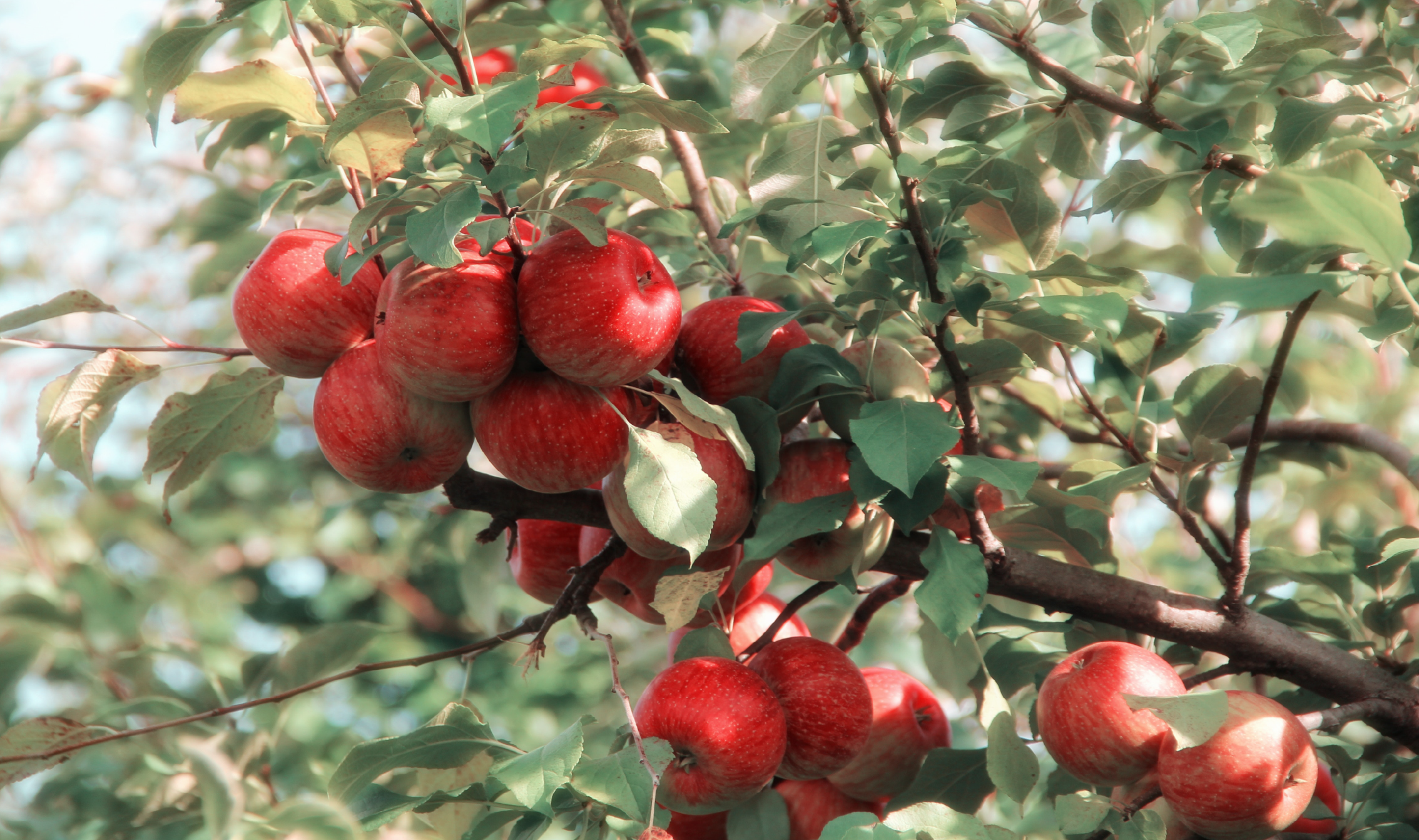
Many fruits grow on the trees. These are apples, pears, oranges, tangerines, quince, lemons, pomegranates and many others.
An apple is a fruit of an apple tree, which is eaten fresh, serves as a raw material in cooking and for making drinks. It is believed that the birthplace of the apple tree is Central Asia. To date, there are many varieties of this type of apple tree, growing in various climatic conditions.
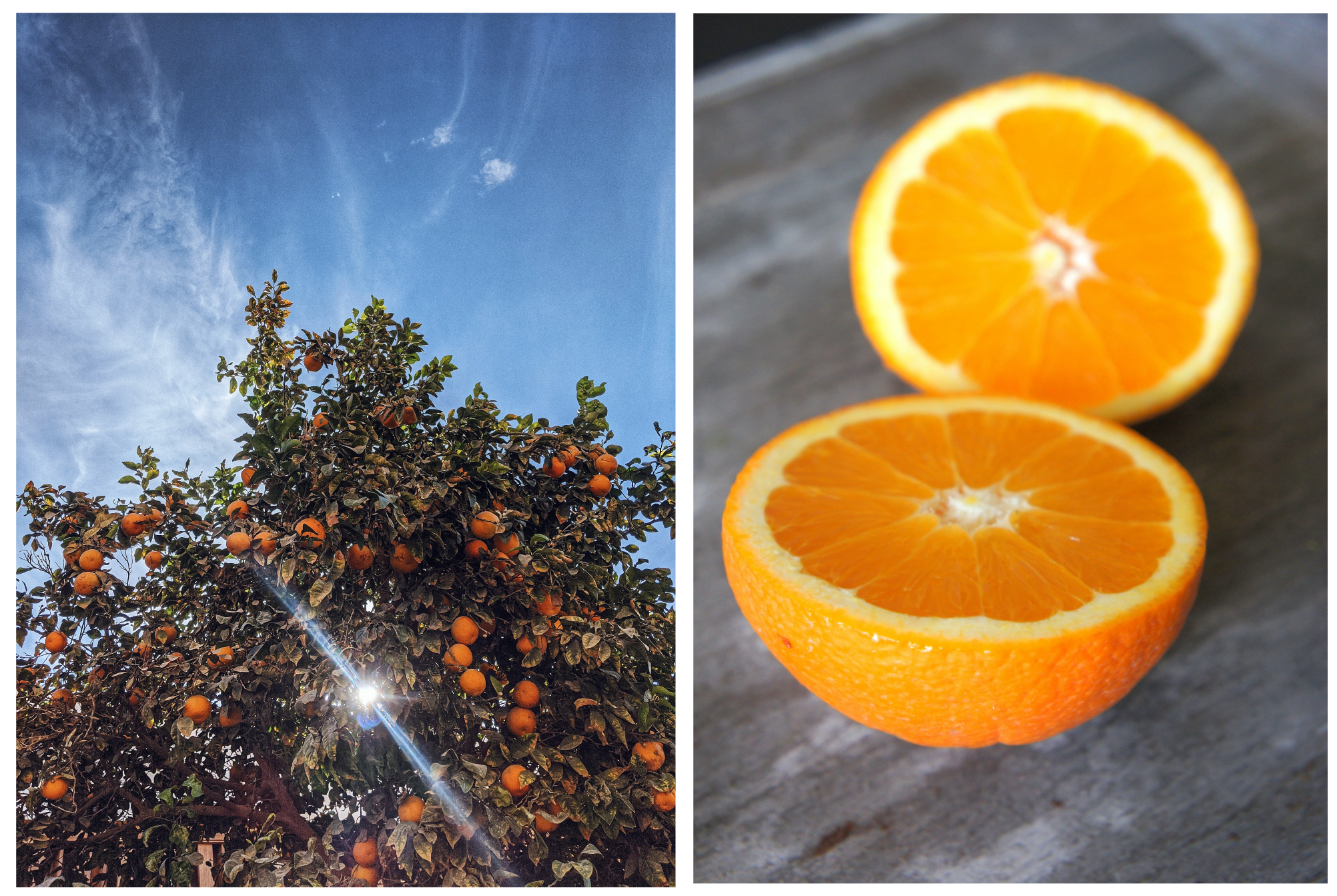
An orange is the fruit of the orange tree, native to China. A fairly tall tree, belongs to the subfamily Citrus of the Rutaceae family.
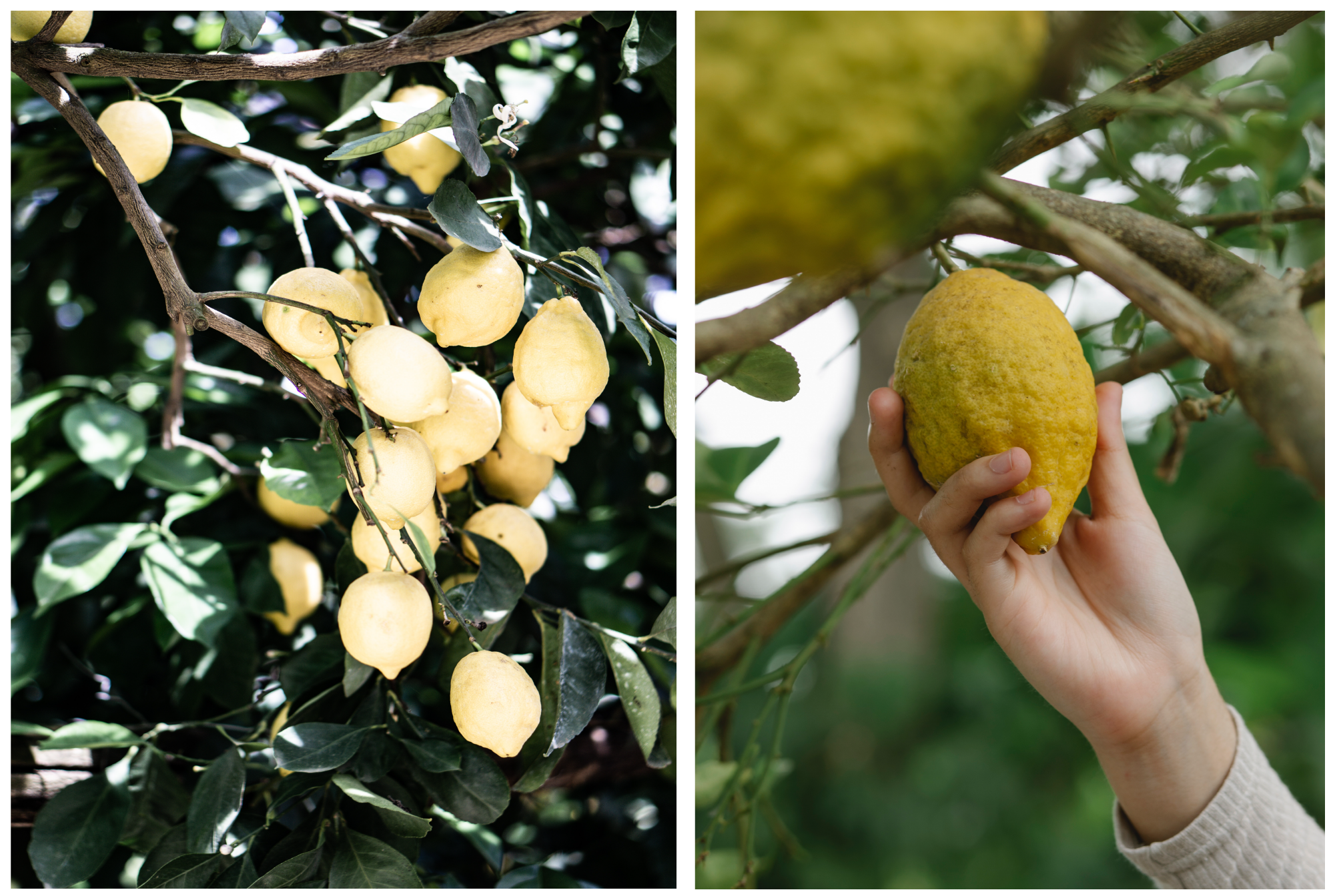
A lemon is a hybrid species of trees from the genus Citrus. Homeland – India, China and the Pacific tropical islands. Lemon is a small fruit tree up to 5–8 m high, with a spreading or pyramidal crown [1].
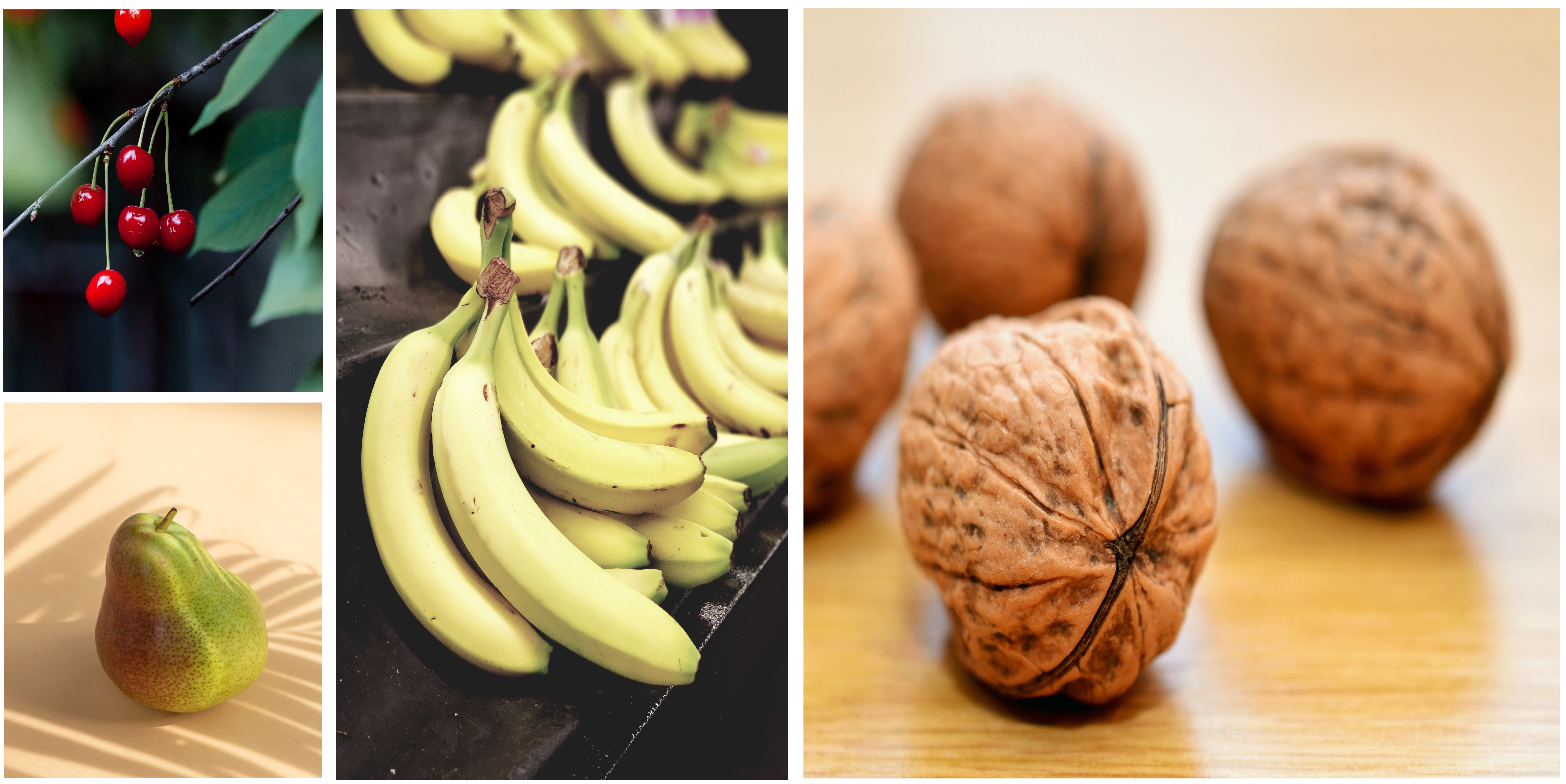
Also examples of plants growing on a tree are: cherry, pear, banana and walnuts.
What fruits and vegetables grow underground (from the ground)?
Root vegetables such as carrots and beets, and tubers – potatoes – grow underground. Food grown underground can be a good source of vitamins and minerals.
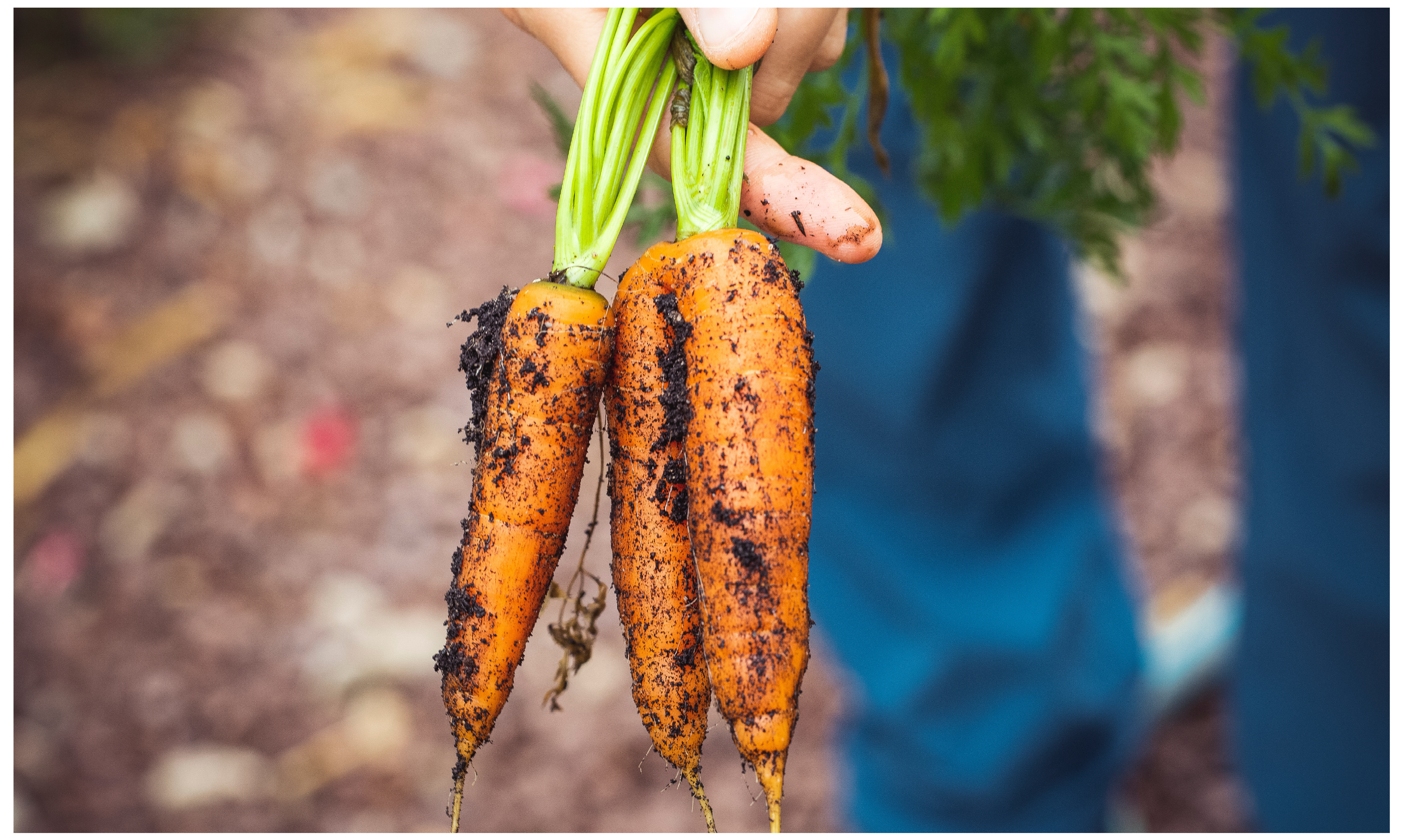
Carrots are usually orange, but sometimes red, white or even purple, the carrot is a long, cone-shaped root. Eat raw, carrots are crunchy, but once cooked, you can use them to make moist carrot cake.
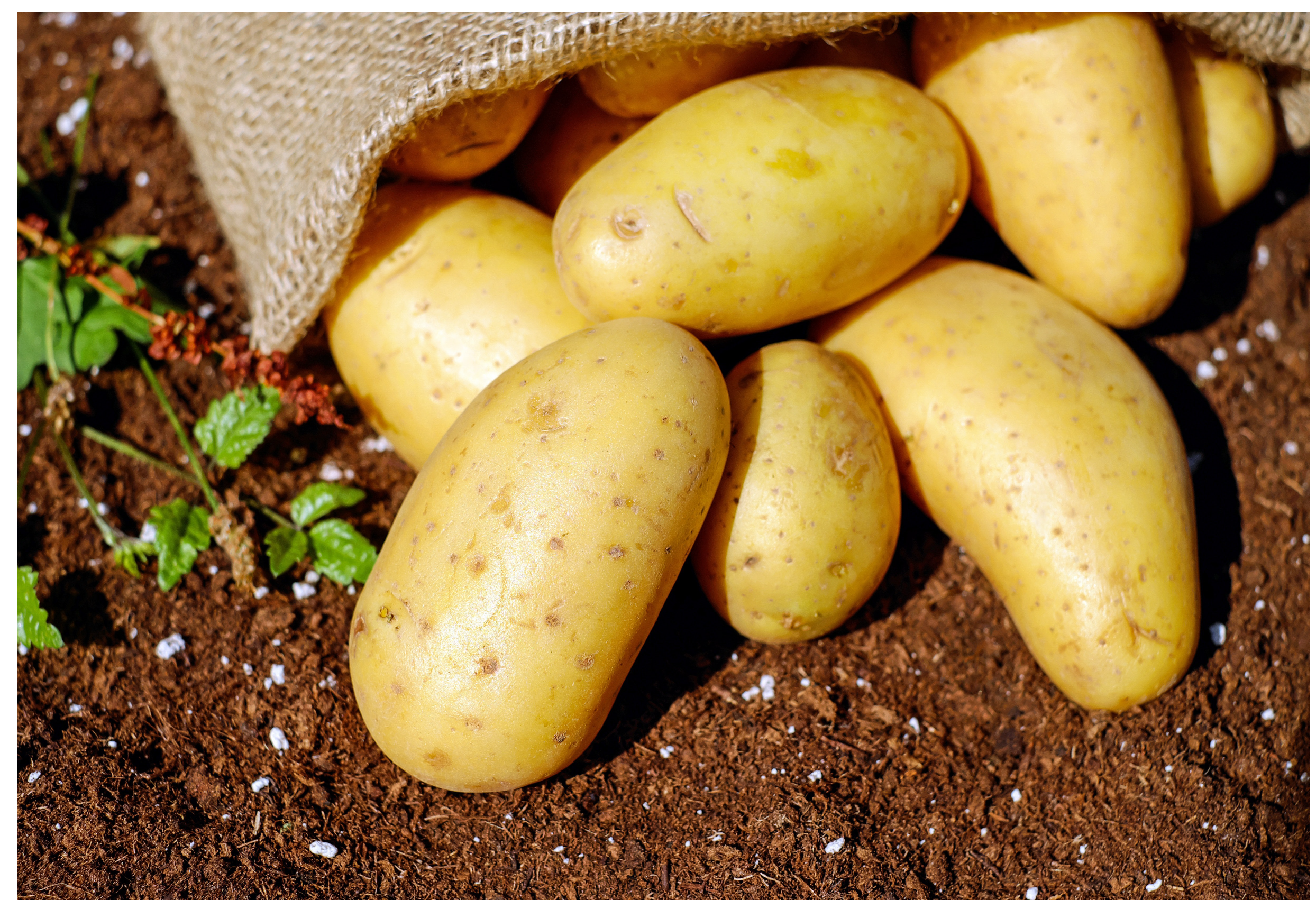
Potatoes can be baked, boiled, mashed, or made into bread.
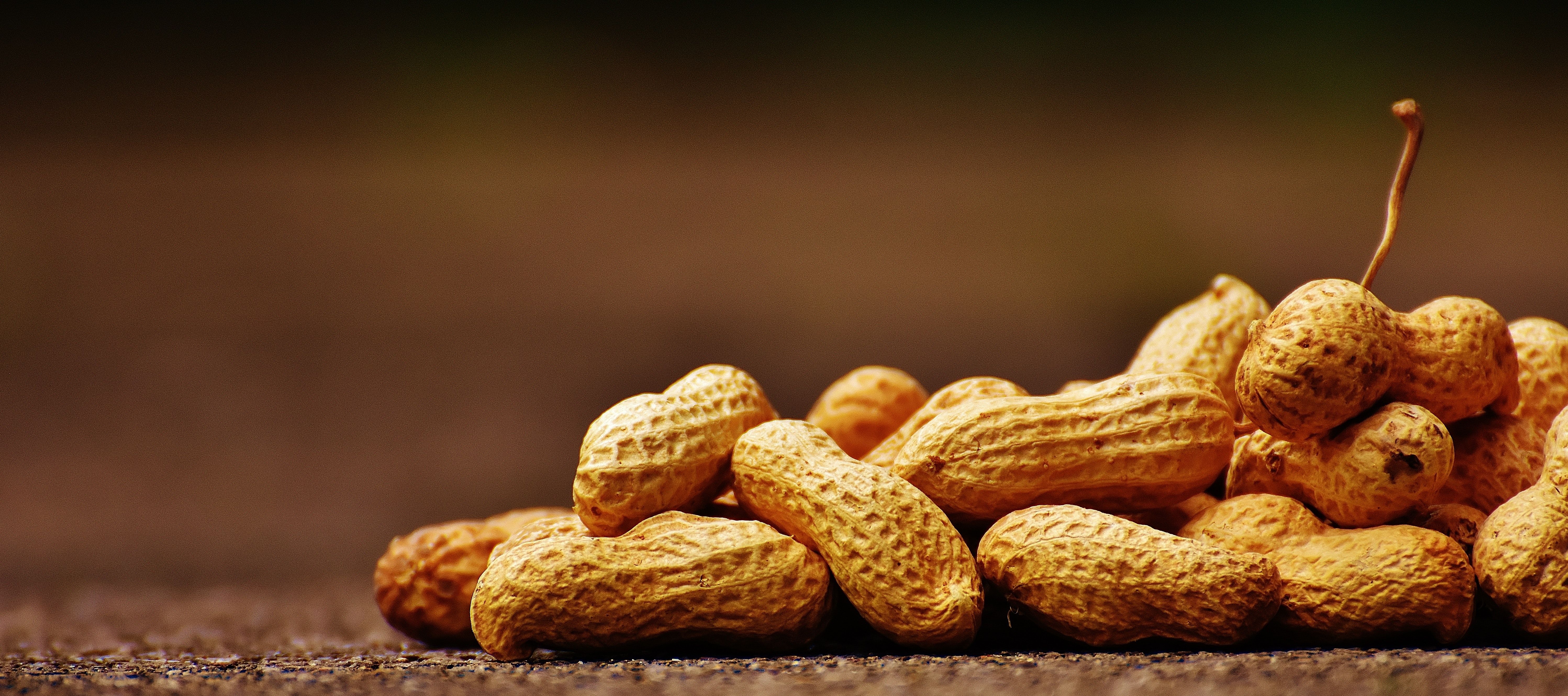
Classified as fruits, peanuts grow underground. Peanuts grow in shells, each containing one or two nuts [2].
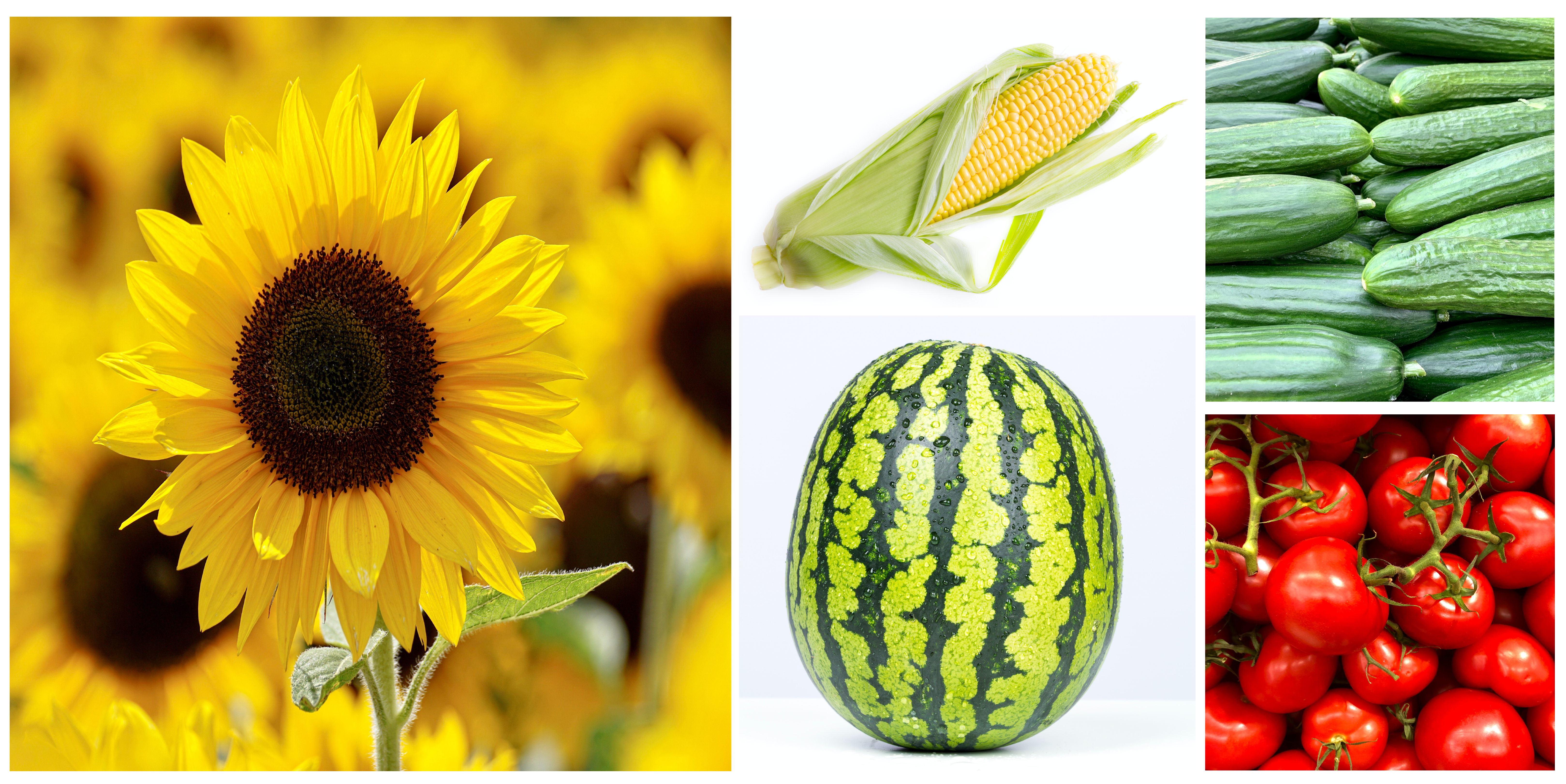
Other examples of plants growing underground (out of the ground) are sunflowers, corn, watermelon, cucumbers and tomatoes.
References:
[1] https://ppt4web.ru/tekhnologija/frukty–kotorye–rastut–na–derevjakh.html
[2] https://ru.mosg-portal.com/fruits-vegetables-grow-under-ground-6534048-5804
Practical part
The practical part aims to teach students to divide plants into two groups:
- plants that grow on a tree
- plants that grow underground
Color the first sheet of A4 brown with a colored pencil.

Take the second sheet of A4 and draw the center line using a simple pencil:
- Measure the sheet width
- Divide the width by 2 and draw a center line

- Put the compass on the rulers and open it to 9.5 cm
- Draw a circle at the top of the sheet using the resulting compass solution (put one end of the compass on the center line).

At the bottom of the circle, step back from the center line 4 cm to the right and left.

- Color the circle green
- Paint the bottom of the piece brown as shown.
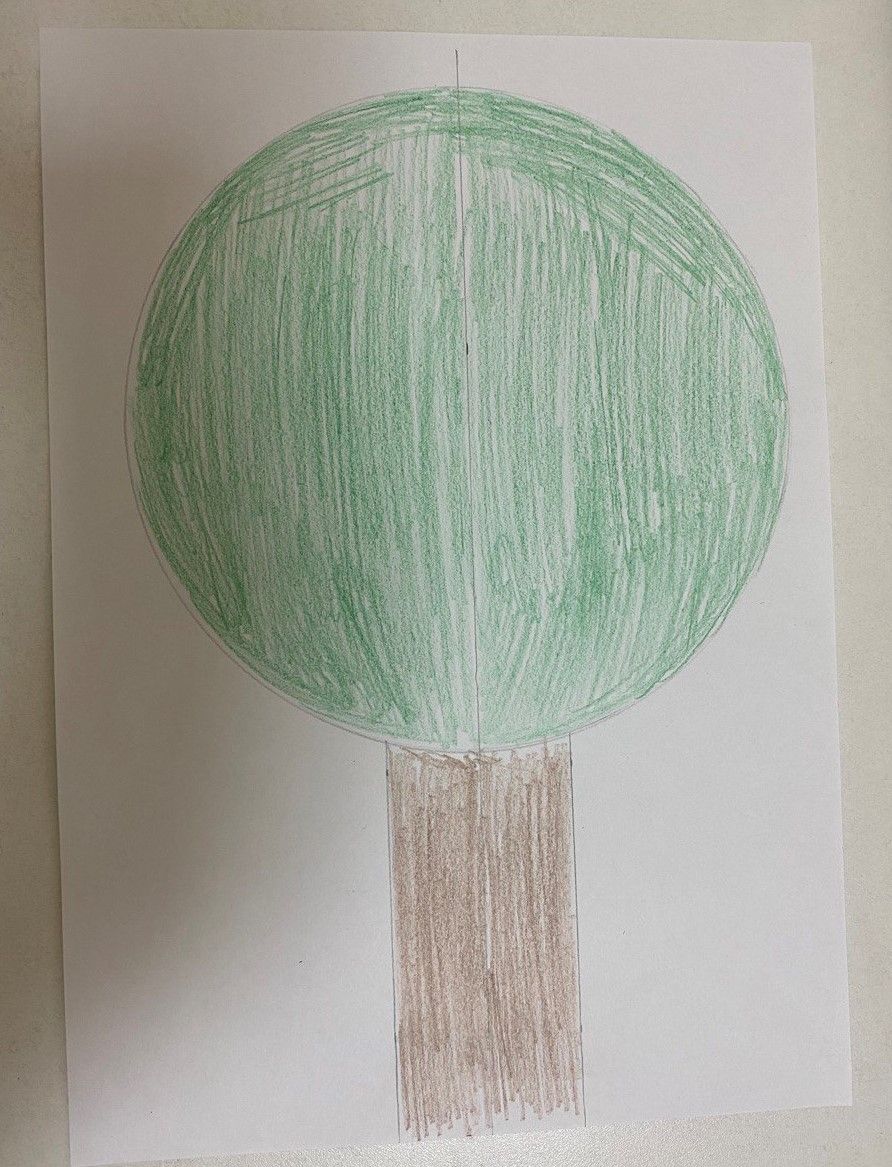
Cut out the piece
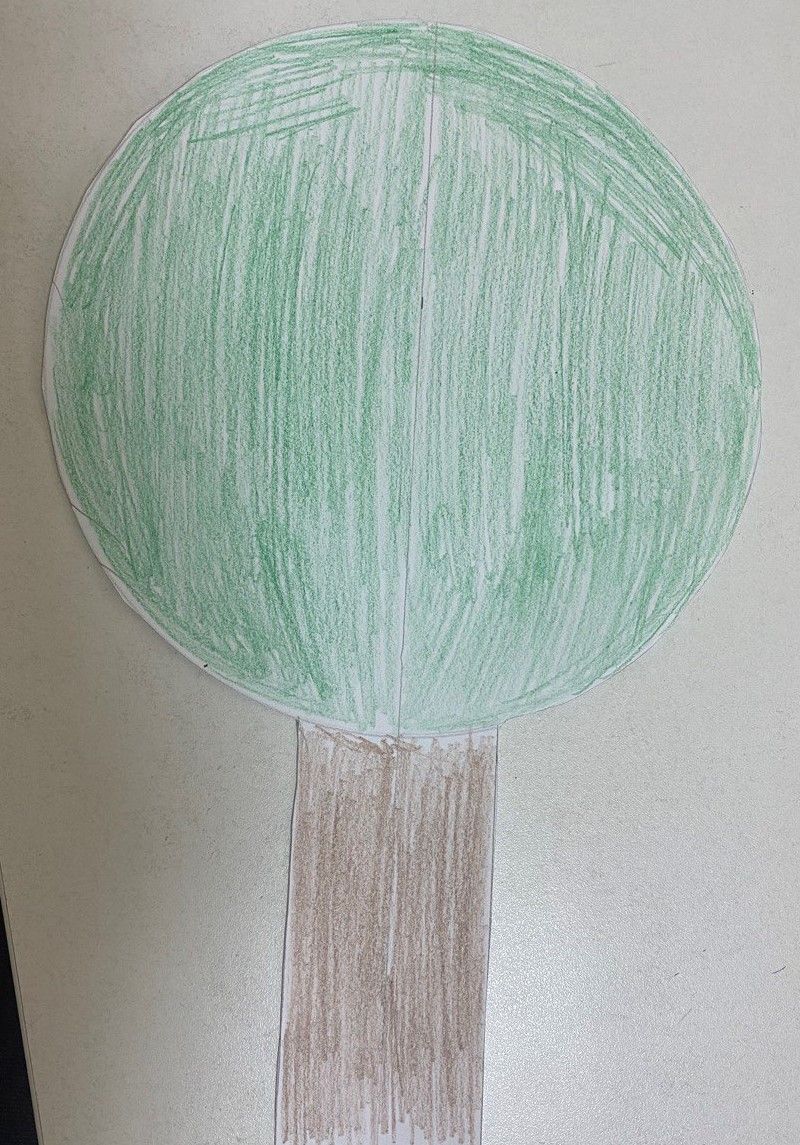
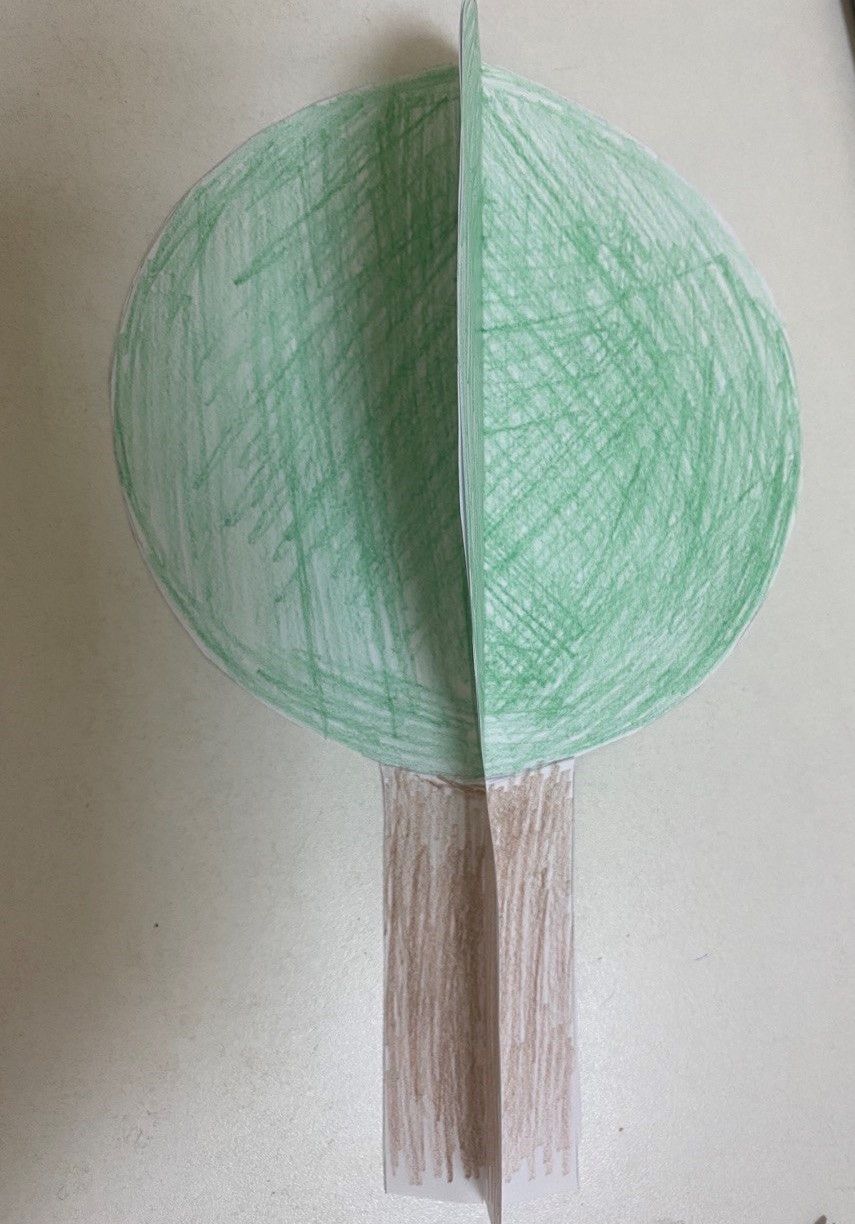
Bend the part in the middle (along the center line)

Each student in the group must receive their item. Glue each piece to each other using paper glue (3 pieces in total).
Make a 1.5 cm cut at the bottom of the part
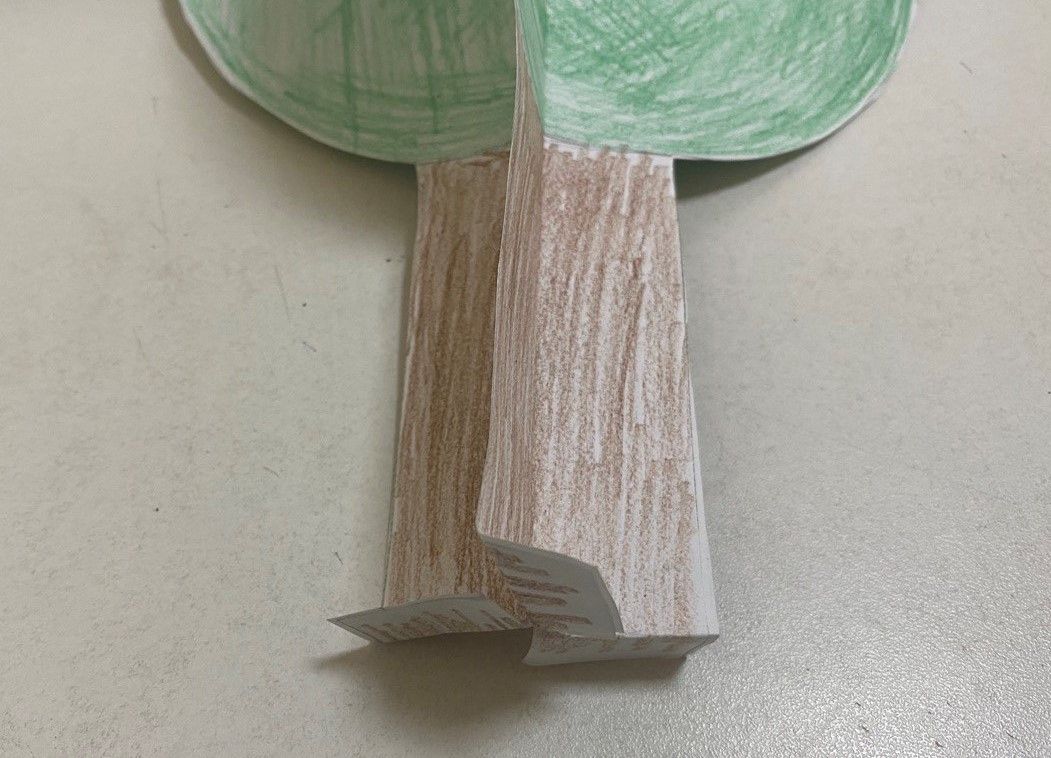
Glue the resulting tree to a brown A4 sheet
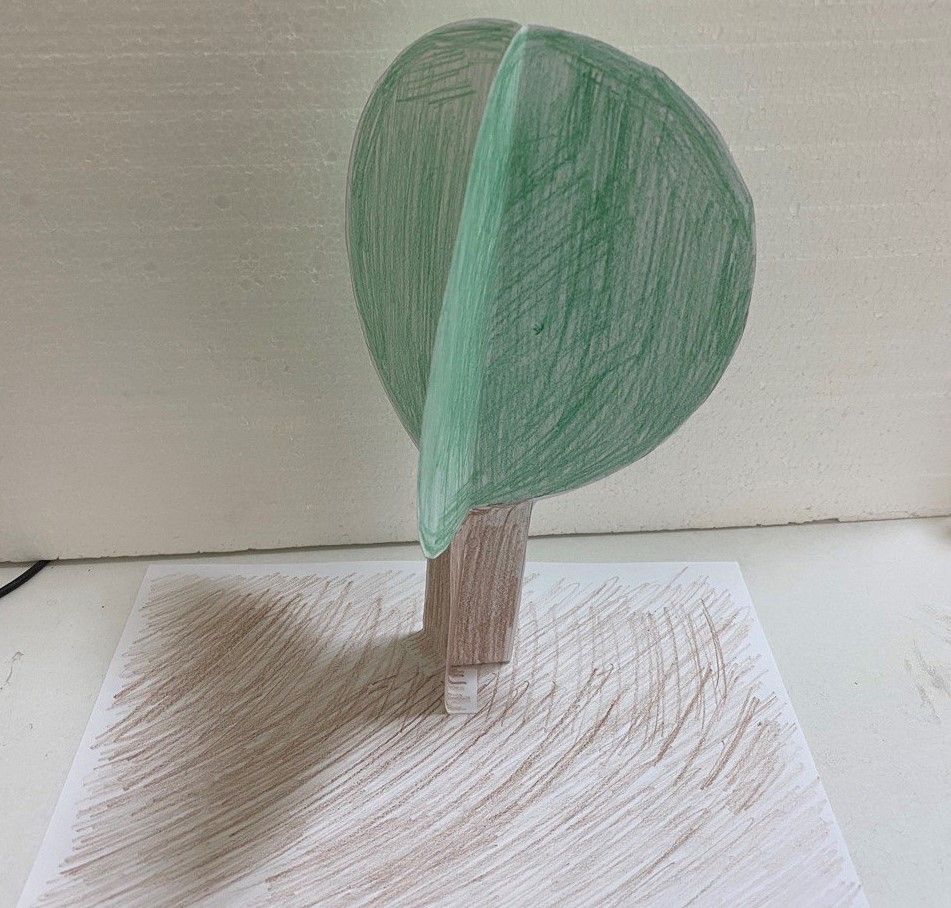
Divide A4 paper into small pieces and cut them out (into 10 pieces). Distribute the resulting pieces to each student.

Ask students to draw at least 2 types of plants:
1) A plant that grows on a tree
2) A plant that grows on the ground.
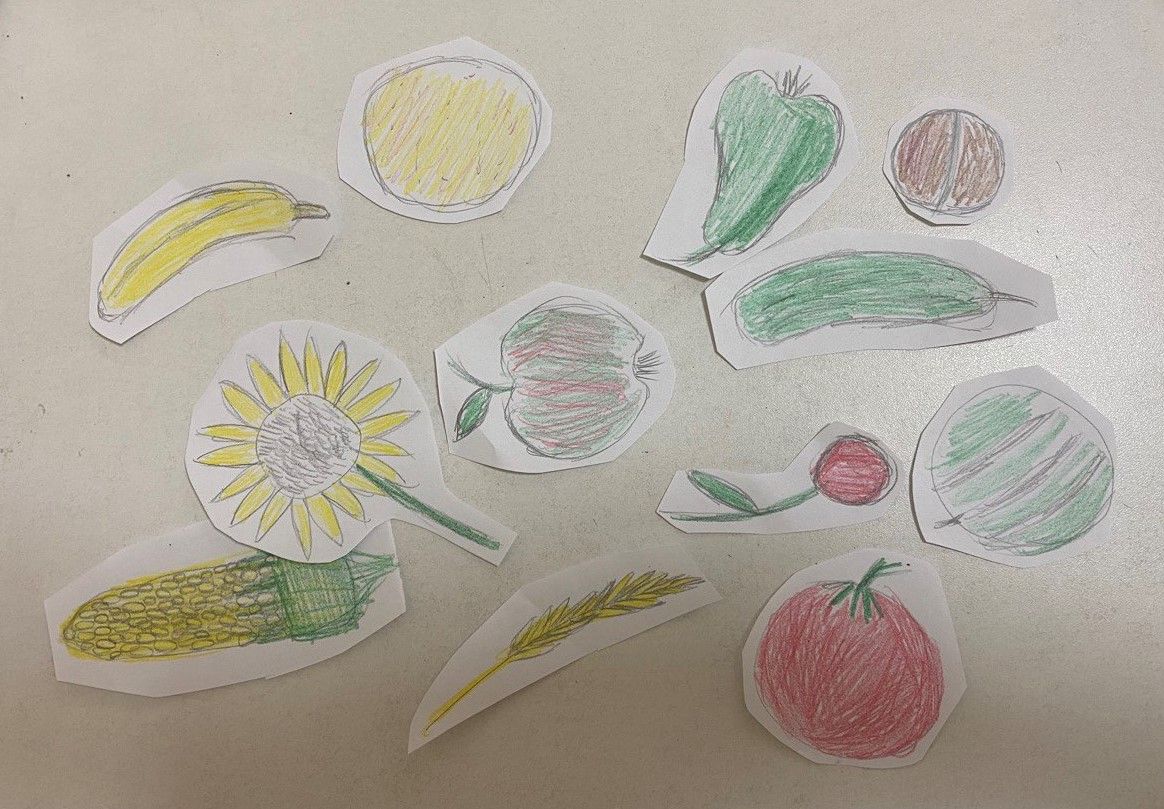
Have the students glue the plants to the first part by dividing the plants into 2 groups:
- plants that grow on a tree stick on a tree
- plants that grow on the ground glue to the ground
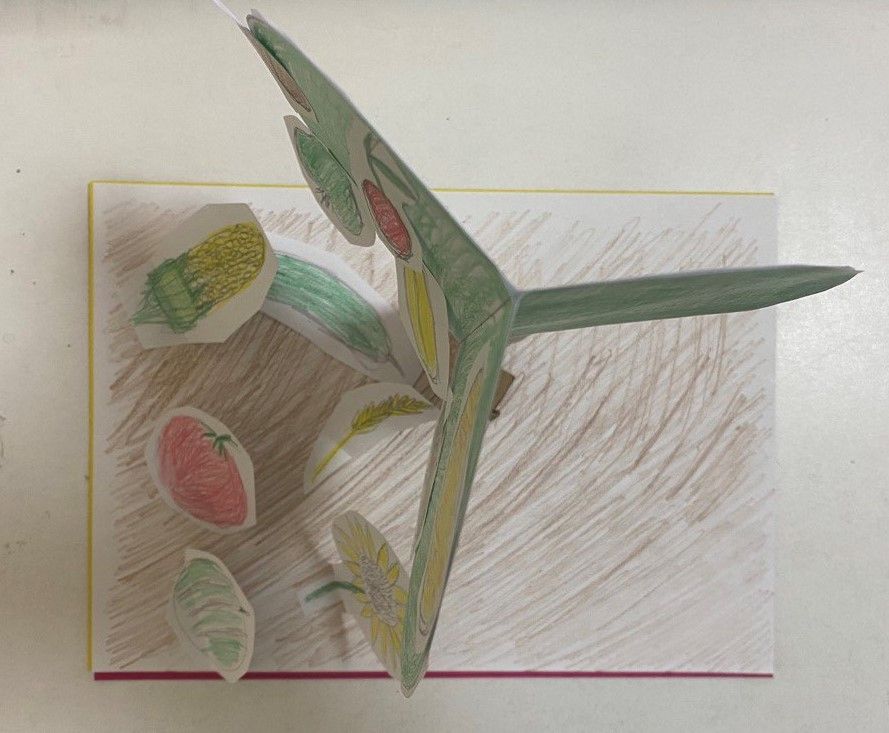
You should get a part identical to the part in the picture.
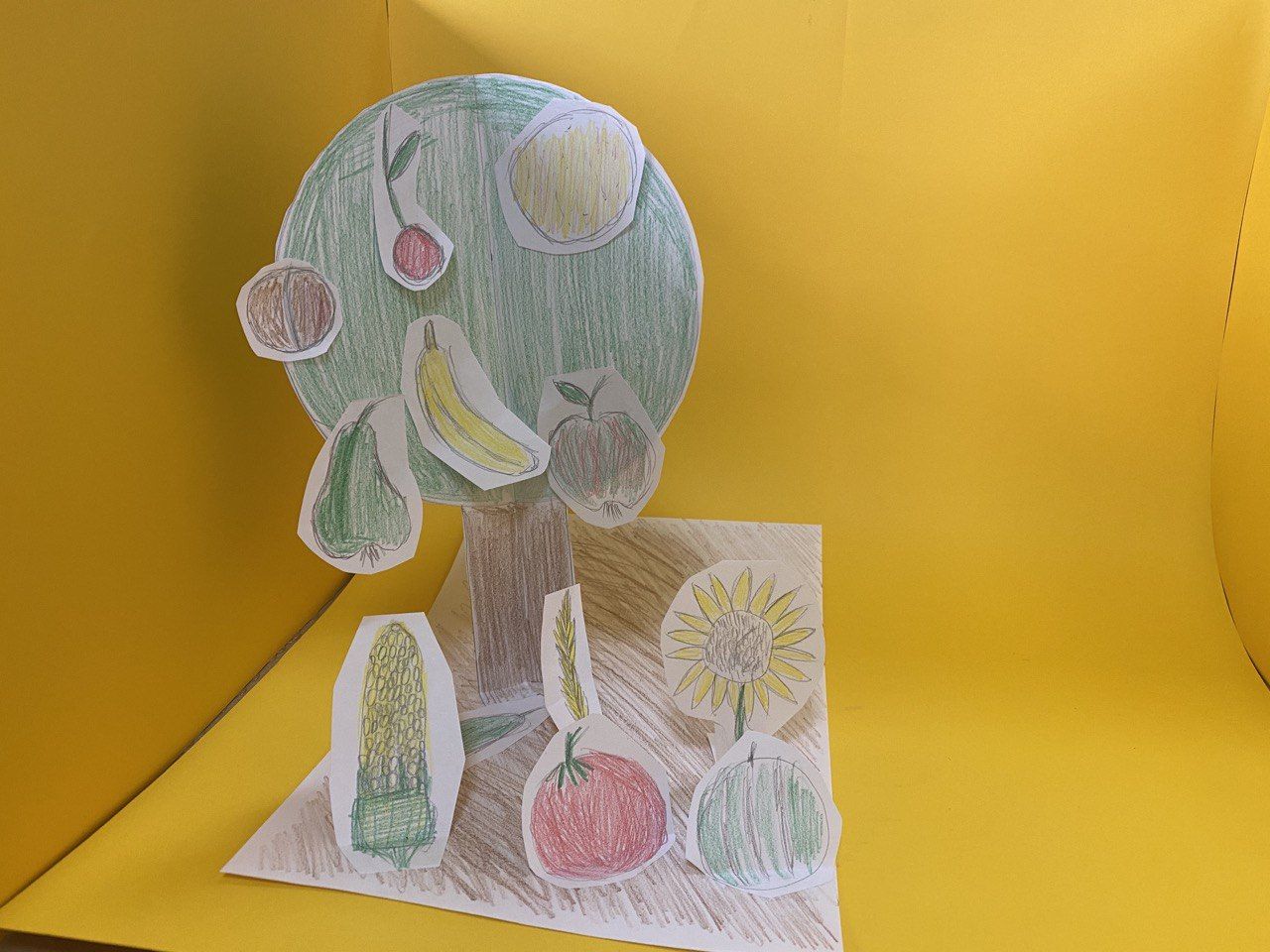
Conclusion
On this project, students learned about fruits and vegetables that grow on a tree and underground. Also, students learned to divide objects into groups.

Evaluation