
Week 1
Objectives
- Learn how an internal combustion engine works
- learn to plan and build engineering objects
- learn to work collaboratively and work in groups
Introduction
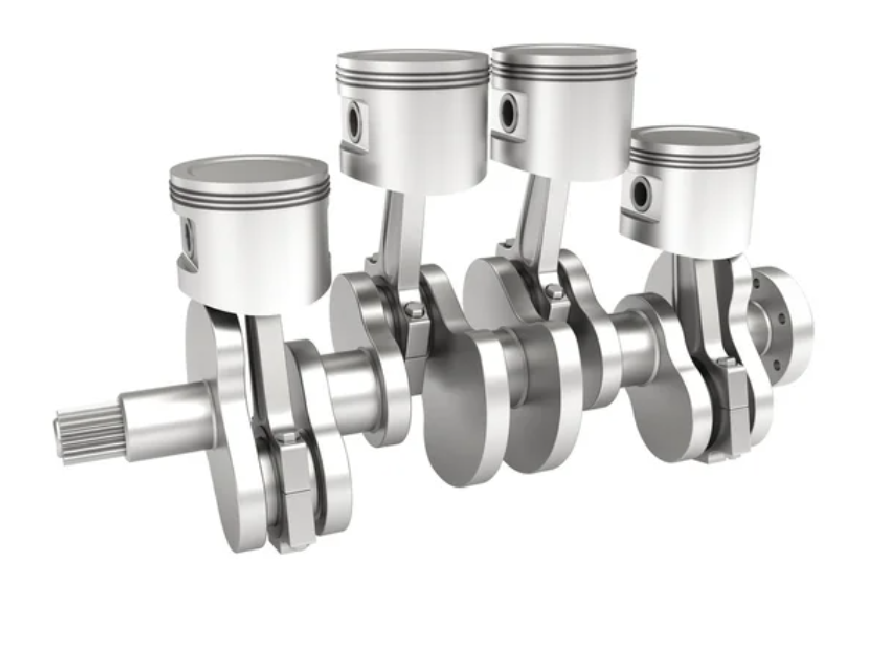
An internal combustion engine (ICE) is a heat engine in which the chemical energy of the fuel is converted into mechanical work by means of fuel combustion in the combustion chamber (working cavity) [1].
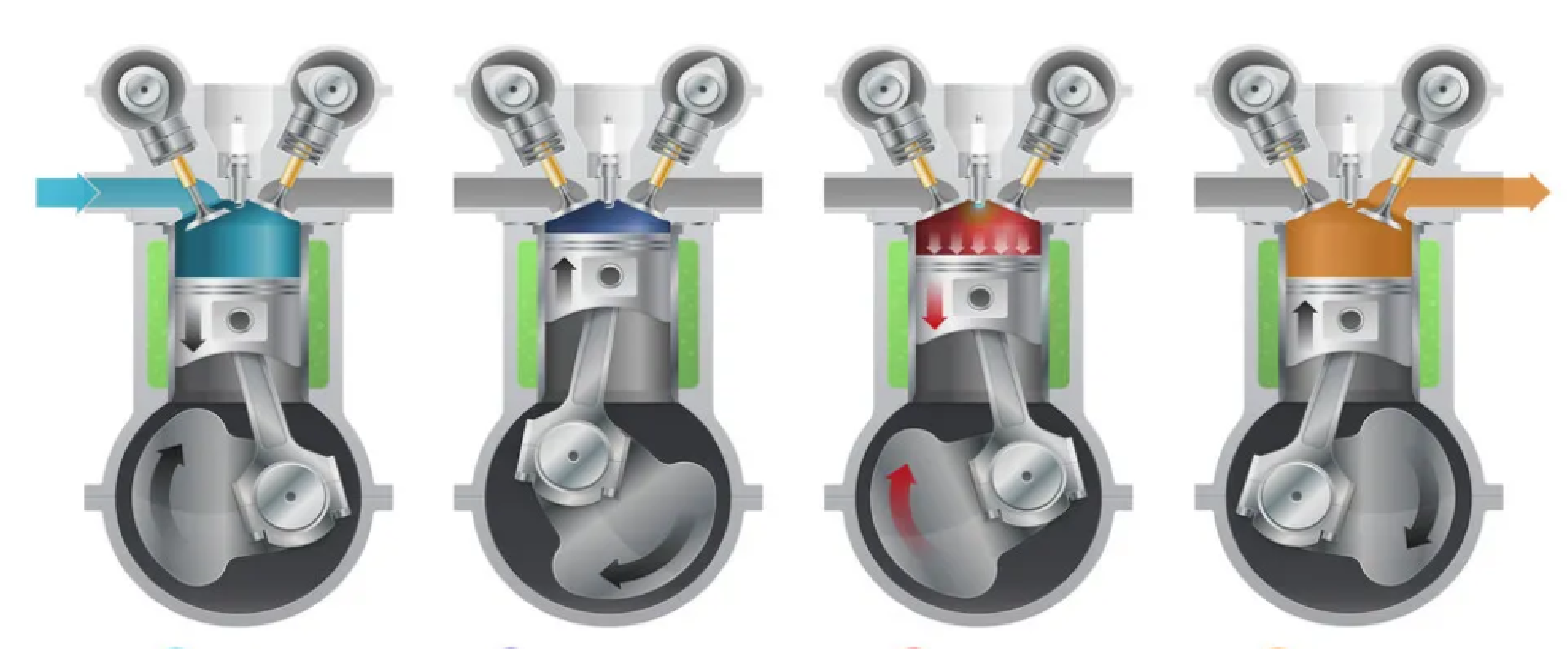
The principle of operation of the internal combustion engine.
The following is the principle of one of the most common engines – a four-stroke piston internal combustion engine. The cycle of operation of such a motor is divided into 4 cycles:
1. The piston moves down from the top dead center, sucking the mixture out of the open intake valve and freeing the combustion chamber (cylinder).
2. The piston goes to the top dead center, squeezing the mixture. A spark is supplied to the combustion chamber when the piston approaches the top dead center.
3. Piston free travel. After a spark is applied, the mixture detonates and the piston is squeezed out of the combustion chamber.
4. At the moment of the fourth stroke of the piston, the exhaust valve opens, through which the exhaust gases are squeezed out by the piston from the combustion chamber [2].
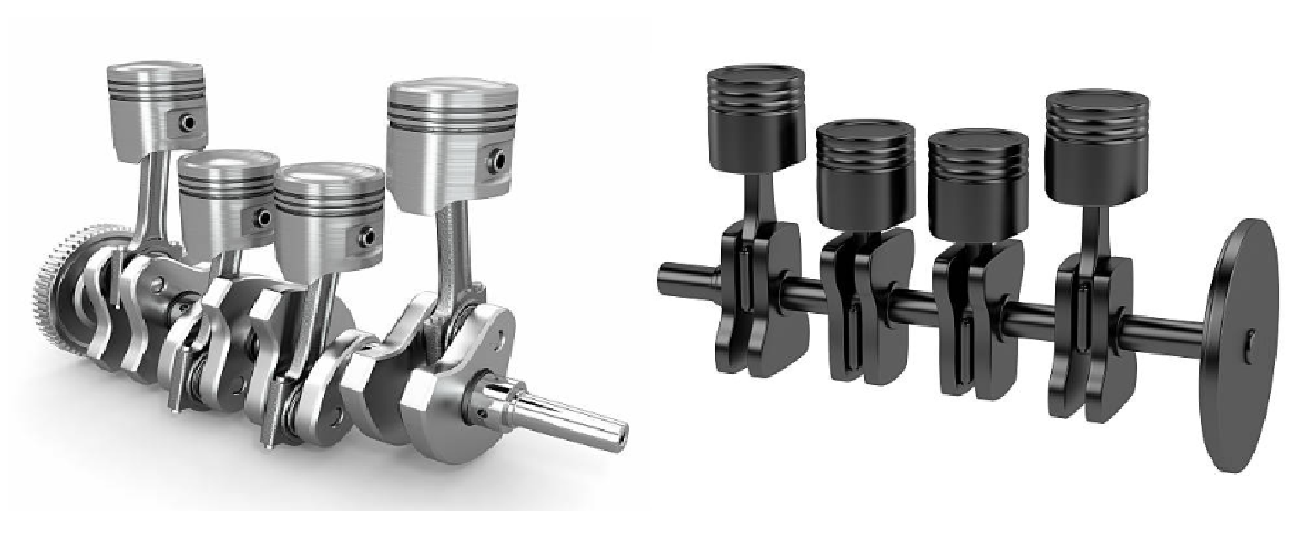
Varieties of internal combustion engines
By type, internal combustion engines can be divided into in-line, V-shaped, VR-shaped, boxer and W-shaped.
The following are descriptions of some types of internal combustion engines.
One of the most common types of engine is the inline engine. In such an engine, the cylinders are arranged in one row. Their number varies from one to six. The 4-cylinder engine is the most common of the in-line engine types. Such engines can be installed on almost all cars with an engine capacity of 1 to 2.4 liters. In cars, these types of engines are denoted by the letter R (R3, R4, R5, etc.).
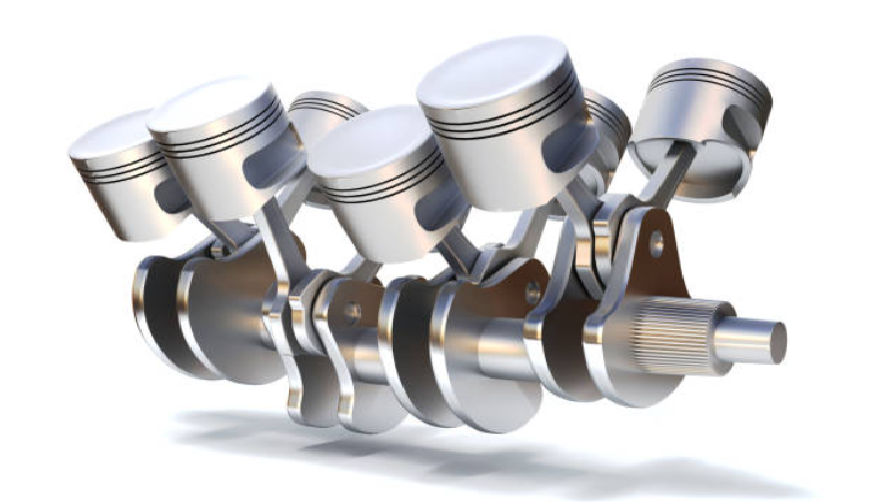
In a V-shaped engine, the cylinders are arranged in a V-shape opposite each other at an angle of 10o to 120o. In this type of engine, the pistons are rotated by one common crankshaft. In cars, the letter V indicates the type of engine, and the subsequent number indicates the number of cylinders. Such engines are common in cars with an engine capacity of more than 3 liters. But there are also cars with a V-shaped engine with an engine capacity of 2.6 or 2.8.
The essence of W-shaped motors is to merge two VR-shaped motors into one at an angle of 72o. The Bugatti Veyron is the most famous 16.4-liter W-engine made from two VR8 engines.
Boxer internal combustion engine – a type of engine with an angle between the cylinders of 180 °. This type of engine differs from the 180° V-engine in that the pistons facing each other reach top dead center at the same time, and not alternately as in the V-type. Often this type of motor is installed in Subaru cars [2].
References.
[1] https://bigenc.ru/technology_and_technique/text/4341616
[2] http://krutimotor.ru/kakie-byvayut-dvigateli-vnutrennego-sgoraniya/
Practical part.
1. ICE layout body
Draw a rectangle measuring 13 cm x 20 cm on cardboard. From the upper right corner, step back 3 cm to the left and 4 cm down. Connect the points obtained and cut off the extra corner.

Draw a second rectangle of the same size and cut off the upper left corner in the same way as shown above.

You should get the details as shown in the picture below.

2. The middle (main part) of the internal combustion engine layout
Draw a layout of the middle of the internal combustion engine on cardboard

Cut out the layout and bend its corners as shown in the picture.

Glue the side edges to the middle of the layout using thermoplastic glue. The places where the glue was applied are highlighted in red.

