
Lesson 1
Purpose of the work:
- to investigate the antibacterial properties of different substances (alcohol, chlorhexidine, iodine, soap, etc.).
- to compare the relative effectiveness of these substances against bacterial growth.
Expected results:
After completing the work, students can:
- develop teamwork skills
- be able to analyze and summarize the information received
- draw logical conclusions
Teacher’s Guide:
- The task is performed in groups of 3 people
- Before starting laboratory work, please read the safety rules by following the link:
- To download the worksheet, follow the link:
Theoretical part
Some types of bacteria cause disease and sickness. These kinds of bacteria are called pathogens. They reproduce very rapidly, like all bacteria.
How do people stop bacteria from growing and spreading? There are a variety of chemical ways to kill bacteria or keep it from reproducing.
- Antiseptics. These agents can be applied directly to living tissues, including human skin.
- Disinfectants. These agents are not safe for live tissues. Disinfectants are used to clean toilets, sinks, floors, etc.
- Antibiotics. These kill the bacteria cells that are inside the body, without harming normal cells. Antibiotics often are able to cure once-fatal diseases, such as scarlet fever. However, they can kill good bacteria along with the bad.
Practical part
This experiment used ethyl alcohol and chlorhexidine as antiseptics. Just like those, you can also use iodine, antibacterial soap, or hydrogen peroxide in your practice.
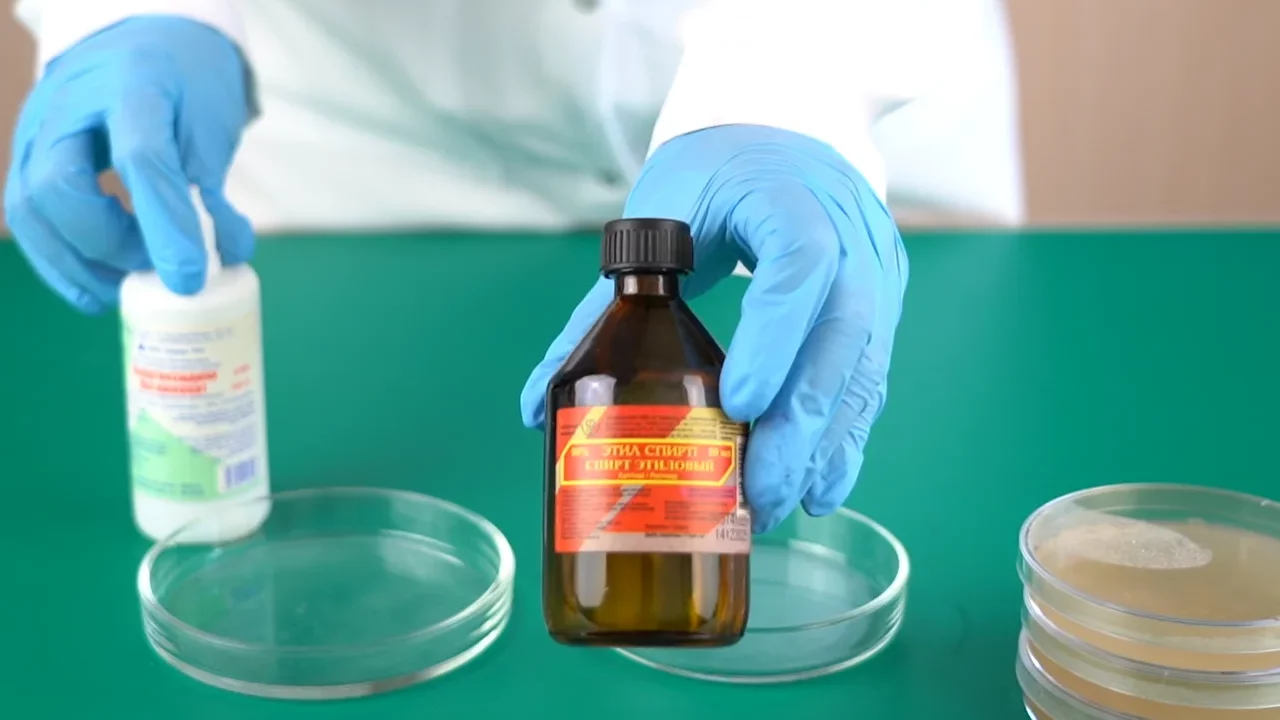
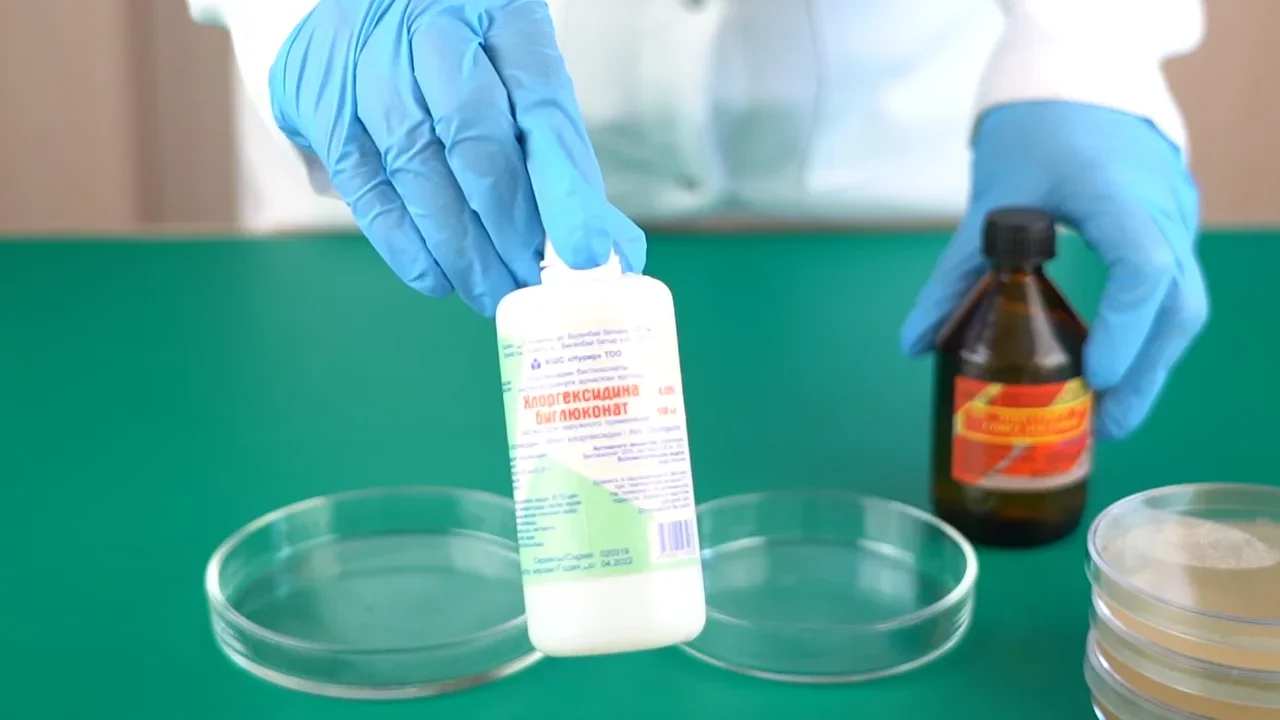
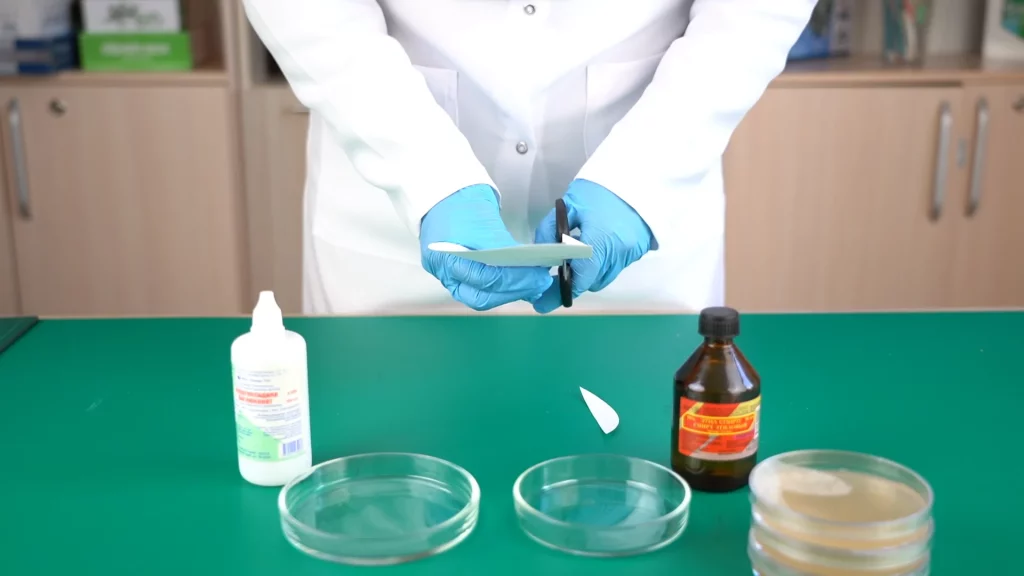
Prepare Sensitivity Squares:
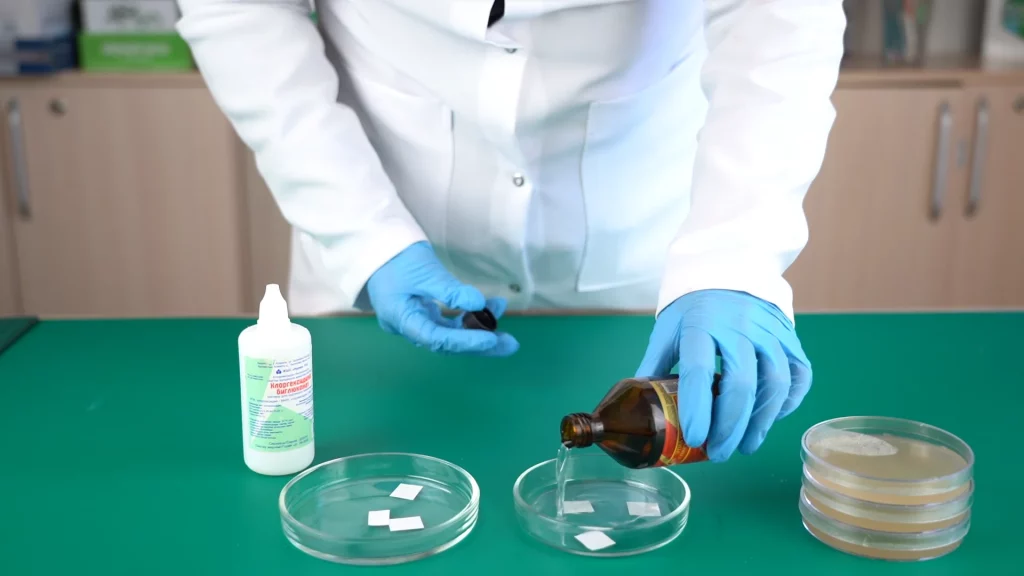
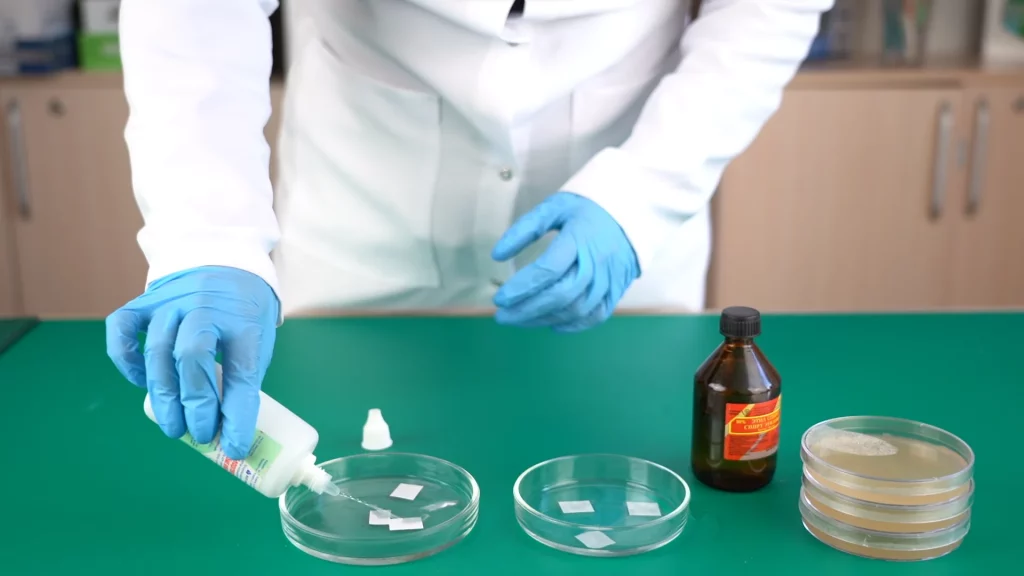
Step 1.Cut small squares of blotter paper (or absorbent alternative).
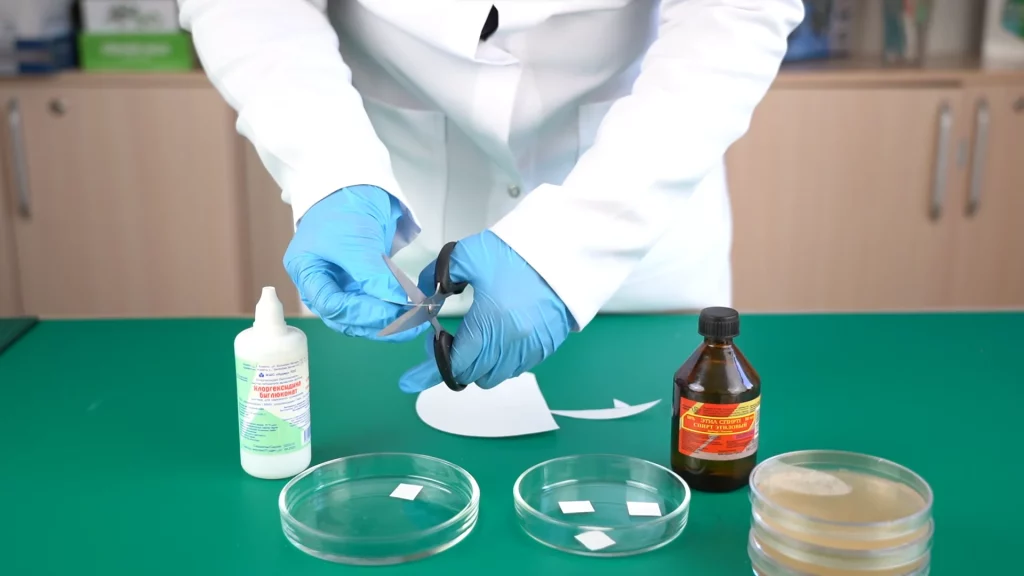
Step 2. Soak each square in a different test substance (iodine, alcohol, soap, etc.).
Inoculate Agar Plate:
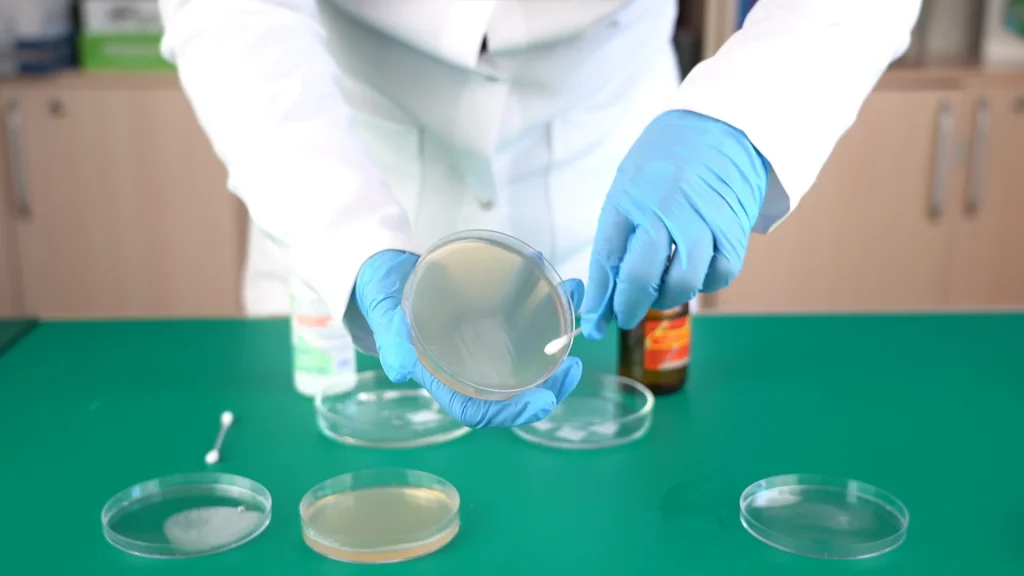
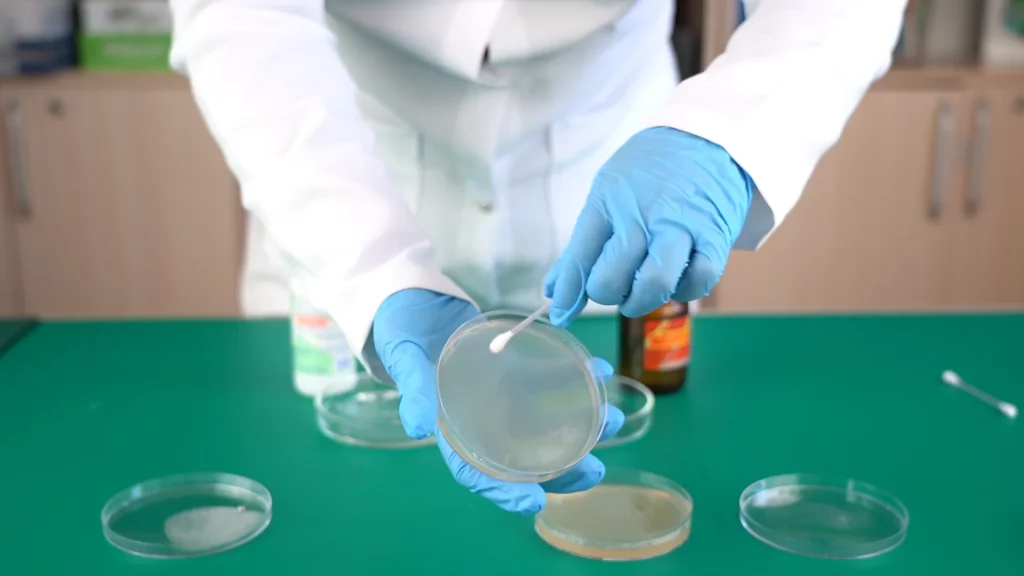
Step 3: To see instructions for preparing the culture medium, follow the link to the previous lab.
Step 4. Spread a culture of bacteria evenly over the surface of an agar plate.
Place Sensitivity Squares:
Step 5.Carefully place each labeled sensitivity square onto the inoculated agar plate, ensuring adequate spacing.
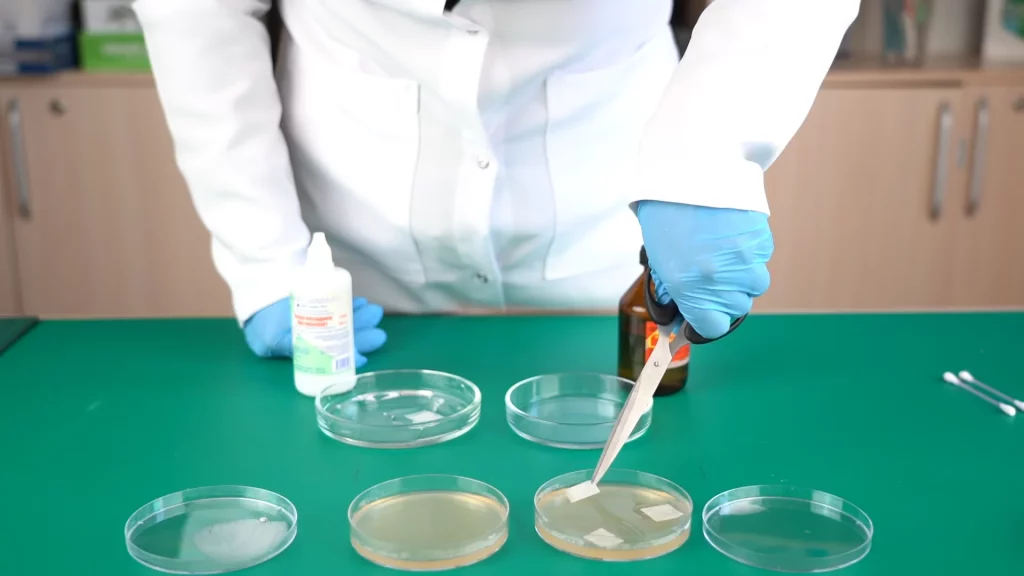
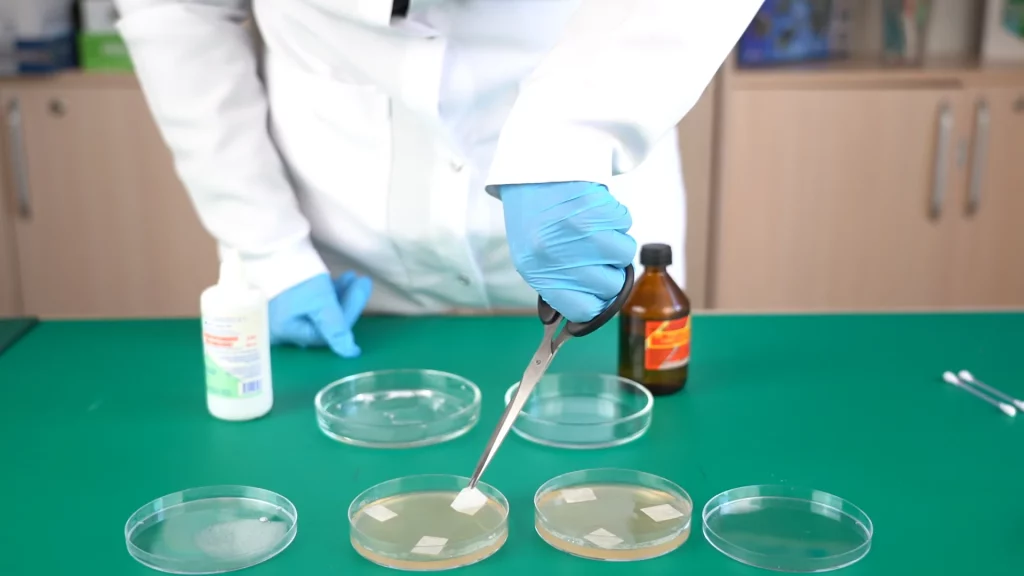
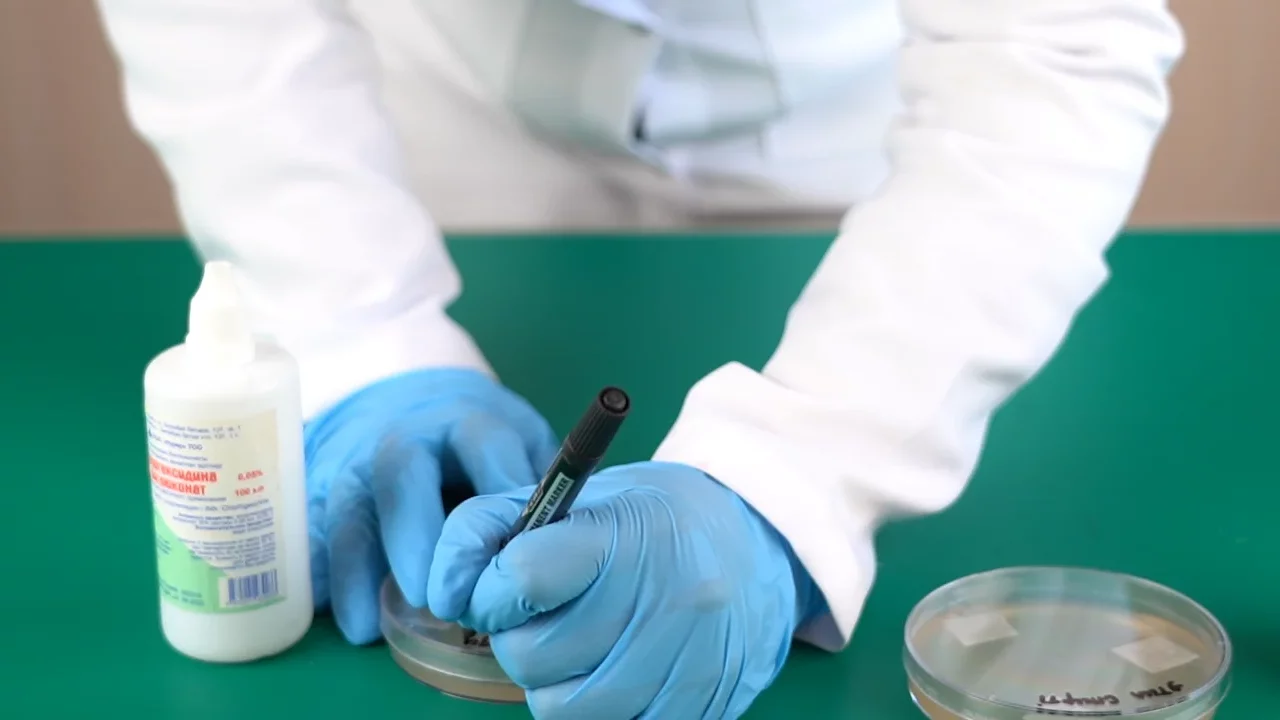
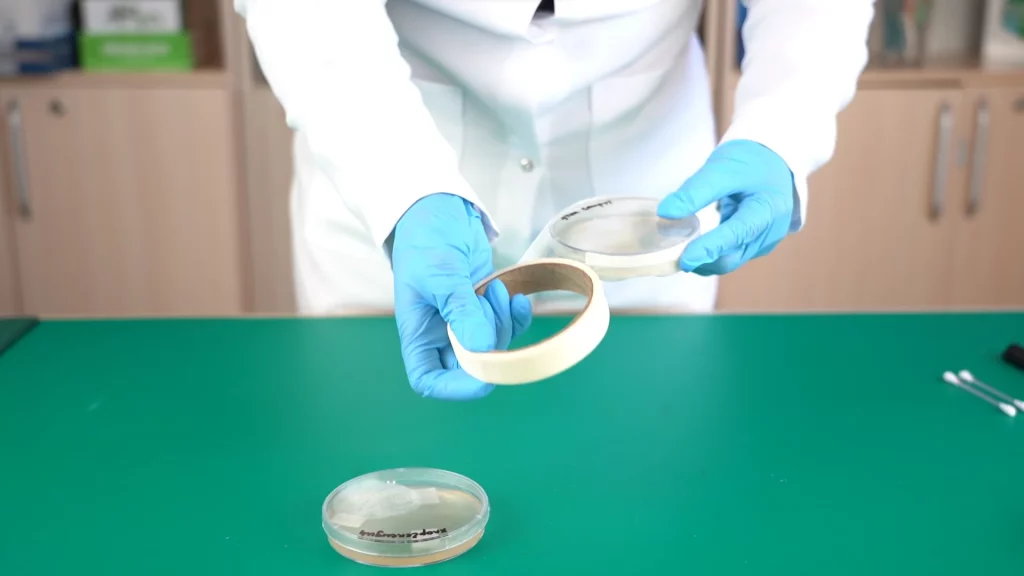
Step 6. Mark the testing cups and wrap with film.
Incubation:
Step 7. Invert the agar plate and incubate it for a designated period (24-48 hours) at the appropriate temperature for the chosen bacteria.