
Task – 2
Determine the density of a liquid
Objective of the work
- To learn how to determine the density of a liquid, and to compare it with the table data
Practical work
Every liquid substance has its own individual qualities and parameters. In physics a certain number of phenomena associated with these original parameters are traditionally considered.
The density of a liquid is the ratio of its mass to its volume. As the pressure is progressively increased, the volume of water will rapidly decrease from its original size. The difference in values is roughly 1 in 20,000. A similar level of data will make up the volumetric compression ratio for other droplet liquids. In most cases, practice shows that significant pressure conversions do not occur, for which reason it is generally accepted not to use the compressibility of water for practical purposes during the calculation of specific gravity and density depending on pressure.
Step 1: In order to carry out the work prepare all the materials and instruments required
- Laboratory Balance
- Set of weights
- Beaker
- Beaker of water
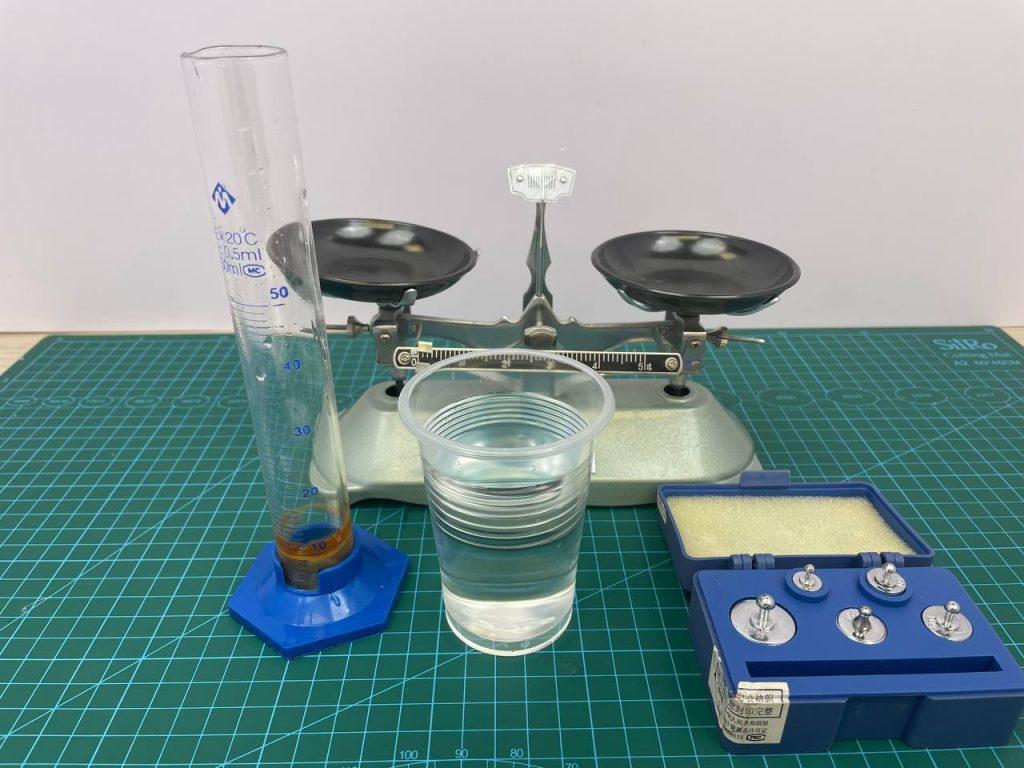
Step 2: To find the density of the liquid. First, measure the mass of the empty beaker
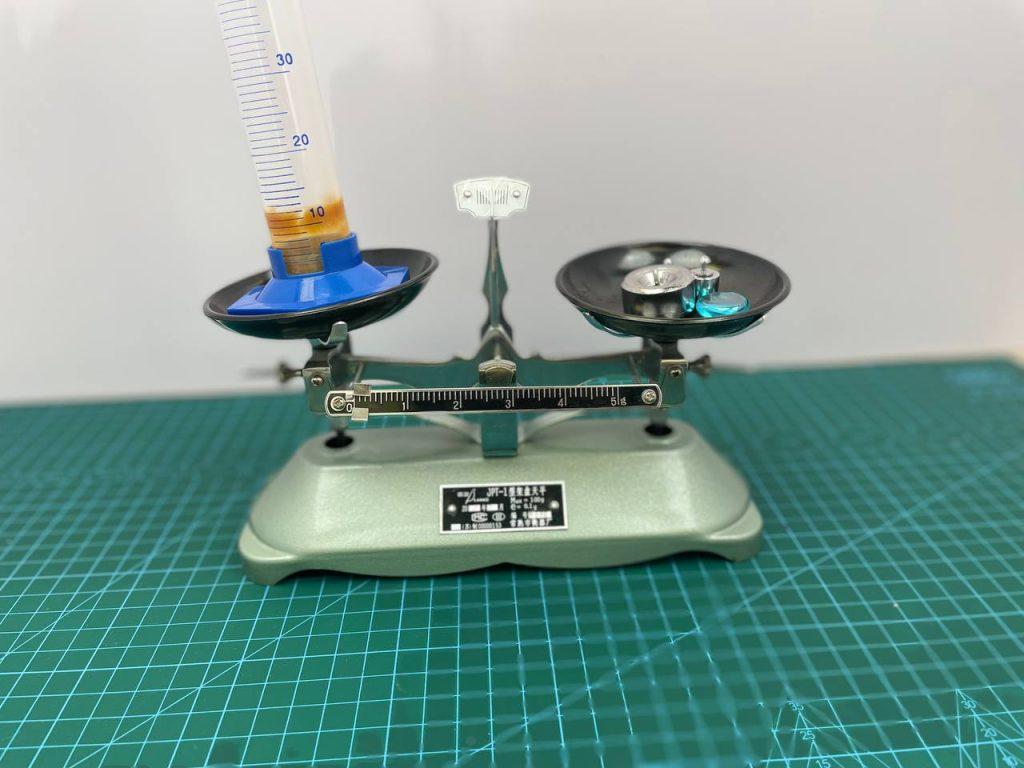
For example: The beaker in the picture weighs -75g. So the mass of the beaker is m=75g
Step 3: Pour a certain amount of liquid into the beaker. Now measure the beaker with water
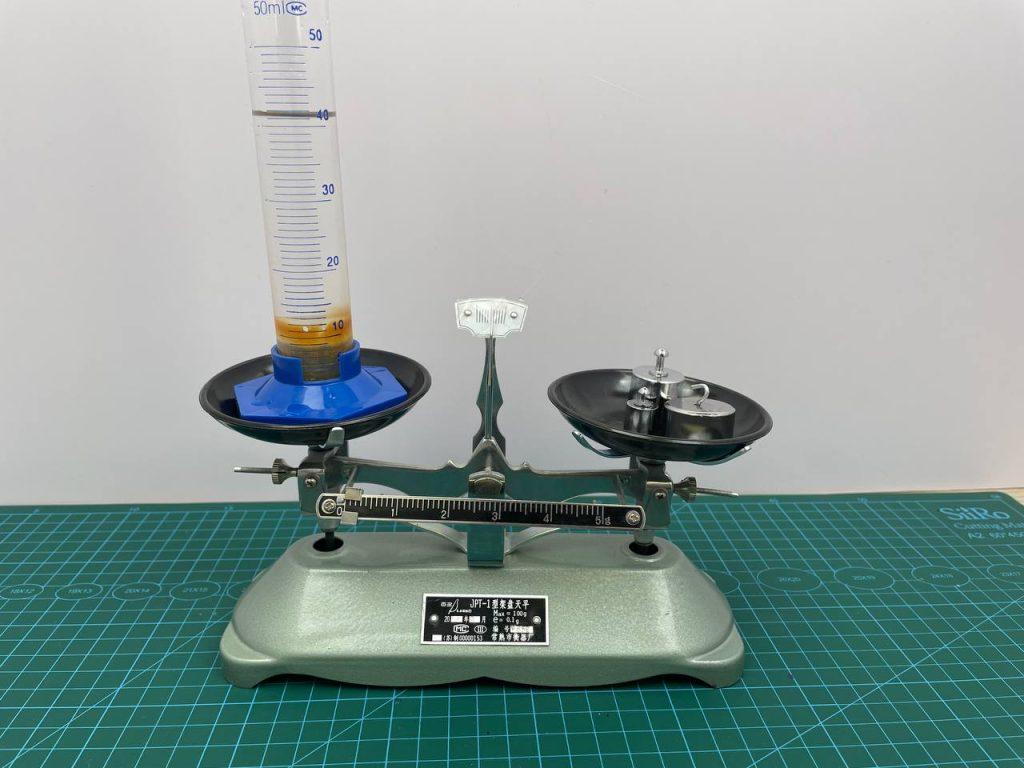
For example: A beaker of soda weighs 115g, so the mass of the beaker of water is m=115g. And the volume of water is – 41ml, V = 41ml.
Step 4: Calculate the mass of the liquid in the beaker. To do this, from the second value of mass , subtract the first value of mass
m1 = 75g
m2 = 115g
m = 115g – 75g = 40g – the mass of liquid in the beaker
Step 5: Calculate the density of the liquid
The table shows an example of how to do this during a laboratory activity!
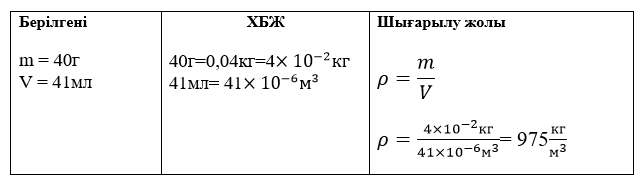
Step 6: After the calculation, students should fill in all the data in the table
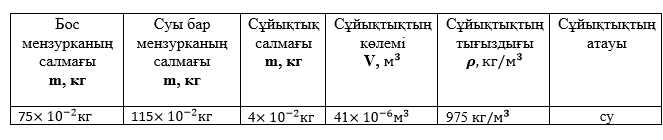
When you fill in the substance name column, you have to take into account the prepared table, densities of solids and liquids. Determine the name of the substance from which the body is made. You can see and download the table here “Density of solids and liquids”.
Conclusion
Pupils were able to determine the densities of solids and liquids using different methods, compare the results with the table and realise that the experiment sometimes makes mistakes. They were introduced to error calculation and learned how to achieve more accurate measurements.