
Task – 1

Substance density
Objective of the work
- Explain the physical meaning of density.
- Determine the density of solids and liquids.
- To be able to use laboratory instruments in the course of the work.
Teacher’s guide
In the practical work, the students work in a group.
The students should be familiar with the topics like density/density of substances.
Before starting the practical work, familiarise and provide the students with all the necessary materials.
Give the students a worksheet to complete the lab work. You can download the worksheet from the Worksheet link:
Familiarise the students with safety procedures:
Laboratory works are carried out by students in the classroom under the direct supervision of the teacher and with strict adherence to safety and health requirements.
Laboratory work is accompanied by measurements and calculations. A report shall be prepared on the results of the work.
The report on the performance of laboratory work by the student shall contain:
- The name and number of the laboratory work;
- The name of the theme of laboratory work;
- The purpose of laboratory work;
- Brief description of the laboratory system (if any);
- The methods of measurement;
- The course of the laboratory work;
- Results of measurements and calculations (usually in the form of tables) with obligatory indication of the units of measurement;
- The results of the individual measurements; add a photo guide
- The results of processing the experimental data obtained with an estimate of the error of measurements;
- Graphs, charts, drawings;
- Basic calculation formulas with the indication of the quantities to be measured (all the alphabetic values of the formulas must be explained);
- Calculation and detailed analysis of the results;
- Conclusions.
Provide this material (PBL rubrics) to students for assessment so that:
- Students understand in advance what criteria they need to prepare,
- Students will be able to assess their own peers accordingly.
Practical part of the work
Determining the density of solids
Step 1: To determine the density of solids we need to prepare the following materials
- Laboratory scales
- Set of weights
- A solid (e.g. a cylinder)
- A beaker
- A beaker of water
- String
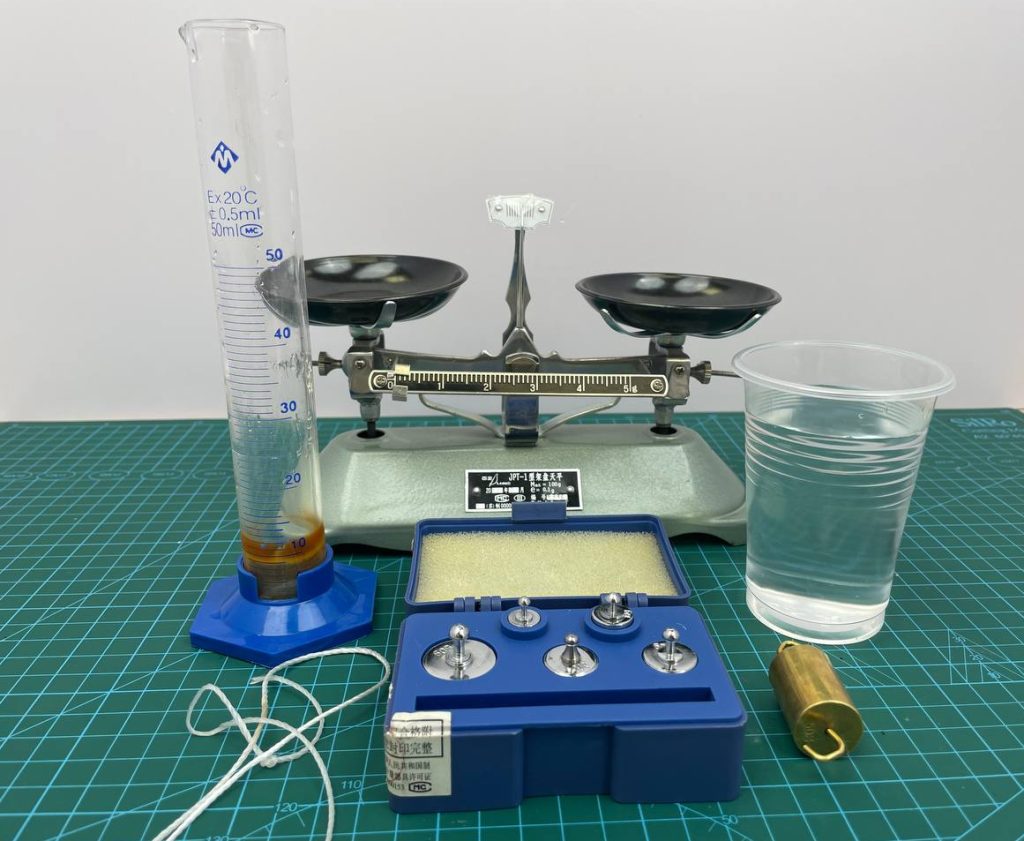
Step 2: Familiarise the students with the workings of lever scales and weights:
- Balance the scales with strips of paper, cardboard, etc.
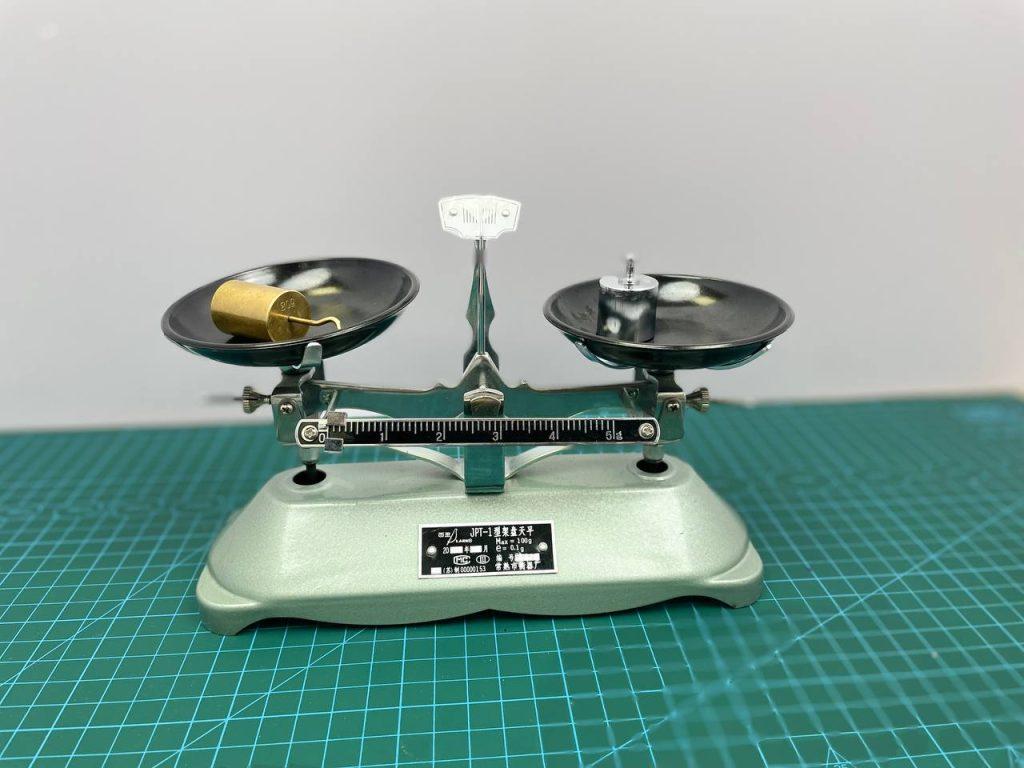
- Place the body to be weighed on the left side of the scale and the weights on the right side.
- Once the body is balanced, calculate the total mass of the weights on the scale.
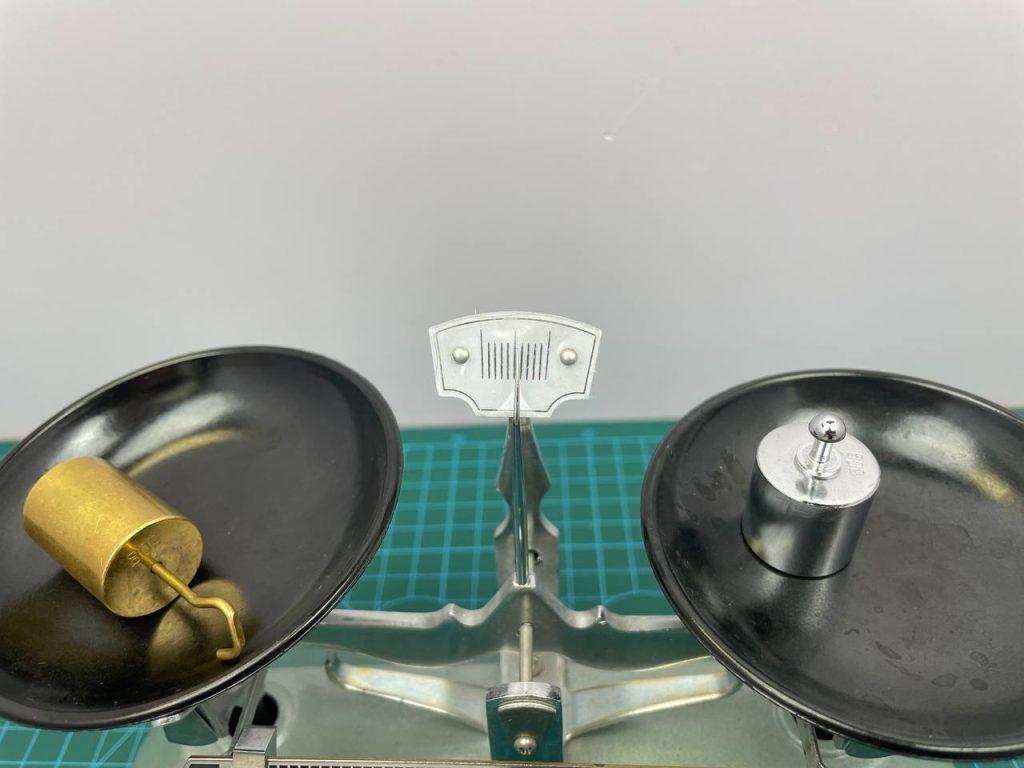
Step 3: Take a cylinder and measure its mass using the scale.
For example: The cylinder in the picture weighs – 50g. Then mark the mass as m = 50g
Step 4: Now find the mass, find the volume of the cylinder in question. To do this, recall lab task №1 “Determining the volume of different bodies”
Step 5: Take a beaker and fill it with a sufficient amount of water. And measure the initial volume of water V1 in the beaker.
For example: The initial volume of water in this beaker is V1 = 30ml
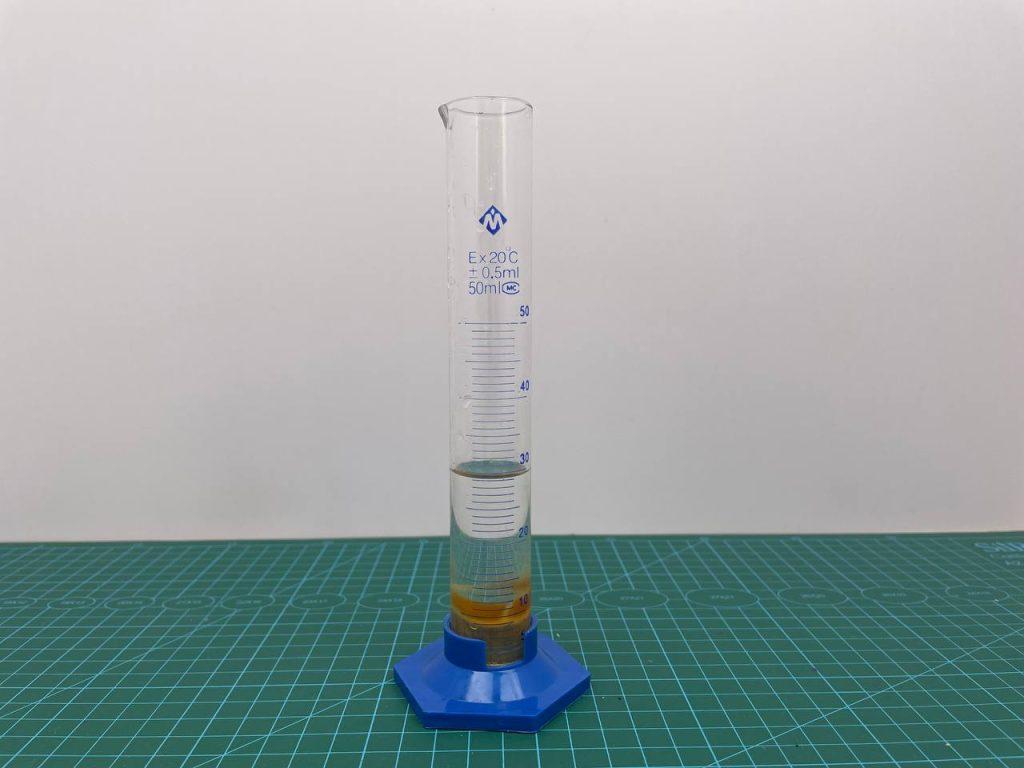
Step 6: Before immersing the body in water, it is best to tie a string into it. This makes it easier to gently lower the body into the water and then remove it from the beaker
Step 7: Immerse the cylinder in water and measure the volume of water with the body immersed in it. Mark the volume of water and the body V2
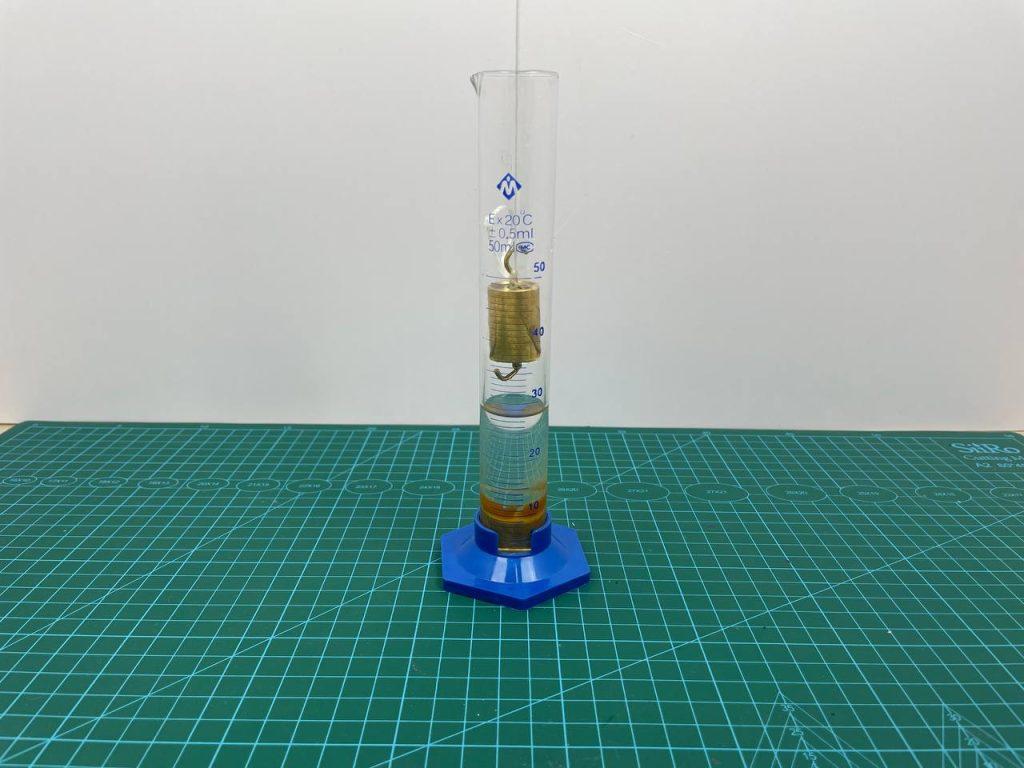
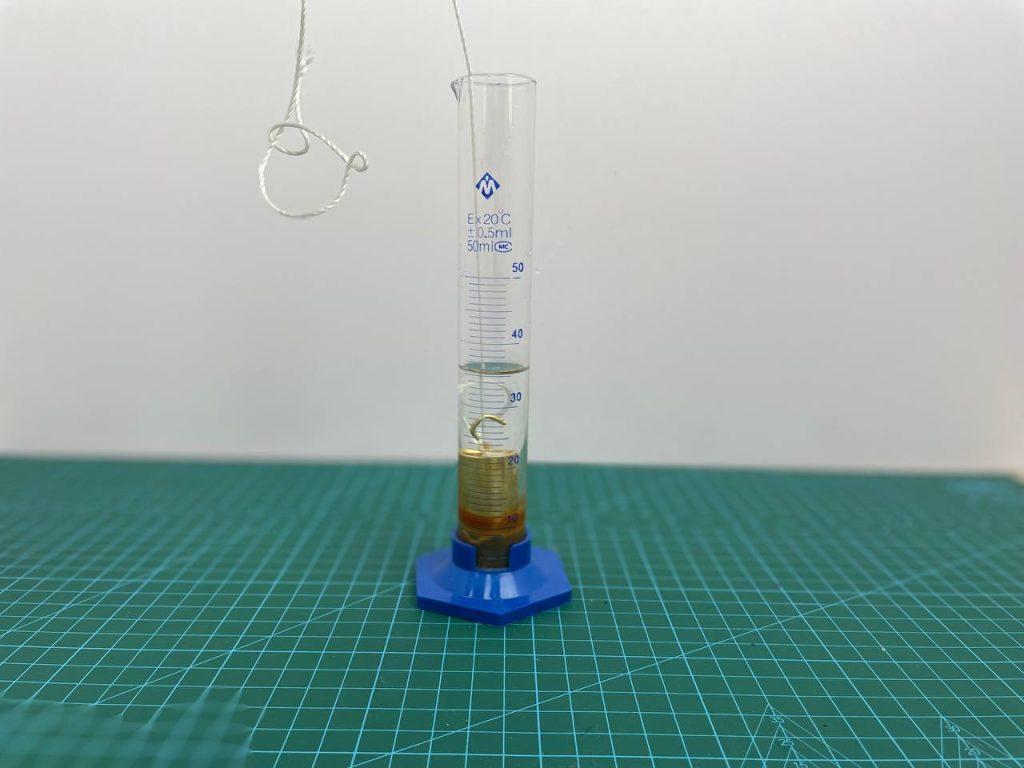
Step 8: The difference between the original volume and the volume of the liquid in which the body is immersed is equal to the volume of that body.
V=V2-V1,
V2 is the volume of water with the submerged body,
V1 – initial volume of water
V – volume of solid
Step 9: Do a calculation to determine the density of a solid.
- Find the volume of the cylinder
V1 = 30ml
V2 = 35 ml
V = 36ml – 30ml = 6ml
The volume of the solid is equal to: V = 6ml.
- Find the density of the cylinder. We know the mass of the cylinder and the volume
The table shows an example of how to do this during laboratory work!
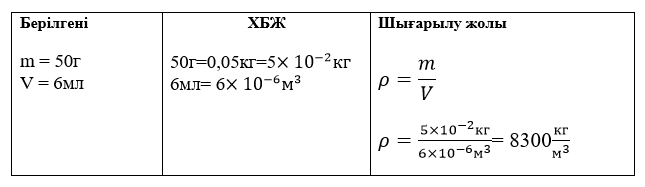
Step 10: After the calculation, the students should fill in all the data in the table
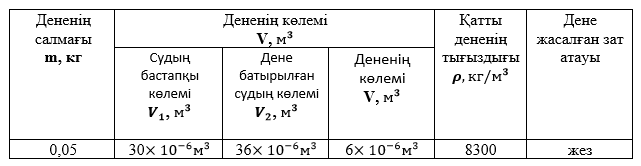
When you fill in the substance name column, you have to consider a ready-made table of the densities of solids. Determine the name of the substance from which the body is made. You can see and download the table here “Densities of solids and liquids”.