
Lesson 1
Teacher’s Guide
– In the experimental part of the project, students work in groups of 4-5 people.
– Students should be familiar with topics such as Electricity, electricity sources, Wind generator- the principle of operation, Wind generator in the Republic of Kazakhstan.
– Before starting the experimental part, familiarize and provide students with all the necessary materials.
– Give a brief instruction on how to work with hot glue.
To evaluate the project, in the first week, provide this material (PBLrubrics) to students in order to:
– the students previously understood by what criteria they needed to prepare,
– the students were able to independently give an appropriate assessment to their colleagues.
Project objective
– Get acquainted with the existing wind energy.
– Build a working model of a wind turbine installation.
– Work with a current source.
Interdisciplinary communication:
– natural science (the principle of operation of a wind generator, working with electronic devices)
– Artistic work (layout development, design)
Introduction
Renewable or regenerative energy (Green Energy) is energy from sources that, according to human concepts, are inexhaustible.
The basic principle of using renewable energy is to extract it from processes constantly occurring in the environment and provide it for technical use.
Renewable energy is obtained from natural resources – such as sunlight, wind, rain, tides and geothermal heat, which are replenished naturally. Approximately 18% of the world’s energy consumption was met from renewable energy sources, with 13% from traditional biomass, such as wood burning.
Hydroelectric power is the next largest source of renewable energy, providing 3% of global energy consumption and 15% of global electricity generation. The use of wind energy is growing by about 30%/year, worldwide with an installed capacity of 196,600 MW in 2010 and is widely used in Europe and the USA. Annual production in the photovoltaic industry reached 6,900 MW in 2008.
Solar power plants are popular in Germany and Spain.
Solar thermal power plants operate in the USA and Spain, and the largest of them is the 354 MW Mojave Desert station. The world’s largest geothermal plant is a geyser plant in California, with a nominal capacity of 750 MW.Brazil is conducting one of the largest renewable energy programs in the world related to the production of fuel ethanol from sugar cane. Ethyl alcohol currently covers 18% of the country’s automotive fuel needs. Fuel ethanol is also widely distributed in the USA.
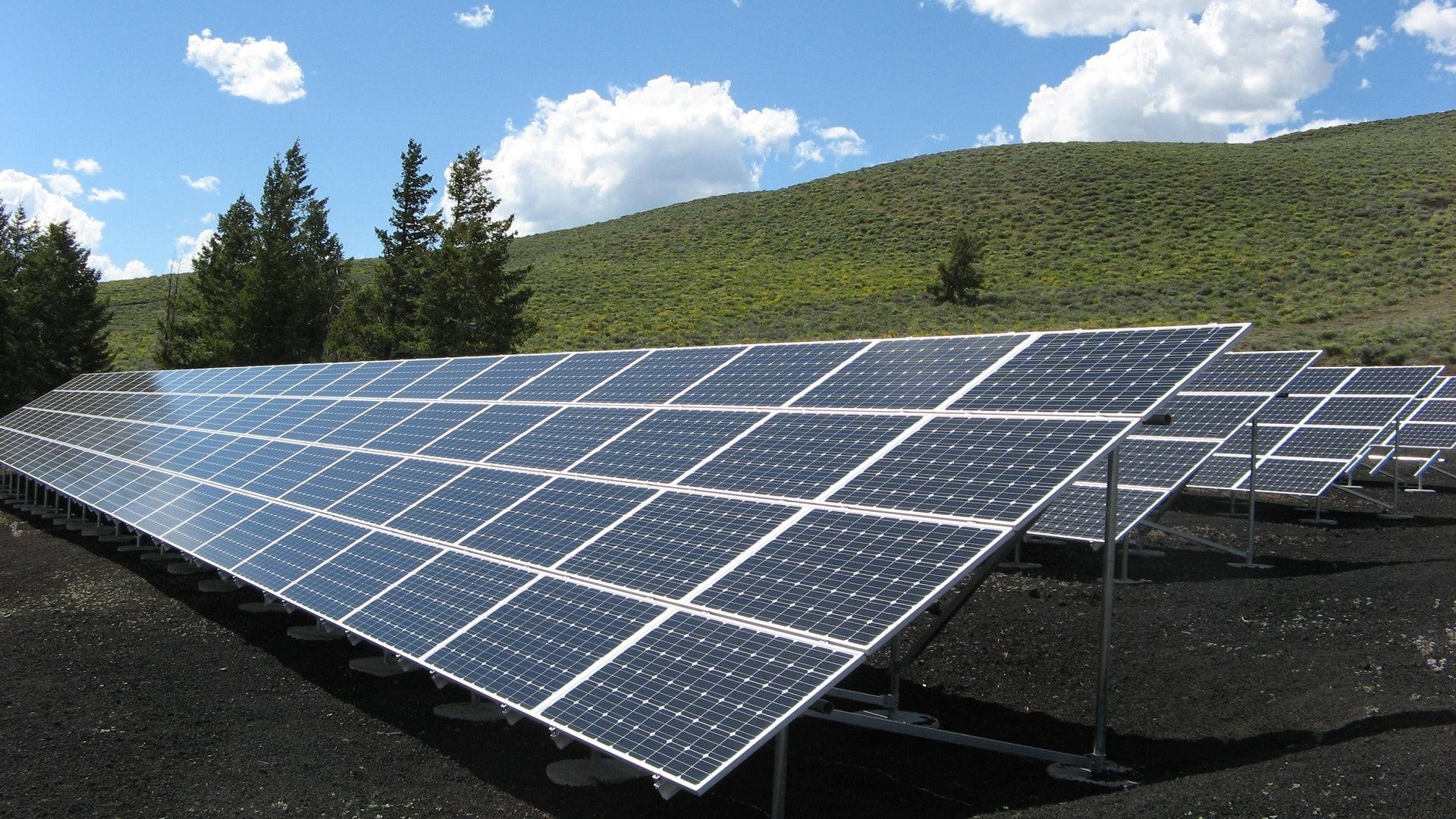
Wind power converts the kinetic energy of air masses in the atmosphere into electrical, thermal and any other form of energy. Hydropower specializes in using the potential energy of the water flow of rivers formed by precipitation that has fallen on high ground. Tidal energy uses the energy of tides, and in fact the kinetic energy of the Earth’s rotation. The energy of sea waves uses the potential energy of waves carried on the surface of the ocean. The power of the wave is estimated in kW/m.
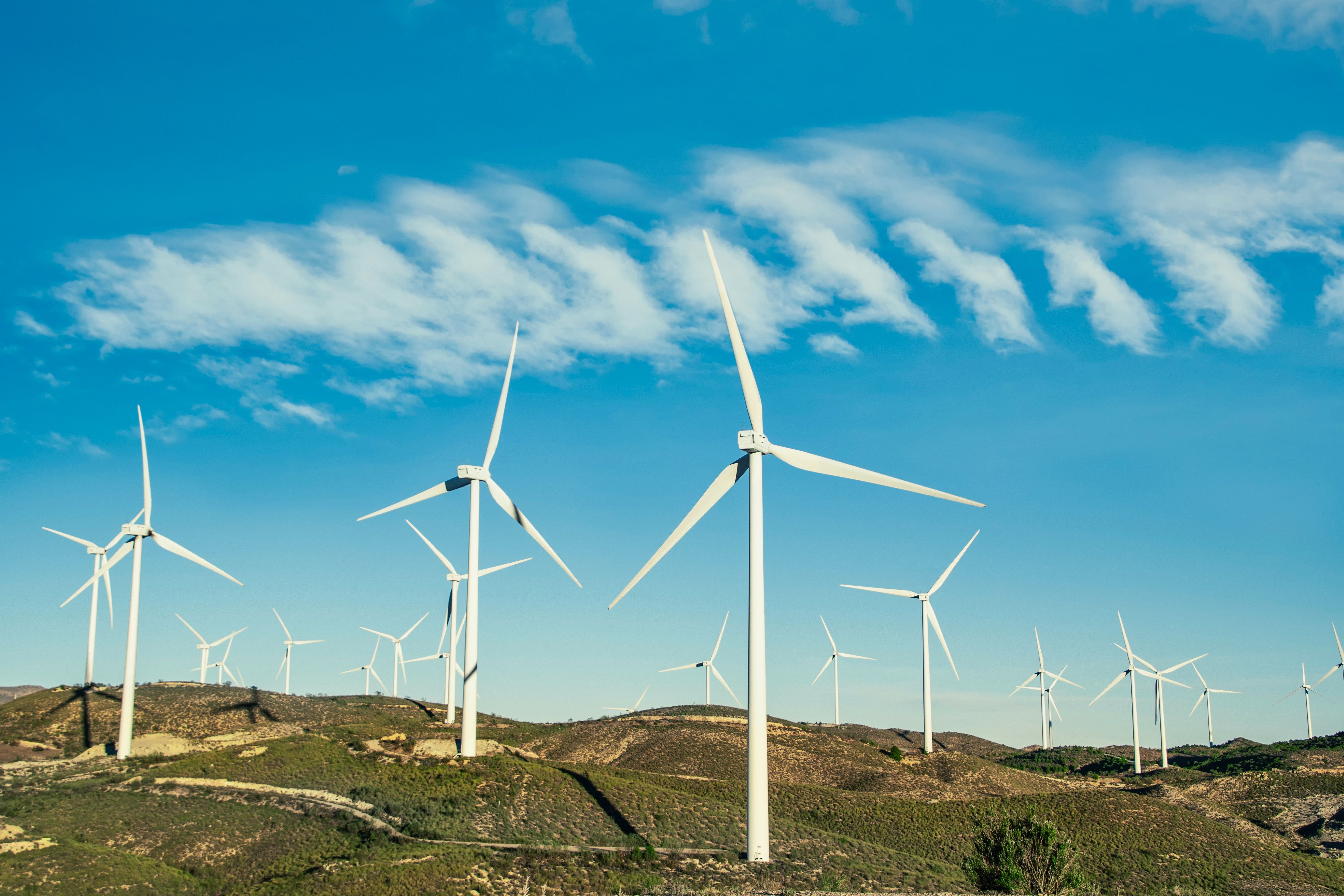
A wind generator (wind power plant or wind turbine for short) is a device for converting the kinetic energy of the wind flow into the mechanical energy of rotation of the rotor, followed by its conversion into electrical energy. Wind turbines can be divided into three categories: industrial, commercial and domestic (for private use).
Industrial ones are installed by the state or large energy corporations. As a rule, they are combined into networks, resulting in a wind power plant. Previously, it was believed that they are completely eco-friendly, which is why they differ from traditional ones. However, the blades of the wind turbine are made of a polymer composite, the secondary use and processing of which are unprofitable from the point of view of costs. Now the question of processing blades is open.
The only important requirement for a wind farm is a high average annual wind level. The capacity of modern wind turbines reaches 8 MW. The power of the wind generator depends on the power of the airflow (N), determined by the wind speed and the swept area
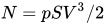
where: V – is the wind speed, p – is the air density, S – is the swept area.
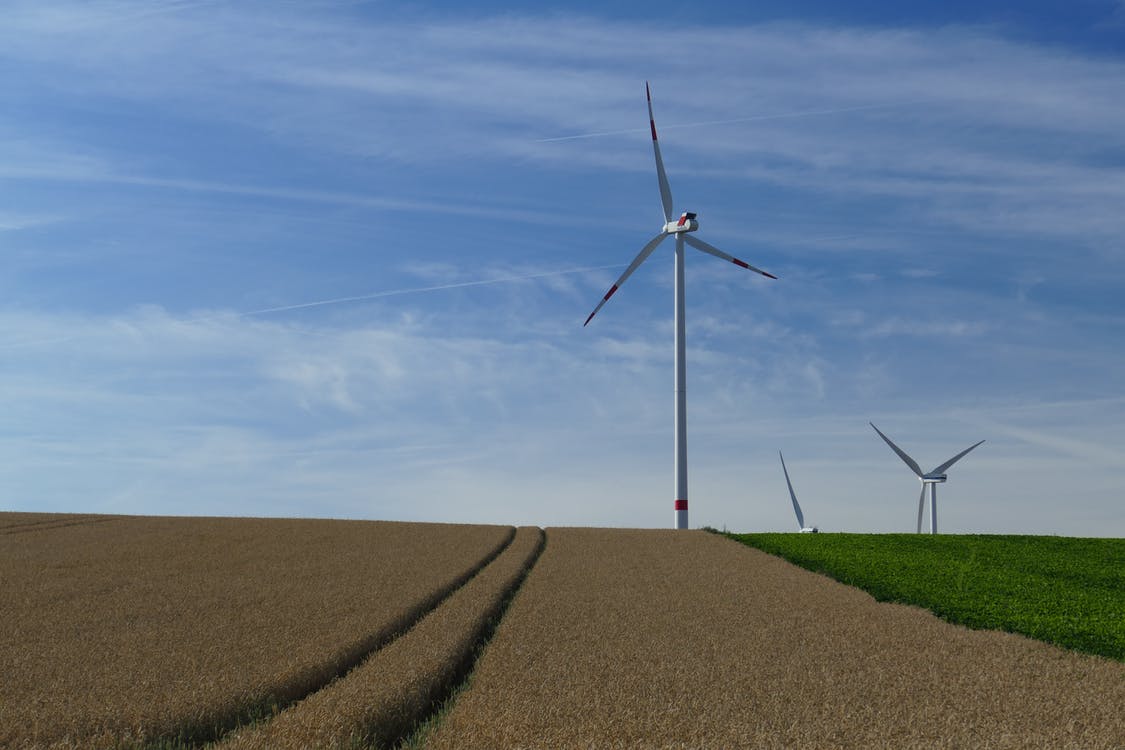
There are classifications of wind turbines by the number of blades, by the materials from which they are made, by the axis of rotation and by the pitch of the screw. There are two main types of wind turbines:
- With a vertical axis of rotation (“carousel” — rotary (including “Savonius rotor”, more precisely “Voronin Brothers rotor” In early October 1924, Russian inventors brothers Ya. A. and AA Voronin received a Soviet patent for a transverse rotary turbine, the following year Finnish industrialist Sigurd Savonius organized mass production of such turbines. The “glory” of the inventor of this novelty remained behind him), the “blade” orthogonal ones — the Darye rotor
- With a horizontal axis of circular rotation (winged). They can be high-speed with a small number of blades and slow-speed multi-blade, with an efficiency of up to 40%. There are also drum and rotary wind turbines.
Wind turbines, as a rule, use three blades to achieve a compromise between the amount of torque (increases with the number of blades) and the speed of rotation (decreases with the number of blades).
The practical part of the work
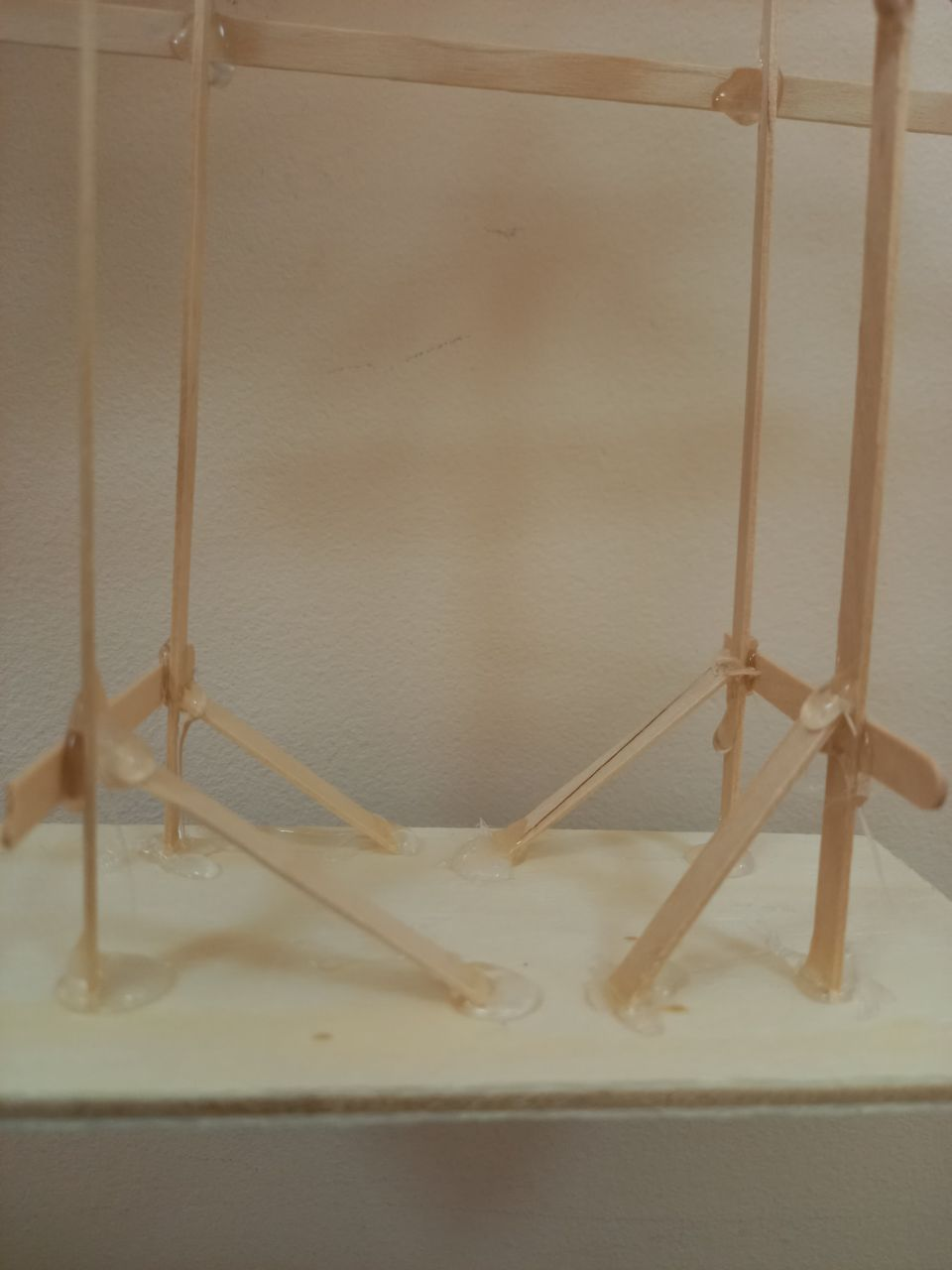
Step 1. Make a tower from a wooden stick. First, we insert 4 sticks vertically onto the plywood and glue them together with hot glue, if the sticks are not standing, you can attach supports nearby
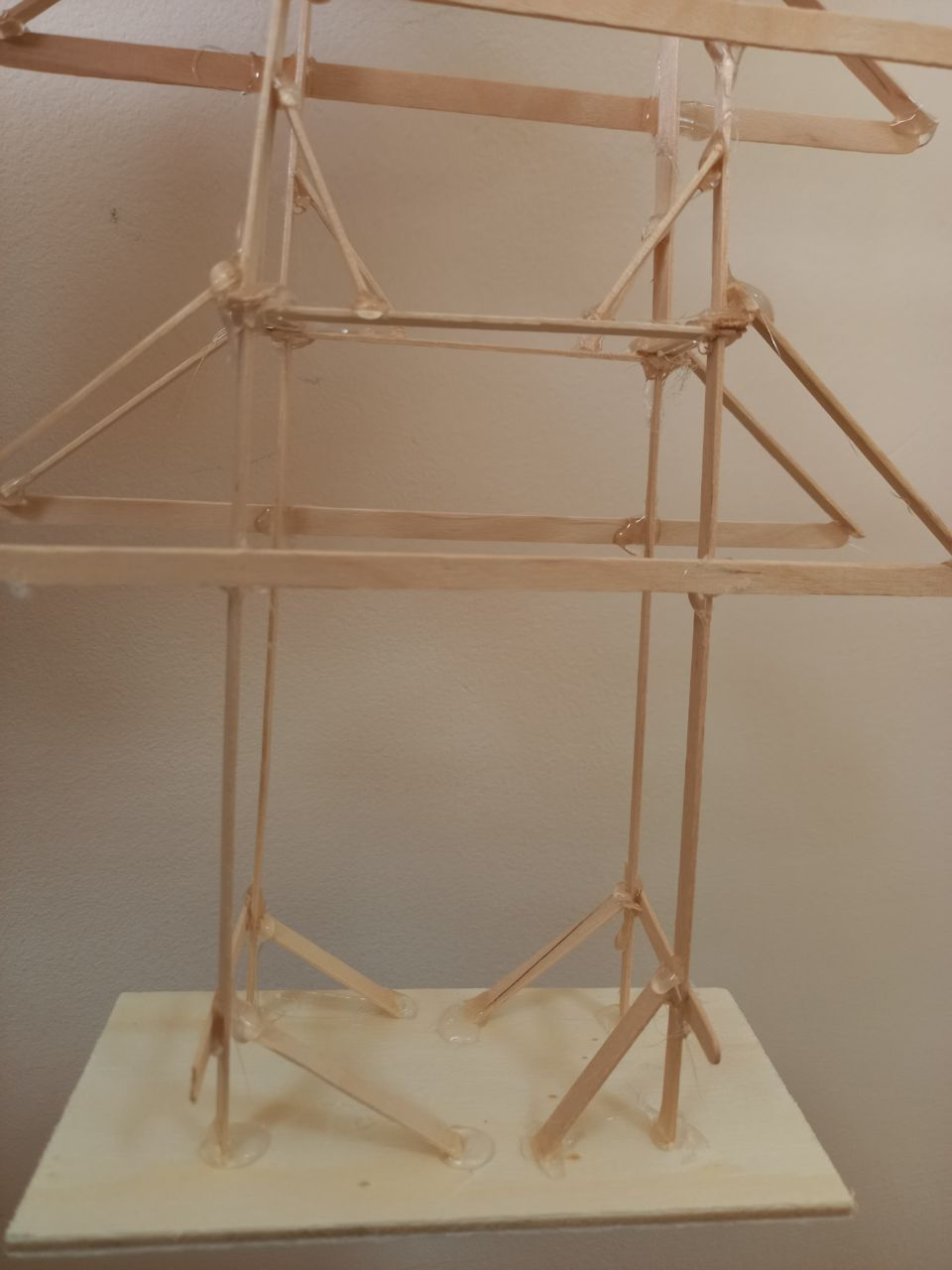
Step 2. In the same way, we connect all the sticks with hot glue as shown in the figure
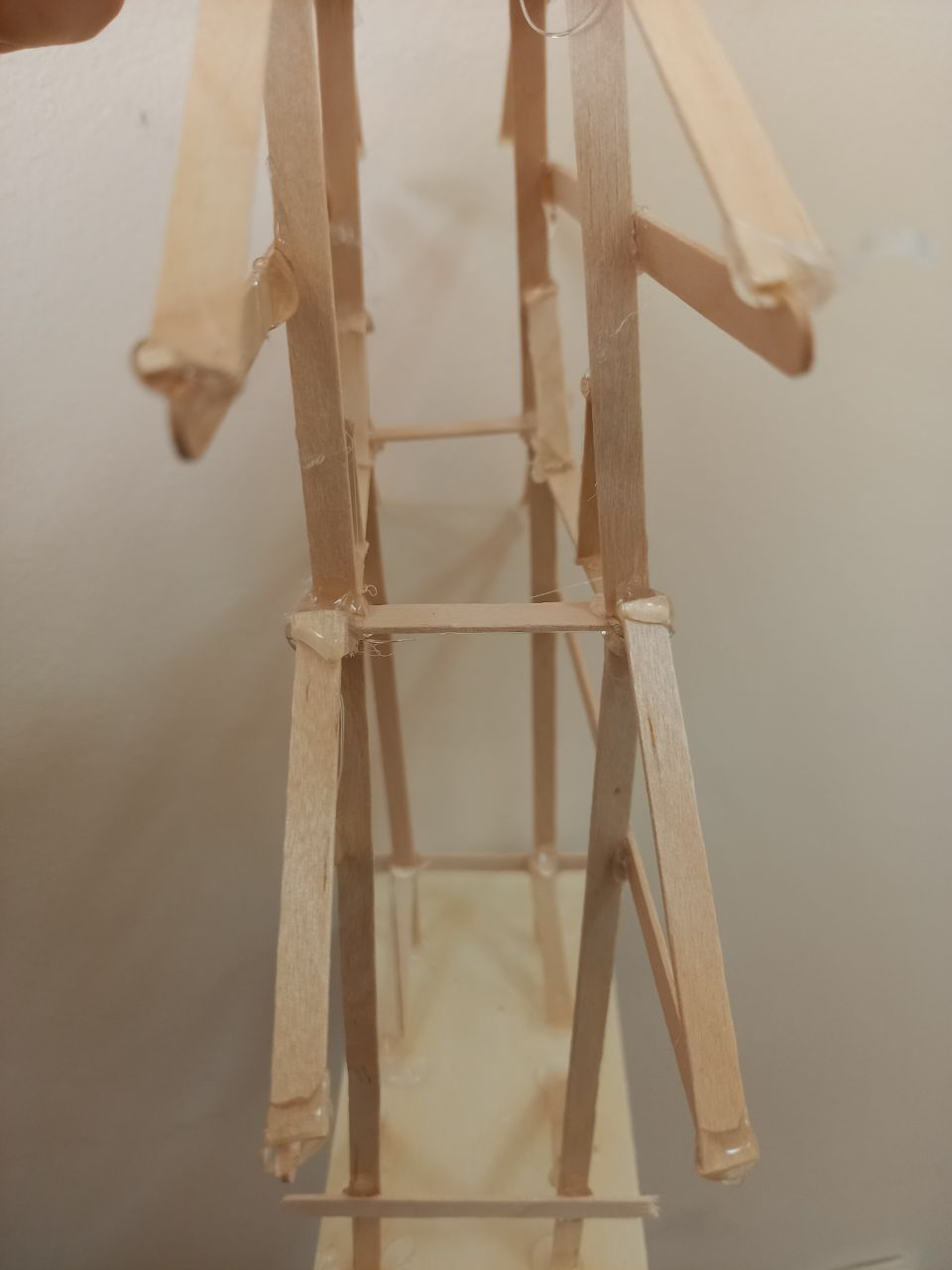
Step 3. The electric tower is ready
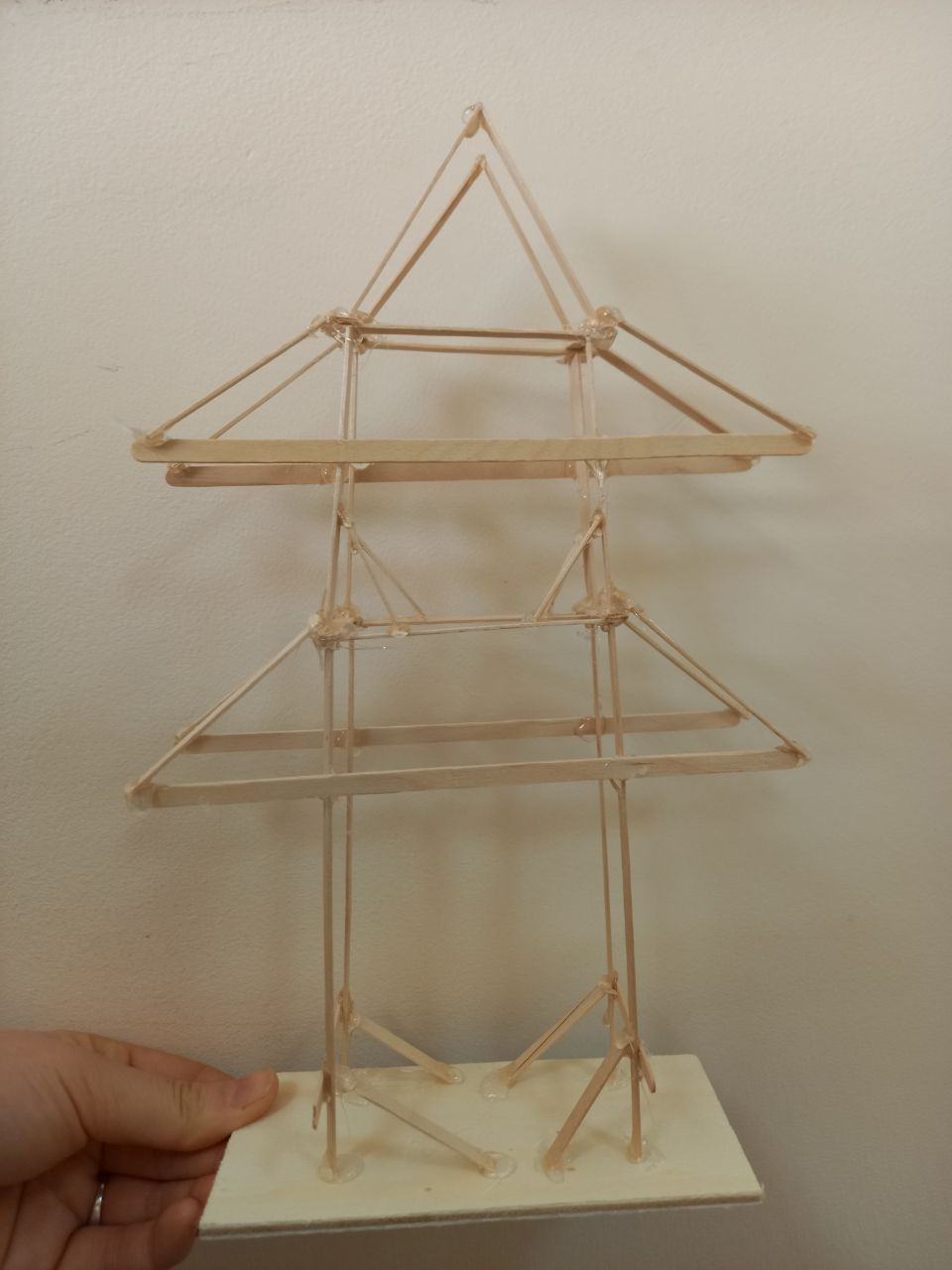
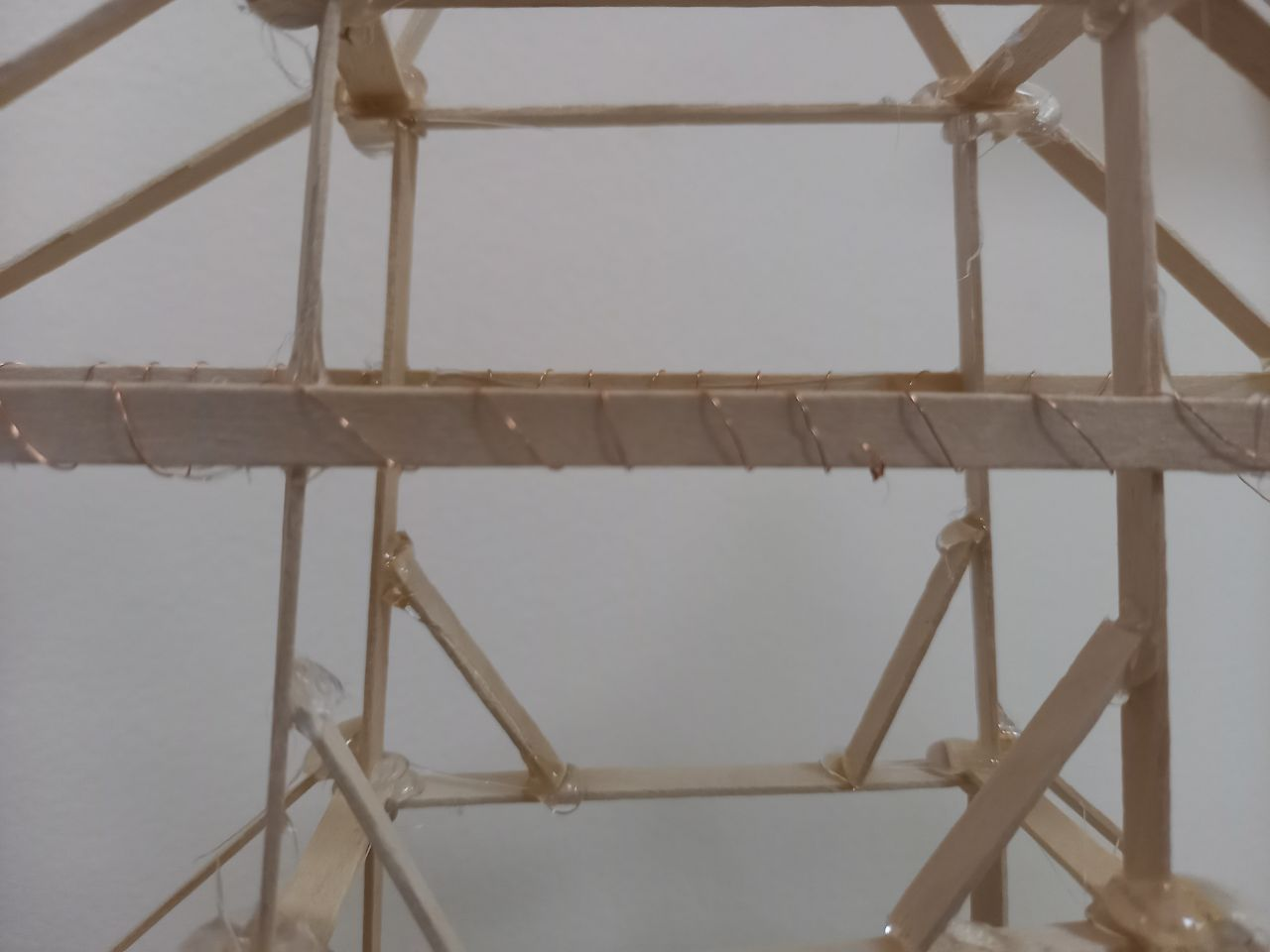
In this lesson we made an electric tower, in the next lesson we will make a house from where we will have a light bulb lit.