
Lesson 1
Project objective
- To familiarise pupils with energy sources, including solar energy;
- To develop students’ 4K skills;
- To make a solar tracker out of improvised materials.
Teacher’s guide
- In the experimental part of the project, pupils work in groups of 3-4 people.
- Pupils should be introduced to topics like ecology.
- Before starting the experimental part, familiarise and provide the students with all the necessary materials.
- Give a brief instruction on how to use the hot melt glue.
For the evaluation of the project, in the first week, provide this material (PBL rubrics) to the students so that:
- students understand in advance what criteria they need to be prepared for,
- students will be able to self-evaluate for their peers.
Theoretical part
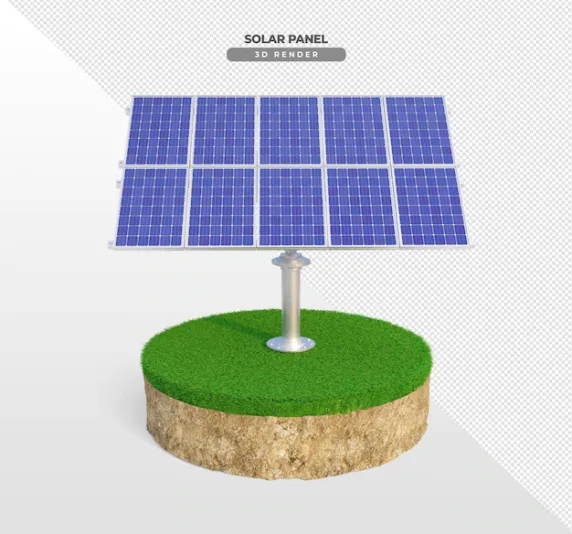
A solar tracker is a system that positions an object at an angle in relation to the sun. The most common applications for solar trackers are to position photovoltaic panels (PVs) so that they remain perpendicular to the sun’s rays, and to position space telescopes so that they can determine the direction of the sun. Photovoltaic solar trackers adjust the direction in which the solar panel operates according to the position of the Sun in the sky. By holding the panel perpendicular to the sun, more sunlight hits the solar panel, the glass light is reflected and more energy is absorbed. This energy can be converted into energy.
How does the tracker know where the sun is?
There are several methods of how a tracker ‘knows’ during the day that it is time to turn the panels.
Photodetectors. Special devices (photodetectors) receive sunlight, the system analyzes this data and adjusts the position of the photodetectors until the same amount of light falls on all the photodetectors. As soon as the light starts to fall at an angle again, the system recognises this and corrects the position again. It’s a simple, cost-effective solution, with the only drawback being that trackers don’t work on overcast skies. Manual control. You can save money by not using clever electronics, but by operating the tracker manually. Of course, this is not an option to increase daylight output, but it is much more convenient to change the seasonal angle of the panels.
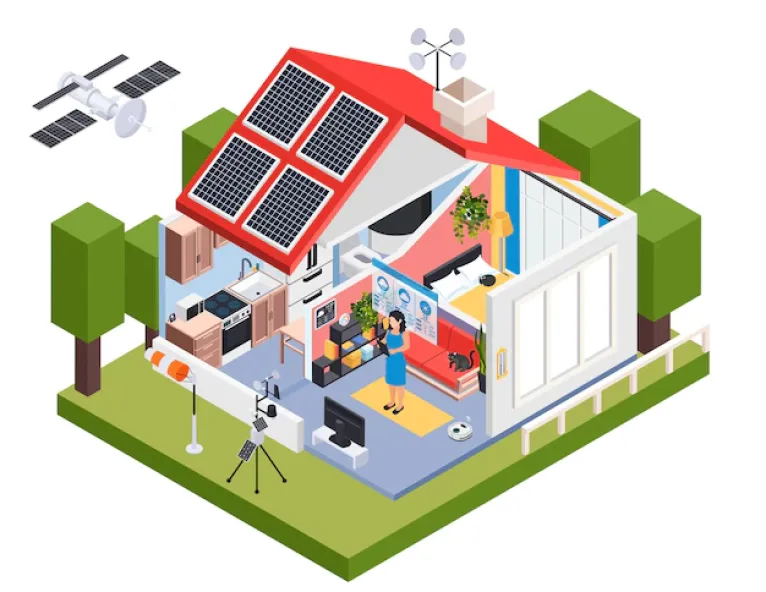
Timer. Another inexpensive option is to have the trackers change the position of the panels at pre-set intervals. That is, the system does not see the position of the sun, but understands that at a certain time the modules should be looking in a certain direction. This is acceptable as long as the system takes into account the annual change in the position of the sun in the sky. SPA (Solar Position Algorithm). The software, given the location of the tracker (coordinates and altitude), calculates exactly where the Sun will be at any given time interval. Based on this, the tracker rotates to the most favourable position. Does the tracker increase solar panel efficiency? Solar trackers can increase electricity production by around 25-30% and in some regions by as much as 40-50% compared to fixed angle modules.
Practical part
In week 1 we will prepare all the materials needed
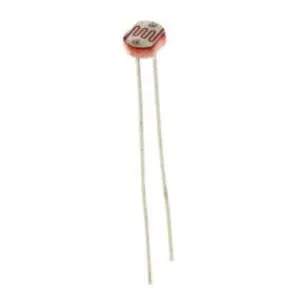
Photoresistor
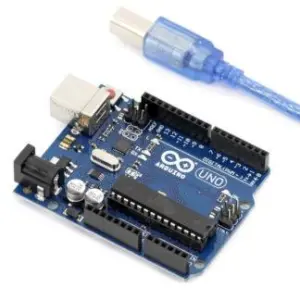
Arduino Uno board
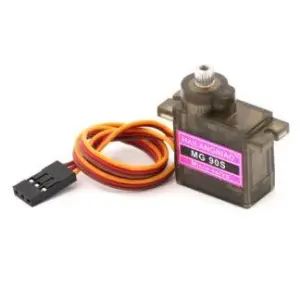
Servo motor
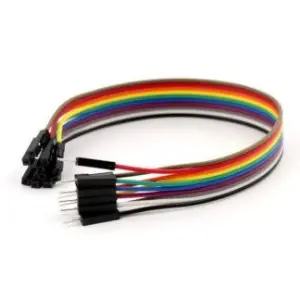
Papa-mama wires
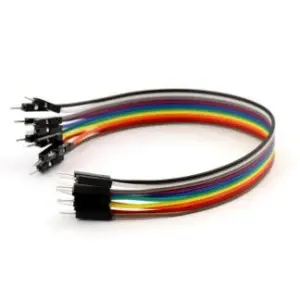
Papa-papa wires
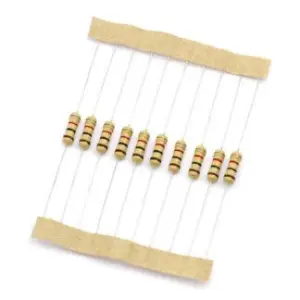
Resistors
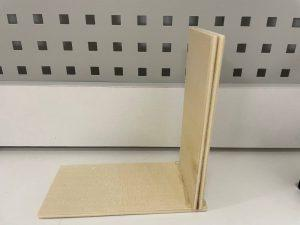
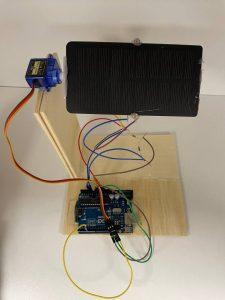
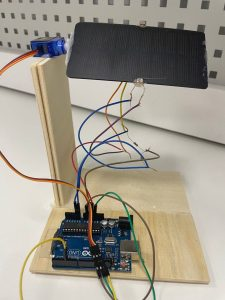
Step 1. Take 4 plywood and fix it with hot melt adhesive as shown in the picture.
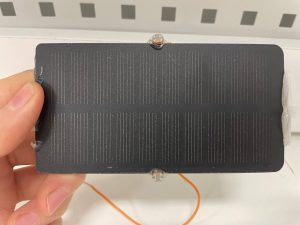
Step 2. The light sensors, aka photoresistors, are placed on the same front plane as the solar panel. And a servo motor is attached to the side.
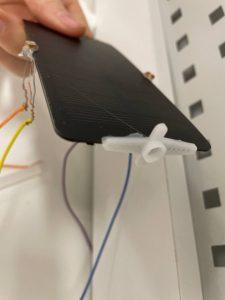
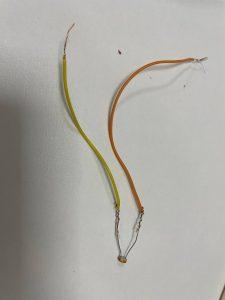
Step 3. Connect the wires to the photoresistor.
Step 4. Connect the motor to the servomotor output shaft. Secure the servomotor itself to the plywood with hot glue, as shown in the illustration.
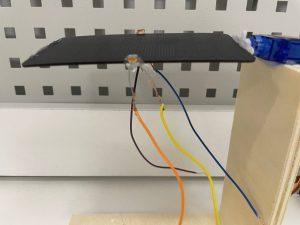
Step 5. Secure the Arduino Uno to the plywood with double-sided adhesive tape
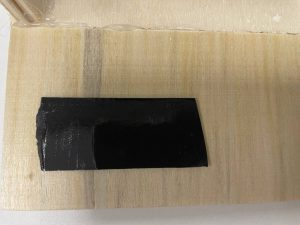
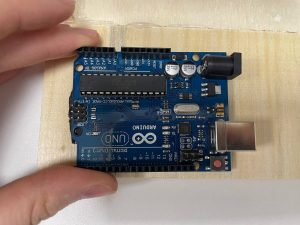
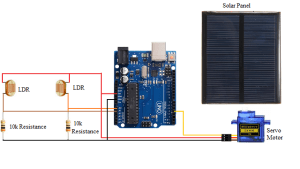
Step 6. Now assemble the remaining parts in accordance with the diagram
The scheme can be downloaded from the link
We are writing code on Arduino, to do this, follow the link
The finished prototype can be viewed in the video below:

Step 8. Let each team figure out how to improve this prototype
Homework
Each student should study the solar insolation of Kazakhstan, and find information about solar trackers and where they are located in the Republic of Kazakhstan.