
Lesson 1
Goals:
- study the lobes of the brain and their functions
- study injuries sustained during popular sports games
- build a brain model and visualize data with Arduino
- create a solution to mitigate the impact on the brain model
Expected results
Students should develop an understanding of:
- finding an idea for a project
- lobes of the brain and their functions
- study of literature in the field, work with sources
- creation of project prototypes
- improvement of the prototype, based on the received data
Interdisciplinary communication
- Biology (lobes of the brain and their functions)
- Physical culture (injuries received during a sporting event)
- Physics (working with electronics)
- Computer science (programming)
Introduction
Our brain is the most basic organ and thought center of the human being. Almost the entire life of a person depends on his work. In the process of life, the brain is exposed to a wide variety of influences, and we often encounter situations where even minor brain injuries lead to the most unpleasant consequences.
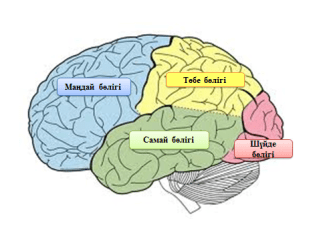
There are 4 main lobes in the brain: frontal, temporal, parietal, occipital. Different areas of the brain control certain functions. Thus, what function will be lost depends on the place of brain damage [1].
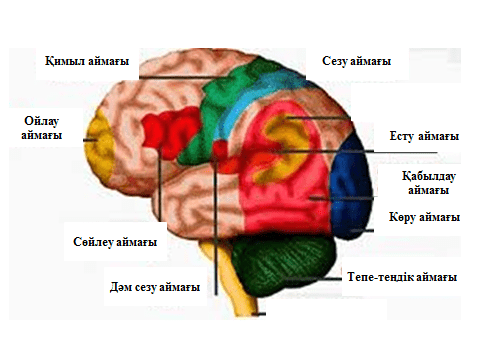
Especially during sporting events, the brain receives strong blows and is exposed to various kinds of influences. According to statistics, [2] athletes get the most brain damage during training sessions. To reduce injury and impact on the brain, athletes wear a wide variety of helmets: bicycle helmets, motorcycle helmets, riding helmets. Each of these helmets is aimed at protecting the head and brain in general, but in particular, those areas that are most often damaged, depending on the sport, are strengthened.

That is why our project is aimed at studying brain injuries and building a model for a detailed study of this problem. Each lobe of the improvised assembled brain will be equipped with sensors that will be connected to a microcontroller, which will in turn process and visualize the data. In this way, we will study brain injuries, we will be able to simulate impacts of different strengths and see the data coming from the sensors.
Resources used:
[2] https://publications.aap.org/pediatrics/article/144/5/e20192180/38225/Concussion-Incidence-and-Trends-in-20-High-School?autologincheck=redirected
Practical part
At this stage of the lesson, it is explained what lobes of the brain are and show them on a gif-animation.
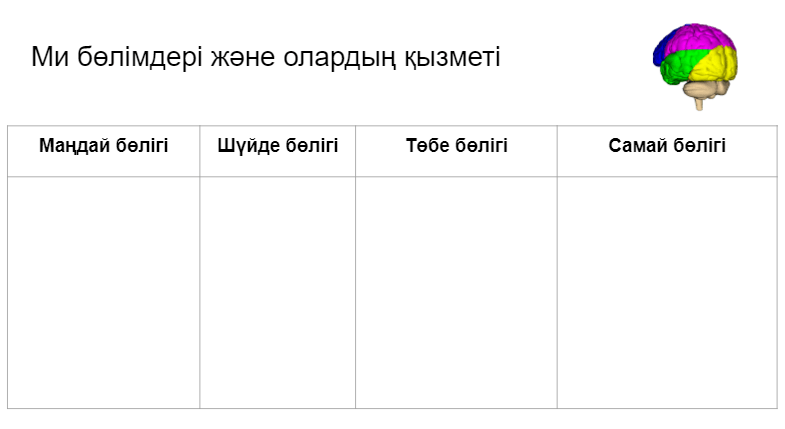
Group work: mini-research work on the study of the function of the brain lobes and filling in the table with the data obtained.
Give students material [1] about the lobes of the brain and their functions. Division into groups:
- 4 groups on the function of each lobe of the brain
- 4 groups for brain damage from injuries
- You can cut parts of the material and distribute to students or distribute general material, but so that everyone reads their own material. This activity takes approximately 10 minutes.
Next, the students fill in the table “Parts of the brain and their functions”, based on the material read and discuss the completed table.
1.Create a brain model
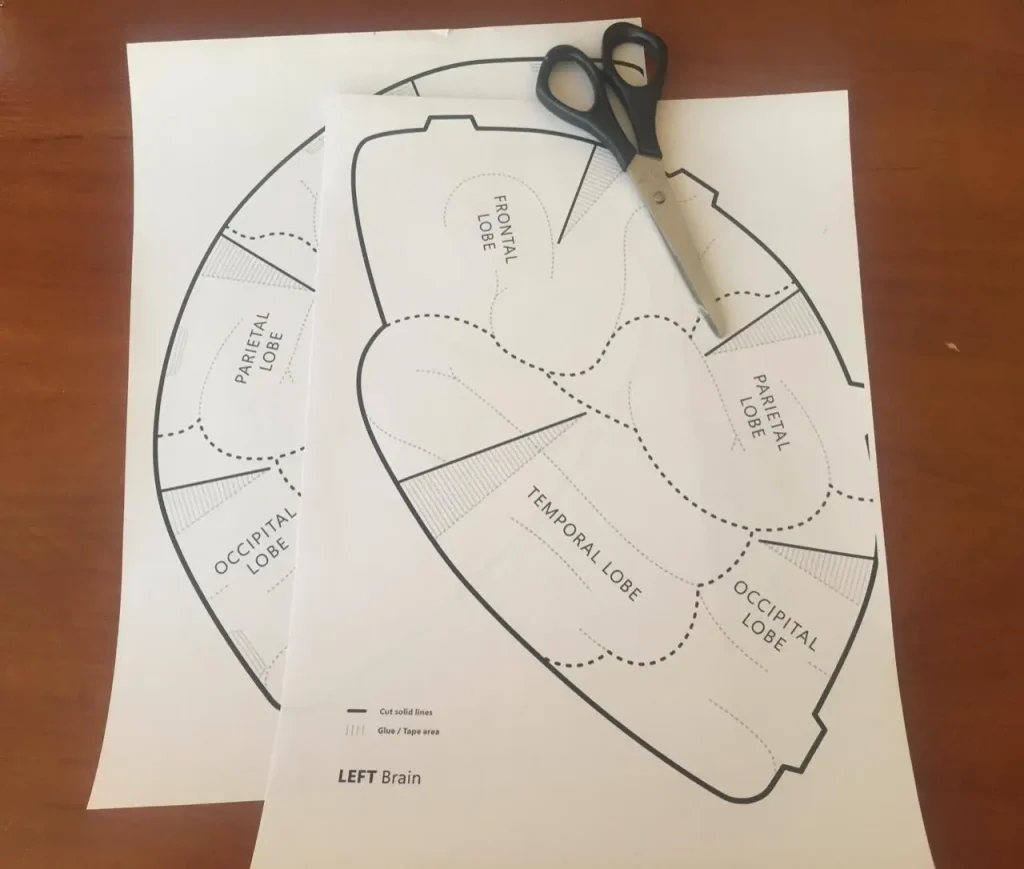
Print the helmet (you can download from the link https://aka.ms/brain-hat-template/en?azure-portal=true)
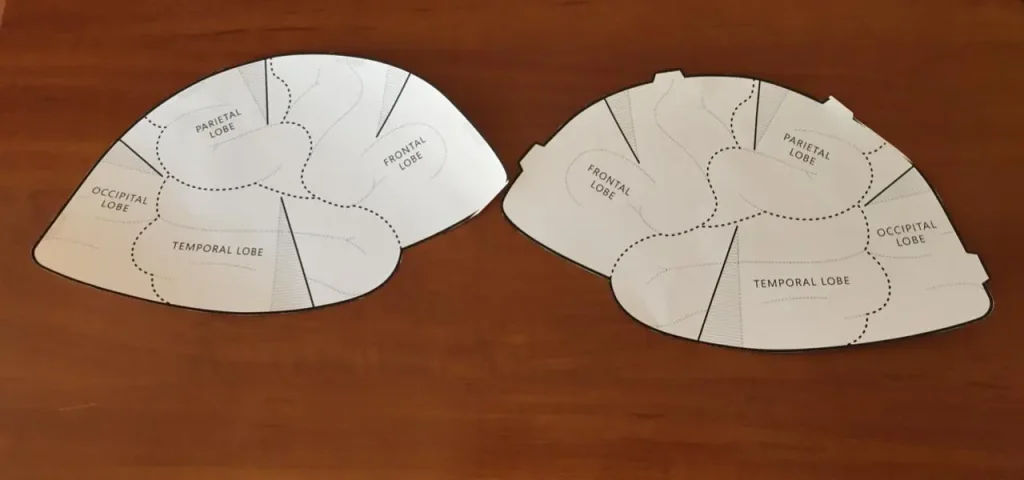
Cut out both parts of the helmet along a solid black line.
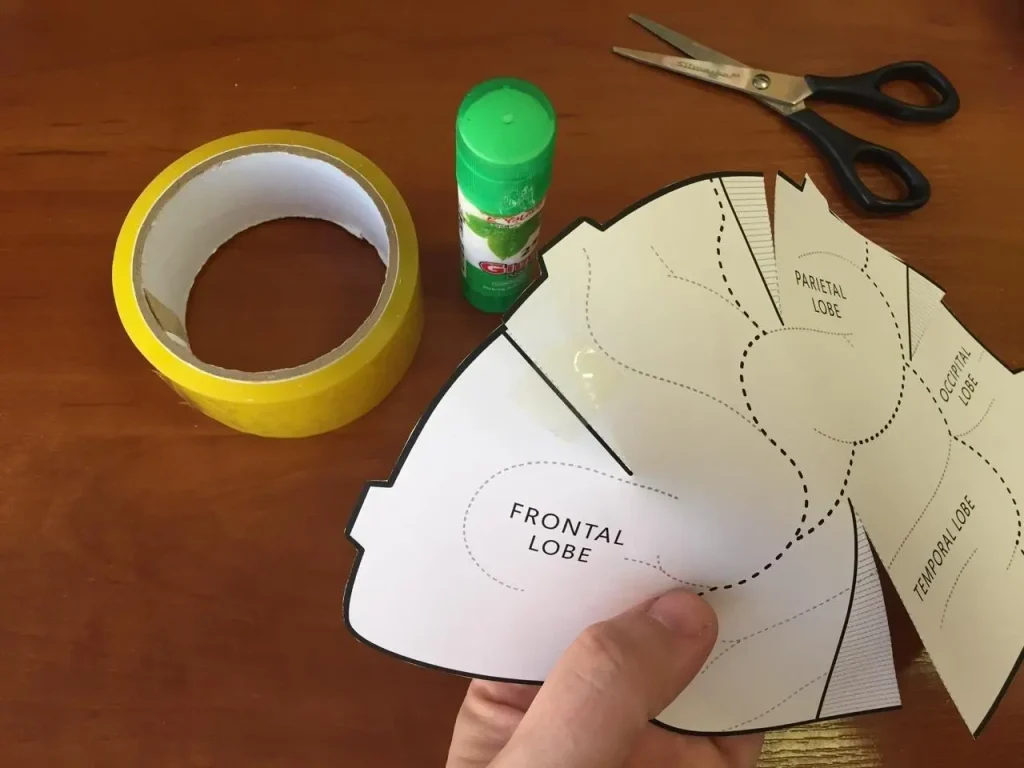
Locate the incision line in each lobe of the brain, place it over the shaded area, and then glue it with tape or glue stick. So we get the shape of a hemisphere on each side of the helmet
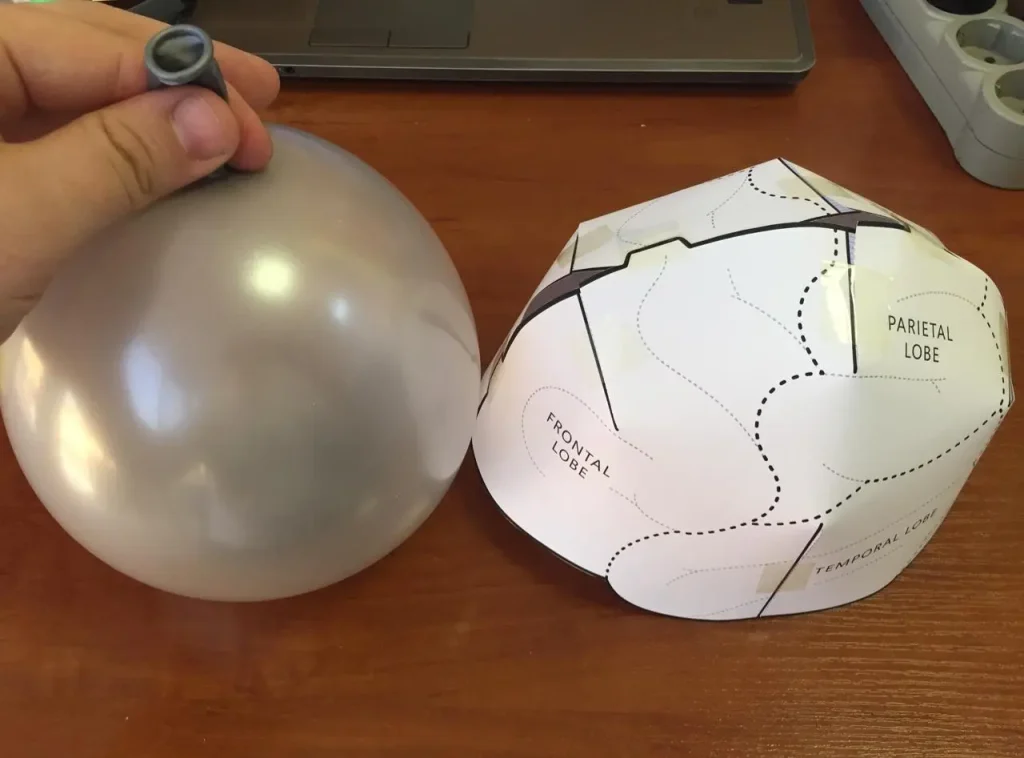
Using the tabs on the top of the helmet, secure both halves with tape or glue.
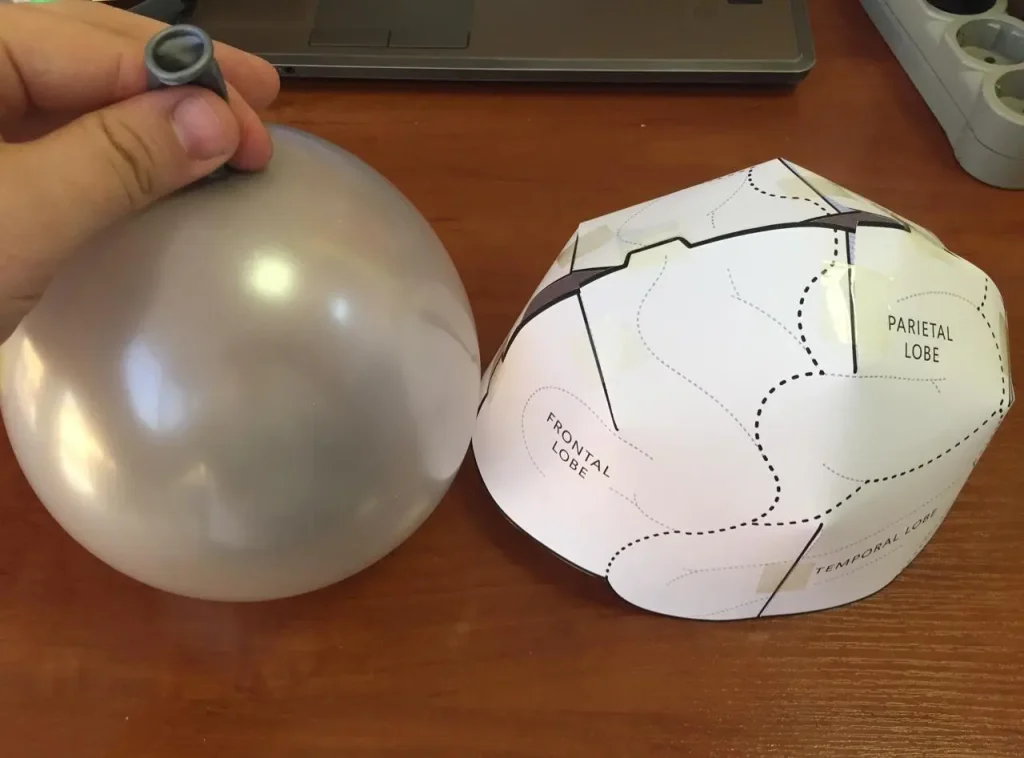
Inflate a balloon the size of the resulting brain (if realistic, you can pour water into it)
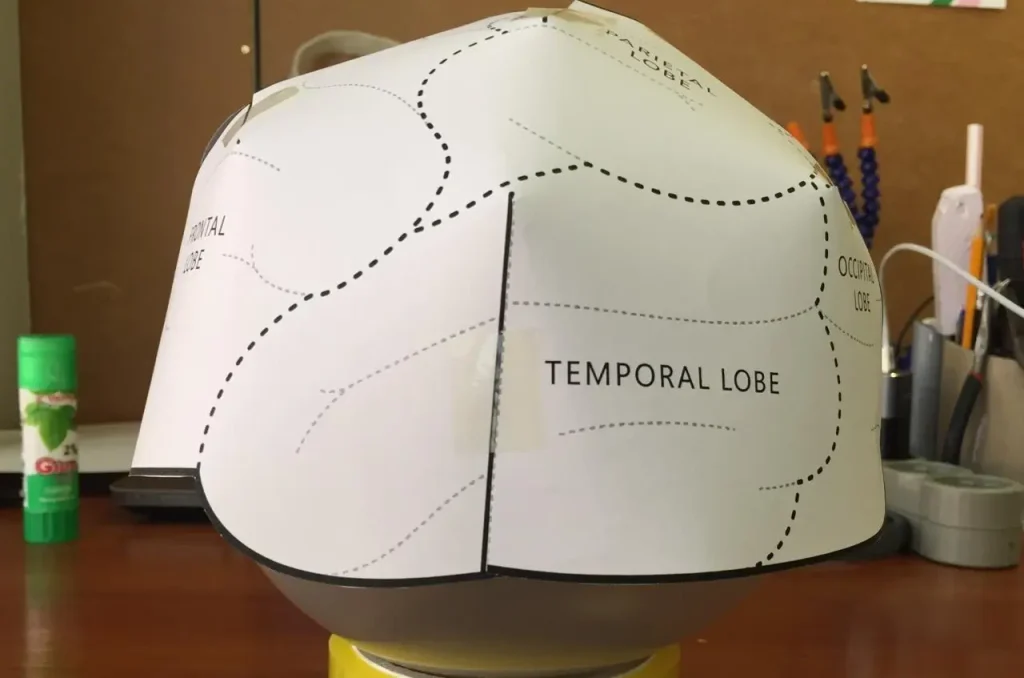
Put the helmet on the balloon. Make sure it fits snugly. Remove the helmet from the balloon and tape where needed.
Homework:
Mini-study on the topic “sports and brain injuries”
It’s about a study about brain injuries from sports competitions. Students study material on brain injuries during a sporting event. After that, the table “Consequences of damage to the lobes of the brain” is filled in and a discussion is underway.
The lesson is summed up and reflection is carried out.
[1] https://www.msdmanuals.com/home/brain,-spinal-cord,-and-nerve-disorders/brain-dysfunction/brain-dysfunction-by-location
[2] https://publications.aap.org/pediatrics/article/144/5/e20192180/38225/Concussion-Incidence-and-Trends-in-20-High-School?autologincheck=redirected