
Lesson 2
Work on creating a model of the brain
Students assemble the model according to the instructions
- Assembling a brain model
- Collect sensors
- Assemble the percussion mechanism
Students assemble the model according to the instructions
You can additionally offer a mini-competition for the most creative model
Practical part of the work
- Create touch sensors for the brain model
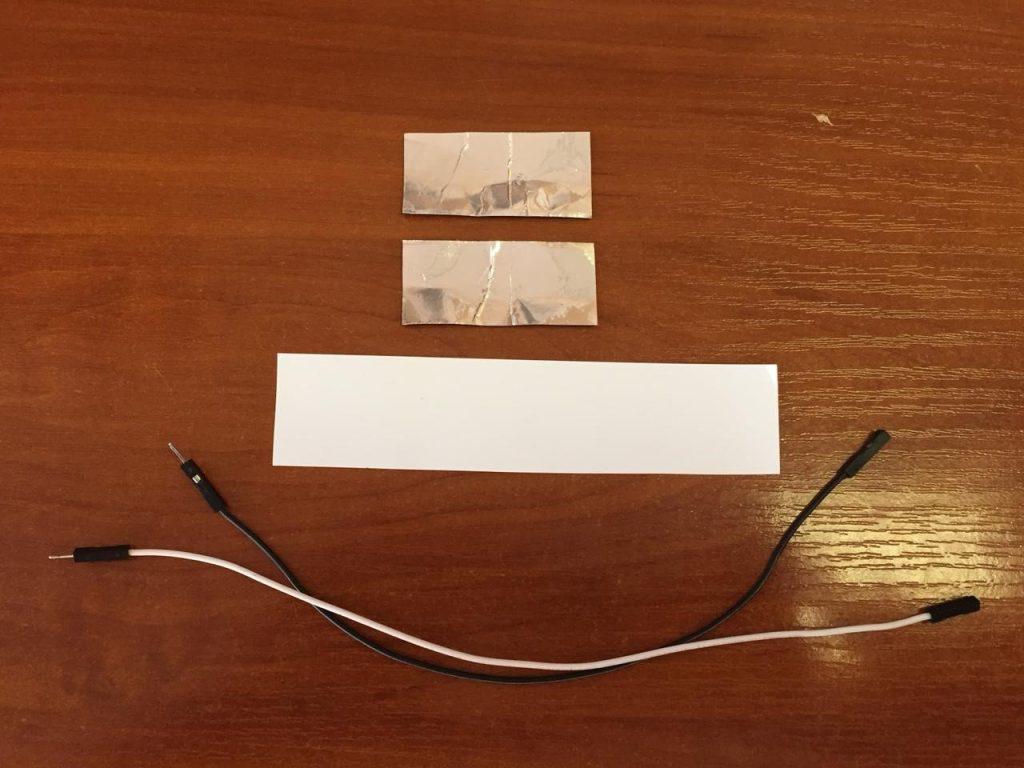
Prepare materials. To make your first touch sensor, you will need 1 piece of cardboard or thick paper 3 x 12 cm, 2 pieces of copper or aluminum tape 2.5 x 5.5 cm and 2 connecting wires with female-to-female jumpers.
Fold the cardboard in half along the entire length.
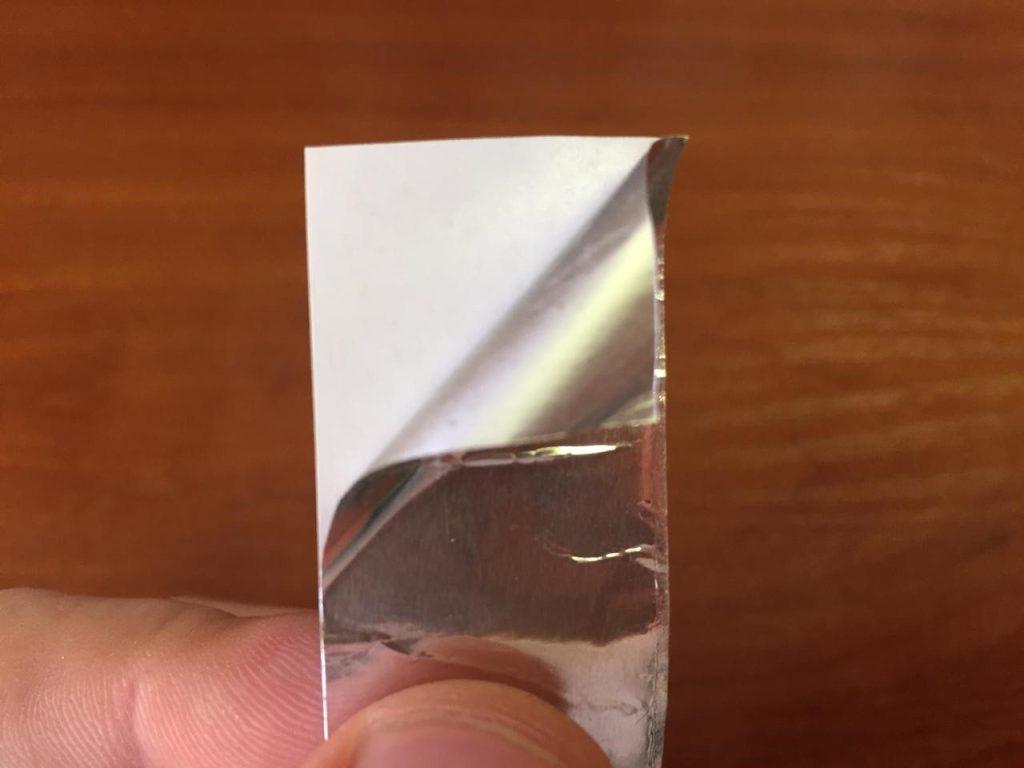
Remove the backing from the copper/aluminum tape being careful not to wrinkle or bend it.
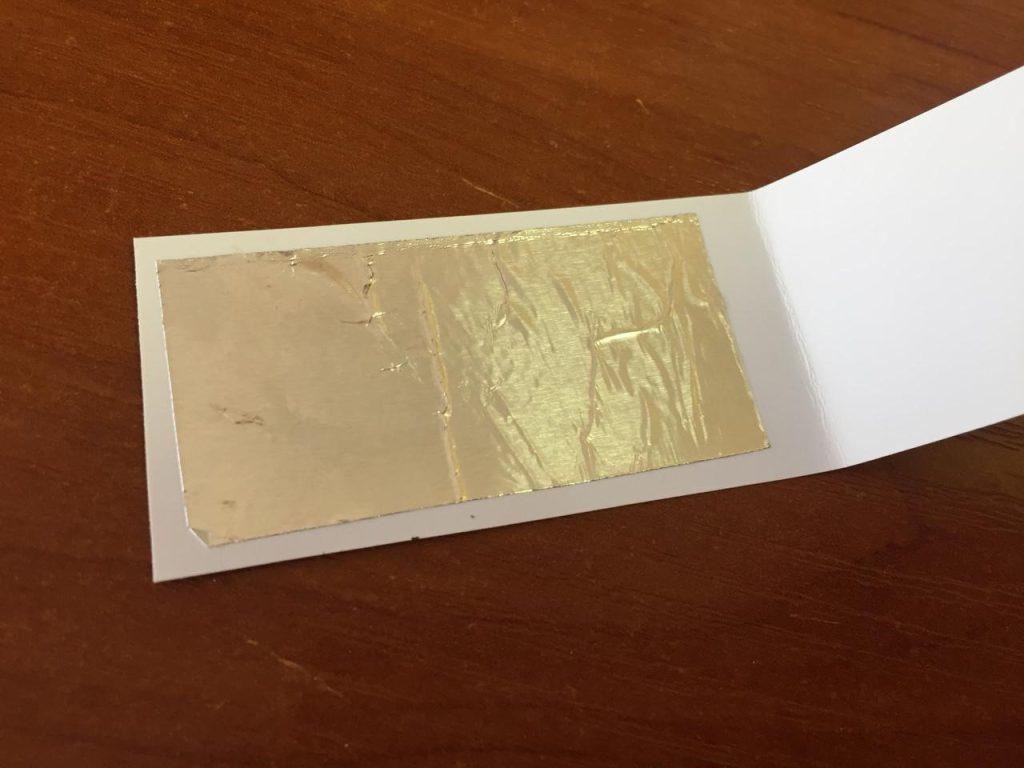
Place the copper/aluminum tape in the middle of one of the resulting sides on the inside of the folded cardboard.
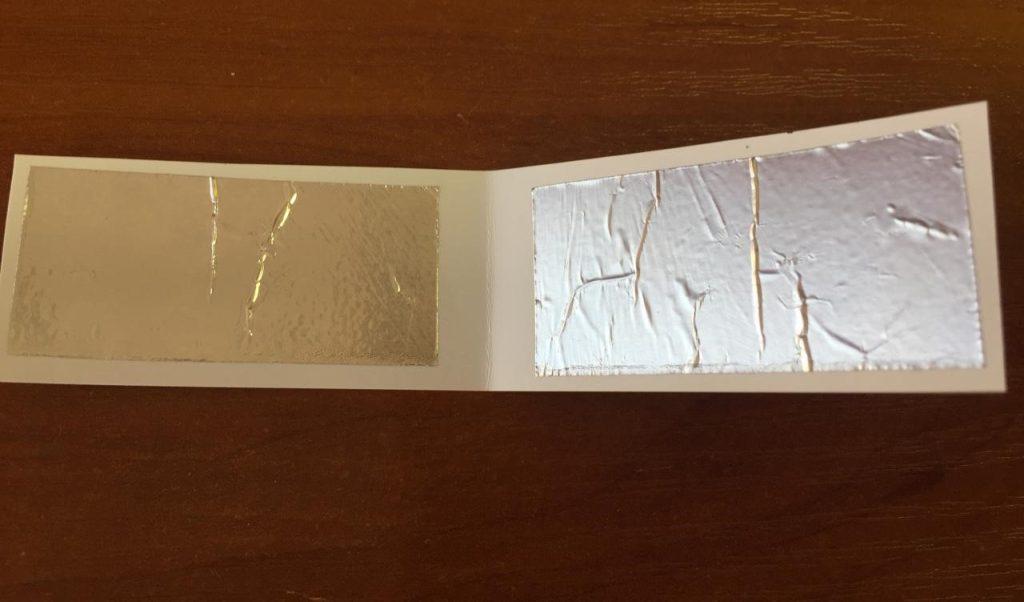
Do the same for the other side of the folded cardboard.
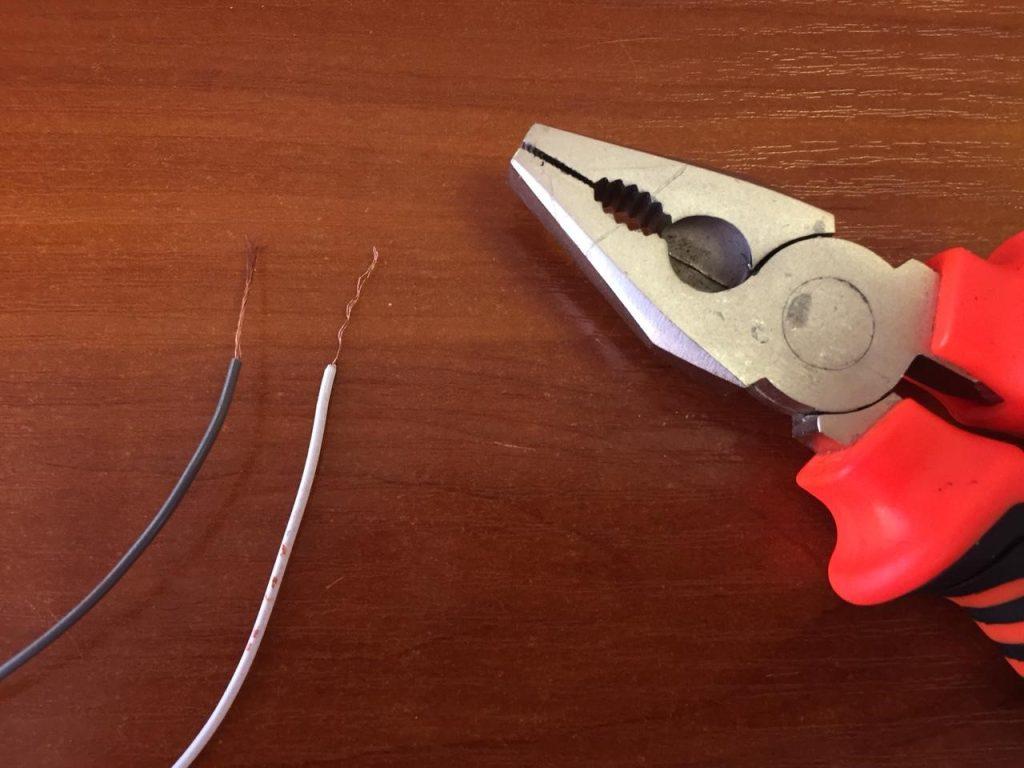
Remove 2.5 cm of insulation from both wires.
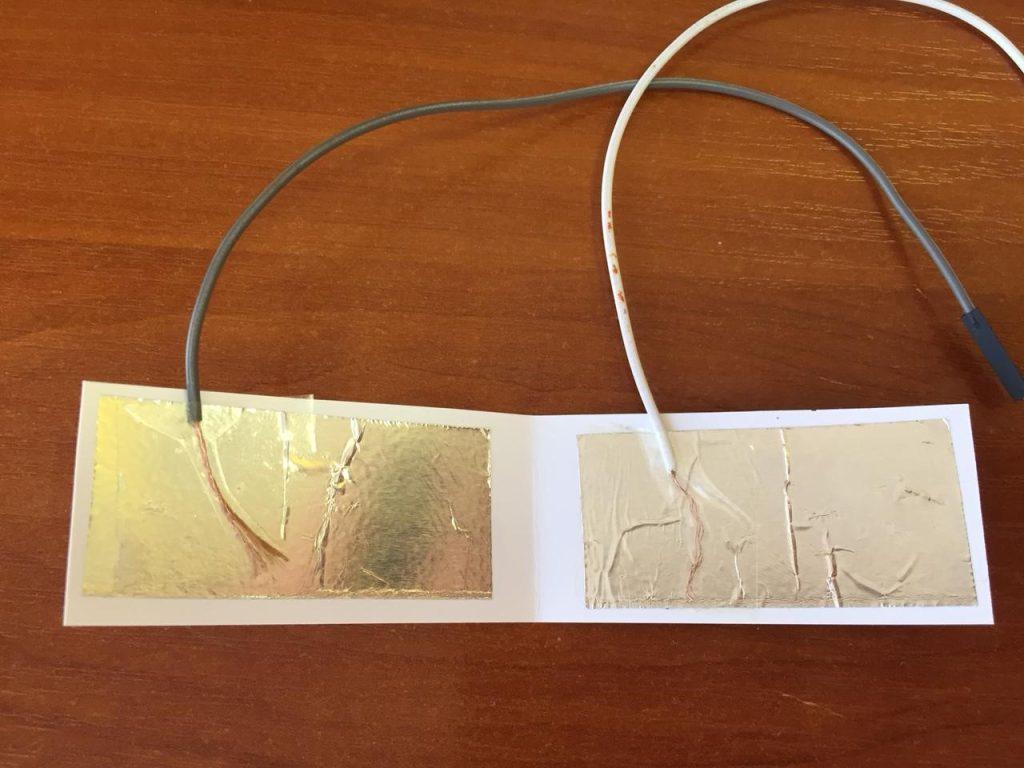
Using clear tape or copper/aluminum tape, attach one wire to the inside edge of one piece of copper/aluminum tape and the other to the outside edge of another piece of copper/aluminum tape. Be sure to leave the center of the copper/aluminum tape open.
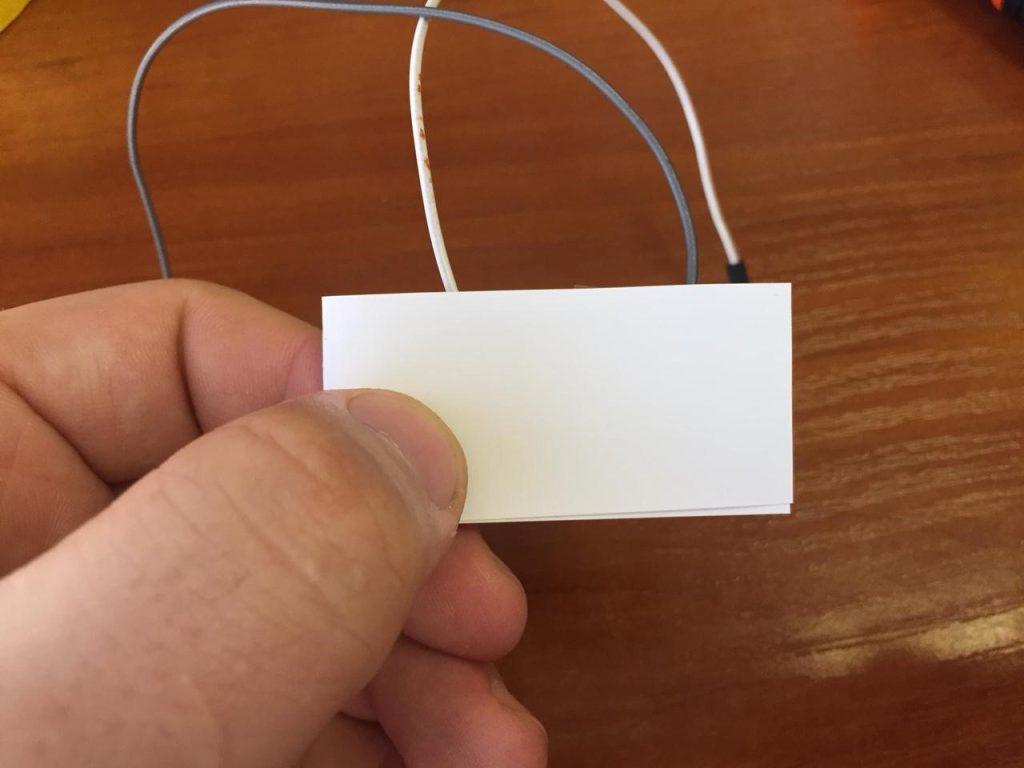
Fold the paper in such a way to get a multilayer sensor.
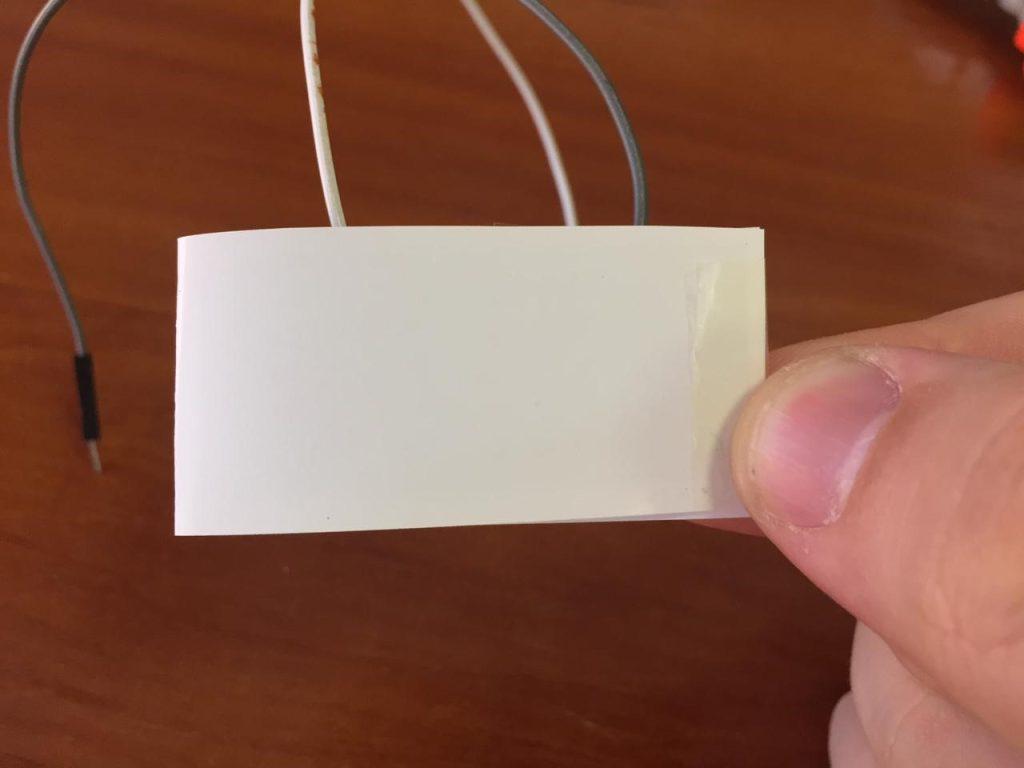
Seal the edges on all sides with transparent tape and attach the wires to the sensor paper.
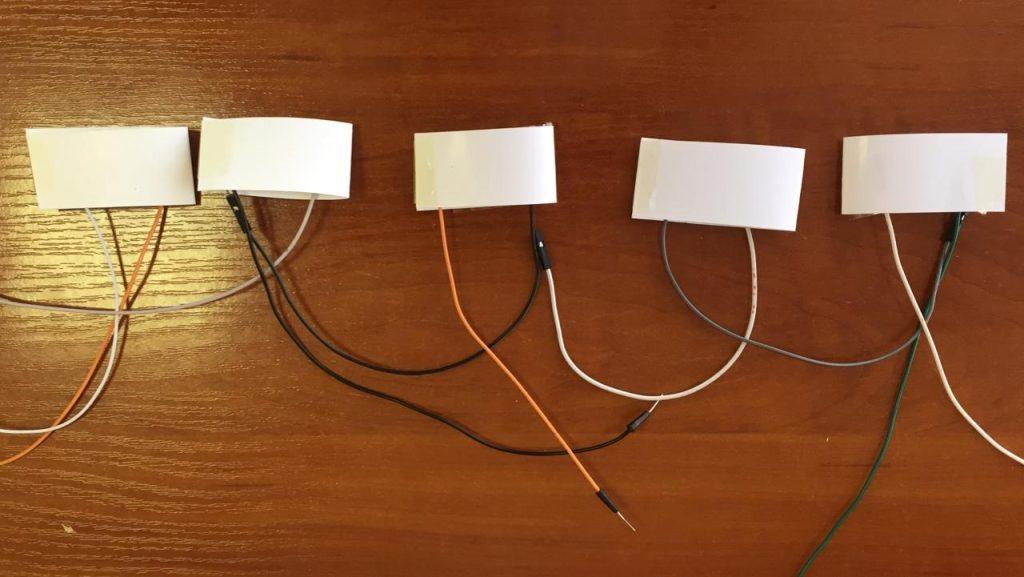
Repeat the steps four times for a total of 5 sensors.
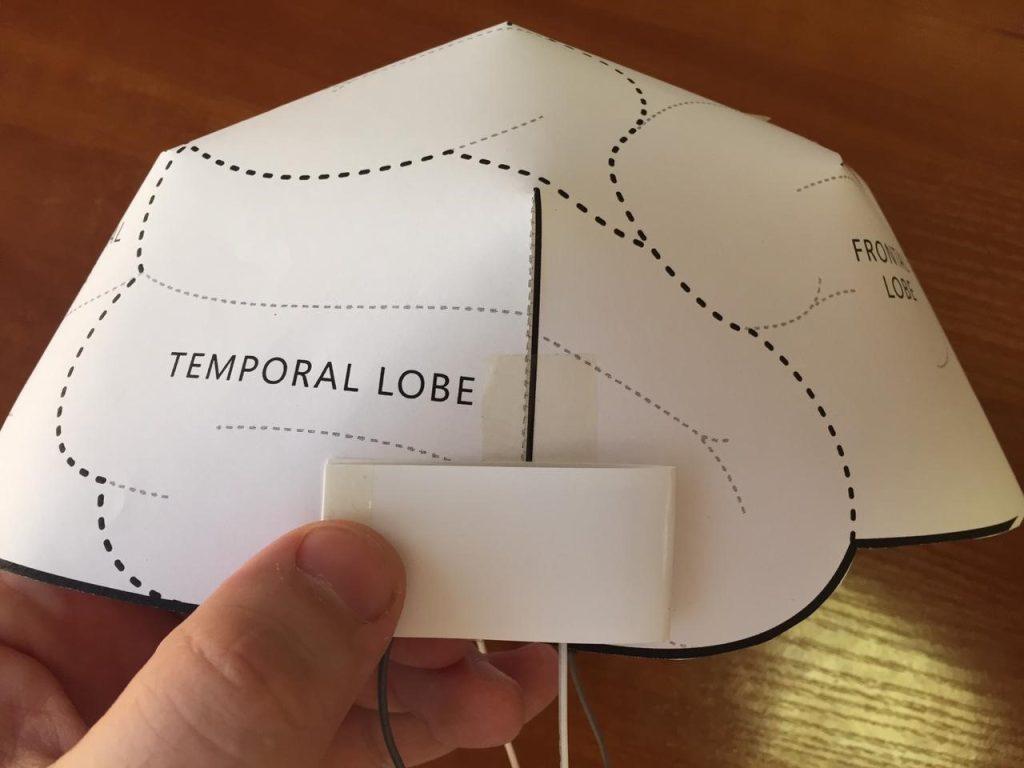
Glue the transducer to each of the main lobes of the brain (frontal, right temporal, left temporal, occipital, and parietal).
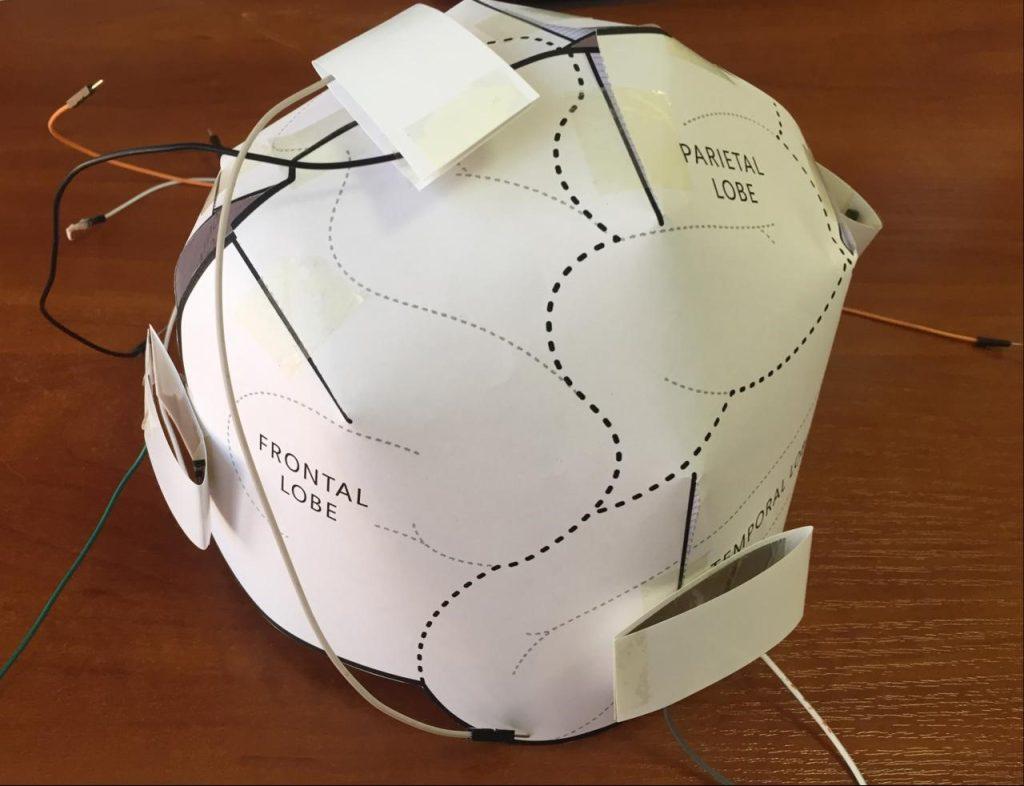
With all the sensors connected, the helmet should look like the one shown in the picture above. For the convenience of subsequent prototyping, it is recommended to label each lobe with the sensor installed, and then connect it to the ends of the wires on the breadboard.
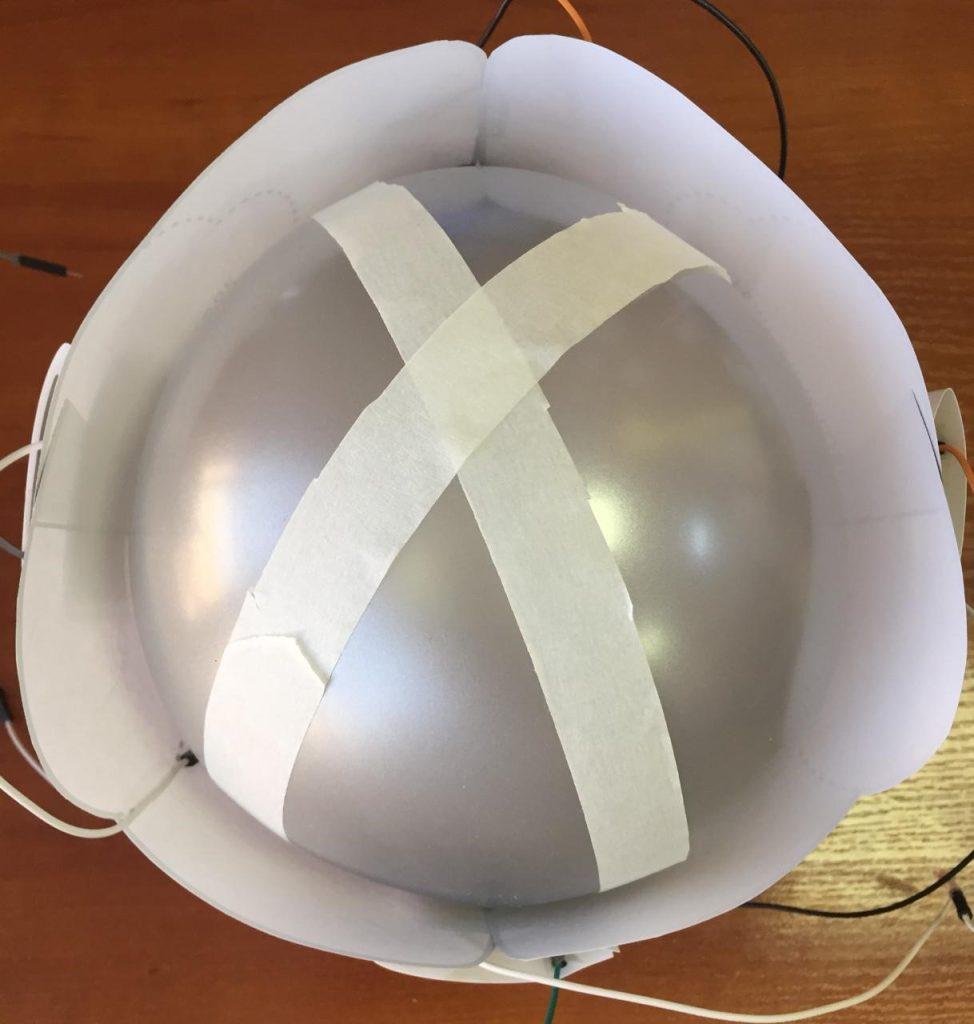
Use duct tape/painting tape/duct tape to attach the paper brain to the balloon
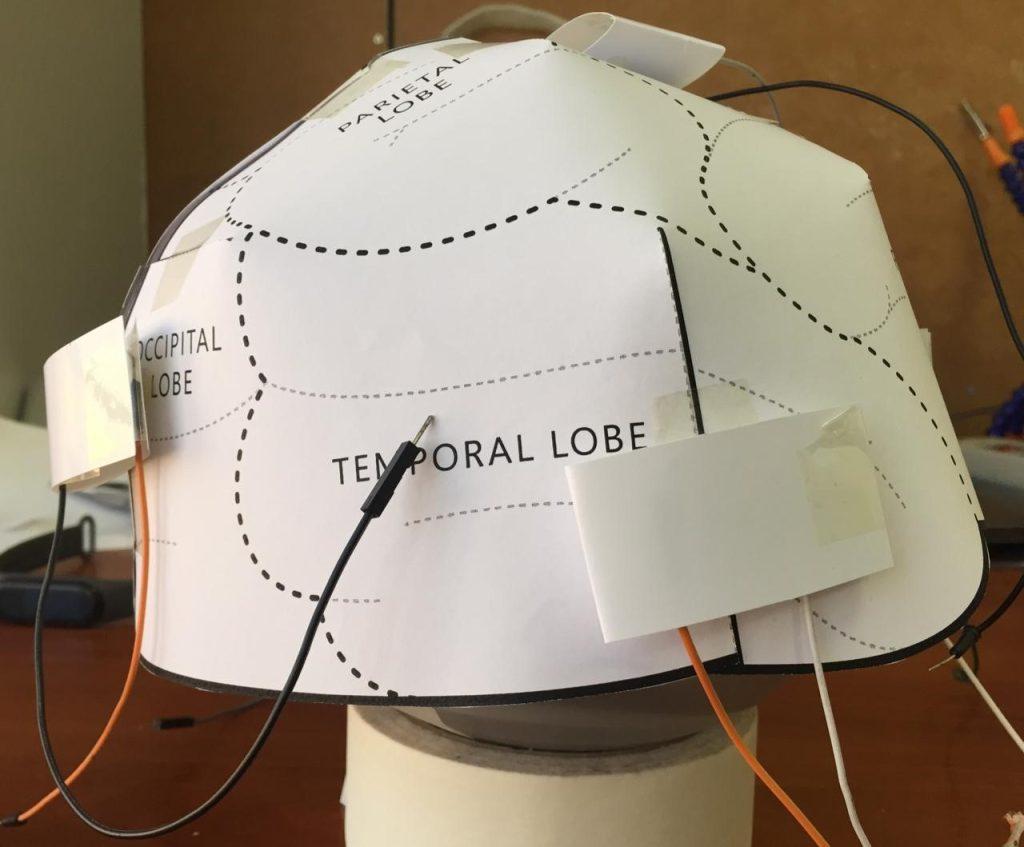
Turn the balloon upside down and place it in a container or place it on a stand. Set it aside.
3.Create a impact mechanism
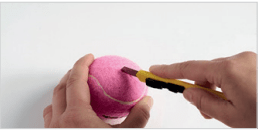
Take a tennis ball and carefully make a slit in it about an inch wider than the puck.
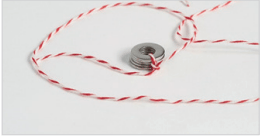
Tie several pucks (you can use any objects that are suitable in weight and size) to one end of the rope. They will act as an anchor for the tennis ball.
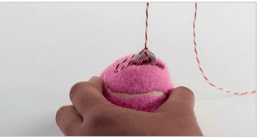
Squeeze the tennis ball to open the slot and lower the anchor into the tennis ball
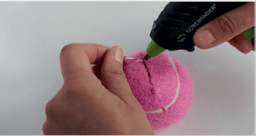
Fill the tennis ball about 2/3 full with pucks, then seal it with hot glue.
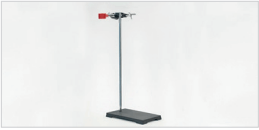
Assemble a structure to which you can attach a rope and a tennis ball. It can be just a table or a few pieces of wood and a clamp. In this example, we are using a laboratory rack.
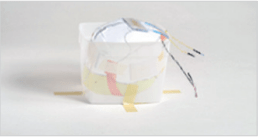
Tape the container with the brain model to the table at the experiment site.