
Lesson 1
Goal
- The study and research of plastic materials that harm the environment, the animal world and nature
- Creative recycling. Creation of design projects using used plastic waste.
Interdisciplinary communication:
Natural science
Artistic labor
Teacher’s Guide
For project assessment, in the first week, provide this material (PBL rubrics) to students in order to:
– the students understood in advance what criteria they need to prepare for,
– students were able to independently evaluate their colleagues.
Theoretical part
What is plastic waste?
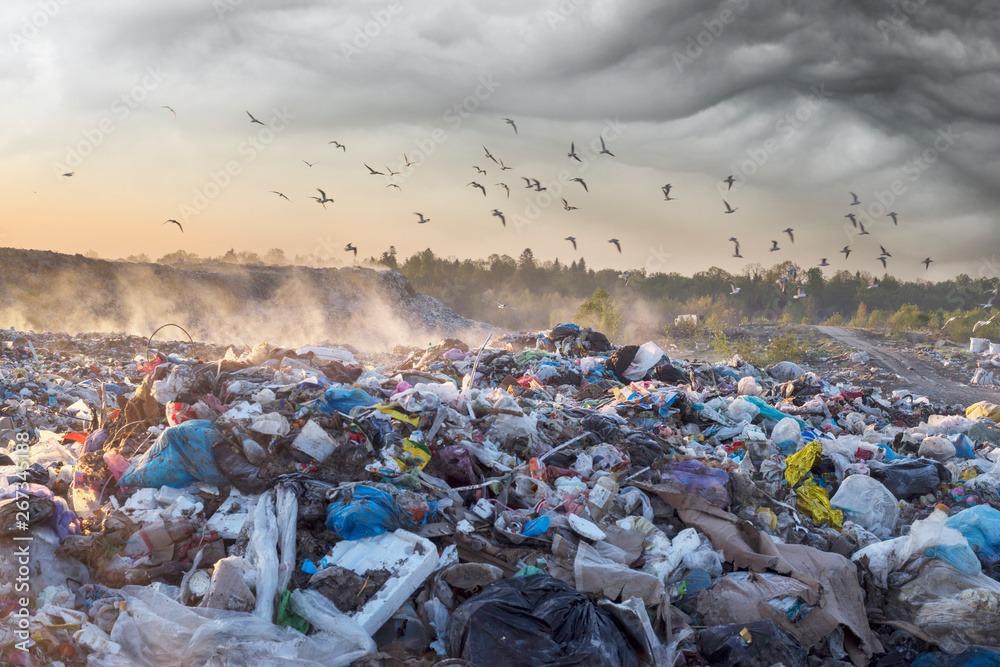
Plastic waste or plastic pollution is “the accumulation of plastic items (like plastic bottles and more) in the Earth’s environment that negatively impacts wildlife, wildlife habitats and humans.”
Much of what we consume is made from plastic (like plastic bottles and food containers) because it’s inexpensive yet durable. However, plastic is slow to decompose (it takes over 400 years) due to its chemical structure, which is a huge problem.
Reducing plastic consumption and raising awareness of plastic recycling are critical if we are to solve the problem of plastic waste and pollution on our planet.
Plastic pollution has become one of the most pressing environmental issues as the rapidly growing production of single-use plastic products exceeds the world’s ability to combat them. Plastic pollution is most visible in developing countries in Asia and Africa, where garbage collection systems are often inefficient or non-existent. But in developed countries, especially those with low levels of recycling, there are also problems with the proper collection of discarded plastic. Plastic trash has become so ubiquitous that it has sparked efforts to write a global compact negotiated by the United Nations.
How did it happen?
Plastics made from fossil fuels are just over a century old. The production and development of thousands of new plastic products accelerated after World War II, transforming the modern era so much that life without plastic would be unrecognizable today. Plastics have revolutionized medicine with lifesaving devices, made space travel possible, lightened cars and planes to save fuel and pollution, and saved lives with helmets, incubators and clean drinking water equipment.
However, the convenience that plastic offers has led to a culture of single use that exposes the dark side of the material: Today, single-use plastic makes up 40 percent of the plastic produced each year. Many of these products, such as plastic bags and food wrappers, have a shelf life of minutes to hours, but they can persist in the environment for hundreds of years.
Plastic in numbers
Some key facts:
- Half of all plastics ever made have been made in the last 15 years.
- Production increased exponentially from 2.3 million tons in 1950 to 448 million tons by 2015. Production is expected to double by 2050.
- Every year, about 8 million tons of plastic waste enters the oceans from coastal countries. It’s like putting five bags of trash on every foot of coastline around the world.
- Plastics often contain additives that make them stronger, more flexible and more durable. But many of these additives can extend the life of foods if they become trash, up to 400 years, by some estimates, to decompose.
How plastic moves around the world
Most of the plastic debris in the oceans, the last shell of the Earth, flows from the land. Garbage is also carried to the sea by large rivers that act like conveyor belts, picking up more and more garbage as they move downstream. Once at sea, most of the plastic waste remains in coastal waters. But once in the ocean currents, it can be transported around the world.
On Henderson Island, an uninhabited atoll in the Pitcairn Group isolated midway between Chile and New Zealand, scientists have found plastic items from Russia, the US, Europe, South America, Japan and China. They were swept into the South Pacific by the circular ocean current in the South Pacific.
Harm to wildlife
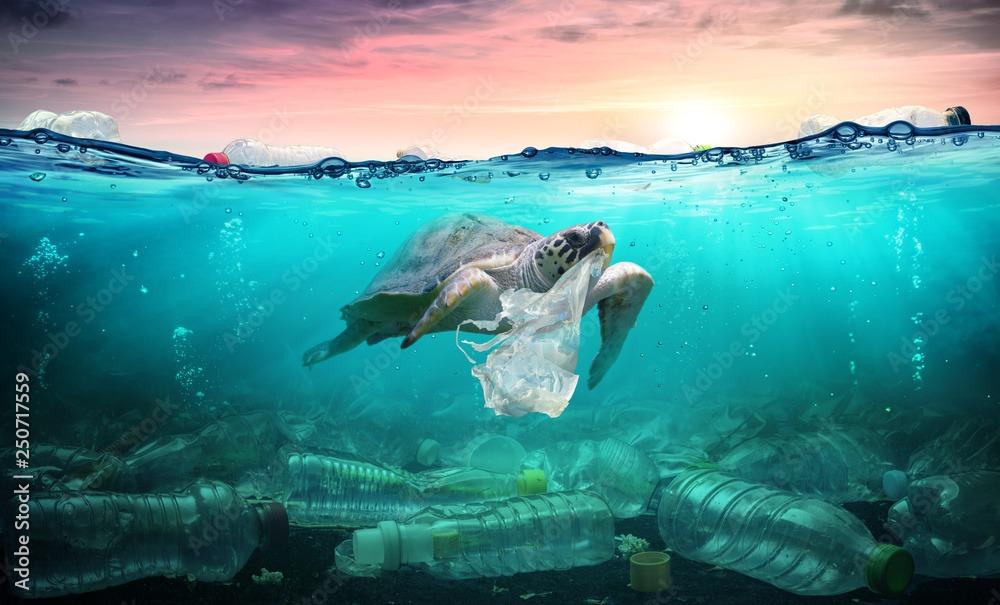
Every year, plastic kills millions of animals, from birds to fish and other marine life. About 700 species, including endangered species, are known to have been affected by plastic. Almost all seabird species feed on plastic.
Most animal deaths are caused by entanglement or starvation. Seals, whales, turtles and other animals are strangled by discarded fishing tackle or discarded six-pack rings. Microplastics have been found in over 100 aquatic species including fish, shrimp and mussels destined for our dinner plates. In many cases, these tiny pieces pass through the digestive system and are eliminated without consequences. But plastic has also been found to block the digestive tract or pierce organs, causing death. Stomachs stuffed with plastic reduce the desire to eat, causing starvation.
Land animals, including elephants, hyenas, zebras, tigers, camels, cattle and other large mammals, have consumed plastic, resulting in death in some cases.
Tests also confirmed damage to the liver and cells, as well as disruption of the reproductive system, causing some species, such as oysters, to produce fewer eggs. New research shows that fish larvae feed on nanofibers in their first days of life, raising new questions about the impact of plastic on fish populations.
How much plastic waste is there in the world?
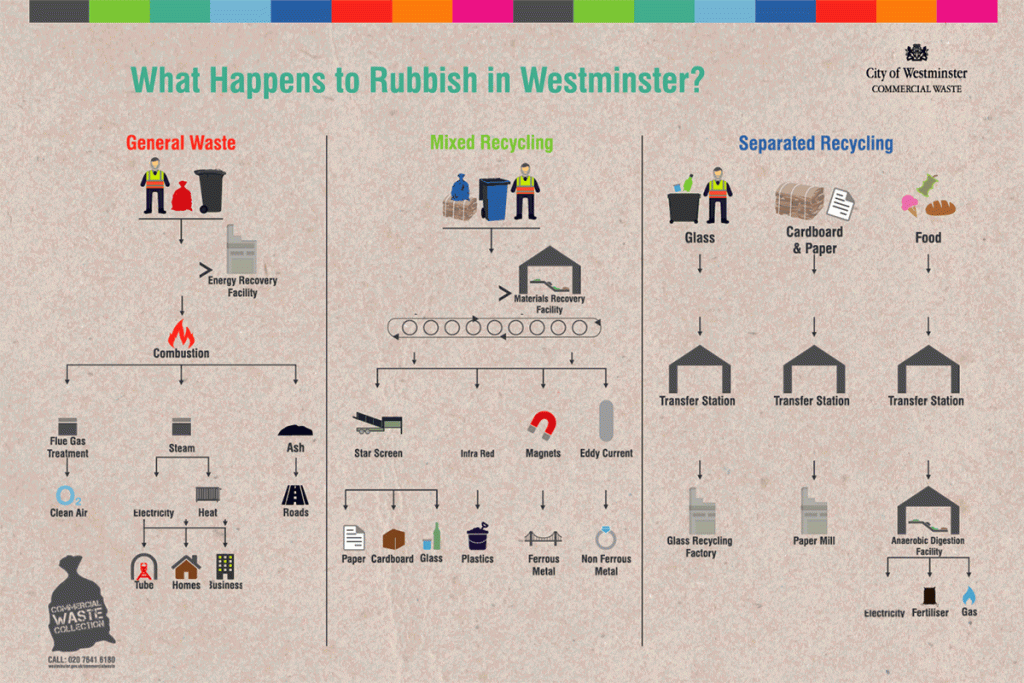
Six decades ago, the mass production of plastics began and accelerated so rapidly that 8.3 billion tons of plastic were created, and more than 90% of it is not recycled.
As of 2018, about 380 million tons of plastic are produced annually worldwide. Our planet cannot cope with this amount of plastic polluting the environment, and in recent years, calls to reduce pollution and plastic consumption have become more and more urgent.
Sources of information:
- https://cleanstreets.westminster.gov.uk/plastic-waste-complete-guide/
- https://www.nationalgeographic.com/environment/article/plastic-pollution
Practical part
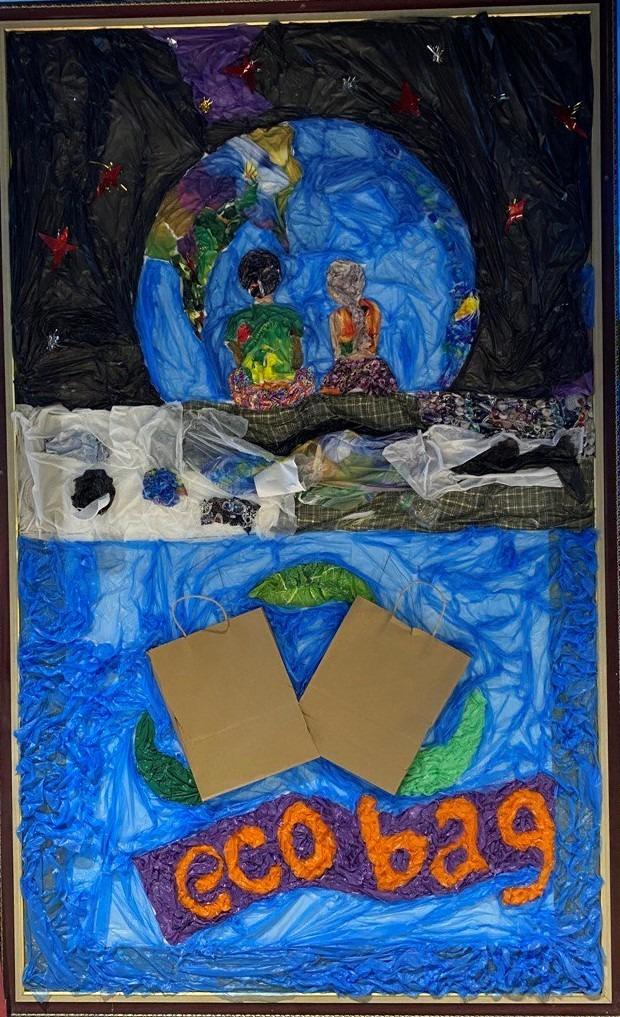
The figure shows an art project from previously used plastic bags, students of school No. 54 (Astana).
Step 1. Before the next lesson, students need to find multi-colored bags, different wires, used plastic dishes, bottles, in general, all unnecessary and used plastic items.
Step 2. Using a search engine on the Internet, find a more suitable art object / painting, etc., and invent, draw your artistic creation.
Step 3. Divide among team members, distribute responsibilities.
Homework
- Do your short research on the environmental impact of plastic on the environment.
- Suggest ways to solve this problem at the local and global level.
- Provide statistics.
- Based on the research work, make a presentation for the whole team for the 3rd week of the project.